1. Search Result
Search Result
Results for "

facilitate

" in MedChemExpress (MCE) Product Catalog:

392

Inhibitors & Agonists

15

Screening Libraries

20

Fluorescent Dye

73

Biochemical Assay Reagents

49

Peptides

3

MCE Kits

3

Inhibitory Antibodies

36

Natural
Products

36

Isotope-Labeled Compounds

6

Click Chemistry

17

Oligonucleotides

Cat. No. Product Name Target Research Areas Chemical Structure
  • HY-N0324
    Cholic acid
    15+ Cited Publications

    Endogenous Metabolite Metabolic Disease
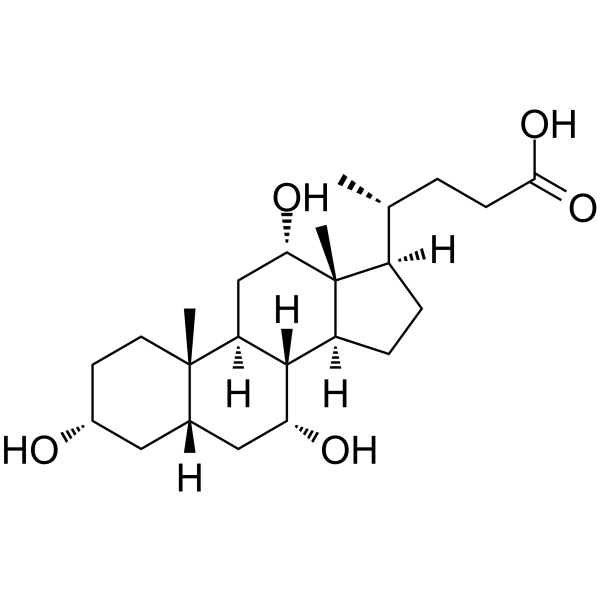
    Cholic acid is a major primary bile acid produced in the liver and usually conjugated with glycine or taurine. It facilitates fat absorption and cholesterol excretion. Cholic acid is orally active .
    Cholic acid
  • HY-17571
    Oxytocin
    Maximum Cited Publications
    24 Publications Verification

    α-Hypophamine; Oxytocic hormone

    Oxytocin Receptor Endogenous Metabolite Endocrinology Cancer
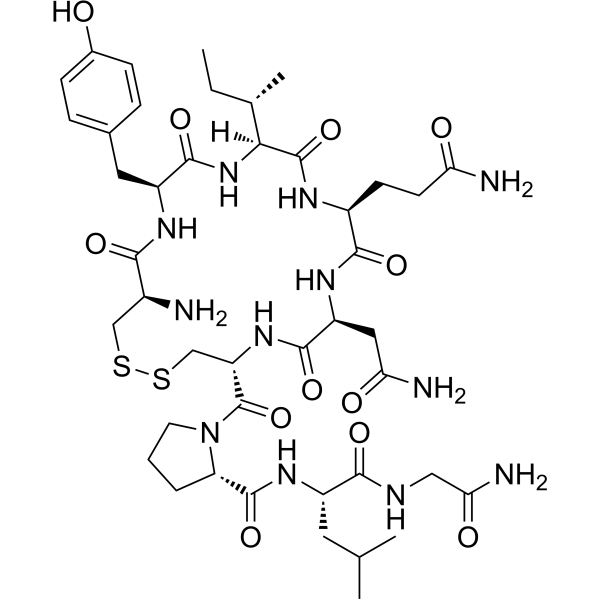
    Oxytocin (α-Hypophamine; Oxytocic hormone) is a pleiotropic, hypothalamic peptide known for facilitating parturition, lactation, and prosocial behaviors. Oxytocin can function as a stress-coping molecule with anti-inflammatory, antioxidant, and protective effects especially in the face of adversity or trauma .
    Oxytocin
  • HY-107641
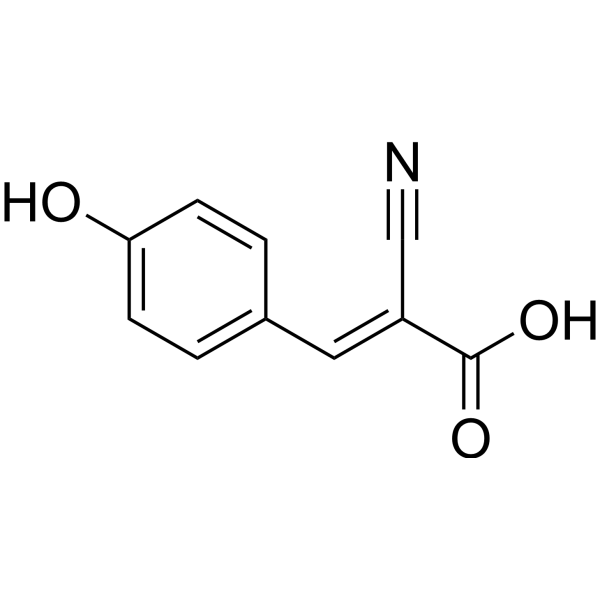
    α-Cyano-4-hydroxycinnamic acid
    10+ Cited Publications

    α-Cyano-4-hydroxycinnamate

    Monocarboxylate Transporter Metabolic Disease
    α-Cyano-4-hydroxycinnamic acid (α-Cyano-4-hydroxycinnamate) is a potent and non-competitive inhibitor of monocarboxylate transporters (MCTs). α-Cyano-4-hydroxycinnamic acid inhibits mitochondrial pyruvate transporter with a Ki of 6.3 μM. α-Cyano-4-hydroxycinnamic acid is used as a matrix to facilitate peptide ionization in matrix-assisted laser desorption/ionization time-of-flight (MALDI-TOF) mass spectrometry applications .
    α-Cyano-4-hydroxycinnamic acid
  • HY-111772
    Elexacaftor
    Maximum Cited Publications
    48 Publications Verification

    VX-445

    CFTR Autophagy Inflammation/Immunology
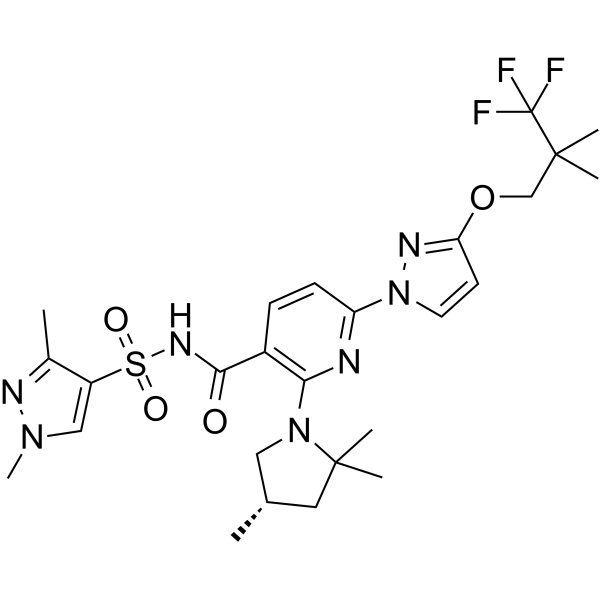
    Elexacaftor (VX-445, Compound 1) is a modulator of cystic fibrosis transmembrane conductance regulator (CFTR). Elexacaftor (VX-445, Compound 1) facilitates the processing and trafficking of CFTR to increase the amount of CFTR at the cell surface .
    Elexacaftor
  • HY-N0324S
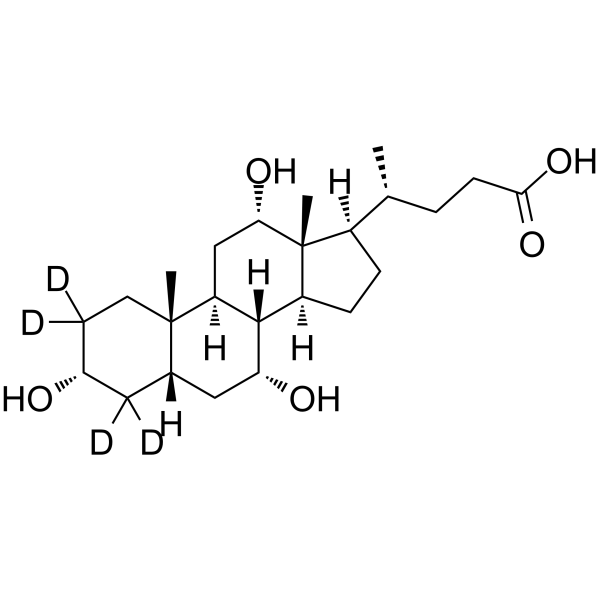
    Cholic acid-d4
    3 Publications Verification

    Endogenous Metabolite Metabolic Disease
    Cholic acid-d4 is the deuterium labeled Cholic acid. Cholic acid is a major primary bile acid produced in the liver and usually conjugated with glycine or taurine. It facilitates fat absorption and cholesterol excretion.
    Cholic acid-d4
  • HY-17571A
    Oxytocin acetate
    Maximum Cited Publications
    24 Publications Verification

    α-Hypophamine acetate; Oxytocic hormone acetate

    Oxytocin Receptor Endogenous Metabolite Endocrinology Cancer
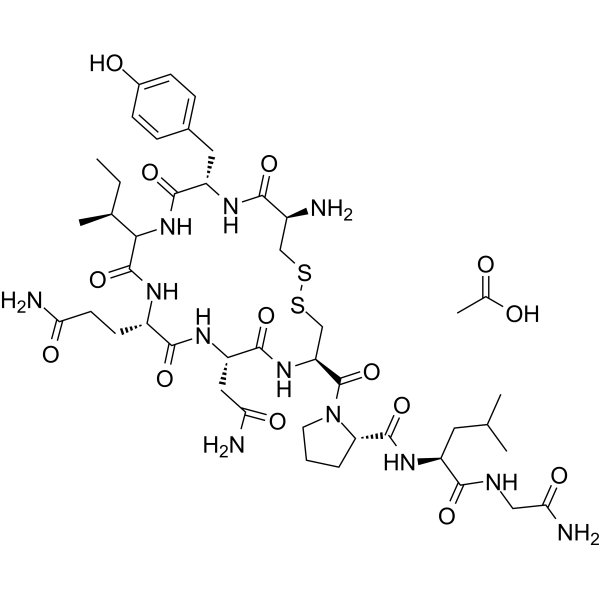
    Oxytocin (α-Hypophamine) acetate is a pleiotropic, hypothalamic peptide known for facilitating parturition, lactation, and prosocial behaviors. Oxytocin acetate can function as a stress-coping molecule with anti-inflammatory, antioxidant, and protective effects especially in the face of adversity or trauma .
    Oxytocin acetate
  • HY-W010382
    Oxaloacetic acid
    2 Publications Verification

    2-Oxosuccinic acid

    Endogenous Metabolite Reactive Oxygen Species (ROS) Metabolic Disease
    Oxaloacetic acid (2-Oxosuccinic acid) is a metabolic intermediate involved in several ways, such as citric acid cycle, gluconeogenesis, the urea cycle, the glyoxylate cycle, amino acid synthesis, and fatty acid synthesis, whereby Oxaloacetic acid facilitates the clearance of reactive oxygen species (ROS) and improves mitochondrial function .
    Oxaloacetic acid
  • HY-N0324A
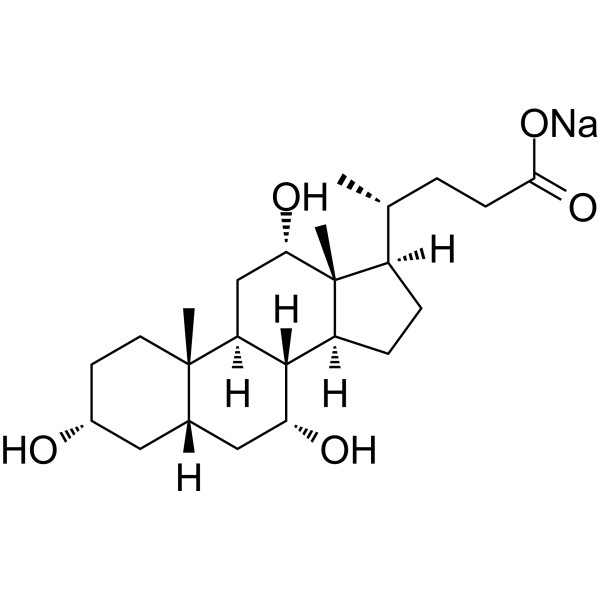
    Cholic acid sodium
    15+ Cited Publications

    Sodium cholate

    Endogenous Metabolite Metabolic Disease
    Cholic acid sodium is a major primary bile acid produced in the liver and usually conjugated with glycine or taurine. It facilitates fat absorption and cholesterol excretion. Cholic acid sodium is orally active .
    Cholic acid sodium
  • HY-17440
    Rocuronium Bromide
    2 Publications Verification

    ORG 9426 Bromide

    nAChR Neurological Disease Inflammation/Immunology Cancer
    Rocuronium Bromide (ORG 9426 Bromide) is an aminosteroid non-depolarizing neuromuscular blocker or muscle relaxant used in modern anaesthesia, to facilitate endotracheal intubation and to provide skeletal musclerelaxation during surgery or mechanical ventilation.
    Rocuronium Bromide
  • HY-Y0966S8

    Endogenous Metabolite iGluR Neurological Disease
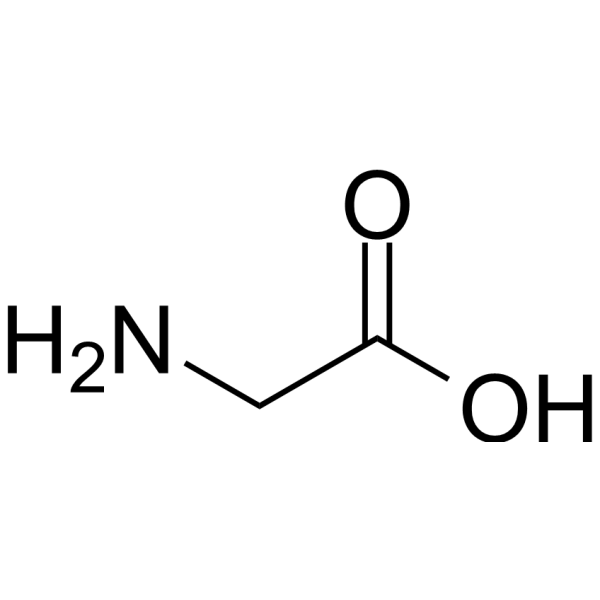
    Glycine-d5 is the deuterium labeled Glycine. Glycine is an inhibitory neurotransmitter in the CNS and also acts as a co-agonist along with glutamate, facilitating an excitatory potential at the glutaminergic N-methyl-D-aspartic acid (NMDA) receptors.
    Glycine-d5
  • HY-120722
    TCH-165
    2 Publications Verification

    Proteasome Cancer
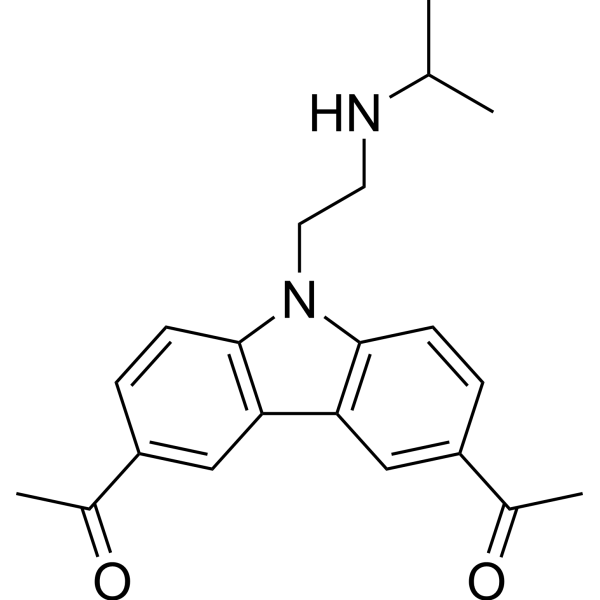
    TCH-165 is a small molecule modulator of proteasome assembly, which increases 20S levels and facilitates 20S-mediated protein degradation .
    TCH-165
  • HY-100744
    AS8351
    1 Publications Verification

    NSC51355

    Histone Demethylase Cardiovascular Disease
    AS8351 (NSC51355) is a KDM5B inhibitor, which can induce and sustain active chromatin marks to facilitate the induction of cardiomyocyte-like cells .
    AS8351
  • HY-107601

    ACET

    iGluR Neurological Disease
    UBP316 (ACET) is a highly potent and selective kainate receptor GluK1 (GluR5) antagonist, with a Kb value of 1.4 nM. UBP316 is effective at blocking the depression of both field excitatory postsynaptic potentials (fEPSPs) and monosynaptically-evoked GABAergic transmission induced by ATPA, a GluK1 selective agonist .
    UBP316
  • HY-P5623A

    RVG29-Cys; RDP-Cys; Rabies Virus Glycoprotein-29-Cys

    RABV Others
    RVG-Cys (RVG29-Cys) is a peptide derived from rabies virus glycoprotein (RVG29) with Cys attached to facilitate subsequent conjugation. RVG-Cys enhances the specific targeted delivery of proteins in brain tissue and neurons .
    RVG-Cys
  • HY-79139
    Pteroic acid
    1 Publications Verification

    Drug Intermediate Metabolic Disease
    Pteroic acid is a precursor to significant compounds like Folic acid (HY-16637) and Vitamin B12 (HY-B0315). Pteroic acid facilitates the examination of how different compounds influence cell growth and development .
    Pteroic acid
  • HY-Y0966S3

    Isotope-Labeled Compounds Endogenous Metabolite iGluR Neurological Disease
    Glycine- 13C2 is the 13C-labeled Glycine. Glycine is an inhibitory neurotransmitter in the CNS and also acts as a co-agonist along with glutamate, facilitating an excitatory potential at the glutaminergic N-methyl-D-aspartic acid (NMDA) receptors.
    Glycine-13C2
  • HY-101528

    iGluR Neurological Disease
    IDRA 21 is a positive and orally active modulator of the AMPA receptor. IDRA 21 facilitates excitatory neurotransmission via GluR1/2 receptors. IDRA 21 has the potential for the research of cognitive/memory disorders, including those associated with aging .
    IDRA 21
  • HY-131060

    CN328

    Ferroptosis Others
    CN128 hydrochloride (CN328) is an orally active and selective iron chelator. CN128 is used for the research of β-thalassemia .
    CN128 hydrochloride
  • HY-Y0966S1

    Isotope-Labeled Compounds Endogenous Metabolite iGluR Neurological Disease
    Glycine-d2 is the deuterium labeled Glycine. Glycine is an inhibitory neurotransmitter in the CNS and also acts as a co-agonist along with glutamate, facilitating an excitatory potential at the glutaminergic N-methyl-D-aspartic acid (NMDA) receptors.
    Glycine-d2
  • HY-P3173

    R-enzyme

    Biochemical Assay Reagents Others
    Pullulanase (R-enzyme) is a key starch debranching enzyme that specifically hydrolyzes α-1,6-glycosidic linkages in polysaccharides such as amylopectin and pullulan, facilitating the efficient degradation of starch into fermentable sugars .
    Pullulanase
  • HY-Y0966S

    Endogenous Metabolite iGluR Neurological Disease
    Glycine- 15N is the 15N-labeled Glycine. Glycine is an inhibitory neurotransmitter in the CNS and also acts as a co-agonist along with glutamate, facilitating an excitatory potential at the glutaminergic N-methyl-D-aspartic acid (NMDA) receptors .
    Glycine-15N
  • HY-N0324S2

    Endogenous Metabolite Metabolic Disease
    Cholic acid- 13C is the 13C-labeled Cholic acid. Cholic acid is a major primary bile acid produced in the liver and usually conjugated with glycine or taurine. It facilitates fat absorption and cholesterol excretion.
    Cholic acid-13C
  • HY-32951

    Drug Intermediate Others
    2-Fluoropyridine-4-boronic acid is a coupling reagent and chemical intermediate. 2-Fluoropyridine-4-boronic acid facilitates the synthesis of Rho kinase (ROCK) inhibitor Compound 37 .
    2-Fluoropyridine-4-boronic acid
  • HY-136433

    1,4-Dinitrosopiperazine; DNP

    Others Cancer
    N,N'-Dinitrosopiperazine (1,4-Dinitrosopiperazine; DNP) is a carcinogen with specificity for nasopharyngeal epithelium and facilitates NPC metastasis. N,N'-Dinitrosopiperazine regulates multiple signaling pathways through protein phosphorylation, including LYRIC at serine 568 .
    N,N'-Dinitrosopiperazine
  • HY-P5623A1

    RVG29-Cys acetate; RDP-Cys acetate; Rabies Virus Glycoprotein-29-Cys acetate

    RABV Others
    RVG-Cys (RVG29-Cys) acetate is a peptide derived from rabies virus glycoprotein (RVG29) with Cys attached to facilitate subsequent conjugation. RVG-Cys acetate enhances the specific targeted delivery of proteins in brain tissue and neurons .
    RVG-Cys acetate
  • HY-Y0966S6

    Endogenous Metabolite iGluR Neurological Disease
    Glycine- 13C2, 15N is the 13C- and 15N-labeled Glycine. Glycine is an inhibitory neurotransmitter in the CNS and also acts as a co-agonist along with glutamate, facilitating an excitatory potential at the glutaminergic N-methyl-D-aspartic acid (NMDA) receptors.
    Glycine-13C2,15N
  • HY-116016

    L-DOPA ethyl ester; Levodopa ethyl ester

    Dopamine Receptor Drug Metabolite Neurological Disease
    Etilevodopa (L-Dopa ethyl ester), an ethyl-ester proagent of Levodopa, is rapidly hydrolyzed to Levodopa and ethanol by nonspecific esterases in the gastrointestinal tract. Etilevodopa is used for the treatment of Parkinson disease (PD). Levodopa is the direct precursor of dopamine and is a suitable proagent as it facilitates CNS penetration and delivers dopamine .
    Etilevodopa
  • HY-W133919

    Environmental Pollutants Biochemical Assay Reagents Others
    Aniline Blue sodium is a water-soluble dye commonly used as a biological stain for the detection of nucleic acids and proteins in various laboratory procedures such as electrophoresis and microscopy. Aniline Blue sodium has unique chemical properties that allow it to bind to specific cellular components, producing a color change that facilitates their visualization and analysis.
    Aniline Blue sodium
  • HY-W008884

    Bacterial Others
    25-NBD Cholesterol is a fluorescently labeled form of cholesterol that facilitates the distinction between exogenous and endogenous cholesterol within bacterial cell membranes, emitting green fluorescence signals.
    25-NBD Cholesterol
  • HY-N0324S1

    Endogenous Metabolite Metabolic Disease
    Cholic acid-d5 is the deuterium labeled Cholic acid. Cholic acid is a major primary bile acid produced in the liver and usually conjugated with glycine or taurine. It facilitates fat absorption and cholesterol excretion.
    Cholic acid-d5
  • HY-13225B
    Rivanicline hemioxalate
    1 Publications Verification

    RJR-2403 hemioxalate; (E)-Metanicotine hemioxalate

    nAChR Neurological Disease
    Rivanicline (RJR-2403) hemioxalate is a neuronal nicotinic receptor agonist. Rivanicline hemioxalate is highly selective for the rat brain cortex nAChRs (Ki = 26 nM, EC50 of 732 nM) and α4β2 subtype (Ki = 26 nM, EC50 = 16 μM). Rivanicline hemioxalate can significantly restore the learning impairment and cognitive dysfunction. Rivanicline hemioxalate can be used for the study of neurodegenerative diseases (such as schizophrenia or Alzheimer's disease) .
    Rivanicline hemioxalate
  • HY-Y0966S10

    Isotope-Labeled Compounds Endogenous Metabolite iGluR Cancer
    Glycine-d3 is the deuterium labeled Glycine. Glycine is an inhibitory neurotransmitter in the CNS and also acts as a co-agonist along with glutamate, facilitating an excitatory potential at the glutaminergic N-methyl-D-aspartic acid (NMDA) receptors.
    Glycine-d3
  • HY-136651

    Reactive Oxygen Species (ROS) Inflammation/Immunology
    BNTA, a potent extracellular matrix (ECM) modulator, facilitates cartilage structural molecule synthesis on chondrocytes by activating superoxide dismutase 3 (SOD3). BNTA shows a promising potential for osteoarthritis alleviation by modulating cartilage generation .
    BNTA
  • HY-N0324R
    Cholic acid (Standard)
    15+ Cited Publications

    Reference Standards Endogenous Metabolite Metabolic Disease
    Cholic acid (Standard) is the analytical standard of Cholic acid. This product is intended for research and analytical applications. Cholic acid is a major primary bile acid produced in the liver and usually conjugated with glycine or taurine. It facilitates fat absorption and cholesterol excretion. Cholic acid is orally active .
    Cholic acid (Standard)
  • HY-Y0966S2

    Endogenous Metabolite iGluR Neurological Disease
    Glycine-2- 13C is the 13C-labeled Glycine. Glycine is an inhibitory neurotransmitter in the CNS and also acts as a co-agonist along with glutamate, facilitating an excitatory potential at the glutaminergic N-methyl-D-aspartic acid (NMDA) receptors.
    Glycine-2-13C
  • HY-W016510

    Biochemical Assay Reagents Drug Intermediate Others
    Benzenesulfonate sodium is the sodium salt of Benzenesulfonic acid. Benzenesulfonate sodium facilitates the identification of -SO3H and -SO3 - vibrational bands in compounds in Raman spectroscopy. Benzenesulfonate sodium was used in the synthesis of 1-Butyl-3-propanenitrile imidazolium benzenesulfonate [C2CN Bim]BS .
    Benzenesulfonate sodium
  • HY-Y0966S4

    Endogenous Metabolite iGluR Neurological Disease
    Glycine-1- 13C is the 13C-labeled Glycine. Glycine is an inhibitory neurotransmitter in the CNS and also acts as a co-agonist along with glutamate, facilitating an excitatory potential at the glutaminergic N-methyl-D-aspartic acid (NMDA) receptors.
    Glycine-1-13C
  • HY-12310

    DNA Methyltransferase HDAC Others
    RSC133 exhibits dual activity by inhibiting histone deacetylase and DNA methyltransferase. RSC133 effectively facilitates reprogramming of human somatic cells to pluripotent stem cells and supports the maintenance of an undifferentiated state of human pluripotent stem cells .
    RSC133
  • HY-W923642

    Endogenous Metabolite Cardiovascular Disease Metabolic Disease
    Sphingomyelin (d18:1/12:0) is a metabolomic biomarker. Sphingomyelin (d18:1/12:0) exhibits favorable diagnostic properties and may facilitate the early detection and targeted prevention of dyslipidemia-related adverse cardiovascular events .
    Sphingomyelin (d18:1/12:0)
  • HY-W879007

    Fluorescent Dye Others
    ICG-azide, a near infrared (NIR) fluorescent dye, is a copper (I)-catalyzed azide-alkyne cycloaddition (CuAAC) reagent. ICG-azide can be readily incorporated into dye-stabilized nanoemulsions and facilitate the attachment of targeting ligands via click-chemistry in a simple, scalable, and reproducible reaction .
    ICG-azide
  • HY-79602

    Biochemical Assay Reagents Drug Derivative Drug Intermediate Others
    p-Toluenesulfonamide is an intermediate and plasticizer. p-Toluenesulfonamide is also the main degradation product of the disinfectant Chloramine-T (HY-B0959) in water. p-Toluenesulfonamide facilitates the localization of fluorescent probes to the endoplasmic reticulum .
    p-Toluenesulfonamide
  • HY-151721

    Drug Intermediate Others
    H-D-Orn(N3)-OH hydrochloride is a drug intermediate that can be introduced at the 5' end of oligonucleotides with a protected C6 amino linker by MMT, facilitating the subsequent deprotection and coupling of functional groups such as dyes and biotin.
    H-D-Orn(N3)-OH hydrochloride
  • HY-W028714

    Drug Intermediate Others
    2,3-Diphenylquinoxaline-6-carboxylic acid is used for end-capping in the synthesis of AB2 monomers, which facilitates the synthesis and chain-end modification of hyperbranched polymers containing alternating quinoxaline and benzoxazole repeating units .
    2,3-Diphenylquinoxaline-6-carboxylic acid
  • HY-N0324F

    Fluorescent Dye Metabolic Disease
    Cholic acid-Biotin is a biotin-labeled Cholic acid (HY-N0324). Cholic acid is a major primary bile acid produced in the liver and usually conjugated with glycine or taurine. It facilitates fat absorption and cholesterol excretion. Cholic acid has orally activity .
    Cholic acid-Biotin
  • HY-Y0966S7

    Isotope-Labeled Compounds Endogenous Metabolite iGluR Neurological Disease
    Glycine-2- 13C, 15N is the 13C- and 15N-labeled Glycine. Glycine is an inhibitory neurotransmitter in the CNS and also acts as a co-agonist along with glutamate, facilitating an excitatory potential at the glutaminergic N-methyl-D-aspartic acid (NMDA) receptors.
    Glycine-2-13C,15N
  • HY-W015003

    N-Ethylcarbazole

    Biochemical Assay Reagents Others
    9-Ethylcarbazole (N-Ethylcarbazole) serves as a hydrogen storage material. The introduction of nitrogen (N) into 9-ethylcarbazole can reduce the endothermic nature of the reaction and decrease the dehydrogenation temperature, thereby facilitating the process of hydrogen storage and release .
    9-Ethylcarbazole
  • HY-W250721D

    Carboxy polymethylene

    Biochemical Assay Reagents Others
    Carbomer (Carboxy polymethylene) is an acrylic acid polymer, which can be used as a thickening agent. Carbomer provides a stable gel matrix, exhibits good heat, light and microbial contamination resistance. Carbomer facilitates the drug release and local application, which can be used in the pharmaceutical industry .
    Carbomer
  • HY-177508

    Cholecystokinin Receptor Neurological Disease
    BC264 is a highly potent and selective CCK-B agonist that crosses the blood-brain barrier. BC264 increases dopamine in the nucleus accumbens and facilitates motivation and attention in rats .
    BC264
  • HY-158555

    Monoamine Transporter Neurological Disease
    4-Ethyl-N,N-Dmc hydrochloride is an analog of Methedrone. Methedrone acts as a non-selective substrate for monoamine transporters, facilitating a neurotransmitter release .
    4-Ethyl-N,N-Dmc hydrochloride
  • HY-W124377

    3,3'-Dipyridyl

    MOFs Drug Intermediate Others
    3,3'-Bipyridine (3,3'-Dipyridyl) is a ligand used in coordination chemistry. 3,3'-Bipyridine can combine with BINOL to facilitate catalytic reactions .
    3,3'-Bipyridine

Inquiry Online

Your information is safe with us. * Required Fields.

Salutation


Country or Region *

Applicant Name *


Organization Name *

Department *


Email Address *


Product Name *

Cat. No.


Requested quantity *

Phone Number *


Remarks

Inquiry Online

Inquiry Information

Product Name:
Cat. No.:
Quantity:
MCE Japan Authorized Agent:

