
1. Search Result
Search Result
Results for "

growing

" in MedChemExpress (MCE) Product Catalog:

31

Inhibitors & Agonists

8

Screening Libraries

1

Fluorescent Dye

1

Biochemical Assay Reagents

1

Peptides

6

Natural
Products

2

Isotope-Labeled Compounds

2

Oligonucleotides

Cat. No. Product Name Target Research Areas Chemical Structure
  • HY-W406070

    LNA-G

    Nucleoside Antimetabolite/Analog DNA/RNA Synthesis Others
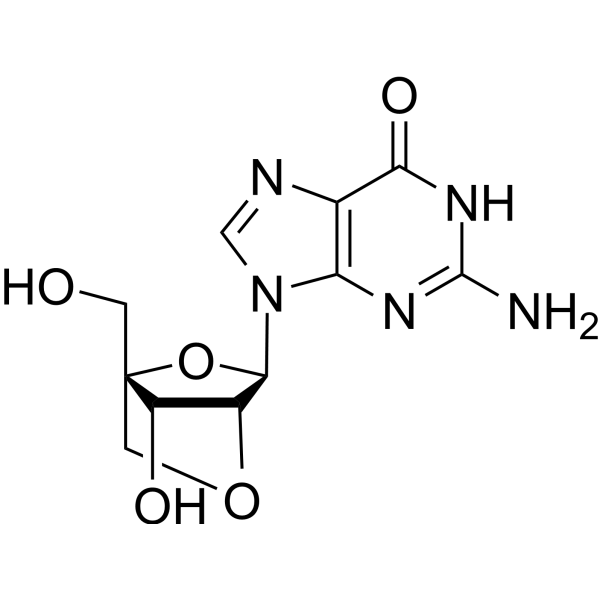
    2′-O,4′-C-Methyleneguanosine (LNA-G) is a reverse guanine analog, where LNA (locked nucleic acid) is a nucleic acid analog. LNA modification can be widely used in various fields, such as effective binding affinity with complementary sequences and stronger nuclease resistance than natural nucleotides, providing great potential for application in disease diagnosis and research. 2'-O,4'-C-Methyleneguanosine is a substrate for KOD DNA polymerase, which incorporates LNA-G nucleotides into growing DNA strands, including consecutive incorporations , to generate full-length extension products .
    2'-O,4'-C-Methyleneguanosine
  • HY-B0503
    2-Thiouracil
    2 Publications Verification

    Thiouracil

    NO Synthase Endocrinology Cancer
    2-Thiouracil (Thiouracil) is a selective neuronal nitric oxide synthase (nNOS) inhibitor with a Ki value of 20 μM. 2-Thiouracil antagonizes BH4-induced nNOS dimerization. 2-Thiouracil is also an antithyroid compound and a highly specific melanoma detector. 2-Thiouracil stimulates the growth of pea and corn root segments .
    2-Thiouracil
  • HY-N3354

    8-prenylgenistein

    Apoptosis Cancer
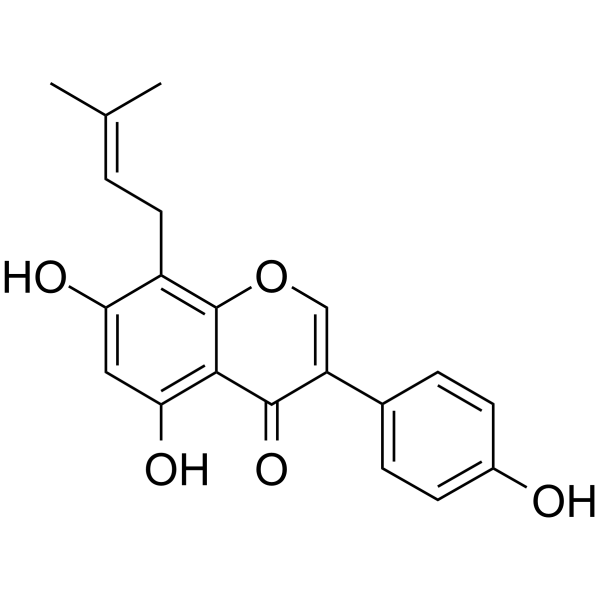
    Lupiwighteone is an isoflavone present widely in wild-growing plants, with antioxidant, antimicrobial and anticancer effects. Lupiwighteone induces caspase-dependent and -independent apoptosis on human breast cancer cells via inhibiting PI3K/Akt/mTOR pathway .
    Lupiwighteone
  • HY-Y1718
    Tridecanoic acid
    1 Publications Verification

    N-Tridecanoic acid

    Endogenous Metabolite Bacterial Infection
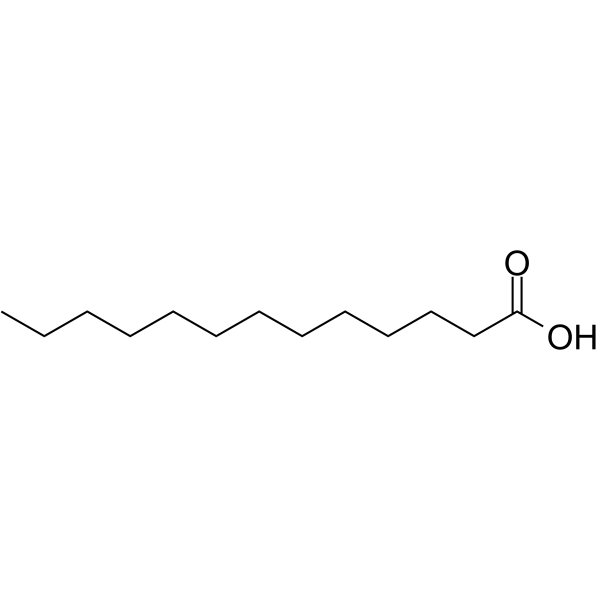
    Tridecanoic acid (N-Tridecanoic acid) is a medium-chain saturated fatty acid and inhibitor with no antibacterial activity against enterohemorrhagic E. coli (EHEC). When used in combination with Ciprofloxacin (HY-B0356) or Ampicillin (HY-B0522), Tridecanoic acid suppresses persister formation in exponentially growing E. coli and EHEC, but exerts no inhibitory effect on persister formation induced by Kanamycin (HY-16566) or in stationary-phase cells. Tridecanoic acid inhibits biofilm formation in EHEC. It can be used in the research of bacterial infections .
    Tridecanoic acid
  • HY-W011151
    trans-Zeatinriboside
    1 Publications Verification

    Phytohormone Others
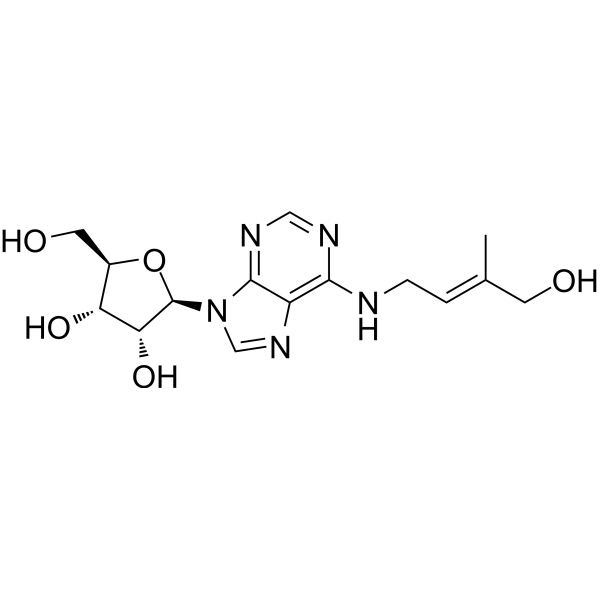
    trans-Zeatinriboside is a zeatin-type cytokinin and plant growth regulator. trans-Zeatinriboside is produced by the terrestrial filamentous cyanobacterium Nostoc sp. HK-01 and Agrobacterium tumefaciens (including Ti plasmid-dependent and Ti plasmid-independent strains). trans-Zeatinriboside is detectable as a cytokinin component in growing crown galls, and accumulates in large amounts in CHRK1-silenced transgenic tobacco accompanied by pleiotropic developmental abnormalities. trans-Zeatinriboside can be used in studies related to crown galls .
    trans-Zeatinriboside
  • HY-108569

    Antibiotic Bacterial PPAR Infection
    nTZDpa is an antibiotic. nTZDpa is a PPARG partial agonist. nTZDpa has antibacterial activity. nTZDpa is effective against growing and persistent Staphylococcus aureus by lipid bilayer disruption .
    nTZDpa
  • HY-115127

    m-Methoxytoluene; m-Methylanisole

    Endogenous Metabolite Bacterial Infection Others
    Methylanisole (m-Methoxytoluene; m-MetHYlanisole) is a volatile metabolite produced by Penicillium strains growing on barley. 3-Methylanisole serves as a precursor for the biotechnological production of vanillin .
    3-Methylanisole
  • HY-124814

    Bacterial Infection
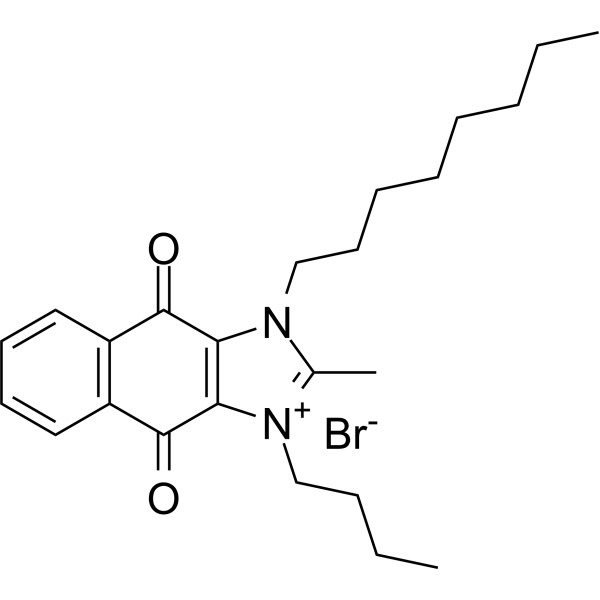
    C215 is a potent inhibitor of MmpL3. C215 is identified in HTS with glycerol independent activity against M. tuberculosis, limited non-specific toxicity against mammalian cells, an IC90 of 16 μM against M. tuberculosis, and efficacy against M. tuberculosis growing in macrophages .
    C215
  • HY-Y0531

    Tricyclo[3.3.1.1~3,7~]decan-1-ol

    Drug Intermediate Bacterial Infection
    1-Adamantanol (Tricyclo[3.3.1.1~3,7~]decan-1-ol) is a hydroxylated derivative of Adamantane (HY-N2427). 1-Adamantanol serves as a substrate for regioselective hydroxylation reactions in Streptomyces strain SA8. 1-Adamantanol can form acrylate derivatives, which are used as photoresist layer materials .
    1-Adamantanol
  • HY-121952

    Drug Isomer Others
    (9E,11E)-9,11-Octadecadienoic acid methyl ester is an isomer of 9(Z),11(E),13(E)-octadecatrienoic acid methyl ester and the methyl ester form of 9(Z),11(E),13(Z)-octadecatrienoic acid, which is found in wild growing pomegranate seed oil .
    (9E,11E)-9,11-Octadecadienoic acid methyl ester
  • HY-W116594

    Fluorescent Dye Infection
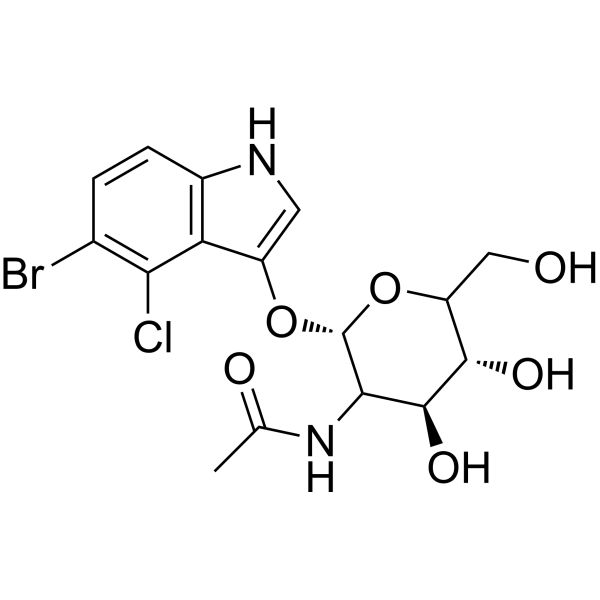
    X-GalNAc is a chromogenic substrate for for N-acetyl-β-galactosidase, used to determine the presence or absence of a cloned DNA insert in bacteria growing on agar plates .
    X-GalNAc
  • HY-139863

    Bacterial Infection
    Antibacterial agent 62 is a novel redox cycling antituberculosis chemotype with potent bactericidal activity against growing and nutrient-starved phenotypically drug-resistant nongrowing bacteria.
    Antibacterial agent 62
  • HY-121158

    S-2846

    Herbicide Others
    Butamifos (S-2846) is an organophosphoramidate herbicide used to control annual weeds with low toxicity to mammals. Butamifos acts on the growing points of susceptible plants, causing severe radial enlargement of the affected tissues .
    Butamifos
  • HY-173355

    Bacterial Infection
    RCB18350 is an antituberculosis agent that belongs to the class of isoxazole derivatives. RCB18350 has bacteriostatic activity and inhibits the growth of Mycobacterium tuberculosis with an MIC of 1.25 μg/mL. RCB18350 is effective against multidrug-resistant Mycobacterium tuberculosis (MDR-TB) clinical isolates, slow-growing mycobacteria such as Mycobacterium bovis BCG and Mycobacterium avium .
    RCB18350
  • HY-115127S

    m-Methoxytoluene-d3; m-Methylanisole-d3

    Isotope-Labeled Compounds Endogenous Metabolite Bacterial Infection
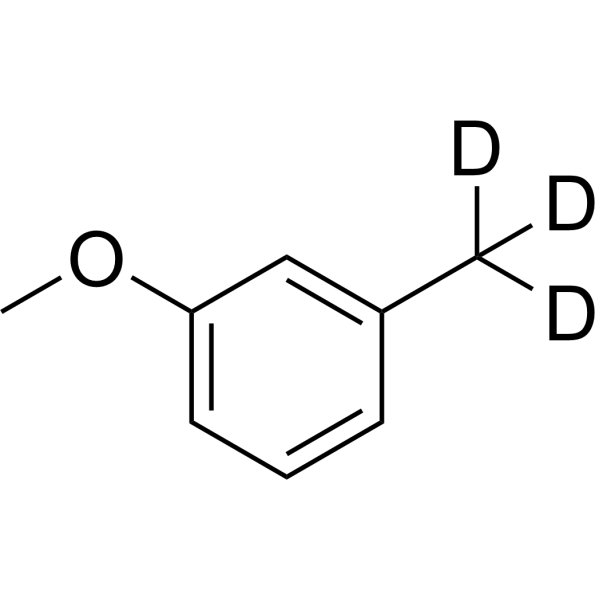
    3-Methylanisole-d3 (m-Methoxytoluene-d3; m-MetHYlanisole-d3) is the deuterium labeled 3-Methylanisole (HY-115127) . Methylanisole is a volatile metabolite produced by Penicillium strains growing on barley. 3-Methylanisole serves as a precursor for the biotechnological production of vanillin .
    3-Methylanisole-d3
  • HY-132275

    Biochemical Assay Reagents Others
    After the Long trebler phosphoramidite is condensed by the triple condensate, three DNA branches begin to grow simultaneously with each step of the synthesis. Deblock of this construct gives rise to DNA containing a branching point. One arm (stem) is attached to the branch point with its 5'-end, and other arms (branches) are attached with their 3'-ends. Reverse amidites can be used to prepare constructs with different branch orientations.
    Long trebler phosphoramidite
  • HY-123221

    Interleukin Related Inflammation/Immunology Cancer
    RS-0481 is an orally active lymphocyte population function restorer. RS-0481 enhances IL-2 production activity. RS-0481 can re-establish the function of certain lymphoid cell populations impaired by the presence of a growing tumor in an animal. RS-0481 markedly augments the tumor-specific cytotoxic T lymphocytes, TDTH, and the nonspecific lymphokine-activated-killer-cell-like cell responses .
    RS-0481
  • HY-133813AR

    Reference Standards Drug Metabolite Neurological Disease
    2,4-D Butyl ester (Standard) is the analytical standard of 2,4-D Butyl ester. This product is intended for research and analytical applications. 2,4-D Butyl ester is an organic phenoxy herbicide and used to control woody broad-leaf weeds. 2,4-D butyl ester produces its herbicidal effect by mimicking natural plant growth hormones causing plants to grow too rapidly to survive .
    Apovincaminic acid hydrochloride salt (Standard)
  • HY-129300

    Endogenous Metabolite Others
    Prosulfocarb is a herbicide with a rapidly growing use trend. Prosulfocarb is used in winter cereals to help address the problem of increasing biotic resistance of weeds to certain pesticides. Environmental and food effects of prosulfocarb have been observed, and its transfer pattern from target crops to non-target areas has been studied. The volatility effect of prosulfocarb is an important factor explaining the inefficiency of isolated area contamination and marginal protection against residue spread .
    Prosulfocarb
  • HY-N7176R

    Kaempferol-3-glucuronide (Standard); Kaempferol-3-O-glucuronide (Standard)

    Reference Standards Interleukin Related Metabolic Disease Inflammation/Immunology Cancer
    Prosulfocarb (Standard) is the analytical standard of Prosulfocarb. This product is intended for research and analytical applications. Prosulfocarb is a herbicide with a rapidly growing use trend. Prosulfocarb is used in winter cereals to help address the problem of increasing biotic resistance of weeds to certain pesticides. Environmental and food effects of prosulfocarb have been observed, and its transfer pattern from target crops to non-target areas has been studied. The volatility effect of prosulfocarb is an important factor explaining the inefficiency of isolated area contamination and marginal protection against residue spread .
    Kaempferol 3-O-β-D-glucuronide (Standard)
  • HY-129300R

    Endogenous Metabolite Reference Standards Others
    Prosulfocarb (Standard) is the analytical standard of Prosulfocarb. This product is intended for research and analytical applications. Prosulfocarb is a herbicide with a rapidly growing use trend. Prosulfocarb is used in winter cereals to help address the problem of increasing biotic resistance of weeds to certain pesticides. Environmental and food effects of prosulfocarb have been observed, and its transfer pattern from target crops to non-target areas has been studied. The volatility effect of prosulfocarb is an important factor explaining the inefficiency of isolated area contamination and marginal protection against residue spread .
    Prosulfocarb (Standard)
  • HY-129300S

    S-Benzyl dipropylthiocarbamate-d7

    Isotope-Labeled Compounds Endogenous Metabolite Others
    Prosulfocarb-d7 (S-Benzyl dipropylthiocarbamate-d7) is deuterium labeled Prosulfocarb. Prosulfocarb is a herbicide with a rapidly growing use trend. Prosulfocarb is used in winter cereals to help address the problem of increasing biotic resistance of weeds to certain pesticides. Environmental and food effects of prosulfocarb have been observed, and its transfer pattern from target crops to non-target areas has been studied. The volatility effect of prosulfocarb is an important factor explaining the inefficiency of isolated area contamination and marginal protection against residue spread .
    Prosulfocarb-d7
  • HY-N17787

    Drug Intermediate Inflammation/Immunology
    Labdanolic acid is a labdane-type diterpenoid compound that can be isolated from Cistus ladaniferus, a plant growing in Portugal. Labdanolic acid is a key intermediate in the synthesis of anti-inflammatory molecules and has both medicinal and industrial applications .
    Labdanolic acid
  • HY-E71029

    FAK Others
    Active focal adhesion kinase, Human (EC 2.7.10.2) is a cytoplasmic protein tyrosine kinase which is found concentrated in the focal adhesions that form between cells growing in the presence of extracellular matrix constituents.
    Active focal adhesion kinase, Human
  • HY-N16978

    Others Inflammation/Immunology
    Tuberospironine A is a Stemona alkaloid compound; a series of Stemona alkaloids often exhibit pharmacological activities such as antitussive effects. Tuberospironine A can be naturally extracted from the dried roots of Stemona tuberosa Lour., which grows in Indonesia .
    Tuberospironine A
  • HY-E71263

    Biochemical Assay Reagents Others
    β-1,4-Mannosyl-glycoprotein 4-β-N-acetylglucosaminyltransferase (EC 2.4.1.144) probably prevents further attachment of N-acetylglucosamine residues to the growing carbohydrate chain.
    β-1,4-Mannosyl-glycoprotein 4-β-N-acetylglucosaminyltransferase
  • HY-121158R

    S-2846 (Standard)

    Herbicide Reference Standards Others
    Butamifos (Standard) is the analytical standard of Butamifos. This product is intended for research and analytical applications. Butamifos (S-2846) is an organophosphoramidate herbicide used to control annual weeds with low toxicity to mammals. Butamifos acts on the growing points of susceptible plants, causing severe radial enlargement of the affected tissues .
    Butamifos (Standard)
  • HY-W190933

    Biochemical Assay Reagents Others
    Bis-PEG6-TFP ester is a PEG linker with two terminal TFP ester moieties. TFP esters are amine reactive and are also more stable than NHS esters against hydrolysis. The PEG chain increases the water solubility properties of compounds in aqueous media. The water solubility properties of PEG chains are enhanced as the PEG chain grows.
    Bis-PEG6-TFP ester
  • HY-P11770

    Microtubule/Tubulin Others
    α-Tubulin (residues 440-451) (α-Tubulin Tail) is a Microtubule growth inhibitor. α-Tubulin (residues 440-451) transiently interacts with the longitudinal polymerization interface of α-tubulin, regulating the apparent association and dissociation rates of tubulin at the microtubule growing end. α-Tubulin (residues 440-451) inhibits microtubule growth .
    α-Tubulin (residues 440–451)
  • HY-W019888

    Ferrofloc

    Environmental Pollutants Others
    Iron (II) chloride (Ferrofloc) is an active radical polymerization initiator, which is a transition metal chloride composed of Fe 2+ and Cl ions. The ion association constant logKFeCl2 of Iron (II) chloride is −0.89. In acidic aqueous solutions, Iron (II) chloride forms solvated Fe 2++2Cl ions as well as FeCl ++Cl ion pairs. Without the addition of aluminum compounds, Iron (II) chloride drives the living radical polymerization of methyl methacrylate by generating transient radical growing species through homolytic reversible cleavage of the carbon-halogen end groups of organic halide initiators .
    Iron(II) chloride
  • HY-177901

    DNA/RNA Synthesis Others
    3'-O-(2-Nitrobenzyl)-dATP is a reversible and photolabile DNA synthesis terminator. 3'-O-(2-Nitrobenzyl)-dATP incorporates into growing DNA strands to terminate synthesis in a base-specific manner. 3'-O-(2-Nitrobenzyl)-dATP undergoes efficient photolytic removal of its 3'-protecting group upon UV exposure to enable reinitiation of DNA synthesis. 3'-O-(2-Nitrobenzyl)-dATP supports development of the Base Addition Sequencing Scheme (BASS) via a complete stop-start DNA synthesis cycle .
    3'-O-(2-Nitrobenzyl)-dATP

Inquiry Online

Your information is safe with us. * Required Fields.

Salutation


Country or Region *

Applicant Name *


Organization Name *

Department *


Email Address *


Product Name *

Cat. No.


Requested quantity *

Phone Number *


Remarks

Inquiry Online

Inquiry Information

Product Name:
Cat. No.:
Quantity:
MCE Japan Authorized Agent:

