
1. Search Result
Search Result
Pathways Recommended: Membrane Transporter/Ion Channel
Results for "

ions

" in MedChemExpress (MCE) Product Catalog:

1105

Inhibitors & Agonists

19

Screening Libraries

130

Fluorescent Dye

180

Biochemical Assay Reagents

58

Peptides

5

MCE Kits

1

Inhibitory Antibodies

117

Natural
Products

74

Isotope-Labeled Compounds

9

Click Chemistry

23

Oligonucleotides

1

GMP Molecules

Cat. No. Product Name Target Research Areas Chemical Structure
  • HY-D0861
    EGTA
    20+ Cited Publications

    Biochemical Assay Reagents Inflammation/Immunology
    EGTA is a cell-impermeant specific calcium ion chelator. EGTA has an apparent calcium dissociation constant (Kd) of 60.5 nM at physiological pH (7.4) and has very high specificity for Ca 2+ over Mg 2+ (Mg 2+ Kd 1-10 mM). EGTA significantly inhibits the substrate adherence capacity of inflammatory macrophages .
    EGTA
  • HY-W019981C

    MgCl2 hexahydrate, for cell culture

    Calcium Channel Biochemical Assay Reagents Metabolic Disease
    Magnesium chloride hexahydrate (MgCl2 hexahydrate), for cell culture is the hexahydrate form of magnesium dichloride. Magnesium chloride hexahydrate, for cell culture can be used as a source of magnesium ion and a co-foactor for many enzymes. Magnesium chloride hexahydrate, for cell culture increases the activity of Ca 2+ ATPase .
    Magnesium chloride hexahydrate, for cell culture
  • HY-11062
    Icilin
    1 Publications Verification

    AG-3-5

    TRP Channel Neurological Disease Inflammation/Immunology
    Icilin (AG-3-5) is a super-agonist of the transient receptor potential M8 (TRPM8) ion channel. Icilin activates TRPM8 in EGTA in a dose-dependent manner (EC50=1.4 μM). Icilin is a "super-cooling agent" . Icilin attenuates autoimmune neuroinflammation through modulation of the T-cell response .
    Icilin
  • HY-130605
    BAY-1797
    4 Publications Verification

    P2X Receptor Neurological Disease
    BAY-1797, a chemical probe, is a potent, orally active, and selective P2X4 antagonist, with an IC50 of 211 nM against human P2X4. BAY-1797 displays no or very weak activity on the other P2X ion channels. BAY-1797 shows anti-nociceptive and anti-inflammatory effects .
    BAY-1797
  • HY-D1498
    Mag-Fluo-4 AM
    3 Publications Verification

    Fluorescent Dye Others
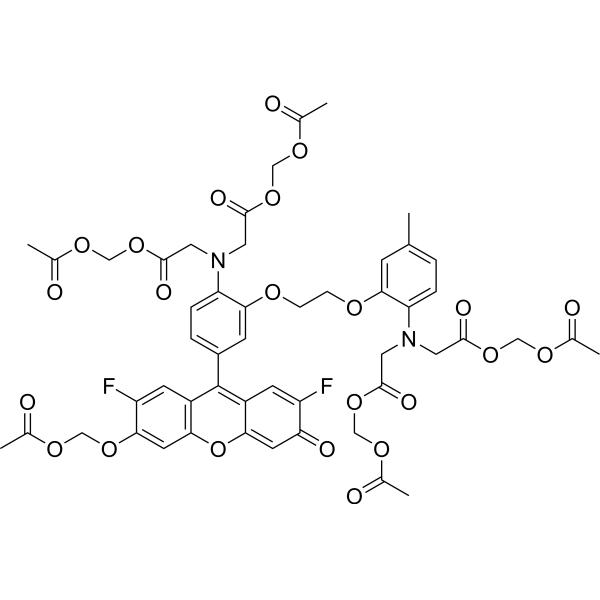
    Mag-Fluo-4 AM is a fluorecent Ca 2+ chelator, with high affinity for calcium. Mag-Fluo-4 AM can specifically identify intracellular calcium ions, with high sensitivity, low cytotoxicity, increased AM acetylmethyl ester can enter the cell well, after being sheared by the intracellular esterase stay in the cell to bind to calcium ions, produce strong fluorescence .
    Mag-Fluo-4 AM
  • HY-143202

    Liposome Biochemical Assay Reagents Others
    DPhPC is a phospholipid compound characterized by high mechanical and chemical stability, broad temperature phase stability, and high electrical resistance. DPhPC readily forms unilamellar vesicles and solid-supported bilayers. DPhPC is commonly used as a component of nanoliposomal drug carriers or as a model membrane material for studies on membrane proteins/ion channels .
    DPhPC
  • HY-B0997

    Dihydroquinidine; (+)-Hydroquinidine; Hydroconquinine

    Others Cardiovascular Disease Cancer
    Hydroquinidine (Dihydroquinidine) is a potent ion channel blocker, which exhibits strong anti-cancer activity on colon, pancreatic, and hepatocellular cancer cells. Hydroquinidine prolongs the QT interval and has antiarrhythmic efficacy .
    Hydroquinidine
  • HY-W007656

    Biochemical Assay Reagents Others
    Cyclen is a macrocyclic tetraamine chelating agent. Cyclen is the aza analogue of crown ether, used as a precursor for MRI contrast agents, and is an intermediate for the preparation of effective macrocyclic chelates. Cyclen is employed as a structural regulator through interfacial polymerization of polyethleneimine (PEI) and trimesoyl chloride (TMC) to develop polyamide NF membrane with efficient Li +/Mg 2+ separation performance. Cyclen has specific cavity structure and exhibits selective coordination properties for Li + ions [1][2].
    Cyclen
  • HY-103112B

    5-HT Receptor Neurological Disease
    SB 243213 is an orally active, selective and high-affinity 5-HT2C receptor antagonist with a pKi of 9.37 and a pKb of 9.8 for human 5-HT2C receptor. SB 243213 shows greater than a 100-fold selectivity over a wide range of neurotransmitter receptors, enzymes and ion channels. SB 243213 has improved anxiolytic profile and has the potential for schizophrenia and motor disorders .
    SB 243213
  • HY-D1247

    Biochemical Assay Reagents Others
    Hydroxynaphthol Blue is an azo dye and serves as a metal indicator. Hydroxynaphthol Blue binds to specific metal ions to form stable complexes with distinct color and fluorescence properties. Hydroxynaphthol Blue is used for the visual monitoring of isothermal nucleic acid amplification results. A visible color difference appears between positive and negative nucleic acid amplification reactions, allowing result discrimination by the naked eye without opening the reaction tube .
    Hydroxynaphthol Blue
  • HY-W076836

    p-aminobenzaldehyde

    Biochemical Assay Reagents Others
    4-Aminobenzaldehyde (p-aminobenzaldehyde) is a useful synthetic reagent and monomer that can be used to synthesize monoazo dyes and photocurable ion exchange resins. 4-Aminobenzaldehyde is also a corrosion inhibitor of metals .
    4-Aminobenzaldehyde
  • HY-N10473
    Pulcherriminic acid
    3 Publications Verification

    Bacterial Fungal Infection
    Pulcherriminic acid is a cyclic dipeptide antimicrobial agent with high affinity for Fe 3+, found mainly in Bacillus and yeast. Pulcherriminic acid chelates iron ions through a non-enzymatic reaction to form the extracellular red pigment pulcherrimin, which competes for iron nutrition and thus achieves an antibacterial effect. Pulcherriminic acid has great applications in food, agriculture and medical industries .
    Pulcherriminic acid
  • HY-158155

    Potassium Channel NOD-like Receptor (NLR) Neurological Disease Inflammation/Immunology
    CVN293 is a selective and brain permeable potassium ion (K +) channel KCNK13 inhibtor with IC50s of 41 nM and 28 nM for hKCNK13 and mKCNK13, respectively. CVN293 potently inhibits the NLRP3-inflammasome mediated production of the proinflammatory cytokine IL-1β in microglia .
    CVN293
  • HY-NP009

    Bacterial Infection Neurological Disease
    α-Lactalbumin is a globular whey protein that exists in milk. α-Lactalbumin binds Ca 2+, Mg 2+, Mn 2+, Na +, K + and Zn 2+ ions; among these, Ca 2+ binding enhances protein stability, while Zn 2+ binding reduces stability and induces aggregation. α-Lactalbumin forms amyloid fibrils, amorphous aggregates, nanoparticles and nanotubes depending on external conditions. α-Lactalbumin exhibits bactericidal and antiviral activities. α-Lactalbumin has anxiolytic and antidepressant activities, and its effects are enhanced under stress conditions .
    α-Lactalbumin
  • HY-W129633

    DCIP sodium hydrate; DPIP sodium hydrate

    Biochemical Assay Reagents Others
    2,6-Dichlorophenolindophenol (DCIP; DPIP) sodium hydrate is a redox chromogenic indicator with a redox potential of +217 mV relative to SHE, and it acts as a substrate for reduction reactions. During the metabolic process of nutrient consumption by Saccharomyces cerevisiae, 2,6-Dichlorophenolindophenol sodium hydrate is reduced from dark blue to colorless, resulting in a decrease in absorbance. 2,6-Dichlorophenolindophenol sodium hydrate is widely used in spectrophotometric biochemical oxygen demand determination and preclinical colorimetric toxicity analysis for heavy metal ion detection based on Saccharomyces cerevisiae .
    2,6-Dichlorophenolindophenol sodium hydrate
  • HY-D2295
    Mito-FerroGreen
    5 Publications Verification

    Fluorescent Dye Others
    Mito-FerroGreen is a mitochondria-specific ferrous ion detection probe with an excitation wavelength of 488nm .
    Mito-FerroGreen
  • HY-W011060

    4,7,13,16,21,24-Hexaoxa-1,10-diazabicyclo[8.8.8]hexacosane

    Biochemical Assay Reagents Others
    Cryptand 2.2.2 (4,7,13,16,21,24-Hexaoxa-1,10-diazabicyclo[8.8.8]hexacosane) is a metal ion chelator. Cryptand 2.2.2 forms stable mononuclear, protonated and dinuclear complexes with copper (II) ions; forms protonated complexes with hydrogen ions; and also forms stable complexes with Zn 2+, Co 2+, Ni 2+, Cd 2+, Hg 2+ and Pb 2+ ions. Cryptand 2.2.2 can be used for the preparation of nanoparticles, transition metal compounds, etc.
    Cryptand 2.2.2
  • HY-W115738

    Biochemical Assay Reagents Others
    PAR is an azo dye widely used as a colorimetric reagent for metal ions. PAR forms stable chelates with different metal ions. PAR can also complex with heavy metal ions in polar organic solvents, such as ethanol .
    PAR
  • HY-W090309

    Biochemical Assay Reagents Others
    Monosodium 2-sulfoterephthalate is an oxygen-containing organic linker and coordination ligand. Under hydrothermal conditions, Monosodium 2-sulfoterephthalate binds to Cr 3+ ions via deprotonated carboxyl groups to form the MIL-101 (Cr)-SO3H metal-organic framework. Monosodium 2-sulfoterephthalate also adopts monodentate and hexadentate linkage modes with Er III ions, respectively, thereby forming monomeric and polymeric Er III compounds .
    Monosodium 2-sulfoterephthalate
  • HY-D0861A
    EGTA tetrasodium
    20+ Cited Publications

    Biochemical Assay Reagents Inflammation/Immunology
    EGTA tetrasodium is a cell-impermeant specific calcium ion chelator. EGTA tetrasodium has an apparent calcium dissociation constant (Kd) of 60.5 nM at physiological pH (7.4) and has very high specificity for Ca 2+ over Mg 2+ (Mg 2+ Kd 1-10 mM). EGTA tetrasodium significantly inhibits the substrate adherence capacity of inflammatory macrophages .
    EGTA tetrasodium
  • HY-W020249

    Biochemical Assay Reagents Others
    Sodium ionophore X is a neutral ionophore that binds highly selectively to sodium ions (Na +) to form stable complexes. Sodium ionophore X can be used to construct ion-selective chemical sensors (including optical sensors and electrochemical sensors) .
    Sodium ionophore X
  • HY-19995
    GSK137647A
    1 Publications Verification

    GSK 137647

    Free Fatty Acid Receptor Metabolic Disease
    GSK137647A (GSK 137647) is a potent, selective free fatty acid receptor 4 (FFA4) agonist with pEC50 values of 6.3, 6.2, and 6.1 for human, mouse and rat FFA4, and pEC50 values < 4.5 for all three species for FFA1, FFA2, and FFA3, respectively. GSK137647A has anti-inflammatory activity. GSK137647A induces insulin secretion and inhibits epithelial ion transport, GSK137647A is related to regulation of glucose homeostasis and anti-inflammatory response .
    GSK137647A
  • HY-W012683

    Biochemical Assay Reagents Cancer
    Iminodiacetic acid is a metal ion chelator targeting Cr 6+, Cd 2+, Ni 2+, and Pb 2+. Iminodiacetic acid selectively and irreversibly binds metal ions through the coordination of carboxyl and imino groups, reduces the toxicity of metal ions and promotes their adsorption and separation. Iminodiacetic acid has the functions of heavy metal ion removal and coordination complex stabilization. Iminodiacetic acid is often used in environmental pollution control (such as heavy metal adsorption in water) and coordination chemistry (such as metal ion detection and separation) research .
    Iminodiacetic acid
  • HY-W030778
    Nitrilotriacetic acid
    1 Publications Verification

    Triglycollamic acid

    Biochemical Assay Reagents Others
    Nitrilotriacetic acid is an orally active chelating agent for metal ions. Nitrilotriacetic acid is an aminotricarboxylic acid that can sequester metal ions as water soluble complexes. Nitrilotriacetic acid reacts with strong oxidizing agents such as hypochlorite, chlorine, ozone, or oxygen in the presence of palladium/carbon catalyst. Nitrilotriacetic acid interacts with solid phases such as cell membranes and bone matrices in the mammalian system. Nitrilotriacetic acid is classified as an epigenetic rodent carcinogen .
    Nitrilotriacetic acid
  • HY-143481

    Sodium Channel Neurological Disease Inflammation/Immunology
    Nav1.8-IN-2 (compound 35A) is a Nav1.8 voltage-gated sodium ion inhibitor with an IC50 of 0.4 nM (HEK 293 cells). Nav1.8-IN-2 inhibits the activity of Nav1.8 voltage-gated sodium ion channels, mediates sodium ion influx in excitable cells, and is associated with the initiation and conduction of action potentials. Nav1.8-IN-2 can be used for research related to pain, cough, itching, etc .
    Nav1.8-IN-2
  • HY-16915
    RPR-260243
    1 Publications Verification

    Potassium Channel Cardiovascular Disease
    RPR-260243, a potent activator of human ether-a-go-go-related gene (hERG), slows deactivation and attenuates inactivation of hERG1 channels. RPR260243-modified HERG currents are inhibited by Dofetilide (IC50=58 nM). RPR260243 displays no activator-like effects on other voltage-dependent ion channels, including the closely related ERG3 K+ channel . RPR-260243 is a click chemistry reagent, it contains an Alkyne group and can undergo copper-catalyzed azide-alkyne cycloaddition (CuAAc) with molecules containing Azide groups.
    RPR-260243
  • HY-D2775

    Fluorescent Dye Others
    Cobalt(II) ions probe 1 (Compound L) is a fluorescent sensor for Co 2+ detecting in biological environments. Cobalt(II) ions probe 1 can selectively bind with Co 2+ in the presence of other metal ions (Ex: 380 nm) .
    Cobalt(II) ions probe 1
  • HY-148129

    TRPC6-IN-3

    TRP Channel Cardiovascular Disease
    Apecotrep (TRPC6-IN-3) (compound 17) is a potent, orally active transient receptor potential C6 ion channel (TRPC6) inhibitor. Apecotrep modulates not only intracellular calcium concentration, but also membrane potential by modulating the flux of cations including calcium and sodium ions. Apecotrep can be used in research of respiratory system .
    Apecotrep
  • HY-D1550

    Fluorescent Dye Others
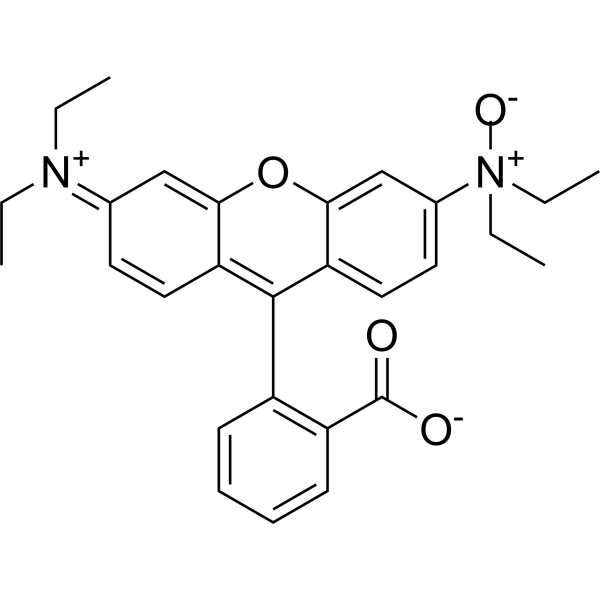
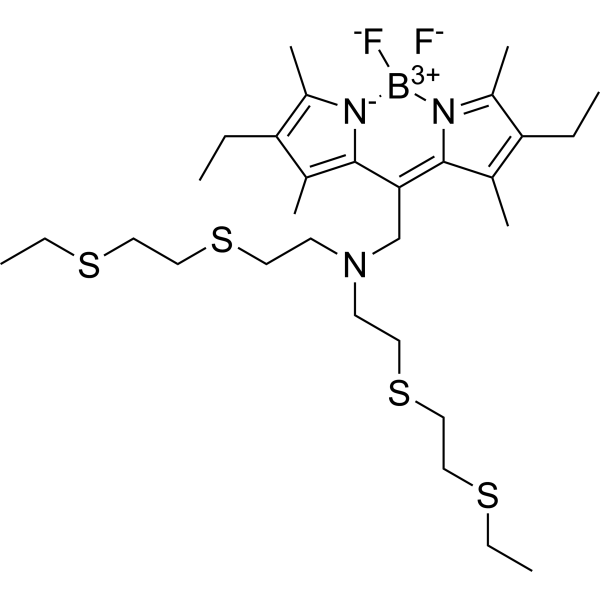
    10-(4-(Bis(2-acetoxyethyl)amino)phenyl)-BODIPY 505/515 is a fluorescent dye for Cu 2+ ion .
    10-(4-(Bis(2-acetoxyethyl)amino)phenyl)-BODIPY 505/515
  • HY-112217A

    nAChR Neurological Disease
    PSEM 89S TFA is a selective and brain penetrant agonists for the resulting ion channels. PSEM 89S TFA is orthogonally selective for Q79G and L141F, respectively .
    PSEM 89S TFA
  • HY-131868

    TRP Channel Neurological Disease
    TRPV3 antagonist 74a is a potent and selective TRPV3 antagonist. TRPV3 antagonist 74a displays no significant activity against a panel of other ion channels. TRPV3 antagonist 74a can be used for the research of neuropathic pain .
    TRPV3 antagonist 74a
  • HY-P0190A
    Iberiotoxin TFA
    2 Publications Verification

    Potassium Channel Others
    Iberiotoxin (TFA) is a selective high conductance high conductance Ca 2+-activated K + channel inhibitor with a Kd of ~1 nM. Iberiotoxin (TFA) does not block other types of voltage-dependent ion channels .
    Iberiotoxin TFA
  • HY-W013718

    Biochemical Assay Reagents Others
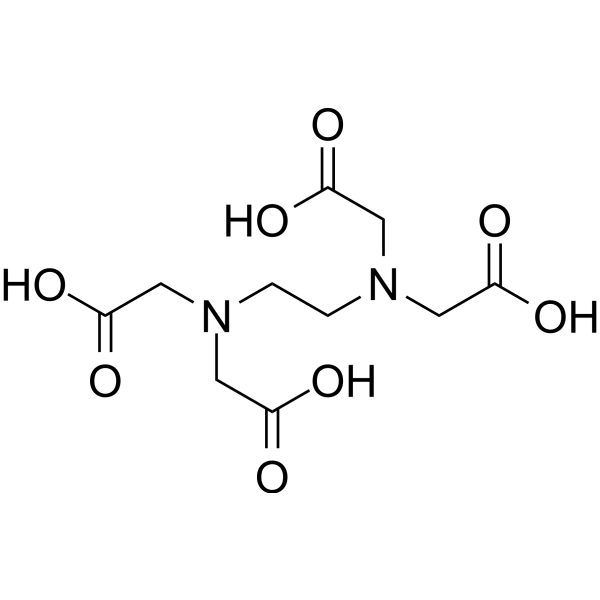
    TTHA is an aminopolycarboxylic acid chelating agent with preferential affinity for lighter (lower atomic number) rare earth element (REE) ions. TTHA binds to REE ions through chelation as the primary coordination mechanism .
    TTHA
  • HY-D2481

    APG-2 (TMA)

    Fluorescent Dye Neurological Disease
    Asante potassium green-2 (APG-2) TMA is a cell-impermeable K + (potassium ion) fluorescent indicator that produces a fluorescent response to changes in extracellular potassium ion concentration. Its excitation/emission maxima are 525/545 nm , respectively.
    Asante potassium green-2 (TMA)
  • HY-D2482

    APG-1 AM

    Fluorescent Dye Neurological Disease
    Asante potassium green-1 AM (APG-1 AM) is a cell-permeable K +-sensitive fluorescent indicator and potassium ion indicator that exhibits minimal interference from Na + and pH at physiologically relevant intracellular levels. Asante potassium green-1 AM enables non-invasive monitoring and quantitative analysis of intracellular potassium ion concentration (ᵢ) . Its excitation/emission maxima are 525/545 nm, respectively.
    Asante potassium green-1 AM
  • HY-158741

    APG-2 Acetoxymethyl ester

    Fluorescent Dye Potassium Channel Others
    IPG-2 AM (APG-2 Acetoxymethyl ester) is a membrane-permeant acetoxymethyl ester derivative and selective fluorescent potassium ion indicator. IPG-2 AM exhibits fluorescence increases proportional to extracellular potassium ion concentrations. IPG-2 AM enables real-time monitoring of cytosolic free potassium ion fluxes in human platelets and macrophages. IPG-2 AM can be used for the research of intracellular potassium concentration dynamics .
    IPG-2 AM
  • HY-75200

    Biochemical Assay Reagents Others
    N-(Benzyloxycarbonyloxy)succinimide is an efficient amino-protecting reagent in organic synthesis, playing an important role in the field of organic synthesis. N-(Benzyloxycarbonyloxy)succinimide is also a neutral ionophore, which significantly improves the performance of erbium ion (Er 3+) sensors and provides a practical tool for the rapid detection of erbium ions in the environment and water quality .
    N-(Benzyloxycarbonyloxy)succinimide
  • HY-B2200

    Tricalcium dicitrate tetrahydrate, 99%

    Environmental Pollutants Biochemical Assay Reagents Calcium Channel Metabolic Disease
    Calcium citrate tetrahydrate, 99% exhibits the ability to release more calcium ions in a short time therefore allowing a high activity, and a high concentration of calcium ions that can stimulate bone formation .
    Calcium citrate tetrahydrate, 99%
  • HY-128536

    Fluorescent Dye Others
    KMG-104AM is a Mg 2+ fluorescent probe. KMG-104AM is a membrane-permeable ester-modified derivative of KMG-104, which serves as a reporter and imaging agent. KMG-104AM can track the increase in intracellular free magnesium ion concentration induced by mitochondrial uncoupling. KMG-104AM enables visualization of the three-dimensional distribution of intracellular magnesium ion concentration. KMG-104AM is applicable to research related to the functions of intracellular magnesium ions .
    KMG-104AM
  • HY-136300

    HIF/HIF Prolyl-Hydroxylase Cardiovascular Disease Inflammation/Immunology
    PHD-1-IN-1 is an orally active and potent HIF prolylhydroxylase domain-1 (PHD-1) inhibitor with an IC50 of 0.034 μM. PHD-1-IN-1 has a unique monodentate binding interaction with the active site Fe 2+ ion and induces the formation of an "Arg367-out" pocket .
    PHD-1-IN-1
  • HY-W099576

    EHDA bromide

    Environmental Pollutants Biochemical Assay Reagents Others
    Ethylhexadecyldimethylammonium (EHDA) bromide, a surfactant, has been used in a number of adsorptive separational methods, such as the removal of nickel, zinc and chromium ions. Ethylhexadecyldimethylammonium (EHDA) bromide also can be used to prepare dye of staining intracellular ions .
    Ethylhexadecyldimethylammonium bromide
  • HY-W110917

    Biochemical Assay Reagents Others
    Dimethylsulfonazo III is a potent sulfate indicator. Dimethylsulfonazo III can be used as indicator to test those samples contaminated with potassium or phosphate ions .
    Dimethylsulfonazo III
  • HY-D0430

    Tracid Brilliant Red B

    Environmental Pollutants Fluorescent Dye Others
    Acid Red 249 (Tracid Brilliant Red B) is a kind of weak acid dye containing sulfate ion .
    Acid Red 249
  • HY-168377

    Fluorescent Dye Others
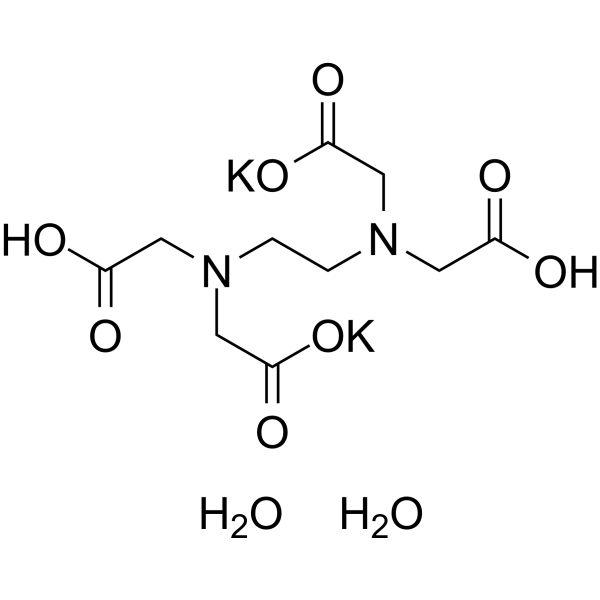
    Fluo-4 potassium is a cell-impermeable Ca 2+ (calcium ion) indicator (λex=494 nm, λem=516 nm). Fluo-4 potassium can be introduced into cells using methods such as patch clamping and microinjection .
    Fluo-4 potassium
  • HY-W009065

    Others Cardiovascular Disease Cancer
    Hydroquinidine hydrochloride is a potent ion channel blocker, which exhibits strong anti-cancer activity on colon, pancreatic, and hepatocellular cancer cells. Hydroquinidine hydrochloride prolongs the QT interval and has antiarrhythmic efficacy .
    Hydroquinidine hydrochloride
  • HY-130074

    TRP Channel Neurological Disease
    FEMA 4809 is a TRPM8 receptor agonist (EC50=0.2 nM) for use as a cooling agent. TRPM8 is the ion channel responsible for the cool perception .
    FEMA 4809
  • HY-172876

    iGluR Reactive Oxygen Species (ROS) Trk Receptor Cardiovascular Disease
    FLY26 is a selective partial GluN2B antagonist with an IC50 value of 0.64 μM. FLY26 partially inhibits the GluN2B subunit of NMDA receptors, reduces calcium ion influx and reactive oxygen species (ROS) production and activates the BDNF/TrkB/CREB neuroprotective signaling pathway to alleviate neuronal excitotoxicity and mitochondrial dysfunction. FLY26 is promising for research of neurological deficits caused by cerebral ischemia-reperfusion injury .
    FLY26
  • HY-W012232

    Biochemical Assay Reagents Drug Intermediate Others
    2,6-Diphenylpyridine is a proton acceptor (log(P) = 5) and a tridentate [C^N^C] dianionic ligand. 2,6-Diphenylpyridine efficiently transfers protons through a direct pathway at the interface of two immiscible electrolyte solutions. 2,6-Diphenylpyridine as a tridentate ligand and can form mononuclear and binuclear complexes with gold(III). 2,6-Diphenylpyridin is applicable to research in electrochemical ion transfer kinetics and organometallic chemistry .
    2,6-Diphenylpyridine
  • HY-103112

    5-HT Receptor Neurological Disease
    SB 243213 hydrochloride is an orally active, selective and high-affinity 5-HT2C receptor antagonist with a pKi of 9.37 and a pKb of 9.8 for human 5-HT2C receptor. SB 243213 hydrochloride shows greater than a 100-fold selectivity over a wide range of neurotransmitter receptors, enzymes and ion channels. SB 243213 hydrochloride has improved anxiolytic profile and has the potential for schizophrenia and motor disorders .
    SB 243213 hydrochloride
  • HY-117710B

    Cholinesterase (ChE) Amyloid-β ERK TNF Receptor Interleukin Related Neurological Disease
    AD-35 is an orally active anti-Alzheimer's disease (AD) agent with moderate AChE inhibitory activity and metal ion chelating ability. AD-35 exhibits IC50 values for AChE and BuChE of 793 nM and 31428 nM, respectively. AD-35 can form chelates with Cu²⁺ and Fe³⁺, but its chelating ability for Zn²⁺ is relatively weak. AD-35 can inhibit aggregation and disassemble the formed Aβ aggregates, and inhibit Aβ-induced ERK phosphorylation. AD-35 inhibits neuroinflammation in AD rat models and demonstrates a strong effect in improving cognitive function .
    AD-35

Inquiry Online

Your information is safe with us. * Required Fields.

Salutation


Country or Region *

Applicant Name *


Organization Name *

Department *


Email Address *


Product Name *

Cat. No.


Requested quantity *

Phone Number *


Remarks

Inquiry Online

Inquiry Information

Product Name:
Cat. No.:
Quantity:
MCE Japan Authorized Agent:

