1. Search Result
Search Result
Results for "

learning disorder

" in MedChemExpress (MCE) Product Catalog:

17

Inhibitors & Agonists

2

Screening Libraries

2

Natural
Products

Cat. No. Product Name Target Research Areas Chemical Structure
  • HY-16900
    Rolipram
    Maximum Cited Publications
    19 Publications Verification

    (R,S)-Rolipram; (±)-Rolipram; ZK 62711

    Bacterial HIV Phosphodiesterase (PDE) Epigenetic Reader Domain Amyloid-β Infection Neurological Disease Cancer
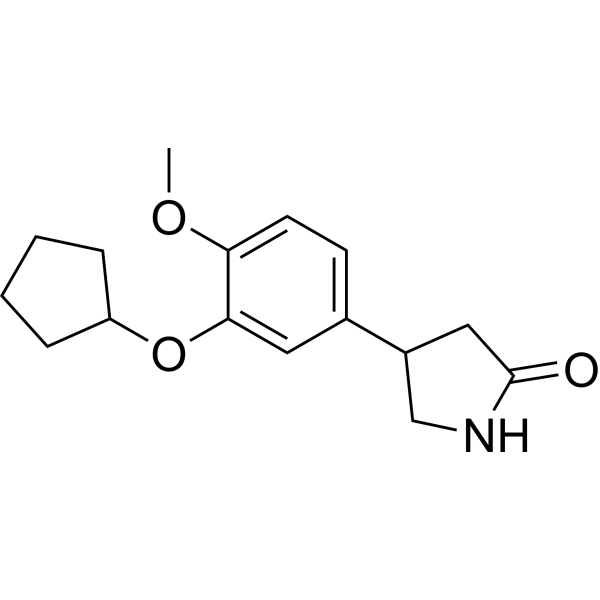
    Rolipram is a PDE4 inhibitor, with blood-brain barrier permeability, that reverses β-amyloid-induced learning and memory impairment in rats. Rolipram elevates intracellular cAMP and clevels and regulates the cAMP/CREB signaling pathway, thereby alleviating neuroinflammation and apoptotic responses. Rolipram promotes neuronal differentiation of human bone marrow mesenchymal stem cells and inhibits Methamphetamine- and morphine-induced hyperlocomotion in mice. Rolipram also reduces the viability of glioblastoma stem-like cells and enhances Bevacizumab (HY-P9906)-induced cell death. Rolipram inhibits the expression of proinflammatory cytokines and enhances central noradrenergic transmission. Rolipram is mainly used in studies related to various central nervous system diseases including Alzheimer's disease, major depressive disorder, glioblastoma multiforme, and multiple sclerosis .
    Rolipram
  • HY-115864

    TAK-653; NBI-1065845

    iGluR Lipoxygenase Neurological Disease
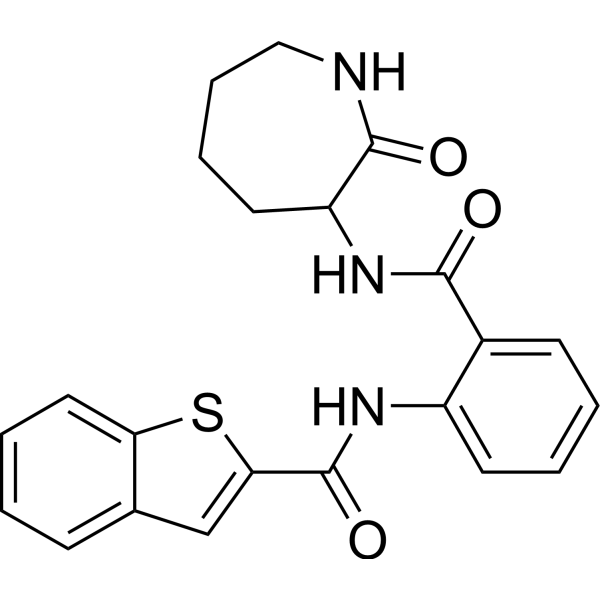
    Osavampator (TAK-653) is a AMPA receptor positive allosteric modulator. Osavampator selectively binds to AMPA-R in a glutamate-dependent manner and induces Ca2+ influx in hGluA1i CHO cells (EC50 = 3.3 μM). Osavampator improves learning and memory in many models. Osavampator is can be used for the research of depressive disorders .
    Osavampator
  • HY-B2167R

    DHA (Standard); Cervonic acid (Standard)

    Reference Standards Endogenous Metabolite Neurological Disease Cancer
    Docosahexaenoic acid (Standard) is the analytical standard of Docosahexaenoic acid. This product is intended for research and analytical applications. Docosahexaenoic Acid (DHA) is an omega-3 fatty acid abundantly present brain and retina. It can be obtained directly from fish oil and maternal milk. In Vitro: Docosahexaenoic acid (DHA) is essential for the growth and functional development of the brain in infants. DHA is also required for maintenance of normal brain function in adults. The inclusion of plentiful DHA in the diet improves learning ability and memory . DHA is an essential requirement in every step of brain development like neural cell proliferation, migration, differentiation, synaptogenesis. The multiple double bonds and unique structure allow DHA to impart special membrane characteristics for effective cell signaling. Many development disorders like dyslexia, autism spectrum disorder, attention deficit hyperactivity disorder, schizophrenia etc. are causally related to decreased level of DHA . DHA is a potent RXR ligand inducing robust RXR activation already at low micro molar concentrations. The EC50 for RXRα activation by DHA is about 5-10 μM fatty acid . In Vivo: Docosahexaenoic acid administration over 10 weeks significantly reduces the number of reference memory errors, without affecting the number of working memory errors, and significantly increases the docosahexaenoic acid content and the docosahexaenoic acid/arachidonic acid ratio in both the hippocampus and the cerebral cortex . DHA treatment exerts neuroprotective actions on an experimental mouse model of PD. There is a decrease tendency in brain lipid oxidation of MPTP mice but it does not significantly .
    Docosahexaenoic acid (Standard)
  • HY-B0106A

    UCB 6474

    Drug Derivative Neurological Disease
    Etiracetam is a racetam-class nootropic agent. Etiracetam enhances learning and memory in both normal and amnesic rats. Etiracetam can be used in studies related to memory retrieval disorders and amnesic diseases such as Alzheimer's disease .
    Etiracetam
  • HY-118424

    iGluR Neurological Disease Metabolic Disease
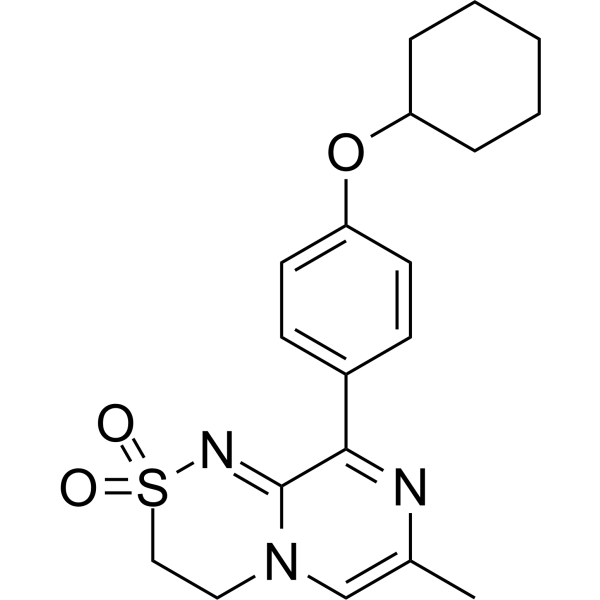
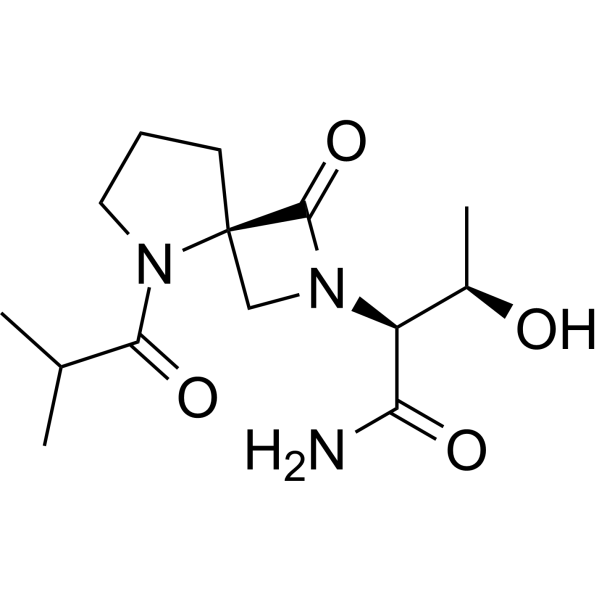
    JNJ-55511118 is a selective TARP γ-8 binding AMPA receptor modulator with oral bioavailability and blood-brain barrier permeability, with a Ki of 26 nM. JNJ-55511118 reduces voluntary intake of sweetened alcohol in male mice. In rodent models, JNJ-55511118 inhibits hippocampal neurotransmission, reduces specific electroencephalogram frequency bands, induces transient hyperlocomotion, impairs learning and memory abilities, and exerts anticonvulsant effects. JNJ-55511118 is applicable to research related to alcohol use disorder and seizures .
    JNJ-55511118
  • HY-160236

    Drug Metabolite Neurological Disease
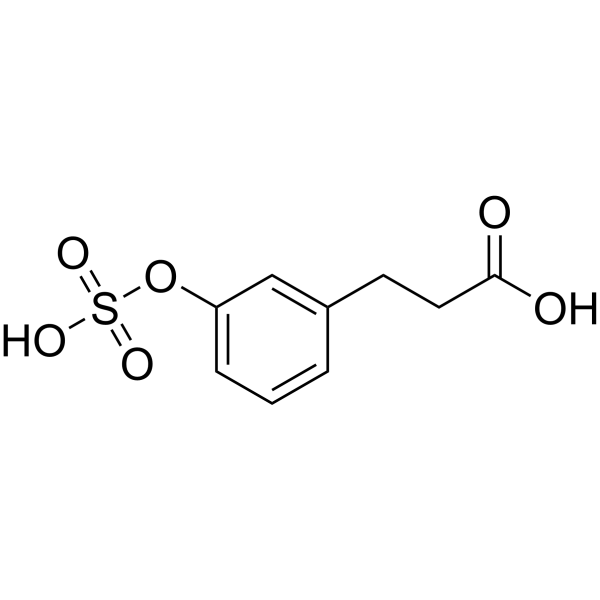
    3-(3-Sulfooxyphenyl) propanoic acid is a metabolite of Echinacoside (HY-N0020). It promotes neural, psychological and brain health, enhances the proliferation, function and activity of brain cells, and facilitates extinction learning. 3-(3-Sulfooxyphenyl) propanoic acid can be used in research related to anxiety disorders, post-traumatic stress disorder, extinction learning deficits, autism, as well as neurodegenerative diseases including Parkinson's disease and Alzheimer's disease .
    3-(3-Sulfooxyphenyl)propanoic acid
  • HY-B1752
    Quinpirole
    4 Publications Verification

    LY 171555; (-)-LY 141865

    Dopamine Receptor Calcium Channel Bcl-2 Family iGluR Apoptosis Neurological Disease
    Quinpirole (LY 171555; (-)-LY 141865) is a D2/D3 dopamine receptor agonist and a CaV1.3 calcium channel modulator. Quinpirole normalizes dendritic spine density in dopamine-depleted striatum, upregulates the protein expression of BCL2 and GluR2, downregulates the protein expression of BAX, and delays the onset of seizures. Quinpirole enhances learning and memory, inhibits neuronal apoptosis (apoptosis), and induces anxiety-like, stereotyped, and compulsive behaviors. Quinpirole disrupts prepulse inhibition in rhesus monkeys, enhances the activity of paraventricular thalamic neurons to promote recovery from Isoflurane anesthesia, and alters the composition of the gut microbiota in rats. Quinpirole can be used in research related to dyskinesia, pain, epilepsy, and neurological disorders including anxiety disorder, obsessive-compulsive disorder, and schizophrenia .
    Quinpirole
  • HY-19490

    AQW-051

    nAChR Neurological Disease
    VQW-765 (AQW-051) is a selective and orally active alpha-7 nicotinic acetylcholine receptor (α7-nAChR) agonist with a pKD value of 7.56 to recombinantly expressed human α7-nAChR. VQW-765 shows anxiolytic-like effect in vivo. VQW-765 can be used for the research of anxiety disorder and acute performance anxiety .
    VQW-765
  • HY-N1414

    Trk Receptor NF-κB Amyloid-β Neurological Disease
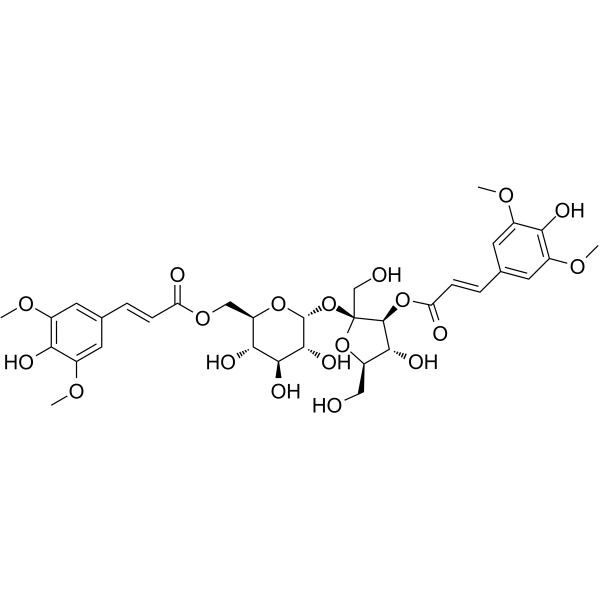
    (E)-3',6-Disinapoylsucrose is an orally active, blood-brain barrier permeable neuroprotective agent that inhibits protein aggregation. (E)-3',6-Disinapoylsucrose exerts anxiolytic, anti-inflammatory and cognitive-enhancing effects. (E)-3',6-Disinapoylsucrose regulates the TrkB/BDNF signaling pathway, inhibits the expression of NF-κB p65, reduces pro-inflammatory cytokine levels, and alleviates neuronal damage. (E)-3',6-Disinapoylsucrose also enhances the functions of central 5-HT and noradrenergic systems, thereby improving spatial learning and memory abilities and reducing anxiety-like behaviors. (E)-3',6-Disinapoylsucrose can be used for the research of related diseases such as Alzheimer's disease, depression, memory impairment and anxiety disorder .
    (E)-3',6-Disinapoylsucrose
  • HY-12294A
    PEAQX tetrasodium hydrate
    5+ Cited Publications

    NVP-AAM077 tetrasodium hydrate

    Apoptosis Caspase iGluR Neurological Disease
    PEAQX tetrasodium hydrate (NVP-AAM077 tetrasodium hydrate) is a tetrasodium hydrate of PEAQX (HY-12294). PEAQX tetrasodium hydrate is an orally active and selective NMDA antagonist, with IC50 values of 270 nM and 29.6 μM for hNMDAR 1A/2A and hNMDAR 1A/2B, respectively. PEAQX tetrasodium hydrate can promote the activation of caspase-3 and induce cell apoptosis in cortical striatal slice cultures .
    PEAQX tetrasodium hydrate
  • HY-12294

    NVP-AAM077

    Caspase Apoptosis iGluR Neurological Disease
    PEAQX (NVP-AAM077) is an orally active and selective NMDA antagonist, with IC50 values of 270 nM and 29.6 μM for hNMDAR 1A/2A and hNMDAR 1A/2B, respectively. PEAQX can promote the activation of caspase-3 and induce cell apoptosis in cortical striatal slice cultures .
    PEAQX
  • HY-148325

    nAChR Neurological Disease
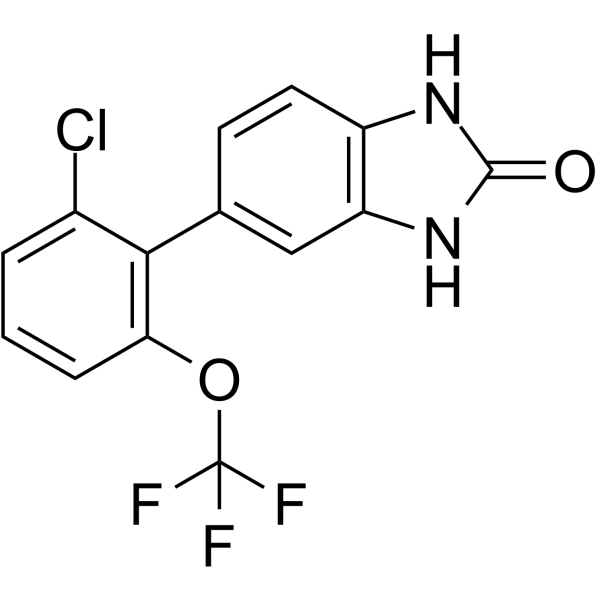
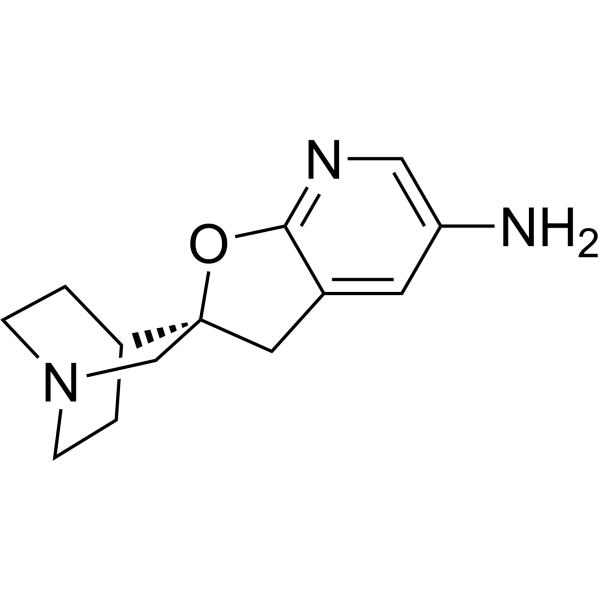
    α7 Nicotinic receptor agonist-1 (Preparation 5) is an α7 nAChR agonist. α7 Nicotinic receptor agonist-1 can be used in studies of psychiatric disorders (such as schizophrenia, manic or hypomanic depression and anxiety disorders) and intellectual disorders (such as alzheimer's disease, learning deficits, cognitive deficits, attention deficits, memory loss, lewy body dementia and attention deficit hyperactivity disorder) .
    α7 Nicotinic receptor agonist-1
  • HY-16900R

    (R,S)-Rolipram (Standard); (±)-Rolipram (Standard); ZK 62711 (Standard)

    Reference Standards Bacterial HIV Phosphodiesterase (PDE) Epigenetic Reader Domain Amyloid-β Neurological Disease Cancer
    Rolipram (Standard) is the analytical standard of Rolipram (HY-16900). This product is intended for research and analytical applications. Rolipram is a PDE4 inhibitor, with blood-brain barrier permeability, that reverses β-amyloid-induced learning and memory impairment in rats. Rolipram elevates intracellular cAMP and clevels and regulates the cAMP/CREB signaling pathway, thereby alleviating neuroinflammation and apoptotic responses. Rolipram promotes neuronal differentiation of human bone marrow mesenchymal stem cells and inhibits Methamphetamine- and morphine-induced hyperlocomotion in mice. Rolipram also reduces the viability of glioblastoma stem-like cells and enhances Bevacizumab (HY-P9906)-induced cell death. Rolipram inhibits the expression of proinflammatory cytokines and enhances central noradrenergic transmission. Rolipram is mainly used in studies related to various central nervous system diseases including Alzheimer's disease, major depressive disorder, glioblastoma multiforme, and multiple sclerosis .
    Rolipram (Standard)
  • HY-108157

    mAChR Neurological Disease
    A-72055 is a partial agonist of muscarinic receptors. A-72055 has binding activity to both M1 and M2 receptors, with Ki values of 32 nM and 30 nM, respectively. A-72055 can enhance cognitive function and improve learning and memory deficits. A-72055 has better security. A-72055 can be used for research on neurological disorders such as cognitive impairment .
    A-72055
  • HY-160236B

    Drug Metabolite Neurological Disease
    3-(3-Sulfooxyphenyl) propanoic acid disodium is a metabolite of Echinacoside (HY-N0020). 3-(3-Sulfooxyphenyl) propanoic acid disodium promotes neural, psychological and brain health, enhances the proliferation, function and activity of brain cells, and facilitates extinction learning. 3-(3-Sulfooxyphenyl) propanoic acid disodiumis can be used in research related to anxiety disorders, post-traumatic stress disorder, extinction learning deficits, autism, as well as neurodegenerative diseases including Parkinson's disease and Alzheimer's disease .
    3-(3-Sulfooxyphenyl)propanoic acid disodium
  • HY-186170

    5-HT Receptor Neurological Disease
    R-MDMA, 4-methylenedioxymethamphetamine (MDMA) isomer, is a 5-HT2A/5-HT2C receptor antagonist with an IC50 of 629 and 61.4 nM. R-MDMA promotes cortical neuron growth. R-MDMA facilitates fear extinction learning and produces antidepressant-like effects in preclinical rodent models. R-MDMA can be used for the researches of post-traumatic stress disorder and depression .
    R-MDMA
  • HY-186169

    5-HT Receptor Drug Derivative Neurological Disease
    R-MDDMA, 4-methylenedioxymethamphetamine (MDMA) analogue, is a 5-HT2A/5-HT2C receptor modulator. R-MDDMA shows antagonistic activity against 5-HT2A/5-HT2C with IC50 values of 642 and 137 nM, and also shows partial agonist activity with EC50 values of 24.5 and 14.4 nM, but does not activate 5-HT2B receptors. R-MDDMA promotes cortical neuron growth. R-MDDMA facilitates fear extinction learning and produces antidepressant-like effects in preclinical rodent models. R-MDDMA can be used for the researches of post-traumatic stress disorder and depression .
    R-MDDMA

Inquiry Online

Your information is safe with us. * Required Fields.

Salutation


Country or Region *

Applicant Name *


Organization Name *

Department *


Email Address *


Product Name *

Cat. No.


Requested quantity *

Phone Number *


Remarks

Inquiry Online

Inquiry Information

Product Name:
Cat. No.:
Quantity:
MCE Japan Authorized Agent:

