
29 Results for "

misfolded

" in MedChemExpress (MCE) Product Catalog:
Products (29)

29 Results for "misfolded" in MCE Product Catalog:

7
7 Publications Verification
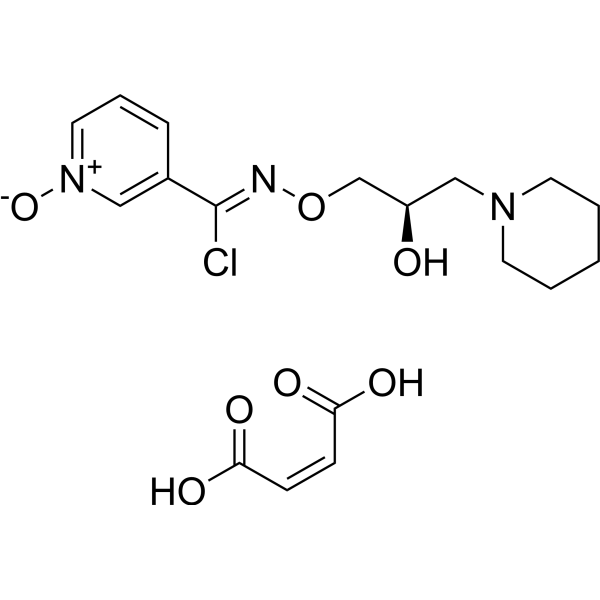
Cat. No.: HY-106443A
CAS No.: 289893-26-1
Purity:  99.96%
Synonyms: BRX-220
Arimoclomol maleate (BRX-220) is an orally active co-inducer of heat shock proteins (HSP) . Arimoclomol protects motor neurons by enhancing Hsp expression, thus directly affecting protein aggregation and clearance of misfolded assemblies via the proteasome-ubiquitin system .Arimoclomol maleate can be used for the study of Niemann–Pick disease type C.
loading...
    loading...
7
7 Publications Verification
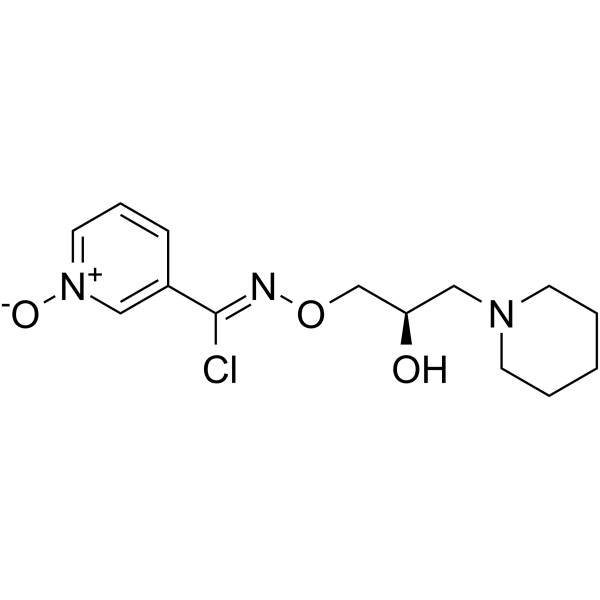
Cat. No.: HY-106443
CAS No.: 289893-25-0
Purity:  99.74%
Synonyms: BRX-220 free base
Arimoclomol (BRX-220 free base) is an orally active co-inducer of heat shock proteins (HSP). Arimoclomol protects motor neurons by enhancing Hsp expression, thus directly affecting protein aggregation and clearance of misfolded assemblies via the proteasome-ubiquitin system.Arimoclomol can be used for the study of Niemann–Pick disease type C. Arimoclomol can cross the blood-brain barrier and can be used in research on Niemann-Pick disease type C .
loading...
    loading...
7
7 Publications Verification
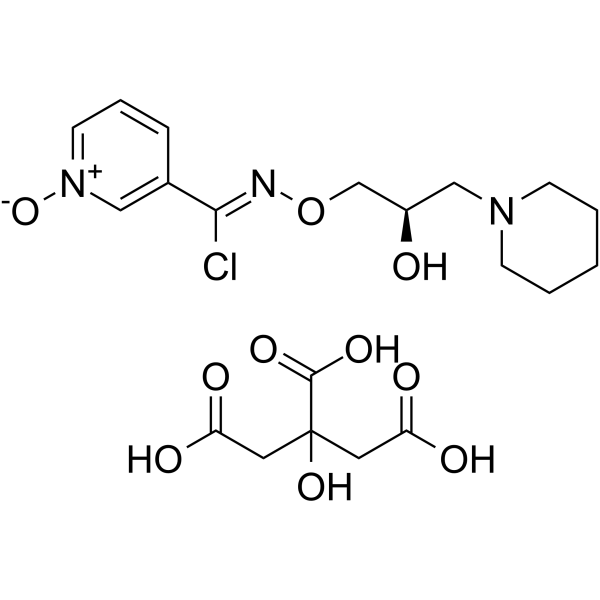
Cat. No.: HY-106443B
CAS No.: 368860-21-3
Purity:  99.76%
Synonyms: BRX-220 citrate
Arimoclomol citrate (BRX-220 citrate) is an orally active co-inducer of heat shock proteins (HSP) . Arimoclomol citrate protects motor neurons by enhancing Hsp expression, thus directly affecting protein aggregation and clearance of misfolded assemblies via the proteasome-ubiquitin system . Arimoclomol citrate can be used for the study of Niemann–Pick disease type C.
loading...
    loading...
4
4 Cited Publications
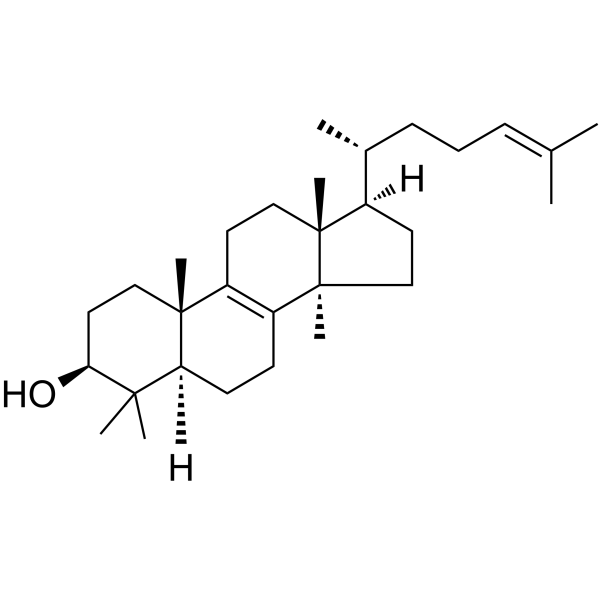
Cat. No.: HY-W020033
CAS No.: 79-63-0
Lanosterol is an intermediate of cholesterol synthesis and use of lanosterol induces ubiquitination and degradation of a rate-controlling enzyme of cholesterol synthesis, i.e., HMG CoA reductase. Lanosterol suppresses the aggregation and cytotoxicity of misfolded proteins linked with neurodegenerative diseases .
loading...
    loading...
1
1 Cited Publications
Cat. No.: HY-148089
CAS No.: 1637600-16-8
Target:  

Transthyretin (TTR)

Research Areas:  

Neurological Disease

Eplontersen is a triantennary N-acetyl galactosamine (GalNAc3-7a)-conjugated antisense oligonucleotide targeting transthyretin (TTR) mRNA to inhibit production of both variant and wild-type TTR protein. Misfolded TTR induces amyloid fibrils formation in the heart and peripheral nerves, leads to amyloid TTR (ATTR) amyloidosis diseases .
loading...
    loading...
1
1 Cited Publications
Cat. No.: HY-148089A
CAS No.: 2131025-75-5
Purity:  96.92%
Target:  

Transthyretin (TTR)

Research Areas:  

Neurological Disease

Eplontersen sodium the sodium salt form of Eplontersen (HY-148089). Eplontersen sodium is a triantennary N-acetyl galactosamine (GalNAc3-7a)-conjugated antisense oligonucleotide targeting transthyretin (TTR) mRNA to inhibit production of both variant and wild-type TTR protein. Misfolded TTR induces amyloid fibrils formation in the heart and peripheral nerves, leads to amyloid TTR (ATTR) amyloidosis diseases .
loading...
    loading...
1
1 Cited Publications
Cat. No.: HY-139606
CAS No.: 2630950-38-6
Target:  

p97

Research Areas:  

Cancer

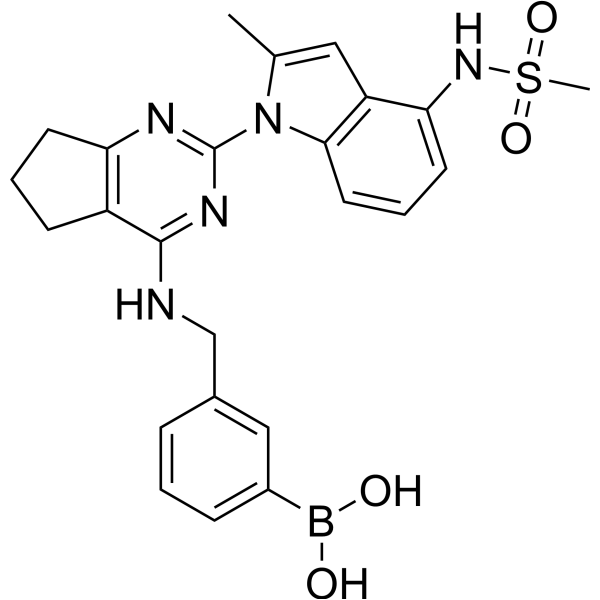
VCP/p97 inhibitor-1 is a potent inhibitor of VCP/p97 (also called Cdc48, CDC-. 48, or Ter94) with an IC50 of 54.7 nM. VCP/p97 inhibitor-1 causes the dysregulation of protein homeostasis and disturbs the degradation of misfolded polypeptides by the ubiquitin-proteasome system (UPS) .
loading...
    loading...
Cat. No.: HY-W010041
CAS No.: 488-59-5
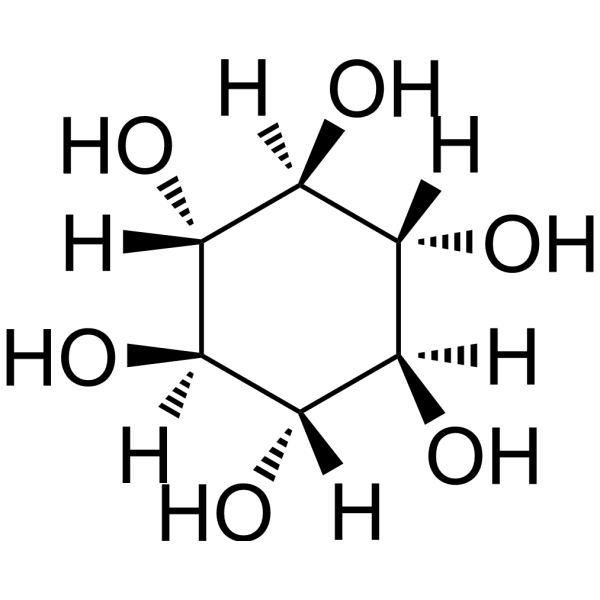
Scyllo-Inositol is an inhibitor that targets the aggregation of misfolded proteins (such as α-synuclein and Amyloid-β), is orally effective, and can cross the blood-brain barrier. Scyllo-Inositol can selectively bind to and stabilize non-toxic oligomers, preventing them from converting into toxic fibers, exerting protein homeostasis regulation and neuroprotective activity. Scyllo-Inositol binds to the hydrophobic region of pathogenic proteins, inhibits protein aggregation, and promotes lysosome- and proteasome-mediated degradation pathways, thereby reducing neurotoxicity. Scyllo-Inositol can be used in the study of neurodegenerative diseases such as Parkinson's disease, Alzheimer's disease, and Huntington's disease .
loading...
    loading...
Cat. No.: HY-145580
CAS No.: 1802518-92-8
Purity:  98.60%
Synonyms: UCB0599; (R)-NPT200-11
Target:  

α-synuclein

Research Areas:  

Neurological Disease

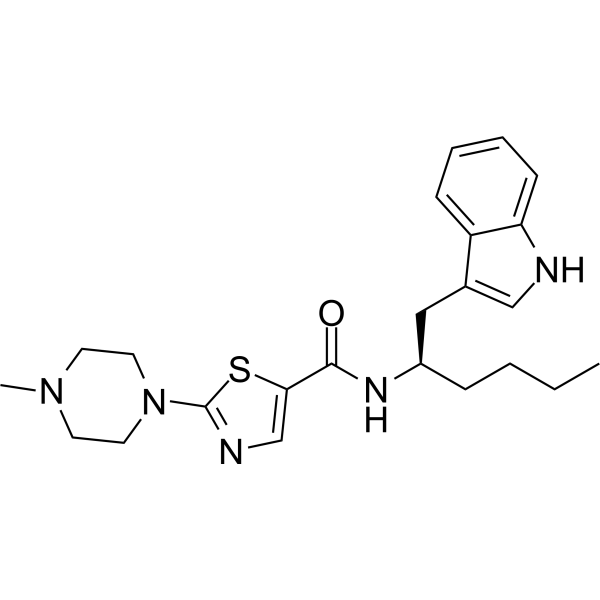
Minzasolmin (UCB0599; (R)-NPT200-11) is an orally active, blood-brain-permeable α-synuclein (α-Syn) inhibitor that selectively binds to α-Syn misfolded intermediates (such as oligomers) and inhibits aggregation and fibril formation by regulating their conformational stability. Minzasolmin can reduce the generation of pathological oligomers and block neurotoxic signaling, thereby reducing the abnormal accumulation of α-Syn in the brain. Minzasolmin significantly improved motor deficits, reduced neuroinflammatory markers, and α-Syn-related pathological deposition in transgenic mouse models .
loading...
    loading...
Cat. No.: HY-111772A
CAS No.: 2229860-99-3
Purity:  99.44%
Synonyms: (R)-VX-445
Target:  

Drug Isomer CFTR

Research Areas:  

Inflammation/Immunology

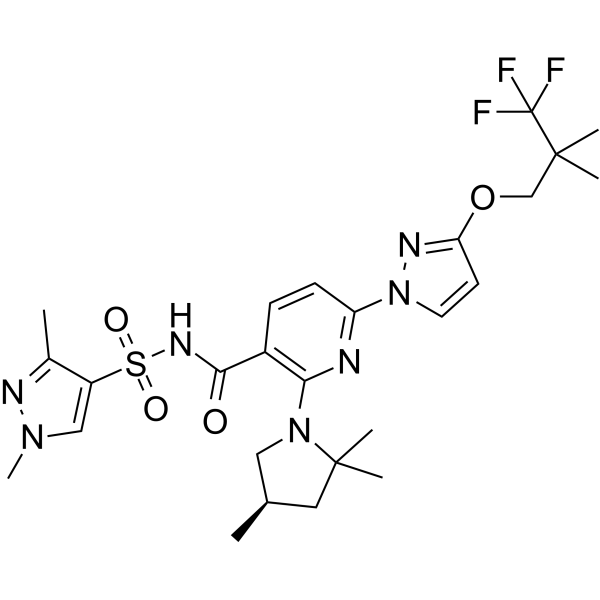
(R)-Elexacaftor ((R)-VX-445) is the enantiomer of Elexacaftor (HY-111772). Elexacaftor is an orally active CFTR modulator that targets nucleotide-binding domain 1. Elexacaftor stabilizes misfolded F508del-CFTR protein, enhances its trafficking to the plasma membrane, and significantly improves metabolic stability, thermal stability and ion conductivity. Elexacaftor not only restores chloride transport function in nasal epithelial cells and rescues multiple CFTR mutation subtypes, but also exerts multiplicative synergistic effects with Ivacaftor (HY-13017), and is often used in a triple combination therapy with Tezacaftor (HY-15448). Elexacaftor is widely used in basic and clinical translational research on cystic fibrosis .
loading...
    loading...
Cat. No.: HY-160791
CAS No.: 1430194-56-1
Target:  

Phosphatase

Research Areas:  

Infection Cancer

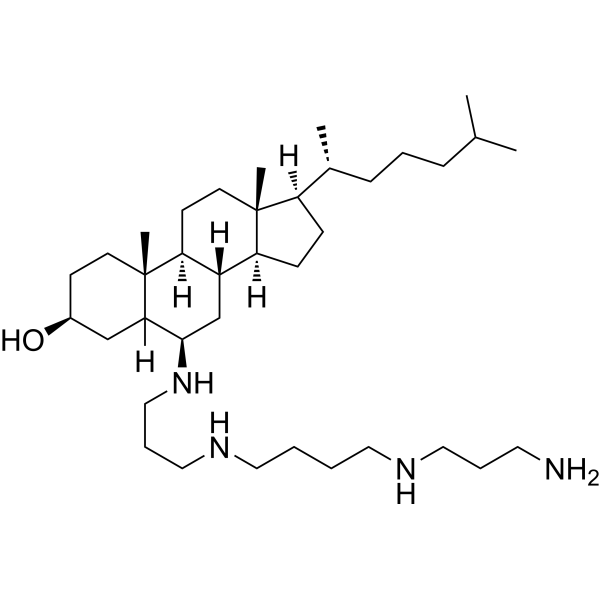
Claramine is a steroid polyamine with blood-brain barrier permeability. Claramine can regulate the properties of lipid membranes and protect cells from various biological toxins, including misfolded protein oligomers and biological protein-based toxins .
loading...
    loading...
Cat. No.: HY-161743
CAS No.: 2410081-56-8
Target:  

AUTOTACs Autophagy

Research Areas:  

Neurological Disease Cancer

PBA-1105 is an autophagy-targeting chimera (AUTOTAC) that induces p62 self-oligomerization. PBA-1105 selectively binds to exposed hydrophobic regions of misfolded proteins, facilitating their degradation via the autophagic pathway. PBA-1105 increases the autophagic flux of Ub-conjugated aggregates .
loading...
    loading...
Cat. No.: HY-160791A
CAS No.: 3030428-57-7
Target:  

Phosphatase

Research Areas:  

Infection Cancer

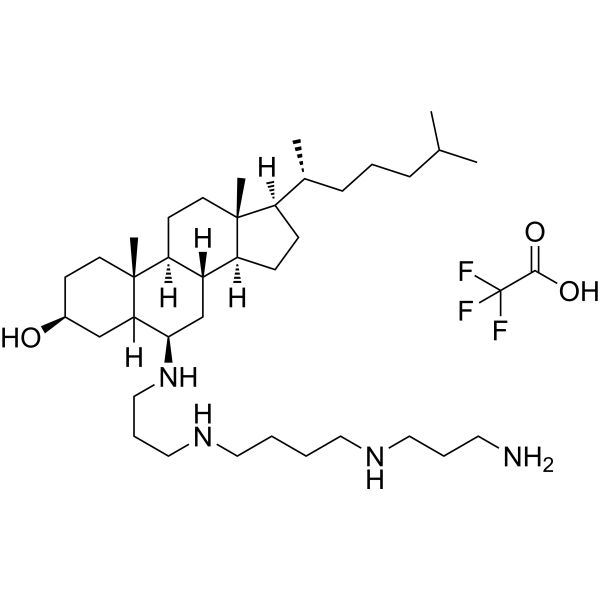
Claramine TFA is a steroidal polyamine. Claramine TFA can regulate the properties of lipid membranes and protect cells from various biological toxins, including misfolded protein oligomers and toxins derived from biological proteins .
loading...
    loading...
Cat. No.: HY-W020033R
CAS No.: 79-63-0
Lanosterol (Standard) is the analytical standard of Lanosterol. This product is intended for research and analytical applications. Lanosterol is an intermediate of cholesterol synthesis and use of lanosterol induces ubiquitination and degradation of a rate-controlling enzyme of cholesterol synthesis, i.e., HMG CoA reductase. Lanosterol suppresses the aggregation and cytotoxicity of misfolded proteins linked with neurodegenerative diseases[1][2].
loading...
    loading...
Cat. No.: HY-160791B
Target:  

Phosphatase

Research Areas:  

Infection Cancer

Claramine hydrochloride is a steroid polyamine with blood-brain barrier permeability. Claramine hydrochloride can regulate the properties of lipid membranes and protect cells from various biological toxins, including misfolded protein oligomers and biological protein-based toxins .
loading...
    loading...
Cat. No.: HY-161743A
Target:  

AUTOTACs Autophagy

Research Areas:  

Neurological Disease Cancer

PBA-1105 TFA is an autophagy-targeting chimera (AUTOTAC) that induces p62 self-oligomerization. PBA-1105 TFA selectively binds to exposed hydrophobic regions of misfolded proteins, facilitating their degradation via the autophagic pathway. PBA-1105 TFA increases the autophagic flux of Ub-conjugated aggregates .
loading...
    loading...
Cat. No.: HY-100857
CAS No.: 1315475-30-9
Target:  

Fluorescent Dye

Research Areas:  

Neurological Disease

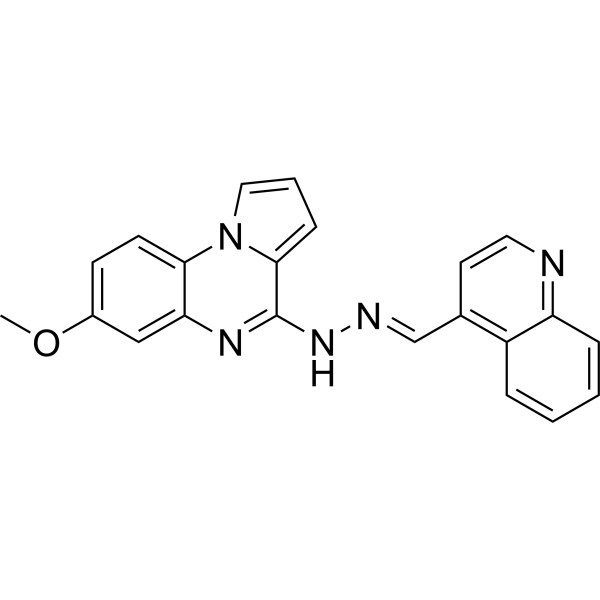
PrPSc-IN-1 is a fluorescent probe, binds to the misfolded protein PrP Sc, inhibits its accumulation, with an IC50 of 1.6 μM. Anti-prion activity .
loading...
    loading...
Cat. No.: HY-124375
CAS No.: 1426047-52-0
Target:  

Prion Protein

Research Areas:  

Infection

IND81 is an orally active antiprion with IC50 value of 1.95 μM. IND81 reduces abnormal, misfolded, disease-causing forms of benign prion proteins that are normally present on or within cells .
loading...
    loading...
Cat. No.: HY-117856
CAS No.: 1426047-44-0
Purity:  99.57%
Target:  

Prion Protein

Research Areas:  

Infection

IND24 is a potent antiprion agent with an EC50 value of 1.27 µM. IND24 decreases abnormal, misfolded, pathogenic forms of benign normally occurring prion protein on the cell surface or inside the cell .
loading...
    loading...
Cat. No.: HY-164539
CAS No.: 2231800-32-9
Target:  

HDAC Autophagy

Research Areas:  

Cancer

TMU 35435 is a histone deacetylase (HDAC) inhibitor. TMU-35435 inhibits the NHEJ pathway through ubiquitination of DNA-dependent protein kinase catalytic subunit (DNA-PKcs). In addition, TMU 35435 enhances radiosensitivity by inducing misfolded protein aggregation and autophagy in TNBC .
loading...
    loading...

