


183 Results for "

quantify

" in MedChemExpress (MCE) Product Catalog:
Products (183)

183 Results for "quantify" in MCE Product Catalog:

15
15 Publications Verification
Cat. No.: HY-15915
CAS No.: 69-78-3
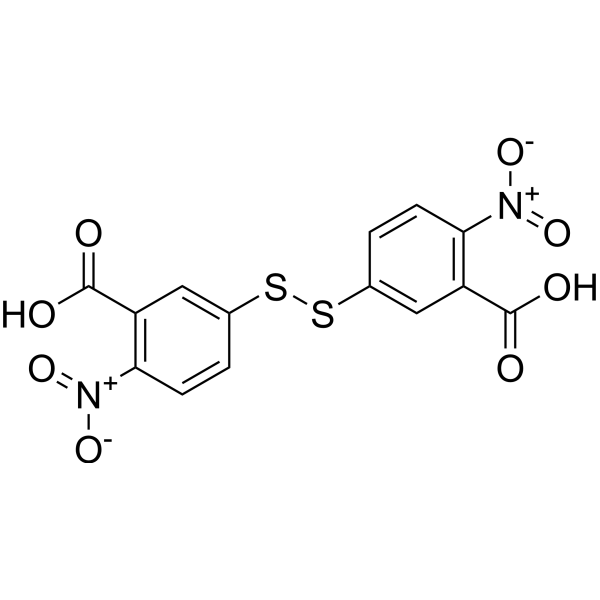
Synonyms: Ellman’s Reagent
DTNB (Ellman’s Reagent) is a chemical used to quantify the number or concentration of thiol groups .
loading...
    loading...
12
12 Cited Publications
Cat. No.: HY-128868E
CAS No.: 60842-46-8
FITC-Dextran (MW 70000) is a compound belonging to the class of fluorescent dyes. It is commonly used in biomedical research as a tracer molecule to label and track cells or other biological matter. FITC-Dextran consists of fluorescein isothiocyanate (FITC) and dextran, a complex carbohydrate derived from starch. The combination of the two creates a stable fluorescent tracer that can be viewed under a microscope or quantified using specialized detection instruments.
loading...
    loading...
12
12 Cited Publications
Cat. No.: HY-D1168
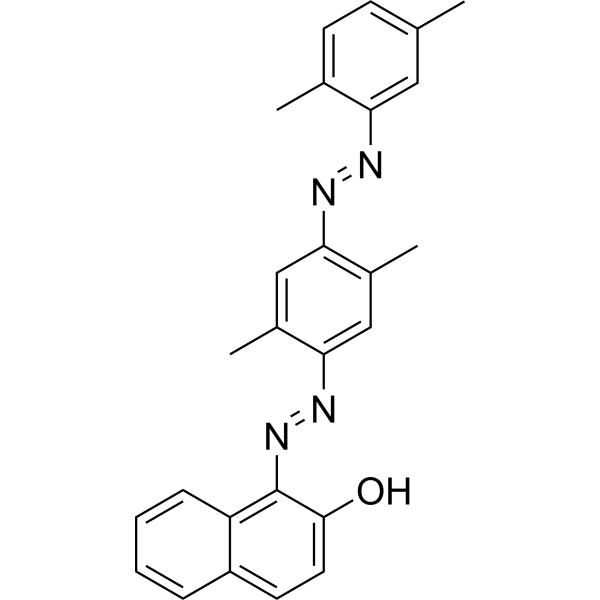
CAS No.: 1320-06-5
Oil Red O is a fat-soluble diazol dye, with a maximum absorption at 518 nm. Oil Red O stains neutral lipids and cholesteryl esters but not biological membranes. Oil Red O can be used for detecting and quantifying hepatic steatosis in mouse liver biopsies. Oil Red O staining efficiently helps to visualize the radical changes that occur in tissues as metabolic disease occurs and progresses .
loading...
    loading...
8
8 Cited Publications
Cat. No.: HY-N0187A
CAS No.: 5980-33-6
Synonyms: Hymecromone sodium salt; 4-MU sodium salt
Research Areas:  

Cancer

4-Methylumbelliferone (sodium salt) is a coumarin derivative. 4-Methylumbelliferone (sodium salt) can be used as a standard to quantify the free 4-methylumbelliferone released as a result of enzyme-substrate action. 4-Methylumbelliferone (sodium salt) inhibits hyaluronan production in vitro. 4-Methylumbelliferone (sodium salt) can be studied in ovarian cancer research .
loading...
    loading...
7
7 Cited Publications
Cat. No.: HY-D1462
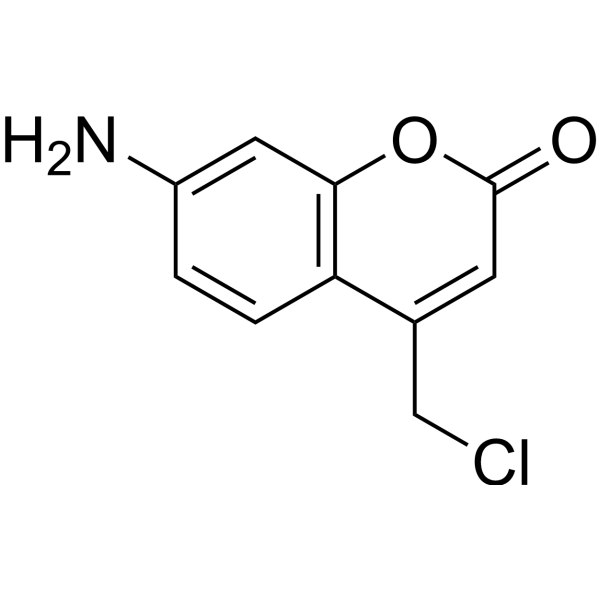
CAS No.: 147963-22-2
CellTracker Blue CMAC is a non-fluorescent cell membrane permeable dye. The chloromethyl groups of CellTracker Blue CMAC are enzymatically cleaved by intracellular glutathione (GSH) to generate a fluorescent product (blue fluorescence, Ex/Em: 360/460 nm). CellTracker Blue CMAC is suitable for long-term cell tracking (up to 72 hours) and cell proliferation studies, and can also quantify GSH levels .
loading...
    loading...
7
7 Cited Publications
Cat. No.: HY-153118
CAS No.: 73049-39-5
Synonyms: ctDNA sodium, Type I, fibers; DNA sodium, from calf thymus, Type I, fibers; Thymonucleic acid sodium, Type I, fibers
Research Areas:  

Others Cancer

Deoxyribonucleic acid sodium, from calf thymus, Type I, fibers is the sodium salts form of Calf thymus DNA (HY-109517). Calf thymus DNA is a double-stranded template DNA isolated from calf thymus. It can be used to study the interaction between DNA and DNA binding agents, as well as the structure and function of DNA, for DNA quantification and used as a substrate for DNA polymerase analysis, etc​ .
loading...
    loading...
6
6 Cited Publications
Cat. No.: HY-D0974
CAS No.: 3520-42-1
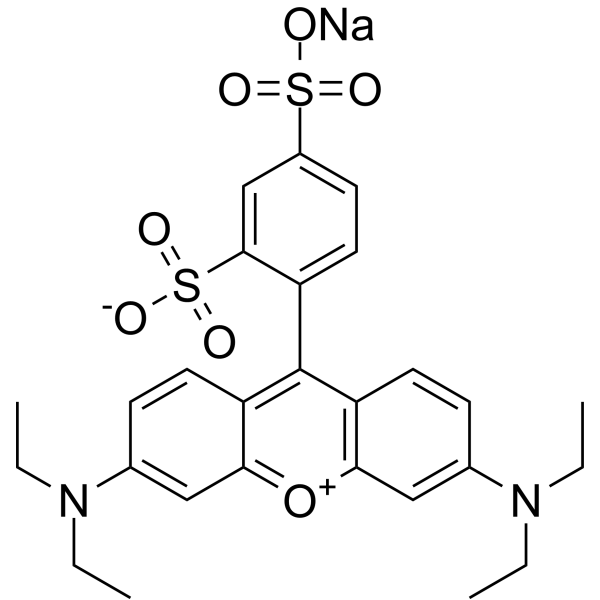
Synonyms: Acid Red 52; Kiton Red 620
Sulforhodamine B sodium salt is a fluorescent dye with uses spanning from laser-induced fluorescence (LIF) to the quantification of cellular proteins of cultured cells.
loading...
    loading...
5
5 Cited Publications
Cat. No.: HY-D1191
CAS No.: 2225748-05-8
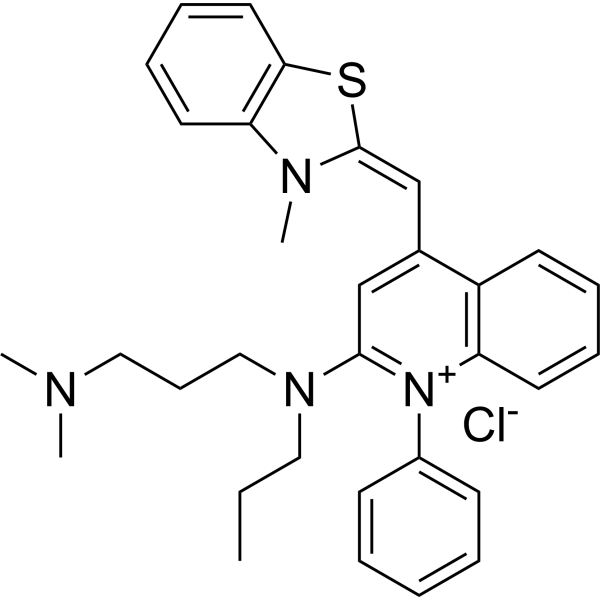
SYBR Green I chloride is a highly sensitive fluorescent nucleic acid dye that binds specifically to the minor groove of double-stranded DNA or intercalates between base pairs. SYBR Green I chloride exhibits weak fluorescence in the unbound state but emits bright fluorescence upon binding, and it preferentially binds to large-fragment DNA and DNA with high G+C content. SYBR Green I chloride is suitable for real-time PCR technology; its fluorescence intensity correlates with the amount and size of amplification products, enabling accurate quantification of gene expression and discrimination of amplicons via melting curve analysis without additional post-processing. SYBR Green I chloride is widely used in preclinical in vitro nucleic acid detection .
loading...
    loading...
4
4 Cited Publications
Cat. No.: HY-128868C
CAS No.: 60842-46-8
FITC-Dextran (MW 20000) is a compound belonging to the class of fluorescent dyes. It is commonly used in biomedical research as a tracer molecule to label and track cells or other biological matter. FITC-Dextran consists of fluorescein isothiocyanate (FITC) and dextran, a complex carbohydrate derived from starch. The combination of the two creates a stable fluorescent tracer that can be viewed under a microscope or quantified using specialized detection instruments.
loading...
    loading...
3
3 Cited Publications
Cat. No.: HY-137805
CAS No.: 69898-45-9
Purity:  99.96%
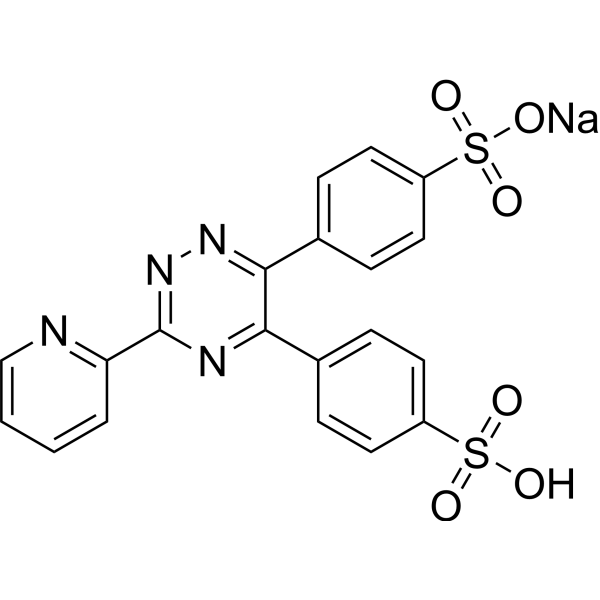
Ferrozine is a spectrophotometric reagent for iron ions, can react with divalent Fe to form a stable magenta complex species. The complex has an absorption peak at 562 nm . Ferrozine-based colorimetric assays can quantify iron in cells
loading...
    loading...
2
2 Cited Publications
Cat. No.: HY-136886
CAS No.: 172616-80-7
Purity:  96.36%
Synonyms: New Indocyanine Green
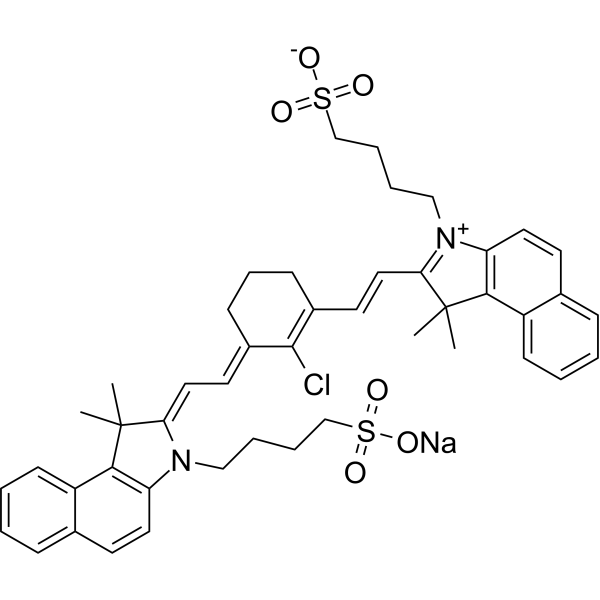
IR-820 (New Indocyanine Green) is an infrared blood pool contrast agent. IR-820 also is normally used as a laser and near-infrared dye to detect and quantify diseased tissue in live animals .
loading...
    loading...
2
2 Cited Publications
Cat. No.: HY-P4931
CAS No.: 720710-69-0
Target:  

MMP

Research Areas:  

Cancer

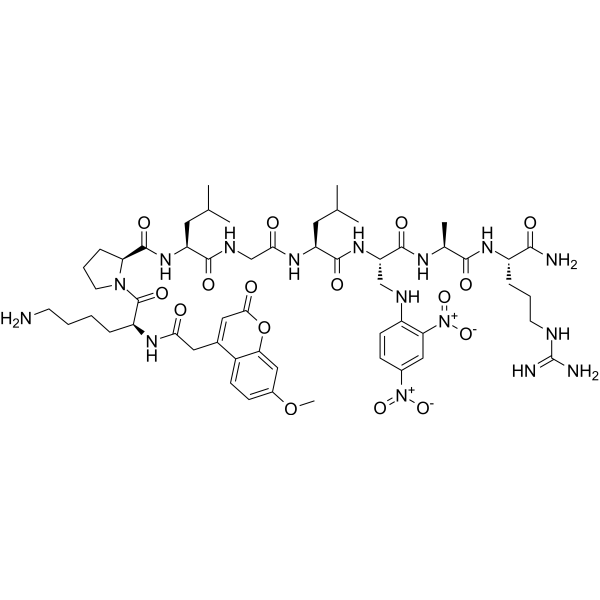
Mca-Lys-Pro-Leu-Gly-Leu-Dap(Dnp)-Ala-Arg-NH2 (FS-6) is a fluorescent peptide that is a quenched MMP peptide substrate. Mca-Lys-Pro-Leu-Gly-Leu-Dap(Dnp)-Ala-Arg-NH2 can be used for real-time quantification of MMP enzymatic activity. Mca-Lys-Pro-Leu-Gly-Leu-Dap(Dnp)-Ala-Arg-NH2 is an elongated peptide of MMP substrate (FS-1) and is active against collagenases (MMP-1, MMP-8, MMP-13 ) and MT1-MMP with higher specificity constants than FS-1 . (Ex/Em=325 nm/400 nm)
loading...
    loading...
2
2 Cited Publications
Cat. No.: HY-W013275
CAS No.: 128322-44-1
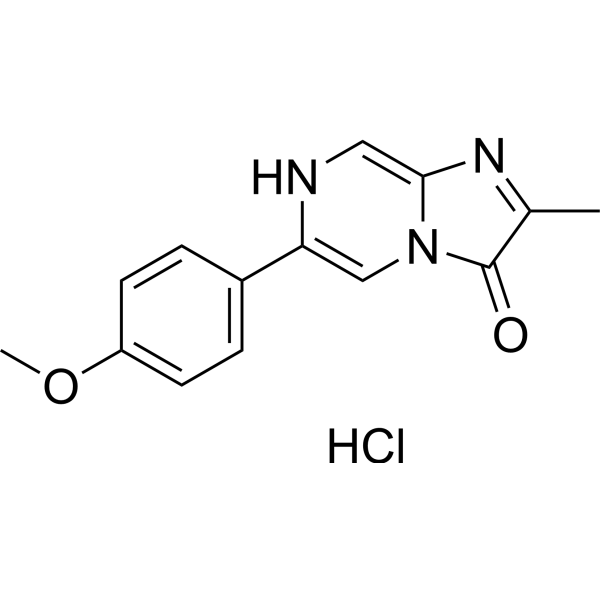
MCLA hydrochloride is a chemiluminescent reagent which can be used to quantify aqueous concentrations of superoxide.
loading...
    loading...
2
2 Cited Publications
Cat. No.: HY-D0995
CAS No.: 55727-10-1
Synonyms: MESG
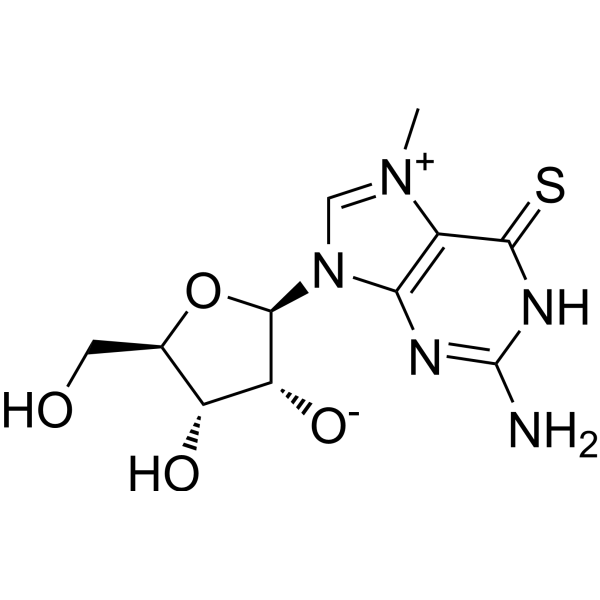
7-Methyl-6-thioguanosine (MESG) is a chromogenic substrate that can be converted to 7-methyl-6-thioguanine in the presence of purine nucleoside phosphorylase and inorganic phosphate. 7-Methyl-6-thioguanosine can be used to quantify inorganic phosphate. 7-Methyl-6-thioguanosine can also be used to determine the activities of purine nucleoside phosphorylase and protein phosphatases .
loading...
    loading...
2
2 Cited Publications
Cat. No.: HY-W034953
CAS No.: 52698-84-7
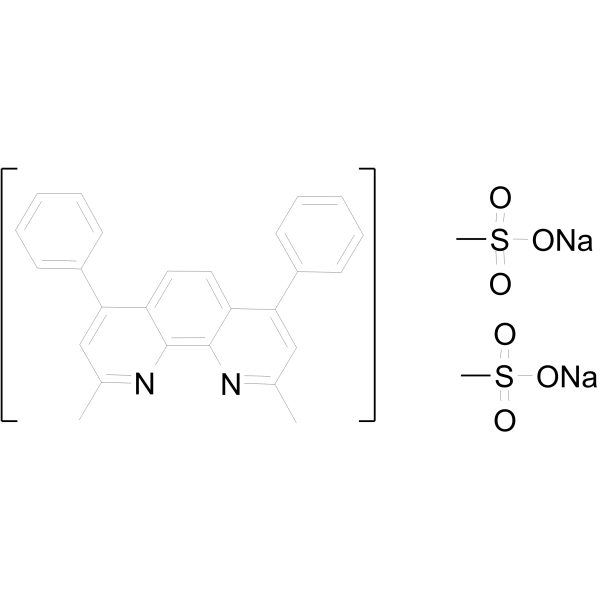
Bathocuproine disulfonate disodium (BCS) is an organic compound used as a highly sensitive colorimetric reagent for copper ions in biochemical and analytical applications. It has a bright yellow color and absorbs light at specific wavelengths, so it can be used to detect and quantify trace copper. In biochemical applications, BCS is commonly used to study the role of copper ions in various biological processes. Copper is an essential nutrient for many organisms, but it can also be toxic in high concentrations, so accurate measurement of copper levels is important to understand its impact on living systems. In terms of analysis, BCS is often used in environmental monitoring and water quality testing to detect copper pollution. It can detect copper even at very low concentrations, making it an invaluable tool for identifying potential sources of pollution and assessing the impact of industrial activities on aquatic ecosystems.
loading...
    loading...
1
1 Cited Publications
Cat. No.: HY-D0018
CAS No.: 620-45-1
Synonyms: Dichlorophenylindophenol sodium; DCPIP sodium; Indochlorophenol sodium
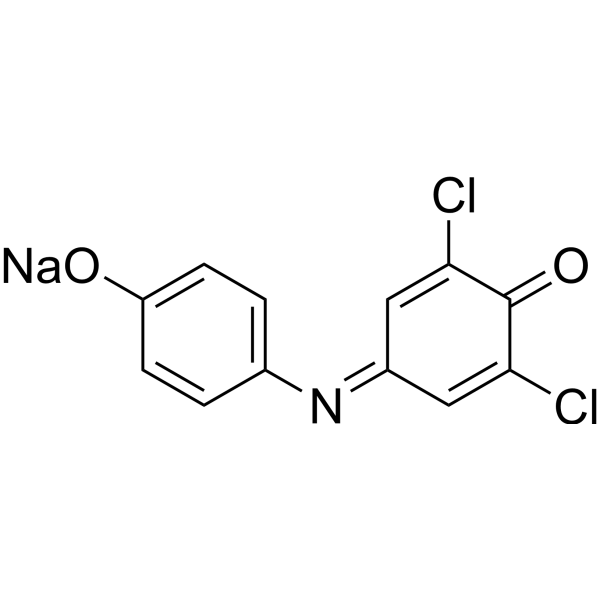
DCIP sodium is a blue dye commonly used in various biochemical and biotechnological applications as an indicator of redox reactions. DCIP sodium has unique chemical properties that change color according to the oxidation state of the substance being tested. It is commonly used in enzyme assays, such as measuring the activity of succinate dehydrogenase, or in protein quantification methods, such as the Lowry assay.
loading...
    loading...
1
1 Cited Publications
Cat. No.: HY-N0335
CAS No.: 482-89-3
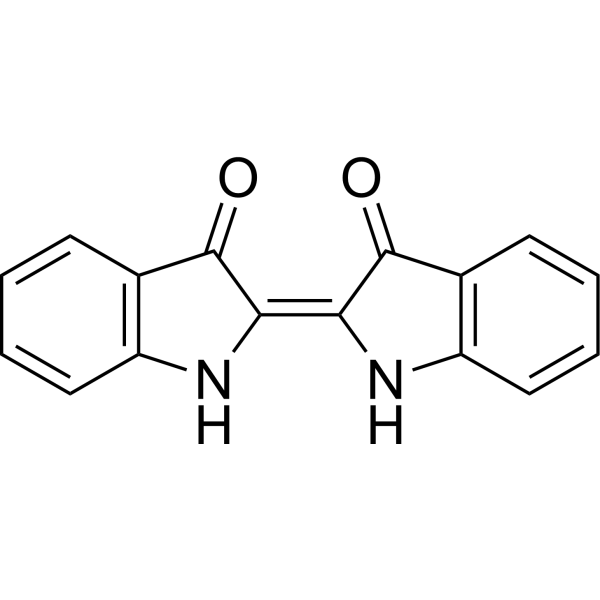
Indigo is a blue dye. Indigo stains cellulose fibers such as cotton. Indigo stains food or biological samples to visualize and quantify the uptake or distribution of substances by organisms .
loading...
    loading...
1
1 Cited Publications
Cat. No.: HY-D1553
CAS No.: 1029138-21-3
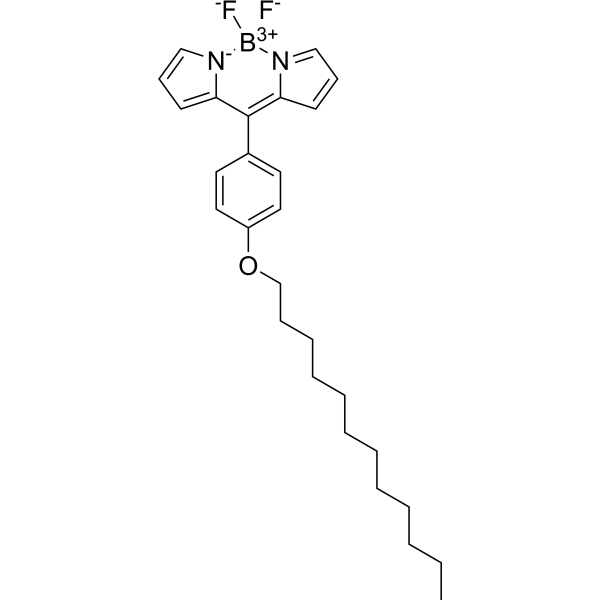
BODIPY-C12 is a boron-dipyrromethene derivative containing a lipophilic tail (excitation 490 nm). BODIPY-C12 is a hydrophobic molecular and sensitivity to the surrounding environment and can be used to quantify viscosity, critical micelle concentration, and critical micelle temperature .
loading...
    loading...
1
1 Cited Publications
Cat. No.: HY-NP035
Synonyms: OVA-FITC
Ovalbumin-FITC is an ovalbumin conjugated to FITC (Ex=495 nm; Em=525 nm). Ovalbumin-FITC can be internalized by cells via endocytosis .
loading...
    loading...
1
1 Cited Publications
Cat. No.: HY-23033
CAS No.: 3637-11-4
Research Areas:  

Neurological Disease

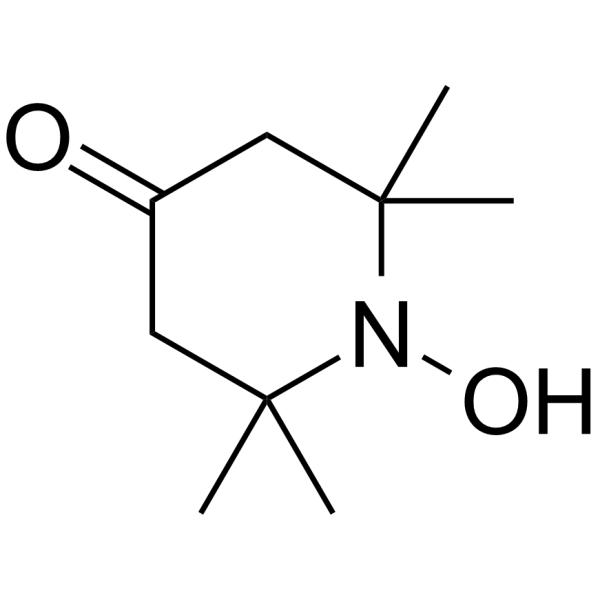
Tempone-H may be used as a spin trap in chemical and biological systems to quantify peroxynitrite and superoxide radical formation. Ferric and cupric ions are effective oxidants of Tempone-H .
loading...
    loading...

