
1. Search Result
Search Result
Results for "

ring

" in MedChemExpress (MCE) Product Catalog:

591

Inhibitors & Agonists

13

Screening Libraries

31

Fluorescent Dye

82

Biochemical Assay Reagents

20

Peptides

1

Inhibitory Antibodies

83

Natural
Products

83

Recombinant Proteins

35

Isotope-Labeled Compounds

63

Antibodies

154

Click Chemistry

17

Oligonucleotides

Cat. No. Product Name Target Research Areas Chemical Structure
  • HY-15917
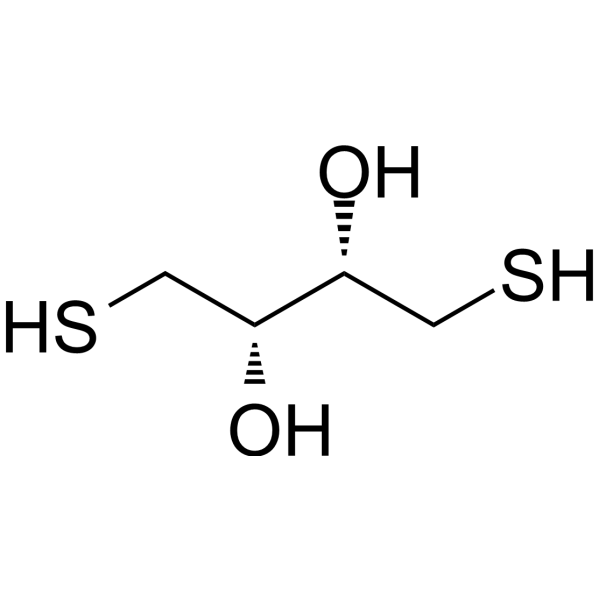
    DL-Dithiothreitol
    40+ Cited Publications

    DTT; rel-(2R,3R)-1,4-Dimercapto-2,3-butanediol

    Biochemical Assay Reagents Disulfidptosis Cancer
    DL-Dithiothreitol (DTT) is a strong reductant with anti-disulfidptosis activity. When DL-Dithiothreitol is oxidized, it forms a stable six-membered ring with an internal disulfide bond .
    DL-Dithiothreitol
  • HY-B1449
    Uridine
    15+ Cited Publications

    β-Uridine

    Endogenous Metabolite Nucleoside Antimetabolite/Analog NF-κB Cancer
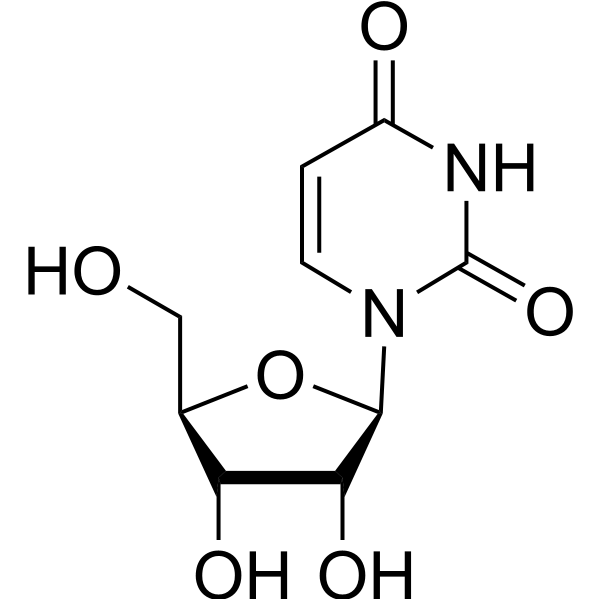
    Uridine (β-Uridine) is a nucleoside compound composed of uracil and a ribose ring, which are connected by a β-N1-glycosidic bond .
    Uridine
  • HY-W019711
    trans-Cinnamaldehyde
    5+ Cited Publications

    Environmental Pollutants Endogenous Metabolite Others
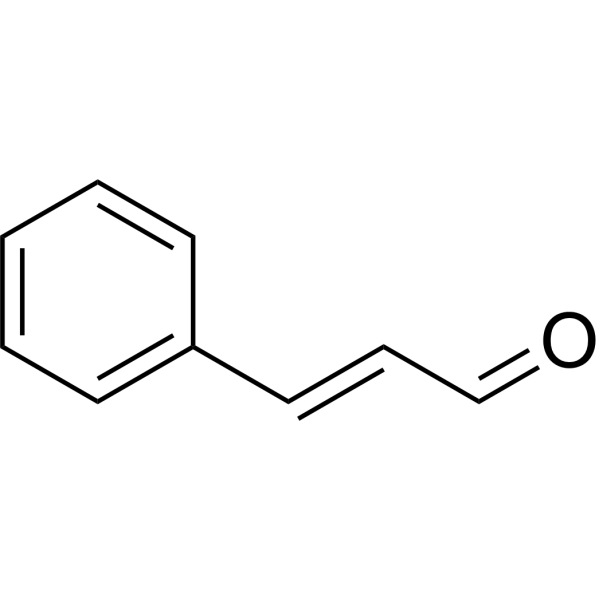
    trans-Cinnamaldehyde can be used to prepare highly polyfunctionalized furan ring by reaction of alkyl isocyanides with dialkyl acetylenedicarboxylate . trans-Cinnamaldehyde can be used to synthesize trans-cinnamaldehyde -β-cyclodextrin complex, an antimicrobial edible coating that increases the shelf life of fresh-cut fruits .
    trans-Cinnamaldehyde
  • HY-139514

    E1/E2/E3 Enzyme Cancer
    RB-3, a polycomb repressive complex 1 (PRC1) inhibitor, binds to RING1B-BMI1f, with a Kd of 2.8 μM .
    RB-3
  • HY-17466

    Bonomycin; 6-Demethyl-6-deoxytetracycline

    Bacterial Antibiotic Metabolic Disease Inflammation/Immunology
    Sancycline (6-Demethyl-6-deoxytetracycline) acts by reversibly binding to the 30 S ribosomal subunit and inhibiting protein translation by blocking entry of aminoacyl-tRNA into the ribosome a site similar to tetracycline (HY-A0107). Sancycline, four linearly fused six-membered rings with four stereocenters, is a rare semi-synthetic tetracycline (HY-A0107) prepared by hydrogenolysis of the chloro and benzylic hydroxy moieties of Declomycin .
    Sancycline
  • HY-103192
    MDL12330A
    5 Publications Verification

    RMI12330A

    Adenylate Cyclase Potassium Channel Neurological Disease Cancer
    MDL12330A (RMI12330A) is an adenylyl cyclases inhibitor. MDL12330A can inhibit KV channels, increases insulin secretion and Ca 2+ levels. MDL12330A accentuates contractions in uterine rings and inhibits cardiac functions. MDL12330A can be used for the research of endocrinology, metabolic and cardiovascular disease .
    MDL12330A
  • HY-140696E

    mPEG1000-Hydroxy; Polyethylene glycol monomethyl ether 1000

    Environmental Pollutants Biochemical Assay Reagents Cancer
    m-PEG1000-OH (mPEG1000-Hydroxy) is a monomethoxypolyethylene glycol and also a macroinitiator for organocatalytic ring-opening polymerization of aliphatic cyclic carbonate monomers. m-PEG1000-OH can participate in the synthesis of amphiphilic block copolymers. Amphiphilic block copolymers can be used to prepare nanoscale micelles for active drug delivery .
    m-PEG1000-OH
  • HY-124467

    Ro 07-4065

    GABA Receptor Neurological Disease
    Difludiazepam (Ro 07-4065), a benzodiazepine derivative, is a GABAA receptor ligand with an IC50 of 4.1 nM. Difludiazepam binds to an allosteric site on the GABAA receptor to potentiate the receptor's response to GABA, reducing neuron excitability. Difludiazepam contains halogenated groups at the ortho position of its phenyl ring .
    Difludiazepam
  • HY-170823

    E1/E2/E3 Enzyme Cancer
    PRC1-IN-1 is a PRC1 complex inhibitor. PRC1-IN-1 binds to both RING1A and RING1B proteins, and inhibits the activities of RING1B-BMI1 and RING1B-PCGF1. PRC1-IN-1 effectively inhibits H2AK119 ubiquitination and induces cell differentiation in leukemia cells. PRC1-IN-1 can be used for the research of leukemia .
    PRC1-IN-1
  • HY-W010610

    Drug Intermediate Others
    2-Cyclopropylacetic acid is a substrate. 2-Cyclopropylacetic acid can produce a ring-opening product, which serves as an important precursor for the preparation of fused-ring molecules .
    2-Cyclopropylacetic acid
  • HY-160924

    PROTACs BMI1 E1/E2/E3 Enzyme Histone Methyltransferase Cancer
    MS147 is a VHL-based PROTAC degrader of BMI1 and RING1B (polycomb repressive complex 1 core components). MS147 directly binds EED and VHL E3 ligase, recruiting the ligase to the EED-BMI1/RING1B complex to induce time-dependent, ubiquitination-mediated degradation of BMI1 and RING1B. MS147 reduces histone H2A Lys119 mono-ubiquitination without altering histone H3 Lys27 tri-methylation and inhibits cancer cells proliferation. MS147 can be used for the research of cancer, such as chronic myelogenous leukemia and b-cell lymphoma . (Pink: BMI1/RING1B ligand (HY-183634); Blue: VHL ligand (HY-125845); Black: linker)
    MS147
  • HY-Y0181

    Endogenous Metabolite Others
    D-Pipecolinic acid is a D-form cyclic amino acid with a piperidine ring structure, which is used to enhance molecular rigidity and stability .
    D-Pipecolinic acid
  • HY-W013205

    Biochemical Assay Reagents Others
    Bis(4-nitrophenyl) phosphate is a catalyst for metal micelles and can catalyze the hydrolysis of (4-nitrophenyl) phosphate. Bis(4-nitrophenyl) phosphate is also an effective catalyst for ring-opening polymerization (ROP), which can achieve controlled polymerization of β-butyrolactone (β-BL) ring-opening and can be used to prepare diembedded polymers without quenching. segment copolymer .
    Bis(4-nitrophenyl) phosphate
  • HY-15951

    CID44968231; NCGC00188654

    CDK DYRK Cancer
    ML167 is a highly selective Cdc2-like kinase 4 (Clk4) inhibitor with IC50 of 136 nM, >10-fold selectivity for closely related kinases Clk1, Clk2, Clk3 and Dyrk1A/1B .
    ML167
  • HY-B0573S1

    Adrenergic Receptor Neurological Disease Endocrinology
    Propranolol-d7 (ring-d7) is the deuterium labeled Propranolol hydrochloride. Propranolol hydrochloride is a nonselective β-adrenergic receptor (βAR) antagonist, has high affinity for the β1AR and β2AR with Ki values of 1.8 nM and 0.8 nM, respectively . Propranolol hydrochloride inhibits [3H]-DHA binding to rat brain membrane preparation with an IC50 of 12 nM . Propranolol hydrochloride is used for study of hypertension, pheochromocytoma, myocardial infarction, cardiac arrhythmias, angina pectoris, and hypertrophic cardiomyopathy .
    Propranolol-d7 (ring-d7)
  • HY-W012956

    Drug Intermediate Others
    2-Acetylpyrrole is an organic compound containing a pyrrole ring. 2-Acetylpyrrole is one of the products of the Maillard browning reaction and can serve as a major flavor component in many foods. As an intermediate, 2-acetylpyrrole can also be used in the synthesis of other active compounds, such as the flavor compound 2-acetyl-1-pyrroline .
    2-Acetylpyrrole
  • HY-126061

    Biochemical Assay Reagents Drug Metabolite Others
    1,7-Dimethyluric acid is an N-methylated uric acid and purine derivative, as well as a caffeine metabolite. When 1,7-Dimethyluric acid is acted upon by peroxidase in the presence of H2O2, it follows the same oxidation pathway to generate a UV-absorbing intermediate, which decays via first-order kinetics. 1,7-Dimethyluric acid can adsorb onto pyrolytic graphite electrodes, but not onto glassy carbon electrodes or platinum electrodes. The N-methylation modification of its pyrimidine ring prevents ring contraction of the diol intermediate, and no NMR evidence of O-alkylation is observed during propylation under the test conditions .
    1,7-Dimethyluric acid
  • HY-172615

    Molecular Glues Epigenetic Reader Domain Cancer
    AMPTX-1 is a selective, orally active, covalent reversible BRD9 molecular glue degrader with a DC50 of 0.05 nM. AMPTX-1 selectively recruits BRD9 to the E3 ligase DCAF16. AMPTX-1 forms a ternary complex with BRD9 and a reversible covalent adduct with Cys58 on the surface of DCAF16. AMPTX-1 mediates BRD9 degradation via the proteasome and Cullin RING E3 ligase pathways. AMPTX-1 can be used in the research of solid tumors and hematological malignancies .
    AMPTX-1
  • HY-19555A

    Secorapamycin A monosodium

    Drug Metabolite Others
    Seco Rapamycin sodium salt is the ring-opened product of Rapamycin. Seco-rapamycin is reported not to affect the mTOR function.
    Seco Rapamycin sodium salt
  • HY-122519

    Biochemical Assay Reagents Others
    Trixylyl phosphate is a triaryl phosphate compound. Each benzene ring of Trixylyl phosphate contains two methyl groups, and compared with other triaryl phosphate compounds, it exhibits lower toxicity to freshwater algae .
    Trixylyl phosphate
  • HY-113862

    Fluorescent Dye Others
    PHOME is a fluorogenic substrate for sEH. sEH can hydrolyze the epoxy ring in the PHOME substrate. PHOME can be used for fluorescent epoxide hydrolase assay .
    PHOME
  • HY-131255

    Ziprasidone Impurity C; Ziprasidone open ring impurity

    5-HT Receptor Dopamine Receptor Neurological Disease
    Ziprasidone amino acid (Ziprasidone Impurity C) is an impurity of Ziprasidone. Ziprasidone is a combined 5-HT (serotonin) and dopamine receptor antagonist. Ziprasidone exhibits potent effects of antipsychotic activity .
    Ziprasidone amino acid
  • HY-144881

    Histone Methyltransferase Inflammation/Immunology Cancer
    (S)-HH2853 (compound 200), a PYRIDINO five membered aromatic ring compound, is a potent EZH1/2 dual inhibitor with an IC50 of <100 nM for EZH2_Y641F. (S)-HH2853 has the potential to be used in the research of anti-tumor or autoimmune diseases .
    (S)-HH2853
  • HY-W011579

    Biochemical Assay Reagents Others
    4-Benzoyl-3-methyl-1-phenyl-5-pyrazolone, is a heterocyclic compound with a five-membered ring structure, which can be used as a starting material for organic synthesis, a reagent for organic transformation, and a biological probe for studying biological processes. 4-Benzoyl-3-methyl-1-phenyl-5-pyrazolone is a biomaterial or organic compound that can be used as a research-related biomaterial or organic compound in life sciences .
    4-Benzoyl-3-methyl-1-phenyl-5-pyrazolone
  • HY-W265757

    DNA/RNA Synthesis Cancer
    4-Ethylcatechol is a ring-dihydroxylated metabolite of 4-Ethylphenol that leads to oxidative DNA damage .
    4-Ethylcatechol
  • HY-Y1890B

    Biochemical Assay Reagents Others
    Cremophor EL-10 is a nonionic polyoxyethylene castor oil surfactant with multiple functions including organic solubilizer, mixed zinc anode corrosion inhibitor and dendrite growth inhibitor. By forming a physical barrier to block electrolyte contact and constructing oriented hydration channels to reduce the desolvation energy barrier of Zn 2+ , Cremophor EL-10 achieves a corrosion inhibition efficiency of over 99%. Cremophor EL-10 exerts no significant effects on the mitochondrial activity and cell viability of epithelial cells, making it suitable for in vitro drug delivery and biopharmaceutical research at concentrations ≤10% v/v. However, Cremophor EL-10 may induce sustained non-endothelium-dependent contraction in rat aortic rings and exert concentration-dependent inhibitory effects on acetylcholine-induced endothelium-dependent relaxation responses .
    Cremophor EL-10
  • HY-W019711R

    Reference Standards Endogenous Metabolite Others
    trans-Cinnamaldehyde (Standard) is the analytical standard of trans-Cinnamaldehyde. This product is intended for research and analytical applications. trans-Cinnamaldehyde can be used to prepare highly polyfunctionalized furan ring by reaction of alkyl isocyanides with dialkyl acetylenedicarboxylate . trans-Cinnamaldehyde can be used to synthesize trans-cinnamaldehyde -β-cyclodextrin complex, an antimicrobial edible coating that increases the shelf life of fresh-cut fruits .
    trans-Cinnamaldehyde (Standard)
  • HY-W015752

    Drug Intermediate Others
    5-Methoxyresorcinol is a model molecule of the A ring of flavonoids, specifically simulating the chemical behavior of the resorcinol-type A ring found in catechins. 5-Methoxyresorcinol exhibits extremely low reactivity of tocopherol. 5-Methoxyresorcinol hardly inhibits cholesteryl ester transfer protein (CETP) .
    5-Methoxyresorcinol
  • HY-19555

    Secorapamycin A

    Drug Metabolite Others
    Seco Rapamycin (Secorapamycin A) is the ring-opened product of Rapamycin. Seco-rapamycin is reported not to affect the mTOR function .
    Seco Rapamycin
  • HY-110225

    UCB L059-d6 (ring-d6)

    Others Others
    Levetiracetam-d6 (ring-d6) can be used as internal standard for the determination of Levetiracetam (HY-B0106) content in whole blood .
    Levetiracetam-d6 (ring-d6)
  • HY-124791

    MDM-2/p53 PARP Cancer
    MMRi6 is a Mdm2-MdmX RING domain inhibitor that can disrupt Mdm2-MdmX RING-RING interaction in vitro. MMRi6 inhibits MdmX-stimulated Mdm2 autoubiquitination and Mdm2-MdmX-mediated p53 polyubiquitination in vitro without affecting NEDD4-1 autoubiquitination. MMRi6 induces p53 stabilization and accumulation and induces PARP cleavage in wt-p53 Emu-myc lymphoma cells. MMRi6 inhibits the growth of wt-p53 and p53-null Emu-myc lymphoma cells with IC50s of approximately 0.5 μM and 3 μM, respectively. MMRi6 can be used for the study of leukemia/lymphoma .
    MMRi6
  • HY-76203

    Drug Intermediate Others
    2-Coumaranone is a bicyclic heteroaromatic compound in which a six-membered benzene ring is annulated with a five-membered γ-butyrolactone ring. 2-Coumaranone can be used to synthesize chemiluminescent and fluorescent dyes .
    2-Coumaranone
  • HY-124003

    Endogenous Metabolite Inflammation/Immunology
    Phytomonic acid is a long-chain fatty acid containing a cyclopropane ring produced by Lactobacillus reuteri. Lactobacilli that normally produce Lactobacillic acid also have the ability to resist TNF-α .
    Phytomonic acid
  • HY-W597209

    Biochemical Assay Reagents Others
    2,6-Diethyl-4-fluoroaniline is a benzene ring compound .
    2,6-Diethyl-4-fluoroaniline
  • HY-78315

    Fluorescent Dye Infection
    2',3',4'-Trimethoxyacetophenone is an organic compound with a benzene ring and an acetyl group. 2',3',4'-Trimethoxyacetophenone can be used as a raw material for synthesizing dyes, fragrances, and certain pesticides .
    2',3',4'-Trimethoxyacetophenone
  • HY-17466A

    Bonomycin hydrochloride; 6-Demethyl-6-deoxytetracycline hydrochloride

    Antibiotic Bacterial Metabolic Disease Inflammation/Immunology
    Sancycline (6-Demethyl-6-deoxytetracycline) hydrochloride acts by reversibly binding to the 30 S ribosomal subunit and inhibiting protein translation by blocking entry of aminoacyl-tRNA into the ribosome a site similar to tetracycline (HY-A0107). Sancycline hydrochloride, four linearly fused six-membered rings with four stereocenters, is a rare semi-synthetic tetracycline (HY-A0107) prepared by hydrogenolysis of the chloro and benzylic hydroxy moieties of Declomycin .
    Sancycline hydrochloride
  • HY-129756

    N-Phenylthioacetamide

    Biochemical Assay Reagents Metabolic Disease
    Thioacetanilide (N-Phenylthioacetamide) is a sulfur-containing thioamide derivative of acetanilide. Thioacetanilide displays a solvent‑dependent Z/E isomeric distribution, preferring the E conformation in polar hydrogen‑bonding solvents and the Z conformation in halogenated solvents. Thioacetanilide serves as a substrate for metabolic desulfurization and aromatic hydroxylation. Thioacetanilide is mainly metabolized via desulfurization and 4‑hydroxylation of the aromatic ring in Rattus norvegicus, and the released sulfur integrates into the total body sulfur pool. Thioacetanilide is well absorbed in rats, and more than 90% of the dose is excreted in urine as conjugated metabolites after oral administration .
    Thioacetanilide
  • HY-15350

    LY 300046 hydrochloride

    Reverse Transcriptase Others
    Trovirdine hydrochloride, a phenethylthiazolylthiourea (PETT) derivative, is an HIV reverse transcriptase (RT) non-nucleoside inhibitor (NNI). A novel computer model of the RT/NNI binding pocket revealed spatial gaps around Trovirdine hydrochloride's pyridyl ring. Docking studies suggested that replacing this planar ring with a nonplanar piperidinyl or piperazinyl ring could better occupy the binding pocket, enhancing anti-HIV activity. Synthesized heterocyclic compounds based on this modification demonstrated greater potency than Trovirdine hydrochloride, effectively inhibiting HIV replication at nanomolar concentrations without cytotoxicity in infected peripheral blood mononuclear cells .
    Trovirdine hydrochloride
  • HY-119392

    Biochemical Assay Reagents Others
    16-Hexadecanolide is a lactone that is commonly used in ring-opening polymerization reactions and can be catalyzed by enzymes to form polymers at a relatively high polymerization rate .
    16-Hexadecanolide
  • HY-136476G

    Drug Intermediate Others
    Pt(II) protoporphyrin IX is a protoporphyrin IX. Protoporphyrin IX is a heterocyclic organic compound, which consists of four pyrrole rings, and is the final intermediate in the heme biosynthetic pathway .
    Pt(II) protoporphyrin IX
  • HY-W160625

    Others Others
    3,5-Dimethyl-2-cyclohexen-1-one is a precursor to configurationally locked polyene chromophores with a mono-methylated cyclohexene ring .
    3,5-Dimethyl-2-cyclohexen-1-one
  • HY-RS11985

    Small Interfering RNA (siRNA) Others

    RING1 Human Pre-designed siRNA Set A contains three designed siRNAs for RING1 gene (Human), as well as a negative control, a positive control, and a FAM-labeled negative control.

    RING1 Human Pre-designed siRNA Set A
    RING1 Human Pre-designed siRNA Set A
  • HY-N7106S

    DMP (ring-d4)

    Isotope-Labeled Compounds Others
    Dimethyl phthalate (Ring-d4) is the deuterium labeled Dimethyl phthalate. Dimethyl phthalate, a known endocrine disruptor and one of the phthalate esters (PAEs), is a ubiquitous pollutant. Dimethyl phthalate is commonly used as a plasticizer to impart flexibility to rigid polyvinylchloride (PVC) resins .
    Dimethyl phthalate (Ring-d4)
  • HY-17011

    Fungal Metabolic Disease
    Croconazole is an antifungal agent containing imidazole rings. Croconazole has a unique structural feature of aryl vinyl at the imidazole ring N-1. Croconazole can be used for the identification and quantitative study of major metabolites in rat urine and bile .
    Croconazole
  • HY-142467

    HIV Infection
    HIV-1 inhibitor-11, a fused pyridine ring derivative, is a HIV-1 inhibitor. WO2021104413A1 ( compound 1-1b) .
    HIV-1 inhibitor-11
  • HY-129665

    (±)-O,O-Dimethylcoclaurine

    Endogenous Metabolite Metabolic Disease
    GS 389 ((±)-O,O-Dimethylcoclaurine) is a tetrahydroisoquinoline. GS-389 inhibites Cyclic AMP and cyclic AMP dependent phosphodiesterases from rat atrial and ventricular tissue. GS-389 relaxes the contraction induced by phenylephrine and high K + in rat aortic rings .
    GS-389
  • HY-155536

    Parasite Infection
    Antimalarial agent 28 (Compound 2i) is an antiplasmodial agent. Antimalarial agent 28 inhibits P. berghei, with IC50s of 0.561 μM, 0.14 μM, 4.34 μM for Liver stage, early gametocytes and ring stages of P. falciparum .
    Antimalarial agent 28
  • HY-90009R

    Demethyl Tadalafil (Standard)

    Reference Standards Phosphodiesterase (PDE) Cardiovascular Disease
    Nortadalafil (Standard) is the analytical standard of Nortadalafil. This product is intended for research and analytical applications. Nortadalafil , a new tadalafil (HY-90009A) analogue detected in health foods, is a PDE5 inhibitor. Nortadalafil is used in the research of erectile dysfunction (ED). Nortadalafil can be formed by closing the diketopiperazine ring in high yield. Nortadalafil is promising for research of pulmonary arterial hypertension [4] .
    Nortadalafil (Standard)
  • HY-142919

    Opioid Receptor Neurological Disease
    μ opioid receptor agonist 2 (Compound H-3)is an optically pure oxaspiro ring substituted pyrrolopyrazole derivative, acts as a MOR receptor agonist and can be used for the research of pain and pain related diseases .
    μ opioid receptor agonist 2
  • HY-142918

    Opioid Receptor Neurological Disease
    μ opioid receptor agonist 1 (Compound H-1a)is an optically pure oxaspiro ring substituted pyrrolopyrazole derivative, acts as a MOR receptor agonist and can be used for the research of pain and pain related diseases .
    μ opioid receptor agonist 1

Inquiry Online

Your information is safe with us. * Required Fields.

Salutation


Country or Region *

Applicant Name *


Organization Name *

Department *


Email Address *


Product Name *

Cat. No.


Requested quantity *

Phone Number *


Remarks

Inquiry Online

Inquiry Information

Product Name:
Cat. No.:
Quantity:
MCE Japan Authorized Agent:

