1. Search Result
Search Result
Results for "

site

" in MedChemExpress (MCE) Product Catalog:

1811

Inhibitors & Agonists

17

Screening Libraries

48

Fluorescent Dye

76

Biochemical Assay Reagents

177

Peptides

3

MCE Kits

46

Inhibitory Antibodies

137

Natural
Products

3

Recombinant Proteins

59

Isotope-Labeled Compounds

13

Antibodies

32

Click Chemistry

50

Oligonucleotides

1

GMP Molecules

Targets Recommended:
Cat. No. Product Name Target Research Areas Chemical Structure
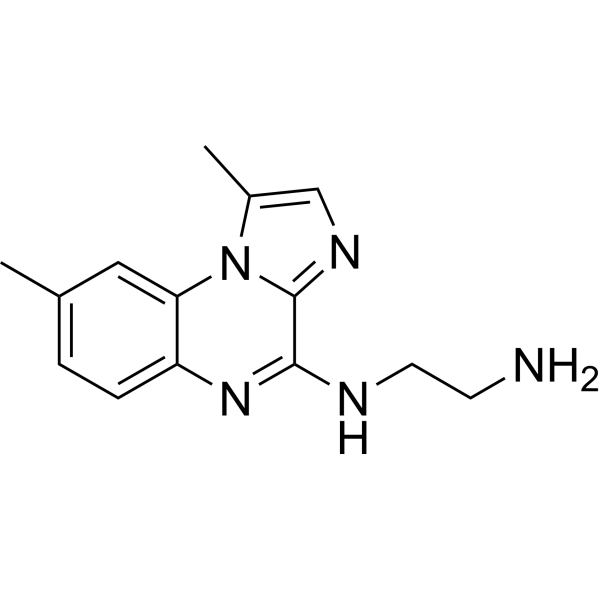
  • HY-402410
    TETi76
    1 Publications Verification

    TET Protein Cancer
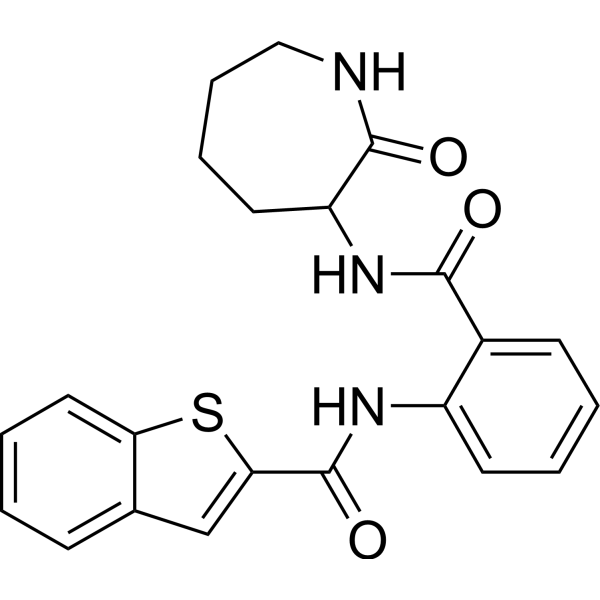
    TETi76 is an orally active TET family inhibitor with IC50 values ??of 1.5, 9.4 and 8.8 μM for TET1, TET2 and TET3, respectively. TETi76 competitively binds to the active site of TET enzymes, reduces cytosine hydroxymethylation and restricts clonal growth of TET2 mutants in vitro and in vivo, but does not affect the growth of normal hematopoietic precursor cells. TETi76 can be used for leukemia research .
    TETi76
  • HY-113056A

    Endogenous Metabolite Apoptosis Cancer
    N1-Acetylspermidine hydrochloride is an acetyl derivative of polyamines and a substrate for polyamine oxidase (PAO). N1-Acetylspermidine hydrochloride can promote Apoptosis in combination with Procyanidins. N1-Acetylspermidine hydrochloride has a certain cleavage efficiency at apurinic sites of DNA. N1-Acetylspermidine hydrochloride can be used in colorectal cancer research .
    N1-Acetylspermidine hydrochloride
  • HY-P1315

    Glycylglycyl-L-tyrosyl-L-arginine

    Cathepsin Others
    Papain inhibitor (Glycylglycyl-L-tyrosyl-L-arginine) is a competitive papain-targeting enzyme inhibitor with a Ki of 9 μM. Papain inhibitor binds directly to the substrate binding site of papain, inhibiting substrate hydrolysis by the enzyme. Papain inhibitor functions as a component of an electrochemical probe for the detection of papain .
    Papain inhibitor
  • HY-Y0958
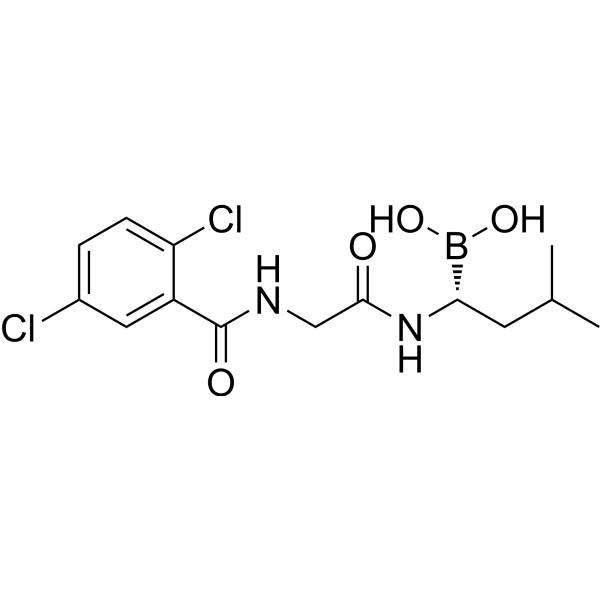
    Methoxyamine hydrochloride
    1 Publications Verification

    O-Methylhydroxylamine hydrochloride

    DNA/RNA Synthesis Apoptosis Cancer
    Methoxyamine (O-Methylhydroxylamine) hydrochloride is an orally active and potent base excision repair (BER) inhibitor. Methoxyamine hydrochloride binds to 3’ hydroxyl groups that are left behind by 3-methylpurine-DNA glycosylase (MPG) following excision of the damaged base and thus inhibits BER activity. Methoxyamine hydrochloride binds directly to the apyrimidinic (AP) sites. Methoxyamine hydrochloride synergistically enhances the therapeutic efficacy of DNA-damaging agents .
    Methoxyamine hydrochloride
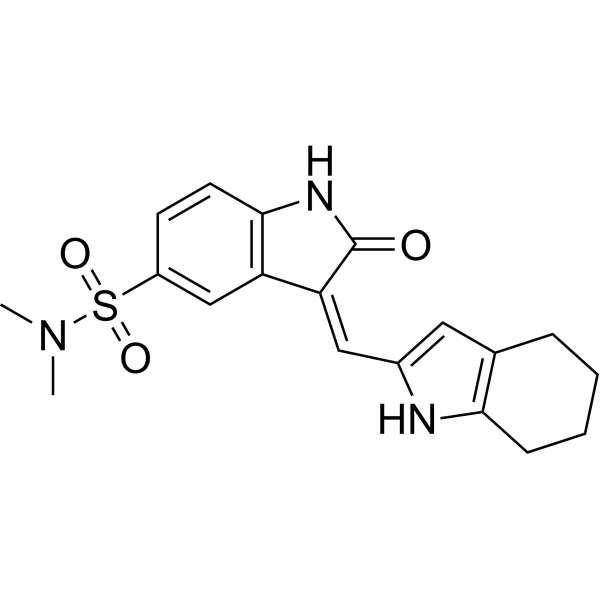
  • HY-18698

    iGluR Neurological Disease
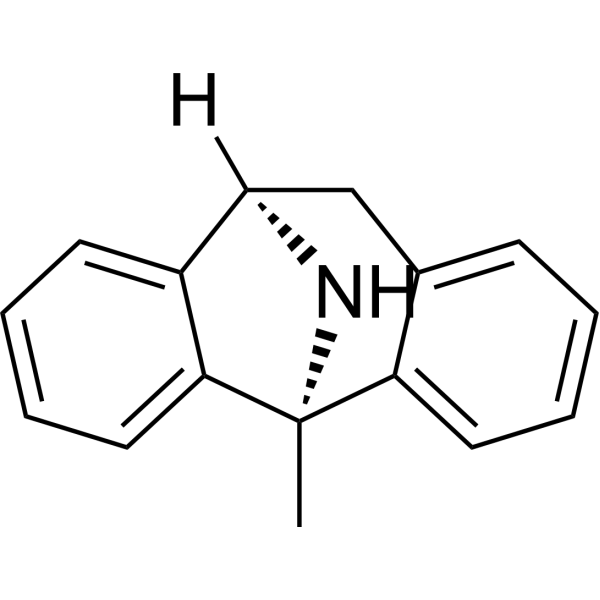
    L-701324 is a potent, orally active NMDA receptor antagonist that antagonizes the activity of the NMDA receptor by blocking its glycine B binding site. L-701324 binds with high affinity to rat brain membranes (IC50=2 nM). L-701324 has antidepressant activity .
    L-701324
  • HY-128914

    ADC Payload Microtubule/Tubulin Apoptosis Cancer
    Tubulysin is a microtubule destabilizer that binds to the β-tubulin peptide site adjacent to the vinca alkaloid binding site and inhibits tubulin polymerization. Tubulysin induces apoptosis and exhibits antiproliferative activity against a variety of human cancer cells, including multidrug-resistant strains. Tubulysin can be conjugated to antibodies via a disulfide-containing quaternary ammonium linker for ADC synthesis . Tubulysin is applicable to tumor-related research .
    Tubulysin
  • HY-154949

    WDR5 Cancer
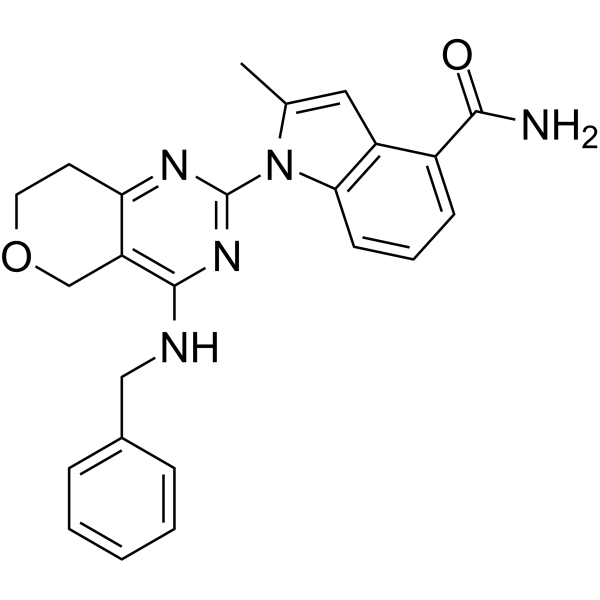
    WDR5-IN-6 is a WDR5 inhibitor, targeting to WBM site. WDR5-IN-6 inhibits cell proliferation of neuroblastoma cell lines with potent anti-tumor activity. WDR5-IN-6 shows high synergy with OICR-9429 (HY-16993), a WDR5 inhibitor targeting to WIN site. WDR5-IN-6 can be used for reasearch in neuroblastoma .
    WDR5-IN-6
  • HY-105056

    Ro 16-6028

    GABA Receptor Neurological Disease
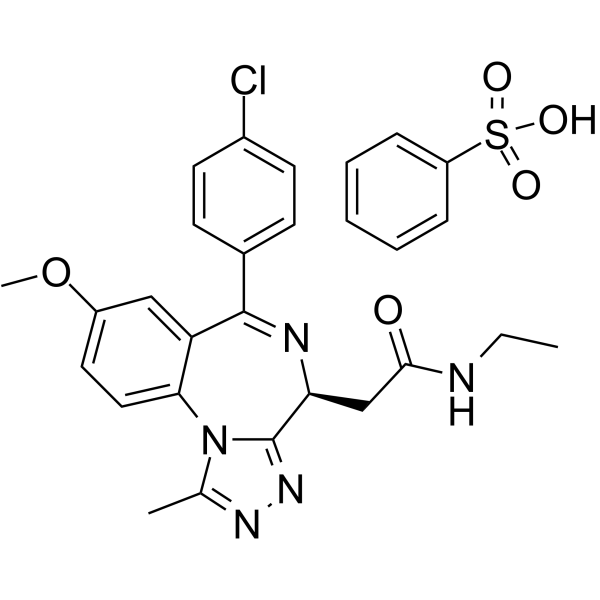
    Bretazenil (Ro 16-6028) is a partial agonist at the gamma-aminobutyric acid A (GABAA) receptor-linked benzodiazepine site. Bretazenil is potent benzodiazepine examined, exhibiting an IC50 (concentration at which half-maximal inhibition of specific [35S]TBPS binding occurs) of 6.1 nM. Bretazenil shows an EC50 of 10 nM for recombinant α1β1γ2. Anticonvulsant effects .
    Bretazenil
  • HY-W714076

    Fungal Infection Inflammation/Immunology
    Ametoctradin is a potent Qo site inhibitor of bc1 complex in mitochondrial respiration. Ametoctradin is a highly selective and effective Oomycete-specific fungicide that can be used against late blight and downy mildews .
    Ametoctradin
  • HY-157508
    VCP Activator 1
    2 Publications Verification

    p97 Others
    VCP Activator 1 is a VCP activator that dose-dependently stimulates VCP ATPase activity. VCP Activator 1 binds an allosteric pocket near the C-terminus. In addition, VCP Activator 1 binding site can also be occupied by a phenylalanine residue in the VCP C-terminal tail .
    VCP Activator 1
  • HY-D0871

    N-Cyclohexyltaurine

    Biochemical Assay Reagents Influenza Virus Infection
    CHES (N-Cyclohexyltaurine) is a biological buffer reagent that binds to influenza virus hemagglutinin (HA). CHES mimics the binding mode of sialic acid to the HA receptor-binding site .
    CHES
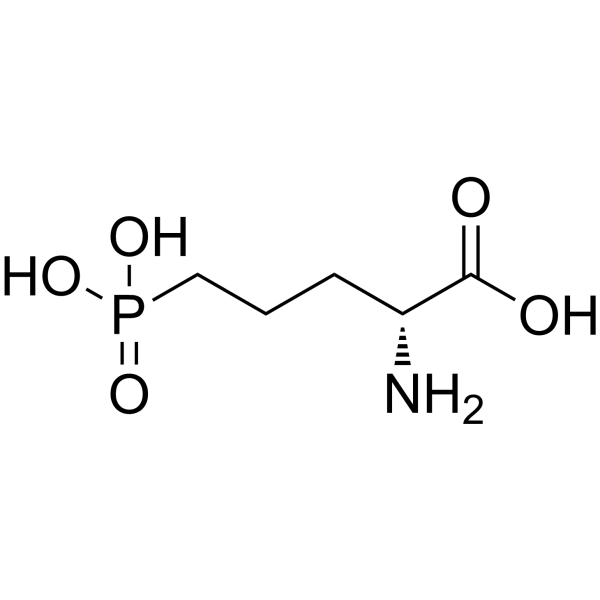
  • HY-100822

    (+)-HA-966

    iGluR Neurological Disease
    (R)-(+)-HA-966 ((+)-HA-966) is a partial agonist/antagonist of glycine site of the N-methyl-D-aspartate (NMDA) receptor complex. (R)-(+)-HA-966 selectively blocks the activation of the mesolimbic dopamine system by amphetamine . (R)-(+)-HA-966 can cross the blood-brain barrier and has the potential for neuropathic and acute pain .
    (R)-(+)-HA-966
  • HY-150138

    GV 150526

    iGluR Neurological Disease
    Gavestinel (GV 150526) is a selective and potent the glycine site of the NMDA receptor antagonist. Gavestinel has neuroprotectant effects .
    Gavestinel
  • HY-P99624

    CR4098

    RABV Infection
    Foravirumab (CR4098) is a monoclonal antibody against rabies virus glycoprotein antigenic site III .
    Foravirumab
  • HY-112468

    CDK Cancer
    PNU112455A hydrochloride is an ATP-competitive CDK2 and CDK5 inhibitor. PNU112455A hydrochloride binds to the ATP site of CDK2 and CDK5 with Kms of 3.6 and 3.2 μM, respectively .
    PNU112455A hydrochloride
  • HY-13465
    VCH-916
    1 Publications Verification

    HCV Infection
    VCH-916 is a thiophene derivative and non-nucleoside inhibitor of HCV NS5B polymerase with sub-micromolar IC50 values versus genotype 1a and 1b replicons. VCH-916 binds to Thumb Site II. VCH-916 can be used for the research of hepatitis c virus (hcv) infection .
    VCH-916
  • HY-120994B

    PKA Neurological Disease Inflammation/Immunology
    Sp-8-CPT-cAMPS, a cAMP analog, is a potent and selective activator of the cAMP-dependent protein kinas A (PKA I and PKA II). Sp-8-CPT-cAMPS selects site A of RI compares to site A of RII by 153-fold and site B of RII compares to site B of RI by 59-fold .
    Sp-8-CPT-cAMPS
  • HY-P3934

    HIV Protease Infection
    HIV Protease Substrate I is a chromogenic substrate of HIV-1 protease. HIV Protease Substrate I has the cleavage site of HIV protease .
    HIV Protease Substrate I
  • HY-116750

    Tyrosinase Others
    6-Hydroxykaempferol, a flavonoid, is a competitive tyrosinase inhibitor with an IC50 value of 124 μM. 6-Hydroxykaempferol has a Ki value of 148 μM relative to L-DOPA as a substrate and effectively inhibits the activity of the enzyme by binding to the active site of the enzyme .
    6-Hydroxykaempferol
  • HY-110087

    nAChR Neurological Disease
    4BP-TQS is a potent allosteric agonist of α7 nAChR. 4BP-TQS activates nAChRs via an allosteric transmembrane site .
    4BP-TQS
  • HY-150761
    MY-875
    1 Publications Verification

    Microtubule/Tubulin Apoptosis Cancer
    MY-875 is a competitive microtubulin polymerization inhibitor with an IC50 value of 0.92 μM. MY-875 inhibits microtubulin polymerization by targeting colchicine binding sites and activates the Hippo pathway. MY-875 induces apoptosis and has anticancer activity .
    MY-875
  • HY-149414

    Microtubule/Tubulin Apoptosis ERK TGF-beta/Smad Cancer
    MY-673 is a colchicine binding site inhibitor (CBSI), that inhibits tubulin polymerization. MY-673 inhibits the ERK signaling pathway, which in turn affects SMAD4 protein expression levels in the TGF-β/SMAD pathway. MY-673 inhibited cell proliferation, migration and induced apoptosis in vivo and in vitro .
    MY-673
  • HY-136300

    HIF/HIF Prolyl-Hydroxylase Cardiovascular Disease Inflammation/Immunology
    PHD-1-IN-1 is an orally active and potent HIF prolylhydroxylase domain-1 (PHD-1) inhibitor with an IC50 of 0.034 μM. PHD-1-IN-1 has a unique monodentate binding interaction with the active site Fe 2+ ion and induces the formation of an "Arg367-out" pocket .
    PHD-1-IN-1
  • HY-175249

    Others
    TKL-IN-2 is a herbicide and SvTKL inhibitor with an IC50 of 0.11 mg/L. TKL-IN-2 binds to the SvTKL active site, interacts with key pocket residues, and inhibits enzyme activity. TKL-IN-2 can be used for the research of weed control in maize, wheat, soybean, and cotton fields .
    TKL-IN-2
  • HY-P1220A

    Sodium Channel Neurological Disease
    Huwentoxin-IV TFA is a potent and selective sodium channel blocker, inhibits neuronal Nav1.7, Nav1.2, Nav1.3 and Nav1.4 with IC50s of 26, 150, 338 and 400 nM, respectively. Huwentoxin-IV TFA preferentially blocks peripheral nerve subtype Nav1.7 by binding neurotoxin receptor site 4. Huwentoxin-IV TFA has analgesic effects on animal models of inflammatory and neuropathic pain .
    Huwentoxin-IV TFA
  • HY-176846

    Biochemical Assay Reagents Others
    HIPS probe-1 (Compound 1) is a click chemistry reagent containing a alkyne group. HIPS probe-1 can undergo copper-catalyzed azide-alkyne cycloaddition (CuAAc) with molecules containing Azide groups. HIPS probe-1 can be used as a chemical probe to specifically recognize and label aldehyde functional groups in DNA, especially abasic sites (AP sites) for DNA damage research .
    HIPS probe-1
  • HY-126055

    Adenylate Cyclase Others
    Hadacidin is a competitive inhibitor of adenylate synthase. Hadacidin binds to the active site of adenylate synthase, competitively inhibiting L-aspartate binding. Hadacidin can be used in drug design, to help develop new inhibitors or activators to regulate adenylate synthase activity, and to play a role in the study of related diseases .
    Hadacidin
  • HY-D1608

    Calcium Channel Others
    BODIPY FL Thapsigargin is a potent green fluorescent dye. BODIPY FL Thapsigargin inhibits intracellular SERCA-type Ca2+ pumps present in the sarcoplasmic/endoplasmic reticulum. BODIPY FL Thapsigargin used for investigation of thapsigargin binding sites in live cells .
    BODIPY FL Thapsigargin
  • HY-161462

    ERK p38 MAPK Cancer
    ERK2/p38α MAPK-IN-1 (Compound 1, In silico Hit-2) is a potent and selective ERK2 and p38α MAPK inhibitor, with an IC50 of 82 μM for ERK2. ERK2/p38α MAPK-IN-1 binds to the allosteric site of ERK2 and p38α MAPK in distinct manners. ERK2/p38α MAPK-IN-1 can be used for the research of type 2 diabetes .
    ERK2/p38α MAPK-IN-1
  • HY-139205

    Indoleamine 2,3-Dioxygenase (IDO) Mitochondrial Metabolism Inflammation/Immunology
    BMT-297376 is an optimized derivative of Linrodostat (HY-101560). BMT-297376 inhibits IDO1 and the ubiquinone (Q) site of mitochondrial respiratory chain complex I. BMT-297376 is suitable for tumor immunology-related research .
    BMT-297376
  • HY-P2548

    EGFR Others
    pp60 (v-SRC) Autophosphorylation Site, Phosphorylated is the phosphorylated peptide of an EGFR substrate. pp60 (v-SRC) Autophosphorylation Site, Phosphorylated can be used for the screening of EGFR Kinase inhibitors via phosphorylated-substrate quantification .
    pp60 (v-SRC) Autophosphorylation Site, Phosphorylated
  • HY-120994A

    PKA Neurological Disease Inflammation/Immunology
    Rp-8-CPT-cAMPS, a cAMP analog, is a potent and competitive antagonist of cAMP-induced activation of cAMP-dependent PKA I and II. Rp-8-CPT-cAMPS preferentially selects site A of RI compares to site A of RII and site B of RII compares to site B of RI .
    Rp-8-CPT-cAMPS
  • HY-161800

    Aminoacyl-tRNA Synthetase Infection
    Aminoacyl tRNA synthetase-IN-3 (compound 36K3) is an inhibitor of lysine tRNA synthetase (PfLysRS) from Plasmodium falciparum (IC50=59.2 nM), which inhibits the activity of PfLysRS by occupying the ATP binding site and L-lysine binding site of PfLysRS. Aminoacyl tRNA synthetase-IN-3 can be used in the development of antimalarial drugs .
    Aminoacyl tRNA synthetase-IN-3
  • HY-119292

    Cholinesterase (ChE) Amyloid-β Neurological Disease
    AP2238 is a dual-function acetylcholinesterase (AChE) inhibitor with Ki values for human AChE (HuAChE) and butyrylcholinesterase (BuChE) of 21.7 and 48.9 μM respectively. AP2238 blocks the pro-fibrotic interaction between the peripheral site of AChE and , and can inhibit Aβ aggregation. AP2238 can be used for the research of Alzheimer's disease .
    AP2238
  • HY-129123

    Antibiotic Infection
    ML318 is a biaryl nitrile inhibitor of PvdQ acylase with an IC50 of 20 nM by binding in the acyl-binding site. ML318 inhibits P. aeruginosa (PAO1) with an IC50 of 19 μM. ML318 prevents pyoverdine production and limits the growth of P. aeruginosa under iron-limiting conditions .
    ML318
  • HY-113056AR

    Endogenous Metabolite Apoptosis Reference Standards Cancer
    N1-Acetylspermidine (hydrochloride) (Standard) is the analytical standard of N1-Acetylspermidine (hydrochloride). This product is intended for research and analytical applications. N1-Acetylspermidine hydrochloride is an acetyl derivative of polyamines and a substrate for polyamine oxidase (PAO). N1-Acetylspermidine hydrochloride can promote Apoptosis in combination with Procyanidins. N1-Acetylspermidine hydrochloride has a certain cleavage efficiency at apurinic sites of DNA. N1-Acetylspermidine hydrochloride can be used in colorectal cancer research .
    N1-Acetylspermidine hydrochloride (Standard)
  • HY-165569

    Potassium Channel Neurological Disease
    AU-1421 is a potassium ion (K⁺) site-directed regulator that specifically acts on various cation transport ATPases. AU-1421 can distinguish between two different K⁺-sensitive phosphorylation intermediate (E2P) states: for non-K⁺ transport type ATPases (such as the sarcoplasmic reticulum Ca²⁺-ATPase), after binding to AU-1421, it mimics the agonistic effect of K⁺, significantly accelerating the hydrolysis (dephosphorylation) of E2P. For K⁺ transport type ATPases (such as the gastric mucosa H⁺/K⁺-ATPase and the renal Na⁺/K⁺-ATPase), after binding to AU-1421, it inhibits the hydrolysis of E2P, stabilizing the phosphorylated intermediate, thereby blocking the ion transport cycle. AU-1421 can be used to study the mechanism of the potassium ion pump .
    AU-1421
  • HY-P1220

    Sodium Channel Neurological Disease
    Huwentoxin-IV is a potent and selective sodium channel blocker, inhibits neuronal Nav1.7, Nav1.2, Nav1.3 and Nav1.4 with IC50s of 26, 150, 338 and 400 nM, respectively. Huwentoxin-IV preferentially blocks peripheral nerve subtype Nav1.7 by binding neurotoxin receptor site 4. Huwentoxin-IV has analgesic effects on animal models of inflammatory and neuropathic pain .
    Huwentoxin-IV
  • HY-P3744

    EGFR Others
    pp60v-src Autophosphorylation site is a synthetic peptide. pp60v-src Autophosphorylation site can be used for various biochemical studies .
    pp60v-src Autophosphorylation site
  • HY-P3745

    PKA Others
    H1-7 (histone H1 phosphorylation site), PKA Substrate, a synthetic polypeptide, can be used as PKA substrate .
    H1-7 (histone H1 phosphorylation site), PKA Substrate
  • HY-149484

    Cholinesterase (ChE) Neurological Disease
    AChE/BChE-IN-15 (Compound 6d) is an AChE/BChE inhibitor, with IC50s of 20 nM and 220 nM respectively. AChE/BChE-IN-15 binds to both catalytic anionic site (CAS) and peripheral anionic site (PAS) in the active sites of AChE and BChE. AChE/BChE-IN-15 can be used for research of Alzheimer’s disease .
    AChE/BChE-IN-15
  • HY-101626A

    Sigma Receptor Neurological Disease
    Sigma ligand-1 hydrochloride is a selective sigma receptor ligand with an IC50s of 16 nM, 19 nM at the DTG site and the PPP site, respectively. Sigma ligand-1 hydrochloride has a Ki of 4000 nM at the dopamine D2 receptor .
    Sigma ligand-1 hydrochloride
  • HY-101626

    Sigma Receptor Neurological Disease
    Sigma ligand-1 is a selective sigma receptor ligand with an IC50s of 16 nM, 19 nM at the DTG site and the PPP site, respectively. Sigma ligand-1 has a Ki of 4000 nM at the dopamine D2 receptor .
    Sigma ligand-1
  • HY-120994

    PKA Neurological Disease Inflammation/Immunology
    Rp-8-CPT-cAMPS sodium, a cAMP analog, is a potent and competitive antagonist of cAMP-induced activation of cAMP-dependent PKA I and II. Rp-8-CPT-cAMPS sodium preferentially selects site A of RI compares to site A of RII and site B of RII compares to site B of RI .
    Rp-8-CPT-cAMPS sodium
  • HY-W165085

    Decamethylenebispyridinium dibromide

    Cholinesterase (ChE) Neurological Disease
    1,10-Bis(pyridinium)decane (Decamethylenebispyridinium dibromide) is an acetylcholinesterase (AChE) inhibitor with an IC50 of 25.8 nM. 1,10-Bis(pyridinium)decane acts as a bis-quaternary ligand that bridges the enzyme's catalytic site and peripheral site via its two pyridinium groups. 1,10-Bis(pyridinium)decane can be used for the research of alzheimer's disease .
    1,10-Bis(pyridinium)decane
  • HY-120842

    mAChR Neurological Disease
    RLH-033 is a potent and selective ligand for the sigma 1 recognition site. RLH-033 has high affinity for sigma 1 sites labeled by [ 3H](+)-pentazocine with a Ki of 50 pM .
    RLH-033
  • HY-146125

    Endonuclease Metabolic Disease
    CGCG/CGG ligand 1 (compound 10), an anthracenone derivative, is a CGCG or CGG short spacer-ligand. CGCG/CGG ligand 1 can protect cleavable sites of DNA with the multiple CGCG or continuous CGG sites from the restriction enzyme .
    CGCG/CGG ligand 1
  • HY-120524

    iGluR Neurological Disease
    CGP 31358 is an anticonvulsant agent that binds to a site on the NMDA receptor complex that is coupled to both the transmitter recognition site and to the channel domain. CGP 31358 inhibits the binding of L-Glutamate to the NMDA receptor complex with an IC50 of 53 μM .
    CGP 31358
  • HY-P1371

    KKWKMRRNQFWIKIQRC CSVEIWD*

    PKC Others
    Pseudo RACK1, a peptide, is a PKC agonist with homologous sequences of PKC. Pseudo RACK1 interacts selectively with β-PKC at an autoregulatory site (RACK-binding site) and activates it in the absence of PKC activators, following inducing PKC-mediated histone phosphorylation .
    Pseudo RACK1
  • HY-121813

    BW 234U

    Dopamine Transporter Neurological Disease
    Rimcazole (BW 234U) is a potent antipsychotic agent. Rimcazole also is a competitive antagonist of sigma sites. Rimcazole can be used for the research of acute schizophrenic diseases .
    Rimcazole

Inquiry Online

Your information is safe with us. * Required Fields.

Salutation


Country or Region *

Applicant Name *


Organization Name *

Department *


Email Address *


Product Name *

Cat. No.


Requested quantity *

Phone Number *


Remarks

Inquiry Online

Inquiry Information

Product Name:
Cat. No.:
Quantity:
MCE Japan Authorized Agent:

