

35 Results for "

structure factor

" in MedChemExpress (MCE) Product Catalog:
Products (35)

35 Results for "structure factor" in MCE Product Catalog:

12
12 Publications Verification
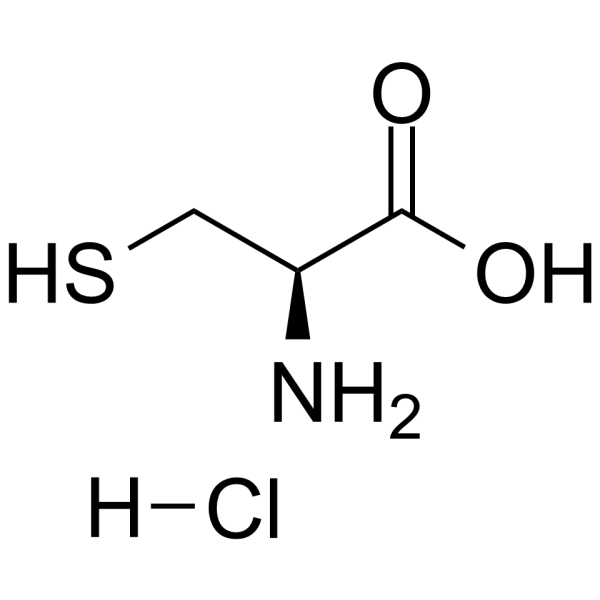
Cat. No.: HY-Y0337A
CAS No.: 52-89-1
L-Cysteine hydrochloride is an orally active conditionally essential amino acid, which acts as a precursor for biologically active molecules such as hydrogen sulphide (H2S), glutathione and taurine. L-Cysteine hydrochloride suppresses ghrelin and reduces appetite in rodents. L-Cysteine hydrochloride inhibits Aspergillus flavus growth and AFB synthesis by disrupting cell structure and antioxidant system balance. L-Cysteine hydrochloride enhances relaxant responses of rat aortic rings to NO and reduces responses to endothelium-derived relaxing factor (EDRF) .
loading...
    loading...
7
7 Cited Publications
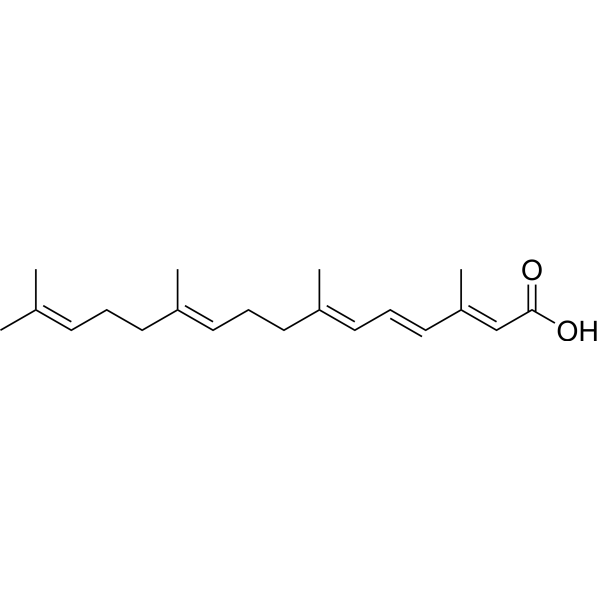
Cat. No.: HY-100008
CAS No.: 81485-25-8
Purity:  98.06%
Synonyms: NIK333
Target:  

RAR/RXR SphK Autophagy HCV

Research Areas:  

Infection Cancer

Peretinoin is an oral acyclic retinoid with a vitamin A-like structure that targets retinoid nuclear receptors such as retinoid X receptor (RXR) and retinoic acid receptor (RAR). Peretinoin reduces the mRNA level of sphingosine kinase 1 (SPHK1) in vitro by downregulating a transcription factor, Sp1 . Peretinoin prevents the progression of non-alcoholic steatohepatitis (NASH) and the development of hepatocellular carcinoma (HCC) through activating the autophagy pathway by increased Atg16L1 expression . Peretinoin inhibits HCV RNA amplification and virus release by altering lipid metabolism with a EC50 of 9 μM .
loading...
    loading...
3
3 Cited Publications
Cat. No.: HY-D1056D
Synonyms: LPS, from Porphyromonas gingivalis
Lipopolysaccharides, from P. gingivalis (LPS, from Porphyromonas gingivalis) are endotoxins and TLR4 activators extracted from Porphyromonas gingivalis (P. gingivalis) and are classified as S (smooth) type LPS. Lipopolysaccharides, from P. gingivalis possess the typical three-part structure: O-antigen, core oligosaccharide, and lipid A. Lipopolysaccharides, from P. gingivalis activate TLR-4 in immune cells and are important virulence factors in the mechanism of periodontal disease. Lipopolysaccharides, from P. gingivalis can be used in research related to periodontitis .
It is recommended to prepare a solution with concentration ≥2 mg/mL. Vortex thoroughly for more than 10 minutes. Due to the adsorption characteristics of LPS, silanized container or low adsorption centrifuge tubes should be used for aliquoting and storage, and mix thoroughly before use.
loading...
    loading...
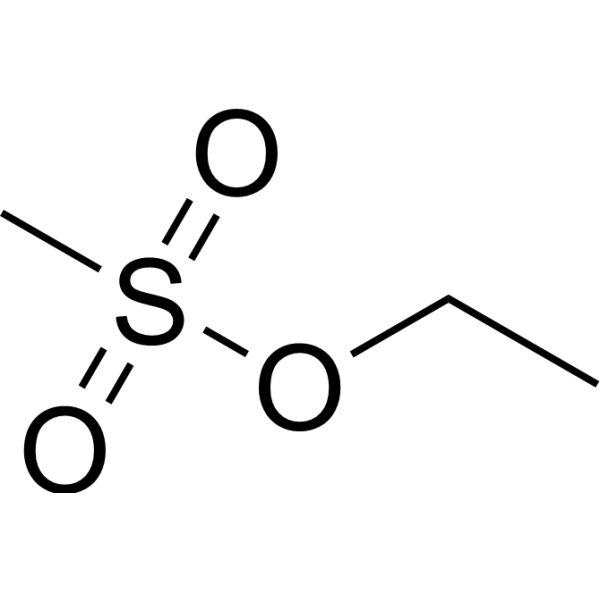
Cat. No.: HY-W015854
CAS No.: 62-50-0
Ethyl methanesulfonate is an orally active biochemical agent. Ethyl methanesulfonate induces Apoptosis. Ethyl methanesulfonate acts on DNA, alkylating it and causing changes in DNA structure, which in turn triggers a series of biological effects such as mutation and cell death. Ethyl methanesulfonate induces kidney and nervous system tumors. Ethyl methanesulfonate is widely used in the field of genetic toxicology research and is often used to induce gene mutations in organisms to study gene function, the mechanism of genetic diseases, and the effects of environmental mutagenic factors, etc .
loading...
    loading...
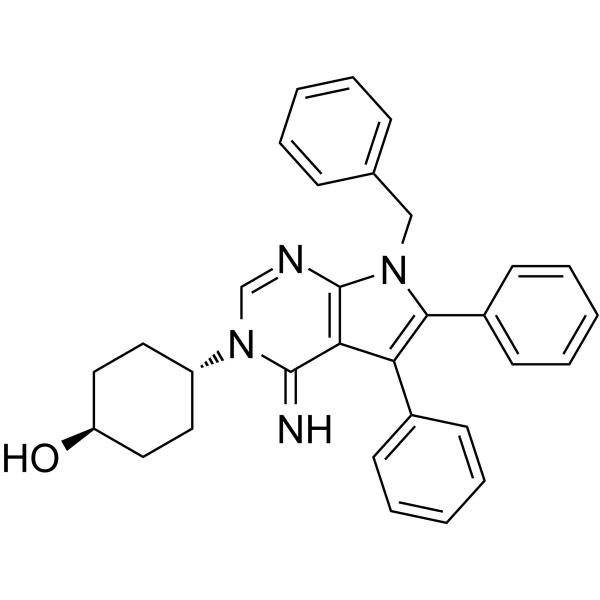
Cat. No.: HY-120118
CAS No.: 1443414-10-5
Purity:  99.90%
Synonyms: ML246
Target:  

DNA/RNA Synthesis

Research Areas:  

Cancer

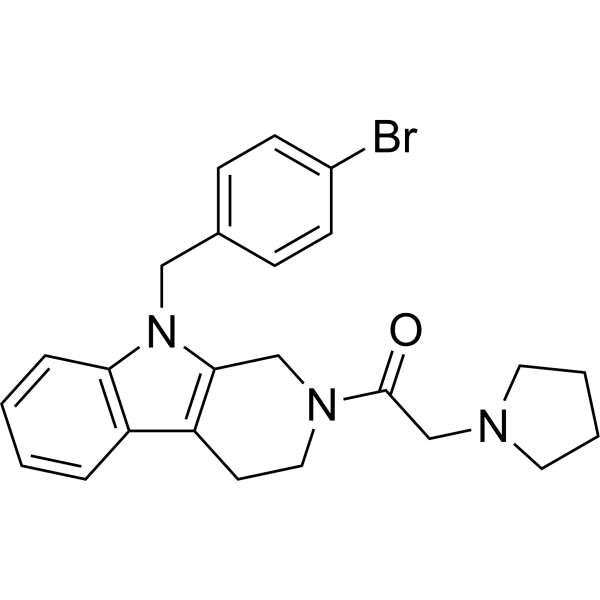
Metarrestin (ML246) is an orally active, first-in-class and specific perinucleolar compartment inhibitor. Metarrestin disrupts the nucleolar structure and inhibits RNA polymerase (Pol) I transcription, at least in part by interacting with the translation elongation factor eEF1A2. Metarrestin blocks metastatic development and extends survival in mouse cancer models .
loading...
    loading...
Cat. No.: HY-W115721
CAS No.: 523-21-7
Synonyms: Sodium rhodizonate dibasic
Rhodizonic acid disodium (Sodium rhodizonate dibasic) is a transition metal-dependent pro-oxidant and lead detection agent that induces reactive oxygen species generation, DNA damage, and inhibits Aconitase activity. Rhodizonic acid disodium generates superoxide anion radicals in an iron (II)-dependent manner, leading to aconitase inactivation. Rhodizonic acid disodium also triggers hydroxyl radical-mediated DNA strand breaks and 8-OHdG formation via copper ion reduction. Rhodizonic acid disodium reacts with lead to form a scarlet precipitate, with the color intensity proportional to lead content, enabling qualitative or quantitative analysis of lead. Rhodizonic acid disodium can also be used for real-time visualization of the dynamic process of lead sequestration in the plant rhizosphere and evaluation of the effects of environmental factors such as soil type on the stability of lead-sequestering structures .
loading...
    loading...
Cat. No.: HY-157693
CAS No.: 799268-69-2
Target:  

Endogenous Metabolite

Research Areas:  

Cancer

C18:1 Cyclic LPA is a naturally occurring analog of the growth factor-like phospholipid mediator, lysophosphatidic acid (LPA), characterized by the formation of a 5-membered ring between its sn-2 hydroxy group and the sn-3 phosphate. This unique structure allows C18:1 Cyclic LPA to influence a variety of cellular functions, such as inhibiting cell cycle progression, promoting the formation of stress fibers, curtailing tumor cell invasiveness and metastasis, and modulating the differentiation and survival of neuronal cells. Notably, many of these cellular effects elicited by C18:1 Cyclic LPA appear to counter those induced by LPA, despite the activation of seemingly similar receptor populations.
loading...
    loading...
Cat. No.: HY-I0736
CAS No.: 55-22-1
Isonicotinic acid is a pyridine carboxylic acid compound and also a metabolite of Isoniazid (HY-B0329). Derivatives of Isonicotinic acid exhibit antiviral activity against influenza viruses .
loading...
    loading...
Cat. No.: HY-N7695
CAS No.: 23133-56-4
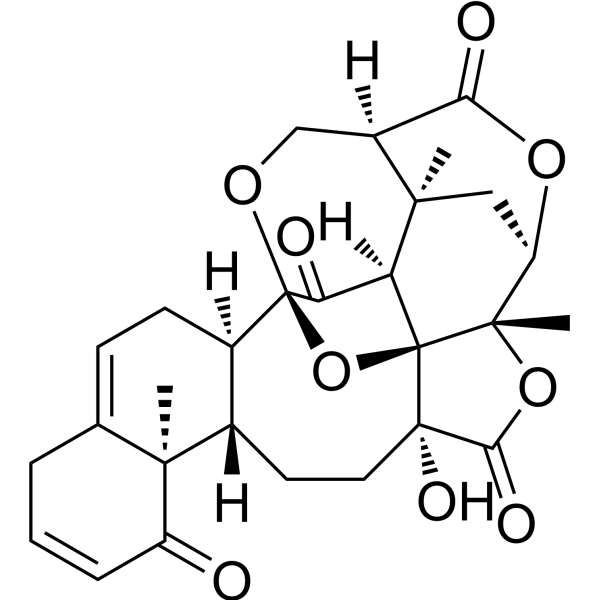
Physalin B is an orally active anti-inflammatory and anticancer agent. Physalin B can be isolated from Physalis alkekengi L. var. Franchetii. Physalin B inhibits the activation of the NF-κB, NLRP3 inflammasome, STAT3, PI3K/Akt and Hedgehog signaling pathways, regulates the phosphorylation levels of GSK-3β, p38 MAPK, ERK1/2 and JNK, and promotes the nuclear translocation of NRF2. Physalin B reduces the levels of pro-inflammatory cytokines and factors, induces mitochondrial reactive oxygen species (mito-ROS) production, Apoptosis, G2/M cell cycle arrest and incomplete Autophagy, alters cytoskeleton structure and alleviates oxidative stress. Physalin B reduces cancer cell viability, ameliorates liver and lung tissue damage and alleviates liver fibrosis. Physalin B can be used in research related to ulcerative colitis, breast cancer, acute lung injury, colon cancer, non-alcoholic steatohepatitis, liver fibrosis, lung cancer, pancreatic cancer, lymphoma, ovarian cancer, sarcoma and leukemia .
loading...
    loading...
Cat. No.: HY-148230
Purity:  90.24%
TFEB Decoy ODN sodium is a synthetic oligonucleotide with a hairpin ring structure, which were designed to inhibit Transcription factor EB (TFEB). TFEB decoy ODN inhibited fibrosis and autophagy in a UUO mouse model. The TFEB decoy ODNs also showed anti-inflammatory effects.
loading...
    loading...
Cat. No.: HY-126436D
CAS No.: 26982-21-8
Synonyms: L-Ornithine homopolymer hydrochloride (MW 15000-30000)
Poly-L-ornithine hydrochloride (MW 15000-30000) is a polycationic homopolymer composed of L-ornithine. Poly-L-ornithine hydrochloride (MW 15000-30000) adsorbs negatively charged species through electrostatic interactions. Poly-L-ornithine hydrochloride (MW 15000-30000) can be used as a key component of polyelectrolyte complexes to construct core-shell structure carriers to achieve controlled delivery of growth factors (such as rhBMP-2, FGF-1). Poly-L-ornithine hydrochloride (MW 15000-30000) is used in the study of diabetes and bone regeneration related diseases .
loading...
    loading...
Cat. No.: HY-166257
CAS No.: 38621-58-8
Synonyms: Psychosine 3′-O-sulfate; Psychosine 3′-sulfate
Research Areas:  

Metabolic Disease

Lyso-sulfatide (bovine) is a phospholipid component derived from sphingolipid catabolism and a potent factor Xa inhibitor and anticoagulant. Lyso-sulfatide (bovine) binds directly to factor Xa and inhibits prothrombin activation mediated by the prothrombinase complex, thereby prolonging factor Xa-induced plasma clotting time and suppressing thrombin generation. Lyso-sulfatide (bovine) serves as a reliable lipid membrane mimic for studying cell membrane structure, function, and molecular interactions .
loading...
    loading...
Cat. No.: HY-W923483
CAS No.: 95403-34-2
Synonyms: 1-O-Hexadecyl-2-oleoyl-sn-glycero-3-phosphocholine
C16-18:1 PC (1-O-Hexadecyl-2-oleoyl-sn-glycero-3-phosphocholine), also known as 1-O-hexadecyl-2-oleoyl-sn-glycero-3-phosphocholine (HOPC), is a member of the platelet-activating factor (PAF) family of glycerophospholipids and serves as a pro-inflammatory lipid mediator with diverse biological and pharmacological effects; it features a mono-ether structure with an oleoyl chain (18:1) ester-linked at the sn-2 position and a hexadecyl chain (16:0) ether-linked at the sn-1 position.
loading...
    loading...
Cat. No.: HY-161483
CAS No.: 1936425-34-1
CBP/p300 ligand 3 is a target protein ligand of CBPD-268 (HY-161369). CBP and p300 are two proteins with histone acetyltransferase (HAT) activity, and CBP and p300 play key roles in regulating biological processes such as gene expression, cell proliferation, differentiation and DNA repair. Through its acetyltransferase activity, CBP/p300 can acetylate histones and other proteins, thereby regulating chromatin structure and gene expression. CBP/p300 ligand 3 regulates the function of CBP/p300 by binding to a specific domain of the CBP/p300 protein (the bromine domain or HAT domain), inhibiting its enzyme activity or altering its interactions with other proteins (transcription factors). CBP/p300 ligand 3 can be used in cancer, neurodegenerative diseases and other disease models associated with abnormal CBP/p300 function .
loading...
    loading...
Cat. No.: HY-120200
CAS No.: 1951466-83-3
Target:  

VEGFR

Research Areas:  

Cardiovascular Disease Cancer

YF-452 is a potent inhibitor of vascular endothelial growth factor receptor 2 (VEGFR2). YF-452 remarkably inhibits the migration, invasion and tube-like structure formation of human umbilical vein endothelial cells (HUVECs) with little toxicity. YF-452 inhibits VEGF-induced phosphorylation of VEGFR2 kinase and the downstream protein kinases including extracellular signal regulated kinase (ERK), focal adhesion kinase (FAK) and Src. YF-452 is a potential antiangiogenic agent candidate for cancer research .
loading...
    loading...
Cat. No.: HY-117479
CAS No.: 1401242-86-1
Research Areas:  

Cancer

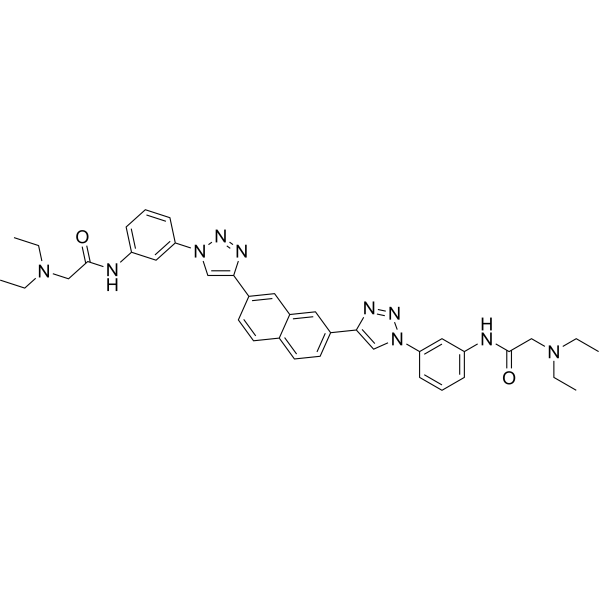
CL67 is a potent hypoxia-inducible factor (HIF) pathway inhibitor. CL67 interferes G-quadruplex structures within promoter sequences. CL67 can be used in research of renal cancer .
loading...
    loading...
Cat. No.: HY-126743
CAS No.: 1219095-76-7
Target:  

Proteasome

Research Areas:  

Others

JBIR-22 is a protein-protein interaction inhibitor of proteasome assembly factor 3 homodimer, which has the activity of inhibiting this interaction and exerting long-term cytotoxicity against human cervical cancer cell lines, and its stereochemical structure has been determined by total synthesis.
loading...
    loading...
Cat. No.: HY-168326
CAS No.: 1139263-21-0
Research Areas:  

Cancer

Antiproliferative agent-64 (Compound 76) is an inhibitor for eukaryotic translation initiation factor 4E (eIF4E), that block the secondary structure of mRNA, thereby inhibiting protein translation. Antiproliferative agent-64 inhibits the 5' untranslated region (5'UTR) of c-Myc (c-myc 5'UTR) with an EC50 of 1.2 nM, inhibits 5'UTR encoding tubulin (tub 5'UTR) with an EC50 of 40 nM. Antiproliferative agent-64 inhibits the proliferation of MDA-MB-231 with an EC50 of 7 nM .
loading...
    loading...
Cat. No.: HY-W339834
CAS No.: 325465-92-7
Research Areas:  

Others

1-Stearoyl-sn-glycerol 3-phosphate sodium is a bioactive phospholipid that plays a crucial role in modulating cellular processes such as motility, proliferation, invasion, survival, and growth factor production, primarily through its interaction with G protein-coupled receptors (GPCRs). Typically found at low concentrations in plasma (~100nM), this compound is synthesized during the formation of membrane phospholipids and is derived from various cell types, including activated platelets, epithelial cells, leukocytes, neuronal cells, and tumor cells. Its unique structure includes stearic acid at the sn-1 position alongside a hydroxyl group at the sn-2 position.
loading...
    loading...
Cat. No.: HY-Y0337AR
CAS No.: 52-89-1
L-Cysteine (hydrochloride) (Standard) is the analytical standard of L-Cysteine (hydrochloride). This product is intended for research and analytical applications. L-Cysteine hydrochloride is an orally active conditionally essential amino acid, which acts as a precursor for biologically active molecules such as hydrogen sulphide (H2S), glutathione and taurine. L-Cysteine hydrochloride suppresses ghrelin and reduces appetite in rodents. L-Cysteine hydrochloride inhibits Aspergillus flavus growth and AFB synthesis by disrupting cell structure and antioxidant system balance. L-Cysteine hydrochloride enhances relaxant responses of rat aortic rings to NO and reduces responses to endothelium-derived relaxing factor (EDRF) [4].
loading...
    loading...

