1. Search Result
Search Result
Results for "

subunit

" in MedChemExpress (MCE) Product Catalog:

724

Inhibitors & Agonists

5

Screening Libraries

15

Fluorescent Dye

5

Biochemical Assay Reagents

58

Peptides

4

MCE Kits

37

Inhibitory Antibodies

67

Natural
Products

598

Recombinant Proteins

55

Isotope-Labeled Compounds

507

Antibodies

6

Click Chemistry

42

Oligonucleotides

Targets Recommended:
Cat. No. Product Name Target Research Areas Chemical Structure
  • HY-D0254
    Gallein
    5+ Cited Publications

    Pyrogallol phthalein

    PI3K Cancer
    Gallein is a Gβγ subunit signaling inhibitor that can interfere with the interaction between Gβγ subunit and PI3Kγ, regulate platelet function, and exhibit anti-tumor activity [1][3].
    Gallein
  • HY-129589
    Thailanstatin A
    2 Publications Verification

    ADC Payload Cancer
    Thailanstatin A is an ultra-potent inhibitor of eukaryotic RNA splicing (IC50=650 nM). Thailanstatin A exerts effects via non-covalent binding to the SF3b subunit of the U2 snRNA subcomplex of the spliceosome and shows low-nM to sub-nM IC50s against multiple cancer cell lines. Thailanstatin A, a payload for ADCs, is conjugated to the lysines on trastuzumab yielding “linker-less” ADC .
    Thailanstatin A
  • HY-19931
    COH29
    5 Publications Verification

    RNR Inhibitor COH29

    DNA/RNA Synthesis Cancer
    COH29 (RNR Inhibitor COH29) is a potent ribonucleotide reductase (RNR) inhibitor with anticancer activity. COH29 inhibits α and β subunit of RNR with IC50s of 16 μM.
    COH29
  • HY-17466

    Bonomycin; 6-Demethyl-6-deoxytetracycline

    Bacterial Antibiotic Metabolic Disease Inflammation/Immunology
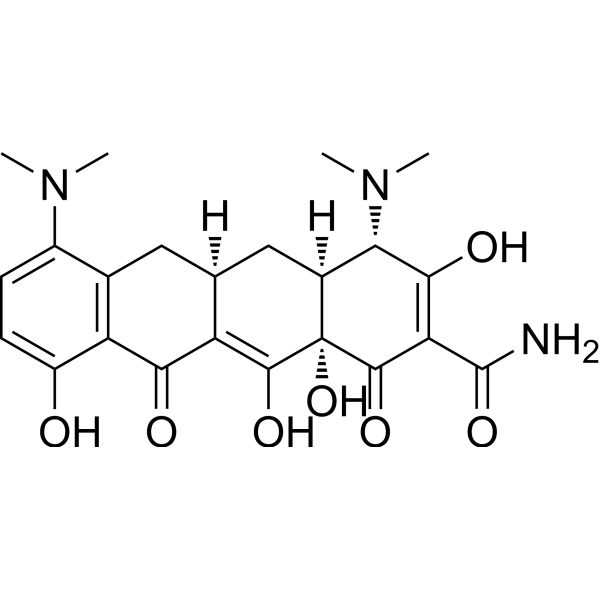
    Sancycline (6-Demethyl-6-deoxytetracycline) acts by reversibly binding to the 30 S ribosomal subunit and inhibiting protein translation by blocking entry of aminoacyl-tRNA into the ribosome a site similar to tetracycline (HY-A0107). Sancycline, four linearly fused six-membered rings with four stereocenters, is a rare semi-synthetic tetracycline (HY-A0107) prepared by hydrogenolysis of the chloro and benzylic hydroxy moieties of Declomycin .
    Sancycline
  • HY-145586

    ZSP1273

    Influenza Virus DNA/RNA Synthesis Infection
    Onradivir (ZSP1273) is an orally active antiviral agent targeting influenza A virus RNA polymerase PB2 subunit with an IC50 of 0.562 nM. Onradivir inhibits cap binding to influenza A virus RNA polymerase PB2 subunit, suppresses viral replication, reduces viral titres and RNA loads, and inhibits influenza A virus infection. Onradivir maintains high survival rates in influenza A virus-infected mice, and reduces influenza A virus titers in a murine model. Onradivir can be used for the research of influenza A virus infection .
    Onradivir
  • HY-142240

    HSK16149

    Calcium Channel Neurological Disease
    Crisugabalin is an orally active, selective ligand for the α2δ subunit of voltage-gated calcium channels, with a target IC50 of 3.96 nM in rats. Crisugabalin inhibits the binding of [ 3H]gabapentin to the α2δ subunit, reduces calcium influx, decreases neuronal excitability, and impairs nociceptive transmission. Crisugabalin alleviates mechanical allodynia, neuropathic pain and inflammatory pain in rats, and reduces phase II pain behaviors. Crisugabalin can be used in research related to chronic pain, neuropathic pain, diabetic neuropathy, fibromyalgia, inflammatory pain, diabetic peripheral neuropathy and postherpetic neuralgia.
    Crisugabalin
  • HY-P11307

    Proteasome Cancer
    Biotin-epoxomicin is a Proteasome subunit binder. Biotin-epoxomicin serves as an affinity reagent for identifying proteasomal catalytic subunits, and facilitates affinity purification of active proteasomal subunits for LC-MS identification. Biotin-epoxomicin can be used to study solid tumors derived from B16 melanoma .
    Biotin-epoxomicin
  • HY-119970
    Helenalin
    5+ Cited Publications

    NF-κB Inflammation/Immunology Cancer
    Helenalin is an anti-inflammatory sesquiterpene lactone. Helenalin selectively inhibits transcription factor NF-κB by directly targeting p65. Helenalin has alkylating activity, targets the cysteine sulfhydryl groups in the p65 subunit of NF-κB, thereby inhibits its DNA binding .
    Helenalin
  • HY-114657A
    Benproperine phosphate
    2 Publications Verification

    Arp2/3 Complex Inflammation/Immunology Cancer
    Benproperine phosphate is an orally active, potent actin-related protein 2/3 complex subunit 2 (ARPC2) inhibitor. Benproperine phosphate attenuates the actin polymerization rate of action polymerization nucleation by impairing Arp2/3 function. Benproperine phosphate has the potential for a cough suppressant and suppresses cancer cell migration and tumor metastasis .
    Benproperine phosphate
  • HY-P5766

    nAChR
    AChRα(97-116) is a synthetic peptide corresponding to the 97-116 region of the rat acetylcholine receptor α-subunit, and also an inducer of autoimmune diseases. AChRα(97-116) can be used in studies related to experimental autoimmune myasthenia gravis .
    AChRα(97-116)
  • HY-P3394

    CTB, from vibrio cholerae

    Biochemical Assay Reagents Others
    Cholera toxin B subunit, from vibrio cholerae (CTB, from vibrio cholerae) is non-toxic to cells and possesses no intrinsic adenylate cyclase activity. Cholera toxin B subunit, from vibrio cholerae attaches to cells by binding to ganglioside GM1.8 CTB has been shown to be a good label for microglial cells (due to the enrichment of ganglioside GM1 on their cell surface), but not for oligodendrocytes or astrocytes. Cholera toxin B subunit, from vibrio cholerae has been reported to be an excellent tracer for the study of axonal transport using immunohistochemical methods. Cholera toxin B subunit, from vibrio cholerae has been widely used as a marker of membrane lipid rafts .
    Cholera toxin B subunit, from vibrio cholerae
  • HY-112803

    DNA/RNA Synthesis Cancer
    GNE-371 is a potent and selective chemical probe for the second bromodomains of human transcription-initiation-factor TFIID subunit 1 and transcription-initiation-factor TFIID subunit 1-like, with an IC50 of 10 nM for TAF1(2).
    GNE-371
  • HY-P5985
    mSIRK
    2 Publications Verification

    ERK Others
    mSIRK (G-Protein βγ Binding Peptide) is an cell-permeable activator of ERK1/2, with EC50 of 2.5-5 μM. mSIRK disrupts the interaction between α and βγ subunits and promotes α subunit dissociation without stimulating nucleotide exchange .
    mSIRK
  • HY-P4279

    Angiotensin-converting Enzyme (ACE) Cholinesterase (ChE) Cardiovascular Disease
    Ovalbumin (154-159) is a protein fragment consisting of residues 154-159 of chicken ovalbumin. Ovalbumin (154-159) is also a poorly conserved sequence (Thr-Asn-Gly-Ile-Ile-Arg) in the α-subunit of the Torpedo acetylcholine receptor, located within the α150-164 epitope region, and exhibits significant angiotensin-converting enzyme (ACE) inhibitory activity .
    Ovalbumin (154-159)
  • HY-120874

    PF-06372865; CVL-865

    GABA Receptor Neurological Disease
    Darigabat (PF-06372865) is an orally active, α2/α3/α5 subtype-selective GABAA positive allosteric modulator (PAM). Darigabat is a high affinity ligand at GABAA receptors containing α1/α2/α3/α5 subunits (Kis of 2.9 nM, 21 nM, 134 nM for α2, α1 PAM, α2 PAM, respectively), with low affinity for α4/α6 subunits. Darigabat can across the blood-brain barrier (BBB). Darigabat has anxiolytic activity and has the potential for epilepsy .
    Darigabat
  • HY-P99524

    GBR500

    Integrin Neurological Disease Inflammation/Immunology
    Vatelizumab (GBR500) is a monoclonal antibody that targets the α2 subunit (CD49b) of very late antigen 2 (VLA-2). Vatelizumab can be used for research on multiple sclerosis .
    Vatelizumab
  • HY-18699
    CIQ
    2 Publications Verification

    iGluR Neurological Disease
    CIQ is a subunit-selective potentiator of NMDA receptors containing the NR2C or NR2D subunit.
    CIQ
  • HY-P1111

    Src Interleukin Related Inflammation/Immunology
    Lyn peptide inhibitor (YGYRLRRKWEEKIPNP-NH2) is a potent, cell-permeable Lyn kinase inhibitor that inhibits Lyn-coupled signaling pathways associated with the IL-5 receptor while preserving the integrity of other signals. Lyn peptide inhibitor blocks the activation of Lyn and inhibits the binding of Lyn tyrosine kinase to the βc subunit of the IL-3/GM-CSF/IL-5 receptor. Lyn peptide inhibitor can be used in the research of eosinophilic diseases such as asthma and allergy .
    Lyn peptide inhibitor
  • HY-114419
    Zetomipzomib
    4 Publications Verification

    KZR-616

    Proteasome Inflammation/Immunology
    Zetomipzomib (KZR-616), a first-in-class inhibitor of the immunoproteasome, selectively targets the LMP7 (IC50: 39/57 nM=hLMP7/mLMP7) and LMP2 (IC50: 131/179 nM=hLMP7/mLMP7) subunits of the immunoproteasome. Zetomipzomib has the potential for the research of multiple autoimmune diseases .
    Zetomipzomib
  • HY-114419A
    Zetomipzomib maleate
    4 Publications Verification

    KZR-616 maleate

    Proteasome Inflammation/Immunology
    Zetomipzomib (KZR-616) maleate, a first-in-class immunoproteasome inhibitor, selectively targets the LMP7 (IC50: 39/57 nM=hLMP7/mLMP7) and LMP2 (IC50: 131/179 nM=hLMP2/mLMP2) subunits of the immunoproteasome. Zetomipzomib maleate has the potential for the research of multiple autoimmune diseases .
    Zetomipzomib maleate
  • HY-171978A

    Adrenergic Receptor Cardiovascular Disease
    LM-189 free base, a G protein alpha subunit I (Gαi)-biased agonist, is a Gαi-biased ligand of β2-adrenergic receptor (β2AR). LM-189 free base stabilizes a distinct conformation in TM6 and increases the dynamics of ICL2. LM-189 free base can be used to develop the Gαi-biased β2AR agonists .
    LM-189 free base
  • HY-124819

    Bacterial Infection
    D13-9001 is a potent AcrB (AcrAB-TolC efflux pump subunit) and MexB (MexAB-OprM efflux pump subunit) inhibitor with the KD values of 1.15 μM and 3.57 μM in E. coli and P. aeruginosa, respectively . D13-9001 exhibits antibiotic activities .
    D13-9001
  • HY-P10602

    RII phosphopeptide

    PKA Others
    PKA Regulatory Subunit II Substrate (RII phosphopeptide) is a tool peptide derived from the regulatory subunit Type II (RII) of cyclic AMP-dependent protein kinase (PKA). PKA Regulatory Subunit II Substrate is commonly used to mimic the phosphorylation of protein kinases and as a specific substrate for protein phosphatases to assess the activities of these enzymes .
    PKA Regulatory Subunit II Substrate
  • HY-145585

    MIJ-821

    iGluR Neurological Disease
    Onfasprodil (MIJ-821) is a selective intravenous NMDA receptor NR2B subunit negative allosteric modulator (NAM). Onfasprodil inhibits the activity of NR2B-NMDA receptors. Onfasprodil has a rapid antidepressant effect. Onfasprodil can be used for the research of treatment-resistant depression (TRD) .
    Onfasprodil
  • HY-105272

    R 72063

    GABA Receptor Neurological Disease
    Loreclezole, an antiepileptic compound, is a selective GABAA receptor modulator and acts as a positive allosteric modulator of β2 or β3-subunit containing receptors .
    Loreclezole
  • HY-128866

    Bacterial Infection
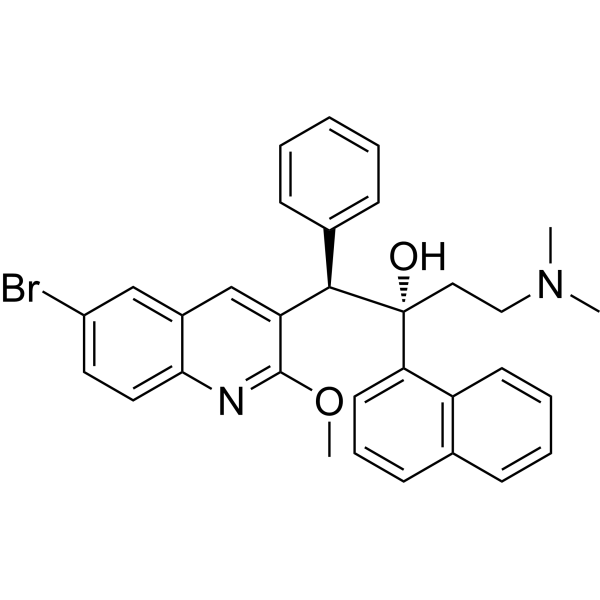
    TBAJ-876 is an orally active diarylquinoline anti-Mycobacterium agent. TBAJ-876 regulates energy metabolism by targeting the c and ε subunits of Mycobacterium tuberculosis F-ATP synthase, exerts bactericidal activity against replicating Mycobacterium tuberculosis, and retains activity against strains carrying the Rv0678 mutation. TBAJ-876 undergoes N-demethylation in vivo to form its major active metabolite TBAJ-876-M3, which has lower lipophilicity and hERG potassium channel binding affinity. TBAJ-876 is well tolerated in BALB/c mice and significantly reduces the colony-forming units of Mycobacterium tuberculosis in the lungs. In addition, TBAJ-876 exhibits inhibitory activity against Mycobacterium abscessus, reduces bacterial loads in the lungs and spleens of infected mice, and shows no antagonistic effect when used in combination with common antibiotics. TBAJ-876 can be used in studies related to tuberculosis and Mycobacterium abscessus pulmonary diseases .
    TBAJ-876
  • HY-148732

    Proteasome Inflammation/Immunology
    LU-005i is a potent inhibitor of β5i subunit of immunoproteasomes (IC50 = 6.6 nM), selective over β5c subunit (IC50 = 287 nM) .
    LU-005i
  • HY-P10030

    Proteasome NF-κB Inflammation/Immunology
    DPLG3 is a specific chymotryptic-like β5i subunits inhibitor, with an IC50 of 4.5 nM. DPLG3 inhibits mouse i-20S with IC50 of 9.4 nM. DPLG3 downregulates the protein levels of NF-κB p50 and p65. DPLG3 can be used for immune disease research .
    DPLG3
  • HY-P99417

    UCB4144; VR 942

    Interleukin Related Inflammation/Immunology
    Abrezekimab (UCB4144; VR 942) is a humanized, high-affinity, neutralizing anti-human-IL-13 antibody fragment that binds to IL-13. Abrezekimab prevents IL-13 binding to the IL-13 Rα1 subunit. Abrezekimab can be used for the research of asthma .
    Abrezekimab
  • HY-P1259A

    Proteasome Bacterial Inflammation/Immunology
    PR-39 TFA, a natural proline- and arginine-rich antibacterial peptide, is a noncompetitive, reversible and allosteric proteasome inhibitor. PR-39 TFAreversibly binds to the α7 subunit of the proteasome and blocks degradation of NF-κB inhibitor IκBα by the ubiquitin-proteasome pathway. PR-39 TFA stimulates angiogenesis, inhibits inflammatory responses and significant reduces myocardial infarct size in mice .
    PR-39 TFA
  • HY-103511

    GABA Receptor Neurological Disease
    TCS1105 is a benzodiazepine ligand with agonist for α2-subunit containing GABAA receptors and antagonist for α1-subunit containing GABAA receptors. TCS1105 reduces anxiety-like behavior in mice. TCS1105 enhances offensive behavior and social dominance. TCS1105 blocks Sema3A induced AGC (axonal growth cones) collapse in a concentration-dependent fashion .
    TCS1105
  • HY-123515

    Infection
    Clorobiocin is an antibacterial agent with an IC50 of 0.21 μM against the B subunit of E. coli DNA gyrase. Clorobiocin targets the mLaC protein of Gram-negative bacteria. Clorobiocin potently inhibits bacterial DNA replication. Clorobiocin can be used in studies on Gram-negative bacterial infections, such as Acinetobacter baumannii and E. coli infections .
    Clorobiocin
  • HY-P10002

    Proteasome Cancer
    EWFW-ACC is the tetrapeptide substrate for the immunoproteasome and has selectivity for the LMP7 subunits .
    EWFW-ACC
  • HY-P2558

    GSK-3 Others
    GSK3 Substrate, α, β subunit is peptide substrate for glycogen synthase kinase-3 (GSK-3) and can be used to measure GSK-3 activity .
    GSK3 Substrate, α, β subunit
  • HY-143744

    GP681; Cap-dependent endonuclease-IN-3

    Endonuclease Influenza Virus Infection
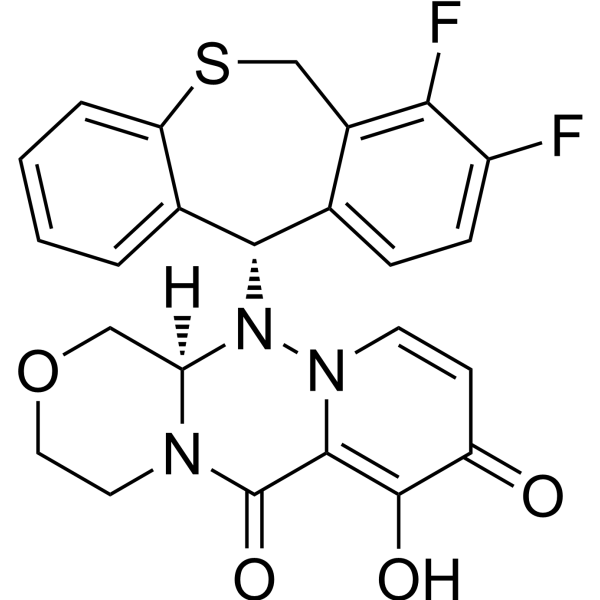
    Suraxavir marboxil (GP681; Cap-dependent endonuclease-IN-3) is a PA subunit cap-dependent endonuclease inhibitor with antiviral activity. Suraxavir marboxil inhibits PA subunit cap-dependent endonuclease activity and inhibits influenza A and/or influenza B viral replication. Suraxavir marboxil can be used alone or in combination with other anti-influenzal agents for the prevention of influenza A and/or influenza B viral infectious diseases. Suraxavir marboxil can be used for the research of influenza A and/or influenza B viral infectious diseases .
    Suraxavir marboxil
  • HY-P2956

    D-Fructose dehydrogenase

    Biochemical Assay Reagents Metabolic Disease
    Fructose 5-dehydrogenase (acceptor) (D-Fructose dehydrogenase) is a membrane-bound flavohemo-protein that catalyzes the oxidation of d-fructose to 5-keto-d-fructose. Fructose 5-dehydrogenase (acceptor) consists of three subunits: subunit I (67 kDa), subunit II (51 kDa), and subunit III (20 kDa) .
    Fructose 5-dehydrogenase (acceptor)
  • HY-153406

    Biochemical Assay Reagents Others
    Activated T Subunit can be used in the synthesis of exon jumping oligomer conjugates. The oligomer conjugates complement selected target sites in the human anti-muscular atrophy protein gene and induce exon 51 jumping. Activated T subunit can be used for research of muscular dystrophy .
    Activated T Subunit
  • HY-162793

    DNA/RNA Synthesis Influenza Virus Infection
    RdRP-IN-8 (compound 45) is an anti-influenza virus compound. RdRP-IN-8 inhibits viral RNA-dependent RNA polymerase (RdRP) activity by disrupting heterodimerization of PA and PB1 subunits (EC50=0.13 μM) .
    RdRP-IN-8
  • HY-106597A

    Bacterial Antibiotic Infection
    Pirlimycin hydrochloride, a lincosamide antibiotic, is active against Gram-positive bacteria. Pirlimycin hydrochloride acts by inhibiting bacterial protein synthesis via binding with the 50S subunit of the ribosome .
    Pirlimycin hydrochloride
  • HY-106597

    Antibiotic Bacterial Infection
    Pirlimycin, a lincosamide antibiotic, is active against Gram-positive bacteria. Pirlimycin acts by inhibiting bacterial protein synthesis via binding with the 50S subunit of the ribosome .
    Pirlimycin
  • HY-153405

    Biochemical Assay Reagents Phosphoramidites Others
    Activated DPG Subunit can be used in the synthesis of exon jumping oligomer conjugates. The oligomer conjugates complement selected target sites in the human anti-muscular atrophy protein gene and induce exon 51 jumping. It can be used for research of muscular dystrophy .
    Activated DPG Subunit
  • HY-127102

    DDD01305143​

    Parasite Proteasome Infection
    GSK3494245 (DDD01305143) is a potent, orally active, and selective inhibitor of the chymotrypsin-like activity of the parasite proteasome binding in a site sandwiched between the β4 and β5 subunits (IC50=0.16 μM for WT L. donovani proteasomes). GSK3494245 moderately inhibits chymotrypsin-like activity of human proteasome (IC50: purified 26S=13 µM; enriched THP-1 extracts IC50=40µM). GSK3494245 exhibits attractive biological and biosafety properties .
    GSK3494245
  • HY-P1259

    Proteasome Bacterial Inflammation/Immunology
    PR-39, a natural proline- and arginine-rich antibacterial peptide, is a noncompetitive, reversible and allosteric proteasome inhibitor. PR-39 reversibly binds to the α7 subunit of the proteasome and blocks degradation of NF-κB inhibitor IκBα by the ubiquitin-proteasome pathway. PR-39 stimulates angiogenesis, inhibits inflammatory responses and significant reduces myocardial infarct size in mice .
    PR-39
  • HY-19371

    GABA Receptor Neurological Disease
    Lorediplon is a novel non-benzodiazepine drug acting as a GABAA receptor modulator, differentially active at the alpha1-subunit, associated with promoting sleep.
    Lorediplon
  • HY-126047

    NF-κB Beta-secretase Neurological Disease
    (S)-(-)-Anatabine is an NFκB/BACE-1 inhibitor with blood-brain barrier penetration. (S)-(-)-Anatabine inhibits NFκB activation via phosphorylation of its p65 subunit. (S)-(-)-Anatabine inhibits BACE-1 transcription and reduces BACE-1 protein levels. (S)-(-)-Anatabine lowers production of 1-40 and 1-42 by reducing β-cleavage of amyloid precursor protein without affecting α-cleavage. (S)-(-)-Anatabine can be used for the research of Alzheimer's disease .
    (S)-(-)-Anatabine
  • HY-169144

    Proteasome Cancer
    Bortezomib analog (Compound 13), an analog of Bortezomib (HY-10227), is an active control of 20S proteasome subunit β5 ligand.
    Bortezomib analog
  • HY-117544

    Drug Intermediate Others
    Porphyrin precursor is the precursor of Porphyrin for the synthesis of Porphyrin. Porphyrin is a large organic compound containing four modified pyrrole subunits interconnected to each other .
    Porphyrin precursor
  • HY-172143

    Phosphatase Neurological Disease Cancer
    ATUX-8385 is a potent PP2A activator. ATUX-8385 binds to PR65 subunit. ATUX-8385 has the potential for the research of cancers and chronic conditions such as Alzheimer’s disease and chronic obstructive pulmonary disease .
    ATUX-8385
  • HY-17466A

    Bonomycin hydrochloride; 6-Demethyl-6-deoxytetracycline hydrochloride

    Antibiotic Bacterial Metabolic Disease Inflammation/Immunology
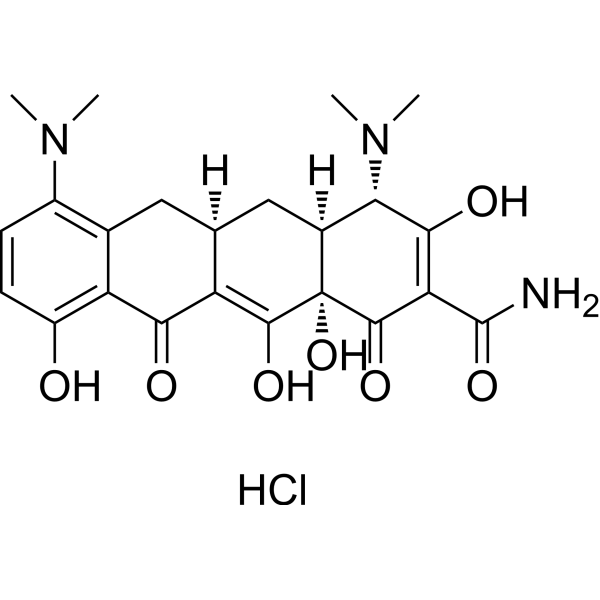
    Sancycline (6-Demethyl-6-deoxytetracycline) hydrochloride acts by reversibly binding to the 30 S ribosomal subunit and inhibiting protein translation by blocking entry of aminoacyl-tRNA into the ribosome a site similar to tetracycline (HY-A0107). Sancycline hydrochloride, four linearly fused six-membered rings with four stereocenters, is a rare semi-synthetic tetracycline (HY-A0107) prepared by hydrogenolysis of the chloro and benzylic hydroxy moieties of Declomycin .
    Sancycline hydrochloride
  • HY-145586A

    ZSP1273 monohydrate

    Influenza Virus DNA/RNA Synthesis Infection
    Onradivir (ZSP1273) monohydrate is an orally active antiviral agent targeting influenza A virus RNA polymerase PB2 subunit with an IC50 of 0.562 nM. Onradivir monohydrate inhibits cap binding to influenza A virus RNA polymerase PB2 subunit, suppresses viral replication, reduces viral titres and RNA loads, and inhibits influenza A virus infection. Onradivir monohydrate maintains high survival rates in influenza A virus-infected mice, and reduces influenza A virus titers in a murine model. Onradivir monohydrate can be used for the research of influenza A virus infection .
    Onradivir monohydrate

Inquiry Online

Your information is safe with us. * Required Fields.

Salutation


Country or Region *

Applicant Name *


Organization Name *

Department *


Email Address *


Product Name *

Cat. No.


Requested quantity *

Phone Number *


Remarks

Inquiry Online

Inquiry Information

Product Name:
Cat. No.:
Quantity:
MCE Japan Authorized Agent:

