



BGT226
Based on 6 publication(s) in Google Scholar
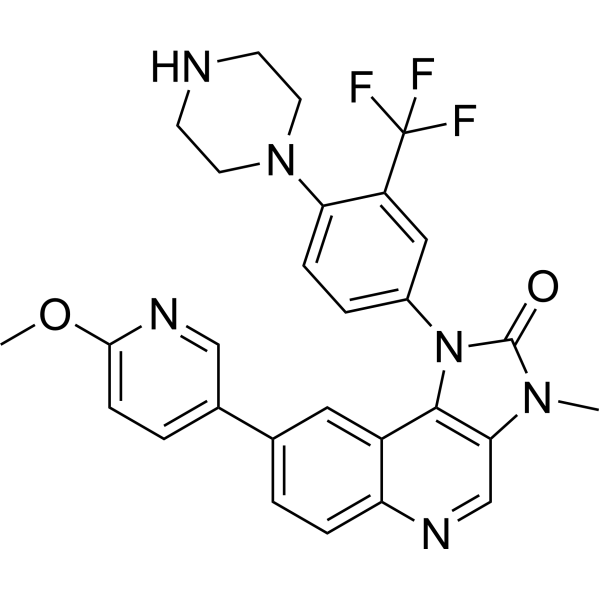
BGT226 (NVP-BGT226) is a PI3K (with IC50s of 4 nM, 63 nM and 38 nM for PI3Kα, PI3Kβ and PI3Kγ)/mTOR dual inhibitor which displays potent growth-inhibitory activity against human head and neck cancer cells.
For research use only. We do not sell to patients.
- Purity : 99.85%
- CAS No.: 915020-55-2
- Formula: C28H25F3N6O2
- Molecular Weight:534.53
-
Storage:Powder -20°C, 3 years , 4°C, 2 years ; In solvent -80°C, 6 months , -20°C, 1 month

To place orders, for customer services and technical support, please contact: MedChemExpress USA
Tel: 609-228-6898 E-mail: [email protected] [email protected]


-
 Biological Activity
-
Chemical Information
-
Solvent & Solubility
- Purity & Documentation
- References
-
 Help & FAQs


-
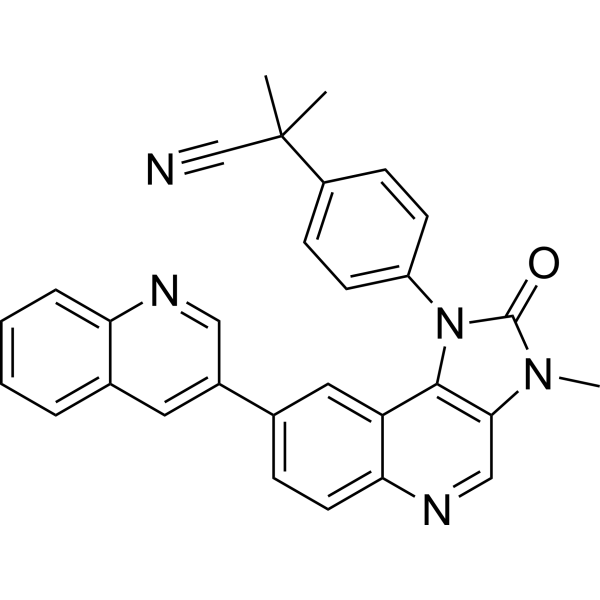
HY-50673
DactolisibPI3K/mTOR Inhibitor -
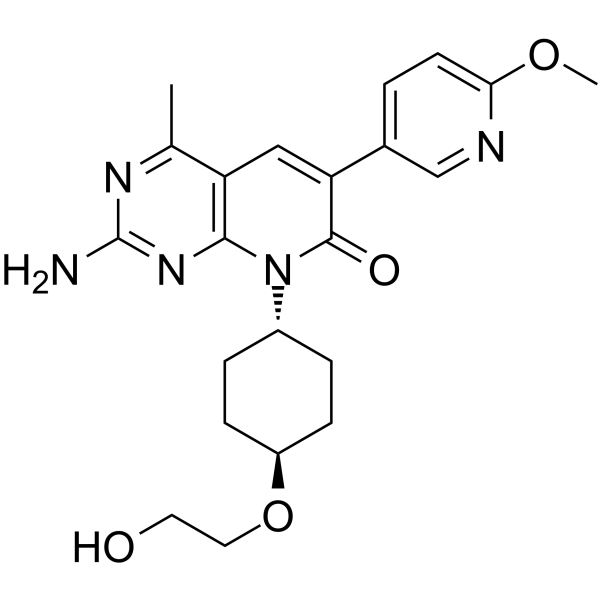
HY-15177
PF-04691502PI3K/mTOR Inhibitor -
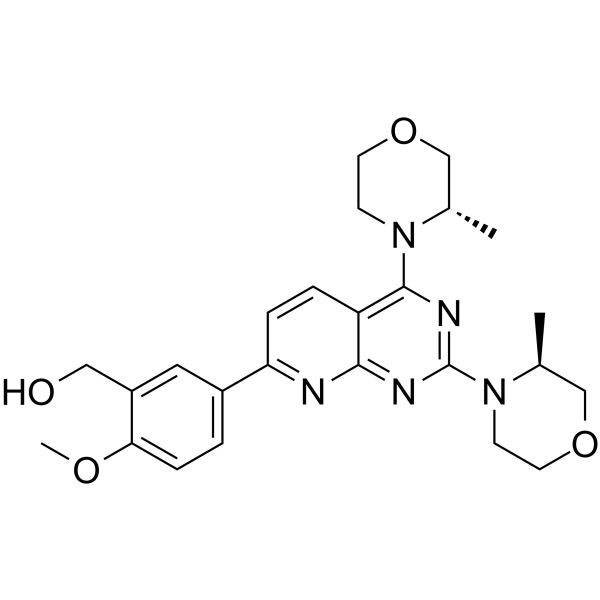
HY-10422
AZD-8055mTOR Inhibitor -
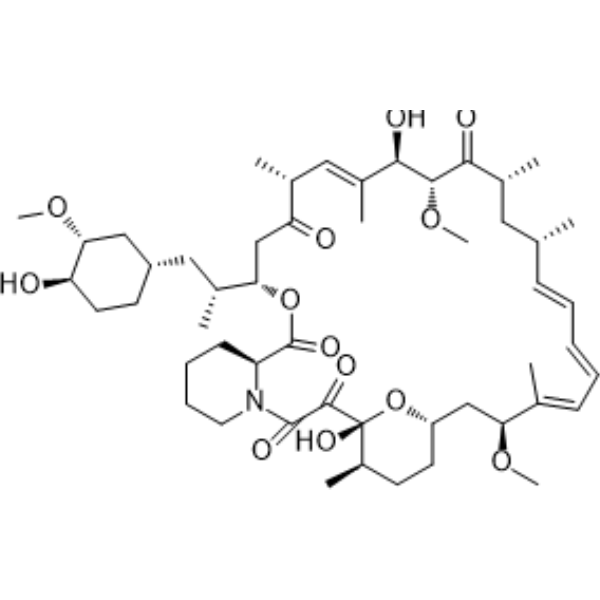
HY-10219
RapamycinmTOR Inhibitor -
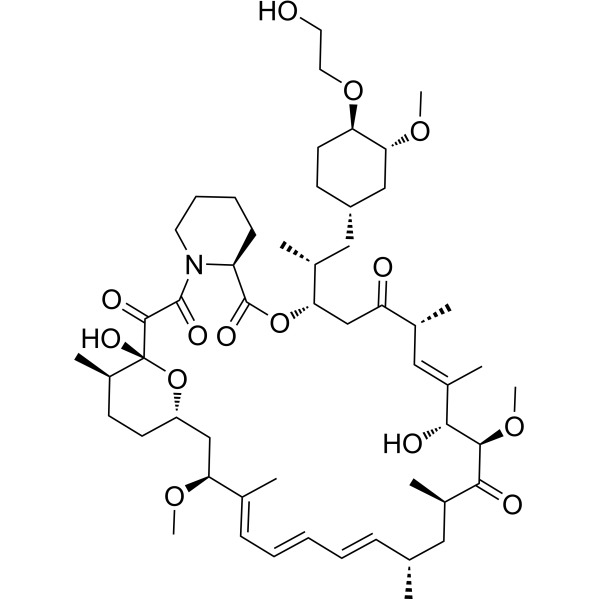
HY-10218
EverolimusmTORC Inhibitor -
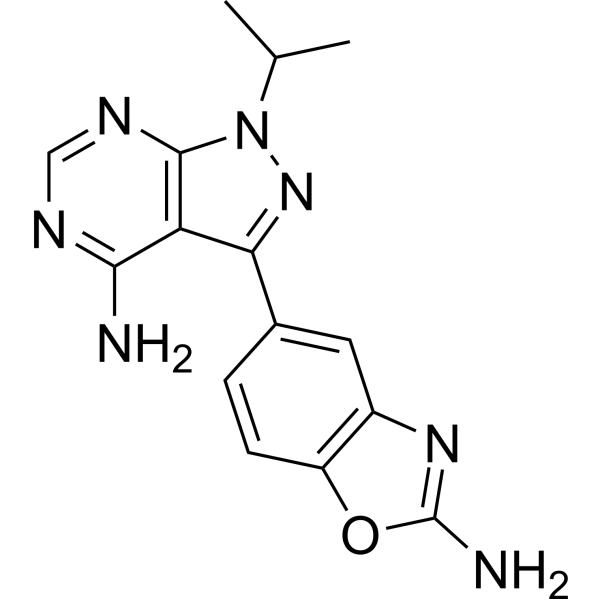
HY-13328
SapanisertibmTORC1/mTORC2 Inhibitor -
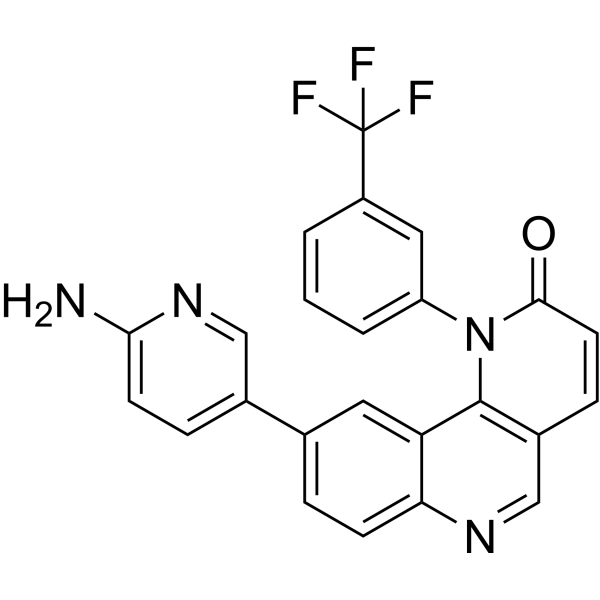
HY-13002
Torin 2mTOR Inhibitor -
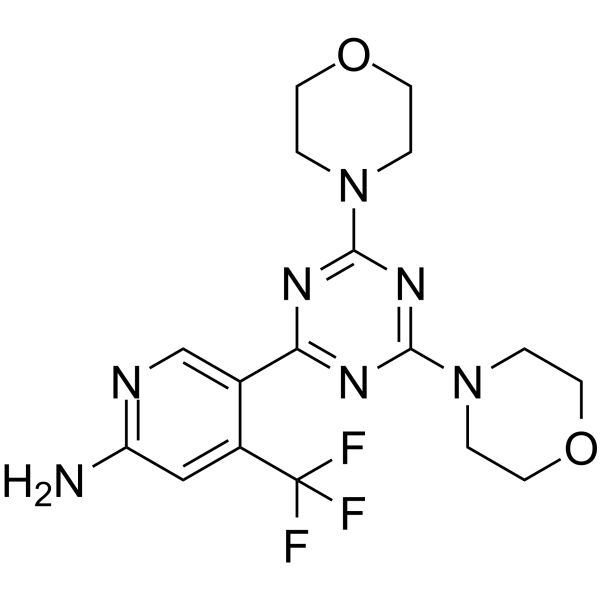
HY-12868
BimiralisibPI3K/mTOR Inhibitor -
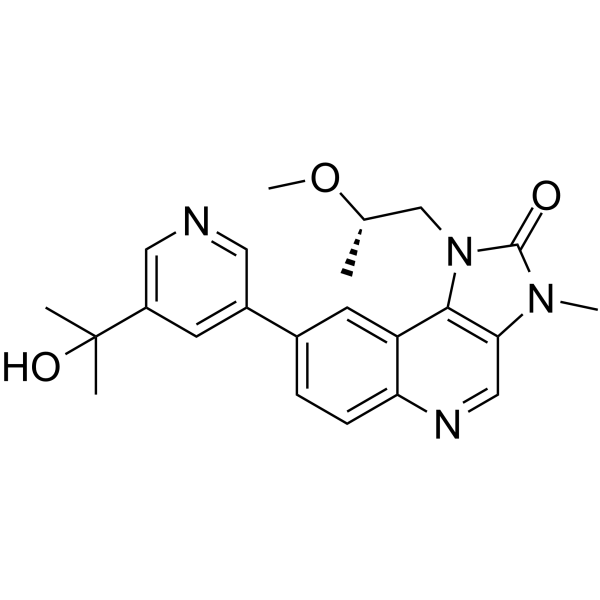
HY-12513
Samotolisib -
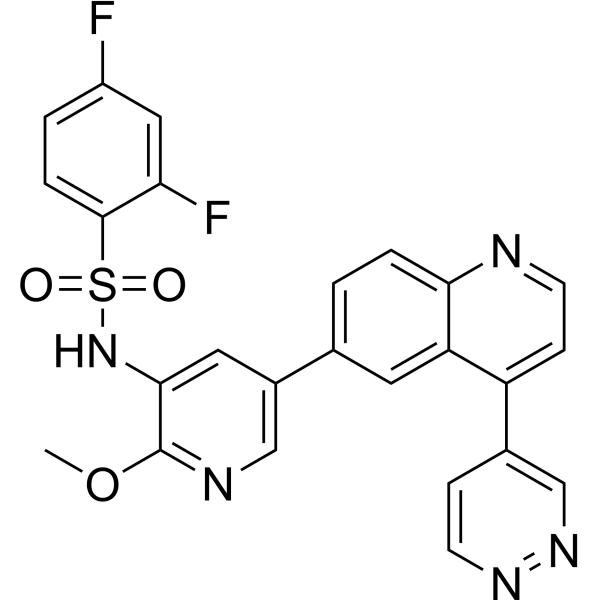
HY-10297
OmipalisibPI3K/mTOR Inhibitor -
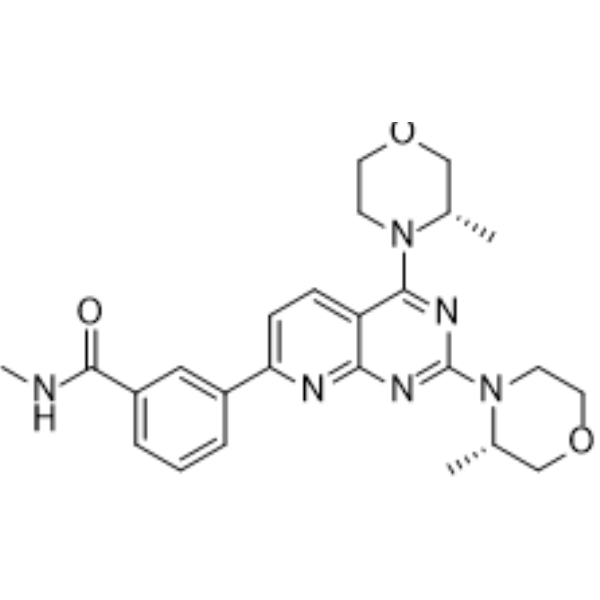
HY-15247
VistusertibmTORC Inhibitor -
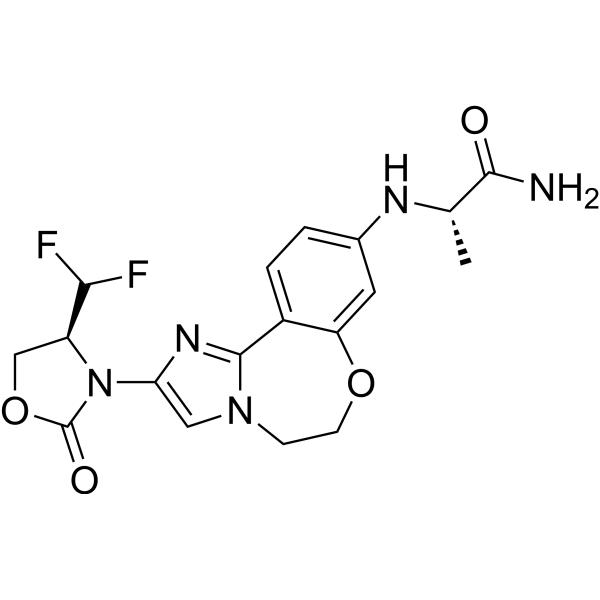
HY-101562
InavolisibPI3Kα Inhibitor
Publications Citing Use of MedChemExpress (MCE) BGT226
More

Biological Activity
Description
IC50 & Target
[1]|
PI3Kα 4 nM (IC50) |
PI3Kβ 63 nM (IC50) |
PI3Kγ 38 nM (IC50) |
mTOR |
Autophagy |
Cellular Effect
|
Cell Line

|
Type | Value | Description | References |
|---|---|---|---|---|
| Hep 3B2 | IC50 |
1.22 μM
Compound: Chemical probe: NVP-BGT226
|
Cytotoxicity against human Hep3B cells assessed as reduction in cell viability incubated for 48 hrs by MTT assay
Cytotoxicity against human Hep3B cells assessed as reduction in cell viability incubated for 48 hrs by MTT assay
|
[PMID: 26003166] |
| HepG2 | IC50 |
1.35 μM
Compound: Chemical probe: NVP-BGT226
|
Cytotoxicity against human HepG2 cells assessed as reduction in cell viability incubated for 48 hrs by MTT assay
Cytotoxicity against human HepG2 cells assessed as reduction in cell viability incubated for 48 hrs by MTT assay
|
[PMID: 26003166] |
| KB | IC50 |
7.4 nM
Compound: BGT226; 2
|
Anticancer activity against human KB cells assessed as growth inhibition
Anticancer activity against human KB cells assessed as growth inhibition
|
[PMID: 34894440] |
| Mahlavu | IC50 |
0.55 μM
Compound: Chemical probe: NVP-BGT226
|
Cytotoxicity against human Mahlavu cells assessed as reduction in cell viability incubated for 48 hrs by MTT assay
Cytotoxicity against human Mahlavu cells assessed as reduction in cell viability incubated for 48 hrs by MTT assay
|
[PMID: 26003166] |
| SCC-4 | IC50 |
7.4 nM
Compound: BGT226; 2
|
Anticancer activity against human SCC-4 cells assessed as growth inhibition
Anticancer activity against human SCC-4 cells assessed as growth inhibition
|
[PMID: 34894440] |
| SNU-449 | IC50 |
0.51 μM
Compound: Chemical probe: NVP-BGT226
|
Cytotoxicity against human SNU-449 cells assessed as reduction in cell viability incubated for 48 hrs by MTT assay
Cytotoxicity against human SNU-449 cells assessed as reduction in cell viability incubated for 48 hrs by MTT assay
|
[PMID: 26003166] |
| SNU-475 | IC50 |
1.01 μM
Compound: Chemical probe: NVP-BGT226
|
Cytotoxicity against human SNU-475 cells assessed as reduction in cell viability incubated for 48 hrs by MTT assay
Cytotoxicity against human SNU-475 cells assessed as reduction in cell viability incubated for 48 hrs by MTT assay
|
[PMID: 26003166] |
In Vitro
BGT226 shows significant growth inhibition or signal blockage profiles compared with LY294002 and Rapamycin. BGT226 (10-10000 nM) inhibits FaDu and OECM1 cells growth with IC50s of 23.1±7.4 and 12.5±5.1 nM, respectively[2].
The expression levels of p-mTOR Ser2481 are decreased in BGT226-treated cell lines (200 nM; 24 hours) and both p-AKT Ser473 and p-mTOR Ser2448 are also decreased in BGT226-treated cell lines[2].
MedChemExpress (MCE) has not independently confirmed the accuracy of these methods. They are for reference only.
-
Cell Line:FaDu cells; OECM1 cells
-
Concentration:10, 100, 1000, 10000 nM
-
Incubation Time:
-
Result:Inhibited FaDu and OECM1 cells growth with IC50s of 23.1±7.4 and 12.5±5.1 nM, respectively.
-
Cell Line:FaDu cells; OECM1 cells
-
Concentration:200 nM
-
Incubation Time:24 hours
-
Result:p-mTOR Ser2481 expression levels decreased, and both p-AKT Ser473 and p-mTOR Ser2448 expression levels also decreased.
In Vivo
MedChemExpress (MCE) has not independently confirmed the accuracy of these methods. They are for reference only.
-
Animal Model:Male athymic mice (strain BALB/cAnN.Cg-Foxn1nu/CrlNarl) with FaDu cell xenografted mouse model[2]
-
Dosage:2.5 and 5 mg/kg
-
Administration:Oral administration; 21 days
-
Result:Caused 34.7% and 76.1% reduction of the tumor growth.


Chemical Information
-
CAS No. 915020-55-2
-
Appearance Solid
-
Molecular Weight 534.53
-
Formula C28H25F3N6O2
-
Color White to off-white
-
SMILES
O=C(N1C2=CC=C(N3CCNCC3)C(C(F)(F)F)=C2)N(C)C4=C1C5=CC(C6=CC=C(OC)N=C6)=CC=C5N=C4
-
Synonyms
NVP-BGT226
-
Shipping
Room temperature in continental US; may vary elsewhere.
-
Storage
Powder -20°C 3 years 4°C 2 years In solvent -80°C 6 months -20°C 1 month


Publications (6)
-
Journal Impact Factor
-
Most Recent
-
Sci Transl Med
PP2A inhibition is a druggable MEK inhibitor resistance mechanism in KRAS-mutant lung cancer cells. [Abstract]2018 Jul 18;10(450):eaaq1093. PMID: 30021885 -
Front Pharmacol
CC-223, NSC781406, and BGT226 Exerts a Cytotoxic Effect Against Pancreatic Cancer Cells via mTOR Signaling. [Abstract]2020 Nov 11:11:580407. PMID: 33343350 -
Molecules
In Vitro and in Vivo Activity of mTOR Kinase and PI3K Inhibitors Against Leishmania donovani and Trypanosoma brucei. [Abstract]2020 Apr 23;25(8):1980. PMID: 32340370 -
Arch Pharm (Weinheim)
Discovery of potent CSK inhibitors through integrated virtual screening and molecular dynamic simulation. [Abstract]2024 Sep;357(9):e2400066. PMID: 38809025 -
Res Sq
A first-in-class precision antibody conjugate targeting EGFR, mTOR, and PI3K to treat head and neck cancers. [Abstract]2026 May 14:rs.3.rs-9655840. PMID: 42183362 -


Solvent & Solubility
In Vitro:
DMSO : 10 mg/mL (18.71 mM; ultrasonic and warming and heat to 60°C; Hygroscopic DMSO has a significant impact on the solubility of product, please use newly opened DMSO)
Please refer to the solubility information to select the appropriate solvent. Once prepared, please aliquot and store the solution to prevent product inactivation from repeated freeze-thaw cycles.
Storage method and period of stock solution: -80°C, 6 months; -20°C, 1 month. When stored at -80°C, please use it within 6 months. When stored at -20°C, please use it within 1 month.
Please refer to the solubility information to select the appropriate solvent. Once prepared, please aliquot and store the solution to prevent product inactivation from repeated freeze-thaw cycles.
Storage method and period of stock solution: -80°C, 6 months; -20°C, 1 month. When stored at -80°C, please use it within 6 months. When stored at -20°C, please use it within 1 month.
Concentration (start) × Volume (start) = Concentration (final) × Volume (final)
In Vivo:
Select the appropriate dissolution method based on your experimental animal and administration route.
- For the following dissolution methods, please ensure to first prepare a clear stock solution using an In Vitro approach and then sequentially add co-solvents:
- To ensure reliable experimental results, the clarified stock solution can be appropriately stored based on storage conditions. As for the working solution for In Vivo experiments, it is recommended to prepare freshly and use it on the same day.
- The percentages shown for the solvents indicate their volumetric ratio in the final prepared solution. If precipitation or phase separation occurs during preparation, heat and/or sonication can be used to aid dissolution.
Add each solvent one by one: 10% DMSO 40% PEG300 5% Tween-80 45% Saline
Solubility: ≥ 1 mg/mL (1.87 mM); Clear solution
This protocol yields a clear solution of ≥ 1 mg/mL (saturation unknown).
Taking 1 mL working solution as an example, add 100 μL DMSO stock solution (10.0 mg/mL) to 400 μL PEG300, and mix evenly; then add 50 μL Tween-80 and mix evenly; then add 450 μL Saline to adjust the volume to 1 mL.
Preparation of Saline: Dissolve 0.9 g sodium chloride in ddH₂O and dilute to 100 mL to obtain a clear Saline solution.
In Vivo Dissolution Calculator
Please enter the basic information of animal experiments:
-
-
-
-
Recommended: Prepare an additional quantity of animals to account for potential losses during experiments.
Please enter your animal formula composition:
-
%DMSO +
Recommended: Keep the proportion of DMSO in working solution below 2% if your animal is weak.
-
%+
-
+%Tween-80 + +
-
%Saline +
The co-solvents required include: DMSO, . All of co-solvents are available by MedChemExpress (MCE). , Tween 80. All of co-solvents are available by MedChemExpress (MCE).
Working solution concentration: 0.22 mg/mL
Method for preparing stock solution: mg drug dissolved in μL DMSO. Stock solution concentration: mg/mL.
1. Take μL DMSO stock solution;
2. Add μL .
μL , mix evenly;
3. Then add μL Tween 80, mix evenly;
4. Then add μL
Please ensure that the stock solution in the first step is dissolved to a clear state, and add co-solvents in sequence. You can use ultrasonic heating (ultrasonic cleaner, recommended frequency 20-40 kHz), vortexing, etc. to assist dissolution.


Purity & Documentation
-
Data Sheet (286 KB)
-
SDS (251 KB)
- English - EN (251 KB)
- Français - FR (251 KB)
- Deutsch - DE (251 KB)
- Norwegian - NO (251 KB)
- Español - ES (251 KB)
- Swedish - SV (251 KB)
- Italian - IT (251 KB)
- Korean - KR (251 KB)
- Portuguese - PT (251 KB)
-
Handling Instructions (2659 KB)
References
[1]. Markman B, et al. Phase I safety, pharmacokinetic, and pharmacodynamic study of the oral phosphatidylinositol-3-kinase and mTOR inhibitor BGT226 in patients with advanced solid tumors. Ann Oncol. 2012 Sep;23(9):2399-408. [Content Brief]
[2]. Chang KY, et al. Novel phosphoinositide 3-kinase/mTOR dual inhibitor, NVP-BGT226, displays potent growth-inhibitory activity against human head and neck cancer cells in vitro and in vivo. Clin Cancer Res. 2011 Nov 15;17(22):7116-26. [Content Brief]


Complete Stock Solution Preparation Table
Please refer to the solubility information to select the appropriate solvent. Once prepared, please aliquot and store the solution to prevent product inactivation from repeated freeze-thaw cycles.
Storage method and period of stock solution: -80°C, 6 months; -20°C, 1 month. When stored at -80°C, please use it within 6 months. When stored at -20°C, please use it within 1 month.
| Optional Solvent | Concentration Solvent Mass | 1 mg | 5 mg | 10 mg | 25 mg |
|---|---|---|---|---|---|
| DMSO | 1 mM | 1.8708 mL | 9.3540 mL | 18.7080 mL | 46.7701 mL |
| 5 mM | 0.3742 mL | 1.8708 mL | 3.7416 mL | 9.3540 mL | |
| 10 mM | 0.1871 mL | 0.9354 mL | 1.8708 mL | 4.6770 mL | |
| 15 mM | 0.1247 mL | 0.6236 mL | 1.2472 mL | 3.1180 mL |


BGT226 Related Classifications
HY-13334A Related Classifications
 Powered by Bioz