



Valinomycin
Based on 8 publication(s) in Google Scholar
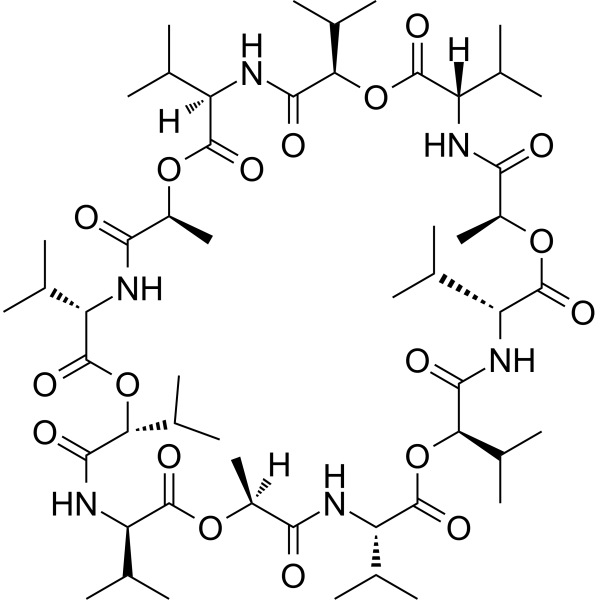
Valinomycin is a potassium-specific ionophore, the valinomycin-K+ complex can be incorporated into biological bilayer membranes with the hydrophobic surface of valinomycin, destroys the normal K+ gradient across the membrane, and as a result kills the cells, incorporating into liposomes can significantly reduces the cytotoxicity and enhances the targeting effect. Valinomycin exhibits antibiotic, antifungal, antiviral, antitumor and insecticidal efficacy, thus can be used for relevant research.
For research use only. We do not sell to patients.
- Purity : 98.92%
- CAS No.: 2001-95-8
- Formula: C54H90N6O18
- Molecular Weight:1111.32
-
Storage:
Sealed storage, away from moisture.
Powder -80°C, 2 years , -20°C, 1 year* In solvent : -80°C, 6 months; -20°C, 1 month (sealed storage, away from moisture)

To place orders, for customer services and technical support, please contact: MedChemExpress USA
Tel: 609-228-6898 E-mail: [email protected] [email protected]


-
 Biological Activity
-
Chemical Information
-
Solvent & Solubility
- Protocols
- Purity & Documentation
- References
-
 Help & FAQs


-
HY-127019
NigericinNLRP3 Activator -
HY-100941
CCCPOXPHOS Uncoupler -
HY-100381
Nigericin sodium saltNLRP3 Activator -

HY-P0163
GramicidinAntimicrobial Peptide -
HY-101892
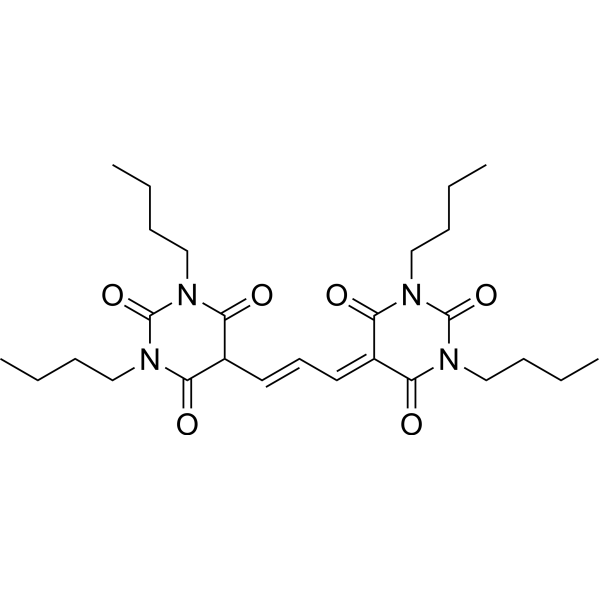
DiBAC4(3)Voltage-Sensitive Fluorescent Dye -
HY-100558
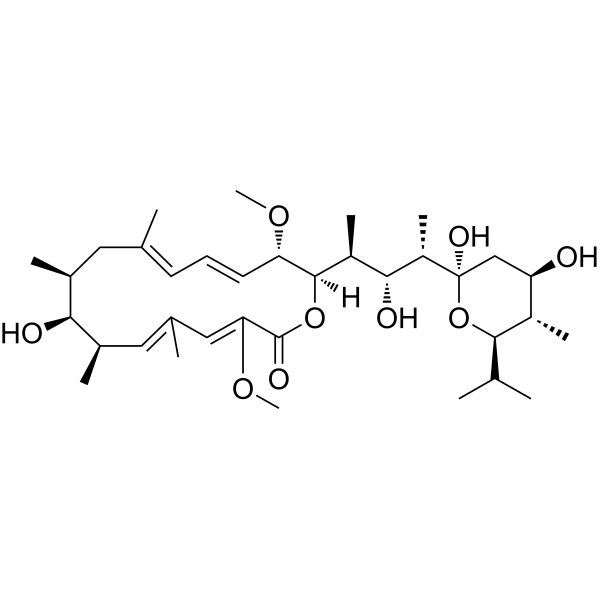
Bafilomycin A1V-ATPase Inhibitor -
HY-100410
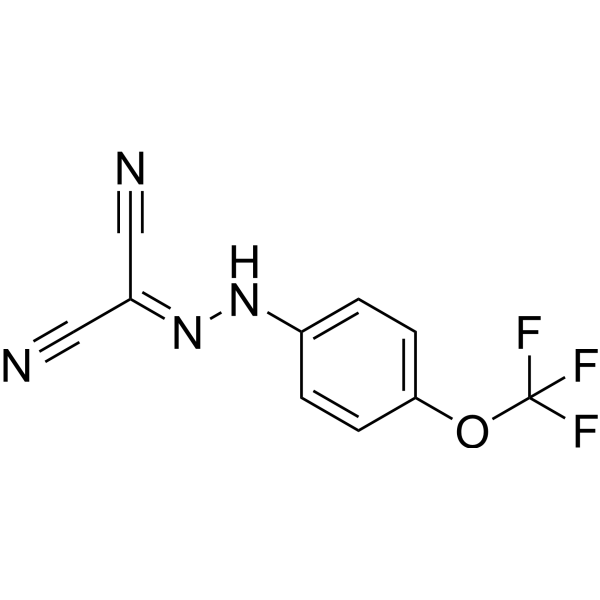
FCCPOXPHOS Uncoupler -
HY-N0109
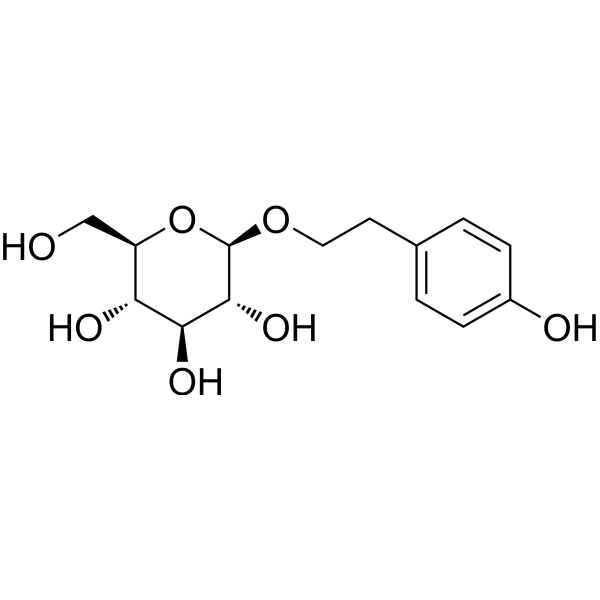
SalidrosideProlyl Endopeptidase Inhibitor -
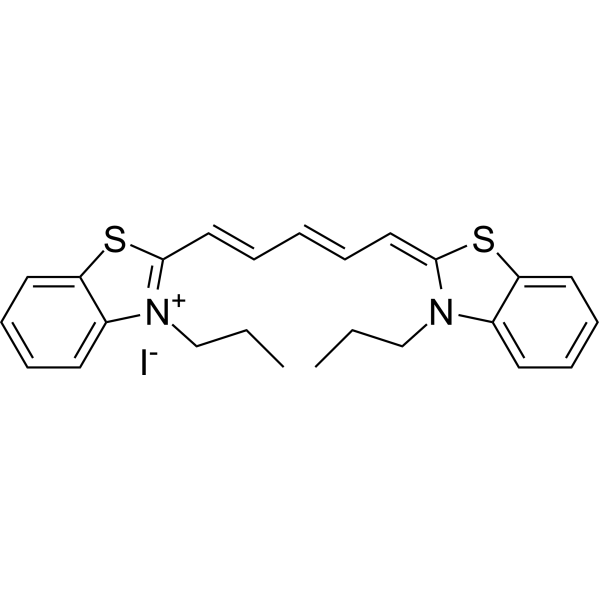
HY-D0085
DiSC3(5)Fluorescent Probe -
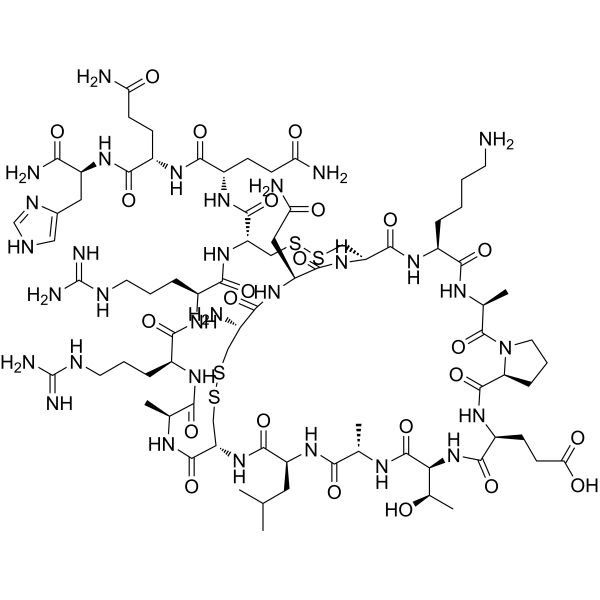
HY-P0256
ApaminPotassium Channel Inhibitor -
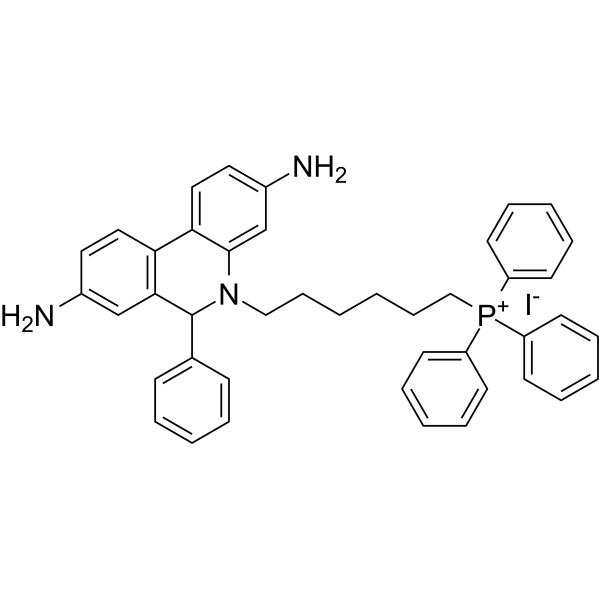
HY-D1055
MitoSOX RedMitochondrial ROS Indicator -
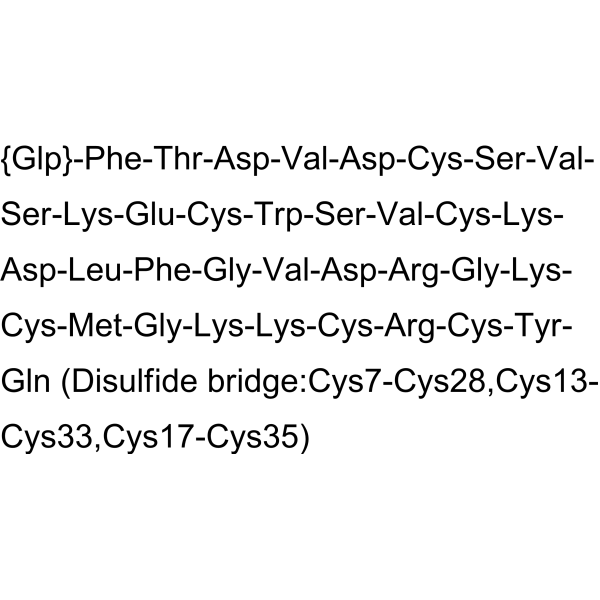
HY-P0190
IberiotoxinCa2+-activated K+ Channel Inhibitor
Publications Citing Use of MedChemExpress (MCE) Valinomycin
More Customer Validation & Images

-
WB
-
WB
-
WB
-
Cell Proliferation/Viability Assay
-
Bio/Physico-chemical Assay
All Antibiotic Isoforms
More

Biological Activity
Description
Cellular Effect
|
Cell Line

|
Type | Value | Description | References |
|---|---|---|---|---|
| A2780 | IC50 |
2.18 μM
Compound: 1, VLM
|
Cytotoxicity against human A2780 cells after 72 hrs by MTT assay
Cytotoxicity against human A2780 cells after 72 hrs by MTT assay
|
[PMID: 24900628] |
| BXPC-3 | GI50 |
0.0019 μg/mL
Compound: 3
|
Cytotoxicity against human BxPC3 cells after 48 hrs by sulforhodamine B assay
Cytotoxicity against human BxPC3 cells after 48 hrs by sulforhodamine B assay
|
[PMID: 19226154] |
| C6 | IC50 |
0.0004 μM
Compound: 1, VLM
|
Cytotoxicity against rat C6 cells after 72 hrs by MTT assay
Cytotoxicity against rat C6 cells after 72 hrs by MTT assay
|
[PMID: 24900628] |
| C6 | IC50 |
0.4 nM
Compound: 1, VLM
|
Cytotoxicity against rat C6 cells after 72 hrs by MTT assay
Cytotoxicity against rat C6 cells after 72 hrs by MTT assay
|
[PMID: 24900628] |
| DU-145 | GI50 |
0.0035 μg/mL
Compound: 3
|
Cytotoxicity against human DU145 cells after 48 hrs by sulforhodamine B assay
Cytotoxicity against human DU145 cells after 48 hrs by sulforhodamine B assay
|
[PMID: 19226154] |
| HeLa | IC50 |
0.001 μM
Compound: 17
|
Antiproliferative activity against HeLa cells after 72 hrs by MTT assay
Antiproliferative activity against HeLa cells after 72 hrs by MTT assay
|
[PMID: 17300184] |
| HepG2 | IC50 |
0.0008 μM
Compound: 1, VLM
|
Cytotoxicity against human HepG2 cells after 72 hrs by MTT assay
Cytotoxicity against human HepG2 cells after 72 hrs by MTT assay
|
[PMID: 24900628] |
| HepG2 | IC50 |
0.8 nM
Compound: 1, VLM
|
Cytotoxicity against human HepG2 cells after 72 hrs by MTT assay
Cytotoxicity against human HepG2 cells after 72 hrs by MTT assay
|
[PMID: 24900628] |
| KM-20L2 | GI50 |
0.0008 μg/mL
Compound: 3
|
Cytotoxicity against human KM20L2 cells after 48 hrs by sulforhodamine B assay
Cytotoxicity against human KM20L2 cells after 48 hrs by sulforhodamine B assay
|
[PMID: 19226154] |
| KM-20L2 | GI50 |
0.8 ng/mL
Compound: 3
|
Cytotoxicity against human KM20L2 cells after 48 hrs by sulforhodamine B assay
Cytotoxicity against human KM20L2 cells after 48 hrs by sulforhodamine B assay
|
[PMID: 19226154] |
| MCF7 | IC50 |
0.5 μM
Compound: 17
|
Antiproliferative activity against MCF7 cells after 72 hrs by MTT assay
Antiproliferative activity against MCF7 cells after 72 hrs by MTT assay
|
[PMID: 17300184] |
| MCF7 | GI50 |
0.001 μg/mL
Compound: 3
|
Cytotoxicity against human MCF7 cells after 48 hrs by sulforhodamine B assay
Cytotoxicity against human MCF7 cells after 48 hrs by sulforhodamine B assay
|
[PMID: 19226154] |
| MCF7 | IC50 |
1.77 μM
Compound: 1, VLM
|
Cytotoxicity against human MCF7 cells after 72 hrs by MTT assay
Cytotoxicity against human MCF7 cells after 72 hrs by MTT assay
|
[PMID: 24900628] |
| MIA PaCa-2 | IC50 |
0.001 μM
Compound: 17
|
Antiproliferative activity against MiaPaCa2 cells after 72 hrs by MTT assay
Antiproliferative activity against MiaPaCa2 cells after 72 hrs by MTT assay
|
[PMID: 17300184] |
| NCI-H460 | IC50 |
0.001 μM
Compound: 17
|
Antiproliferative activity against H460 cells after 72 hrs by MTT assay
Antiproliferative activity against H460 cells after 72 hrs by MTT assay
|
[PMID: 17300184] |
| NCI-H460 | GI50 |
0.0025 μg/mL
Compound: 3
|
Cytotoxicity against human NCI-H460 cells after 48 hrs by sulforhodamine B assay
Cytotoxicity against human NCI-H460 cells after 48 hrs by sulforhodamine B assay
|
[PMID: 19226154] |
| NIH-3T3-G185 | IC50 |
3.2 μM
Compound: Valinomycin
|
TP_TRANSPORTER: inhibition of Daunorubicin efflux in NIH-3T3-G185 cells
TP_TRANSPORTER: inhibition of Daunorubicin efflux in NIH-3T3-G185 cells
|
[PMID: 11743742] |
| P388 | ED50 |
0.12 μg/mL
Compound: 3
|
Cytotoxicity against mouse P388 cells after 48 hrs by coulter counter method
Cytotoxicity against mouse P388 cells after 48 hrs by coulter counter method
|
[PMID: 19226154] |
| SF-268 | GI50 |
0.0027 μg/mL
Compound: 3
|
Cytotoxicity against human SF268 cells after 48 hrs by sulforhodamine B assay
Cytotoxicity against human SF268 cells after 48 hrs by sulforhodamine B assay
|
[PMID: 19226154] |
| SW-620 | IC50 |
0.0001 μM
Compound: 17
|
Antiproliferative activity against SW620 cells after 72 hrs by MTT assay
Antiproliferative activity against SW620 cells after 72 hrs by MTT assay
|
[PMID: 17300184] |
| SW-620 | IC50 |
0.1 nM
Compound: 17
|
Antiproliferative activity against SW620 cells after 72 hrs by MTT assay
Antiproliferative activity against SW620 cells after 72 hrs by MTT assay
|
[PMID: 17300184] |
| Vero | CC50 |
67.5 μM
Compound: 22
|
Cytotoxicity against Vero E6 cells by MTT assay
Cytotoxicity against Vero E6 cells by MTT assay
|
[PMID: 17663539] |
| Vero | EC50 |
1.63 μM
Compound: 22
|
Antiviral activity against SARS coronavirus in Vero E6 cells assessed as inhibition of viral replication by ELISA
Antiviral activity against SARS coronavirus in Vero E6 cells assessed as inhibition of viral replication by ELISA
|
[PMID: 17663539] |
| Vero C1008 | CC50 |
68 μM
Compound: 72
|
Cytotoxicity against African green monkey Vero E6 cells incubated for 2 days by the MTS assay
Cytotoxicity against African green monkey Vero E6 cells incubated for 2 days by the MTS assay
|
[PMID: 32845145] |
In Vitro
Lipo-Valinomycin (1-100 μM, 24 h) suppresses the viability of HepG2 significantly in a concentration-dependent manner[2].
Lipo-Valinomycin (15 μM, 12 h) degrades the mitochondrial membrane potential and induces apoptosis (23%) of HepG2[2].
Valinomycin bioactivities[1]
| Bioactivity | Target | Efficacy |
| Antibacterial | Streptococcus pyogenes | MIC 0.02 µg/mL |
| Clostridium sporogenes | MIC 8 µg/mL | |
| Enterococcus faecalis | MIC 0.39–0.78 µg/disk | |
| Streptococcus pneumoniae | MIC 0.39–0.78 µg/disk | |
| Micrococcus luteus | MIC 25–50 µg/disk | |
| Antifungal | Candida albicans | MIC 0.39–0.78 µg/disk |
| Cryptococcus neoformans | MIC 50–100 µg/disk | |
| Phytophthora capsici | IC50 15.9 µg/mL | |
| Botrytis cinerea | MIC 4 µg/mL | |
| Magnaporthe grisea | MIC 4 µg/mL | |
| Candida albicans | MIC 32 µg/mL | |
| Colletotrichum gloeosporioides | MIC 256 µg/mL | |
| Rhizoctonia solani | MIC 256 µg/mL | |
| Penicillium verrucosum | IC50 0.005 ng/mL | |
| Antiviral | SARS-CoV | EC50 0.85 µM |
| PRRSV | IC50 24 nM | |
| RSV | IC50 0.0015 µM | |
| MERS-CoV | IC50 84 nM | |
| HCoV-OC43 | EC50 4.43 µM | |
| HCoV-NL63 | EC50 1.89 µM | |
| MHV-A59 | EC50 6.78 µM | |
| LACV | IC50 588 nM | |
| RVFV MP-12 | IC50 41 nM | |
| HRV2 | IC50 610 nM | |
| CVB3 | IC50 971 nM | |
| ZIKV | IC50 78 nM | |
| KEYV | IC50 156 nM | |
| HCoV-229E | IC50 67 nM | |
| LASV | EC50 0.61 µM | |
| LCMV | EC50 0.15 µM | |
| Antitumor | Human ovarian tumor cells CaOV-3 | IC50 0.1 nM |
| Murine P388 leukemia cancer cells | GI50 0.019 µg/mL | |
| Human ovary OVCAR-3 tumor cells | GI50 0.19 ng/mL | |
| Brain SF-295 tumor cells | GI50 0.35 ng/mL | |
| Renal A-498 carcinoma cells | GI50 1.9 ng/mL | |
| Lung NCI-H460 cancer cells | GI50 0.21 ng/mL | |
| Colon KM20L2 carcinoma cells | GI50 0.27 ng/mL | |
| Melanoma SK-MEL-5 cancer cells | GI50 0.26 ng/mL | |
| Rat C6 glioma cells | IC50 0.4 µM | |
| Human A2780 ovarian carcinoma cells | IC50 2.18 µM | |
| Human MCF-7 breast carcinoma cells | IC50 1.77 µM | |
| Human HepG2 hepatocellular carcinoma cells | IC50 0.0008 µM | |
| Human U251 glioma cells | IC50 7.6 nM |
MedChemExpress (MCE) has not independently confirmed the accuracy of these methods. They are for reference only. Further protocols information, click here.
In Vivo
MedChemExpress (MCE) has not independently confirmed the accuracy of these methods. They are for reference only.
-
Animal Model:nude mice with HepG2[2]
-
Dosage:1, 2, 5, 10, 20, 40 μg/g
-
Administration:Intravenous injection (i.v.), every two days for 16 d
-
Result:Exerted remarkable inhibition effect on tumor growth and no weight loss during the therapeutic period. Caused destructive tumor necrosis as most of the tumor cells were in apoptotic status.


Chemical Information
-
CAS No. 2001-95-8
-
Appearance Solid
-
Molecular Weight 1111.32
-
Formula C54H90N6O18
-
Color White to off-white
-
SMILES
CC([C@@H](O1)C(N[C@](C(O[C@H](C(N[C@H](C(O[C@@H](C(N[C@@H](C(O[C@](C)([H])C(N[C@@H](C(C)C)C(O[C@H](C(C)C)C(N[C@H](C(C)C)C(O[C@@H](C)C(N[C@](C(C)C)([H])C1=O)=O)=O)=O)=O)=O)=O)C(C)C)=O)C(C)C)=O)C(C)C)=O)C)=O)([H])C(C)C)=O)C
-
Synonyms
NSC 122023
-
Sequence
Cyclic({d-Hiv}-{d-Val}-{Lac}-Val-{d-Hiv}-{d-Val}-{Lac}-Val-{d-Hiv}-{d-Val}-{Lac}-Val)
-
Sequence Shortening
Cyclic({d-Hiv}-{d-Val}-{Lac}-V-{d-Hiv}-{d-Val}-{Lac}-V-{d-Hiv}-{d-Val}-{Lac}-V)
-
Structure Classification
-
Initial Source
Streptomyces fulvissimus
-
Shipping
Room temperature in continental US; may vary elsewhere.
-
Storage
Sealed storage, away from moisture
Powder -80°C 2 years -20°C 1 year * In solvent : -80°C, 6 months; -20°C, 1 month (sealed storage, away from moisture)


Publications (8)
-
Journal Impact Factor
-
Most Recent
-
Signal Transduct Target Ther
2024 Dec 30;9(1):367. PMID: 39737965
Valinomycin purchased from MedChemExpress. Usage Cited in: Signal Transduct Target Ther. 2024 Dec 30;9(1):367. [Abstract]
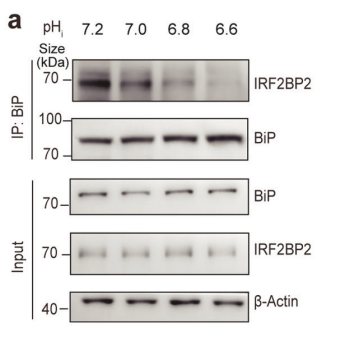
Cellular BiP-IRF2BP2 interactions shown by Western blot analysis of co-immunoprecipitation in MG132-pretreated (5 μM, 2 h) peritoneal macrophages which were incubated with Nigericin (10 μM), Valinomycin (10 μM) and MG132 (5 μM) for 3 h in calibration buffer under different pH (7.2, 7.0, 6.8, 6.6).
-
Cell Death Dis
Crotonylated BEX2 interacts with NDP52 and enhances mitophagy to modulate chemotherapeutic agent-induced apoptosis in non-small-cell lung cancer cells. [Abstract]2023 Sep 30;14(9):645. PMID: 37777549
Valinomycin purchased from MedChemExpress. Usage Cited in: Cell Death Dis. 2023 Sep 30;14(9):645. [Abstract]
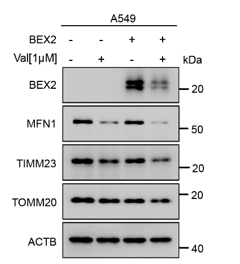
A549 cells were transfected with CTRL(pcDNA3.1) or BEX2. Then the cells were treated with valinomycin (1 μM) for 6 h. Cell lysates were analyzed by western blotting with the indicated antibodies.
Valinomycin purchased from MedChemExpress. Usage Cited in: Cell Death Dis. 2023 Sep 30;14(9):645. [Abstract]
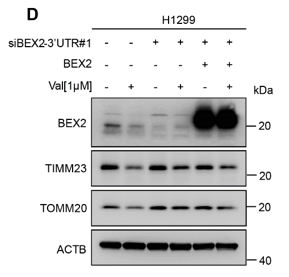
H1299 cells were transfected with siCTRL or siBEX2, and then overexpressed CTRL(pcDNA3.1) or BEX2. Cells were further incubated with valinomycin (1 μM) for 6h. Cell lysates were analyzed by western blotting with the indicated antibodies.
-
-
Viruses
2022 Aug 6;14(8):1734. PMID: 36016355
Valinomycin purchased from MedChemExpress. Usage Cited in: Viruses. 2022 Aug 6;14(8):1734. [Abstract]
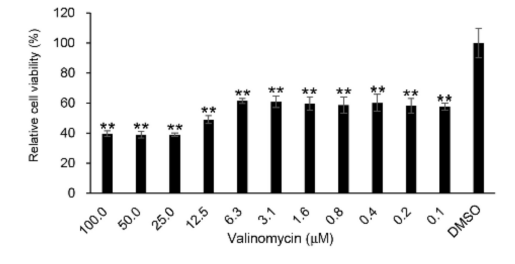
After 24 h treatment (Valinomycin), cell viability was assessed by the WST-8 assay.
Valinomycin purchased from MedChemExpress. Usage Cited in: Viruses. 2022 Aug 6;14(8):1734. [Abstract]
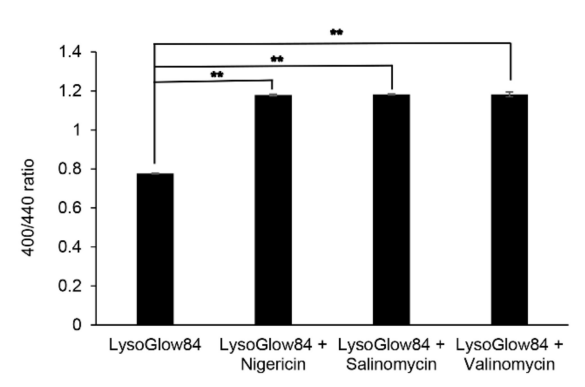
LysoGlow84 (10 µM) with each antibiotic of Salinomycin, Valinomycin, and Nigericin (12.5 µM, 25 µM, and 6.3 µM, respectively) at maximal concentrations without cell toxicities was added to the Felis catus whole fetus-4 cells.
-
Andrology
Pharmacological inhibition of KSper impairs flagellar pH homeostasis of human spermatozoa. [Abstract]2025 Oct;13(7):1805-1815. PMID: 39498893 -
-
-


Solvent & Solubility
In Vitro:
Ethanol : 50 mg/mL (44.99 mM; Need ultrasonic)
DMSO : 25 mg/mL (22.50 mM; Need ultrasonic; Hygroscopic DMSO has a significant impact on the solubility of product, please use newly opened DMSO)
Please refer to the solubility information to select the appropriate solvent. Once prepared, please aliquot and store the solution to prevent product inactivation from repeated freeze-thaw cycles.
Storage method and period of stock solution: -80°C, 6 months; -20°C, 1 month (sealed storage, away from moisture). When stored at -80°C, please use it within 6 months. When stored at -20°C, please use it within 1 month.
Please refer to the solubility information to select the appropriate solvent. Once prepared, please aliquot and store the solution to prevent product inactivation from repeated freeze-thaw cycles.
Storage method and period of stock solution: -80°C, 6 months; -20°C, 1 month (sealed storage, away from moisture). When stored at -80°C, please use it within 6 months. When stored at -20°C, please use it within 1 month.
Concentration (start) × Volume (start) = Concentration (final) × Volume (final)
In Vivo:
Select the appropriate dissolution method based on your experimental animal and administration route.
- For the following dissolution methods, please ensure to first prepare a clear stock solution using an In Vitro approach and then sequentially add co-solvents:
- To ensure reliable experimental results, the clarified stock solution can be appropriately stored based on storage conditions. As for the working solution for In Vivo experiments, it is recommended to prepare freshly and use it on the same day.
- The percentages shown for the solvents indicate their volumetric ratio in the final prepared solution. If precipitation or phase separation occurs during preparation, heat and/or sonication can be used to aid dissolution.
Add each solvent one by one: 10% DMSO 40% PEG300 5% Tween-80 45% Saline
Solubility: ≥ 2.5 mg/mL (2.25 mM); Clear solution
This protocol yields a clear solution of ≥ 2.5 mg/mL (saturation unknown).
Taking 1 mL working solution as an example, add 100 μL DMSO stock solution (25.0 mg/mL) to 400 μL PEG300, and mix evenly; then add 50 μL Tween-80 and mix evenly; then add 450 μL Saline to adjust the volume to 1 mL.
Preparation of Saline: Dissolve 0.9 g sodium chloride in ddH₂O and dilute to 100 mL to obtain a clear Saline solution.
Add each solvent one by one: 10% EtOH 40% PEG300 5% Tween-80 45% Saline
Solubility: ≥ 2.5 mg/mL (2.25 mM); Clear solution
This protocol yields a clear solution of ≥ 2.5 mg/mL (saturation unknown).
Taking 1 mL working solution as an example, add 100 μL EtOH stock solution (25.0 mg/mL) to 400 μL PEG300, and mix evenly; then add 50 μL Tween-80 and mix evenly; then add 450 μL Saline to adjust the volume to 1 mL.
Preparation of Saline: Dissolve 0.9 g sodium chloride in ddH₂O and dilute to 100 mL to obtain a clear Saline solution.
Add each solvent one by one: 10% EtOH 90% Corn Oil
Solubility: ≥ 2.5 mg/mL (2.25 mM); Clear solution
This protocol yields a clear solution of ≥ 2.5 mg/mL (saturation unknown). If the continuous dosing period exceeds half a month, please choose this protocol carefully.
Taking 1 mL working solution as an example, add 100 μL EtOH stock solution (25.0 mg/mL) to 900 μL Corn oil, and mix evenly.
In Vivo Dissolution Calculator
Please enter the basic information of animal experiments:
-
-
-
-
Recommended: Prepare an additional quantity of animals to account for potential losses during experiments.
Please enter your animal formula composition:
-
%DMSO +
Recommended: Keep the proportion of DMSO in working solution below 2% if your animal is weak.
-
%+
-
+%Tween-80 + +
-
%Saline +
The co-solvents required include: DMSO, . All of co-solvents are available by MedChemExpress (MCE). , Tween 80. All of co-solvents are available by MedChemExpress (MCE).
Working solution concentration: 0.22 mg/mL
Method for preparing stock solution: mg drug dissolved in μL DMSO. Stock solution concentration: mg/mL. * In solvent : -80°C, 6 months; -20°C, 1 month (sealed storage, away from moisture)
1. Take μL DMSO stock solution;
2. Add μL .
μL , mix evenly;
3. Then add μL Tween 80, mix evenly;
4. Then add μL
Please ensure that the stock solution in the first step is dissolved to a clear state, and add co-solvents in sequence. You can use ultrasonic heating (ultrasonic cleaner, recommended frequency 20-40 kHz), vortexing, etc. to assist dissolution.

Protocols
-
Research Protocol for Infectious Diseases
Infectious-disease experiments test how pathogens interact with host barriers, innate immune receptors, inflammatory signaling, pathogen replication, and tissue injury; pattern-recognition receptors such as TLRs, RIG-I-like receptors, NOD-like receptors, and inflammasomes detect microbial molecules and activate NF-κB, interferon, and cytokine responses. The central hypothesis is that infection severity reflects the balance between pathogen burden and host response: protective inflammation restricts pathogen growth, whereas excessive or mislocalized inflammation contributes to tissue damage and disease phenotype. Unresolved questions include which host pathways are protective versus pathogenic, why some infection models fail to translate to human disease, and which combined readouts best predict clinically relevant infection outcomes.
-
Cell Cytotoxicity Assay
Cytotoxicity assays are usually based on the assessment of cell membrane damage, which can also be indirectly detected by measuring cell viability. Detection methods include MTT assay, CKK-8 assay, LDH assay and ATP assay, etc.
-
Mammalian live/dead viability and cytotoxicity staining
Live/dead viability and cytotoxicity staining assays are based on the simultaneous detection of intracellular esterase activity in metabolically active (viable) cells and membrane integrity loss in non-viable cells. In commonly used dual-staining approaches, membrane-permeant fluorogenic substrates are converted by intracellular esterases into fluorescent products in live cells, while impermeant DNA-binding dyes selectively enter cells with compromised plasma membranes and label nucleic acids in dead or dying cells, enabling discrimination between viable and non-viable populations by fluorescence microscopy or flow cytometry.
-
Cell Viability Determination by MTT Colorimetric Assay
The following protocol uses the MTT colorimetric assay as a classic literature-established method for assessing cell viability/metabolic activity in cultured mammalian cells. MTT[3-(4,5-dimethylthiazol-2-yl)-2,5-diphenyltetrazolium bromide] is reduced by metabolically active cells to a colored formazan product; the amount of formazan is quantified spectrophotometrically and provides an indirect measure of metabolically active viable cells. Importantly, MTT reduction reflects cellular oxidoreductase/metabolic activity rather than an absolute direct count of living cells, so changes in cellular metabolism can alter the signal independently of cell number.


Purity & Documentation
-
Data Sheet (297 KB)
-
SDS (481 KB)
- English - EN (481 KB)
- Français - FR (481 KB)
- Deutsch - DE (481 KB)
- Norwegian - NO (481 KB)
- Español - ES (481 KB)
- Swedish - SV (481 KB)
- Italian - IT (481 KB)
- Korean - KR (481 KB)
- Portuguese - PT (481 KB)
-
Handling Instructions (2659 KB)
References
[1]. Huang S, et al. The Nonribosomal Peptide Valinomycin: From Discovery to Bioactivity and Biosynthesis. Microorganisms. 2021,9(4):780. [Content Brief]
[2]. Zhang QW, et al. RETRACTED: Liposomal valinomycin mediated cellular K+ leak promoting apoptosis of liver cancer cells. J Control Release. 2021,337:317-328. [Content Brief]


Complete Stock Solution Preparation Table
Please refer to the solubility information to select the appropriate solvent. Once prepared, please aliquot and store the solution to prevent product inactivation from repeated freeze-thaw cycles.
Storage method and period of stock solution: -80°C, 6 months; -20°C, 1 month (sealed storage, away from moisture). When stored at -80°C, please use it within 6 months. When stored at -20°C, please use it within 1 month.
| Optional Solvent | Concentration Solvent Mass | 1 mg | 5 mg | 10 mg | 25 mg |
|---|---|---|---|---|---|
| DMSO / Ethanol | 1 mM | 0.8998 mL | 4.4992 mL | 8.9983 mL | 22.4958 mL |
| 5 mM | 0.1800 mL | 0.8998 mL | 1.7997 mL | 4.4992 mL | |
| 10 mM | 0.0900 mL | 0.4499 mL | 0.8998 mL | 2.2496 mL | |
| 15 mM | 0.0600 mL | 0.2999 mL | 0.5999 mL | 1.4997 mL | |
| 20 mM | 0.0450 mL | 0.2250 mL | 0.4499 mL | 1.1248 mL | |
| Ethanol | 25 mM | 0.0360 mL | 0.1800 mL | 0.3599 mL | 0.8998 mL |
| 30 mM | 0.0300 mL | 0.1500 mL | 0.2999 mL | 0.7499 mL | |
| 40 mM | 0.0225 mL | 0.1125 mL | 0.2250 mL | 0.5624 mL |


Valinomycin Related Classifications
HY-N6693 Related Classifications
 Powered by Bioz