



Cecropin B
Based on 1 publication(s) in Google Scholar
Cecropin B has high level of antimicrobial activity and is considered as a valuable peptide antibiotic.
For research use only. We do not sell to patients.
- Purity : 98.05%
- CAS No.: 80451-05-4
- Formula: C176H302N52O41S
- Molecular Weight:3834.67
-
Storage:
Sealed storage, away from moisture.
Powder -80°C, 2 years , -20°C, 1 year* In solvent : -80°C, 6 months; -20°C, 1 month (sealed storage, away from moisture)


To place orders, for customer services and technical support, please contact: MedChemExpress USA
Tel: 609-228-6898 E-mail: [email protected] [email protected]


-
 Biological Activity
-
Chemical Information
-
Solvent & Solubility
- Protocols
- Purity & Documentation
- References
-
 Help & FAQs


-
HY-P1539
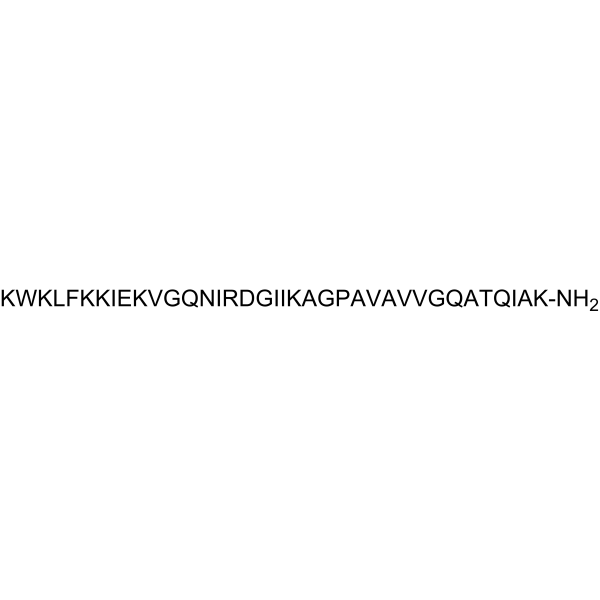
Cecropin ABacterial Inhibitor -

HY-P0233
MelittinPLA2 Activator -

HY-P1222
LL-37, humanAntimicrobial Peptide -

HY-P0269
Magainin 1Antimicrobial Peptide -

HY-P0270
Magainin 2Antimicrobial Peptide -
HY-105088
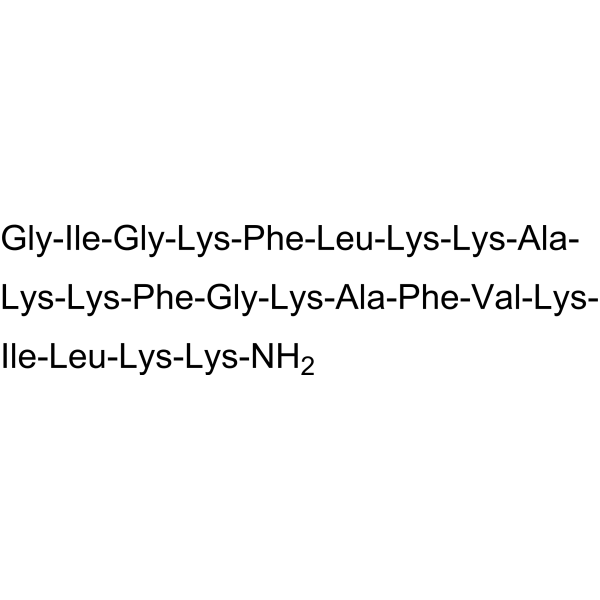
PexigananAntimicrobial Peptide -
HY-P5712
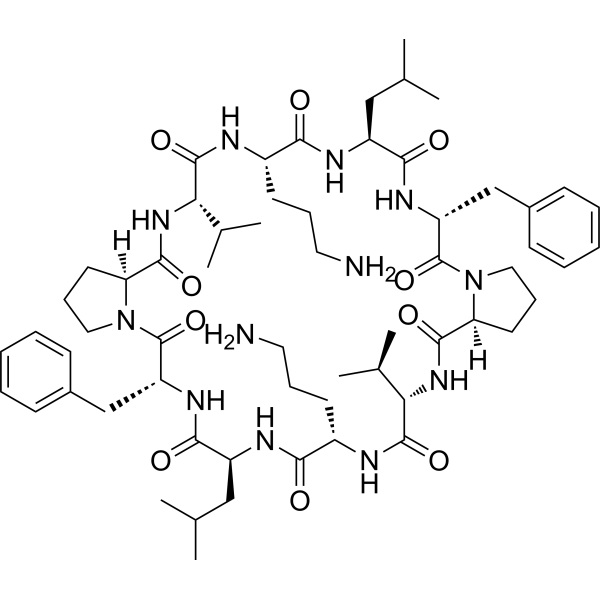
Gramicidin SAntibiotic -
HY-P3914
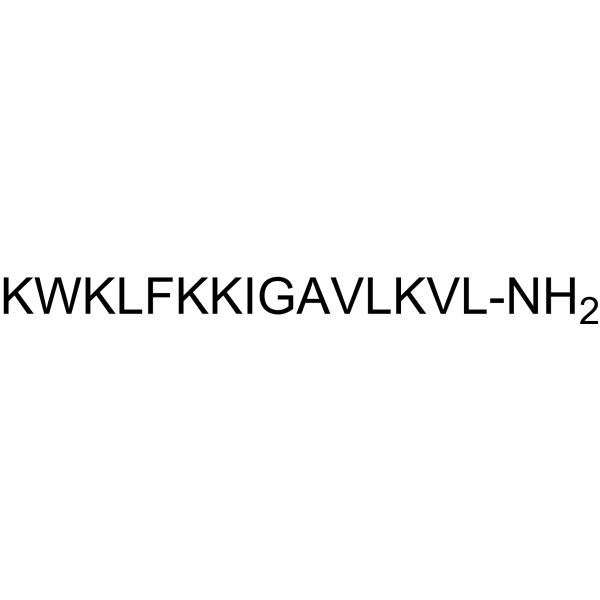
Cecropin A (1-7)-Melittin A (2-9)Antibacterial Peptide -

HY-P0263
DermaseptinAntimicrobial Agent
Publications Citing Use of MedChemExpress (MCE) Cecropin B
More Customer Validation & Images

-
RT-PCR
All Antibiotic Isoforms
More

Biological Activity
Description
IC50 & Target
|
CYP3 |
In Vitro
Cecropin B-induces NF-κB activation playing a pivotal role in the suppression of CYP3A29 through disrupting the association of the PXR/retinoid X receptor alpha (RXR-α) complex with DNA sequences. Cecropin B activates pig liver cells by interacting with TLRs 2 and 4, which modulated NF-κB-mediated signaling pathways[1].
MedChemExpress (MCE) has not independently confirmed the accuracy of these methods. They are for reference only. Further protocols information, click here.
In Vivo
MedChemExpress (MCE) has not independently confirmed the accuracy of these methods. They are for reference only.


Chemical Information
-
CAS No. 80451-05-4
-
Appearance Solid
-
Molecular Weight 3834.67
-
Formula C176H302N52O41S
-
Color White to off-white
-
Sequence
Lys-Trp-Lys-Val-Phe-Lys-Lys-Ile-Glu-Lys-Met-Gly-Arg-Asn-Ile-Arg-Asn-Gly-Ile-Val-Lys-Ala-Gly-Pro-Ala-Ile-Ala-Val-Leu-Gly-Glu-Ala-Lys-Ala-Leu-NH2
-
Sequence Shortening
KWKVFKKIEKMGRNIRNGIVKAGPAIAVLGEAKAL-NH2
-
Shipping
Room temperature in continental US; may vary elsewhere.
-
Storage
Sealed storage, away from moisture
Powder -80°C 2 years -20°C 1 year * In solvent : -80°C, 6 months; -20°C, 1 month (sealed storage, away from moisture)


Publications (1)
-
Journal Impact Factor
-
Most Recent
-
PeerJ
A novel cecropin B-derived peptide with antibacterial and potential anti-inflammatory properties. [Abstract]2018 Jul 25:6:e5369. PMID: 30065898
Cecropin B purchased from MedChemExpress. Usage Cited in: PeerJ. 2018 Jul 25:6:e5369. [Abstract]
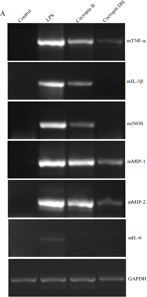
Effects of Cecropin B and Cecropin DH on mRNA levels of inflammatory cytokines in 200 ng/mL LPS-stimulated RAW264.7 cells. Total RNA is analyzed for the expression of TNF-α, IL-1β, iNOS, MIP-1, MIP-2, IL-6 and GAPDH (loading control) by RT-PCR.


Solvent & Solubility
In Vitro:
H2O : 100 mg/mL (26.08 mM; Need ultrasonic)
Please refer to the solubility information to select the appropriate solvent. Once prepared, please aliquot and store the solution to prevent product inactivation from repeated freeze-thaw cycles.
Storage method and period of stock solution: -80°C, 6 months; -20°C, 1 month (sealed storage, away from moisture). When stored at -80°C, please use it within 6 months. When stored at -20°C, please use it within 1 month.
* Note: If you choose water as the stock solution, please dilute it to the working solution, then filter and sterilize it with a 0.22 μm filter before use.
Please refer to the solubility information to select the appropriate solvent. Once prepared, please aliquot and store the solution to prevent product inactivation from repeated freeze-thaw cycles.
Storage method and period of stock solution: -80°C, 6 months; -20°C, 1 month (sealed storage, away from moisture). When stored at -80°C, please use it within 6 months. When stored at -20°C, please use it within 1 month.
* Note: If you choose water as the stock solution, please dilute it to the working solution, then filter and sterilize it with a 0.22 μm filter before use.
Concentration (start) × Volume (start) = Concentration (final) × Volume (final)

Protocols
-
Research Protocol for Infectious Diseases
Infectious-disease experiments test how pathogens interact with host barriers, innate immune receptors, inflammatory signaling, pathogen replication, and tissue injury; pattern-recognition receptors such as TLRs, RIG-I-like receptors, NOD-like receptors, and inflammasomes detect microbial molecules and activate NF-κB, interferon, and cytokine responses. The central hypothesis is that infection severity reflects the balance between pathogen burden and host response: protective inflammation restricts pathogen growth, whereas excessive or mislocalized inflammation contributes to tissue damage and disease phenotype. Unresolved questions include which host pathways are protective versus pathogenic, why some infection models fail to translate to human disease, and which combined readouts best predict clinically relevant infection outcomes.


Purity & Documentation
-
Data Sheet (272 KB)
-
SDS (252 KB)
- English - EN (252 KB)
- Français - FR (252 KB)
- Deutsch - DE (252 KB)
- Norwegian - NO (252 KB)
- Español - ES (252 KB)
- Swedish - SV (252 KB)
- Italian - IT (252 KB)
- Korean - KR (252 KB)
- Portuguese - PT (252 KB)
-
Handling Instructions (2659 KB)
References
[1]. Zhou X et al. Cecropin B Represses CYP3A29 Expression through Activation of the TLR2/4-NF-κB/PXR Signaling Pathway. Sci Rep. 2016 Jun 14 [Content Brief]
[2]. Ren HT et al. [The antibacterial effect of cecropin B on pseudomonas aeruginosa infection of wounds in mice]. Zhonghua Shao Shang Za Zhi. 2006 Dec;22(6):445-7. [Content Brief]


Complete Stock Solution Preparation Table
Please refer to the solubility information to select the appropriate solvent. Once prepared, please aliquot and store the solution to prevent product inactivation from repeated freeze-thaw cycles.
Storage method and period of stock solution: -80°C, 6 months; -20°C, 1 month (sealed storage, away from moisture). When stored at -80°C, please use it within 6 months. When stored at -20°C, please use it within 1 month.
| Optional Solvent | Concentration Solvent Mass | 1 mg | 5 mg | 10 mg | 25 mg |
|---|---|---|---|---|---|
| H2O | 1 mM | 0.2608 mL | 1.3039 mL | 2.6078 mL | 6.5195 mL |
| 5 mM | 0.0522 mL | 0.2608 mL | 0.5216 mL | 1.3039 mL | |
| 10 mM | 0.0261 mL | 0.1304 mL | 0.2608 mL | 0.6519 mL | |
| 15 mM | 0.0174 mL | 0.0869 mL | 0.1739 mL | 0.4346 mL | |
| 20 mM | 0.0130 mL | 0.0652 mL | 0.1304 mL | 0.3260 mL | |
| 25 mM | 0.0104 mL | 0.0522 mL | 0.1043 mL | 0.2608 mL |
* Note: If you choose water as the stock solution, please dilute it to the working solution, then filter and sterilize it with a 0.22 μm filter before use.


Cecropin B Related Classifications
HY-P0092 Related Classifications
 Powered by Bioz