Infection
-
Infection Related Products (18904)
Related Products (18904)

-
Antibodies (22)
-
Anti-Rat CD4 Antibody (OX-38)
 0 ImagesCat. No.: HY-P990135Purity: 98.91%
-
Artemisinin (Standard)
 0 ImagesSynonyms: Qinghaosu (Standard); NSC 369397 (Standard)
Artemisinin (Standard) is the analytical standard of Artemisinin. This product is intended for research and analytical applications. Artemisinin (Qinghaosu), a sesquiterpene lactone, is an anti-malarial agent isolated from the aerial parts of Artemisia annua L. plants. Artemisinin inhibits AKT signaling pathway by decreasing pAKT in a dose-dependent manner. Artemisinin reduces cancer cell proliferation, migration, invasion, tumorigenesis and metastasis and has neuroprotective effects.
-
9(S),12(S),13(S)-TriHODE
 0 ImagesCat. No.: HY-168398CAS No.: 95341-44-9
9(S),12(S),13(S)-TriHODE is a plant oxylipin and trihydroxylated fatty acid. 9(S),12(S),13(S)-TriHODE can be used in research on bacterial infection and fungal infection.
-
Anti-Mouse 4-1BBL/CD137L Antibody (TKS-1)
 0 ImagesCat. No.: HY-P990304
Anti-Mouse 4-1BBL/CD137L Antibody (TKS-1) is a rat-derived IgG2a κ antibody inhibitor, targeting to mouse 4-1BBL/CD137L. Anti-Mouse 4-1BBL/CD137L Antibody (TKS-1) can block 4-1BB ligand (4-1BBL) and inhibit CD4+ and CD8+ T cells. Anti-Mouse 4-1BBL/CD137L Antibody (TKS-1) can be used for the researches of cancer, infection, inflammation and immunology, such as MC38 tumor, lymphocytic choriomeningitis virus (LCMV) infection and herpetic stromal keratitis (HSK).
-
3-Acetyldeoxynivalenol-13C17
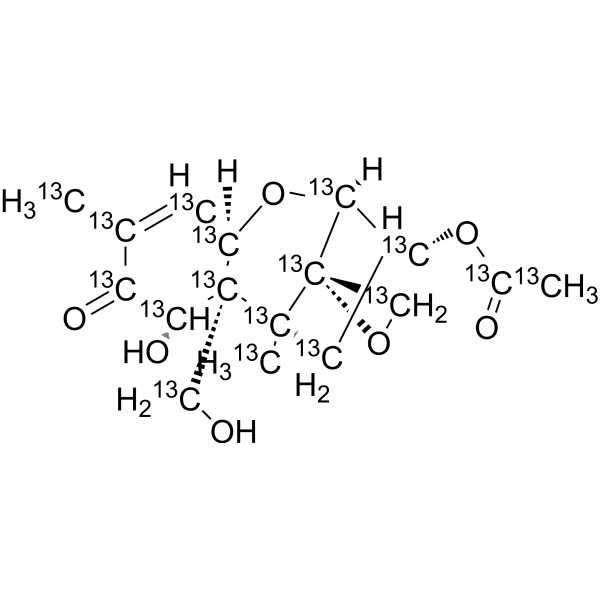 0 ImagesSynonyms: 3-AcDON-13C17; 3-ADON-13C17
3-Acetyldeoxynivalenol (3-AcDON; 3ADON)-13C17 is the 13C labeled 3-Acetyldeoxynivalenol (HY-N6685). 3-Acetyldeoxynivalenol, a trichothecene mycotoxin deoxynivalenol (DON) acetylated derivative, is a brain-penetrant Fusarium mycotoxin. 3-Acetyldeoxynivalenol induces mRNA expression and production of inflammatory chemokine IL-8 in intestinal cells.
-
Dihydroanthracene
 0 Images
Dihydroanthracene (9,10-Dihydroanthracene) is a substrate for toluene dioxygenase (TDO) expressed by Pseudomonas putida UV4. Toluene dioxygenase (TDO) expressed by Pseudomonas putida UV4 catalyzes the benzylic monooxygenation of Dihydroanthracene to 9-hydroxy-9,10-DHA as the only product.
-
Concanamycin C
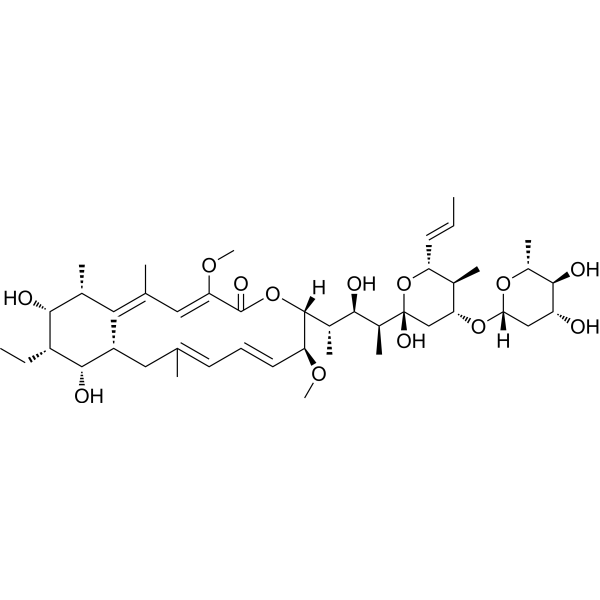 0 Images
Concanamycin C is a macrolide antibiotic with inhibitory activity against certain fungi and yeasts, but no activity against bacteria. Concanamycin C inhibits the proliferation of mouse splenic lymphocytes. Concanamycin C exhibits acute toxicity in ddY mice. Concanamycin C can be used in studies related to fungal infections and yeast infections.
-
Tricosane
 0 ImagesSynonyms: N-Tricosane
Tricosane (N-Tricosane) is a straight-chain alkane. Tricosane exhibits a certain degree of antibacterial activity against E. coli.
-
Eriodictyol chalcone
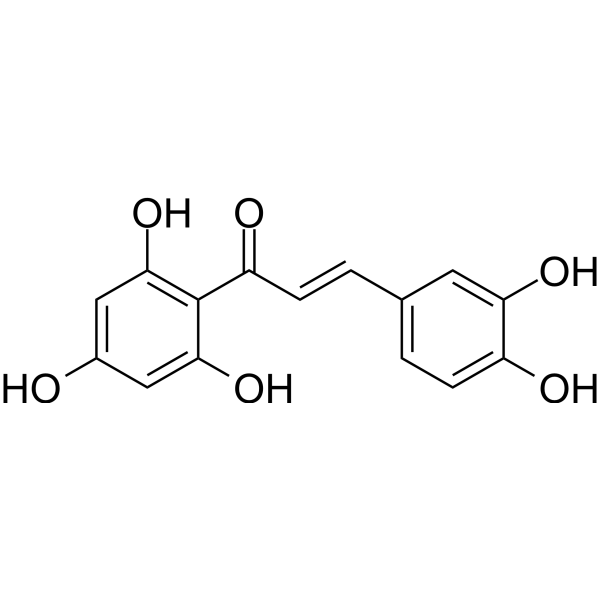 0 ImagesCat. No.: HY-N9551CAS No.: 14917-41-0
Eriodictyol chalcone is an antioxidant that inhibits multiple key enzymes including 5-LOX (IC50=0.043 μM), aromatase/CYP19A1 (IC50=2.8 μM), PTPase 1B (IC50=1.26 μM), and COX (IC50=34 μM). Eriodictyol chalcone exhibits excellent free radical scavenging activity. Eriodictyol chalcone not only inhibits the growth of plasmodia and enhances the efficacy of Artemisinin (HY-B0094), but also reduces depression-like behaviors in animal models. Eriodictyol chalcone serves as a biosynthetic precursor for Aureusidin (HY-N9834). Eriodictyol chalcone is a potential dietary supplement and herbicide, and it can be applied to research on malaria, depression, breast cancer and other related diseases.
-
Cinchonidine (Standard)
 0 Images
Cinchonidine (Standard) is the analytical standard of Cinchonidine. This product is intended for research and analytical applications. Cinchonidine (α-Quinidine) is a cinchona alkaloid found in Cinchona officinalis and Gongronema latifolium. A building block used in asymmetric synthesis in organic chemistry. Weak inhibitor of serotonin transporter (SERT) with Kis of 330, 4.2, 36, 196, 15 μM for dSERT, hSERT, hSERT I172M, hSERT S438T, hSERT Y95F, respectively. Antimalarial activities.
-
Imidazole-4-pyruvic acid TFA
 0 ImagesCat. No.: HY-180690ACAS No.: 3069873-81-7Synonyms: Imidazolepyruvic acid TFA
Imidazole-4-pyruvic acid TFA (Imidazolepyruvic acid TFA) is a metabolic precursor for histidine synthesis and selective stable isotope labeling of histidine residues. Imidazole-4-pyruvic acid TFA serves as a precursor for selective histidine labeling in overexpressed proteins of Escherichia coli. Imidazole-4-pyruvic acid TFA can be used in studies related to cancer and fungal mold infections.
-
Flusilazole (Standard)
 0 ImagesCat. No.: HY-B2012RCAS No.: 85509-19-9Synonyms: DPX-H6573 (Standard)
Flusilazole (Standard) is the analytical standard of Flusilazole. This product is intended for research and analytical applications. Flusilazole (DPX-H6573), an organosilane fungicide, has broad-spectrum antifungal effect. Flusilazole exhibits curative and preventative activities and is recommended for use in agriculture and horticulture.
-
Permethrin (Standard)
 0 ImagesSynonyms: NRDC-143 (Standard)
Permethrin (Standard) is the analytical standard of Permethrin. This product is intended for research and analytical applications. Permethrin (NRDC-143) is an insecticide, acaricide, and insect repellent; functions as a neurotoxin, affecting neuron membranes by prolonging sodium channel activation.
-
Dill apiole
 0 Images
Dill apiole is an aromatic ether, which is an important aroma component in herbs and spices such as dill (Anethum graveolens), parsley (Petroselinum crispum) and basil (Perilla frutescens). Dill apiole exhibits antimicrobial activity against Aspergillus parasiticus and Aedes aegypti.
-
Propiconazole (Standard)
 0 Images
Propiconazole (Standard) is the analytical standard of Propiconazole. This product is intended for research and analytical applications. Propiconazole is an orally active N-substituted triazole used as a fungicide. Propiconazole is a mouse liver hepatotoxicant and a hepatocarcinogen that has adverse reproductive and developmental toxicities in experimental animals.
-
Antibacterial compound 2
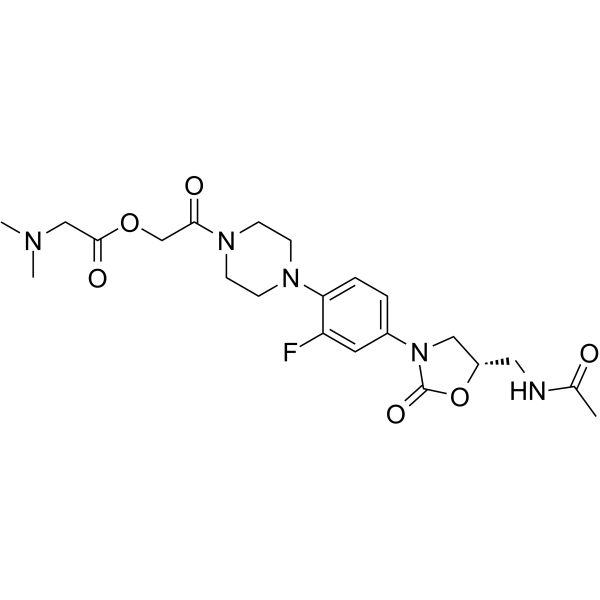 0 ImagesCat. No.: HY-101730CAS No.: 170104-58-2
Antibacterial compound 2 is a useful antibacterial agent extracted from patent US5652238, compound example 9.
-
3-Indolyl-β-D-glucuronide
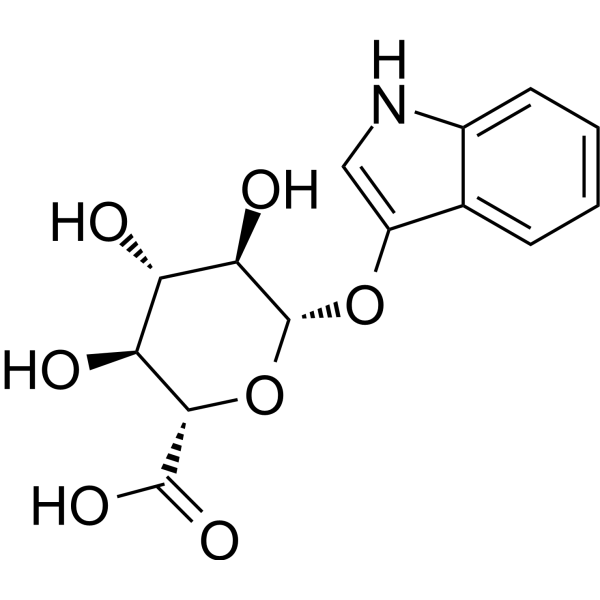 0 ImagesCat. No.: HY-113245CAS No.: 35804-66-1
3-Indolyl-β-D-glucuronide, a chromogenic substrate for β-D-glucuronidase, employs in the detection and enumeration of E. coli, yielding a blue precipitate upon cleavage. 3-Indolyl-β-D-glucuronide in plasma act as a new indicator of renal failure.
-
Azt-pmap
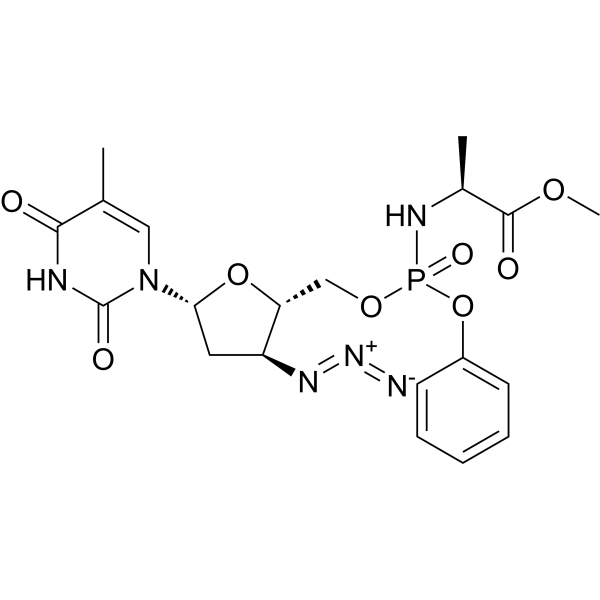 0 Images
Azt-pmap, a nucleoside analogue, is an aryl phosphate derivative of AZT. Azt-pmap shows anti-HIV activity. AZT is a nucleoside reverse transcriptase inhibitor (NRTI) for HIV infection. Azt-pmap is a click chemistry reagent, it contains an Azide group and can undergo copper-catalyzed azide-alkyne cycloaddition reaction (CuAAc) with molecules containing Alkyne groups. It can also undergo strain-promoted alkyne-azide cycloaddition (SPAAC) reactions with molecules containing DBCO or BCN groups.
-
M2 ion channel blocker-1
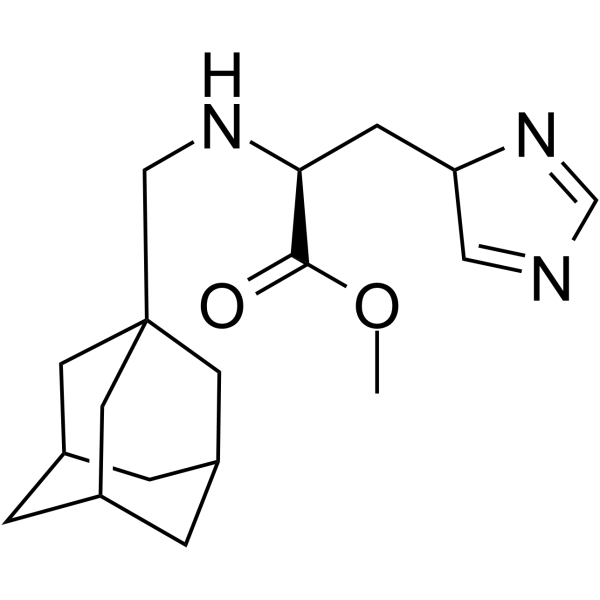 0 ImagesCat. No.: HY-75867CAS No.: 1190215-03-2
M2 ion channel blocker-1 is an inhibitor of the M2 ion channel, with activity against the wild-type, S31N mutant, and S31N-L26I mutant of the M2 ion channel. M2 ion channel blocker-1 can be used in studies related to influenza A.