



Aldehyde Dehydrogenase (ALDH)
Aldehyde Dehydrogenases (ALDHs) are a superfamily of NADP+-dependent enzymes that metabolize endogenous and exogenous aldehydes to corresponding carboxylic acids. This superfamily of proteins is comprised of 19 isozymes, with constitutive activity of at least one isozyme observed in a majority of mammalian tissues. The ALDHs play important roles, among other things, in cellular detoxification, the protection against ultraviolet radiation-induced damage, and amino acid metabolism.
The ALDH1A subfamily plays a pivotal role in embryogenesis and development by mediating retinoic acid signaling. ALDH2, as a key enzyme that oxidizes acetaldehyde, is crucial for alcohol metabolism. ALDH1A1 and ALDH3A1 are lens and corneal crystallins, which are essential elements of the cellular defense mechanism against ultraviolet radiation-induced damage in ocular tissues. Many ALDH isozymes are important in oxidizing reactive aldehydes derived from lipid peroxidation and thereby help maintain cellular homeostasis. Increased expression and activity of ALDH isozymes have been reported in various human cancers and are associated with cancer relapse. As a direct consequence of their significant physiological and toxicological roles, inhibitors of the ALDH enzymes have been developed to treat human diseases.
Aldehyde Dehydrogenase (ALDH) Isoform Specific Products
All Product Categories
-
Aldehyde Dehydrogenase (ALDH) Inhibitors
(90)
View all products
-
Aldehyde Dehydrogenase (ALDH) Agonists
(3)
View all products
-
Aldehyde Dehydrogenase (ALDH) Antagonist
(1)
View all products
-
Aldehyde Dehydrogenase (ALDH) Activators
(3)
View all products
-
Aldehyde Dehydrogenase (ALDH) Modulator
(1)
View all products
-
Aldehyde Dehydrogenase (ALDH) Inducers
(3)
View all products
-
Aldehyde Dehydrogenase (ALDH) Substrates
(3)
View all products
-
Aldehyde Dehydrogenase (ALDH) Ligand
(1)
View all products
-
Aldehyde Dehydrogenase (ALDH) Related Products (113)
Related Products (113)

-
Antibodies (9)
-
Aldehyde Dehydrogenase (ALDH) Isoform Comparison
-
4-Hydroxynonenal (Standard)
 0 ImagesSynonyms: 4-HNE (Standard)4-Hydroxynonenal (Standard) is the analytical standard of 4-Hydroxynonenal. This product is intended for research and analytical applications. 4-Hydroxynonenal (4-HNE) is an α,β unsaturated hydroxyalkenal and an oxidative/nitrosative stress biomarker. 4-Hydroxynonenal is a substrate and an inhibitor of acetaldehyde dehydrogenase 2 (ALDH2). 4-Hydroxynonenal can modulate a number of signaling processes mainly through forming covalent adducts with nucleophilic functional groups in proteins, nucleic acids, and membrane lipids. 4-Hydroxynonenal plays an important role in cancer through mitochondria.
-
Mirivadelgat
 0 ImagesCat. No.: HY-168985CAS No.: 1804941-96-5Mirivadelgat is an activator of aldehyde dehydrogenase 2 (ALDH2). Mirivadelgat is used for research on interstitial lung disease-associated pulmonary hypertension and cancer.

-
Neuroprotective agent 15
 0 ImagesCat. No.: HY-178943CAS No.: 2476614-40-9Neuroprotective agent 15 (Compound 3e) is a neuroprotective agent. Neuroprotective agent 15 is a selective butyrylcholinesterase (BChE) inhibitor, with IC50 values of 2.6 and 114.3 μM for BChE and AChE respectively. Neuroprotective agent 15 has cannabinoid CB2 receptor (CB2 receptor) agonistic activity. Neuroprotective agent 15 can reduce cell death, LDH release and Caspase-3/7 activity, and inhibit apoptosis. Neuroprotective agent 15 can reduce the formation of superoxide free radicals, maintain cell morphology, and significantly lower oxidative stress levels. Neuroprotective agent 15 can be used in the research of neurodegenerative diseases, such as Alzheimer's disease and Parkinson's disease.
-
Dyclonine
 0 ImagesDyclonine (Dyclocaine) is an orally active, blood-brain barrier-permeable piperidine phenylacetone small molecule commonly used as a local anesthetic. Dyclonine acts as a highly selective allosteric antagonist of TRPV3; it also reversibly inhibits G9a, ALDH2 and ALDH3A1, non-competitively blocks AChE. Dyclonine activates the Nrf2/ARE pathway, relieves the epigenetic silencing of FXN, blocks Aβ42 aggregation, and promotes remyelination and reparative polarization of microglia. Dyclonine alleviates pruritus via TRPV3 inhibition; it is used in studies of neurodegenerative disease models based on its AChE inhibitory, antioxidant and remyelinating effects; it sensitizes drug-resistant tumors through ALDH inhibition, and combined use with protease inhibitors induces more tumor cell apoptosis; it inhibits Candida albicans in vitro. Dyclonine can be used for research on multiple diseases including neurodegenerative diseases, cancer and pruritic dermatitis.
-
AldRed 588-A
 0 ImagesCat. No.: HY-D3182CAS No.: 2252329-12-5AldeRed 588-A is a fluorescent labeling reagent and a substrate for aldehyde dehydrogenase (ALDH). AldeRed 588-A is metabolized by functionally active ALDH enzymes, thereby specifically labeling viable ALDHbright cell populations with red-shifted fluorescence. AldeRed 588-A supports one-step isolation and sorting of ALDH-expressing cells (including normal stem cells and cancer stem cells), and can be used in combination with green fluorophores for multicolor experimental applications. AldeRed 588-A is widely applicable to research related to various cancers such as bladder cancer, breast cancer, and head and neck cancer.
-
Dyclonine-d9 hydrochloride
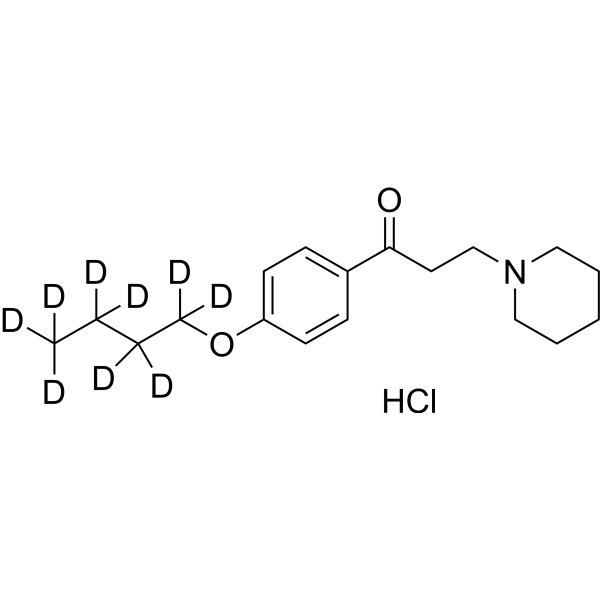 0 ImagesCat. No.: HY-B0364ASSynonyms: Dyclocaine-d9 hydrochlorideDyclonine-d9 hydrochloride (Dyclocaine-d9 hydrochloride) is the deuterated-labeled Dyclonine hydrochloride (HY-B0364A). Dyclonine hydrochloride (Dyclocaine hydrochloride) is an orally active, blood-brain barrier-permeable piperidine phenylacetone small molecule commonly used as a local anesthetic. Dyclonine hydrochloride acts as a highly selective allosteric antagonist of TRPV3; it also reversibly inhibits G9a, ALDH2 and ALDH3A1, non-competitively blocks AChE. Dyclonine hydrochloride activates the Nrf2/ARE pathway, relieves the epigenetic silencing of FXN, blocks Aβ42 aggregation, and promotes remyelination and reparative polarization of microglia. Dyclonine hydrochloride alleviates pruritus via TRPV3 inhibition; it is used in studies of neurodegenerative disease models based on its AChE inhibitory, antioxidant and remyelinating effects; it sensitizes drug-resistant tumors through ALDH inhibition, and combined use with protease inhibitors induces more tumor cell apoptosis; it inhibits Candida albicans in vitro. Dyclonine hydrochloride can be used for research on multiple diseases including neurodegenerative diseases, cancer and pruritic dermatitis.
-
ALDH2 probe 5
 0 ImagesCat. No.: HY-D3442CAS No.: 3121565-89-4ALDH2 probe 5 is a ALDH2 isoform-selective fluorescent probe with an emission wavelength centered at 494 nm. ALDH2 probe 5 is a turn-on fluorescent substrate for ALDH2; in its unreacted aldehyde form, twisted intramolecular charge transfer (TICT) occurs, resulting in fluorescence quenching. After ALDH2 probe 5 is catalytically oxidized to carboxylate by ALDH2, TICT is inhibited and fluorescence is significantly enhanced. ALDH2 probe 5 enables highly sensitive quantitative imaging of ALDH2 activity in recombinant enzymes, live cells, blood, tissue homogenates, and the brains of living mice. ALDH2 probe 5 can be used for studies related to neuroinflammation.
-
Lefelsiran sodium
 0 ImagesCat. No.: HY-177639ACAS No.: 2728713-54-8Synonyms: NN-6020 sodiumLefelsiran sodium is a siRNA targeted to ALDH2. It is used for the study of alcohol use disorder.
-
AlDeSense AM
 0 ImagesCat. No.: HY-D3185CAS No.: 2243148-62-9AlDeSense AM is a cell-permeable ALDH1A1-selective fluorescent reporter. AlDeSense AM is oxidized by ALDH1A1, which eliminates photoinduced electron transfer quenching and enhances the fluorescent signal. AlDeSense AM can be used to detect cells with cancer stem cell properties, as well as to monitor the plasticity of cancer stem cells in cell culture systems and animal models. AlDeSense AM is applicable to the study of cancers associated with cancer stem cells, including chronic myeloid leukemia, melanoma, and breast cancer.
-
Aurora kinase/ALK-IN-1
 0 ImagesCat. No.: HY-183767Aurora kinase/ALK-IN-1 is a dual Aurora A kinase and ALK inhibitor with IC50 values of 0.296 μM and 0.332 μM, respectively. Aurora kinase/ALK-IN-1 induces G2/M cell cycle arrest, triggers mitochondrial apoptosis, elevates intracellular reactive oxygen species (ROS) levels, and inhibits ALDH1 activity. Aurora kinase/ALK-IN-1 demonstrates cytotoxicity and tumor selectivity. Aurora kinase/ALK-IN-1 can be used for the research of anaplastic large cell lymphoma.
-
Z3405279217
 0 ImagesCat. No.: HY-187703CAS No.: 2305402-77-9Z3405279217 is an inhibitor of ALDH1A3 and ALDH1A1, with an IC50 value of 12.9 μM against ALDH1A3. Z3405279217 can be used in studies of non-small cell lung cancer and glioblastoma.
-
BM-51
 0 ImagesCat. No.: HY-187170CAS No.: 3038211-56-9BM-51 is a selective inhibitor of CYP4Z1, with a human IC50 value of 91.7 nM. BM-51 binds to amino acid residues of CYP4Z1, thereby inhibiting its enzymatic activity. BM-51 downregulates the protein expression of stem cell markers (ALDH1A1, SOX2, OCT3/4 and KLF4) in cancer cells, inhibits cancer cell migration and invasion, and exhibits low toxicity to normal cells/tissues. BM-51 suppresses tumor initiation capacity and enhances the chemotherapeutic efficacy of Doxorubicin (HY-15142A). BM-51 can be used in breast cancer-related research.
-
ALDH1A1-IN-4
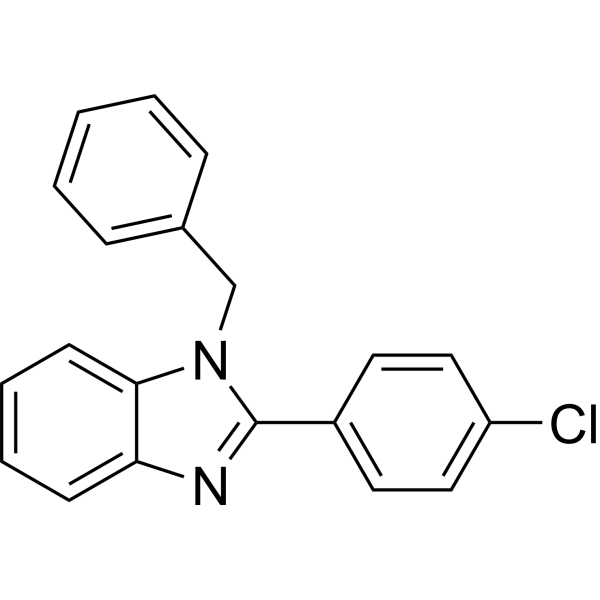 0 ImagesCat. No.: HY-157872CAS No.: 23982-86-7ALDH1A1-IN-4 (compound A1) is a potent inhibitor of aldehyde dehydrogenase (ALDH) A1, with IC50 value of 0.32 μM. ALDH1A1-IN-4 plays an important role in cancer research.
-
ALDH1A1-IN-5
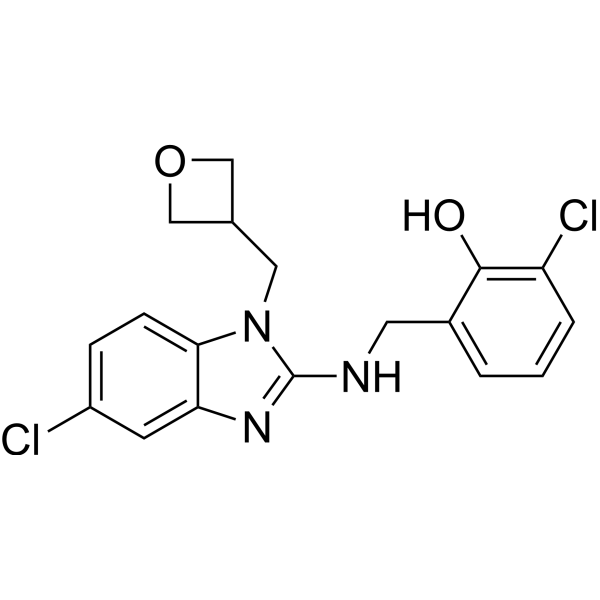 0 ImagesCat. No.: HY-158026ALDH1A1-IN-5 (compound 25) is a potent aldehyde dehydrogenase 1A1 (ALDH1A1) inhibitor with EC50 value of 83, 45, 43 µM for ALDH1A1, ALDH1A2, ALDH1A3, respectively. ALDH1A1-IN-5 has the potential for the research of high-grade serous ovarian cancer (HGSOC).
-
3-Hydroxybenzaldehyde (Standard)
 0 Images3-Hydroxybenzaldehyde (Standard) is the analytical standard of 3-Hydroxybenzaldehyde. This product is intended for research and analytical applications. 3-Hydroxybenzaldehyde (3-HBA) is a precursor compound for phenolic compounds like Protocatechuic aldehyde (PCA) (HY-N0295). 3-Hydroxybenzaldehyde, produced by 3-hydroxybenzyl-alcohol dehydrogenase, is a substrate of aldehyde dehydrogenase (ALDH) in rats and humans. 3-Hydroxybenzaldehyde has vasculoprotective effects in vitro and in vivo. 3-Hydroxybenzaldehyde is proming for research of atherosclerosis[1][2][3][4].
-
Lefelsiran
 0 ImagesCat. No.: HY-177639CAS No.: 2765645-87-0Synonyms: NN-6020Lefelsiran (NN-6020) is a siRNA targeted to ALDH2. It is used for the study of alcohol use disorder.
-
MT16-001
 0 ImagesCat. No.: HY-182636CAS No.: 1895049-73-6MT16-001 is a cell-permeable UCHL1 inhibitor with an IC50 value of 580 nM. MT16-001 also exhibits considerable inhibitory activity against USP30, and shows selectivity for other UCH family deubiquitinases (DUBs) as well as the broader proteome. MT16-001 binds covalently to the cysteine residue at the active site of UCHL1, and forms covalent interactions with ALDH2, ALDH9A1 and GATD3A in intact cells. Meanwhile, as a cytotoxic agent, it displays a steep dose-response curve in human embryonic kidney cells. MT16-001 can be used for research on various cancers, liver fibrosis and pulmonary fibrosis.
-
3-Hydroxyphenylacetic acid-d5
 0 ImagesCat. No.: HY-W001083S12-(3-Hydroxyphenyl-2,4,6-d3)acetic-2,2-d2 acid is the deuterium labeled 3-Hydroxyphenylacetic acid (HY-W001083). 3-Hydroxyphenylacetic acid is an orally active flavonoid metabolite produced by intestinal flora, with blood pressure-lowering activity. 3-Hydroxyphenylacetic acid can also inhibit ferroptosis by upregulating the expression of GPX4, thereby improving spermatogenic dysfunction in aged mice. In addition, abnormal levels of 3-Hydroxyphenylacetic acid are closely related to certain diseases, such as autism spectrum disorders.
-
AldRed 659-A
 0 ImagesCat. No.: HY-D3183CAS No.: 1623011-10-8AldRed 659-A is a red-shifted fluorescent substrate for aldehyde dehydrogenase (ALDH). AldRed 659-A exhibits only minimal fluorescent uptake shift in comparison with DEAB (ALDH inhibitor)-treated control.




