



Apoptosis
Apoptosis
Apoptosis is a distinctive form of cell death exhibiting specific morphological and biochemical characteristics, including cell membrane blebbing, chromatin condensation, genomic DNA fragmentation, and exposure of specific phagocytosis signaling molecules on the cell surface. Cells undergoing apoptosis differ from those dying through necrosis. Necrotic cells are usually recognized by the immune system as a danger signal and, thus, resulting in inflammation; in contrast, apoptotic death is quiet and orderly.
There are two major pathways of apoptotic cell death induction: The intrinsic pathway, also called the Bcl-2-regulated or mitochondrial pathway, is activated by various developmental cues or cytotoxic insults, such as viral infection, DNA damage and growth-factor deprivation, and is strictly controlled by the BCL-2 family of proteins. The extrinsic or death-receptor pathway is triggered by ligation of death receptors (members of the tumor necrosis factor (TNF) receptor family, such as Fas or TNF receptor-1 (TNFR1)) that contain an intracellular death domain, which can recruit and activate caspase-8 through the adaptor protein Fas-associated death domain (FADD; also known as MORT1) at the cell surface. This recruitment causes subsequent activation of downstream (effector) caspases, such as caspase-3, -6 or -7, without any involvement of the BCL-2 family.
Studies suggest that alterations in cell survival contribute to the pathogenesis of a number of human diseases, including cancer, viral infections, autoimmune diseases, neurodegenerative disorders, and AIDS (acquired immunodeficiency syndrome). Treatments designed to specifically alter the apoptotic threshold may have the potential to change the natural progression of some of these diseases.
All Product Categories
-
Apoptosis Inhibitors
(904)
View all products
-
Apoptosis Agonists
(7)
View all products
-
Apoptosis Antagonists
(9)
View all products
-
Apoptosis Activators
(363)
View all products
-
Apoptosis Modulators
(60)
View all products
-
Apoptosis Inducers
(7944)
View all products
-
Apoptosis Degrader
(1)
View all products
-
Apoptosis Controls
(33)
View all products
-
Apoptosis Related Products (9888)
Related Products (9888)

-
Antibodies (120)
-
STAT3-IN-52 hydrochloride
 0 ImagesCat. No.: HY-177990ASTAT3-IN-52 hydrochloride is an orally active STAT3 inhibitor with a Ki value of 2.42 μM. STAT3-IN-52 hydrochloride binds directly and selectively to the pY705 site of STAT3 (Ki = 0.44 μM), thereby impairing its function. STAT3-IN-52 hydrochloride induces apoptosis and triggers anti-tumor responses in vivo. STAT3-IN-52 hydrochloride can be used in breast cancer-related research.
-
(E)-Cardamonin (Standard)
 0 ImagesCat. No.: HY-N1378RCAS No.: 19309-14-9Synonyms: (E)-Cardamomin (Standard); (E)-Alpinetin chalcone (Standard)(E)-Cardamonin (Standard) is the analytical standard of (E)-Cardamonin. This product is intended for research and analytical applications. (E)-Cardamonin ((E)-Cardamomin) is a novel antagonist of hTRPA1 cation channel with an IC50 of 454 nM.

-
PROTAC c-Met Degrader-4
 0 ImagesCat. No.: HY-171824CAS No.: 2959535-15-8PROTAC c-Met Degrader-4 (compound D15) is a potent orally active PROTAC c-MET degrader. PROTAC c-Met Degrader-4 demonstrates excellent intracellular degradation potency with a DC50 < 0.5 nM. PROTAC c-Met Degrader-4 induces cell cycle arrest and apoptosis, inhibits cell invasion and migration, thereby suppressing cell proliferation. PROTAC c-Met Degrader-4 inhibits the growth of Hs746T xenograft tumors in nude mice. PROTAC c-Met Degrader-4 can be used for cancer research, such as non-small cell lung cancer and gastric cancer.
-
RM-581
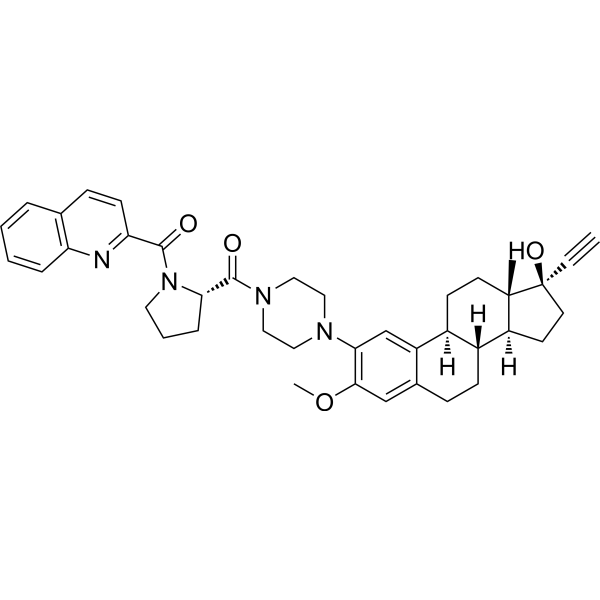 0 ImagesCat. No.: HY-147526CAS No.: 2086809-59-6RM-581, aminosteroid, is an orally active anticancer agent. RM-581 shows anticancer potency against pancreatic, breast, prostate, and ovarian cancers. RM-581 induces endoplasmic reticulum stress and apoptosis via disturbance of cancer cell cholesterol homeostasis. RM-581 can be used for the research of cancer, such as prostate cancer and breast cancer.
-
CK2-TN03
 0 ImagesCK2-TN03 is an ATP-competitive casein kinase 2 (CK2) inhibitor, with an IC50 of 165 nM and a Ki of 20 nM. CK2-TN03 inhibits CK2-mediated survivin activation and reduces CK2-dependent phosphorylation levels of BRD4/MYCN and AKT1. CK2-TN03 exerts anti-neuroblastoma effects by inhibiting survivin, leading to mitotic catastrophe and apoptosis of cancer cells. CK2-TN03 can be used in studies related to neuroblastoma.
-
(S)-Erypoegin K
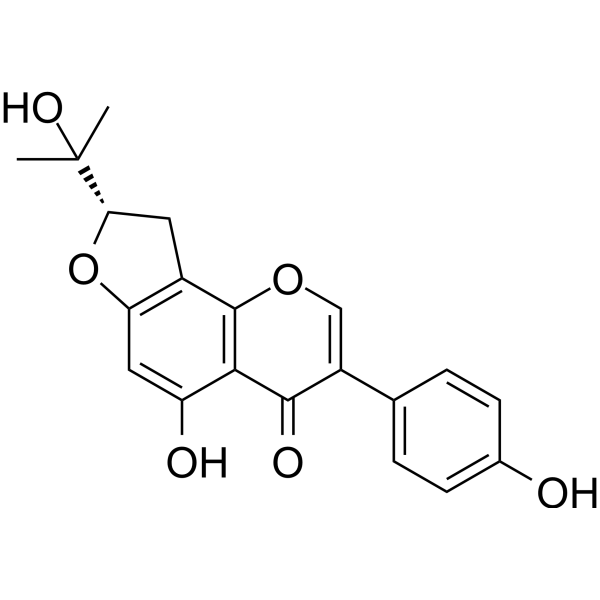 0 ImagesCat. No.: HY-N10392CAS No.: 2055053-90-0(S)-Erypoegin K is a potent anticancer agent. (S)-Erypoegin K shows potent anti-proliferative activity against HL-60 cells. (S)-Erypoegin K induces apoptosis.
-
Antitumor agent-126
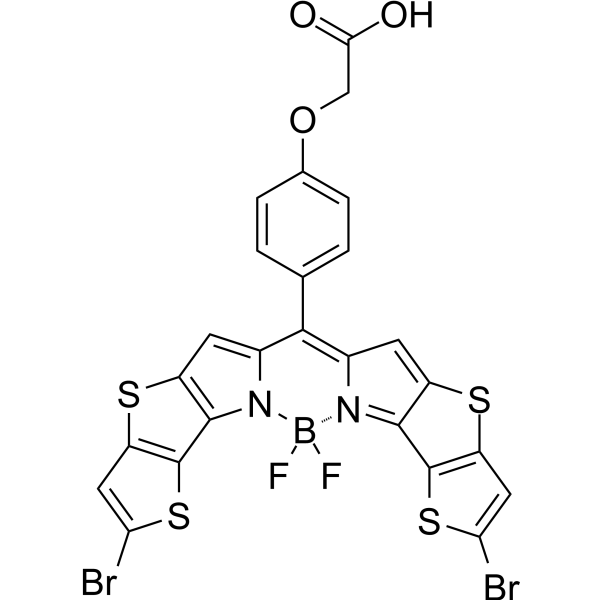 0 ImagesCat. No.: HY-157317CAS No.: 3014356-10-3Antitumor agent-126 (Compound II4) is a photoactive (IC50= 0.149) anticancer agent with significant near-infrared fluorescence emission at 650-760 nm. Antitumor agent-126 has antiproliferative activity and can induce apoptosis after laser irradiation. Antitumor agent-126 effectively inhibits tumor growth in mouse xenograft models exposed to 650 nm laser irradiation. Antitumor agent-126 can be used in cancer research.
-
Loganin (Standard)
 0 ImagesSynonyms: Loganoside (Standard)Loganin (Standard) is the analytical standard of Loganin. This product is intended for research and analytical applications. Loganin is a type of iridoid glycoside compound that possesses anti-inflammatory, antioxidant, and antitumor properties, and offers protective effects against acute lung injury and pulmonary fibrosis. Loganin exerts its protective effects against LPS (HY-D1056)-mediated inflammation and oxidative stress by upregulating the Nrf2/HO-1 signaling pathway, and it reduces neuroinflammation caused by spinal cord injury (SCI).
-
Maxadilan TFA
 0 ImagesCat. No.: HY-P3483AMaxadilan TFA is a specific irreversible PAC1 receptor agonist and a potent vasodilator peptide present in the salivary glands of sand flies. Maxadilan TFA exhibits anti-apoptotic activity in hADSCs. Maxadilan TFA inhibits pro-inflammatory cytokines (TNF-α) and enhances anti-inflammatory mediators (IL-10). Maxadilan TFA can activate leukocytes and inhibit vascular permeability through PAC1 receptors. Maxadilan TFA promotes neural differentiation of human adipose-derived stem cells. Maxadilan TFA can be used to study endotoxin shock, atherosclerosis, and neurodegenerative diseases[1][2][3][4][5].
-
Taltirelin-13C,d3
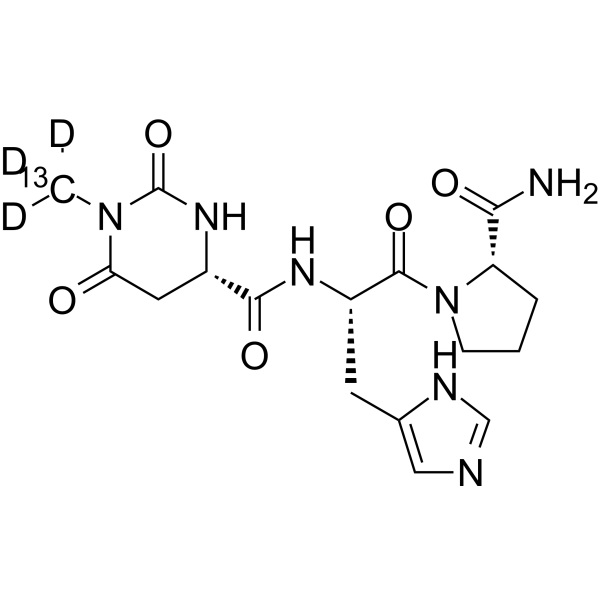 0 ImagesCat. No.: HY-B0596SSynonyms: TA-0910-13C,d3Taltirelin-13C,d3 (TA-0910-13C,d3) is 13C and deuterated labeled Taltirelin (HY-B0596). Taltirelin (TA0910) is a superagonist at thyrotropin-releasing hormone receptor (TRH-R) with an IC50 of 910 nM and EC50 of 36 nM for stimulating an increase in cytosolic Ca2+ concentration (Ca2+ release).
-
(R)-PR-924
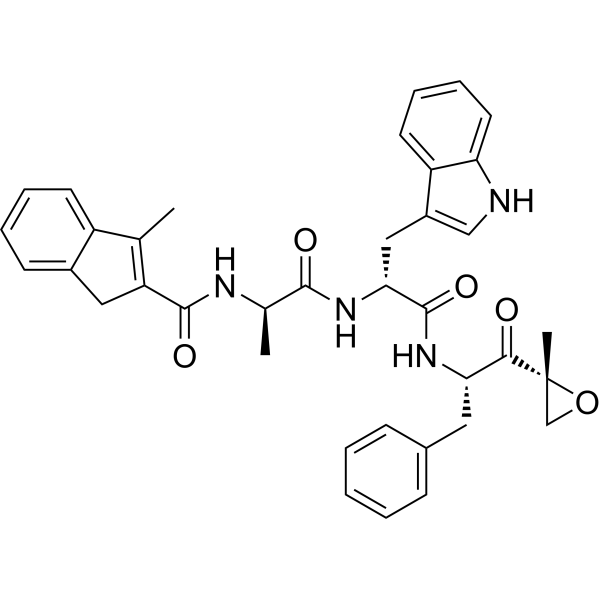 0 ImagesCat. No.: HY-123587APurity: 99.43%(R)-PR-924 is the isomer of PR-924 (HY-123587), and can be used as an experimental control. PR-924 is a selective tripeptide epoxyketone immunoproteasome subunit LMP-7 inhibitor with an IC50 of 22 nM. PR-924 covalently modifies proteasomal N-terminal threonine active sites. PR-924 inhibits growth and triggers apoptosis in multiple myeloma (MM) cells. PR-924 has antitumor activities.
-
Jacaric acid methyl ester
 0 ImagesCat. No.: HY-176160Synonyms: Methyl jacarate; SFE 19:3Jacaric acid methyl ester is a methyl ester form of the conjugated PUFA jacaric acid. Jacaric acid can induce apoptosis selectively in human prostate cancer cells. Jacaric acid induces concentration- and time-dependent LNCaP cell death. Jacaric acid methyl ester can be studied in anticancer research.
-
VK3-OCH3 (Standard)
 0 ImagesCat. No.: HY-W011762RCAS No.: 255906-59-3Fluoxetine (hydrochloride) (Standard) is the analytical standard of Fluoxetine (hydrochloride). This product is intended for research and analytical applications. Fluoxetine hydrochloride (LY 110140) is an antidepressant and a selective serotonin reuptake inhibitor.
-
Antitumor agent-149
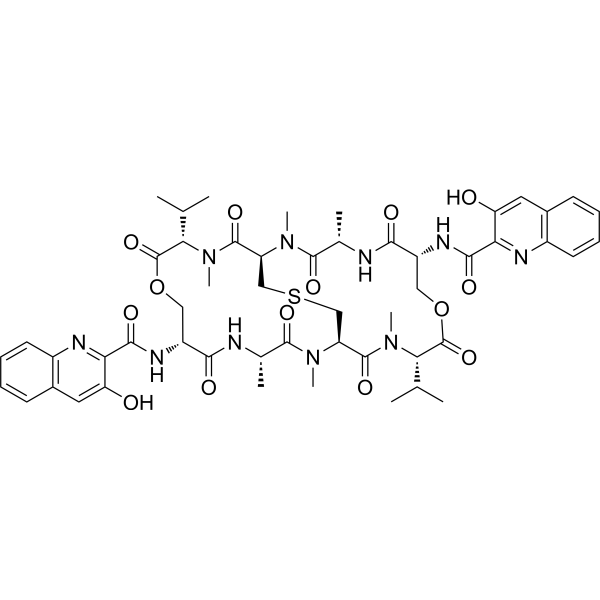 0 ImagesCat. No.: HY-161425CAS No.: 2368983-54-2Antitumor agent-149 (Compound 3) is an analogue of Echinomycin (HY-106101). Antitumor agent-149 inhibits HIF-1α-mediated transcription. Antitumor agent-149 induces cancer cell apoptosis. Antitumor agent-149 inhibits tumor growth in SW620 xenograft mice model.
-
Atopaxar hydrochloride
 0 ImagesCat. No.: HY-18200ACAS No.: 474544-83-7Synonyms: E5555 hydrochloride; ER-172594-00 hydrochlorideAtopaxar hydrochloride (E5555 hydrochloride) is the hydrochloride salt form of Atopaxar (HY-18200). Atopaxar hydrochloride is an orally active, selective and reversible antagonist for thrombin receptor protease-activated receptor-1 (PAR-1). Atopaxar hydrochloride is the inhibitor for Janus kinase 1 (JAK1) and JAK2, which inhibits the JAK-STAT with EC50 of 5.90 μM in A549. Atopaxar hydrochloride inhibits the cell viability of A549 (IC50=7.02 μM), arrests the cell cycle at G1 phase and induces apoptosis. Atopaxar hydrochloride exhibits antiplatelet and antitumor activities. Atopaxar hydrochloride can be used for the research of atherothrombotic disease.
-
MA203
 0 ImagesCat. No.: HY-179157MA203 is a selective CHK1 PROTAC degrader. MA203 targets activated CHK1 for degradation by recruiting the CRBN E3 ubiquitin ligase, thereby completely abolishing both its catalytic and non-catalytic functions and ultimately triggering DNA replication catastrophe and apoptosis. MA203 can be used in research related to pancreatic ductal adenocarcinoma, colorectal cancer, and acute lymphoblastic leukemia.
-
Y502-2304
 0 ImagesCat. No.: HY-178909CAS No.: 741278-95-5Y502-2304 is a c-Myc G-quadruplex stabilizer. Y502-2304 exhibits potent antiproliferative activity in multiple myeloma (MM) cells. Y502–2304 downregulates c-Myc mRNA and protein expression. Y502-2304 induces apoptosis in MM cells, characterizes by elevated γH2AX levels, increases reactive oxygen species (ROS) generation, and mitochondrial dysfunction. Y502-2304 significantly inhibits tumor growth in a xenograft MM model. Y502-2304 can be used for the study of multiple myeloma.
-
Curcumin monoglucoside
 0 ImagesCat. No.: HY-N12669CAS No.: 387818-26-0Curcumin monoglucoside is a flavonoid derivative possessing antioxidant, anti-apoptotic, neuroprotective effects, and antibacterial activity. Curcumin monoglucoside can be used in research on Parkinson's disease.
-
Ciprofloxacin monohydrochloride (Standard)
 0 ImagesSynonyms: Bay-09867 monohydrochloride (Standard)Ciprofloxacin monohydrochloride (Standard) is the analytical standard of Ciprofloxacin (monohydrochloride). This product is intended for research and analytical applications. Ciprofloxacin (Bay-09867) monohydrochloride is an orally active, blood-brain barrier permeable fluoroquinolone antibacterial agent. Ciprofloxacin monohydrochloride exerts bactericidal effects primarily by inhibiting topoisomerase II and IV. Ciprofloxacin monohydrochloride inhibits the proliferation of human dental pulp stem cells and chondrocytes from young rats, and also activates the Akt signaling pathway and upregulates markers such as β-catenin and Nanog to maintain the morphological characteristics of stem cells. Ciprofloxacin monohydrochloride induces significant neurotoxicity and tissue damage, including reducing serotonin and glutathione levels in the brain, inducing oxidative stress and depression-like behaviors, and causing articular cartilage damage. Ciprofloxacin monohydrochloride can be applied to research related to infections of necrotic young permanent teeth and neurotoxicity.




