



Apoptosis
Apoptosis
Apoptosis is a distinctive form of cell death exhibiting specific morphological and biochemical characteristics, including cell membrane blebbing, chromatin condensation, genomic DNA fragmentation, and exposure of specific phagocytosis signaling molecules on the cell surface. Cells undergoing apoptosis differ from those dying through necrosis. Necrotic cells are usually recognized by the immune system as a danger signal and, thus, resulting in inflammation; in contrast, apoptotic death is quiet and orderly.
There are two major pathways of apoptotic cell death induction: The intrinsic pathway, also called the Bcl-2-regulated or mitochondrial pathway, is activated by various developmental cues or cytotoxic insults, such as viral infection, DNA damage and growth-factor deprivation, and is strictly controlled by the BCL-2 family of proteins. The extrinsic or death-receptor pathway is triggered by ligation of death receptors (members of the tumor necrosis factor (TNF) receptor family, such as Fas or TNF receptor-1 (TNFR1)) that contain an intracellular death domain, which can recruit and activate caspase-8 through the adaptor protein Fas-associated death domain (FADD; also known as MORT1) at the cell surface. This recruitment causes subsequent activation of downstream (effector) caspases, such as caspase-3, -6 or -7, without any involvement of the BCL-2 family.
Studies suggest that alterations in cell survival contribute to the pathogenesis of a number of human diseases, including cancer, viral infections, autoimmune diseases, neurodegenerative disorders, and AIDS (acquired immunodeficiency syndrome). Treatments designed to specifically alter the apoptotic threshold may have the potential to change the natural progression of some of these diseases.
All Product Categories
-
Apoptosis Inhibitors
(892)
View all products
-
Apoptosis Agonists
(7)
View all products
-
Apoptosis Antagonists
(9)
View all products
-
Apoptosis Activators
(362)
View all products
-
Apoptosis Modulators
(59)
View all products
-
Apoptosis Inducers
(7862)
View all products
-
Apoptosis Degrader
(1)
View all products
-
Apoptosis Controls
(33)
View all products
-
Apoptosis Related Products (9786)
Related Products (9786)

-
Antibodies (120)
-
Larotrectinib (Standard)
 0 ImagesSynonyms: LOXO-101 (Standard); ARRY-470 (Standard)Larotrectinib (Standard) is the analytical standard of Larotrectinib. This product is intended for research and analytical applications. Larotrectinib (LOXO-101) is an ATP-competitive oral, selective inhibitor of the tropomyosin-related kinase (TRK) family receptors, with low nanomolar 50% inhibitory concentrations against all three isoforms (TRKA, B, and C).
-
FLLL12
 0 ImagesCat. No.: HY-183402CAS No.: 917813-60-6Synonyms: GO-Y026FLLL12 (GO-Y026) is a curcumin analog anticancer agent. FLLL12 inhibits the phosphorylation of AKT, Bcl-2, Bid, EGFR, mTOR, FOXO1a, FOXO3a, STAT3, HER2/neu, as well as pancreatic AKT/STAT3; upregulates the expression of Bim and DR5; and activates PTPs. FLLL12 regulates downstream pathways, induces mitochondria-mediated and DR5-dependent extrinsic apoptosis, inhibits cancer cell viability, proliferation, anchorage-independent growth and migration, and exerts a synergistic effect with Doxorubicin (HY-15142A). FLLL12 can be used in research related to head and neck squamous cell carcinoma, breast cancer, prostate cancer, pancreatic cancer, lung cancer, colon cancer and colorectal cancer.
-
Sitamaquine
 0 ImagesCat. No.: HY-19688CAS No.: 57695-04-2Synonyms: WR 6026Sitamaquine (WR 6026) is an orally active Antileishmanial agent and Succinate dehydrogenase inhibitor. Sitamaquine accumulates in the acidocalcisomes of Leishmania, induces organelle alkalization, and crosses the plasma membrane of Leishmania via temperature- and energy-independent diffusion. Sitamaquine disrupts oxidative phosphorylation in Leishmania, induces mitochondrial depolarization, oxidative stress, elevated intracellular calcium, plasma membrane depolarization, and Apoptosis-like cell death. Sitamaquine can be used in the research of leishmaniasis.
-
BU224 hydrochloride (Standard)
 0 ImagesCat. No.: HY-101170RCAS No.: 205437-64-5BU224 (hydrochloride) (Standard) is the analytical standard of BU224 (hydrochloride). This product is intended for research and analytical applications. BU224 hydrochloride is a selective and high affinity imidazoline I2 receptor ligand, with a Ki of 2.1 nM. BU224 hydrochloride is sometimes used as an I2 receptor antagonist. BU224 hydrochloride exerts neuroprotective effects, with anti-inflammatory and anti-apoptotic properties. BU224 hydrochloride improves memory in 5XFAD mice, enlarging dendritic spines and reducing Aβ-induced changes in NMDARs. BU224 hydrochloride can be used for Alzheimer's disease research.
-
Yamogenin (Standard)
 0 ImagesYamogenin (Standard) is the analytical standard of Yamogenin. This product is intended for research and analytical applications. Yamogenin (Neodiosgenin) is a diastereomer of diosgenin. Yamogenin antagonizes the activation of the liver X receptor (LXR) in luciferase ligand assay. Yamogenin inhibits triacylglyceride (TG) accumulation through the suppression of gene expression of fatty acid synthesis in HepG2 hepatocytes. Yamogenin is a steroidal saponin that can be obtained from plant species with in vitro cytotoxicity, antioxidant, and antimicrobial properties. Yamogenin induces cell death via the extrinsic and intrinsic way of apoptosis. Yamogenin inhibits protein denaturation with an IC50 of 1421.92 μg/mL. Yamogenin can be studied in research on gastric cancer.
-
Histamine-d4
 0 ImagesCat. No.: HY-B1204S1CAS No.: 751471-48-4Synonyms: Ergamine-d4Histamine-d4 (Ergamine-d4) is deuterium labeled Histamine (HY-B1204). Histamine is the agonist for histamine receptor and a vasodilator. Histamine is an organic nitrogen compound that participates in local immune responses, regulates intestinal physiological functions, and acts as a neurotransmitter. Histamine affects p38 MAPK/Akt signaling pathway, exhibits antitumor, antioxidant and anti-inflammatory activities. Histamine can be used in the research of acute myeloid leukemia, malignant melanoma, and renal cell carcinoma.
-
Pracinostat (Standard)
 0 ImagesSynonyms: SB939 (Standard)Pracinostat (Standard) is the analytical standard of Pracinostat. This product is intended for research and analytical applications. Pracinostat is a potent histone deacetylase (HDAC) inhibitor, with IC50s of 40-140 nM, used for cancer research. Pracinostat also inhibits metallo-β-lactamase domain-containing protein 2 (MBLAC2) hydrolase activity with an EC50 below 10 nM.
-
Dihydrodaidzein (Standard)
 0 ImagesCat. No.: HY-N1461RCAS No.: 17238-05-0Synonyms: (±)-Dihydrodaidzein (Standard)Dihydrodaidzein (Standard) ((±)-Dihydrodaidzein (Standard)) is the analytical standard of Dihydrodaidzein (HY-N1461). This product is intended for research and analytical applications. Dihydrodaidzein is a dietary phytoestrogen. Dihydrodaidzein possesses functions including antioxidation, inhibition of DNA oxidative damage, regulation of lipid metabolism and maintenance of intestinal flora stability. Dihydrodaidzein induces apoptosis, regulates immune responses, modulates tumor-related factors, activates the Bmp-2 signaling pathway, inhibits NF-κB and MAPK, and exhibits anti-inflammatory activity. Dihydrodaidzein can be used in research related to cancer, cardiovascular diseases, osteoporosis and inflammatory diseases.
-
KTX-582 intermediate-3
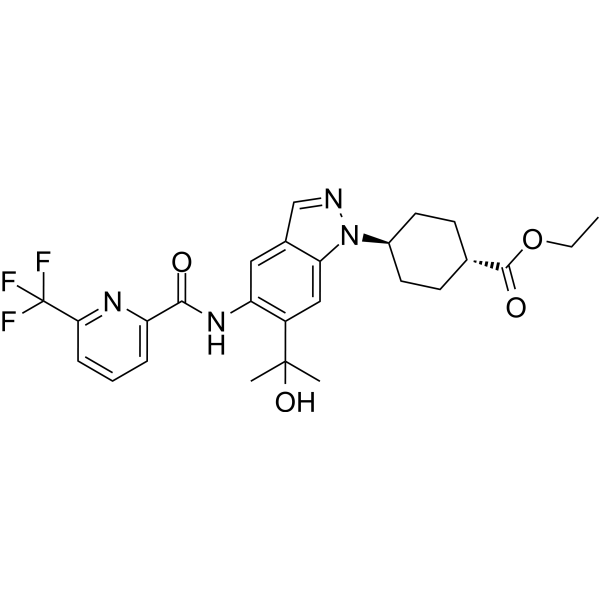 0 ImagesCat. No.: HY-49435CAS No.: 2573304-30-8
-
Diphenyl disulfide (Standard)
 0 ImagesDiphenyl disulfide (Standard) is an analytical standard for diphenyl disulfide (HY-Y1177). This product is intended for research and analytical applications. Diphenyl disulfide (Phenyl disulfide) is an organic disulfide compound. Diphenyl disulfide inhibits the PI3K/AKT/mTOR pathway, and induces ferroptosis (ferroptosis), apoptosis (apoptosis) and autophagy (autophagy) in cancer cells. Diphenyl disulfide downregulates GPX4 expression, inhibits NRF2 phosphorylation, induces lipid peroxidation, promotes xCT ubiquitination, induces proteolytic cleavage of p21 Bax into p18 Bax, and suppresses cell proliferation and viability. Diphenyl disulfide can be used in research related to melanoma and breast cancer.
-
L-Glutamic acid-14C
 0 ImagesCat. No.: HY-14608S12CAS No.: 24016-48-6Synonyms: L-Glutamic acid-14CL-Glutamic acid-14C is L-Glutamic acid (HY-14608) labeled with the radioactive isotope carbon-14. L-Glutamic acid is an excitatory amino acid neurotransmitter and an agonist for all subtypes of glutamate receptors (metabotropic, NMDA, and AMPA). L-Glutamic acid acts as an agonist in the release of DA from dopaminergic nerve terminals and can be used in the study of neurological diseases.
-
Almorexant hydrochloride (Standard)
 0 ImagesCat. No.: HY-10805ARCAS No.: 913358-93-7Synonyms: ACT 078573 hydrochloride (Standard)Almorexant hydrochloride (Standard) is the analytical standard of Almorexant (hydrochloride) (HY-10805A). This product is intended for research and analytical applications. Almorexant (ACT 078573) hydrochloride is an orally active, potent and competitive dual orexin receptor antagonist, with Kd values of 1.3 nM (OX1) and 0.17 nM (OX2), respectively. Almorexant hydrochloride reversibly blocks signaling of orexin-A and orexin-B peptides. Almorexant hydrochloride totally blocked the intracellular Ca2+ signal pathway. Almorexant hydrochloride stimulates caspase-3 activity in AsPC-1 cells and induces apoptosis.
-
Fomesafen (Standard)
 0 ImagesCat. No.: HY-B2010RCAS No.: 72178-02-0Fomesafen (Standard) is the analytical standard of Fomesafen (HY-B2010). This product is intended for research and analytical applications. Fomesafen is an orally active herbicide. Fomesafen inhibits protoporphyrinogen oxidase (PPO). Fomesafen induces Apoptosis and increases ROS. Fomesafen exhibits developmental toxicity, immunotoxicity, and neurotoxicity. It induces precancerous lesions in the liver and hepaturoporphyria in mice. Fomesafen is used to control broadleaf weeds in soybean fields, rubber plantations, and orchards.
-
Vincristine (Standard)
 0 ImagesCat. No.: HY-N0488ARCAS No.: 57-22-7Synonyms: Leurocristine (Standard); NSC-67574 (Standard); 22-Oxovincaleukoblastine (Standard)Vincristine (Standard) is the analytical standard of Vincristine (HY-N0488A). This product is intended for research and analytical applications. Vincristine (Leurocristine; NSC-67574; 22-Oxovincaleukoblastine) is a microtubule inhibitor that disrupts microtubule polymerization by binding to β-tubulin (with a Ki of 85 nM in bovine), arrests the cell cycle and induces apoptosis. Vincristine inhibits cell replication, tumor blood flow and the proliferation of various cancer cells, while triggering effects such as oxidative stress, inflammation, calcium overload, epithelial-mesenchymal transition and peripheral neuropathic pain. Vincristine upregulates the expression of various transporters and nuclear receptors, and enriches gastric cancer stem-like cells. Vincristine is used in research related to various tumors including acute lymphoblastic leukemia, lymphoma, melanoma, gastric cancer, solid tumors and sarcomas.
-
SNS-032 (Standard)
 0 ImagesSynonyms: BMS-387032 (Standard)
-
Notoginsenoside R1 (Standard)
 0 ImagesCat. No.: HY-N0615RCAS No.: 80418-24-2Synonyms: Sanchinoside R1 (Standard); Sanqi glucoside R1 (Standard)Notoginsenoside R1 (Standard) is the analytical standard of Notoginsenoside R1. This product is intended for research and analytical applications. Notoginsenoside R1 (Sanchinoside R1), a saponin, is isolated from P. notoginseng. Notoginsenoside R1 exhibits anti-oxidation, anti-inflammatory, anti-angiogenic, and anti-apoptosis activities. Notoginsenoside R1 provides cardioprotection against ischemia/reperfusion (I/R) injury. Notoginsenoside R1 also provides neuroprotection in H2O2-induced oxidative damage in PC12 cells.
-
Neoandrographolide (Standard)
 0 ImagesCat. No.: HY-N0721RCAS No.: 27215-14-1Synonyms: Neoandrographiside (Standard)Neoandrographolide (Standard) is the analytical standard of Neoandrographolide. This product is intended for research and analytical applications. Neoandrographolide is a diterpenoid compound isolated from Andrographis paniculata. Neoandrographolide inhibits osteoclasts differentiation and bone resorption through inhibition of MAPK/NF-κB/PI3K/AKT/GSK3β/PPAR/CAMK signaling pathway. Neoandrographolide inhibits apoptosis in rat embryonic ventricular cardiomyocytes. Neoandrographolide inhibits iNOS and the generation of ROS, activates eNOS, exhibiting anti-inflammatory and hypolipidemic activity.
-
Diuvaretin
 0 ImagesCat. No.: HY-N13034CAS No.: 61463-04-5Diuvaretin is an antimalarial agent and a C-phenylated dihydrochalcone. Diuvaretin can be isolated from the roots of U. acuminata. Diuvaretin increases the activity of Caspase-3 and triggers Apoptosis. Diuvaretin exhibits antiparasitic activity against Plasmodium falciparum. Diuvaretin can be used in the research of promyelocytic leukemia and malaria.
-
Linichlorin A
 0 ImagesCat. No.: HY-126757CAS No.: 62462-98-0Linichlorin A is a p27Kip1 ubiquitination inhibitor that blocks p27Kip1 degradation by inhibiting the Skp2-Cks1–p27Kip1 interaction. Linichlorin A shows selective antiproliferative activity against tumor cells. Linichlorin A induces apoptosis in leukemia cells via cytochrome c release, caspase activation and PARP cleavage. Linichlorin A can be used in the study of leukemia, melanoma, cervical cancer and breast cancer.
-
Emavusertib tosylate
 0 ImagesCat. No.: HY-135317CCAS No.: 2376399-41-4Synonyms: CA-4948 tosylateEmavusertib tosylate (CA-4948 tosylate) is the tosylate salt form of Emavusertib (HY-135317). Emavusertib tosylate is an orally active inhibitor for IRAK4 (IC50=57 nM) and FLT3. Emavusertib tosylate inhibits NF-κB and MyD88 signaling pathways, reduces the generation of pro-inflammatory cytokines like IL-6 and IL-10, thereby exhibiting anti-inflammatory and anti-proliferative activities against cancer cells, leading to cell apoptosis. Emavusertib tosylate exhibits antitumor activity in mouse model.




