



Apoptosis
Apoptosis
Apoptosis is a distinctive form of cell death exhibiting specific morphological and biochemical characteristics, including cell membrane blebbing, chromatin condensation, genomic DNA fragmentation, and exposure of specific phagocytosis signaling molecules on the cell surface. Cells undergoing apoptosis differ from those dying through necrosis. Necrotic cells are usually recognized by the immune system as a danger signal and, thus, resulting in inflammation; in contrast, apoptotic death is quiet and orderly.
There are two major pathways of apoptotic cell death induction: The intrinsic pathway, also called the Bcl-2-regulated or mitochondrial pathway, is activated by various developmental cues or cytotoxic insults, such as viral infection, DNA damage and growth-factor deprivation, and is strictly controlled by the BCL-2 family of proteins. The extrinsic or death-receptor pathway is triggered by ligation of death receptors (members of the tumor necrosis factor (TNF) receptor family, such as Fas or TNF receptor-1 (TNFR1)) that contain an intracellular death domain, which can recruit and activate caspase-8 through the adaptor protein Fas-associated death domain (FADD; also known as MORT1) at the cell surface. This recruitment causes subsequent activation of downstream (effector) caspases, such as caspase-3, -6 or -7, without any involvement of the BCL-2 family.
Studies suggest that alterations in cell survival contribute to the pathogenesis of a number of human diseases, including cancer, viral infections, autoimmune diseases, neurodegenerative disorders, and AIDS (acquired immunodeficiency syndrome). Treatments designed to specifically alter the apoptotic threshold may have the potential to change the natural progression of some of these diseases.
All Product Categories
-
Apoptosis Inhibitors
(905)
View all products
-
Apoptosis Agonists
(7)
View all products
-
Apoptosis Antagonists
(9)
View all products
-
Apoptosis Activators
(363)
View all products
-
Apoptosis Modulators
(60)
View all products
-
Apoptosis Inducers
(7944)
View all products
-
Apoptosis Degrader
(1)
View all products
-
Apoptosis Controls
(33)
View all products
-
Apoptosis Related Products (9889)
Related Products (9889)

-
Antibodies (120)

-
CID5721353 (Standard)
 0 ImagesCat. No.: HY-100502RCAS No.: 301356-95-6CID5721353 (Standard) is the analytical standard of CID5721353 (HY-100502). This product is intended for research and analytical applications. CID5721353 is an inhibitor of BCL6 with an IC50 value of 212 μM, which corresponds to a Ki of 147 μM.
-
Trimebutine (Standard)
 0 ImagesTrimebutine (Standard) is the analytical standard of Trimebutine (HY-B0380). This product is intended for research and analytical applications. Trimebutine is a multi-target inhibitor and opioid receptor agonist with antimuscarinic activity. Trimebutine inhibits L-type Ca2+ channels and large-conductance calcium-activated potassium channels (BKCa channels), thereby inhibiting extracellular calcium influx and potassium ion efflux. Trimebutine also targets Toll-like receptors, inhibits Toll-like receptor 2/4/7/8/9 signals, and inhibits LPS-induced IRAK1 activation, as well as ERK1/2, JNK and NF-κB activation, thereby exerting anti-inflammatory effects. Trimebutine also induces tumor cell apoptosis by inhibiting the AKT/ERK pathway. Trimebutine also inhibits excessive contraction of smooth muscle and can be used in the study of gastrointestinal disorders such as irritable bowel syndrome (IBS).
-
Lupalbigenin
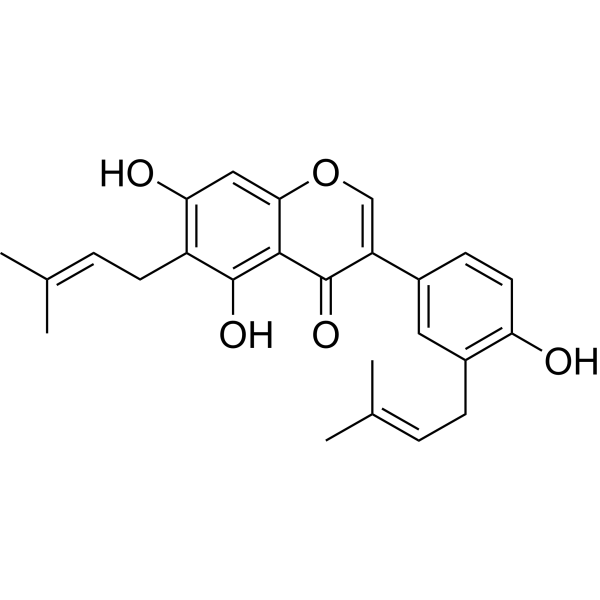 0 ImagesLupalbigenin is a natural compound with anti-metastatic and pro-apoptotic effects.
-
DAPT (Standard)
 0 ImagesCat. No.: HY-13027RCAS No.: 208255-80-5Synonyms: GSI-IX (Standard)DAPT (Standard) is the analytical standard of DAPT (HY-13027). This product is intended for research and analytical applications. DAPT (GSI-IX) is a potent and orally active γ-secretase inhibitor with IC50s of 115 nM and 200 nM for total amyloid-β (Aβ) and Aβ42, respectively. DAPT inhibits the activation of Notch 1 signaling and induces cell differentiation. DAPT also induces autophagy and apoptosis. DAPT has neuroprotection activity and has the potential for autoimmune and lymphoproliferative diseases, degenerative disease and cancers treatment.
-
Berberine
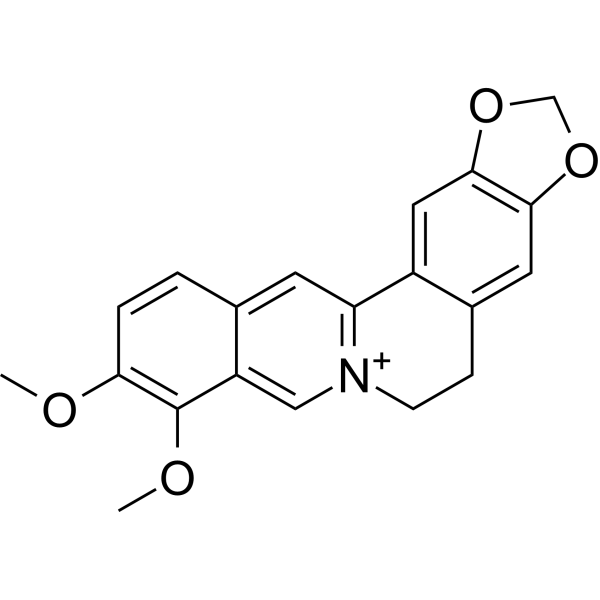 0 ImagesBerberine (Natural Yellow 18) is an alkaloid isolated from the Chinese herbal medicine Huanglian, as an antibiotic. Berberine (Natural Yellow 18) induces reactive oxygen species (ROS) generation and inhibits DNA topoisomerase. Berberine (Natural Yellow 18) has antineoplastic properties. The sulfate form (HY-N0716B) improves bioavailability.
-
Tri-O-tolyl phosphate (Standard)
 0 ImagesSynonyms: Tri-O-cresyl phosphate (Standard); TOTP (Standard)Tri-O-tolyl phosphate (Tri-O-cresyl phosphate; TOTP) (Standard) is an analytical standard of Tri-O-tolyl phosphate (HY-W011086). This product is intended for research and analytical applications. Tri-O-tolyl phosphate is an aryl phosphate compounds commonly utilized as flame retardants and lubricant additives across various industrie. Tri-O-tolyl phosphate has neurotoxicity and reproductive toxicity, decreasing cell viability, inhibiting cell proliferation, triggering cell cycle arrest, induceing apoptosis, causing mitochondrial dysfunction, disrupts calcium homeostasis.
-
Linalool-13C3
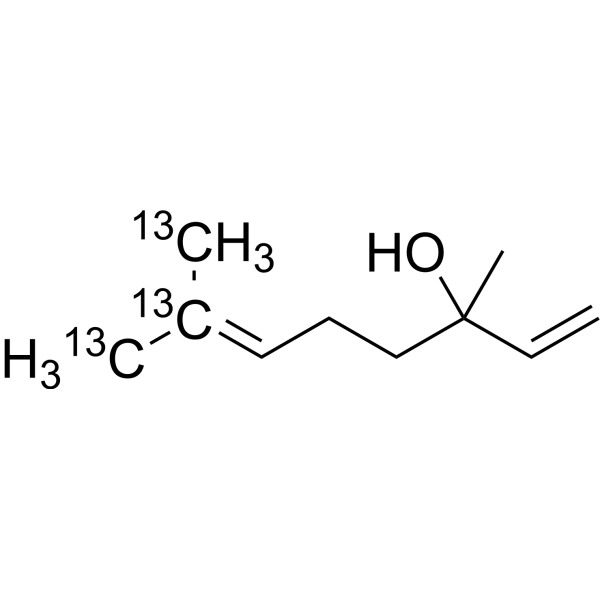 0 ImagesCat. No.: HY-N0368S1Linalool-13C3 is 13C labeled Linalool (HY-N0368). Linalool is a natural monoterpene which is a competitive NMDA receptor antagonist. Linalool is orally active and crosses the blood-brain barrier. Linalool has anticancer, antibacterial, anti-inflammatory, neuroprotective, anxiolytic, antidepressant, anti-stress, cardioprotective, hepatoprotective, nephroprotective and pulmonary protective activities.
-
Perhexiline maleate (Standard)
 0 ImagesPerhexiline (maleate) (Standard) is the analytical standard of Perhexiline (maleate). This product is intended for research and analytical applications. Perhexiline maleate is an orally active CPT1 and CPT2 inhibitor that reduces fatty acid metabolism. Perhexiline maleate induces mitochondrial dysfunction and apoptosis in hepatic cells. Perhexiline maleate can cross the blood brain barrier (BBB) and shows anti-tumor activity. Perhexiline maleate can be used in the research of cancers, and cardiovascular disease like angina.
-
Calcimycin (Standard)
 0 ImagesCat. No.: HY-N6687RCAS No.: 52665-69-7Synonyms: A-23187 (Standard); Antibiotic A-23187 (Standard)Calcimycin (Standard) is the analytical standard of Calcimycin. This product is used for research and analytical applications. Calcimycin is an antibiotic and a unique divalent cation ionophore, such as calcium ions and magnesium ions. Calcimycin induces Ca2+ -dependent cell death by increasing the intracellular calcium concentration. Calcimycin inhibits the growth of Gram-positive bacteria and some fungi, and also inhibits the activity of ATPase and uncouples the oxidative phosphorylation (OXPHOS) of mammalian cells, inducing apoptosis and autophagy.
-
CI-1018
 0 ImagesCat. No.: HY-19299CAS No.: 245329-99-1CI-1018 is an orally active selective PDE-4 inhibitor, with IC50 values of 1.1 μM, 35.8 μM, and 73.4 μM against hPDE-4, canine PDE-4, and guinea pig PDE-4, respectively. CI-1018 induces iNOS expression and Apoptosis. CI-1018 induces vascular injury, medial necrosis, hemorrhage, edema, thymic atrophy, ketonuria, and weight loss. CI-1018 can be used in research related to asthma, vasculitis, and mesenteric vasculitis/arteriopathy.
-
N-Acetylphytosphingosine
 0 ImagesCat. No.: HY-164263CAS No.: 21830-28-4Synonyms: NAPS
-
Daporinad (Standard)
 0 ImagesCat. No.: HY-50876RCAS No.: 658084-64-1Synonyms: FK866 (Standard); APO866 (Standard)Daporinad (Standard) is the analytical standard of Daporinad (HY-50876). This product is intended for research and analytical applications. Daporinad (FK866) is a non-competitive inhibitor of nicotinamide phosphoribosyltransferase (Nampt), with a Ki value of 0.3 nM. Daporinad depletes NAD+ and ATP levels, inhibits mTORC1 and MAPK/ERK pathways, and activates TFEB to induce autophagy. Daporinad causes the depletion of the endoplasmic reticulum Ca²⁺ pool, ultimately weakening the mitogen-induced Ca²⁺ signal and the activation and function of T cells. Daporinad induces cell cycle arrest and apoptosis, and inhibits cell proliferation. Daporinad can be used for the study of myeloma, liver cancer, and immunosuppression.
-
C188-9 (Standard)
 0 ImagesCat. No.: HY-112288RCAS No.: 432001-19-9Synonyms: TTI-101 (Standard)C188-9 (Standard) is the analytical standard of C188-9 (HY-112288). This product is intended for research and analytical applications. C188-9 (TTI-101) is a STAT3 inhibitor with a Kd value of 4.7 nM. C188-9 targets the SH2 domain of STAT3, blocks the processes of STAT3 ligand binding, receptor recruitment, homodimerization and phosphorylation, and regulates STAT3-mediated genes associated with tumorigenesis and radioresistance. C188-9 regulates STAT1-mediated genes related to radioresistance and reduces the activation level of STAT1. C188-9 downregulates the expression of DNMT1, enhances DAC-induced demethylation and re-expression of RASSF1A, and simultaneously potentiates the anti-tumor effect of DAC on pancreatic cancer cells. C188-9 inhibits both anchorage-dependent and anchorage-independent growth of cancer cells, induces Apoptosis, blocks the growth of tumor xenografts, and suppresses muscle atrophy. C188-9 maintains muscle mass, increases body weight and improves grip strength in tumor-bearing mice. C188-9 can be used in research related to head and neck squamous cell carcinoma, pancreatic cancer, sepsis-related skeletal muscle wasting, non-small cell lung cancer, acute myeloid leukemia and cancer cachexia.
-
Dipyridamole (Standard)
 0 ImagesDipyridamole (Standard) is the analytical standard of Dipyridamole. This product is intended for research and analytical applications. Dipyridamole is an orally active phosphodiesterase (PDE) inhibitor. Dipyridamole also is an antiplatelet agent used in secondary prophylaxis against stroke. Dipyridamole can induce cancer cell-specific apoptosis.
-
Quinidine (15% dihydroquinidine) (Standard)
 0 ImagesQuinidine (15% dihydroquinidine) (Standard) is the analytical standard of Quinidine (15% dihydroquinidine) (HY-B1751). This product is intended for research and analytical applications. Quinidine (15% dihydroquinidine) is an orally active antiarrhythmic agent. Quinidine (15% dihydroquinidine) reduces the expression level of P-gp, inhibits P-gp-mediated efflux, increases the intracellular accumulation of P-gp substrates, induces PARP cleavage and Caspase-3 activation, and elevates the proportion of Apoptotic cells at the sub-G1 phase. Quinidine (15% dihydroquinidine) exerts sustained block and open-channel block effects on IK(f). Quinidine (15% dihydroquinidine) alters the urinary metabolic ratio of Amphetamine, modulates the Pentylenetetrazol-induced seizure threshold, and regulates the anticonvulsant effect of Dextromethorphan. Quinidine (15% dihydroquinidine) can be used in studies related to uterine sarcoma and seizures.
-
Omeprazole-d3 sodium
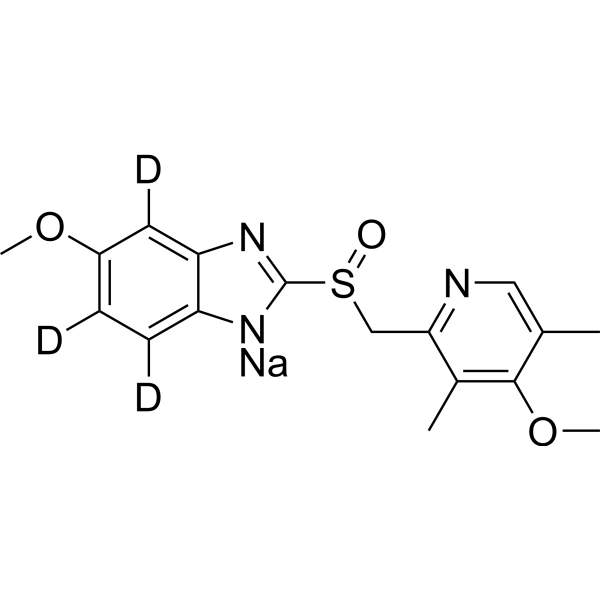 0 ImagesCat. No.: HY-B0113S4Synonyms: H 16868-d3 sodiumOmeprazole-d3 sodium is deuterated labeled Omeprazole (HY-B0113). Omeprazole sodium (H 16868) is an orally active H+,K+-ATPase inhibitor and a proton pump inhibitor. Omeprazole sodium competitively inhibits CYP2C19, CYP3A4, and CYP2C9 activity. Omeprazole sodium inhibits gastric acid secretion and can be used for acid-related gastrointestinal disorders. Omeprazole sodium inhibits pancreatic cancer cell proliferation, induces apoptosis, autophagosome accumulation (elevated LC3-I and LC3-II levels), oxidative stress, and cytogenetic imbalance, modulates lysosomal transport, reduces inflammatory cytokines. Omeprazole sodium alters small intestinal morphology and magnesium absorption, and induces gastric mucosa morphologic changes. Omeprazole sodium also has neuroprotective and antibacterial effects.
-
TZOA
 0 ImagesCat. No.: HY-173128CAS No.: 2106826-77-9TZOA is an antiviral agent that inhibits the replication of infectious hematopoietic necrosis virus (IHNV) in a dose-dependent manner and significantly reduces viral titers. TZOA can effectively counteract IHNV-induced apoptosis, maintain mitochondrial membrane potential and homeostasis, and restore MAVS-mediated interferon expression. TZOA has antiviral activity.
-
Aristolactam I (Standard)
 0 ImagesCat. No.: HY-N2013RCAS No.: 13395-02-3Synonyms: Aristololactam (Standard); Aristolactam (Standard)Aristolactam I (Standard) is the analytical standard of Aristolactam I. This product is intended for research and analytical applications. Aristolactam I is an AQP1 inhibitor and Aristolochic acid I metabolite. Aristolactam I can be isolated from Aristolochia plants. Aristolactam I downregulates Twist1 expression, increases E-cadherin expression, and activates the TGF-β/Smad signaling pathway. Aristolactam I has anticancer activity against breast cancer. Aristolactam I is nephrotoxic. Aristolactam I is mainly used in the study of breast cancer and kidney diseases such as renal interstitial fibrosis.
-
Erioflorin
 0 ImagesCat. No.: HY-187654CAS No.: 27542-17-2Erioflorin is a sesquiterpene lactone compound originally isolated from plants of the Asteraceae family (such as Eriophyllum confertiflorum and species of the Podanthus genus). Erioflorin acts as a selective β-TrCP1 modulator. Erioflorin induces cell apoptosis by increasing intracellular reactive oxygen species (ROS) production and decreasing mitochondrial membrane potential, inhibits the NF-κB signaling pathway by blocking the phosphorylation of IκBα, and prevents the ubiquitination and degradation of the tumor suppressor Pdcd4 by inhibiting the interaction between Pdcd4 and the E3 ubiquitin ligase β-TrCP1. Erioflorin can be used in research related to breast cancer, colon cancer, advanced prostate cancer, and Chagas disease.




