



Caspase
Caspase Isoform Specific Products
-
Caspase 1
(76)
View all products
-
Caspase 2
(11)
View all products
-
Caspase 3
(536)
View all products
-
Caspase 4
(11)
View all products
-
Caspase 5
(5)
View all products
-
Caspase 6
(12)
View all products
-
Caspase 7
(106)
View all products
-
Caspase 8
(107)
View all products
-
Caspase 9
(193)
View all products
-
Caspase 10
(6)
View all products
-
Caspase 12
(3)
View all products
-
Caspase
(588)
View all products
-
Caspase 11
(2)
View all products
-
Caspase-13
(1)
View all products
All Product Categories
-
Caspase Inhibitors
(434)
View all products
-
Caspase Agonists
(41)
View all products
-
Caspase Activators
(620)
View all products
-
Caspase Modulators
(46)
View all products
-
Caspase Chemicals
(4)
View all products
-
Caspase MDM2 Inhibitor
(1)
View all products
-
Caspase Inducers
(49)
View all products
-
Caspase Degrader
(1)
View all products
-
Caspase Control
(1)
View all products
-
Caspase Substrates
(3)
View all products
-
Caspase Proteins
(10)
View all products
-
Caspase-1 Proteins
(3)
View all products
-
Caspase-3 Proteins
(3)
View all products
-
Caspase 7 Proteins
(1)
View all products
-
Caspase-8 Proteins
(1)
View all products
-
Caspase-10 Proteins
(1)
View all products
-
Caspase Related Products (1380)
Related Products (1380)

-
Recombinant Proteins (10)
-
Antibodies (35)
-
Caspase Signaling Pathway
-
Caspase Isoform Comparison
-
VRT-043198 (Standard)
 0 ImagesCat. No.: HY-112226RCAS No.: 244133-31-1VRT-043198 (Standard) is the analytical standard of VRT-043198. This product is intended for research and analytical applications. VRT-043198, the agent metabolite of VX-765 (Belnacasan), is a potent, selective and blood-brain barrier permeable inhibitor of interleukin-converting enzyme/caspase-1 subfamily caspases. VRT-043198 exhibits Ki values of 0.8 nM and 0.6 nM for ICE/caspase-1 and caspase-4, respectively[1].
-
Mesaconic acid (Standard)
 0 ImagesSynonyms: Citronic acid (Standard); Methylfumaric acid (Standard)Mesaconic acid (Standard) is the analytical standard of Mesaconic acid. This product is intended for research and analytical applications. Mesaconic acid (Citronic acid; Methylfumaric acid) is an orally active anti-inflammatory and antioxidant agent. Mesaconic acid reduces the level of NF-κB in colon tissues, downregulates the expression of Keap1 and Bax, upregulates the expression of Nrf2 and Bcl2, and decreases the expression of Caspase-1. Mesaconic acid reduces the levels of NLRP3, ASC and Casp-1 in colon, liver and kidney tissues. Mesaconic acid reduces pro-inflammatory cytokine levels, increases the level of the anti-inflammatory cytokine IL-10, elevates NAD+ levels, regulates oxidative stress markers and antioxidant enzyme levels, and upregulates intestinal barrier proteins in colon, liver and kidney tissues. Mesaconic acid increases the abundance of beneficial gut bacteria and reduces the abundance of harmful gut bacteria in rapidly aging mice, and exhibits anti-aging properties. Mesaconic acid acts as a flame retardant and serves as a competitive inhibitor of fumarate reduction. Mesaconic acid can be used in the research of aging-related inflammation.
-
RN-0001
 0 ImagesCat. No.: HY-P11489CAS No.: 252731-57-0RN-0001 is a cyclophilin (Cyp) inhibitor with Ki values of 4.1 nM and 12.0 nM against CypA and CypD, respectively, and an EC50 of 916 nM for CypD. RN-0001 binds directly to CypD, inhibits the peptidyl-prolyl cis-trans isomerase activities of CypD and CypA, and prevents CypD-dependent mitochondrial permeability transition pore opening. RN-0001 improves mitochondrial function, reduces ROS production, inhibits the expression of lipogenic markers, blocks the nuclear translocation of NF-κB p65, and decreases the release of activated caspase-3 and cytochrome c. RN-0001 can be used in the research of alcohol-associated liver disease.
-
Tauroursodeoxycholate-d5
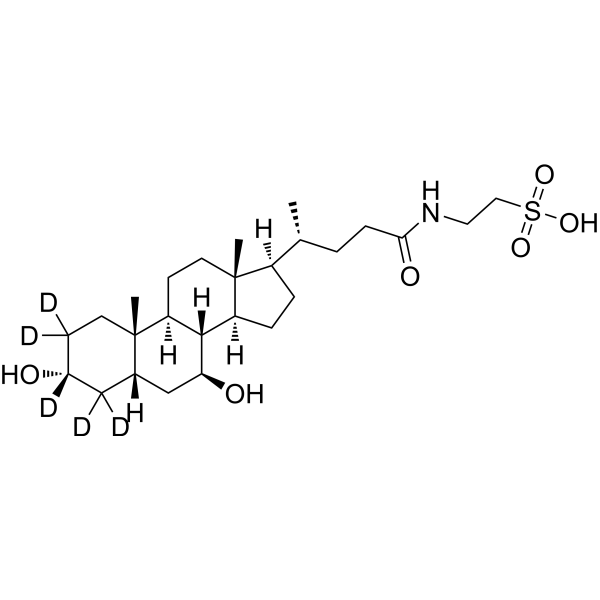 0 ImagesCat. No.: HY-19696SCAS No.: 1207294-25-4Synonyms: Tauroursodeoxycholic acid-d5; TUDCA-d5; UR 906-d5Tauroursodeoxycholate-d5 is the deuterium labeled Tauroursodeoxycholate. Tauroursodeoxycholate (Tauroursodeoxycholic acid) is an endoplasmic reticulum (ER) stress inhibitor. Tauroursodeoxycholate significantly reduces expression of apoptosis molecules, such as caspase-3 and caspase-12. Tauroursodeoxycholate also inhibits ERK.
-
Ac-YVAD-FMK
 0 ImagesCat. No.: HY-P10244CAS No.: 350021-87-3
-
Maxadilan
 0 ImagesCat. No.: HY-P3483CAS No.: 135374-80-0Maxadilan is a specific irreversible PAC1 receptor agonist and a potent vasodilator peptide present in the salivary glands of sand flies. Maxadilan exhibits anti-apoptotic activity in hADSCs. Maxadilan inhibits pro-inflammatory cytokines (TNF-α) and enhances anti-inflammatory mediators (IL-10). Maxadilan can activate leukocytes and inhibit vascular permeability through PAC1 receptors. Maxadilan promotes neural differentiation of human adipose-derived stem cells. Maxadilan can be used to study endotoxin shock, atherosclerosis, and neurodegenerative diseases[1][2][3][4][5].
-
7-Oxogedunin
 0 ImagesCat. No.: HY-178898CAS No.: 13072-74-77-Oxogedunin (Compound 7DG; Compound 16) is a small molecule that protects macrophages from cell pyroptosis induced by anthrax lethal toxin (LT). Its target is protein kinase R (PKR). 7-Oxogedunin can widely inhibit the assembly of various inflammasomes (NLRP1 and NLRP3) and the activation of caspase-1 by inhibiting the kinase-independent function of PKR. 7-Oxogedunin has growth inhibitory activity on European corn borer larvae. 7-Oxogedunin can be used for LT toxicity inhibition and pest control research.
-
Nordentatin
 0 ImagesCat. No.: HY-N16746CAS No.: 1083193-15-0Nordentatin is a selective inhibitor targeting GSK-3 with anticancer activity. Nordentatin can inhibit the phosphorylation of GSK-3, downregulate the anti-apoptotic protein Mcl-1 and activate caspase-3 to induce apoptosis (apoptosis). Nordentatin also inhibits the expression of migration-related protein MMP-9 and exerts anti-proliferation and anti-migration activities. Nordentatin is used in research into cancers such as neuroblastoma.
-
Z-LEED-FMK
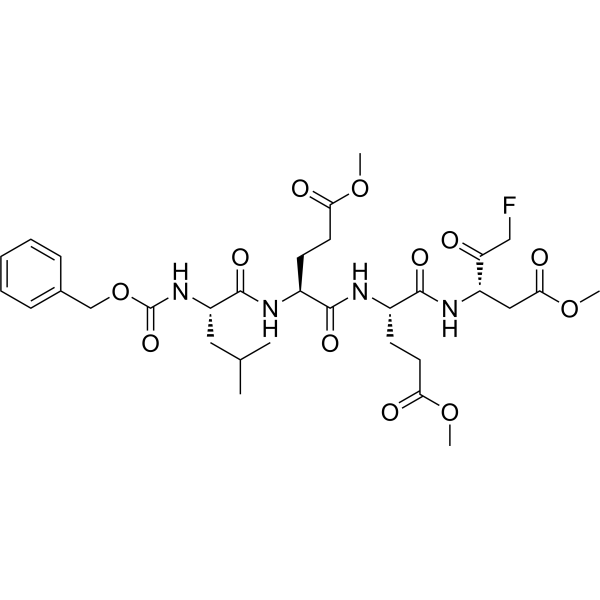 0 ImagesCat. No.: HY-P5122CAS No.: 1135688-38-8Z-LEED-FMK is a caspase-13 and caspase-4 inhibitor. Z-LEED-FMK also inhibits caspase-1 processing in S. typhimurium-infected macrophages.
-
FuBIG
 0 ImagesCat. No.: HY-182469FuBIG is an iminoguanidine derivative with neuroprotective effects. FuBIGL inhibits L-LDH activation and reduces lactate production. FuBIGL exerts protective effects on inflammatory nerve cells, upregulates the expressions of AMPK, pAMPK and FOXO3, and activates the AMPK pathway in cells. FuBIG exerts anti-inflammatory effects by reducing pro-inflammatory cytokines (IL-6, IL-1β, TNF-α) and increasing the anti-inflammatory cytokine IL-10. FuBIG maintains mitochondrial membrane potential, alleviates mitochondrial dysfunction, reduces ROS production, and relieves oxidative stress. FuBIG upregulates Bcl-2, downregulates Bax and Caspase-3, and inhibits cell apoptosis (apoptosis). FuBIG improves metabolic disorders in diabetic mice, decreases the levels of LDL-C, ALT and AST, and increases HDL-C level simultaneously. FuBIG can be used in the research of diabetic neuroinflammation.
-
CASP9 Human Pre-designed siRNA Set A
 0 ImagesCat. No.: HY-RS01969
CASP9 Human Pre-designed siRNA Set A contains three designed siRNAs for CASP9 gene (Human), as well as a negative control, a positive control, and a FAM-labeled negative control.
-
NEK7 degrader-3
 0 ImagesCat. No.: HY-185311CAS No.: 3119435-52-5NEK7 degrader-3 is an orally active and brain-penetrant NEK7 molecular glue degrader with a DC50 of 33.1 nM. NEK7 degrader-3 mediates interaction between NEK7 and E3 ligase cereblon, promoting proteasomal degradation of NEK7 and attenuating NLRP3 inflammasome-mediated inflammatory responses. NEK7 degrader-3 inhibits caspase-1 activity, cytokine release of IL-1β, IL-1α, and IL-18, and pyroptosis-related plasma membrane permeabilization. NEK7 degrader-3 shows antiinflammatory activity in an LPS (HY-D1056)-induced neuroinflammation mouse model. NEK7 degrader-3 can be used for the research of neuroinflammation.

-
Cimiside E
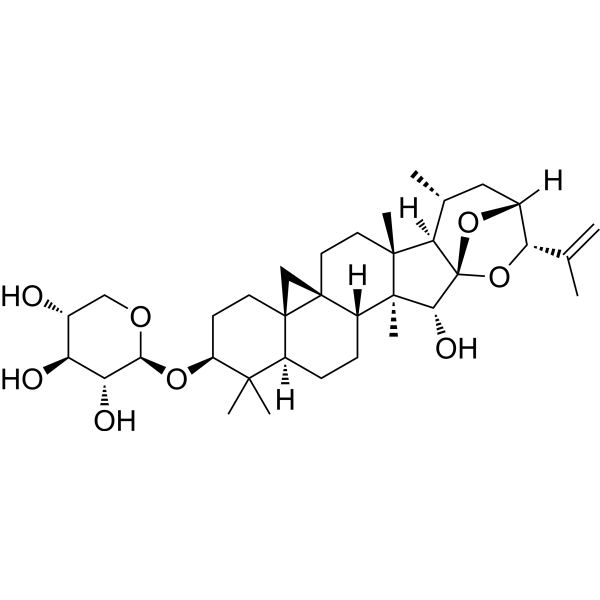 0 ImagesCat. No.: HY-N10018CAS No.: 154822-57-8Synonyms: 25-Anhydrocimigenol xylosideCimiside E (25-Anhydrocimigenol xyloside) is a triterpene xyloside, Cimiside E possesses apoptotic action on gastric cancer cells, with an IC50 value of 14.58 μM. Cimiside E induces cell cycle arrest at G2/M phase, and mediates apoptosis through the induction of the caspase cascade for both the extrinsic and intrinsic pathways.
-
Casp7 Rat Pre-designed siRNA Set A
 0 ImagesCat. No.: HY-RS01964
Casp7 Rat Pre-designed siRNA Set A contains three designed siRNAs for Casp7 gene (Rat), as well as a negative control, a positive control, and a FAM-labeled negative control.
-
PRX-08066 maleate
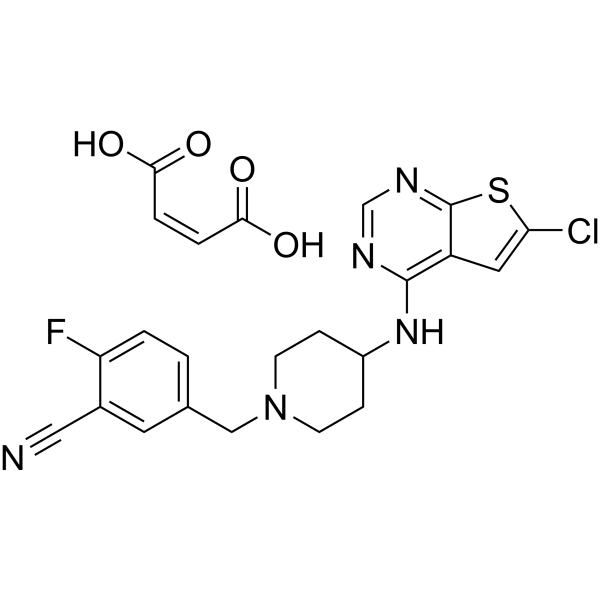 0 ImagesCat. No.: HY-15472ACAS No.: 866206-55-5PRX-08066 maleate is a selective and orally active 5-hydroxytryptamine receptor 2B (5-HT2BR) antagonist with a Ki of 3.4 nM. PRX-08066 maleate inhibits the MAPK pathway, 5-HT release and fibrotic factor (TGFβ1, CTGF and FGF2) expression. PRX-08066 maleate inhibits the proliferation of KRJ-I cells and induces apoptosis (caspase-3 activation). PRX-08066 maleate inhibits pulmonary vascular remodeling. PRX-08066 maleate can be used of pulmonary Arterial Hypertension (PAH) and neuroendocrine tumor (NET).
-
IETD-CHO
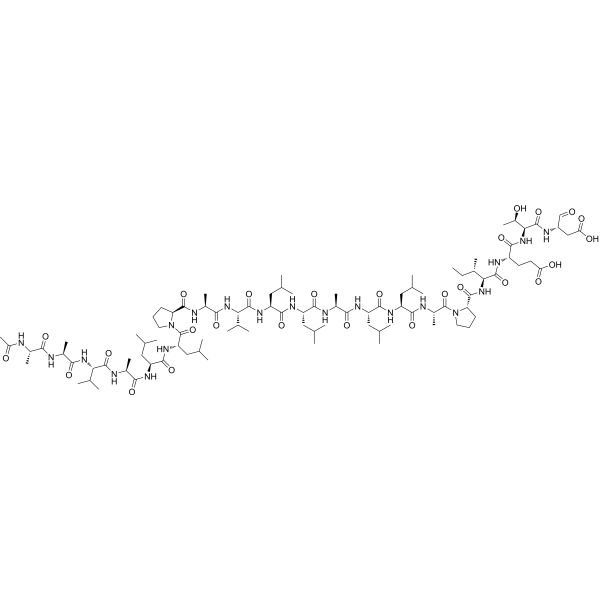 0 ImagesCat. No.: HY-P4222CAS No.: 886462-83-5Synonyms: Caspase-8-IN-1IETD-CHO (Caspase-8-IN-1) is a potent caspase-8 inhibitor.
-
Casp8 Rat Pre-designed siRNA Set A
 0 ImagesCat. No.: HY-RS01967
Casp8 Rat Pre-designed siRNA Set A contains three designed siRNAs for Casp8 gene (Rat), as well as a negative control, a positive control, and a FAM-labeled negative control.
-
Neuroprotective agent 15
 0 ImagesCat. No.: HY-178943CAS No.: 2476614-40-9Neuroprotective agent 15 (Compound 3e) is a neuroprotective agent. Neuroprotective agent 15 is a selective butyrylcholinesterase (BChE) inhibitor, with IC50 values of 2.6 and 114.3 μM for BChE and AChE respectively. Neuroprotective agent 15 has cannabinoid CB2 receptor (CB2 receptor) agonistic activity. Neuroprotective agent 15 can reduce cell death, LDH release and Caspase-3/7 activity, and inhibit apoptosis. Neuroprotective agent 15 can reduce the formation of superoxide free radicals, maintain cell morphology, and significantly lower oxidative stress levels. Neuroprotective agent 15 can be used in the research of neurodegenerative diseases, such as Alzheimer's disease and Parkinson's disease.




