



Caspase 8
Caspase 8 is an initiator protease of death receptor-mediated extrinsic apoptosis and also supports cell survival by restraining RIP-family kinase-dependent necroptosis[1]. Mechanistically, caspase 8 works with cFLIP to regulate the switch among survival, apoptosis, and necroptosis, while cFLIP is structurally related to caspase 8 but lacks proteolytic activity[1][2]. Therefore, caspase 8 differs from inflammatory caspases such as caspase 1, 4, 5, and 12, which participate in inflammasome-related innate immune responses[3]. In intestinal disease, caspase 8 controls Paneth cell necroptosis and may contribute to epithelial cell death and mucosal inflammation in Crohn’s disease[3]. In severe SARS-CoV-2 mouse models, non-apoptotic caspase 8 promoted cytokine release, IL-1β elevation, NF-κB-linked inflammation, and disease pathology[4]. In ovarian cancer, low caspase 8 expression correlated with shorter overall survival, while caspase 8 loss enhanced non-apoptotic necroptotic death under NF-κB blockade[5]. For experimental applications, studies use genetic caspase 8 loss, viral caspase 8 inhibitors, and necroptosis pathway modulation to separate apoptosis, inflammation, and RIPK3-MLKL-dependent cell death[6].
References:
- [1]. Salvesen GS, et al. Functions of caspase 8: the identified and the mysterious. Semin Immunol. 2014 Jun;26(3):246-52. [Content Brief]
- [2]. Tsuchiya Y, et al. FLIP the Switch: Regulation of Apoptosis and Necroptosis by cFLIP. Int J Mol Sci. 2015 Dec 18;16(12):30321-41. [Content Brief]
- [3]. Becker C, et al. Complex roles of caspases in the pathogenesis of inflammatory bowel disease. Gastroenterology. 2013 Feb;144(2):283-293. [Content Brief]
- [4]. M Bader S, et al. Non-apoptotic caspase-8 is critical for orchestrating exaggerated inflammation during severe SARS-CoV-2 infection. Nat Commun. 2025 Nov 13;16(1):9822. [Content Brief]
- [5]. Kim M, et al. Caspase 8 expression may determine the survival of women with ovarian cancer. Cell Death Dis. 2016 Jan 14;7(1):e2045. [Content Brief]
- [6]. Daley-Bauer LP, et al. Mouse cytomegalovirus M36 and M45 death suppressors cooperate to prevent inflammation resulting from antiviral programmed cell death pathways. Proc Natl Acad Sci U S A. 2017 Mar 28;114(13):E2786-E2795. [Content Brief]
-
Caspase 8 Related Products (111)
Related Products (111)

-
Recombinant Proteins (1)
-
Antibodies (2)
-
Phoxim-d5 (phenyl-d5) (mixture of isomers)
 0 ImagesCat. No.: HY-W758414Phoxim-d5 (phenyl-d5) (mixture of isomers) is the deuterated-labeled Phoxim (HY-B0819). Phoxim is an organophosphorus pesticide and an orally active inhibitor of cholinesterase and CYP3A, which induces neurotoxicity in Caenorhabditis elegans and causes nephrotoxicity characterized by glomerular atrophy and interstitial fibrosis. Phoxim induces inhibition of the autophagy pathway. Phoxim induces dopaminergic neuron degeneration and exacerbates Aβ-induced paralysis. Phoxim damages enterocytes and disrupts intestinal barrier integrity. Phoxim induces ROS accumulation. Phoxim induces mitochondrial apoptosis, involving upregulation of Bad, Bax, caspase-3, and caspase-9 and downregulation of Bcl-2. Phoxim inhibits mitochondrial functional enzymes (COX, Ca2+-Mg2+-ATPase, SDH). Phoxim upregulates Nrf2 mRNA expression in the jejunal mucosa. Phoxim increases TNF-α and decreases IL-6 and IL-8 in the intestinal mucosa. Phoxim alters gut microbial composition by increasing total bacteria and Escherichia coli and reducing Lactobacillus. Phoxim enhances energy metabolism in silver carp by upregulating key glycolytic and gluconeogenic enzymes. Phoxim is used in research on neurodegenerative diseases, nephrotoxicity, intestinal oxidative stress and barrier dysfunction, and bacterial sepsis.
-
YVPGP
 0 ImagesCat. No.: HY-P10992CAS No.: 2095286-57-8YVPGP is an oligopeptide exacted from Anthopleura anjunae. YVPGP has a significant antitumor activity by mediating PI3K/AKT/mTOR signaling pathway. YVPGP arrests DU-145 cells in the S phase and induces apoptosis via mitochondrial and death receptor pathways (caspase3, 7, 8, 9). YVPGP effectively inhibits tumor growth in DU-145 xenografts mice model, promising for prostate cancer research.
-
Calactin
 0 ImagesCat. No.: HY-167237CAS No.: 20304-47-6Calactin is a glycoside that can be isolated from Asclepias curassavica L.. Calactin activates caspase-3, caspase-8, caspase-9, and phosphorylates ERK. Calactin induces DNA damage, apoptosis, PARP cleavage, G2/M phase cell cycle arrest, shifts Bax/Bcl-2 expression, and shows anti-proliferation effects in leukemia cells. Calactin can be used for the research of leukemia.
-
EGFR/BRAFV600E-IN-2
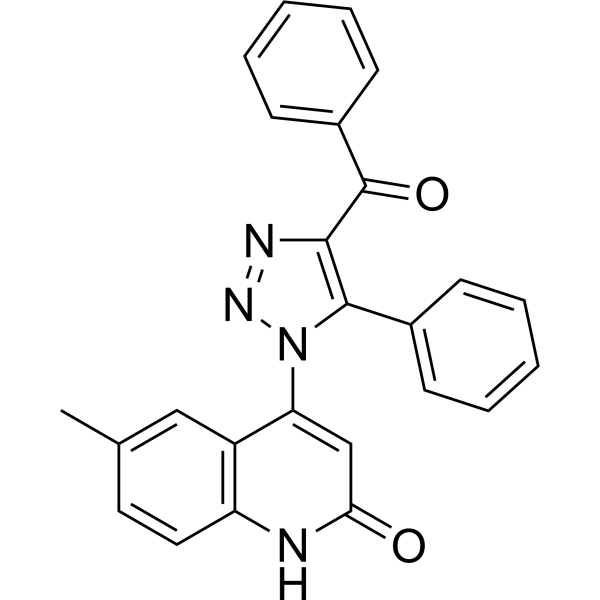 0 ImagesCat. No.: HY-149517EGFR/BRAFV600E-IN-2 (compound 3g) is a potential multi-target inhibitor of EGFR, BRAFV600E, and EGFRT790M, and an inducer of apoptosis. EGFR/BRAFV600E-IN-2 can activate caspase-3, 8, and Bax, and downregulate the anti-apoptotic protein Bcl2, inducing apoptosis. EGFR/BRAF V600E-IN-2 also has antioxidant activity and DPPH free radical scavenging potency.
-
EGFR/VEGFR2-IN-10
 0 ImagesCat. No.: HY-179485EGFR/VEGFR2-IN-10 is a selective EGFR, VEGFR2 and COX2 inhibitor with IC50s of 8.5, 68 and 158 nM, respectively. EGFR/VEGFR2-IN-10 induces G1-phase cell cycle arrest in MCF-7 cells. EGFR/VEGFR2-IN-10 increases the Bax/Bcl-2 ratio, upregulates caspase-8, and elevates caspase-9 protein levels, confirming activation of the intrinsic apoptotic pathway. EGFR/VEGFR2-IN-10 demonstrates exceptional therapeutic potential by simultaneously inhibiting tumor proliferation, angiogenesis, and inflammation pathways while maintaining a favorable selectivity profile. EGFR/VEGFR2-IN-10 can be used as a research tool for cervical, liver, colon, and breast cancer studies.
-
XAN-5
 0 ImagesCat. No.: HY-181599XAN-5 is a mitochondrial DNA G-quadruplex (mtG4) ligand with a Kd of 3.8 μM. XAN-5 selectively binds and stabilizes mtG4 structures, disrupting mitochondrial gene transcription and DNA replication. XAN-5 triggers mitochondrial dysfunction, ROS overproduction, G0 phase arrest and caspase-dependent apoptosis. XAN-5 inhibits autophagy and induces immunogenic cell death. XAN-5 inhibits tumor growth in a mouse liver cancer model while enhancing tumor-infiltrating CD4+ and CD8+ T cells. XAN-5 targets two cancer resistance mechanisms simultaneously. XAN-5 can be used for the research of liver cancer.
-
VEGFR-2-IN-70
 0 ImagesCat. No.: HY-175019VEGFR-2-IN-70 is a potent VEGFR-2 inhibitor with an IC50 of 18.04 nM. VEGFR-2-IN-70 exhibits cytotoxicity against A549 and MCF-7 cancer cells with IC50 values of 0.43 μM and 3.8 μM, respectively. VEGFR-2-IN-70 induces G1 cell cycle arrest and apoptosis in lung cancer cells. VEGFR-2-IN-70 is useful in cancer research.
-
IETDC
 0 ImagesCat. No.: HY-D3169CAS No.: 1476735-95-1IETDC is a caspase 8-responsive fluorescent probe. IETDC is cleaved by activated caspase 8 to release D-cysteine, which then reacts with 6-hydroxy-2-cyanobenzothiazole (HCBT) to form firefly luciferin in situ. IETDC must be used in conjunction with PCL-2 (HY-D3168) to detect the co-existence of hydrogen peroxide and caspase 8. IETDC is applicable to studies related to acute inflammation.
-
d-T101 peptide
 0 ImagesCat. No.: HY-P11298CAS No.: 2120397-85-3d-T101 peptide, a human hormone-peptide, is a T1/ST2 receptor ligand. d-T101 peptide binds to the T1/ST2 receptor and activates caspases 8, 9 and 3 mediated apoptosis, together with activation of JNKinase and p38 MAPKinase. d-T101 peptide also changes Golgi structural with function loss and downregulation of the endoplasmic reticulum (ER) stress repair mechanism. d-T101 peptide has immunostimulatory and anticancer activity, selectively induces apoptosis in proliferating cancer cells and increases IL-2 and IFN-γ expression as well as the recruitment of NK cells and M1 macrophages to the tumor site.
-
TP-110
 0 ImagesCat. No.: HY-118522CAS No.: 688737-95-3TP-110 is a proteasome inhibitor. TP-110 specifically inhibits the protease-like activity of the 20S proteasome, but does not affect the trypsin-like or peptidyl-glutamyl peptide hydrolysis activity. TP-110 inhibits the NF-κB pathway, activates caspase-8, -9, and -3, and causes PARP cleavage, significantly reducing the levels of cIAP-1 and XIAP. TP-110 causes cell cycle arrest at the G2/M phase and promotes apoptosis of cancer cells. TP-110 can be used in cancer research of prostate cancer and multiple myeloma, etc.
-
MPQPPAK
 0 ImagesCat. No.: HY-P12336MPQPPAK is a polypeptide obtained from the enzymatic hydrolysis of C-phycocyanin (HY-D1025) and possesses neuroprotective activity. MPQPPAK enhances the activities of antioxidant enzymes SOD, CAT, and GSH-Px, reduces ROS, inhibits apoptosis and acetylcholinesterase (AChE) activity in brain tissue, and decreases protein carbonyl content. In the MPTP (HY-W114750)-induced zebrafish Parkinson's disease model, MPQPPAK exhibits antioxidant effects, inhibits autophagy and apoptosis, reverses the loss of dopaminergic neurons and cerebral blood vessels, and alleviates motor deficits. MPQPPAK can be used for research on Parkinson's disease.
-
CAIX/CDK-2-IN-1
 0 ImagesCat. No.: HY-179022CAIX/CDK-2-IN-1 is a dual-acting inhibitor of carbonic anhydrase IX (CA IX) and cyclin-dependent kinase-2 (CDK-2) with IC50 values of 0.29 μM and 0.32 μM. The zein nanoparticls of CAIX/CDK-2-IN-1 can induce cancer cells apoptosis. CAIX/CDK-2-IN-1 can be used for the research of cancer, such as lung cancer.
-
STK899704
 0 ImagesCat. No.: HY-120339CAS No.: 1578247-29-6STK899704 is a tubulin polymerization inhibitor. STK899704 exhibits broad-spectrum inhibitory activity against various cancer cell lines with IC50 values ranging from 0.2 to 1.0 μM. STK899704 disrupts the mitotic spindle structure, inducing G2/M phase cell cycle arrest. STK899704 inhibits the migration ability of HT29 cells by downregulating the FAK-MEK-ERK signaling pathway, thereby suppressing the expression and activity of MMP-2 and MMP-9. STK899704 activates caspase-3/7/8/9, leading to PARP cleavage and inducing apoptosis. STK899704 induces cellular senescence through the p53 pathway. STK899704 can be used in research on skin cancer, lung cancer, colon cancer, and other cancers.
-
Apoptosis inducer 45
 0 ImagesCat. No.: HY-178099Apoptosis inducer 45 is an apoptosis inducer. Apoptosis inducer 45 is cytotoxically active against the MCF-7 cell line. Apoptosis inducer 45 elicits MCF-7 cell apoptosis via the mitochondrial pathway (increases the Bax/Bcl-2 ratio) by activating cleavage of caspase-9, thereby inducing the fragmentation of DNA repair protein PARP. Apoptosis inducer 45 also can induce caspase-8 cleavage, subsequently initiating cleavage of caspase-3 and its downstream protein PARP to culminate in the extrinsic apoptosis. Apoptosis inducer 45 can be used in the research of breast cancer.
-
EGFR/HER2-IN-17
 0 ImagesCat. No.: HY-172623EGFR/HER2-IN-17 (Compound 7h) is a dual inhibitor of epidermal growth factor receptor (EGFR) and human epidermal growth factor receptor 2 (HER2). EGFR/HER2-IN-17 inhibits cancer cell proliferation. EGFR/HER2-IN-17 interacts with the binding pockets of EGFR and HER2, activating caspase-3 and caspase-8, and decreases the expression of Bcl-2, thereby inducing apoptosis. EGFR/HER2-IN-17 is promising for research of cancers.
-
Apoptosis inducer 52
 0 ImagesCat. No.: HY-179124Apoptosis inducer 52 is a derivative of flutamide that induces apoptosis in prostate cancer cells. Apoptosis inducer 52 promotes apoptosis by activating both intrinsic and extrinsic apoptotic pathways, without generating reactive oxygen species (ROS). Apoptosis inducer 52 triggers caspase 3/7 activity and the externalization of phosphatidylserine, leading to cell cycle arrest at the G0/G1 phase. Apoptosis inducer 52 can be used for the research of androgen receptor (AR)-dependent and -independent prostate cancers and leukemia.
-
Santamarine
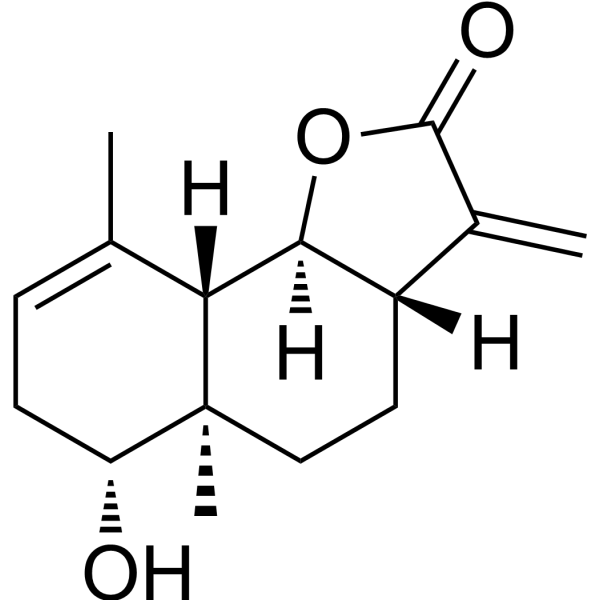 0 ImagesSantamarine (Santamarin; Balchanin) is a sesquiterpene lactone found in Artemisia scoparia. Santamarine shows anti-inflammatory, antioxidant, anticancer and anti-photoaging activities. Santamarine suppresses UVA-induced phosphorylation of JNK and p38 MAPK, nuclear translocation of phosphorylated c-Fos and c-Jun, and AP-1-mediated MMP-1 transcription and secretion. Santamarine suppresses NF-κB signaling, iNOS, COX-2, TNF-α, and IL-1β production. Santamarine inhibits thioredoxin reductase activity, induces ROS production, mitochondrial apoptosis, G2/M cell cycle arrest, and DNA damage, and reduces cancer cell growth. Santamarine can be used for the photoaging, inflammatory diseases and cancer.
-
Anticancer agent-364
 0 ImagesCat. No.: HY-189286Anticancer agent-364 is a phenylalanine-derived hydrazone heterocyclic compound that exhibits selective cytotoxicity against NSCLC lung cancer cells. Anticancer agent-364 inhibits VEGF-A, VEGFR-1, and VEGFR-2, increases caspase-3/7, caspase-8, and caspase-9 activity, and induces apoptosis. Anticancer agent-364 can be used for research on non-small cell lung cancer.
-
BTX306
 0 ImagesCat. No.: HY-177740CAS No.: 2230747-62-1BTX306 is a cereblon-targeting molecular glue degrader. BTX306 reduces myeloma cell viability and induces apoptosis. BTX306 overcomes myeloma cell resistance to Lenalidomide (HY-A0003) or Bortezomib (HY-10227). BTX306 is active against primary myeloma cells, and shows efficacy in vivo. BTX306 can be used for myeloma research.
-
Longilactone
 0 ImagesCat. No.: HY-N21972CAS No.: 129587-09-3Longilactone is a quassinoid diterpenoid isolated from the roots of Eurycoma longifolia. Longilactone induces apoptosis in MCF-7 cells via the extrinsic caspase pathway, activating the cleavage of caspase-8, caspase-7 and PARP. Longilactone can be used in research related to breast cancer and human lung cancer.




