



Caspase Activator
-
NCO-90
 0 ImagesCat. No.: HY-183870CAS No.: 1382354-18-8
NCO-90 is a selective SIRT2 inhibitor with an IC50 of 1.0 μM. NCO-90 induces Apoptosis via Caspase activation and mitochondrial superoxide anion production, and also induces Autophagic cell death by increasing LC3-II levels and autophagosome accumulation. NCO-90 exhibits anticancer activity against leukemia. NCO-90 can be used in research related to acute lymphoblastic leukemia and acute myeloid leukemia.
-
ADP-β-S trisodium
 0 ImagesCat. No.: HY-134353ASynonyms: Adenosine 5'-(β-thiodiphosphate) trisodium
ADP-β-S (Adenosine 5'-(β-thiodiphosphate)) trilithium is a non-hydrolyzable ADP analog and a P2Y12 receptor agonist. ADP-β-S trilithium activates the P2Y12 receptor in microglia, thereby triggering downstream inflammatory signaling pathways. ADP-β-S trilithium activates P2Y purinergic receptors in rat pancreatic β cells and enhances glucose-induced insulin secretion. ADP-β-S trilithium can be used in the research of diseases such as inflammation and diabetes.
-
AR Degrader-3
 0 ImagesCat. No.: HY-178938CAS No.: 1182011-65-9
AR Degrader-3 is an orally active molecular glue that targets AR/ARV7 and induces the degradation of AR and ARV7 through the ubiquitin-proteasome pathway (UPP). AR Degrader-3 directly interacts with the ligand-binding domain (LBD) and the N-terminal domain (NTD) of AR. AR Degrader-3 effectively suppresses the transcriptional activity of wild-type AR (AR-WT), AR mutants, and ARV7. AR Degrader-3 downregulates the mRNA and protein levels of downstream AR target genes, thereby overcoming antiandrogen resistance mediated by ARV7 and AR point mutations. AR Degrader-3 induces apoptosis in Enzalutamide (HY-70002) (ENZa)-resistant cells and increases cleaved caspase-3 protein levels. AR Degrader-3 can be used for the study of castration-resistant prostate cancer (CRPC).
-
EGFR-IN-182
 0 ImagesCat. No.: HY-178955
EGFR-IN-182 (Compound 4) is an EGFR inhibitor with an IC50 value of 199 nM. EGFR-IN-182 inhibits HSP90 and PI3K, with IC50 values of 5.007 and 13.596 μM respectively. EGFR-IN-182 exhibits strong anti-proliferative activity against MCF-7 and MDA-MB-231 cells. EGFR-IN-182 downregulates Cyclin D1, inducing cell cycle arrest; it enhances the activity of caspase-9, inducing cell apoptosis. EGFR-IN-182 downregulates the expressions of ERK and AKT. EGFR-IN-182 can be used for research on breast cancer.
-
Bcl-2-IN-7
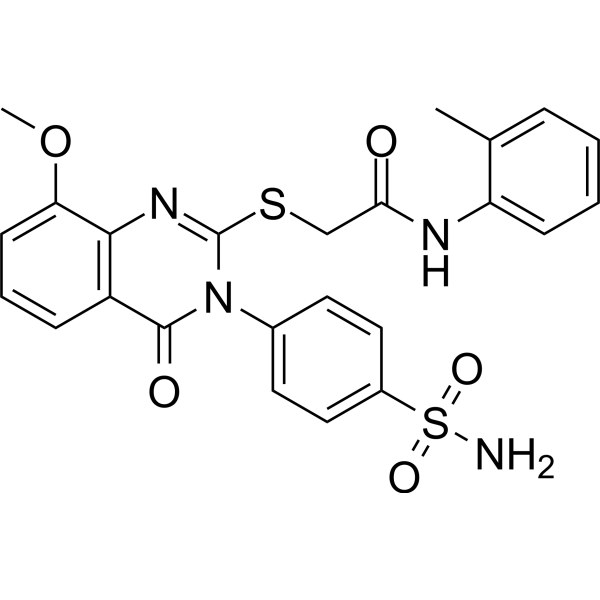 0 ImagesCat. No.: HY-144792CAS No.: 3027734-46-6
Bcl-2-IN-7 (compound 6) is a potent Bcl-2 (B-cell lymphoma-2) inhibitor. Bcl-2-IN-7 down-regulates the expression of Bcl-2, and increases the expression of p53, Bax, and caspase-7 mRNA. Bcl-2-IN-7 induces cell cycle arrest and apoptosis in breast cancer MCF-7 cells. Bcl-2-IN-7 shows good anticancer activity, with IC50 values of 20.17, 22.64, 45.57, and 51.50 μM against MCF-7, LoVo, HepG2, and A549 cell lines, respectively.
-
2-Methoxycinnamaldehyde (Standard)
 0 ImagesCat. No.: HY-W046353RCAS No.: 1504-74-1Synonyms: o-Methoxycinnamaldehyde (Standard)
2-Methoxycinnamaldehyde (Standard) is the analytical standard of 2-Methoxycinnamaldehyde. This product is intended for research and analytical applications. 2-Methoxycinnamaldehyde (o-Methoxycinnamaldehyde) is a natural compound that can be isolated from Cinnamomum cassia. 2-Methoxycinnamaldehyde inhibits topoisomerase-I/II and NF-κB signaling pathway, causes mitochondrial dysfunction, induces lysosomal vesiculation, thereby leading to DNA damage and cell apoptosis. 2-Methoxycinnamaldehyde exhibits antitumor effects.
-
Apoptosis inducer 52
 0 ImagesCat. No.: HY-179124
Apoptosis inducer 52 is a derivative of flutamide that induces apoptosis in prostate cancer cells. Apoptosis inducer 52 promotes apoptosis by activating both intrinsic and extrinsic apoptotic pathways, without generating reactive oxygen species (ROS). Apoptosis inducer 52 triggers caspase 3/7 activity and the externalization of phosphatidylserine, leading to cell cycle arrest at the G0/G1 phase. Apoptosis inducer 52 can be used for the research of androgen receptor (AR)-dependent and -independent prostate cancers and leukemia.
-
Dimethyl bisphenolate
 0 ImagesCat. No.: HY-180820
Dimethyl bisphenolate (Compound DMB) is a natural neolignan derivative with orally active anti-tumor activity. Dimethyl bisphenolate can inhibit cancer cells proliferation, invasion and migration. Dimethyl bisphenolate can activate the p53 signaling pathway, upregulate the expression of p21 protein, inhibit the activity of the CDK1-cyclin B1 complex, and cause cells to stall at the G2/M phase. Dimethyl bisphenolate can induce ROS production, upregulate pro-apoptotic proteins Noxa and Bim, downregulate anti-apoptotic protein Bcl-2, activate caspase-9 and caspase-3, and ultimately induce cell apoptosis. Dimethyl bisphenolate can be used for research of glioblastoma.
-
Apoptosis inducer 34
 0 Images
Apoptosis inducer 34 (Compound 4) is a small molecule compound that induces apoptosis by directly activating the intrinsic apoptotic pathway. Apoptosis inducer 34 promotes Apaf-1 oligomerization to form mature apoptosomes, thereby activating caspase-9 and caspase-3. It significantly activates the apoptotic pathway in Jurkat cells by enhancing the cytochrome c-dependent apoptotic signaling pathway, inducing PARP cleavage and chromosomal DNA fragmentation. Furthermore, Apoptosis inducer 34 exhibits low toxicity to normal cells, demonstrating potential for selective targeting of cancer cells. Apoptosis inducer 34 is a promising candidate for studying cancer related to apoptotic pathways.
-
Cajanol
 0 ImagesCat. No.: HY-N10342CAS No.: 61020-70-0
Cajanol is an isoflavanone that can be isolated from the roots of Cajanus cajan (L.) Millsp.. Cajanol inhibits cancer cell proliferation and induces cancer cell apoptosis. Cajanol promotes the expression of Bax, inhibits the expression of Bcl-2, activates caspase-9 and caspase-3, induces PARP cleavage, arrests the cell cycle at the G2/M phase, generates ROS, disrupts mitochondrial membrane potential and triggers cytochrome c release. Cajanol induces bacterial DNA damage, disrupts bacterial cell membranes, and exerts antibacterial activity in vitro. Cajanol reduces the expression of PI3K, inhibits the phosphorylation of Akt and NF-κB, downregulates the expression and transport function of P-gp, restores the sensitivity of drug-resistant cancer cells to Paclitaxel, and inhibits the growth of Paclitaxel-resistant metastatic ovarian tumors. Cajanol is applicable to research related to breast cancer, ovarian cancer and bacterial infections.
-
Anticancer agent 201
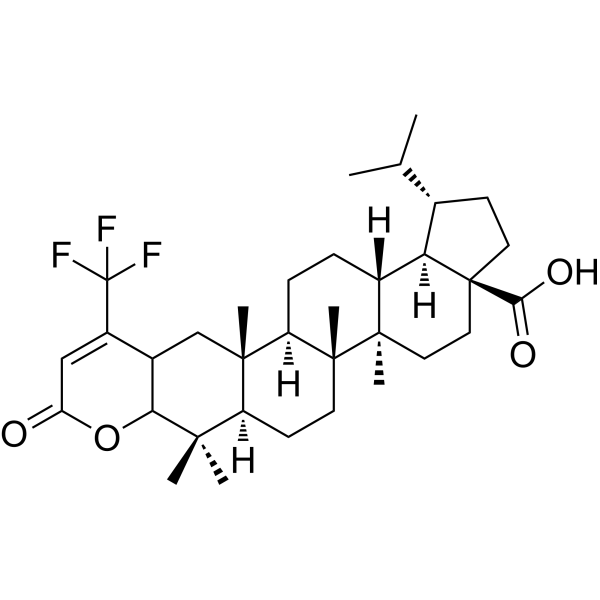 0 ImagesCat. No.: HY-163435
Anticancer agent 201 (Compound 2f) has IC50 values in the low micromolar range for multiple tumor cell lines. Anticancer agent 201 is highly cytotoxic to CCRF-CEM cells in vitro, inducing apotosis by activating caspase-3 in the intrinsic mitochondrial pathway and lysis of PARP, as well as reducing the expression of Bcl-2 and Bcl-XL proteins. Anticancer agent 201 can be used in cancer research.
-
Astin B
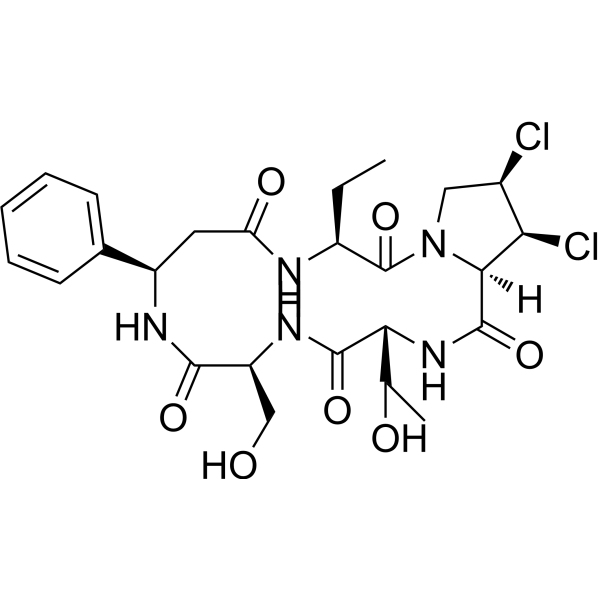 0 ImagesCat. No.: HY-P3148CAS No.: 151201-76-2
Astin B is a orally active and potent cyclic pentapeptide, that can be isolated from Aster tataricus. Astin B has hepatotoxic effects in vitro and in vivo and that hepatic injury was primarily mediated by apoptosis in a mitochondria/caspase-dependent manner. Astin B induces autophagy in L-02 cells, increases LC3-II and decreases p62 expression.
-
Limocitrin
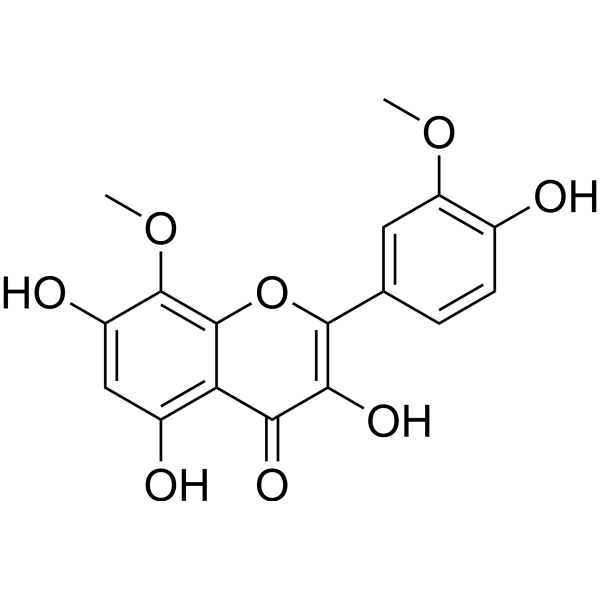 0 Images
Limocitrin is a flavonol glycoside. Limocitrin inhibits AKT phosphorylation and JNK phosphorylation, upregulates p38 phosphorylation, and inhibits ERK1/2 phosphorylation, thereby blocking MAPK signaling. Limocitrin induces Apoptosis through the mitochondrial pathway, death receptor-mediated signaling, Caspase activation, and G2/M cell cycle arrest. Limocitrin possesses anti-inflammatory and anticancer properties. Limocitrin can be used for research on oral squamous cell carcinoma and chronic myeloid leukemia.
-
TKL002
 0 Images
TKL002 is a blood-brain barrier-permeable inhibitor of the CTH/H2S/NF-κB/EMT signaling axis. TKL002 induces G2/M phase cell cycle arrest and apoptosis in glioblastoma cells. TKL002 inhibits the migration and invasion of glioblastoma cells by upregulating E-cadherin and downregulating N-cadherin and vimentin. TKL002 is applicable to relevant research on glioblastoma.

-
(Rac)-PEAQX
 0 ImagesCat. No.: HY-12294BCAS No.: 2514919-70-9Synonyms: (Rac)-NVP-AAM077
(Rac)-PEAQX is a NMDA receptor agonist. (Rac)-PEAQX can promote the activation of caspase-3 and induce cell apoptosis in cortical striatal slice cultures .
-
Anticancer agent-364
 0 ImagesCat. No.: HY-189286
Anticancer agent-364 is a phenylalanine-derived hydrazone heterocyclic compound that exhibits selective cytotoxicity against NSCLC lung cancer cells. Anticancer agent-364 inhibits VEGF-A, VEGFR-1, and VEGFR-2, increases caspase-3/7, caspase-8, and caspase-9 activity, and induces apoptosis. Anticancer agent-364 can be used for research on non-small cell lung cancer.
-
CHNQD-00824
 0 ImagesCat. No.: HY-177869CAS No.: 2222643-74-3
CHNQD-00824 is a Terphenyllin (HY-119821) derivative with potent anticancer effect. CHNQD-00824 inhibits the proliferation and migration of cancer cells via DNA damage. CHNQD-00824 triggers apoptosis and inhibits Doxycin Hydrochloride (DOX)-induced liver-specific enlargement in zebrafish embryos. CHNQD-00824 can be used for cancer research, such as liver and breast cancer.
-
COX/5-LO-IN-2
 0 ImagesCat. No.: HY-181061
COX/5-LO-IN-2 is a COX2, EGFR, COX1, 5-LOX, BRAF and FAK inhibitor with IC50 of 1.22 μM, 2.5 μM, 2.95 μM, 4.65 μM, 7.4 μM, 12.2 μM, respectively. COX/5-LO-IN-2 induces cell growth arrest at G2/M phase. COX/5-LO-IN-2 triggers apoptotic activity by up-regulating proapoptotic proteins p53, Bax, and caspase-7 and down-regulating anti-apoptotic protein Bcl-2. COX/5-LO-IN-2 can be used for the research of breast cancer.
-
EGFR-IN-109
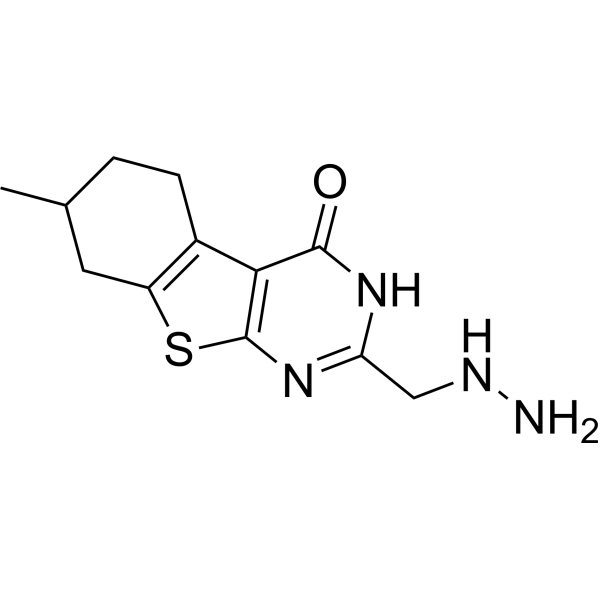 0 ImagesCat. No.: HY-162360CAS No.: 3019971-97-9



