



Caspase Activator
-
MEB55
 0 ImagesCat. No.: HY-120736CAS No.: 1323359-63-2
MEB55 is an antitumor agent. MEB55 shows anti-proliferative activity. MEB55 has the potential for the research of prostate cancer.
-
Longilactone
 0 ImagesCat. No.: HY-N21972CAS No.: 129587-09-3
Longilactone is a quassinoid diterpenoid isolated from the roots of Eurycoma longifolia. Longilactone induces apoptosis in MCF-7 cells via the extrinsic caspase pathway, activating the cleavage of caspase-8, caspase-7 and PARP. Longilactone can be used in research related to breast cancer and human lung cancer.
-
PDGFRA/CAIX/XII-IN-1
 0 ImagesCat. No.: HY-181587Purity: 98.10%
PDGFRA/CAIX/XII-IN-1 is an inhibitor of PDGFRA, CA IX and CA XII, with an IC50 of 20 nM against PDGFRA, a Ki of 93.3 nM against CA IX, and a Ki of 80.0 nM against CA XII. PDGFRA/CAIX/XII-IN-1 binds to the ATP-binding pocket of PDGFRA and blocks the downstream STAT3, AKT and ERK1/2 signaling pathways. PDGFRA/CAIX/XII-IN-1 induces G0/G1 cell cycle arrest and endogenous apoptosis (Apoptosis), including cleavage of PARP-1, caspase-9 and caspase-3, activation of caspase 3/7, and down-regulation of Mcl-1. PDGFRA/CAIX/XII-IN-1 exhibits antiproliferative activity in eosinophilic leukemia cells. PDGFRA/CAIX/XII-IN-1 can be used for the research of leukemia.
-
COX-2-IN-55
 0 Images
COX-2-IN-55 (compound 1) is an orally active, Celecoxib (HY-14398)-based analog with broad-spectrum anticancer activity and weak COX-2 inhibition. COX-2-IN-55 specifically inhibits SERCA2, increases caspase-3 cleavage and DR5 levels, thereby activating GRP78 and inhibiting the development of triple-negative breast cancer (TNBC). COX-2-IN-55 can also downregulate the levels of angiogenic markers VEGF-α and IL-8, inhibiting the formation of microvessels.
-
Bfl-1-IN-6
 0 ImagesCat. No.: HY-170434CAS No.: 3106363-91-8
Bfl-1-IN-6 is an orally active BFL1 inhibitor with an IC50 of 19 nM. Bfl-1-IN-6 selectively binds covalently to BFL1, stabilizes the protein and displaces BIM from BFL1, thereby inducing apoptosis activity. Bfl-1-IN-6 stabilizes BFL1 protein, activates cleaved caspase 3, and exhibits antitumor activity in mouse models. Bfl-1-IN-6 can be used for the research of hematological malignancies.
-
S-Petasin
 0 ImagesCat. No.: HY-N17617CAS No.: 70238-51-6
S-Petasin is a phosphodiesterase (PDE) inhibitor with IC50 values of 25.5 μM and 17.5 μM for PDE3 and PDE4, respectively. S-Petasin inhibits cholesterol side-chain cleavage enzyme, 11β-hydroxylase, PPAR-γ, and iNOS induction at RNA and protein levels. S-Petasin induces apoptosis, activates caspases, cleaves PARP, modulates mitochondrial membrane permeability, and regulates BCL2/BAX, p53, Bcl-XL, MMP-2, MMP-9, p21, CDK4, and cyclin D1 expression. S-Petasin reduces inflammatory cell accumulation, cytokine and IgE levels, and enhances serum IgG2a levels. S-Petasin relaxes isolated sensitized guinea pig trachealis and exhibits gastrointestinal anti-spasmodic activity. S-Petasin reduces tonsillitis severity and asthmatic attack frequency. S-Petasin can be used for the research of prostate cancer, obesity, melanoma, allergic asthma, asthma, and peritonitis.
-
EGFR/BRAFV600E-IN-6
 0 ImagesCat. No.: HY-180154CAS No.: 3120155-78-1
EGFR/BRAFV600E-IN-6 (Compound 7c) is a dual EGFR/BRAFV600E inhibitor with IC50 values of 0.12 and 0.05 μM. EGFR/BRAFV600E-IN-6 can activate caspase-3/8/9, unregulate Bax expression and downregulate Bcl-2 levels. EGFR/BRAFV600E-IN-6 can induce apoptosis and shows antioxidant activity. EGFR/BRAFV600E-IN-6 can be used for the research of cancer, such as colon cancer.
-
Antiproliferative agent-83
 0 ImagesCat. No.: HY-189636
Antiproliferative agent-83 is an orally active STAT3 inhibitor (Kd = 5.63 μM) with antiproliferative activity against Huh-7 cells (IC50 = 1.30 μM). Antiproliferative agent-83 inhibits dual phosphorylation of STAT3 at tyrosine and serine residues, blocking nuclear translocation and downstream transcriptional activation. Antiproliferative agent-83 induces apoptosis, ROS accumulation, and mitochondrial depolarization. Antiproliferative agent-83 suppresses tumor growth in a hepatocellular carcinoma xenograft mouse model. Antiproliferative agent-83 can be used for research on hepatocellular carcinoma.
-
BKT300
 0 ImagesCat. No.: HY-179466CAS No.: 2551033-16-8
BKT300 is a potent and selective protein regulator of cytokinesis 1 (PRC1) inhibitor. BKT300 inhibits PRC1 dephosphorylation at T481, disrupts actin and microtubule formation, induces G2/M cell cycle arrest, triggers mitotic catastrophe, and promotes apoptosis, thereby inhibiting proliferation and migration of acute myeloid leukemia (AML) cells while sparing normal cells. BKT300 inhibits tumor growth in mouse xenograft AML models. BKT300 can be used for the research of AML.
-
BT-PROTAC
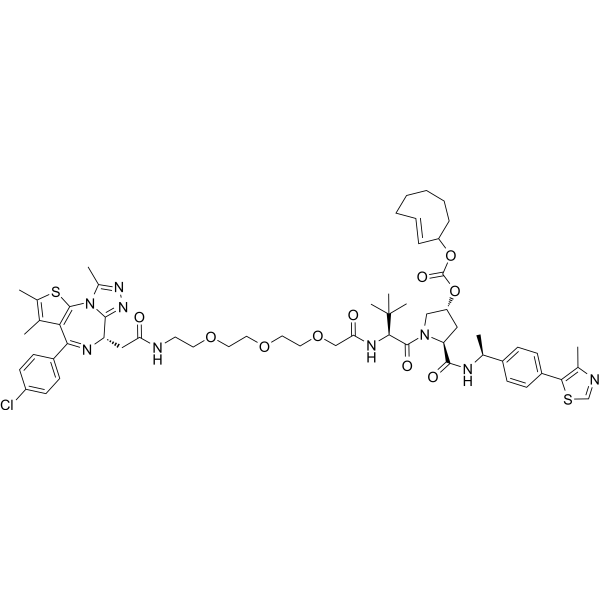 0 ImagesCat. No.: HY-155371CAS No.: 3032848-64-6
BT-PROTAC is a bioorthogonally activatable BRD4/BRD3 PROTAC degrader prodrug. BT-PROTAC is inactive when present alone, but upon activation by tetrazine compounds, it promotes the degradation of BRD4 and BRD3 via the ubiquitin-proteasome system, inhibits c-Myc expression, activates caspase-3, and induces apoptosis in breast cancer cells. BT-PROTAC can be used for breast cancer research.
-
CA IX/VEGFR-2-IN-2
 0 ImagesCat. No.: HY-158328A
-
2'-Deoxyadenosine monohydrate-3′-13C
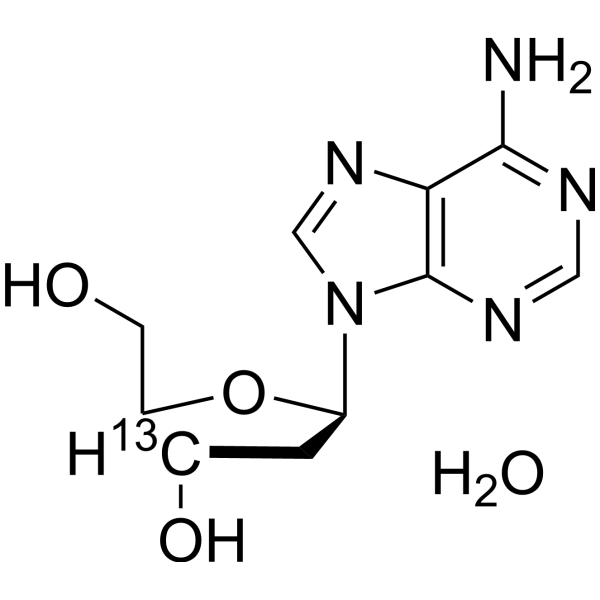 0 ImagesCat. No.: HY-W011683S2
2'-Deoxyadenosine monohydrate-3′-13C is the 13C labeled 2'-Deoxyadenosine monohydrate (HY-W011683)adenine nucleoside that inhibits glucose-stimulated insulin release. 2′-Deoxyadenosine monohydrate inhibits glucose-stimulated increases seen in islet cyclic AMP (cAMP) accumulation. 2'-Deoxyadenosine monohydrate activates caspase-3 and promotes apoptosis. 2'-Deoxyadenosine monohydrate inhibits the activity of S-adenosyl-L-homocysteine hydrolase (SAHH). 2'-Deoxyadenosine monohydrate inhibits the growth of various cells. 2'-Deoxyadenosine monohydrate has an anticancer effect on colon cancer>
-
Aurora kinase-IN-15
 0 ImagesCat. No.: HY-184386
Aurora kinase-IN-15 is a potent dual Aurora A and Aurora B kinase inhibitor. Aurora kinase-IN-15 has broad-spectrum anticancer activity and low toxicity to normal cells. Aurora kinase-IN-15 induces G2/M phase arrest, apoptosis, and activates the intrinsic apoptotic pathway through upregulation of Caspase 3 and Bax, along with downregulation of Bcl-2. Aurora kinase-IN-15 can be used for the study of breast cancer, hepatocellular carcinoma, colorectal cancer and prostate cancer.
-
EGFR-IN-186
 0 ImagesCat. No.: HY-179522
EGFR-IN-186 is a potent inhibitor of EGFR with an IC50 of 0.065 µM. EGFR-IN-186 also exhibits inhibitory activity against EGFRL858R (IC50 = 0.528 µM) and EGFRT790M (IC50 = 0.465 µM). EGFR-IN-186 induces apoptosis by increasing Bax and caspase-3 levels and down-regulating Bcl-2 expression level. EGFR-IN-186 can be used for the research of non-small cell lung cancer (NSCLC).
-
CHNQD-01522
 0 ImagesCat. No.: HY-181675
CHNQD-01522 is a microtubule inhibitor targeting the colchicine binding site on β-tubulin. CHNQD-01522 binds to the colchicine binding site on β-tubulin, inhibits microtubule polymerization, and evades P-glycoprotein transport in cancer cells. CHNQD-01522 inhibits proliferation, suppresses tumor cell colony formation, arrests cell cycle in G2/M phases, and induces apoptosis in cancer cells. CHNQD-01522 upregulates of Bax and activation of caspase-9 and caspase-3. CHNQD-01522 shows anti-tumor efficacy in subcutaneous and orthotopic hepatocellular carcinoma xenograft tumor models. CHNQD-01522 can be used for the research of hepatocellular carcinoma.
-
EGFR-IN-201
 0 ImagesCat. No.: HY-181659CAS No.: 3103654-99-2
EGFR-IN-201 is a potent EGFR inhibitor, with an IC50 of 0.091 μM against wild-type EGFR; for mutant EGFR variants, the IC50 values of EGFRT790M, EGFRL858R and EGFRC797S are 0.147 μM, 0.221 μM and 0.703 μM, respectively. EGFR-IN-201 inhibits EGFR downstream signaling proteins AKT1 (IC50 = 0.225 μg/mL) and ERK1 (IC50 = 0.705 μg/mL). EGFR-IN-201 induces G0/G1 cell cycle arrest, apoptosis and low-level necrosis in cancer cells. EGFR-IN-201 is applicable to research on cancers such as colon cancer.
-
PeS-9
 0 ImagesCat. No.: HY-174377
PeS-9 is an Androgen Receptor (AR) degrader that induces androgen receptor degradation PeS-9 induces mitochondrial and ER stress by promoting cytotoxic ROS production, leading to the release of mitochondrial cytochrome C and AIF. PeS-9 subsequently activates caspases-9 and -3, causing DNA fragmentation and apoptotic cell death. PeS-9 has anticancer activity against prostate cancer and exerts in vivo antitumor and antimetastatic activity with minor side effects. PeS-9 can be used for the study of targeting monotherapy against GLUT-1-overexpressing tumors.
-
HDAC6-IN-63
 0 ImagesCat. No.: HY-178022
HDAC6-IN-63 (Compound 7) is an orally active HDAC6 inhibitor with an IC50 of 145 nM. HDAC6-IN-63 inhibits the expression of Sp1 and RAD51, thereby inducing Caspase-dependent apoptosis. HDAC6-IN-63 has antitumor activity and sensitizes Etoposide (HY-13629) and Gemcitabine (HY-17026), promoting synergistic death of NSCLC cells through the inhibition of homologous recombination and non-homologous end joining (NHEJ) pathways involved in DNA DSB repair. HDAC6-IN-63 can be used for chemotherapy of cancers like NSCLC research.
-
EGFR-IN-134
 0 ImagesCat. No.: HY-168623
EGFR-IN-134 (compound 3f), a triazolo[3,4-a]isoquinoline derivative, is a potent EGFR inhibitor with an IC50 of 0.023 µM. EGFR-IN-134 induces apoptosis and necrosis. EGFR-IN-134 initiates cell cycle arrest at the G2/M and pre-G1 phases, downregulates anti-apoptotic protein Bcl2 and upregulates pro-apoptotic proteins: p53, Bax, and caspases 3, 8, and 9. EGFR-IN-134 shows antiproliferative and anticancer activity.
-
Anticancer agent 58
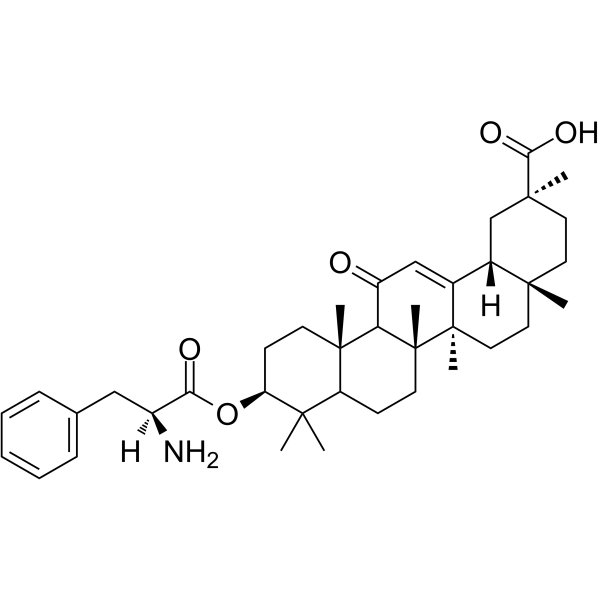 0 ImagesCat. No.: HY-146461
Anticancer agent 58 (compound 16) has inhibitory activity against kinds of cancer cell lines, especially in A549 and T24 with IC50s of 0.6 μM and 0.7 μM, respectively. Anticancer agent 58 induces apoptosis by activating caspase 3/8/9 activity, and induces an increase of Ca2+ and ROS in cancer cells. Anticancer agent 58 significantly decreases mitochondrial membrane potential. Anticancer agent 58 can suppress tumor growth in T24 mouse xenograft model.



