



Caspase Activator
-
Berzosertib hydrochloride
 0 ImagesSynonyms: VE-822 hydrochloride; VX-970 hydrochloride; M6620 hydrochloride
Berzosertib (VE-822) hydrochloride is an orally active, CNS-penetrant, and selective ATR kinase inhibitor. Berzosertib hydrochloride blocks ATR kinase activity, abrogates G2/M cell cycle checkpoint, impairs DNA damage repair. Berzosertib hydrochloride induces apoptosis, inhibnits conlony migration, inhibits cell proliferation, and activates cGAS-STING axes in cancer cells. Berzosertib hydrochloride can be used for the research of cancers, such as head and neck squamous cell carcinoma, and colorectal cancer.
-
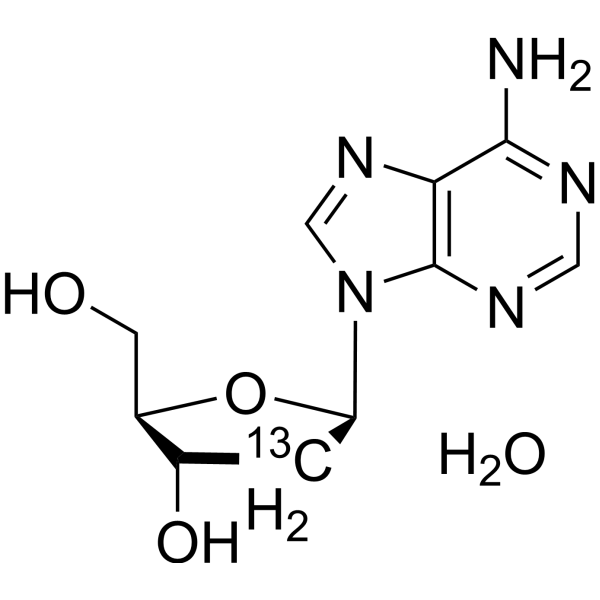
2'-Deoxyadenosine monohydrate-2′-13C
 0 ImagesCat. No.: HY-W011683S1
2'-Deoxyadenosine monohydrate-2′-13C is the 13C labeled 2'-Deoxyadenosine monohydrate(HY-W011683). 2′-Deoxyadenosine monohydrate is an adenine nucleoside that inhibits glucose-stimulated insulin release. 2′-Deoxyadenosine monohydrate inhibits glucose-stimulated increases seen in islet cyclic AMP (cAMP) accumulation. 2'-Deoxyadenosine monohydrate activates caspase-3 and promotes apoptosis. 2'-Deoxyadenosine monohydrate inhibits the activity of S-adenosyl-L-homocysteine hydrolase (SAHH). 2'-Deoxyadenosine monohydrate inhibits the growth of various cells. 2'-Deoxyadenosine monohydrate has an anticancer effect on colon cancer.
-
MO-2097
 0 ImagesCat. No.: HY-N13009CAS No.: 2744300-63-6
MO-2097 is a RAF-1/HIF-1α inhibitor. MO-2097 induces RAF-1 destabilization, leading to a reduction in EMT-associated transcription factors and mesenchymal markers. MO-2097 inhibits HIF-1a protein expression mediated by hnRNPA2B1 under hypoxic and mimetic hypoxia. MO-2097 induces mitochondrial ROS, which leads to apoptosis in cells. MO-2097 effectively suppresses colorectal cancer metastasis by inhibiting the RAF/MEK/ERK signaling pathway. MO-2097 attenuates tumor growth in a xenograft HCT116 cell mouse model. MO-2097 can be used for the study of colorectal cancer.
-
Nivalenol (Standard)
 0 ImagesCat. No.: HY-N6801RCAS No.: 23282-20-4
Nivalenol (Standard) is the analytical standard of Nivalenol (HY-N6801). This product is intended for research and analytical applications. Nivalenol, a trichothecene mycotoxin that can be produced by Fusarium graminearum, is a fungal metabolite present in agricultural product. Nivalenol modulates apoptotic pathway, cell cycle regulation, Bax, ERK, caspase-3, and poly-ADP-ribose synthase activity in macrophages. Nivalenol inhibits ribosomal peptidyltransferase site, protein synthesis, DNA synthesis, and cell proliferation. Nivalenol induces late-stage apoptotic morphological changes, reduces cellular metabolism, and decreases cell proliferation in erythroleukemia cells. Nivalenol induces lymphocyte apoptosis in murine thymus, spleen, and Peyer's patches. Nivalenol can be used for the research of erythroleukemia.
-
Quinidine hydrochloride
 0 ImagesCat. No.: HY-W115674CAS No.: 1668-99-1
Quinidine hydrochloride is an orally active antiarrhythmic agent. Quinidine hydrochloride reduces the expression level of P-gp, inhibits P-gp-mediated efflux, increases the intracellular accumulation of P-gp substrates, induces PARP cleavage and Caspase-3 activation, and elevates the proportion of Apoptotic cells at the sub-G1 phase. Quinidine hydrochloride exerts sustained block and open-channel block effects on IK(f). Quinidine hydrochloride alters the urinary metabolic ratio of Amphetamine, modulates the Pentylenetetrazol-induced seizure threshold, and regulates the anticonvulsant effect of Dextromethorphan. Quinidine hydrochloride can be used in studies related to uterine sarcoma and seizures.
-
GPS167
 0 ImagesCat. No.: HY-183831CAS No.: 3034312-19-8
GPS167 is a CLK kinase inhibitor that potently and selectively inhibits recombinant human CLK1, CLK2 and CLK4. By inhibiting CLK-mediated phosphorylation of SRSF10, GPS167 upregulates the protein-binding ability of CLK1 and CLK4 with SRSF10, downregulates oncogenic BCLAF1-L and upregulates tumor-suppressive BCLAF1-S, regulates alternative splicing of genes such as MDM2 and MDM4, stabilizes p53 protein and induces DNA damage, ultimately triggering tumor cell apoptosis. GPS167 can block the epithelial-mesenchymal transition process of tumors, activate intracellular double-stranded RNA-mediated antiviral immune responses, and produce synergistic cytotoxicity when combined with microtubule-targeting drugs. GPS167 can be used in research related to various cancers including colorectal cancer.
-
JAK1-IN-21
 0 ImagesCat. No.: HY-184592
JAK1-IN-21, biotin-conjugated isoxazole derivative, is a JAK1 inhibitor. JAK1-IN-21 directly engages and stabilizes JAK1, reduces the phosphorylation of JAK1, STAT1 and AKT, induces apoptotic marker cleavage (PARP, Caspase-3, Caspase-7) and exhibits broad-spectrum antiproliferative activity against cancer cells. JAK1-IN-21 can be used for the study of liver cancer, prostate cancer, and breast cancer.
-
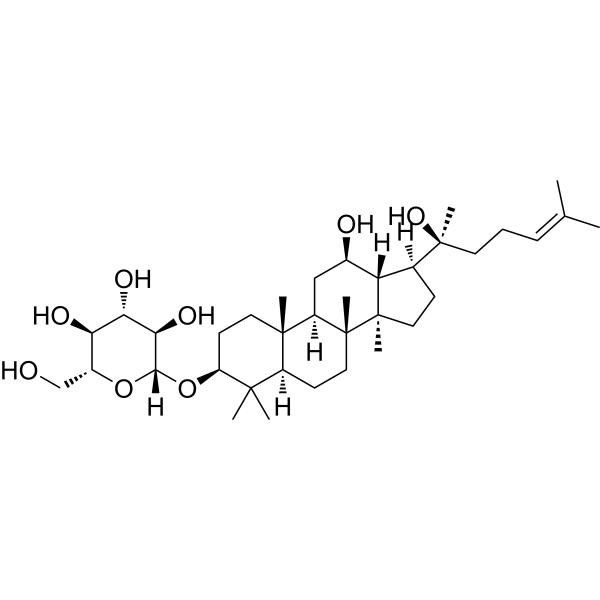
Ginsenoside Rh2 (Standard)
 0 ImagesSynonyms: 20(S)-Ginsenoside Rh2(Standard); 20(S)-Rh2(Standard)
-
COX-2-IN-59
 0 ImagesCat. No.: HY-179125
COX-2-IN-59 is a potent and selective COX-2 inhibitor with an IC50 of 0.052 μM. COX-2-IN-59 exhibits 200-fold selectivity over COX-1 (IC50 = 11.16 μM). COX-2-IN-59 reduces COX-2 levels, induces cell cycle arrest, and triggers apoptosis by increasing Bax expression, decreasing Bcl-2 levels, and activating caspase-3. COX-2-IN-59 can be used for the research of colon cancer.
-
EM20-25
 0 ImagesCat. No.: HY-101999CAS No.: 141266-44-6
EM20-25 is an inhibitor for Bcl-2, which interferes with the interaction between BCL-2 and BAX, activates caspase-9 and thus induces the apoptosis. EM20-25 affects the mitochondrial function, causes the open of permeability transition pore (PTP). EM20-25 enhances the sensitivity of cells to Staurosporine (HY-15141), and enhances the killing effect of BCL-2-expressing leukemia cells to Chlorambucil (HY-13593) and Fludarabine (HY-B0069).
-
Tubulin polymerization-IN-82
 0 ImagesCat. No.: HY-174411CAS No.: 3067075-77-5
Tubulin polymerization-IN-82 is a tubulin inhibitor. Tubulin polymerization-IN-82 inhibits cell migration and invasion, and triggers cell apoptosis through the mitochondria and ER stress mediated pathway. Tubulin polymerization-IN-82 exhibits antitumor activity against drug resistance cancer cells, and inhibits tumor growth, can be used for liver cancer research.
-
CDC25A/NF-κB-IN-1
 0 ImagesCat. No.: HY-184446
CDC25A/NF-κB-IN-1 is an effective dual-target inhibitor of CDC25A and NF-κB, and is a prodrug of Pt(IV). CDC25A/NF-κB-IN-1 has anticancer activity and low cytotoxicity to normal cells. CDC25A/NF-κB-IN-1 can trigger a variety of anticancer mechanisms, including S phase cell cycle arrest, mitochondrial endogenous apoptosis, endoplasmic reticulum stress, autophagy-dependent ferroptosis. CDC25A/NF-κB-IN-1 has good safety and can be used for ovarian cancer research.
-
EGFR/HER2-IN-20
 0 ImagesCat. No.: HY-184301
EGFR/HER2-IN-20 is a dual EGFR/HER2 inhibitor. EGFR/HER2-IN-20 induces G1/S phase cell cycle arrest by downregulating CCND1. EGFR/HER2-IN-20 induces cell apoptosis by upregulating BAX and caspase-3. EGFR/HER2-IN-20 inhibits cancer cell migration. EGFR/HER2-IN-20 can be used in the research of cervical cancer and breast cancer.
-
WB156
 0 ImagesCat. No.: HY-174266CAS No.: 2368944-44-7
WB156 is a dual MDM2 and GSPT1 PROTAC degrader with a DC50 of 23 nM against MDM2. WB156 induces the degradation of MDM2 and GSPT1 via the ubiquitin-proteasome system. WB156 upregulates the levels of p53 and p21, and triggers Apoptosis through the cleavage of PARP and Caspase-3. WB156 can be used in leukemia-related research.
-
NSC 850745
 0 ImagesCat. No.: HY-175848
NSC 850745 is a selective and potent c-Met/STAT3 inhibitor with IC50 values of 210 and 670 nM. NSC 850745 can inhibit cell proliferation, induce G2/M phase arrest and induce apoptosis. NSC 850745 can downregulate AKT-1, VEGF and Bcl-2 expression and upregulate p53, Bax and caspase expression. NSC 850745 can be used for the research of cancer, such as leukemia and colon cancer.
-
M802
 0 ImagesCat. No.: HY-P992401
M802 is an anti-HER2/CD3 bispecific antibody, with a Kd of 0.578 nM for human HER2 and a Kd of 71.2 nM for human CD3. M802 inhibits the PI3K/AKT and MAPK signaling pathways, suppresses tumor cell proliferation, activates caspase-3, and promotes tumor cell apoptosis (apoptosis). M802 recruits and activates CD3-positive immune cells, mediates cytotoxicity against HER2-positive tumor cells, and induces immune cells to secrete IFN-γ, TNF-α, IL-2 and IL-6. M802 exhibits anti-tumor efficacy in mice with gastric cancer xenografts. M802 can be used in research related to HER2-positive breast cancer, HER2-positive gastric cancer and other cancers. The recommended isotype control is human IgG1 kappa (HY-P99001).
-
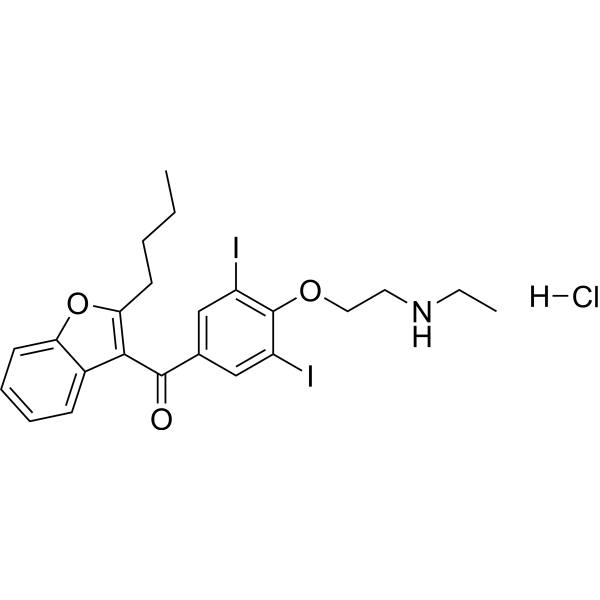
Desethylamiodarone hydrochloride (Standard)
 0 ImagesCat. No.: HY-130353RCAS No.: 96027-74-6Synonyms: N-Desethylamiodarone hydrochloride (Standard); LB 33020 hydrochloride (Standard)
Desethylamiodarone hydrochloride (Standard) (N-Desethylamiodarone hydrochloride (Standard); LB 33020 hydrochloride (Standard)) is the analytical standard of Desethylamiodarone hydrochloride (HY-130353). This product is intended for research and analytical applications. Desethylamiodarone hydrochloride (N-Desethylamiodarone hydrochloride; LB 33020 hydrochloride) is the major active metabolite of Amiodarone (HY-14187) generated via CYP3A4 metabolism. Desethylamiodarone hydrochloride downregulates p‑Akt, p‑Bad and Bcl‑2, upregulates Bax, promotes mitochondrial release of cytochrome c, activates caspase‑3 and cleaves PARP‑1, thereby inducing cell cycle arrest and apoptosis. Desethylamiodarone hydrochloride can be used in cervical cancer-related research.
-
ST-168
 0 ImagesCat. No.: HY-120281CAS No.: 2126038-25-1
ST-168 is an orally active MEK/PI3K inhibitor with an IC50 of 182 nM against MEK1 and IC50 values of 69.2, 41.7, 1482 and 2293 nM against PI3Kα, PI3Kδ, PI3Kβ and PI3Kγ respectively. ST-168 completely inhibits the phosphorylation of ERK1/2 and AKT and induces cancer cell death in a 3D tumor sphere model. ST-168 demonstrates significant antitumor effects in the A375 melanoma mouse model. ST-168 improves the ocular toxicity profile of MEK inhibitors, showing lower caspase activation levels, indicating reduced apoptosis induction. ST-168 can be used in melanoma research.
-
Anticancer agent 306
 0 ImagesCat. No.: HY-181769CAS No.: 3043892-01-6
Anticancer agent 306 is a spiro tetramic acid derivative and a inhibitor of MMP1, MMP7 and PLK1. Anticancer agent 306 exerts antiproliferative activity against H1299, RKO and MCF-7 cells with IC50 values of 19.25 μM, 3.29 μM and 102.36 μM, respectively. Anticancer agent 306 can up-regulate p21 protein and down-regulate CCND1 and CCNB1 proteins to induce cell cycle arrest, regulate the expression of Bcl-2 and Bax to induce cell apoptosis. Anticancer agent 306 can down-regulate MMP1 and MMP7 proteins to inhibit tumor invasion and metastasis. Anticancer agent 306 can be used for the research of lung cancer, colorectal cancer, breast cancer.
-
DZ-1-DHA
 0 ImagesCat. No.: HY-184557CAS No.: 2223036-84-6
DZ-1-DHA is a conjugate of DHA (HY-B2167) and DZ-1 dye. DZ-1-DHA mediates selective cellular uptake via binding to overexpressed OATP1A2. DZ-1-DHA induces the cleavage of Caspase-3, Caspase-8, Caspase-9 and PARP-1. DZ-1-DHA induces Apoptosis and Ferroptosis. DZ-1-DHA induces ROS production through a Fenton-like mechanism, causes mitochondrial membrane depolarization, and triggers lipid peroxidation. DZ-1-DHA can be used in studies related to colorectal cancer liver metastasis.



