



Caspase Activator
-
Anticancer agent 311
 0 ImagesCat. No.: HY-182382CAS No.: 421579-95-5
Anticancer agent 311 is an apoptosis inducer and p53 modulator. Anticancer agent 311 increases p53 levels, activates cleaved caspase-3, reduces p-Cdc25C levels, and disrupts p-p44/42 MAPK phosphorylation. Anticancer agent 311 induces G2/M phase arrest, inhibits cancer cell viability in a concentration- and time-dependent manner, and exhibits low toxicity to non-cancer cells. Anticancer agent 311 prevents tumor growth and angiogenesis in mouse xenograft models without detectable toxicity. Anticancer agent 311 can be used for the research of lung cancer.
-
YCH3971
 0 ImagesCat. No.: HY-181664
YCH3971 is a PARP1 inhibitor with a PARP1 IC50 of 7.52 nM and a PARP1 EC50 of 67.75 nM. YCH3971 inhibits the proliferation of BRCA-deficient tumor cells. YCH3971 induces DNA damage, G2/M phase arrest, and caspase-mediated Apoptosis in triple-negative breast cancer cells. YCH3971 can be used for the research of BRCA-deficient tumors.
-
CSN5-IN-3
 0 ImagesCat. No.: HY-181795
CSN5-IN-3 (Compound 30) is a CSN5 inhibitor with an IC50 of 0.58 μM. CSN5-IN-3 inhibits the enzymatic activity of CSN5, leading to increased accumulation of NEDD8-Cul1 and promoting the degradation of PD-L1. CSN5-IN-3 downregulates Bcl-2, and upregulates P53 and Cleaved caspase-3. CSN5-IN-3 exhibits anticancer activity against triple-negative breast cancer.
-
Topo I/II-IN-2
 0 ImagesCat. No.: HY-170912
Topo I/II-IN-2 (Compound 3g) is an inhibitor of Topo I and Topo II. Topo I/II-IN-2 inhibits NCI-H446 cells and NCI-H1048 cells with IC50s of 1.30 μM and 1.42 μM, respectively. Topo I/II-IN-2 induces mitochondrial Apoptosis, mitochondrial dysfunction and activity generation. Topo I/II-IN-2 inhibits the PI3K/Akt/mTOR pathway. Topo I/II-IN-2 prevents SCLC (small cell lung cancer) cell proliferation, invasion, and migration in vitro. .
-
SP-6-27
 0 ImagesCat. No.: HY-136893CAS No.: 1384170-58-4
SP-6-27 is a tubulin depolymerizing agent that binds to the colchicine site of β-tubulin. SP-6-27 induces G2/M cell cycle arrest in ovarian cancer cells. SP-6-27 enhances intrinsic apoptosis in ovarian cancer cells through upregulation of Bax, Apaf-1, caspase-6, caspase-9, and caspase-3. SP-6-27 reduces ovarian cancer cell migration. SP-6-27 inhibits capillary tube formation by human umbilical vein endothelial cells. SP-6-27 shows minimum cytotoxicity to normal ovarian epithelia. SP-6-27 shows enhanced cytotoxicity in chemo-sensitive/resistant ovarian cancer cells when combined with Cisplatin (HY-17394). SP-6-27 can be used for the research of ovarian cancer.
-
Fenobucarb-d3
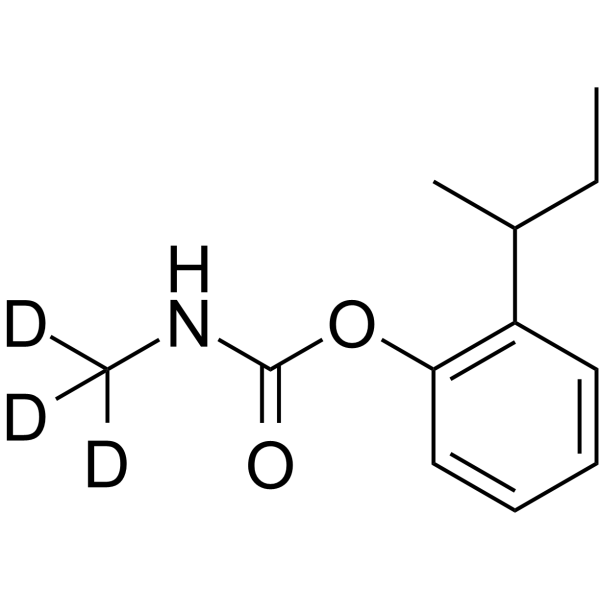 0 Images
Fenobucarb-d3 is the deuterium labeled Fenobucarb. Fenobucarb is a carbamate insecticide. Fenobucarb induces zebrafish developmental neurotoxicity through pathways involved in inflammation, oxidative stress, degeneration and apoptosis. Fenobucarb is a possible risk factor to cardiovascular and cerebrovascular systems in animals.
-
Triptolidenol
 0 ImagesCat. No.: HY-N11784CAS No.: 99694-86-7
Triptolidenol, a traditional Chinese medicine, is an epoxy diterpene lactone that can be isolated from Tripterygium wilfordii. Triptolidenol has anti-inflammatory and anticancer activities. Triptolidenol significantly inhibits tumor cell proliferation and migration, arrests cell cycle arrest at S phase and induces apoptosis by activating the cytochrome c/caspase cascade signaling pathway. Triptolidenol disrupts NF-κB/COX-2 pathway by inhibiting IKKβ at ATP-binding sites. Triptolidenol can be used for chronic nephritis and kidney cancer like clear cell renal cell carcinoma (ccRCC) research.
-
Swerchirin
 0 Images
Swerchirin is an orally active, plant-derived xanthone that acts as an inhibitor of the Raf/MEK/ERK signaling pathway. Swerchirin downregulates the expression of phosphorylated MEK and phosphorylated ERK, induces mitochondrial apoptosis and cell cycle arrest, regulates Bcl-2 family proteins, triggers cytochrome c release, activates caspases, and drives PARP cleavage. Swerchirin reduces blood glucose levels in rat models under fasting, fed, glucose-loaded conditions, and following treatment with Tolbutamide (HY-B0401). Swerchirin can be used in research related to ovarian cancer, liver injury, and diabetes.
-
Tubulin polymerization-IN-68
 0 ImagesCat. No.: HY-163983CAS No.: 2924156-96-5
Tubulin polymerization-IN-68 (compound 32) is a tubulin inhibitor that can inhibit tubulin polymerization and destroy the cellular microtubule network. Tubulin polymerization-IN-68 can upregulate the expression of PARP-1 and caspase-3 and induce cell apoptosis, and has anticancer activity. Tubulin polymerization-IN-68 can effectively inhibit HepG2 (IC50=93 nM) and significantly inhibit the growth of HepG2 xenograft tumors in nude mice by oral administration.
-
CQ31
 0 ImagesCat. No.: HY-183739CAS No.: 441022-67-9
CQ31 is a PEPD and XPNPEP1 inhibitor, with an IC50 of 0.67 μM against PEPD and an IC50 of 122 μM against XPNPEP1. CQ31 inhibits the M24B aminopeptidase activity of PEPD and XPNPEP1. CQ31 induces the accumulation of Xaa-Pro-containing peptides, mildly inhibits DPP8/9, and triggers CASP1-dependent pyroptosis via activation of the CARD8 inflammasome and caspase-1. CQ31 can be used in research related to cancers such as acute myeloid leukemia.
-
GUT-70
 0 ImagesCat. No.: HY-120923CAS No.: 161633-75-6
GUT-70, a tricyclic coumarin, is a Hsp90 inhibitor. GUT-70 activates the caspase 2, 3, 8 and 9, and induces the apoptosis in leukemic cells. GUT-70 inhibits HIV-1 replication in chronically infected cells via suppression of the NF-κB pathway. GUT-70 can be used for the study of leukemic, mantle cell lymphoma (MCL) and HIV-1 infection.

-
GEA 3162 hydrochloride
 0 ImagesCat. No.: HY-120314A
GEA 3162 hydrochloride is an orally active compound that acts as a NO/ONOO⁻ donor. GEA 3162 hydrochloride significantly inhibits the activation of human polymorphonuclear leukocytes (PMNs) through the cGMP pathway, inhibits the release of inflammatory mediators, and exerts anti-inflammatory and protective effects. GEA 3162 hydrochloride induces apoptosis of neutrophils and bone marrow cells by activating caspase-2/3/8/9 through the ONOO⁻ pathway. GEA 3162 hydrochloride has a bidirectional effect in the rat gastric ulcer model: at low doses, it significantly reduces gastric mucosal damage, while at high doses, it aggravates the ulcer area. GEA 3162 hydrochloride can be used for research on inflammatory conditions such as gastric ulcers.
-
KLA peptide acetate
 0 ImagesCat. No.: HY-P5345APurity: 99.81%
KLA peptide acetate is a naturally occurring Antibiotic peptide that is nontoxic outside of cells but is toxic when it enters into the interior of targeted cells. KLA peptide acetate can induce cell Apoptosis by disrupting mitochondrial membranes and activating Caspase. MG1-KLA acetate, formed by the coupling of KLA peptide acetate with MG1, can selectively induce apoptosis in pro-inflammatory microglia. KLA peptide acetate can be used for the research of liver fibrosis. KLA peptide acetate can be used for the research of neonatal hypoxic-ischemic encephalopathy.
-
CDK9/EZH2-IN-2
 0 ImagesCat. No.: HY-189422
CDK9/EZH2-IN-2 is a potent dual CDK9 and EZH2 inhibitor with an IC50 of 8.9 nM against EZH2. CDK9/EZH2-IN-2 inhibits anti-apoptotic proteins and induces DNA damage by blocking the activity of CDK9 and EZH2, ultimately leading to tumor cell apoptosis. CDK9/EZH2-IN-2 can be used for research on diffuse large B-cell lymphoma.
-
Quinidine-13C, d2 hydrochloride
 0 ImagesCat. No.: HY-B1751S1
Quinidine-13C, d2 hydrochloride is the 13C, d2 labeled Quinidine hydrochloride (HY-W115674). Quinidine hydrochloride is an orally active antiarrhythmic agent. Quinidine hydrochloride reduces the expression level of P-gp, inhibits P-gp-mediated efflux, increases the intracellular accumulation of P-gp substrates, induces PARP cleavage and Caspase-3 activation, and elevates the proportion of Apoptotic cells at the sub-G1 phase. Quinidine hydrochloride exerts sustained block and open-channel block effects on IK(f). Quinidine hydrochloride alters the urinary metabolic ratio of Amphetamine, modulates the Pentylenetetrazol-induced seizure threshold, and regulates the anticonvulsant effect of Dextromethorphan. Quinidine hydrochloride can be used in studies related to uterine sarcoma and seizures.
-
Antioxidant agent-22
 0 ImagesCat. No.: HY-181174CAS No.: 2996086-75-8
Antioxidant agent-22 is a paraben derivative tetracyclic spermine cyclotriphosphazene compound. Antioxidant agent-22 exhibits antioxidant, anti-Inflammatory, and apoptotic activities. Antioxidant agent-22 significantly upregulates CAT, SOD, caspase-3 and IL-6 expression, suppresses GSH, IL-1β, and reduces BCL-2 and BAX levels. Antioxidant agent-22 can be used for the research of cancer, such as lung cancer.
-
ERK5-IN-7
 0 ImagesCat. No.: HY-181477
ERK5-IN-7 is an orally active ERK5 inhibitor with an IC50 of 403.4 nM. ERK5-IN-7 directly inhibits ERK5 kinase activity, and downregulates the phosphorylation level and total protein expression of ERK5. ERK5-IN-7 induces Apoptosis (upregulates Bax, downregulates Bcl-2, and induces Caspase-3 cleavage). ERK5-IN-7 induces ROS accumulation. ERK5-IN-7 exhibits anticancer effects against Lewis lung cancer.
-
FGFR-IN-25
 0 ImagesCat. No.: HY-181005
FGFR-IN-25 (Compound 19E) is a FGFR inhibitor (IC50s: 1.30 nM and 0.85 nM for FGFR1 and FGFR2, respectively) and radiosensitizer. FGFR-IN-25 effectively reduces the phosphorylation of FGFR1 and its key downstream effectors, pAKT and pERK. FGFR-IN-25 exerts broad-spectrum antitumor activity against gastric cancer, colorectal carcinoma, hepatocellular carcinoma, breast cancer, triple-negative breast cancer, and glioblastoma. FGFR-IN-25, when combined with radiotherapy, synergistically activates the ROS-Caspase-3-GSDME axis, downregulates PD-L1 expression, and induces immunogenic cell death (ICD). FGFR-IN-25 combined with radiotherapy improves the antitumor efficacy.
-
MAHS-3
 0 ImagesCat. No.: HY-187513
MAHS-3 is a thymidylate synthase (TS) and dihydrofolate reductase (DHFR) inhibitor, with IC50 values of 5.279 μM and 52.60 μM against human targets, respectively. MAHS-3 exhibits broad-spectrum antiproliferative activity against cancer cells, induces cell cycle arrest, activates endogenous caspase-dependent apoptosis, reduces MMP levels, inhibits cell migration, increases intracellular NO levels, and promotes autophagy activity. MAHS-3 can be used in cancer-related research.



