



DNA/RNA Synthesis
RNA synthesis, which is also called DNA transcription, is a highly selective process. Transcription by RNA polymerase II extends beyond RNA synthesis, towards a more active role in mRNA maturation, surveillance and export to the cytoplasm.
Single-strand breaks are repaired by DNA ligase using the complementary strand of the double helix as a template, with DNA ligase creating the final phosphodiester bond to fully repair the DNA.DNA ligases discriminate against substrates containing RNA strands or mismatched base pairs at positions near the ends of the nickedDNA. Bleomycin (BLM) exerts its genotoxicity by generating free radicals, whichattack C-4′ in the deoxyribose backbone of DNA, leading to opening of the ribose ring and strand breakage; it is an S-independentradiomimetic agent that causes double-strand breaks in DNA.
First strand cDNA is synthesized using random hexamer primers and M-MuLV Reverse Transcriptase (RNase H). Second strand cDNA synthesis is subsequently performed using DNA Polymerase I and RNase H. The remaining overhangs are converted into blunt ends using exonuclease/polymerase activity. After adenylation of the 3′ ends of DNA fragments, NEBNext Adaptor with hairpin loop structure is ligated to prepare the samples for hybridization. Cell cycle and DNA replication are the top two pathways regulated by BET bromodomain inhibition. Cycloheximide blocks the translation of mRNA to protein.
DNA/RNA Synthesis Isoform Specific Products
All Product Categories
-
DNA/RNA Synthesis Inhibitors
(1507)
View all products
-
DNA/RNA Synthesis Agonists
(11)
View all products
-
DNA/RNA Synthesis Antagonists
(2)
View all products
-
DNA/RNA Synthesis Activators
(54)
View all products
-
DNA/RNA Synthesis Modulators
(34)
View all products
-
DNA/RNA Synthesis Chemicals
(20)
View all products
-
DNA/RNA Synthesis Inducers
(14)
View all products
-
DNA/RNA Synthesis Degraders
(5)
View all products
-
DNA/RNA Synthesis Controls
(6)
View all products
-
DNA/RNA Synthesis Substrates
(6)
View all products
-
DNA/RNA Synthesis Ligands
(6)
View all products
-
DNA/RNA Synthesis Related Products (2968)
Related Products (2968)

-
Antibodies (248)
-
DNA/RNA Synthesis Isoform Comparison
-
5-Propargylamino-3'-azidomethyl-dUTP tristriethylamine
 0 ImagesCat. No.: HY-132137B5-Propargylamino-3'-azidomethyl-dUTP tristriethylamine is a nucleotide molecule that can be used in DNA synthesis and DNA sequencing. For detailed information, refer to compound 5 in patent document WO2004018497A2. It contains an azide group, which can undergo copper-catalyzed azide-alkyne cycloaddition (CuAAc) with molecules containing alkyne groups. It can also react with molecules containing DBCO or BCN groups through strain-promoted alkyne-azide cycloaddition (SPAAC).
-
Cysteinylglycine (Standard)
 0 ImagesSynonyms: L-Cysteinylglycine (Standard); Cys-Gly (Standard); H-Cys-Gly-OH (Standard)Cysteinylglycine (Standard) is the analytical standard of Cysteinylglycine. This product is intended for research and analytical applications. Cysteinylglycine is a dipeptide formed by the peptide bond linkage between cysteine (Cysteine) and glycine (Glycine). Cysteinylglycine is an important metabolic intermediate in the human body, mainly derived from the degradation of glutathione (GSH). Cysteinylglycine reduces ferric iron to ferrous iron, drives the redox cycle of iron, generates reactive oxygen species (ROS), stimulates oxidative reactions, induces lipid peroxidation of human plasma LDL lipoproteins, and causes oxidative damage to DNA bases. Cysteinylglycine can be used as a biomarker to evaluate ischemic heart disease, breast cancer and other conditions.
-
Deoxyguanosine triphosphate trisodium (powder)
 0 ImagesCat. No.: HY-W008661BCAS No.: 93919-41-6Synonyms: dGTP trisodium (powder); 2'-Deoxyguanosine-5'-triphosphate trisodium (powder)Deoxyguanosine triphosphate (dGTP) trisodium (powder) is a nucleotide precursor in cells for DNA synthesis. Deoxyguanosine triphosphate trisodium (powder) is used in reverse transcription-polymerase chain reaction (RT-PCR) for DNA amplification.
-
7-Methyl-diguanosine triphosphate ammonium solution (100 mM)
 0 ImagesSynonyms: m7Gp3G ammonium7-Methyl-diguanosine triphosphate (m7Gp3G) ammonium is an mRNA cap structure analog that inhibits in vitro protein synthesis by binding to the translation initiation complex. 7-Methyl-diguanosine triphosphate ammonium binds to eIF4E, promotes cap-dependent translation initiation, stabilizes mRNA, and acts as a translation enhancer. 7-Methyl-diguanosine triphosphate ammonium can be used to prepare synthetic capped RNA transcripts for studies related to mRNA translation, splicing, turnover, and intracellular transport.
-
3′-O-Azidomethyl-dTTP sodium,100 mM Solution
 0 ImagesCat. No.: HY-158672Purity: 99.79%3′-O-Azidomethyl-dTTP sodium is a labeled modified deoxyoligonucleotide (dNTP) that can release pyrophosphate to produce fluorescence and has special applications in gene synthesis and sequencing.
-
E-982
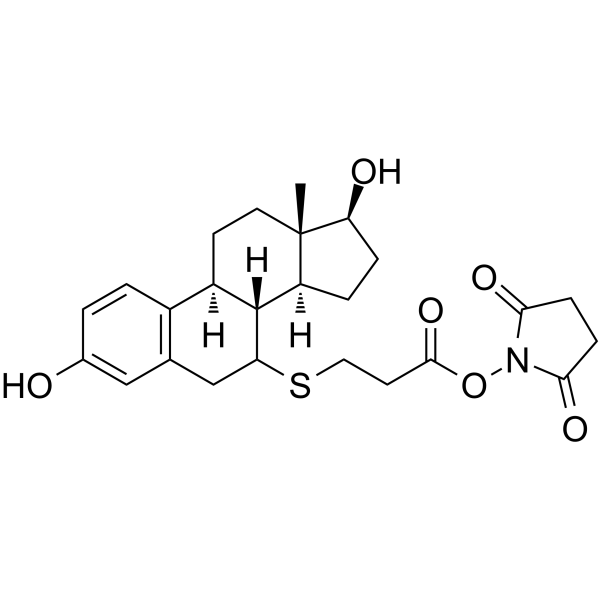 0 ImagesE-982 is a steroid used for the on-line screening of the DNA unwinding element binding protein (DUE-B) immobilized protein column.
-
N4-Me-dCTP sodium, 100 mM solution
 0 ImagesCat. No.: HY-158667N4-Me-dCTP sodium is a labeled modified deoxyoligonucleotide (dNTP) that can release pyrophosphate to produce fluorescence and has special applications in gene synthesis and sequencing.
-
Norbixin
 0 ImagesCat. No.: HY-W587784CAS No.: 542-40-5Norbixin is an orally active natural product with multiple activities such as retinal protection and oxidative stress regulation. Norbixin scavenges ROS, chelates metal ions, regulates plasmid and genomic DNA breakage, inhibits H2O2-induced mutagenesis, activates PPAR-α, modulates lipid levels, restores or regulates antioxidant enzyme activity, and alters NO levels. Norbixin prevents A2E accumulation and protects photoreceptor cells and retinal pigment epithelial cells. Norbixin is a derivative of Bixin (HY-N6884). Norbixin can be used in research related to diseases such as macular degeneration and diabetes, and also serves as a natural textile dye.
-
5-Vinyl-uridine
 0 ImagesCat. No.: HY-W416298CAS No.: 55520-64-45-Vinyl-uridine is a fluorescent probe that can be used for intracellular RNA imaging, cell division stage imaging, and in vivo tumor imaging in mice. The detection mechanism of 5-Vinyl-uridine relies on metabolic incorporation into cellular RNA during RNA synthesis; after incorporation, it undergoes a bioorthogonal Diels-Alder reaction with Biotin (HY-B0511)-tetrazine. When paired with Streptavidin (HY-P3152)-Alexa Fluor 488, 5-Vinyl-uridine has an Ex/Em = 488/500-550 nm; when using Biotin-tetrazine, the emission peak is at approximately 510 nm, with the excitation/emission filter settings of 450-490/500-550 nm. 5-Vinyl-uridine can be used in tumor-related research.
-
Benzyl (5-hydroxypentyl)carbamate
 0 ImagesCat. No.: HY-W142194CAS No.: 87905-98-4Benzyl (5-hydroxypentyl)carbamate is a linker capable of repairing damaged DNA by binding to the 5'-hydroxyl group on the sugar backbone. Benzyl (5-hydroxypentyl)carbamate can also bind to DNA ligands and can inhibit cell proliferation in resistant cell lines. However, Benzyl (5-hydroxypentyl)carbamate is toxic to cells and can also cause DNA damage and strand breakage.
-
Anticancer agent 198
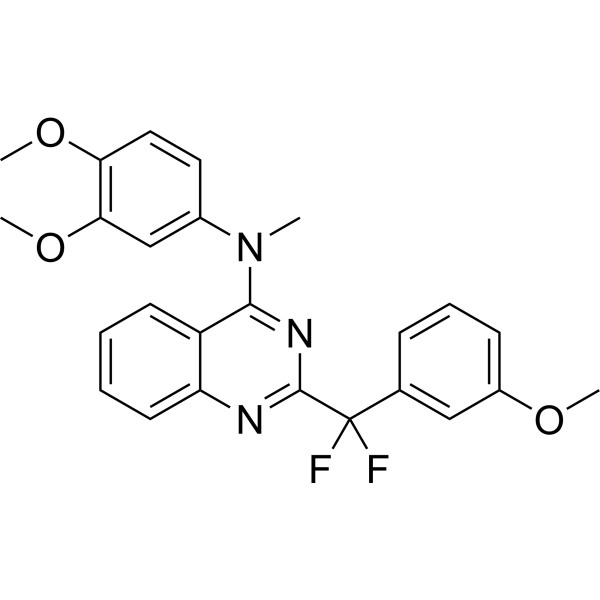 0 ImagesCat. No.: HY-158025Anticancer agent 198 (compound 18b) is a potent anticancer agent and potential WRN protein inhibitor. Anticancer agent 198 was significantly toxic to K562 cells and WRN-overexpressing PC3 cells.
-
Carboplatin solution
 0 ImagesCat. No.: HY-FL17393CAS No.: 41575-94-4Synonyms: NSC 241240 solutionCarboplatin solution is mainly composed of Carboplatin (HY-17393). Carboplatin (NSC 241240) is a DNA synthesis inhibitor which binds to DNA, inhibits replication and transcription and induces cell death. Carboplatin (NSC 241240) is a derivative of CDDP and a potent anti-cancer agent.
-
TQB2102
 0 ImagesCat. No.: HY-185816TQB2102 is a bispecific epitope antibody-drug conjugate targeting HER2, composed of the antibody Rolditamig (HY-P992130) and the toxin molecule Deruxtecan-d2 (HY-13631ES3). TQB2102 binds to the ECD2 and ECD4 domains of HER2, promotes its own internalization by HER2-expressing cells, and delivers deuterated DXd payload to inhibit topoisomerase I. TQB2102 induces antibody-dependent cellular cytotoxicity, DNA damage, bystander killing activity, and inhibits cancer cell proliferation. TQB2102 can be used in research related to various cancers including metastatic breast cancer, colorectal cancer, and gastric/gastroesophageal junction adenocarcinoma.
-
Adeninobananin
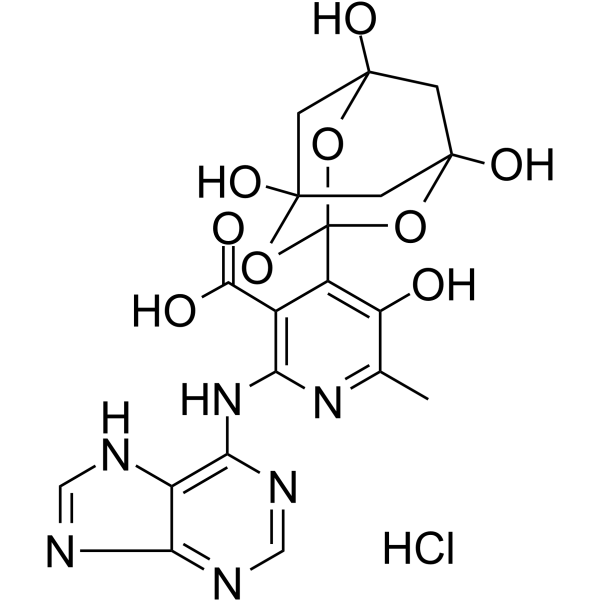 0 ImagesCat. No.: HY-145115CAS No.: 858956-99-7Adeninobananin, a negative control tool, does not show any inhibitory activity of the SARS Coronavirus helicase.
-
Prexasertib mesylate
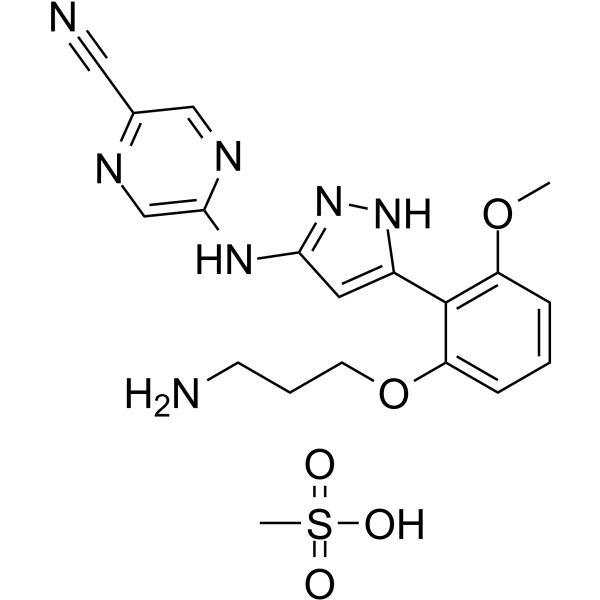 0 ImagesCat. No.: HY-18174CCAS No.: 1234015-55-4Synonyms: LY2606368 mesylatePrexasertib mesylate (LY2606368 mesylate) is a selective, ATP-competitive second-generation checkpoint kinase 1 (CHK1) inhibitor with a Ki of 0.9 nM and an IC50 of <1 nM. Prexasertib mesylate inhibits CHK2 (IC50=8 nM) and RSK1 (IC50=9 nM). Prexasertib mesylate causes double-stranded DNA breakage and replication catastrophe resulting in apoptosis. Prexasertib mesylate shows potent anti-tumor activity.
-
Adenine hydrochloride (Standard)
 0 ImagesCat. No.: HY-B0152ARCAS No.: 2922-28-3Synonyms: 6-Aminopurine hydrochloride (Standard); Vitamin B4 hydrochloride (Standard)Adenine (hydrochloride) (Standard) is the analytical standard of Adenine (hydrochloride). This product is intended for research and analytical applications. Adenine hydrochloride (6-Aminopurine hydrochloride), a purine, is one of the four nucleobases in the nucleic acid of DNA. Adenine hydrochloride acts as a chemical component of DNA and RNA. Adenine hydrochloride also plays an important role in biochemistry involved in cellular respiration, the form of both ATP and the cofactors (NAD and FAD), and protein synthesis[1][2][3].
-
Balapiravir hydrochloride
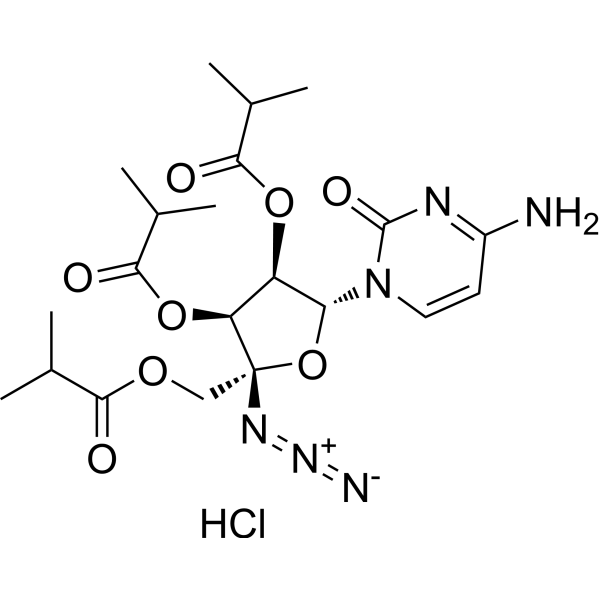 0 ImagesCat. No.: HY-10443ACAS No.: 690270-65-6Synonyms: Ro 4588161 hydrochloride; R1626 hydrochlorideBalapiravir hydrochloride (Ro 4588161 hydrochloride; R1626 hydrochloride) is an orally active proagent of a nucleoside analogue inhibitor of the RNA-dependent RNA polymerase (RdRp) of HCV (R1479; 4'-Azidocytidine). Balapiravir hydrochloride has anti-HCV activity. Balapiravir (hydrochloride) is a click chemistry reagent, it contains an Azide group and can undergo copper-catalyzed azide-alkyne cycloaddition reaction (CuAAc) with molecules containing Alkyne groups. It can also undergo strain-promoted alkyne-azide cycloaddition (SPAAC) reactions with molecules containing DBCO or BCN groups.
-
Evybactin
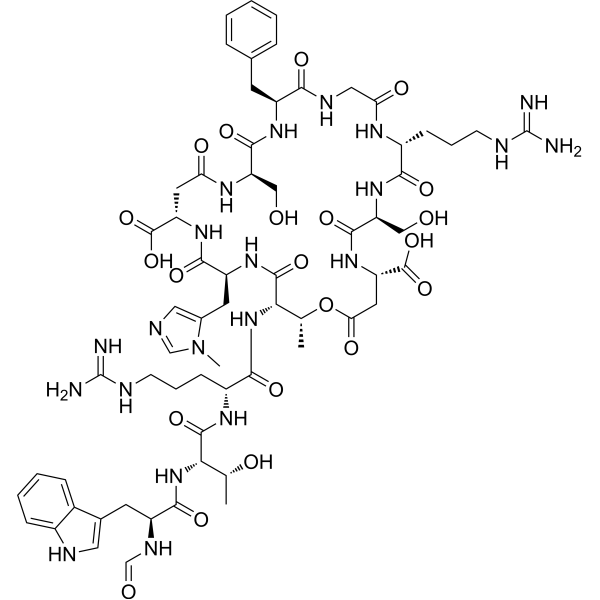 0 ImagesCat. No.: HY-P3473Evybactin is a DNA gyrase inhibitor. Evybactin is a selective inhibitor of Mycobacterium tuberculosis with a MIC value of 0.25 µg/mL. Evybactin is the first antimicrobial compound found to employ this unusual mechanism of selectivity.
-
BRD9185
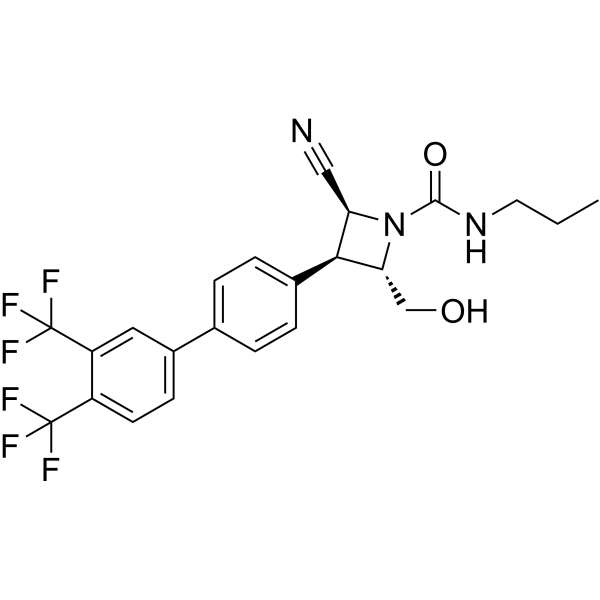 0 ImagesCat. No.: HY-120924CAS No.: 2057420-29-6BRD9185 is a Dihydroorotate dehydrogenase (DHODH) inhibitor, with an EC50 of 16 nM against multidrug-resistant blood-stage parasites in vitro and is curative after just three doses in a P. berghei mouse model.
-
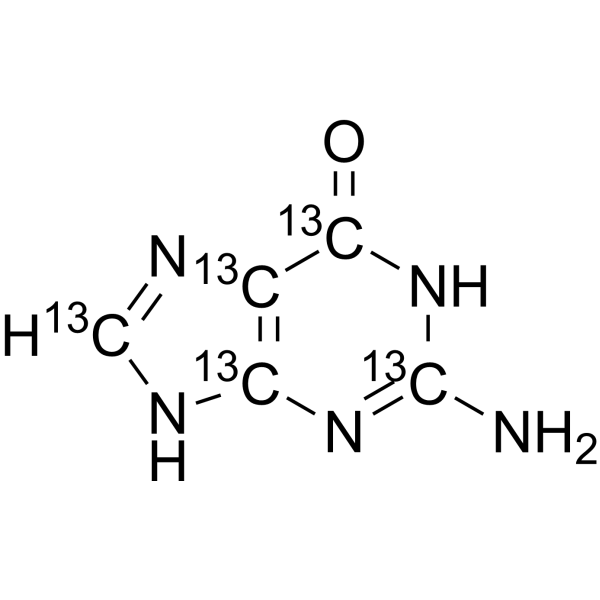
Guanine-13C5
 0 ImagesCat. No.: HY-Y1055S4Guanine-13C5 is 13C-labeled Guanine (HY-Y1055). Guanine is one of the fundamental components of nucleic acids (DNA and RNA). Guanine is a purine derivative, consisting of a fused pyrimidine-imidazole ring system with conjugated double bonds. Guanine has the potential to serve as a large-capacity N pool. Guanine has cytotoxic, antinociceptive and neuroprotective effects.




