



Epigenetic Reader Domain
Epigenetic regulators of gene expression and chromatin state include so-called writers, erasers, and readers of chromatin modifications.Well-characterized examples of reader domains include bromodomains typically binding acetyllysine and chromatin organization modifier (chromo), malignant brain tumor (MBT), plant homeodomain (PHD), and Tudor domains generally associating with methyllysine. Research on epigenetic readers has been tremendously influenced by the discovery of selective inhibitors targeting the bromodomain and extraterminal motif (BET) family of acetyl-lysine readers. The human genome encodes 46 proteins containing 61 bromodomains clustered into eight families. Distinct experimental approaches are used to identify the first BET inhibitors, GSK 525762A and (+)-JQ-1.
The Polycomb group (PcG) protein, enhancer of zeste homologue 2 (EZH2), has an essential role in promoting histone H3 lysine 27 trimethylation (H3K27me3) and epigenetic gene silencing. This function of EZH2 is important for cell proliferation and inhibition of cell differentiation, and is implicated in cancer progression. Cyclin-dependent kinases regulate epigenetic gene silencing through phosphorylation of EZH2. In many types of cancers including lymphomas and leukemia, EZH2 is postulated to exert its oncogenic effects via aberrant histone and DNA methylation, causing silencing of tumor suppressor genes.
p300/CBP is not only a transcriptional adaptor but also a histone acetyltransferase.
Epigenetic Reader Domain Isoform Specific Products
-
Epigenetic Reader Domain
(434)
View all products
-
Brd
(3)
View all products
-
BRPF1
(9)
View all products
-
BRPF2
(5)
View all products
-
BRPF3
(2)
View all products
-
BRD2
(66)
View all products
-
BRD3
(62)
View all products
-
BRD4
(298)
View all products
-
BRDT
(26)
View all products
-
CECR2
(4)
View all products
-
BD1
(9)
View all products
-
BD2
(9)
View all products
-
BRD7
(9)
View all products
-
BRD9
(55)
View all products
-
BET
(22)
View all products
-
BAZ
(1)
View all products
All Product Categories
-
Epigenetic Reader Domain Inhibitors
(583)
View all products
-
Epigenetic Reader Domain Agonists
(3)
View all products
-
Epigenetic Reader Domain Antagonists
(2)
View all products
-
Epigenetic Reader Domain Activators
(11)
View all products
-
Epigenetic Reader Domain Modulators
(3)
View all products
-
Epigenetic Reader Domain Chemicals
(2)
View all products
-
Epigenetic Reader Domain Inducer
(1)
View all products
-
Epigenetic Reader Domain Degraders
(165)
View all products
-
Epigenetic Reader Domain Controls
(12)
View all products
-
Epigenetic Reader Domain Substrate
(1)
View all products
-
Epigenetic Reader Domain Ligands
(28)
View all products
-
Epigenetic Reader Domain Related Products (888)
Related Products (888)

-
Antibodies (109)
-
Epigenetic Reader Domain Isoform Comparison
-
HJB97
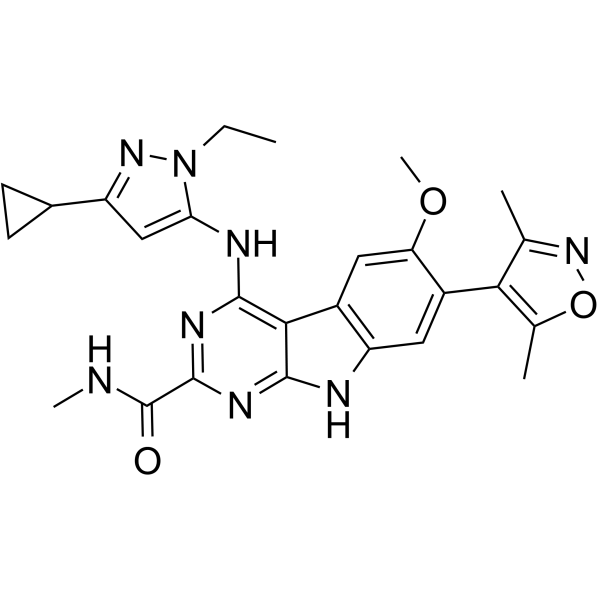 0 ImagesHJB97 is a high-affinity BET inhibitor with Ki values of 0.9 nM (BRD2 BD1), 0.27 nM (BRD2 BD2), 0.18 nM (BRD3 BD1), 0.21 nM (BRD3 BD2), 0.5 nM (BRD4 BD1), and 1.0 nM (BRD4 BD2). HJB97 can serve as a ligand for target protein (Ligands for Target Protein for PROTAC) for the development of PROTAC BET degraders with antitumor activity. HJB97 can be used for the synthesis of BETd-260 (HY-101519).
-
ZEN-3694
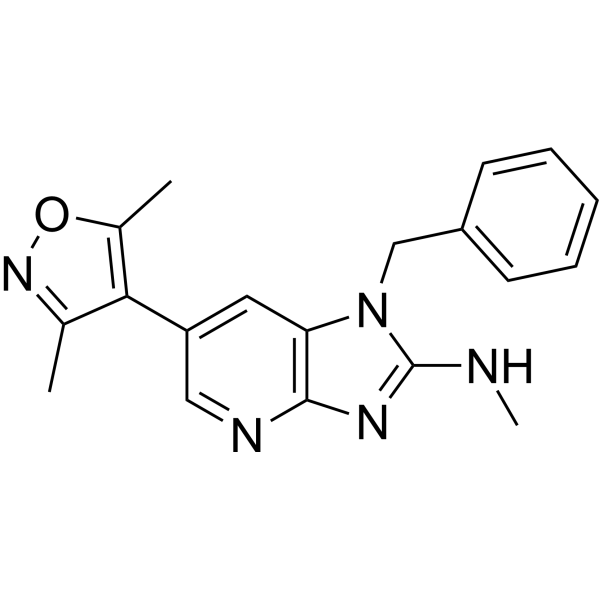 0 ImagesSynonyms: BET-IN-19ZEN-3694 (BET-IN-19) is an orally active BET inhibitor. ZEN-3694 regulates the function of BET proteins, thereby downregulating pathways involved in cell cycle regulation, ER signaling, AR signaling, AR splice variants, MYC, GR, cell growth, inflammation, and cellular immune responses. ZEN-3694 inhibits proliferation, induces apoptosis, reverses the upregulation of CDK6 and CCND1, restores cell cycle arrest, and inhibits CDK6 via miR-34a-5p. ZEN-3694 can be used in research related to HER2 breast cancer and metastatic castration-resistant prostate cancer.
-
Molibresib besylate
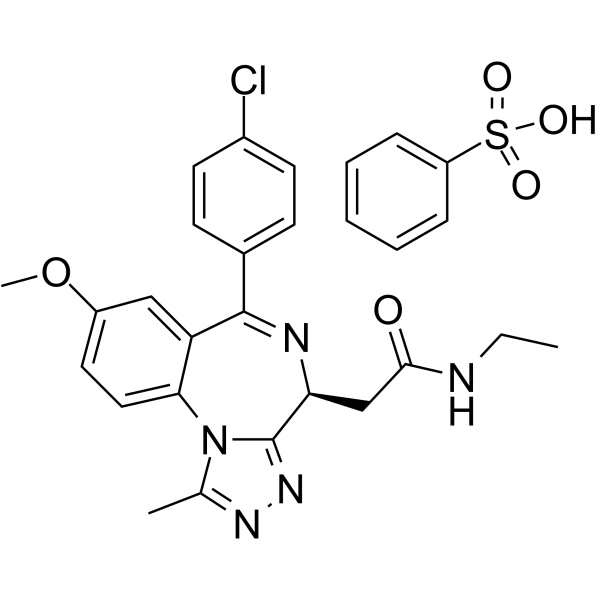 0 ImagesCat. No.: HY-13032BCAS No.: 1895049-20-3Synonyms: GSK 525762C; I-BET 762 besylateMolibresib besylate (GSK 525762C; I-BET 762 besylate) is an orally active pan-BET inhibitor that targets and binds to BRD2, BRD3, BRD4 and BRDT. By competitively occupying acetylated lysine binding sites, Molibresib besylate disrupts the interaction between BET proteins and chromatin, thereby effectively inhibiting MYC expression and target gene transcription. Molibresib besylate exhibits broad antiproliferative activity, which not only inhibits cancer cell growth and induces growth arrest, but also downregulates mitosis-related genes and upregulates the level of p-ERK1/2. When combined with MEK inhibitors, Molibresib besylate shows a significant synergistic effect, reduces tumor burden in mouse models of leukemia, modulates the immune microenvironment and prolongs survival. Molibresib besylate is widely applicable to research related to acute myeloid leukemia, multiple myeloma, triple-negative breast cancer, small-cell lung cancer and various advanced refractory solid tumors.
-
KB02-JQ1
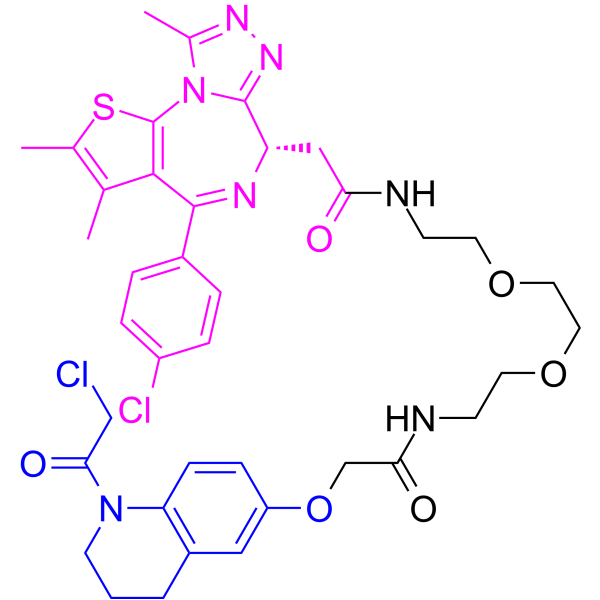 0 ImagesKB02-JQ1 is a highly selective and PROTAC-based BRD4 degrader (molecular glue), but does not degrade BRD2 or BRD3. KB02-JQ1 promotes BRD4 degradation by covalently modifying DCAF16 (E3 ligase) and can improve the durability of protein degradation in biological systems. JQ1 binds ubiquitin E3 ligase ligand KB02 via a linker to form KB02-JQ1.
-
MI-3
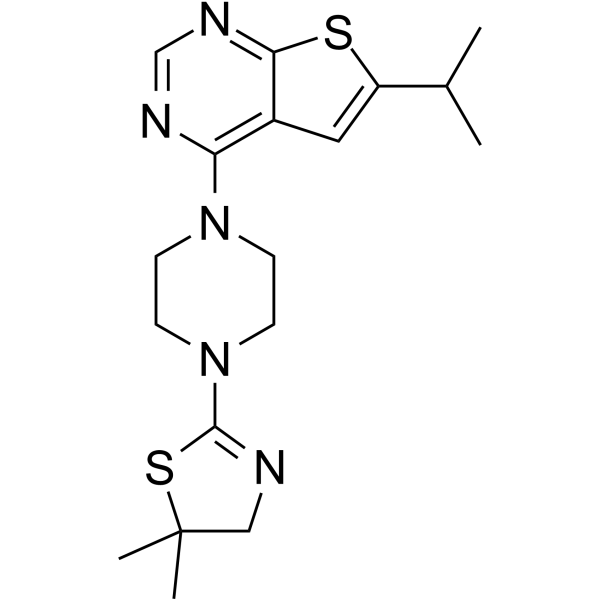 0 ImagesSynonyms: Menin-MLL inhibitor 3MI-3 (Menin-MLL inhibitor 3) is a potent and high affinity menin-MLL inhibitor with an IC50 of 648 nM and a Kd of 201 nM.
-
BRD4 degrader-3
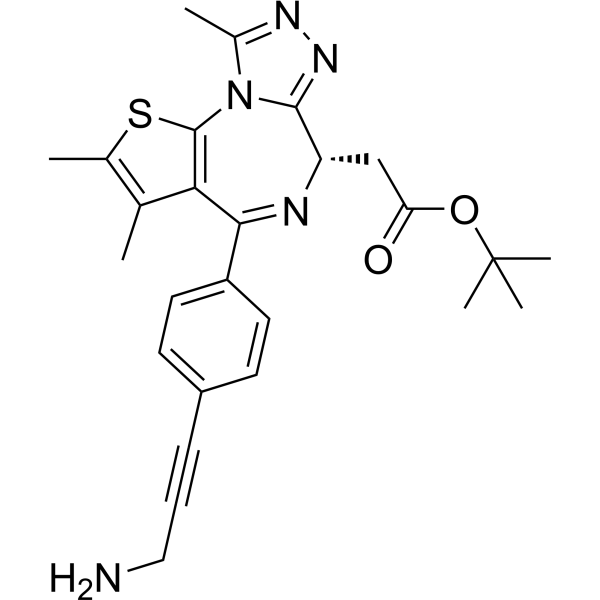 0 ImagesBRD4 degrader-3 is a molecular glue degrader targeting BRD4, with binding activity towards the BD1 and BD2 domains of BRD4. BRD4 degrader-3 regulates the activity of BRD4. BRD4 degrader-3 inhibits MYC expression in cancer cells. BRD4 degrader-3 suppresses cell proliferation. BRD4 degrader-3 can be used in research related to acute myeloid leukemia and prostate cancer.
-
MZP-54
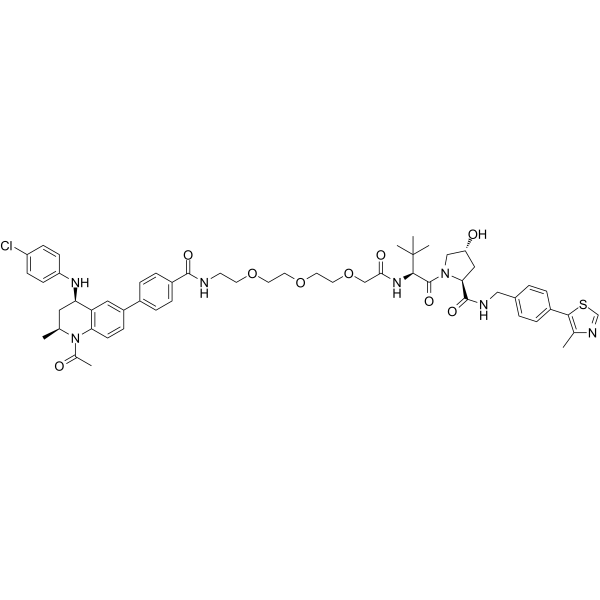 0 ImagesMZP-54 is a PROTAC degrader that selectively targets BRD3/BRD4, with a DC50 of < 0.05 μM in AML cells. MZP-54 recruits VHL to form a ternary complex, induces BRD3/BRD4 degradation via the ubiquitin-proteasome pathway, inhibits c-Myc expression, and exerts antiproliferative activity. MZP-54 can be used for the research of acute myeloid leukemia.
-
PROTAC BRD4 Degrader-8
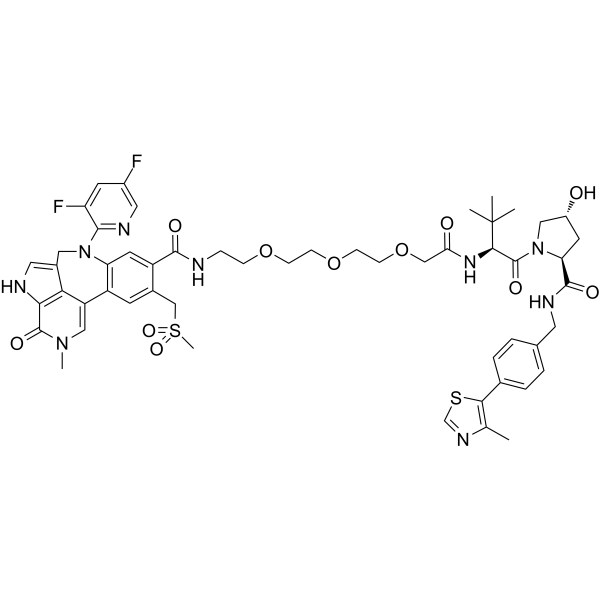 0 ImagesPROTAC BRD4 Degrader-8 is a PROTAC connected by ligands for von Hippel-Lindau and BRD4, with IC50s of 1.1 nM and 1.4 nM for BRD4 BD1 and BD2, respectively. PROTAC BRD4 Degrader-8 is capable of potently degrading the BRD4 protein in PC3 prostate cancer cells.
-
ZL0590
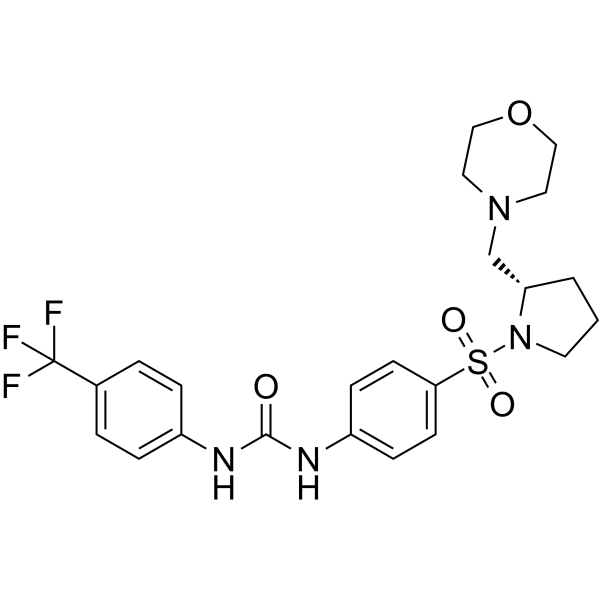 0 ImagesZL0590 is a potent, orally active BRD4 BD1-selective inhibitor with an IC50 of 90 nM for human BRD4 BD1. ZL0590 exhibits significant anti-inflammatory activities. ZL0590 can reduce mucosal inflammation in animal models of inflammatory bowel disease and restores tissue architecture. ZL0590 can be used in research on inflammatory diseases such as inflammatory bowel disease.
-
RVX-297
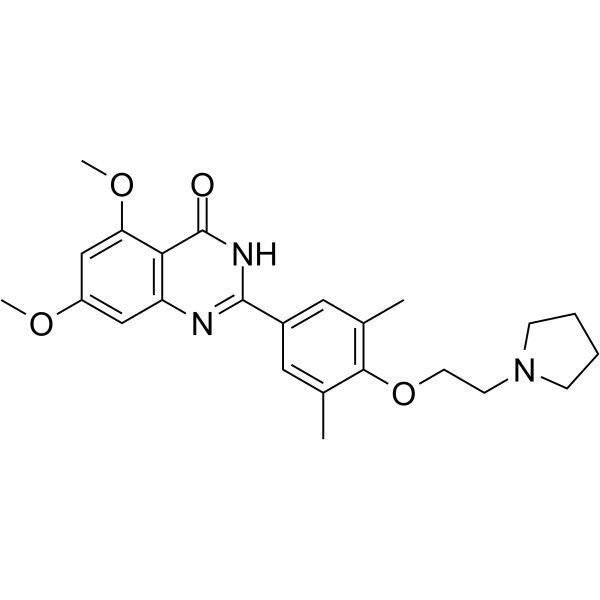 0 ImagesCat. No.: HY-114504CAS No.: 1044871-04-6RVX-297 is a potent, orally active BET bromodomain inhibitor with selectivity for BD2. RVX-297 shows IC50s of 0.08, 0.05, and 0.02 μM for BRD2(BD2), BRD3(BD2), and BRD4(BD2), respectively. RVX-297 suppresses inflammatory gene expression in multiple immune cell types. RVX-297 is effective in acute inflammation and autoimmunity models.
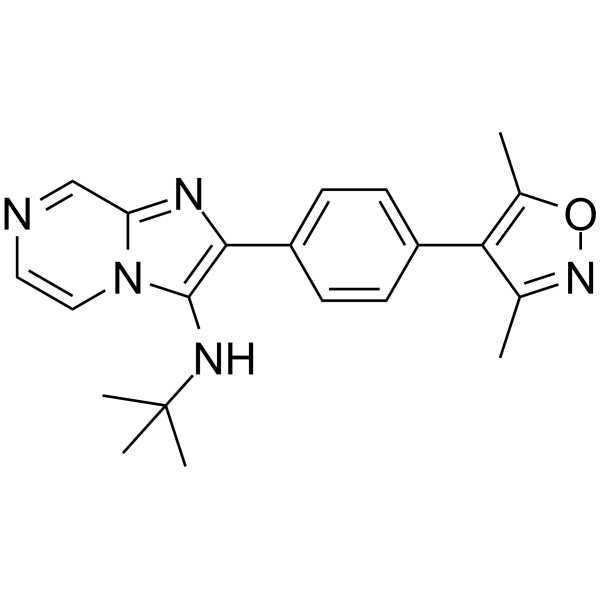
-
MMH1
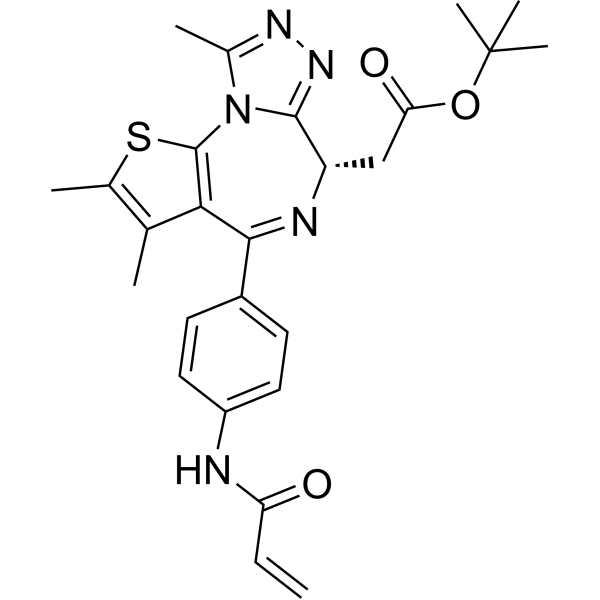 0 ImagesMMH1 is a novel BRD4 molecular glue degrader. MMH1 functions by recruiting the CUL4 DCAF16 ligase to the second bromodomain of BRD4 (BRD4 BD2). MMH1 binds to the JQ1-binding site of BRD4 BD2, acts as a template to covalently modify Cys58 of DCAF16, stabilizes the BRD4-DCAF16 ternary complex, and thereby promotes BRD4 degradation via the CRL4DCAF16 ubiquitin ligase pathway. Using BRD4 BD2 as a structural template, MMH1 covalently modifies Cys87 of GAK and induces the GAK-BRD4 BD2 interaction. Through its covalent mechanism, MMH1 exhibits sustained BRD4 degradation activity, and shows selective degradation activity for BRD4 BD2 over BRD4 BD1.
-
L1BC8
 0 ImagesL1BC8 (compound 13a) is a BRD4 PROTAC degrader with anticancer effects. L1BC8 is also a drug-linker conjugate for ADC that can be used for the synthesis of ADCs. The resulting BRD4-degrader antibody conjugates exhibit potent and antigen-dependent BRD4 degradation and antiproliferation activities in cell-based experiments.
-
Ganodermanontriol
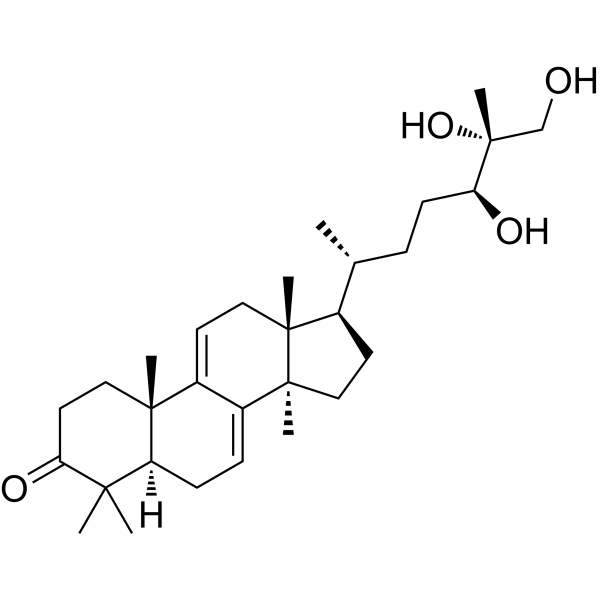 0 ImagesCat. No.: HY-N1506CAS No.: 106518-63-2Ganodermanontriol, a sterol isolated from Ganoderma lucidum, induces anti-inflammatory activity in tert-butyl hydroperoxide (t-BHP)-damaged hepatic cells through the expression of HO-1. Ganodermanontriol exhibits hepatoprotective activity.

-
BD-9136
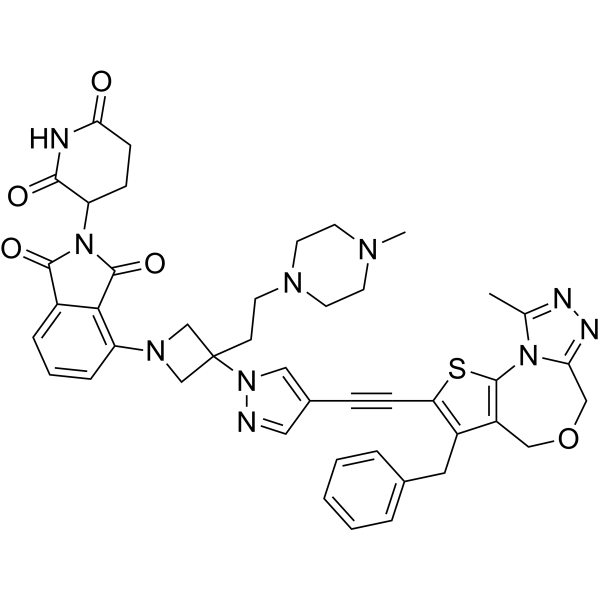 0 ImagesBD-9136 is a selective BRD4 PROTAC degrader with a DC50 of 1.2 nM, and exhibits a selectivity of ≥1000-fold over BRD2 and BRD3. BD-9136 preferentially forms a ternary complex with the BD1 domain of BRD4, and downregulates the expression of B7-H4 by disrupting the PR-P300-BRD4 axis. BD-9136 depletes BRD4 protein in tumor tissues, inhibits tumor growth, reduces B7-H4 protein expression, increases CD8+ T cell infiltration, and enhances tumor sensitivity to anti-PD-L1. Degradation of BRD4 by BD-9136 rescues the erythroid differentiation block induced by LSD1 inhibition, and transient administration restores erythroid output while retaining HbF induction. BD-9136 causes no adverse effects in mice at effective doses. BD-9136 can be used in studies related to acute myeloid leukemia, acute lymphoblastic leukemia and breast cancer.




