



JNK Activator
-
[D-Arg1,D-Phe5,D-Trp7,9,Leu11]-Substance P
![[D-Arg1,D-Phe5,D-Trp7,9,Leu11]-Substance P](https://file.medchemexpress.com/product_pic/hy-103544.gif "Click to View [D-Arg1,D-Phe5,D-Trp7,9,Leu11]-Substance P Product Detail") 0 Images
0 Images[D-Arg1,D-Phe5,D-Trp7,9,Leu11]-Substance P, a Substance P derivative, is a biased agonist toward neuropeptide and chemokine receptors. [D-Arg1,D-Phe5,D-Trp7,9,Leu11]-Substance P activates G12. [D-Arg1,D-Phe5,D-Trp7,9,Leu11]-Substance P binds to IL-8 and GRP receptors. [D-Arg1,D-Phe5,D-Trp7,9,Leu11]-Substance P inhibits ERK-2 activation, activates JNK activity. [D-Arg1,D-Phe5,D-Trp7,9,Leu11]-Substance P stimulates an increase in neutrophil migration and Ca2+ mobilization. [D-Arg1,D-Phe5,D-Trp7,9,Leu11]-Substance P is also a bombesin antagonist, and inhibits the growth of small cell lung cancer
-
Anisomycin (Standard)
 0 ImagesSynonyms: Flagecidin (Standard); Wuningmeisu C (Standard)
Anisomycin (Standard) is the analytical standard of Anisomycin. This product is intended for research and analytical applications. Anisomycin is a potent protein synthesis inhibitor which interferes with protein and DNA synthesis by inhibiting peptidyl transferase or the 80S ribosome system[1]. Anisomycin is a JNK activator, which increases phospho-JNK[2][3]. Anisomycin is a bacterial antibiotic[4].
-
MKK7-JNK activator 1
 0 Images
MKK7-JNK activator 1 (Compound 10) is a MKK7-JNK pathway activator. MKK7-JNK activator 1 effectively inhibits the proliferation and migration of MDA-MB-468 cells, induces G2/M phase arrest and caspase -dependent apoptosis (independent of ROS production). MKK7-JNK activator 1 significantly increases the levels of p-MKK7 and p-JNK, but does not affect p-ERK or p-p38. MKK7-JNK activator 1 can be used for the study of triple-negative breast cancer (TNBC).
-
Glyoxal (40% w/w in water)
 0 Images
Glyoxal (40% w/w in water) is an α-oxoaldehyde that inhibits Aldose Reductase, Glutathione Reductase, and NADPH synthase. Glyoxal (40% w/w in water) exhibits cytotoxicity, triggers oxidative stress, induces ROS accumulation, lipid peroxidation, mitochondrial membrane potential collapse, DNA damage, apoptosis, and massive production of advanced glycation end products (AGEs). Glyoxal (40% w/w in water) depletes glutathione and activates MAPK phosphorylation. It has lower toxicity as a fixative than paraformaldehyde (PFA) and serves as a precursor for the synthesis of oxalates and dietary carcinogens. Glyoxal (40% w/w in water) is suitable for research related to calcium oxalate kidney stones, diabetes, atherosclerosis, cardiovascular diseases, retinopathy, and cataracts.
-
Satratoxin H
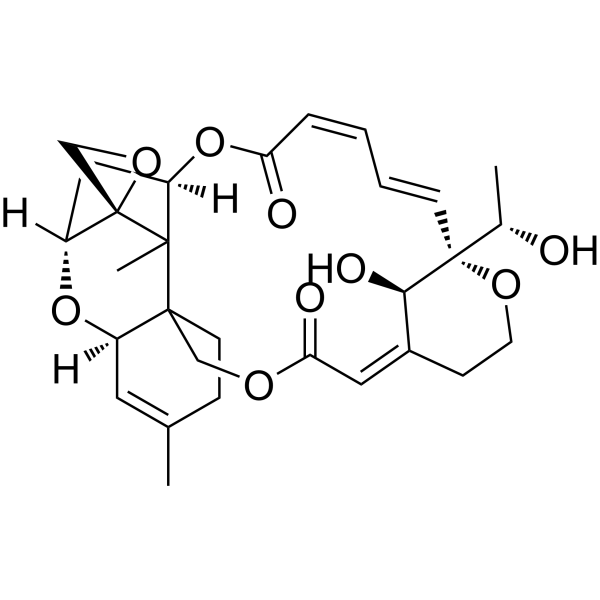 0 Images
Satratoxin H is a toxic metabolite of Stachybotrys atra. Satratoxin H induces caspase-3 and PARP cleavage via p38 MAPK and JNK pathways, stimulates JNK, ERK, and p38 MAPK phosphorylation, and activates JNK and p38 MAPK in a glutathione-sensitive manner. Satratoxin H induces DNA double-stranded breaks, apoptotic body formation, intracellular reactive oxygen species generation, and endoplasmic reticulum stress via ATF6, PERK, and IRE1 pathways. Satratoxin H can be used for the research of central nervous system disorders and melanoma.
-
p-Cresyl sulfate potassium (Standard)
 0 ImagesSynonyms: p-Tolyl sulfate potassium (Standard)
p-Cresyl sulfate (potassium) (Standard) is the analytical standard of p-Cresyl sulfate (potassium). This product is intended for research and analytical applications. p-Cresyl sulfate (p-Tolyl sulfate) potassium is a uremic toxin, that can cause renal damage and dysfunction. p-Cresyl sulfate potassium shows antiproliferation activity. p-Cresyl sulfate potassium increases the protein expression of HIF-1α and VHL, decreases the protein expression of HIF-2α. p-Cresyl sulfate potassium induces epithelial-mesenchymal transition (EMT). p-Cresyl sulfate potassium activates the JNK and p38 MAPK signaling pathways.
-
MPT0B392
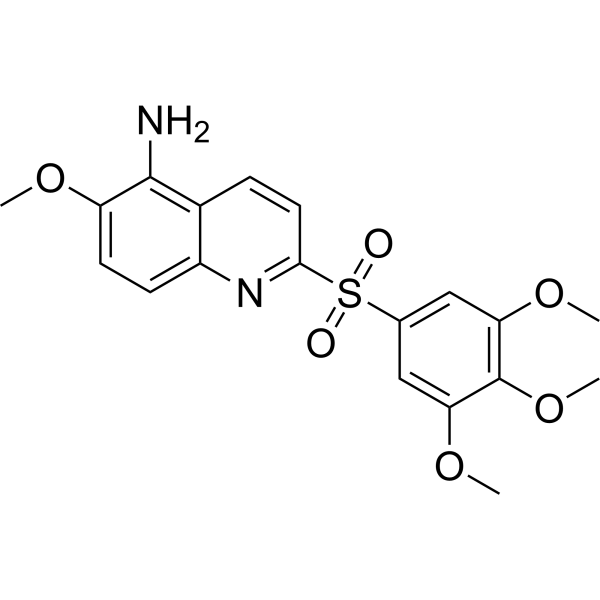 0 Images
MPT0B392, an orally active quinoline derivative, induces c-Jun N-terminal kinase (JNK) activation, leading to apoptosis. MPT0B392 inhibits tubulin polymerization and triggers induction of the mitotic arrest, followed by mitochondrial membrane potential loss and caspases cleavage by activation of JNK and ultimately leads to apoptosis. MPT0B392 is demonstrated to be a novel microtubule-depolymerizing agent and enhances the cytotoxicity of sirolimus in sirolimus-resistant acute leukemic cells and the multidrug resistant cell line.
-
PROTAC HPK1 Degrader-3
 0 ImagesCat. No.: HY-162816Purity: 98.11%
PROTAC HPK1 Degrader-3 is an orally active, PROTAC degrader that selectively targets HPK1, with a DC50 of 21.26 nM. PROTAC HPK1 Degrader-3 induces HPK1 degradation via the ubiquitin-proteasome system and forms a stable ternary complex with HPK1 and CRBN. It inhibits the SLP76 and NF-κB signaling pathways, enhances MAPK signal transduction, reverses the immunosuppressive factor-mediated inhibition of T cell cytokine secretion, and promotes the secretion of T cell immune cytokines. PROTAC HPK1 Degrader-3 suppresses tumor growth and enhances anti-PD-L1-mediated antitumor activity. It can be used in studies related to malignant tumors, such as colorectal cancer.
-
Benzanthrone
 0 Images
Benzanthrone is an immunotoxic, pro-inflammatory Photosensitizer. Benzanthrone upregulates iNOS, COX-2 and inflammatory cytokines; activates ERK1/2, p38, JNK, AP-1 and NF-κB; inhibits Nrf2; and induces oxidative stress and DNA damage. Upon radiation exposure, Benzanthrone generates singlet oxygen and superoxide anion radicals, induces photohemolysis and lipid peroxidation, and alters the levels of skin xenobiotic enzymes. Benzanthrone exhibits differential genotoxicity in different cell lines. Benzanthrone possesses skin tumor-initiating and promoting activities. Benzanthrone can be used in skin tumor-related studies.
-
Fluazinam (Standard)
 0 Images
Fluazinam (Standard) is the analytical standard of Fluazinam (HY-B1839). This product is intended for research and analytical applications. Fluazinam is a broad spectrum pyridinamine fungal inhibitor. Fluazinam is an orally active dinitroaniline fungicide. Fluazinam induces phosphorylation of JNK, activates p38 pathway, decreases Bcl-2, activates caspase-3, decreases complex I activity, increases Autophagy and Apoptosis. Fluazinam has strong antifungal activity against F. fujikuroi and B. maydis. Fluazinam has a negative impact on Brachydanio rerio and worker bees.
-
(E)-2-Hexadecenal
 0 ImagesSynonyms: 16:1 Aldehyde; trans-2-Hexadecenal
(E)-2-Hexadecenal (trans-2-Hexadecenal) is an MLK3 activator that induces cytoskeletal remodeling, leading to cell rounding, detachment, and ultimately apoptosis in human and mouse cells. (E)-2-Hexadecenal activates the MLK3 signaling pathway, phosphorylating MKK4/7 and JNK, subsequently activating downstream targets of JNK, such as c-Jun phosphorylation, cytochrome c release, Bax activation, Bid cleavage, and Bim translocation to mitochondria. (E)-2-Hexadecenal has potential applications in research related to sphingolipid signaling pathways.
-
OSM-SMI-8
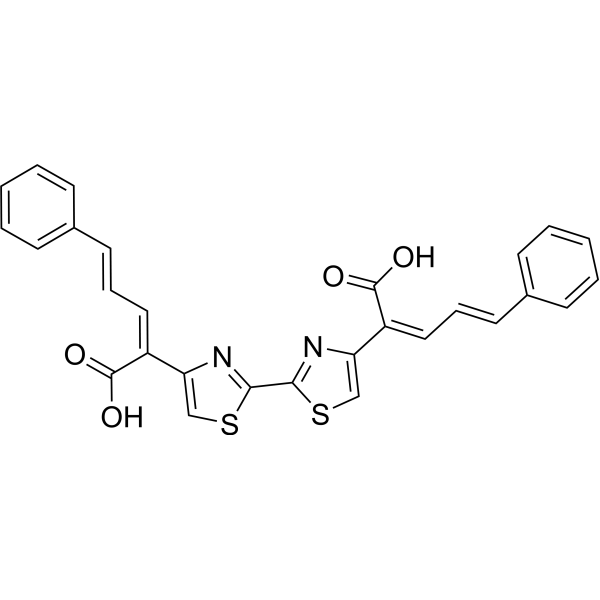 0 ImagesCat. No.: HY-148693CAS No.: 1689690-20-7Synonyms: NSC642624
-
Triphenyl phosphate-d15
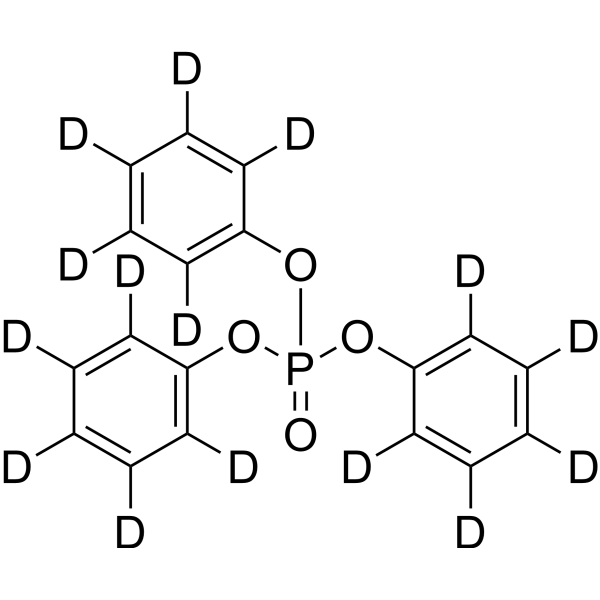 0 ImagesSynonyms: Celluflex TPP-d15; DHPF 005-d15; Disflamol TP-d15; Disflamoll TP-d15; NSC 57868-d15; Phenyl phosphate ((PhO)3PO)-d15; Phoscon FR 903N-d15
Triphenyl phosphate-d15 is the deuterium labeled Triphenyl phosphate. Triphenyl phosphate is an orally active, blood-brain barrier-permeable aryl organophosphate flame retardant and endocrine disruptor. Triphenyl phosphate disrupts mitochondrial dynamic balance through oxidative stress, induces excessive mitophagy and apoptosis, and ultimately leads to myocardial fibrosis. In the brain, Triphenyl phosphate activates the NF-κB inflammatory pathway by disrupting the gut microbiota, alters tryptophan metabolism and elevates neurotoxins, thereby inducing anxiety- and depression-like behaviors. In the skeletal and reproductive systems, Triphenyl phosphate inhibits osteoblast differentiation and induces germ cell apoptosis by suppressing the MAPK/ERK pathway and activating the JNK signal, respectively. In adipose and placental tissues, Triphenyl phosphate promotes lipid accumulation by activating the PI3K/AKT-PPARγ axis, and disrupts placental metabolism via the MAOA/ROS/NF-κB cascade, impairing neurodevelopment of offspring.
-
Oncrasin-60
 0 ImagesSynonyms: NSC-741909
-
CMIT/MIT (2.0-2.5% in water)
 0 ImagesCat. No.: HY-W017982ACAS No.: 55965-84-9Synonyms: CMI/MI (2.0-2.5% in water)
CMIT/MIT (2.0-2.5% in water) (CMI/MI (2.0-2.5% in water)) is a mixture of CMIT and MIT, and is also a preservative and skin sensitizer. CMIT/MIT (2.0-2.5% in water) increases the levels of phosphorylated ERK1/2, p38, JNK1/2, p53, p21 and Bax, decreases the level of Bcl-2, and activates the Nrf-2/HO-1 signaling pathway. CMIT/MIT (2.0-2.5% in water) increases LDH release and lipid peroxidation levels, impairs antioxidant defense capacity, promotes pro-inflammatory cytokine release, induces apoptosis, triggers cell cycle arrest, exhibits neurotoxicity in neuroblastoma cells, and causes dysregulation of Th2/Th17 immune responses. CMIT/MIT (2.0-2.5% in water) can be used in studies related to allergy, atopic dermatitis and lung injury.
-
IDB-001
 0 Images
IDB-001 is a human ribosomal peptidyl transferase center (PTC) inhibitor that induces conformational changes and blocks translational elongation in specific sequence contexts through complementary interactions with Asp/Glu residues in nascent polypeptides. IDB-001 preferentially stalls ribosomes at positions containing acidic peptide motifs, thereby inhibiting cancer cell proliferation, and activates the integrated stress response via eIF2α phosphorylation at high concentrations. In addition, IDB-001 mildly triggers ribotoxic stress responses through phosphorylation of JNK and p38. IDB-001 has been applied to mechanistic studies of triple-negative breast cancer.
-
(E/Z)-OSM-SMI-8
 0 ImagesCat. No.: HY-148693ASynonyms: (E/Z)-NSC642624
(E/Z)-OSM-SMI-8 ((E/Z)-NSC642624) is the racemate of OSM-SMI-8 (HY-148693). OSM-SMI-8 is an oncostatin M (OSM) inhibitor with a pKi of 44.82 nM against human targets. OSM-SMI-8 inhibits the activation of STAT3, JNK, ERK 42/44 and AKT signaling pathways induced by OSM. OSM-SMI-8 is applicable to research related to cancer metastasis and Crohn's disease.
-
Procyanidin C2
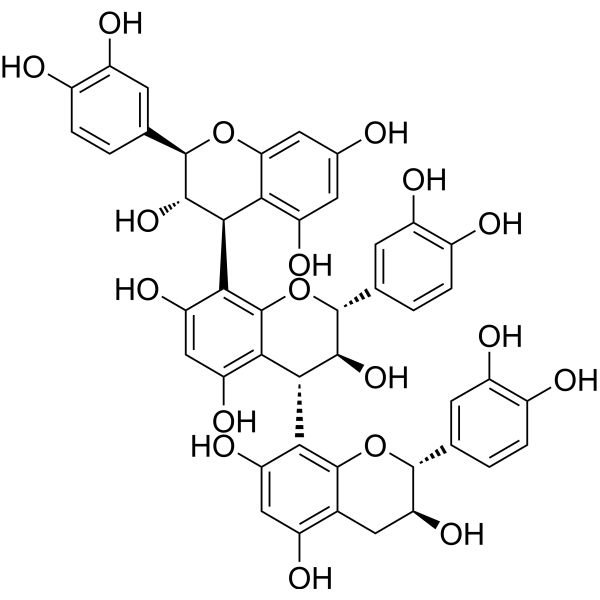 0 ImagesCat. No.: HY-N7521CAS No.: 37064-31-6Synonyms: Procyanidine C2
Procyanidin C2 (Procyanidine C2) is a lipid metabolism regulator and antioxidant with free radical scavenging activity. Procyanidin C2 down-regulates ACC, SREBP-1c, FAS, SCD-1 and PPARγ. Procyanidin C2 increases the level of phosphorylated AMPKα and inhibits the level of phosphorylated mTOR. Procyanidin C2 reduces lipid accumulation, alleviates oxidative stress, enhances fatty acid oxidation and improves mitochondrial function. Procyanidin C2 can be used in the research of non-alcoholic fatty liver disease.
-
Ro 31-8220
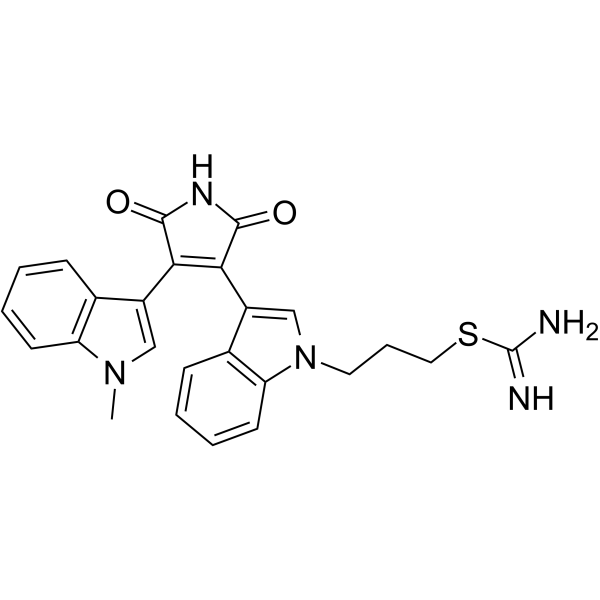 0 ImagesCat. No.: HY-13866ACAS No.: 125314-64-9Synonyms: Bisindolylmaleimide IX
Ro 31-8220 is a potent PKC inhibitor, with IC50s of 5, 24, 14, 27, 24 and 23 nM for PKCα, PKCβI, PKCβII, PKCγ, PKCε and rat brain PKC, respectively. Ro 31-8220 also significantly inhibits MAPKAP-K1b, MSK1, S6K1 and GSK3β (IC50s, 3, 8, 15, and 38 nM, respectively), with no effect on MKK3, MKK4, MKK6 and MKK7. Ro 31-8220 can also inhibit the expression of MKP-1, induce the expression of c-Jun, and activate JNK, and these effects possess pharmacological properties independent of PKC.
-
DpC hydrochloride
 0 ImagesCat. No.: HY-114243ACAS No.: 1382469-40-0
DpC hydrochloride is a selective, orally active iron chelator with anticancer activity. DpC hydrochloride acts on signaling pathway-related targets such as JNK, NF-κB, and its activity is competitively inhibited by another iron chelator Dp44mT (HY-18973). By chelating intracellular iron and copper ions in tumor cells to form redox-active complexes, DpC hydrochloride induces oxidative stress, activates the JNK, NF-κB pathways and downregulates IκBα, upregulates the expressions of neuroglobin and cytoglobin, activates caspase 3/9 to induce tumor cell apoptosis. It also overcomes P-glycoprotein-mediated multidrug resistance through a lysosome-targeting mechanism, and exhibits broad-spectrum synergistic effects when combined with various chemotherapeutic agents. DpC hydrochloride inhibits tumor metastasis and increases TNF-α levels in the tumor microenvironment to enhance endogenous immune responses. DpC hydrochloride is applicable to the research of various malignancies including neuroblastoma, pancreatic cancer, prostate cancer, lung cancer, and breast cancer.



