



Keap1-Nrf2 Inhibitor
-
Keap1-Nrf2-IN-23
 0 ImagesCat. No.: HY-168161CAS No.: 2771115-65-0
Keap1-Nrf2-IN-23 (compound 56) is an inhibitor of the Keap1–Nrf2 PPI (IC50=16.0 nM). Keap1-Nrf2-IN-23 binds to Keap1 with a Kd value of 3.07 nM. Keap1-Nrf2-IN-23 has oral activity.
-
Keap1-Nrf2 PPI-IN-2
 0 ImagesCat. No.: HY-189433
Keap1-Nrf2 PPI-IN-2 is a Keap1-Nrf2 PPI inhibitor with an EC50 of 14.2 μM. Keap1-Nrf2 PPI-IN-2 covalently binds to Keap1 cysteine residues through its electrophilic itaconate moiety, disrupts the Keap1-Nrf2 protein-protein interaction, releases Nrf2, and promotes its nuclear translocation and antioxidant gene expression, thereby reducing ROS and inhibiting IL-13 production. Keap1-Nrf2 PPI-IN-2 can be used for research on atopic dermatitis.
-
Keap1-Nrf2-IN-19
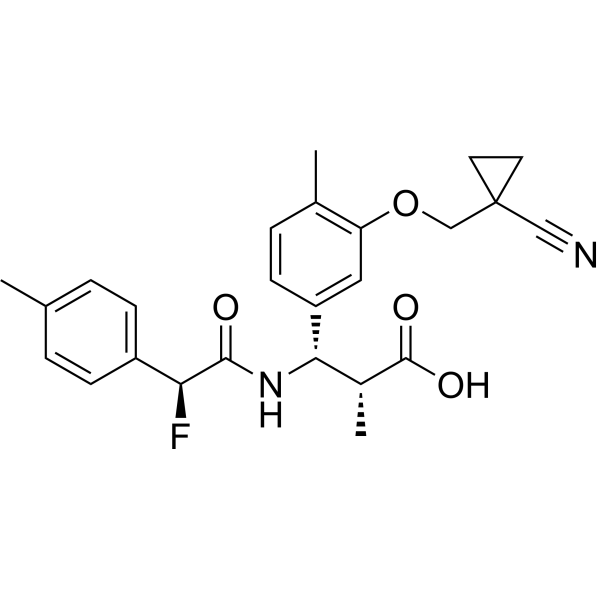 0 ImagesCat. No.: HY-157929
Keap1-Nrf2-IN-19 (compound 33) is an oral active Keap1-Nrf2 protein–protein interaction (PPI) inhibitor with the Kd value of 0.0014 μM. Keap1-Nrf2-IN-19 exhibits less than 50% inhibition at 30 μM against hERG and 10 μM against CYPs.
-
Keap1-IN-1
 0 ImagesCat. No.: HY-170301
Keap1-IN-1 (Compound 27) is the inhibitor for Keap1, that covalently modifys the Cys151 site in the BTB domain of KEAP1, and interfers with the interaction between Keap-Nrf. Keap1-IN-1 upregulates the mRNA expression of the antioxidant stress element (ARE)-dependent gene NQO1 with an EC50 of 160 nM. Keap1-IN-1 exhibits cytotoxicity in cell U2OS with an EC50 of 527 nM.
-
Keap1-Nrf2-IN-27
 0 ImagesCat. No.: HY-173187
Keap1-Nrf2-IN-27 (compound 1C) is a inhibitor of Keap1-Nrf2 protein-protein interaction (PPI) with KD2 value of 0.119 μM. Keap1-Nrf2-IN-27 suppresses the expression of pro-inflammatory cytokine TNF-α and IL-6 in the LPS-induced RAW264.7 cell model.
-
Anticancer agent 309
 0 ImagesCat. No.: HY-182055
Anticancer agent 309 (Compound HZ-1) is an anticancer agent and G-quadruplex binder, with Kd values of 2.46 μM and 1.61 μM for c-Myc G4 and KRAS G4, respectively. Anticancer agent 309 promotes the formation of intranuclear G4. Anticancer agent 309 shows higher selectivity for parallel G4 than for non-parallel G4. Anticancer agent 309 inhibits the NRF2 signaling pathway and reduces the expression of XCT and GPX4. Anticancer agent 309 induces Ferroptosis, Apoptosis and immunogenic cell death in cells. Anticancer agent 309 exerts antitumor efficacy against breast cancer. Anticancer agent 309 is applicable for the research of breast cancer.
-
GSK3227634
 0 ImagesCat. No.: HY-189367CAS No.: 1799977-30-2
GSK3227634 is a non-covalent inhibitor of the KEAP1-NRF2 protein-protein interaction. GSK3227634 binds to the Kelch domain of KEAP1, disrupts the KEAP1-NRF2 protein-protein interaction, and thereby activates the NRF2 antioxidant cytoprotective pathway. In a rat model of acute lung injury, intratracheal administration of GSK3227634 dose-dependently upregulates the expression of NRF2 downstream target genes such as NQO1, TXNRD1, and SRXN1, and elevates glutathione levels in lung tissue. GSK3227634 can be used for research on chronic obstructive pulmonary disease.
-
Keap1-Nrf2-IN-3
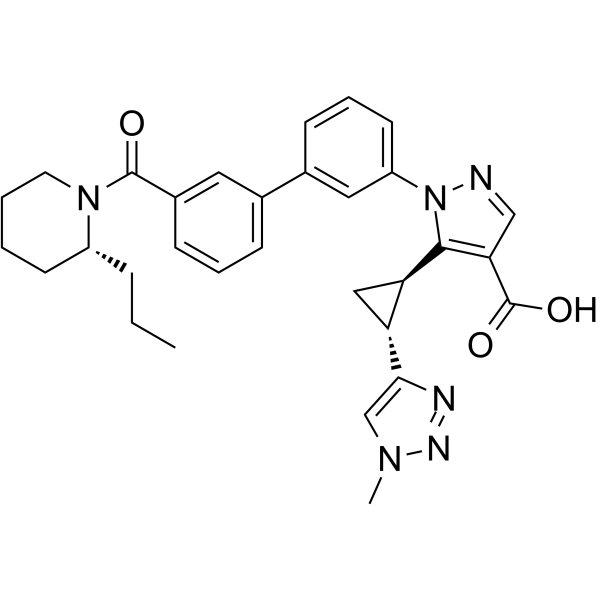 0 ImagesCat. No.: HY-139862CAS No.: 2095066-47-8
Keap1-Nrf2-IN-3 is a KEAP1:NRF2 protein−protein interaction inhibitor, and with a Kd value of 2.5 nM for KEAP1 protein.
-
SG16
 0 ImagesCat. No.: HY-172598CAS No.: 3075750-60-3Synonyms: Keap1-Nrf2-IN-28
SG16 (Keap1-Nrf2-IN-28) is an orally active Keap1-Nrf2 inhibitor. SG16 disrupts the binding of Keap1 to Nrf2, promotes the nuclear translocation of Nrf2, upregulates the downstream antioxidant proteins HO-1 and GCLM, and simultaneously inhibits microglial overactivation and proinflammatory cytokine secretion. By activating the Nrf2 pathway, SG16 can be used in studies on oxidative stress, ischemic stroke and acute liver injury.
-
Ferroptosis inducer-13
 0 ImagesCat. No.: HY-179481CAS No.: 3085517-19-4
Ferroptosis inducer-13 is a 5′-prenylated chalcone derivative that effectively induces ferroptosis in human non-small cell lung cancer (NSCLC) cells by altering the activity of the Nrf2/xCT/GPX4 pathway. Ferroptosis inducer-13 exhibits potent anti-proliferative effects in vitro, and inhibits tumour growth in a NSCLC mouse model. Ferroptosis inducer-13 can be used for NSCLC research.
-
HDAC-IN-77
 0 ImagesCat. No.: HY-169014
HDAC-IN-77 (HL-5s) is an HDAC inhibitor. HDAC-IN-77 can induce ferroptosis and inhibit the Nrf2/HO-1 signaling pathway. HDAC-IN-77 can be used in cancer research.
-
Keap1-Nrf2-IN-5
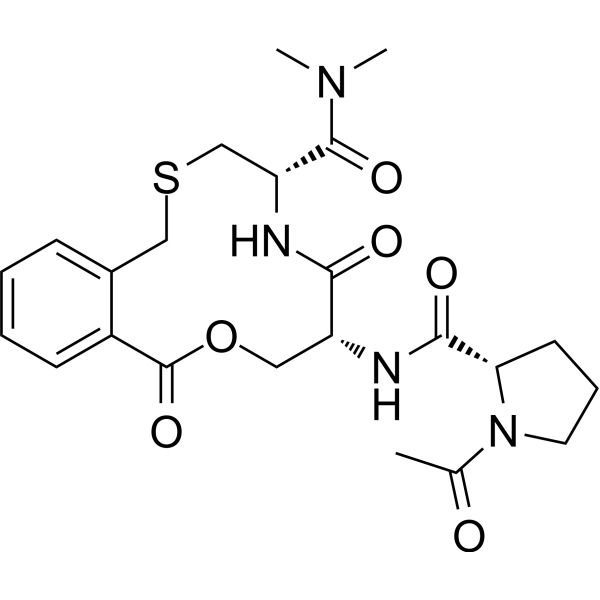 0 ImagesCat. No.: HY-143892CAS No.: 2696272-70-3
Keap1-Nrf2-IN-5 (compound 1) is a potent Keap1-Nrf2 PPI (Keap1-Nrf2 protein−protein interaction) inhibitor with an IC50 of 4.1 µM, Kd of 3.7 µM.
-
Citraconic acid (Standard)
 0 ImagesSynonyms: Methylmaleic acid (Standard); Citraconate (Standard)
Citraconic acid (Methylmaleic acid) (Standard) is the analytical standard of Citraconic acid (HY-113298). This product is intended for research and analytical applications. Citraconic acid is an orally active inhibitor targeting the NLRP3 inflammasome and Keap1-Nrf2 pathway. Citraconic acid reduces reactive oxygen species (ROS) generation by inhibiting succinate dehydrogenase (SDH) activity. Citraconic acid also modifies the conformation of Keap1 protein, relieves its inhibition of Nrf2, promotes antioxidant gene expression, and inhibits NLRP3 activation and the release of pro-inflammatory factors such as IL-1β and IL-18. Citraconic acid has anti-inflammatory and antioxidant activities, can reduce oxidative stress and cell pyroptosis, improve tissue damage, and can be used for the research of inflammation-related diseases such as acute renal ischemia-reperfusion injury. Citraconic acid is an isomer of Itaconic acid (HY-Y052).
-
Keap1-Nrf2-IN-18
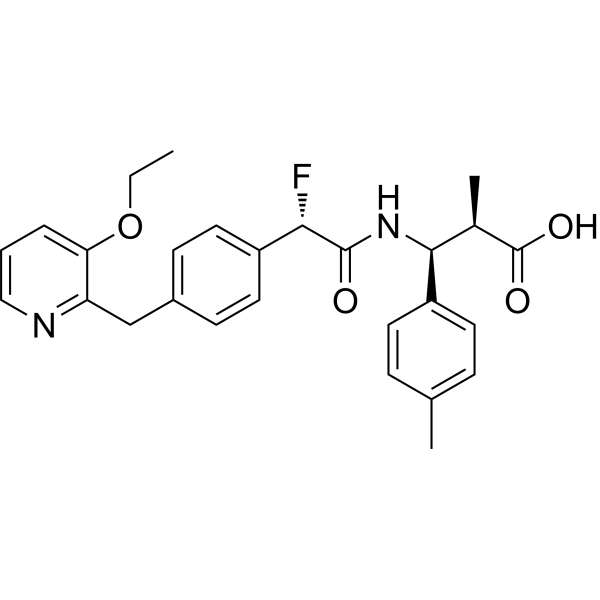 0 ImagesCat. No.: HY-157928
Keap1-Nrf2-IN-18 (Compound 22) is an orally active Keap1-Nrf2 protein-protein interaction (PPI) inhibitor with good pharmacokinetics (PK) profiles and more potent in vivo activities in rats. Keap1-Nrf2-IN-18 has the strongest inhibitory activity in structure−activity relationship (SAR) study (KD = 0.0029 μM).
-
AChE-IN-105
 0 ImagesCat. No.: HY-180946CAS No.: 2678601-07-3
AChE-IN-105 (Compound C5) is a potent, mixed AChE inhibitor with an IC50 of 5.02 μM. AChE-IN-105 scavenges ROS, decreases Hydrogen peroxide-induced Caspase-3 activation, reduces activity of the Nrf2-ARE pathway. AChE-IN-105 prevents memory impairments in the Scopolamine (HY-N0296)-induced cognitive dysfunction zebrafish model. AChE-IN-105 has potent antioxidant activity. AChE-IN-105 can be used in the research of Alzheimer's disease.
-
PRL-295
 0 ImagesCat. No.: HY-171035CAS No.: 2377770-85-7
PRL-295 is an orally active inhibitor targeting Keap1-Nrf2 interaction. PRL-295 increases the thermal stability of Keap1 and disrupts its interaction with Nrf2, thereby activating the Nrf2-dependent transcriptional target NAD(P)H:quinone oxidoreductase 1 (NQO1). PRL-295 protects against Acetaminophen (HY-66005)-induced liver injury in mice.
-
Cephaeline hydrochloride
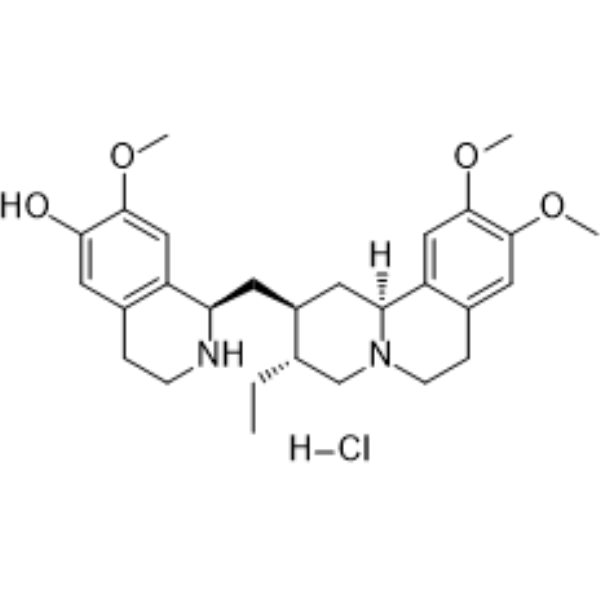 0 ImagesSynonyms: (-)-Cephaeline hydrochloride; NSC 32944 monohydrochloride
Cephaeline hydrochloride ((-)-Cephaeline (hydrochloride); NSC 32944 (monohydrochloride)) is a ferroptosis inducer, with broad-spectrum anticancer and antiviral activities. Cephaeline hydrochloride induces Ferroptosis by upregulating p53, inhibiting NRF2, activating ULK3, downregulating the expressions of SLC7A11 and GPX4 in a p53-dependent manner, reducing GSH and mitochondrial membrane potential, and increasing lipid peroxidation and iron accumulation. Cephaeline hydrochloride inhibits cancer cell proliferation, migration and tumor growth. Cephaeline hydrochloride inhibits Ebola virus (EBOV) VLP entry and infection, with IC50 values of 3.27 μM and 22.18 μM respectively; it also inhibits Zika virus (ZIKV) NS5 RdRp activity (IC50 = 976 nM), and binds to severe acute respiratory syndrome coronavirus 2 (SARS-CoV-2) RdRp and N protein, with Kd values of 8.9 μM and 53.8 μM respectively. Cephaeline hydrochloride can be used in studies related to breast cancer, lung cancer, COVID-19, EBOV and ZIKV infections.
-
OXPHOS-IN-2
 0 ImagesCat. No.: HY-176284
OXPHOS-IN-2 is an orally active OXPHOS inhibitor. OXPHOS-IN-2 exhibits potent inhibitory activity in PC9 (IC50 = 12.3 nM) and Bxpc-3 cells (IC50 = 250 nM in glucose medium, IC50 = 17.5 nM in galactose medium). OXPHOS-IN-2 decreases the NADH/NAD+ ratio and reduces ATP levels. OXPHOS-IN-2 induces tumor cells apoptosis by activating reactive oxygen species (ROS) and downregulating the level of Nrf2. OXPHOS-IN-2 can be used for research on cancer such as non-small cell lung cancer and pancreatic cancer.
-
CX-Se13
 0 ImagesCat. No.: HY-187219
CX-Se13 is an orally active pulmonary fibrosis inhibitor with anti-inflammatory and antioxidant activities. CX-Se13 regulates the Keap1/Nrf2/HO-1/NQO1, YAP/TAZ-TEAD, NF-κB p65 and TGF-β/Smads signaling pathways. CX-Se13 activates the cellular antioxidant defense system, restores redox balance, alleviates inflammatory responses, reduces collagen deposition, decreases pro-inflammatory cytokine levels and inhibits pathological progression. CX-Se13 can be used in studies related to pulmonary fibrosis.
-
Cephaeline dihydrobromide
 0 ImagesSynonyms: (-)-Cephaeline dihydrobromide; NSC 32944 dihydrobromide
Cephaeline dihydrobromide ((-)-Cephaeline dihydrobromide; NSC 32944 dihydrobromide) is a ferroptosis inducer, with broad-spectrum anticancer and antiviral activities. Cephaeline dihydrobromide induces ferroptosis (Ferroptosis) by upregulating p53, inhibiting NRF2, activating ULK3, downregulating the expressions of SLC7A11 and GPX4 in a p53-dependent manner, reducing GSH and mitochondrial membrane potential, and increasing lipid peroxidation and iron accumulation. Cephaeline dihydrobromide inhibits cancer cell proliferation, migration and tumor growth. Cephaeline dihydrobromide inhibits Ebola virus (EBOV) VLP entry and infection, with IC50 values of 3.27 μM and 22.18 μM respectively; it also inhibits Zika virus (ZIKV) NS5 RdRp activity (IC50 = 976 nM), and binds to severe acute respiratory syndrome coronavirus 2 (SARS-CoV-2) RdRp and N protein, with Kd values of 8.9 μM and 53.8 μM respectively. Cephaeline dihydrobromide can be used in studies related to breast cancer, lung cancer, COVID-19, EBOV and ZIKV infections.



