



MDM-2/p53 p53 Activator
-
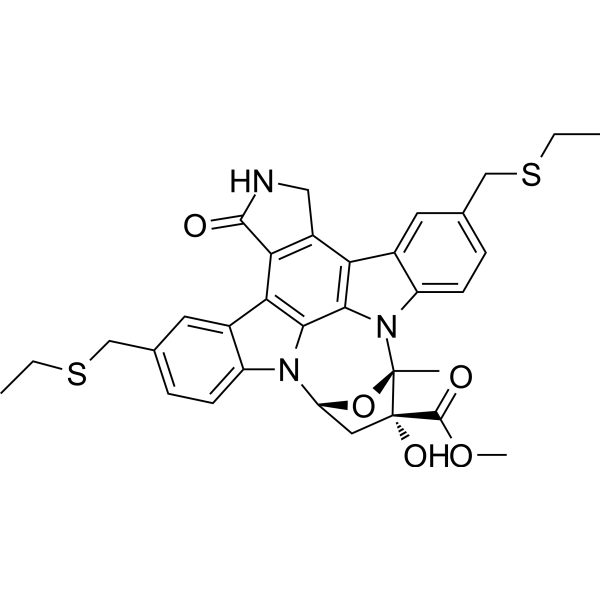
CEP-1347
 0 ImagesSynonyms: KT7515
CEP-1347 is an inhibitor of the JNK/SAPK pathway with neuroprotective effects. CEP-1347 blocks JNK1 activation induced by members of the mixed lineage kinase (MLK) family (MLK3, MLK2, MLK1, dual leucine zipper kinase, and leucine zipper kinase). As an inhibitor of MDM4, CEP-1347 can more effectively inhibit the growth of glioma cells expressing wild-type p53.
-
Methyl methanesulfonate (Standard)
 0 Images
Methyl methanesulfonate (Standard) is the analytical standard of Methyl methanesulfonate (HY-W004702). This product is intended for research and analytical applications. Methyl methanesulfonate is an alkylating agent which transfers methyl groups, and induces DNA damage. Methyl methanesulfonate is a biochemical reagent that can be used as a biological material or organic compound for life science related research.
-
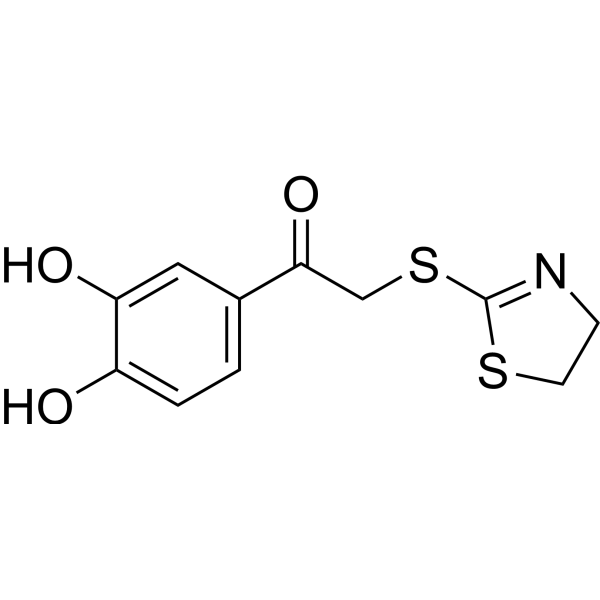
RETRA
 0 Images
RETRA is a RIPK1/RIPK3/MLKL and p73 activator. RETRA mediates plasma membrane disruption, induces ROS accumulation, triggers early mitochondrial hyperpolarization, and synergistically drives necroptosis. RETRA inhibits cancer cells carrying mutant p53 via a p73-dependent salvage pathway. RETRA can be used in research related to cervical cancer and cancers with mutant p53.
-
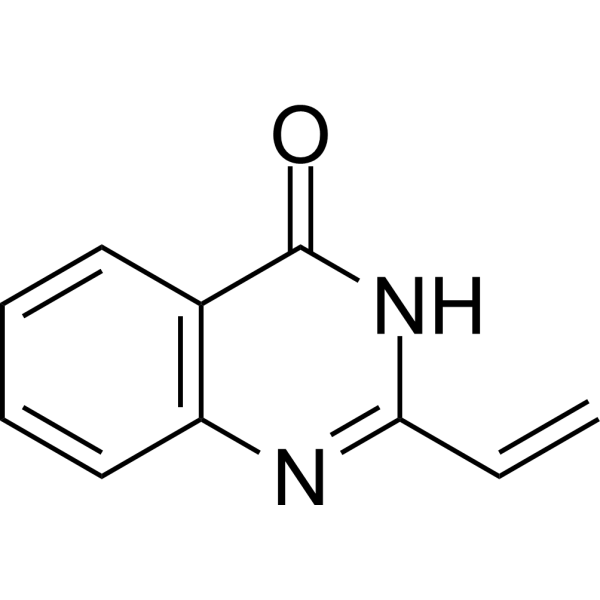
AurAP14
 0 Images
AurAP14 is an Aurora A PROTAC degrader (DC50 = 120 nM). AurAP14 can form a stable ternary complex with Aurora A kinase and HSP90, recruiting cullin family E3 ubiquitin ligases and MDM2 to mediate the ubiquitination and proteasome degradation of Aurora A kinase. AurAP14 increases p53 levels and decreases C-MYC levels; AurAP14 induces Apoptosis. AurAP14 can be used in the study of non-small cell lung cancer.
-
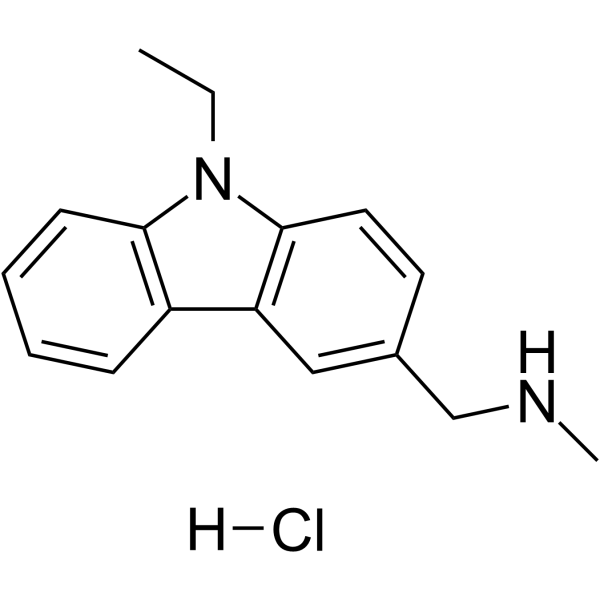
PhiKan 083 hydrochloride
 0 Images
PhiKan 083 hydrochloride is a carbazole derivative, which binds to the surface cavity and stabilizes Y220C (a p53 mutant), with a Kd of 167 μM, and a relative binding affinity (Kd) of 150 μM in Ln229 cells.
-
APE1-IN-2
 0 Images
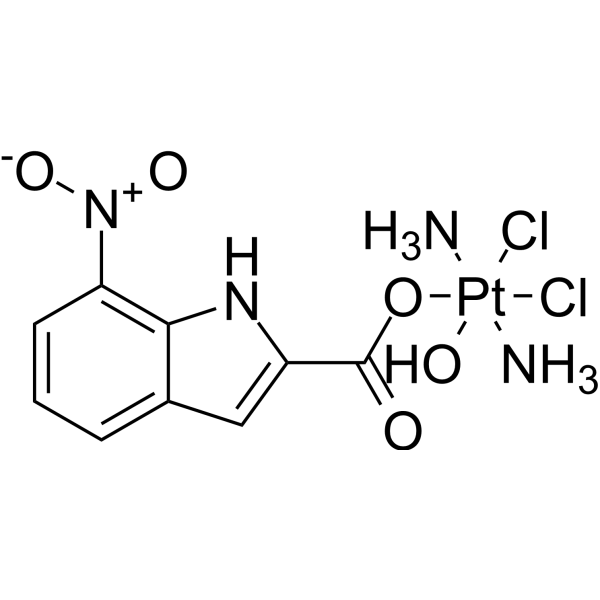
APE1-IN-2 (compound AP1) is a Pt(IV) proagent, targeting a critical BER protein, apurinic/apyrimidinic endonuclease 1 (APE1). APE1-IN-2 shows anticancer activity. APE1-IN-2 induces intracellular accumulation of platinum and activates DNA damage response and apoptosis signals.
-
Diosbulbin B
 0 Images
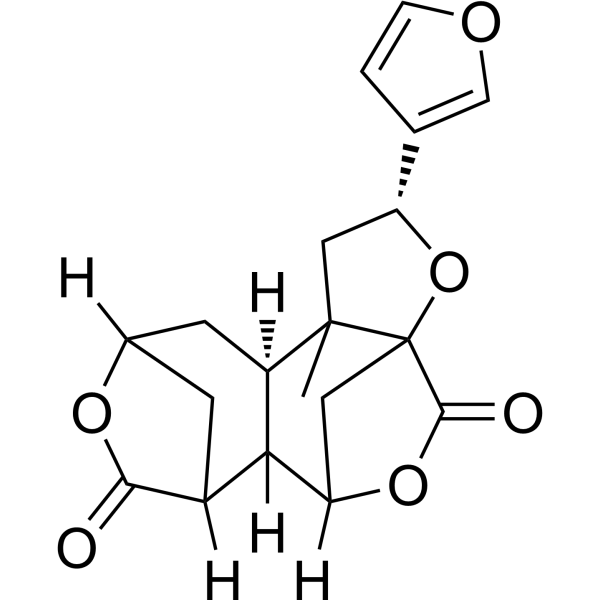
Diosbulbin B, a diterpene lactone, is an anticancer agent. Diosbulbin B is an orally active component of Dioscorea. bulbifera L. Diosbulbin B can inhibit cell proliferation, induce G0/G1 phase arrest and apoptosis. Diosbulbin B can induce autophagy and mitochondrial dysfunction. Diosbulbin B can induce liver injury. Diosbulbin B can be used for the research of cancer, such as non-small cell lung cancer (NSCLC).
-
DPBQ
 0 Images
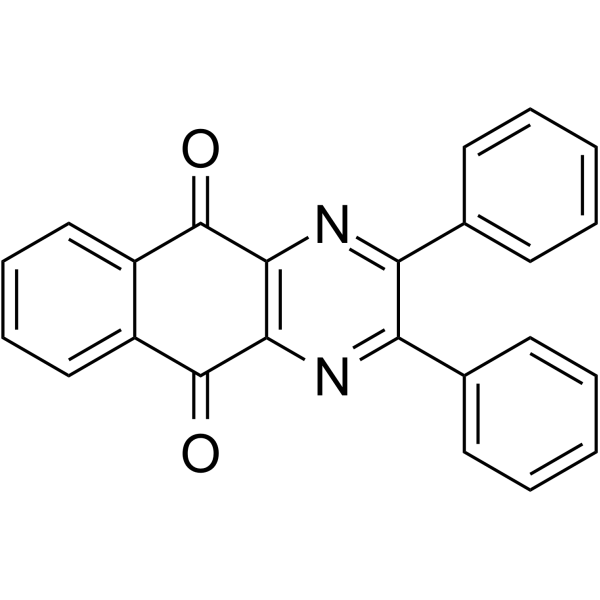
DPBQ activates p53 and triggers apoptosis in a polyploid-specific manner, but does not inhibit topoisomerase or bind DNA. DPBQ elicits expression and phosphorylation of p53 and this effect is specific to tetraploid cells.
-
Triglycidyl isocyanurate
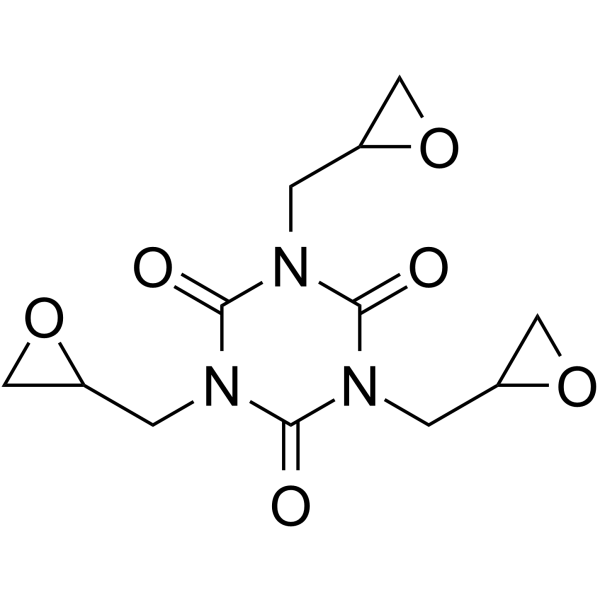 0 ImagesSynonyms: TGIC
Triglycidyl isocyanurate (TGIC; Teroxirone) is a triazene triepoxide with antiangiogenic and antineoplastic activities. Triglycidyl isocyanurate inhibits the growth of non-small-cell-lung cancer cells via?p53 activation. Triglycidyl isocyanurate induces cell apoptosis. Triglycidyl isocyanurate can be used for cancer research.
-
Chitosan oligosaccharide (MW 2000)
 0 ImagesCat. No.: HY-112108DSynonyms: COS (MW 2000)
Chitosan oligosaccharide (MW 2000) is a natural oligomer derived from chitosan, with a molecular weight of 2000 Da. Chitosan oligosaccharide (MW 2000∼3000 Da) activates the P53, MAPK and NF-κB signaling pathways. As an ideal immunopotentiator, chitosan oligosaccharide is mainly used as a feed additive in aquaculture.
-
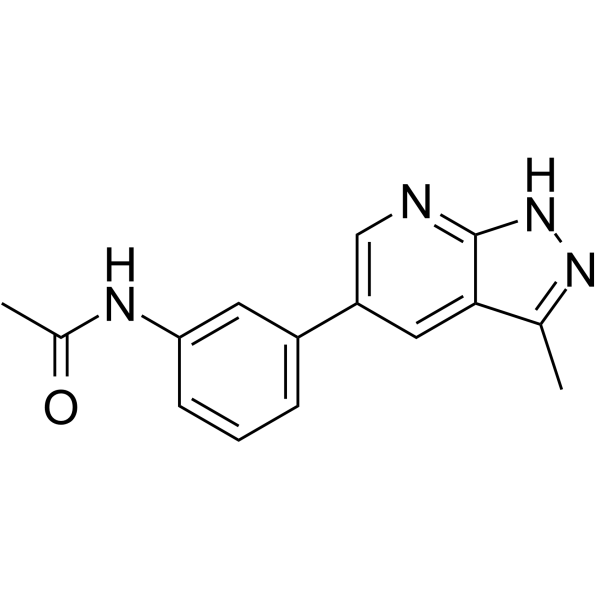
LNS8801
 0 ImagesCat. No.: HY-173178CAS No.: 925419-55-2
LNS8801 is an orally active GPER activator with tumor suppressor activity. LNS8801 mediates suppression of cancer via GPER activation, with activity dependent on GPER expression. LNS8801 suppresses cancer growth in preclinical models. LNS8801 can be used for the research of cancer (including melanoma, pancreatic ductal adenocarcinoma, non-small cell lung cancer, leukemias, colon carcinomas).
-
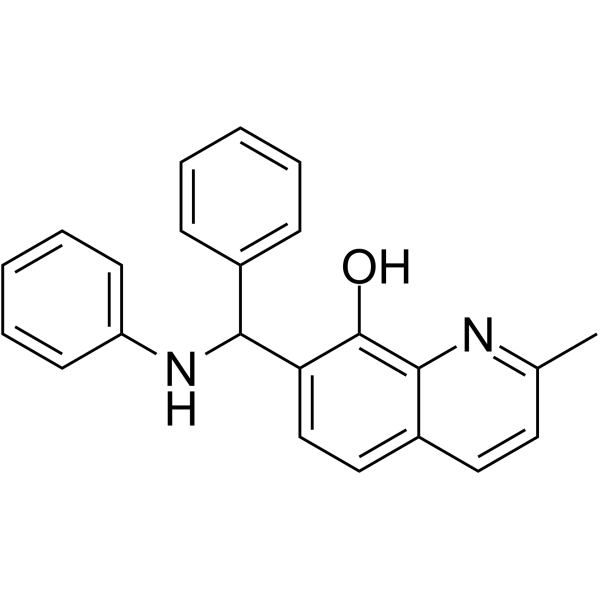
BRD6257
 0 ImagesCat. No.: HY-173084Purity: 99.69%
BRD6257 is an orally active inhibitor for protein phosphatase, Mg2+/Mn2+ dependent 1D PPM1D with an IC50 of 5 nM. BRD6257 activates p53 signaling pathway with an EC50 of 51 nM, increases the p21 expression, inhibits the proliferation of cancer cell MOLM13 (IC50=2.8 μM). BRD6257 exhibits good metabolic stability in human and rat liver microsomes.
-
Methyl methanesulfonate-d3
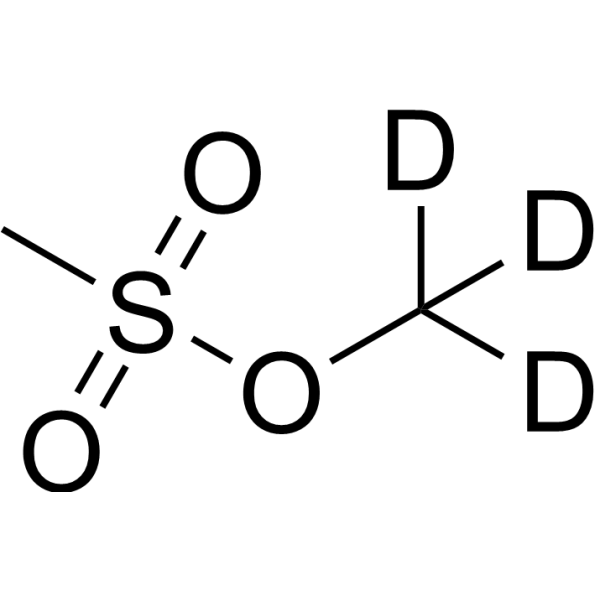 0 ImagesSynonyms: METHYLMETHANE SULPHONATE-d3
Methyl methanesulfonate-d3 is the deuterium labeled Methyl methanesulfonate (HY-W004702). Methyl methanesulfonate is an alkylating agent which transfers methyl groups, and induces DNA damage. Methyl methanesulfonate is a biochemical reagent that can be used as a biological material or organic compound for life science related research.
-
Minocycline-d6 sulfate
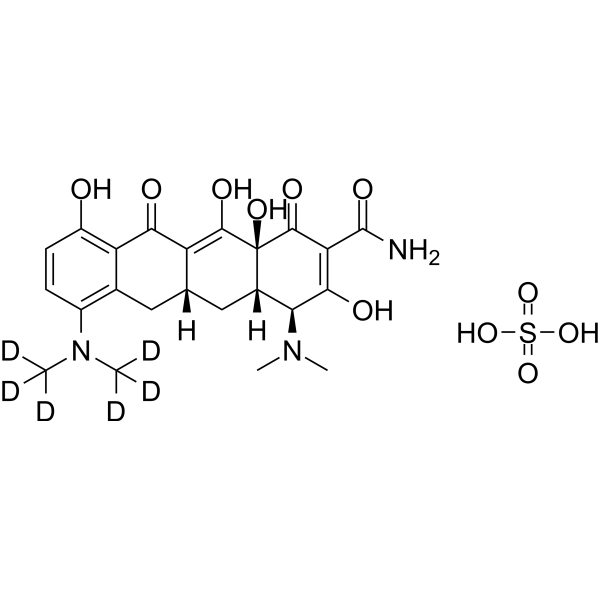 0 ImagesCat. No.: HY-17412S1
Minocycline-d6 sulfate is deuterated labeled Minocycline (HY-17412A). Minocycline is an orally active, potent and BBB-penetrated semi-synthetic tetracycline antibiotic. Minocycline is a hypoxia-inducible factor (HIF)-1α inhibitor. Minocycline shows anti-cancer, anti-inflammatory, and glutamate antagonist effects. Minocycline reduces glutamate neurotransmission and shows neuroprotective properties and antidepressant effects. Minocycline inhibits bacterial protein synthesis through binding with the 30S subunit of the bacterial ribosome, resulting in a bacteriostatic effect.
-
Minocycline-d7
 0 ImagesCat. No.: HY-W654013
Minocycline-d7 is deuterium labeled Minocycline. Minocycline is an orally active, potent and BBB-penetrated semi-synthetic tetracycline antibiotic. Minocycline is a hypoxia-inducible factor (HIF)-1α inhibitor. Minocycline shows anti-cancer, anti-inflammatory, and glutamate antagonist effects. Minocycline reduces glutamate neurotransmission and shows neuroprotective properties and antidepressant effects. Minocycline inhibits bacterial protein synthesis through binding with the 30S subunit of the bacterial ribosome, resulting in a bacteriostatic effect.
-
WMJ-J-09
 0 Images
WMJ-J-09 is an HDAC inhibitor with IC50 values of 7.5 nM (HDAC1), 21.3 nM (HDAC2), 18.4 nM (HDAC3), 90.9 nM (HDAC8), 3.9 nM (HDAC6) and 8715.7 nM (HDAC4). WMJ-J-09 blocks the cell cycle and induces apoptosis in cancer cells. WMJ-J-09 induces cancer cell death through the LKB1-AMPK-p38MAPK-p63-survivin signaling cascade.WMJ-J-09 inhibits HDAC enzyme activity, leading to acetylation of key proteins and thereby regulating cancer cell death. WMJ-J-09 can be used in HCT116 cells and FaDu cells research[1][2].



