



MMP Inhibitor
-
Cystatin B agonist 1
 0 ImagesCat. No.: HY-175291
Cystatin B agonist 1 is an orally active MMP-2/9 inhibitor. Cystatin B agonist 1 exhibits inhibitory effects with IC50 values of 3.95 and 3.43 μM against U87 and T98G cells, respectively. Cystatin B agonist 1 induces the cell-cycle arrest at S phase, inhibits angiogenesis, and suppresses migration and invasion of MG cells. Cystatin B agonist 1 inhibits tumor growth in U87 MG xenograft model. Cystatin B agonist 1 can be used for the study of malignant glioma (MG).
-
BSc2118
 0 ImagesCat. No.: HY-123255CAS No.: 863924-64-5
BSc2118 is a 20S proteasome inhibitor with an IC50 of approximately 50 nM. BSc2118 induces G2/M phase cell cycle arrest and apoptosis in myeloma cells, inhibits cytoprotective autophagy, and suppresses tumor angiogenesis. BSc2118 reduces MMP9 activity, promotes angioneurogenesis, and alleviates recombinant tissue-type plasminogen activator-induced cerebral toxicity. BSc2118 is applicable to studies related to cerebral ischemia and multiple myeloma.
-
Alvelestat tosylate
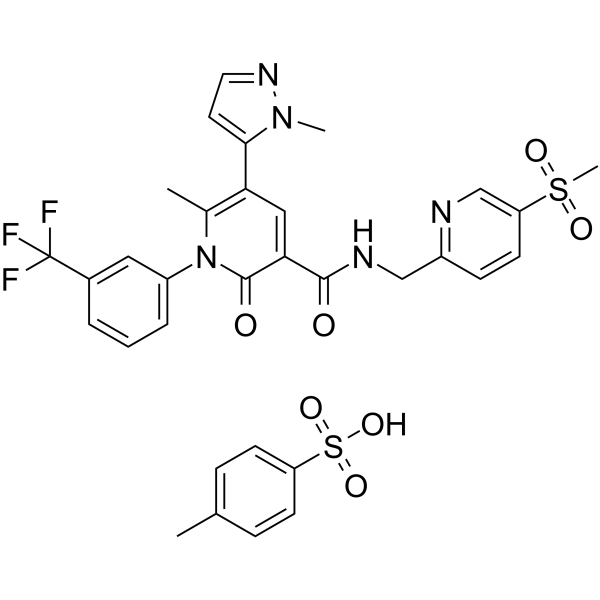 0 ImagesCat. No.: HY-15651ACAS No.: 1240425-05-1Synonyms: AZD9668 tosylate
Alvelestat tosylate (AZD9668 tosylate) is an orally active, selective inhibitor of neutrophil elastase. Alvelestat tosylate reduces elastase activity, myeloperoxidase release, neutrophil recruitment and activation, and calcium phosphate precipitation; promotes smooth muscle cell colonization and collagen deposition; and inhibits the formation of neutrophil extracellular traps (NETs) as well as NET-derived neutrophil elastase activity. Alvelestat tosylate restores endothelial dysfunction, regulates antioxidant factors, improves the expression of endothelial tight junctions, reduces vascular leakage, and accelerates wound healing. Alvelestat tosylate prevents pulmonary hemorrhage, matrix protein degradation, airspace enlargement, and small airway wall remodeling; and alleviates cigarette-induced inflammatory responses. Alvelestat tosylate inhibits the growth of abdominal aortic aneurysms exacerbated by Porphyromonas gingivalis. Alvelestat tosylate can be used in research related to chronic obstructive pulmonary disease, abdominal aortic aneurysm, radiation-induced skin injury, and bronchiectasis.
-
ASPH-IN-1
 0 ImagesCat. No.: HY-160720CAS No.: 2477878-52-5
ASPH-IN-1 (Compound 14c) is an orally active ASPH inhibitor. ASPH-IN-1 down-regulates MMP2 and MMP14 protein expression. ASPH-IN-1 exhibits anti-cancer activity against cholangiocarcinoma.
-
MAHS-4
 0 ImagesCat. No.: HY-187514
MAHS-4 is an inhibitor of thymidylate synthase (TS) and dihydrofolate reductase (DHFR), with IC50 values of 1.918 μM and 83.53 μM, respectively. MAHS-4 inhibits thymidylate biosynthesis, reduces tetrahydrofolate pool maintenance, and interferes with extracellular matrix remodeling. MAHS-4 induces G2/M phase cell cycle arrest, activates endogenous caspase-dependent apoptosis, decreases MMP protein levels, inhibits cell migration, increases intracellular NO levels, and promotes autophagy activity. MAHS-4 is applicable for cancer-related research.
-
MMP-9-IN-14
 0 ImagesCat. No.: HY-181272
MMP-9-IN-14 is a MMP-9 inhibitor (IC50 = 34.46 μM). MMP-9-IN-14 induces G1-phase cell cycle arrest and caspase-dependent apoptosis in cancer cells. MMP-9-IN-14 promotes the accumulation of phosphorylated γH2AX. MMP-9-IN-14 inhibits the migration and invasion of cancer cells, and downregulates the expressions of MMP-2, MMP-9 and hTERT in cancer cells. MMP-9-IN-14 inhibits tumor growth and angiogenic spread in animal models. MMP-9-IN-14 can be used for the research of cancers such as lung adenocarcinoma, cervical cancer and colorectal cancer.

-
WAY-170523
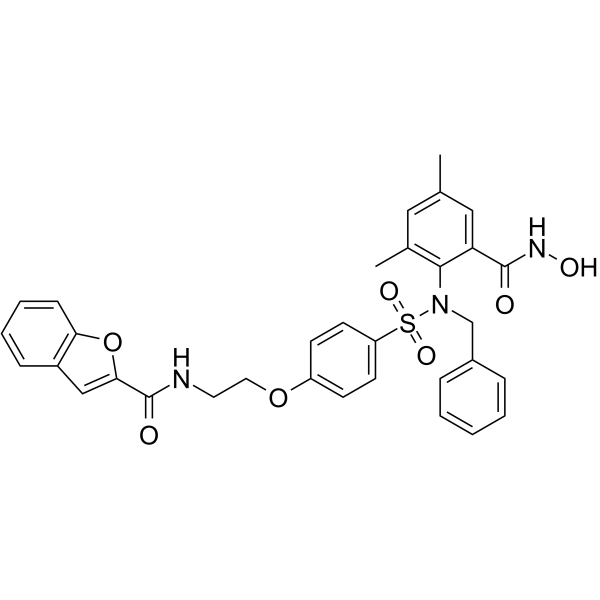 0 ImagesCat. No.: HY-107640CAS No.: 307002-73-9
WAY-170523 is a potent and selective MMP-13 (matrix metalloproteinase-13) inhibitor, with an IC50 of 17 nM. WAY-170523 can directly attenuate ERK1/2 phosphorylation. WAY-170523 inhibits the invasion of PC-3 cells, can be used for prostate cancer research.
-
Mmp3 Rat Pre-designed siRNA Set A
 0 ImagesCat. No.: HY-RS08550
Mmp3 Rat Pre-designed siRNA Set A contains three designed siRNAs for Mmp3 gene (Rat), as well as a negative control, a positive control, and a FAM-labeled negative control.
-
Glaucine hydrobromide
 0 ImagesCat. No.: HY-W726101CAS No.: 5996-06-5Synonyms: O,O-Dimethylisoboldine hydrobromide; S-(+)-Glaucine hydrobromide; NSC 34396 hydrobromide
Glaucine hydrobromide (O,O-Dimethylisoboldine hydrobromide) is an alkaloid extracted from Glaucium flavum that possesses various activities, including cough relief, bronchodilation, anti-inflammatory effects, analgesia, antipyretic properties, and anticancer effects. Glaucine hydrobromide acts as a selective and orally active inhibitor of phosphodiesterase 4 (PDE4), with a Ki of 3.4 µM in human bronchial tissues and polymorphonuclear leukocytes. Glaucine hydrobromide induces relaxation of human isolated bronchi by antagonizing calcium channels. Additionally, Glaucine hydrobromide inhibits the activation of NF-κB, leading to a reduction in the expression of the MMP-9 gene, thereby suppressing the migration and invasion of breast cancer cells. Therefore, Glaucine hydrobromide holds potential for research in asthma and breast cancer.
-
GI-129471
 0 ImagesCat. No.: HY-105360CAS No.: 130370-59-1
GI-129471 is a MMP inhibitor. GI-129471 exhibits inhibitory activity against cancer cell invasion. GI-129471 can completely block the enhanced production of IgE and IgG1 by mouse B cells induced by rat mast cell protease-I (RMCP-I). GI-129471 can be used for the study of cancer and mast cell chymase-regulated immunological processes.
-
Doxycycline (hydrochloride) (GMP)
 0 ImagesCat. No.: HY-N0565AGCAS No.: 10592-13-9
Doxycycline hydrochloride GMP is Doxycycline (hydrochloride) (HY-N0565A) produced by using GMP guidelines. GMP small molecules works appropriately as an auxiliary reagent for cell therapy manufacture. Doxycycline hydrochloride is an orally active highly lipophilic, tissue-permeable MMP inhibitor with broad-spectrum antibacterial activity. Doxycycline hydrochloride is also a semi-synthetic antibiotic with chelating properties, which blocks bacterial protein synthesis and inhibits extracellular matrix degradation through interactions with zinc and calcium atoms. Doxycycline hydrochloride also inhibits mitochondrial biogenesis, translation, and the expression of respiratory chain proteins. Doxycycline hydrochloride induces apoptosis, inhibits autophagy and EMT, downregulates stem cell markers, and activates the PI3K-AKT pathway, thereby effectively inhibiting the viability and proliferation of cancer cells such as breast cancer cells. Doxycycline hydrochloride also promotes the survival and self-renewal of embryonic stem cells and neural stem cells, and reduces the frequency of medium changes in culture. Doxycycline hydrochloride has been applied in studies related to breast cancer, prostate cancer, bladder cancer, and other cancers.
-
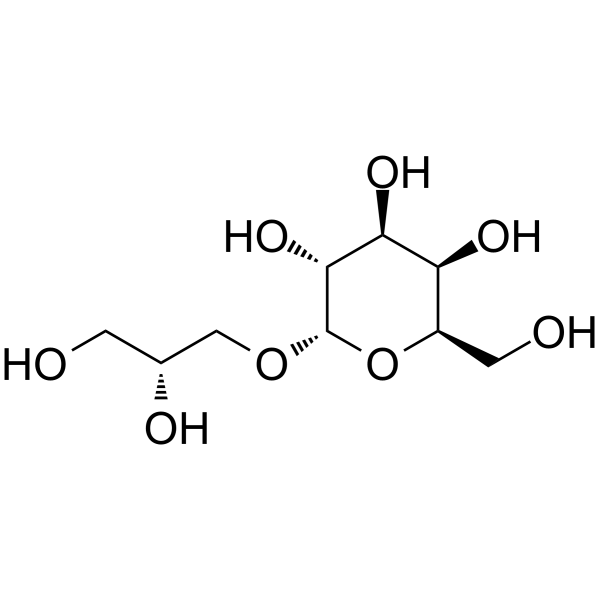
Gaultherin (Standard)
 0 Images
Gaultherin (Standard) is the analytical standard for Gaultherin (HY-N1965). Gaultherin is an orally active non-steroidal anti-inflammatory agent. Gaultherin selectively inhibits NF-κB, MAPK, COX-2 (IC50 = 0.35 mg/mL), LOX (IC50 = 0.56 mg/mL) and HYAL (IC50 = 28.58 μg/mL) to exert anti-inflammatory, antipyretic and analgesic effects. Gaultherin exhibits modest direct antioxidant capacity, greater in cell-based models. Gaultherin does not affect COX-1 so that avoids the common gastrointestinal side effects of Aspirin (HY-14654).
-
Anti-MMP9 Antibody
 0 ImagesCat. No.: HY-P990468
Anti-MMP9 Antibody is a CHO-expressed human antibody that targets MMP9. The Anti-MMP9 Antibody is composed of a huIgG1 heavy chain and a huκ light chain, with a predicted molecular weight (MW) of 144.76 kDa. For the isotype control of the Anti-MMP9 Antibody, you can refer to Human IgG2 kappa, Isotype Control (HY-P99002).
-
Pexmetinib (Standard)
 0 ImagesSynonyms: ARRY-614 (Standard)
Pexmetinib (Standard) (ARRY-614 (Standard)) is the analytical standard of Pexmetinib (HY-16782). This product is intended for research and analytical applications. Pexmetinib (ARRY-614) is an orally active dual Tie-2 and p38 MAPK inhibitor. Pexmetinib binds to Tie-2 and p38 MAPK in a "DFG-out" conformation, attenuates the phosphorylation of p38, inhibits STAT3 activation, reduces the promoter-binding activity of NFATc1, and decreases the expression of MMPs. Pexmetinib inhibits leukemia cell proliferation, abrogates TNF-α-mediated myelosuppression of healthy hematopoietic stem cells, stimulates hematopoiesis in primary myelodysplastic syndrome (MDS) samples, inhibits RANKL-induced osteoclast formation and bone resorption, and suppresses migration, invasion and induced osteolysis of breast cancer cells. Pexmetinib can be used in research related to myelodysplastic syndrome, acute myeloid leukemia and breast cancer-induced osteolysis.
-
BIM-46174
 0 ImagesCat. No.: HY-183400CAS No.: 195450-11-4
BIM-46174 is a heterotrimeric G protein complex inhibitor. BIM-46174 blocks GPCR downstream signaling by trapping Gα proteins in a nucleotide-free pocket conformation, thereby inhibiting Gαq-mediated calcium release, Gαs-mediated cAMP production, and GPCR-regulated cancer cell invasion. In vitro, BIM-46174 effectively suppresses a variety of clinically multidrug-resistant cell lines and induces tumor cell apoptosis through activation of caspase-3 and PARP cleavage. BIM-46174 also inhibits activation of the Neu1-MMP-9-GPCR signaling platform and downstream NF-κB signaling, and is widely used in the study of cancer signaling pathways and inflammation-related research, including lung cancer, pancreatic cancer, breast cancer, melanoma, and leukemia.
-
Feprazone (Standard)
 0 ImagesCat. No.: HY-114911RCAS No.: 30748-29-9Synonyms: DA2370 (Standard); Prenazone (Standard); Zepelin (Standard)
Feprazone (Standard) is the analytical standard of Feprazone. This product is intended for research and analytical applications. Feprazone (DA2370; Prenazone), an analogue of Phenylbutazone (HY-B0230), is a nonsteroidal anti-inflammatory agent with analgesic and antipyretic activities. Feprazone acts by inhibiting the activity of cyclooxygenase (COX)-2. Feprazone ameliorates free fatty acid (FFA)-induced oxidative stress by reducing the production of mitochondrial reactive oxygen species (ROS). Feprazone can decrease the expression of MMP-2 and MMP-9. Besides, Feprazone can suppress adipogenesis and increase lipolysis in differentiating 3 T3-L1 cells. Feprazone also can be used to research atherosclerosis and obesity.
-
(E)-N-(4-Methoxyphenyl)cinnamamide
 0 ImagesCat. No.: HY-W1057938CAS No.: 76228-15-4
-
Phosphoramidon
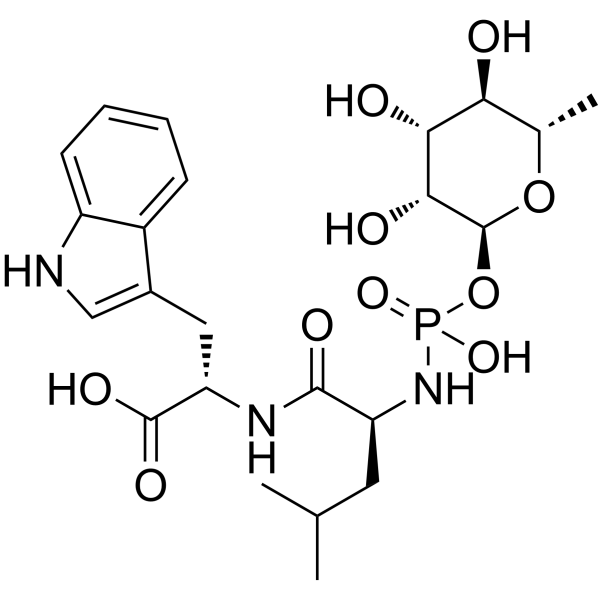 0 ImagesCat. No.: HY-N2021CAS No.: 36357-77-4
Phosphoramidon, a microbial metabolite, is a specific metalloprotease thermolysin inhibitor with an IC50 of 0.4 μg/mL. Phosphoramidon also inhibits endothelin-converting enzyme (ECE), neutral endopeptidase (NEP), and angiotensin-converting enzyme (ACE) with IC50 values of 3.5, 0.034, and 78 μM, respectively.



