



Microbial Metabolite
Microbial metabolites function as critical mediators between host physiology and microbiome activity, regulating immunity, metabolic homeostasis, and tissue repair[1][2][3]. Mechanistically, these metabolites modulate host cellular signaling through pathways including AMPK, PPARα, and HDAC inhibition, influencing lipid metabolism, bone homeostasis, and epigenetic regulation[4][5][6][7]. In disease models, specific microbial metabolites such as 10-hydroxystearic acid and imidazole propionate demonstrate dual roles in hepatic regeneration and bone dysfunction, respectively, underscoring context-dependent effects[5][6]. Compared with related isoforms, certain microbial metabolites act selectively on target enzymes or receptors, exemplified by butyrate and valeric acid inhibiting class I HDACs without affecting other isoforms[7]. For experimental applications, metabolites have been leveraged as diagnostic markers in gastric cancer, modulators of drug toxicity, and indicators of microbial-host metabolic interactions[2][8][9]. Bioinformatic tools, including MetOrigin, enable precise discrimination of microbial metabolite origins and facilitate pathway enrichment analysis, enhancing identification of functionally relevant compounds[4]. The integration of metagenomics, metabolomics, and metaproteomics supports targeted discovery of microbial metabolites for both mechanistic studies and therapeutic interventions[3][10][11].
References:
- [1]. Fobofou SA, et al. Microbial metabolites: cause or consequence in gastrointestinal disease? Am J Physiol Gastrointest Liver Physiol. 2022 Jun 1;322(6):G535-G552. [Content Brief]
- [2]. Nie S, et al. Microbial-Related Metabolites May Be Involved in Eight Major Biological Processes and Represent Potential Diagnostic Markers in Gastric Cancer. Cancers (Basel). 2023 Nov 3;15(21):5271. [Content Brief]
- [3]. Vélez-Ixta JM, et al. Post Natal Microbial and Metabolite Transmission: The Path from Mother to Infant. Nutrients. 2024 Jun 22;16(13):1990. [Content Brief]
- [4]. Yu G, et al. MetOrigin: Discriminating the origins of microbial metabolites for integrative analysis of the gut microbiome and metabolome. Imeta. 2022 Mar 21;1(1):e10. [Content Brief]
- [5]. Kramer DJ, et al. Microbial biotherapeutic metabolite alleviates liver injury by restoring hepatic lipid metabolism through PPARα across the gut-liver axis. mBio. 2025 Sep 10;16(9):e0171825. [Content Brief]
- [6]. Park SG, et al. The microbial metabolite imidazole propionate dysregulates bone homeostasis by inhibiting AMP-activated protein kinase (AMPK) signaling. Commun Biol. 2024 Dec 19;7(1):1644. [Content Brief]
- [7]. Yuille S, et al. Human gut bacteria as potent class I histone deacetylase inhibitors in vitro through production of butyric acid and valeric acid. PLoS One. 2018 Jul 27;13(7):e0201073. [Content Brief]
- [8]. Kim B, et al. Pathway-Based Integrative Analysis of Metabolome and Microbiome Data from Hepatocellular Carcinoma and Liver Cirrhosis Patients. Cancers (Basel). 2020 Sep 21;12(9):2705. [Content Brief]
- [9]. Lee H, et al. The Discovery of Gut Microbial Metabolites as Modulators of Host Susceptibility to Acetaminophen-Induced Hepatotoxicity. Drug Metab Dispos. 2024 Jul 16;52(8):754-764. [Content Brief]
- [10]. Wang WL, et al. Application of metagenomics in the human gut microbiome. World J Gastroenterol. 2015 Jan 21;21(3):803-14. [Content Brief]
- [11]. Kingkaw A, et al. Analysis of the infant gut microbiome reveals metabolic functional roles associated with healthy infants and infants with atopic dermatitis using metaproteomics. PeerJ. 2020 Sep 25;8:e9988. [Content Brief]
-
Microbial Metabolite Related Products (563)
Related Products (563)

-
5,8-Epidioxyergosta-6,9(11),22-trien-3-ol
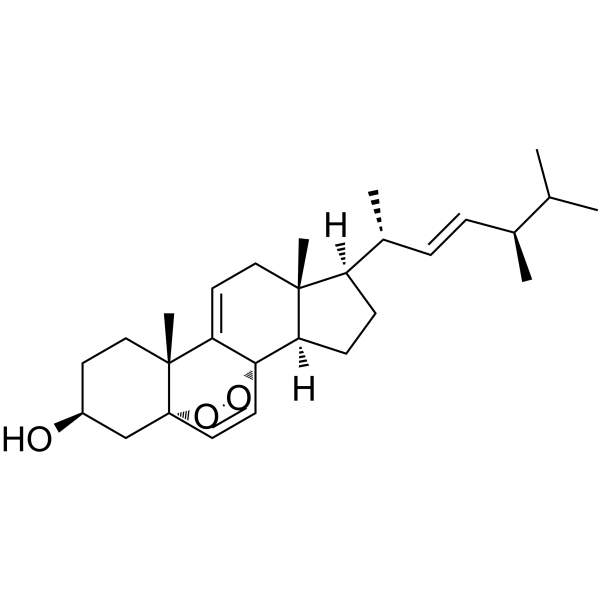 0 ImagesCat. No.: HY-N7175CAS No.: 86363-50-0Synonyms: 9,11-Dehydroergosterol peroxide; 9(11)-DHEP5,8-Epidioxyergosta-6,9(11),22-trien-3-ol (9,11-Dehydroergosterol peroxide), an important steroid from medicinal mushroom, exerts antitumor activity in several tumor types. 5,8-Epidioxyergosta-6,9(11),22-trien-3-ol inhibits HT29 cell growth by inducing CDKN1A expression, thus causing cell cycle arrest and apoptosis.
-
Rapamycin-13C,d3-1
 0 ImagesCat. No.: HY-W765245Synonyms: Sirolimus-13C,d3-1; AY-22989-13C,d3-1Rapamycin-13C,d3-1 (Sirolimus-13C,d3-1) is the deuterated, 13C-labeled Rapamycin (HY-10219). Rapamycin (Sirolimus; AY 22989) is a potent and specific blood-brain barrier-transmissible mTOR inhibitor with an IC50 of 0.1 nM in HEK293 cells. Rapamycin is a molecular glue that binds FKBP12 and mTOR proteins together, thereby inhibiting mTOR kinase activity. Rapamycin binds to FKBP12 and specifically acts as an allosteric inhibitor of mTORC1. Rapamycin is an autophagy activator, an immunosuppressant.
-
Erinacine Q
 0 ImagesCat. No.: HY-N21649CAS No.: 435306-99-3Erinacine Q is a cyathane diterpenoid compound. Erinacine Q is produced by the mycelium of H. erinaceum. Erinacine Q serves as the direct substrate for the biosynthesis of Erinacine P (HY-N11019). Erinacine Q is used in the study of peripheral nerve injury.
-
3,4-Dimethoxyphenylacetic acid (Standard)
 0 Images3,4-Dimethoxyphenylacetic acid (Standard) is the analytical standard of 3,4-Dimethoxyphenylacetic acid (HY-Y0771). This product is intended for research and analytical applications. 3,4-Dimethoxyphenylacetic acid is a phenylacetic acid class urinary metabolite of 3,4-dimethoxyphenethylamine and also a building block in chemical synthesis. 3,4-Dimethoxyphenylacetic acid is produced by the gut microbiota during colonic fermentation of phenolic compounds from Achillea millefolium L. and Origanum majorana L. 3,4-Dimethoxyphenylacetic acid can be used in studies related to gut microbiota metabolism.
-
(S)-3-Hydroxyhexanoyl-CoA
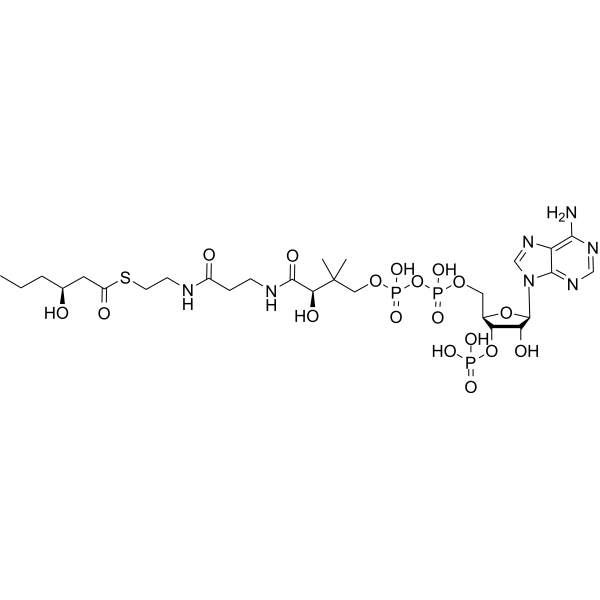 0 ImagesCat. No.: HY-E70247CAS No.: 79171-47-4Synonyms: L-3-Hydroxyhexanoyl-CoA(S)-3-Hydroxyhexanoyl-CoA (L-3-Hydroxyhexanoyl-CoA) is a hydroxy fatty acyl-CoA.
-
Phomopsinone A
 0 ImagesCat. No.: HY-N19907CAS No.: 1374428-43-9Phomopsinone A is an Antifungal agent. Phomopsinone A is isolated from Phomopsis sp. Phomopsinone A exhibits activity against plant and crop pathogens Pyricularia oryzae, Septoria tritici and Botrytis cinerea. Phomopsinone A can be used in the research of plant/crop fungal diseases.
-
Dihydromevinolin
 0 ImagesCat. No.: HY-Z8472CAS No.: 77517-29-4Synonyms: Lovastatin EP impurity E; 4a,5-DihydromevinolinDihydromevinolin is a potent hypocholesterolemic metabolite produced by Aspergillus terreus. Dihydromevinolin is a HMG-CoA reductase inhibitor.
-
Phosphoramidon
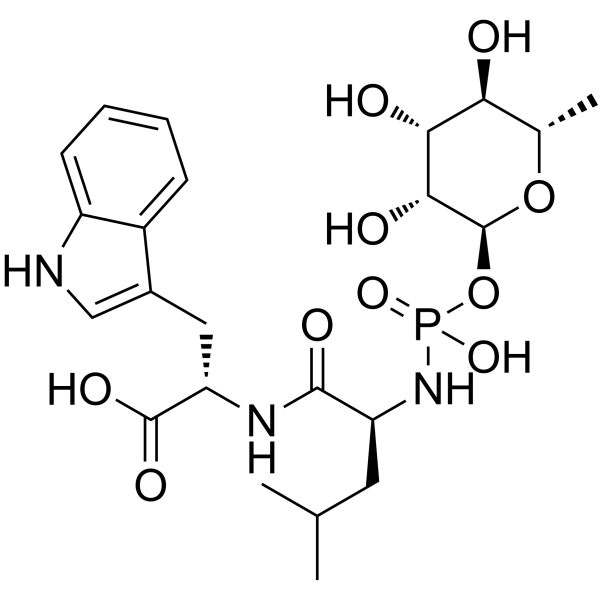 0 ImagesCat. No.: HY-N2021CAS No.: 36357-77-4Phosphoramidon, a microbial metabolite, is a specific metalloprotease thermolysin inhibitor with an IC50 of 0.4 μg/mL. Phosphoramidon also inhibits endothelin-converting enzyme (ECE), neutral endopeptidase (NEP), and angiotensin-converting enzyme (ACE) with IC50 values of 3.5, 0.034, and 78 μM, respectively.
-
Cyclo(L-Ile-D-Leu)
 0 ImagesCat. No.: HY-N18989CAS No.: 2193113-02-7
-
Asperindole A
 0 ImagesCat. No.: HY-N16404CAS No.: 2416222-17-6Asperindole A is an indole-diterpene alkaloid. Asperindole A can be isolated from fungus Aspergillus sp. KMM 4676. Asperindole A induces Apoptosis. Asperindole A exerts cytotoxic activity against hormone-resistant and hormone-sensitive prostate cancer cells.
-
Paromomycin
 0 ImagesParomomycin (Aminosidine) is an orally active broad-spectrum aminoglycoside aminocyclitol. Paromomycin is produced by Streptomyces riomosus var. Paromomycinus. Paromomycin binding induces local conformational changes in the 16S rRNA A-site. Paromomycin exhibits inhibitory activity against C. parvum. Paromomycin can be used in research related to leishmaniasis, amoebiasis and cryptosporidiosis.
-
Lactosyl fructoside
 0 ImagesCat. No.: HY-W726082CAS No.: 87419-56-5Synonyms: LactosucroseLactosyl fructoside (Lactosucrose) is a non-reducing trisaccharide composed of galactose, glucose, and fructose. Lactosyl fructoside is produced by enzymatic transfructosylation of sucrose with lactase. Lactosyl fructoside is not digested by human digestive tract enzymes and, upon entering the colon, is selectively fermented by beneficial bacteria such as Bifidobacteria, exhibiting prebiotic effects. Lactosyl fructoside serves as a low-calorie sweetener for diabetic and obese populations. Lactosyl fructoside improves the fermentation and refrigeration quality of yogurt, maintains the viable count and texture of starter lactic acid bacteria, and modulates the metabolite profile. Lactosyl fructoside is used in studies related to yogurt fermentation and intestinal diseases.
-
Cyanosafracin B (Standard)
 0 ImagesCat. No.: HY-137787RCAS No.: 96996-50-8Cyanosafracin B (Standard) is the analytical standard of Cyanosafracin B (HY-137787). This product is intended for research and analytical applications. Cyanosafracin B is an Antibiotic. Cyanosafracin B is present in the fermentation products of Pseudomonas fluorescens. Cyanosafracin B can be used for the synthesis of Ecteinascidin.
-
Chorismic acid
 0 ImagesChorismic acid is a precursor for the biosynthesis of aromatic amino acids and vitamins, as well as a key metabolite in tRNA modification. Chorismic acid is a critical metabolite for the synthesis of cmo5U. Deficiency of Chorismic acid inhibits the formation of cmo5U and mcmo5U. Chorismic acid can be used in studies of S. typhimurium and E. coli infections.\n
-
Wailupemycin F
 0 ImagesCat. No.: HY-N19219CAS No.: 426816-67-3Wailupemycin F is an Antibiotic and anticancer agent. Wailupemycin F is isolated from the marine-derived Streptomyces maritimus. Wailupemycin F exhibits antibacterial activity against Micrococcus luteus with a MIC of 1.1 μM. Wailupemycin F shows anticancer activity against myeloma. When used in combination with enterocin, Wailupemycin F exerts synergistic antibacterial activity against Micrococcus luteus, doubling its potency. Wailupemycin F can be used in studies related to Micrococcus luteus infection.
-
4-Cholenic acid-3-one
 0 Images4-Cholenic acid-3-one is an antifeedant steroid metabolite formed via anaerobic biotransformation of Lithocholic acid (HY-B0172) by Pseudomonas sp. strain NCIB 10590.
-
Phenazine (Standard)
 0 ImagesPhenazine (Standard) is the analytical standard of Phenazine (HY-W016477). This product is intended for research and analytical applications. Phenazine belongs to the family of N-heterocyclic compounds. Phenazine can be found in terrestrial and marine microorganisms. Phenazine attracts attention due to its diverse biological activities, including Antimicrobial and enzyme inhibitory properties. Phenazine can be used in breast cancer research.
-
Aspergillusidone F
 0 ImagesCat. No.: HY-N16403CAS No.: 1558007-47-8Aspergillusidone F is a Depsidone and antibacterial agent. Aspergillusidone F can be isolated from a marine fungus Aspergillus unguis. Aspergillusidone F potently inhibits Aromatase with an IC50 of 0.5 μM. Aspergillusidone F exhibits antibacterial activity against Pseudomonas aeruginosa and Methicillin (HY-121544)-resistant Staphylococcus aureus. Aspergillusidone F exhibits potent larvicidal activity against Artemia salina larvae, with an LC50 value of 12.8 μM. Aspergillusidone F exhibits anticancer activity against intrahepatic cholangiocarcinoma, non-small cell lung cancer, and acute lymphoblastic leukemia.
-
Antibacterial agent 134
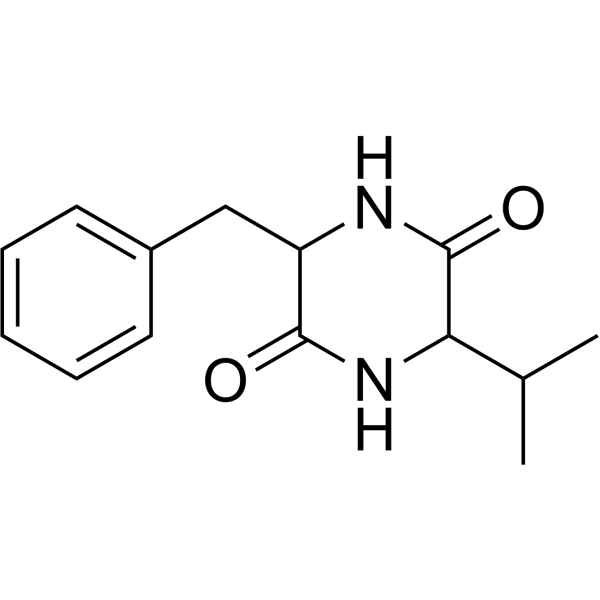 0 ImagesCat. No.: HY-142075CAS No.: 14474-71-6Antibacterial agent 134 is the major metabolite in the culture of Hymeniacidon perleve associated bioactive bacterium Pseudomonas sp. NJ6-3-1. Antibacterial agent 134 can be used for bacterial infection.
-
D-Gluco-D-mannan
 0 ImagesCat. No.: HY-185688CAS No.: 11078-31-2D-Gluco-D-mannan is a mannose-containing heteropolysaccharide found in the cell walls of Ceratocystis brunnea.



