



MyD88 Inhibitor
-
LM9
 0 ImagesCat. No.: HY-180336CAS No.: 2249864-11-5
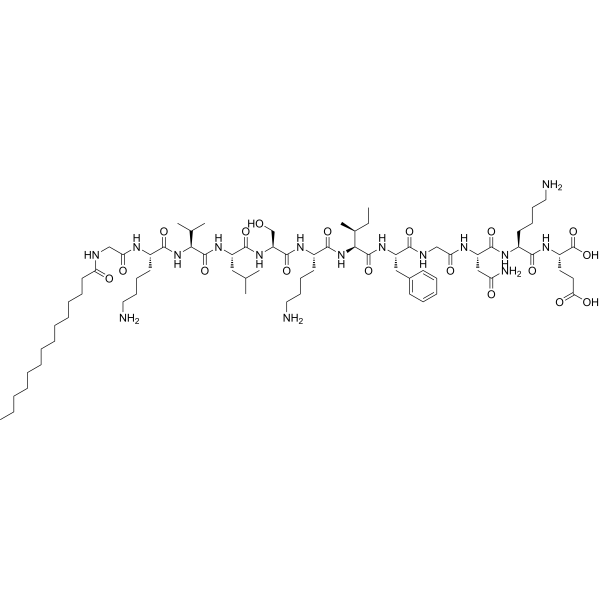
LM9 is a potent, orally active MyD88 inhibitor. LM9 blocks TLR4/MyD88 binding, MyD88 homodimer formation, and TLR4/MyD88/NF-κB signaling pathway activation. LM9 prevents atherosclerosis by regulating inflammatory responses and oxidative stress in macrophages. LM9 efficiently mitigates inflammatory responses and fibrosis in obesity-induced cardiomyopathy. LM9 can be used for fibrosis and atherosclerosis research.
-
MyD88-IN-4
 0 ImagesCat. No.: HY-178690CAS No.: 1801552-15-7
MyD88-IN-4 is a MyD88 inhibitor. MyD88-IN-4 exerts antiviral effects by up-regulating IFN-β, and anti-inflammatory effects by inhibiting pro-inflammatory cytokine production. MyD88-IN-4 prevents MyD88 homodimer formation and its interaction with IRF3/IRF7. MyD88-IN-4 demonstrates efficacy against encephalitic alphavirus infections by reducing viral replication and improving survival in VEEV TC-83-infected mouse models. MyD88-IN-4 can be used for the study of alphavirus infections, bacterial toxin-related diseases, and sepsis.
-
COX-2-IN-57
 0 ImagesCat. No.: HY-175637
COX-2-IN-57 is an orally active COX-2 inhibitor with an IC50 value of 0.02 μM. COX-2-IN-57 reduces MyD88 expression and decreases serum levels of COX-2, PGE2, and COX-1 in Cisplatin (HY-17394)/radiation-induced neuropathy rat model. COX-2-IN-57 demonstrates superior antinociceptive efficacy in hot plate, cold allodynia, and Randall-Selitto tests, along with hepato-/renal protection. COX-2-IN-57 can be used for the study of inflammation.
-
BIM-46174
 0 ImagesCat. No.: HY-183400CAS No.: 195450-11-4
BIM-46174 is a heterotrimeric G protein complex inhibitor. BIM-46174 blocks GPCR downstream signaling by trapping Gα proteins in a nucleotide-free pocket conformation, thereby inhibiting Gαq-mediated calcium release, Gαs-mediated cAMP production, and GPCR-regulated cancer cell invasion. In vitro, BIM-46174 effectively suppresses a variety of clinically multidrug-resistant cell lines and induces tumor cell apoptosis through activation of caspase-3 and PARP cleavage. BIM-46174 also inhibits activation of the Neu1-MMP-9-GPCR signaling platform and downstream NF-κB signaling, and is widely used in the study of cancer signaling pathways and inflammation-related research, including lung cancer, pancreatic cancer, breast cancer, melanoma, and leukemia.
-
6-Methoxyflavone (Standard)
 0 ImagesCat. No.: HY-W097625RCAS No.: 26964-24-9
6-Methoxyflavone (Standard) is the analytical standard of 6-Methoxyflavone (HY-W097625). This product is intended for research and analytical applications. 6-Methoxyflavone is an orally active methoxyflavone. 6-Methoxyflavone suppresses neuroinflammation in microglia through the inhibition of TLR4/MyD88/p38 MAPK/NF-κB dependent pathways and the activation of HO-1/NQO-1 signaling. 6-Methoxyflavone induces S-phase arrest through the CCNA2/CDK2/p21CIP1 signaling pathway and activates the PERK/EIF2a/ATF4/CHOP pathway in HeLa cells. 6-Methoxyflavone acts as a Flumazenil (HY-B0009)-insensitive positive allosteric modulator at human recombinant α1β2γ2L and α2β2γ2L GABAα receptors. 6-Methoxyflavone inhibits NFAT Translocation into the nucleus and suppresses T cell activation. 6-Methoxyflavone partially restores chronic ethanol-induced behavioral deficits in mice. 6-Methoxyflavone antagonizes chronic constriction injury and diabetes associated neuropathic nociception expression. 6-Methoxyflavone can be used for the study of cancer, inflammation and neurological diseases.
-
2,4′-Dihydroxybenzophenone (Standard)
 0 ImagesCat. No.: HY-W014223RCAS No.: 131-56-6Synonyms: Ultraviolet absorber UV-0 (Standard)
2,4′-Dihydroxybenzophenone (Standard) is the analytical standard of 2,4′-Dihydroxybenzophenone. This product is intended for research and analytical applications. 2,4′-Dihydroxybenzophenone (Ultraviolet absorber UV-0) occupies the hydrophobic pocket of MD2 and blocks the dimerization of TLR4. 2,4′-Dihydroxybenzophenone inhibits the LPS induced mtROS production, and LPS induced inflammatory response by downregulating pro-inflammatory mediators and decreasing the expression of MyD88, p-IRAK4, and NF-κB. 2,4′-Dihydroxybenzophenone is also a UV absorber.
-
Emavusertib phosphate
 0 ImagesCat. No.: HY-135317FCAS No.: 2376399-38-9Synonyms: CA-4948 phosphate
Emavusertib phosphate (CA-4948 phosphate) is the phosphate salt form of Emavusertib (HY-135317). Emavusertib phosphate is an orally active inhibitor for IRAK4 (IC50=57 nM) and FLT3. Emavusertib phosphate inhibits NF-κB and MyD88 signaling pathways, reduces the generation of pro-inflammatory cytokines like IL-6 and IL-10, thereby exhibiting anti-inflammatory and anti-proliferative activities against cancer cells, leading to cell apoptosis. Emavusertib phosphate exhibits antitumor activity in mouse model.
-
Hecubine
 0 ImagesCat. No.: HY-N9164CAS No.: 62874-52-6
Hecubine is a monoterpene indole alkaloid found in Ervatamia ocinalis. Hecubine activates TREM2 expression, reduces LPS (HY-D1056)-stimulated inammatory cytokines (TNF-α、IL-6、IL-1β) overexpression, as well as suppresses the levels of TLR4-, MyD88-, MAPK/PI3K/AKT- and NF-κB-related proteins. Hecubin also exhibits antioxidative effect, reduces ROS production and activates of the Nrf2/HO-1 pathway. Hecubine rescues LPS-induced behavioral deficits in zebrash larvae. Hecubine can be used for the research of neural inflammation-associated central nervous system diseases.
-
Emavusertib maleate
 0 ImagesCat. No.: HY-135317ECAS No.: 2376399-39-0Synonyms: CA-4948 maleate
Emavusertib maleate (CA-4948 maleate) is the maleate salt form of Emavusertib (HY-135317). Emavusertib maleate is an orally active inhibitor for IRAK4 (IC50=57 nM) and FLT3. Emavusertib maleate inhibits NF-κB and MyD88 signaling pathways, reduces the generation of pro-inflammatory cytokines like IL-6 and IL-10, thereby exhibiting anti-inflammatory and anti-proliferative activities against cancer cells, leading to cell apoptosis. Emavusertib maleate exhibits antitumor activity in mouse model.
-
N-(p-Coumaroyl) Serotonin (Standard)
 0 ImagesCat. No.: HY-129440RCAS No.: 68573-24-0
N-(p-Coumaroyl) Serotonin (Standard) is the analytical standard of N-(p-Coumaroyl) Serotonin (HY-129440). This product is intended for research and analytical applications. N-(p-Coumaroyl) Serotonin is an orally active polyphenol found in safflower seeds with potent anti-inflammatory, antioxidant, and antitumor activities. N-(p-Coumaroyl) Serotonin suppresses NF‑κB, TLR4/MyD88 and MAPK signaling, activates NQO1/HO‑1 pathways, and inhibits pro‑inflammatory cytokines, iNOS and COX‑2 and ROS production. N-(p-Coumaroyl) Serotonin induces S‑phase arrest and apoptosis in glioblastoma cells, reduces atherosclerotic lesions, and alleviates renal and vascular injuries. N-(p-Coumaroyl) Serotonin acts as a vasodilator, regulates calcium dynamics. N-(p-Coumaroyl) Serotonin can be used for the research of neurodegenerative diseases, atherosclerosis, glioblastoma, and acute renal failure.
-
Chaetoglobosin Vb
 0 ImagesCat. No.: HY-N9541CAS No.: 1399690-75-5
Chaetoglobosin Vb is a cytochalasin alkaloid with anti-inflammatory and antioxidant activities. Chaetoglobosin Vb attenuates LPS (HY-D1056)-induced TLR4 inflammatory signaling and IFN-β release by downregulating TRIF, MyD88, TLR4 mRNA and IRF7 expression. Chaetoglobosin Vb downregulates the expression and release of inflammatory mediators such as iNOS, COX-2, TNF-α and IL-6 by blocking MAPK/NF-κB pathway activation. Chaetoglobosin Vb reduces excessive ROS production and protects SOD enzyme activity against LPS-induced oxidative stress. Chaetoglobosin Vb inhibits the growth of certain bacteria and radish seedling roots. Chaetoglobosin Vb can be used in research related to colorectal cancer, bacterial infection, and radish growth.
-
T5996207
 0 ImagesCat. No.: HY-125480CAS No.: 950003-29-9
T5996207 is a MyD88 inhibitor. T5996207 inhibits LPS-induced MyD88-mediated NF-κB-driven SEAP expression. T5996207 protects mice from lethal staphylococcal enterotoxin B-induced shock. T5996207 can be used for research on acute lung injury and toxic shock.
-
Schaftoside (Standard)
 0 Images
Schaftoside (Standard) is the analytical standard of Schaftoside. This product is intended for research and analytical applications. Schaftoside is a flavonoid found in a variety of Chinese herbal medicines, such as Eleusine indica. Schaftoside inhibits the expression of TLR4 and Myd88. Schaftoside also decreases Drp1 expression and phosphorylation, and reduces mitochondrial fission.
-
Emavusertib tosylate
 0 ImagesCat. No.: HY-135317CCAS No.: 2376399-41-4Synonyms: CA-4948 tosylate
Emavusertib tosylate (CA-4948 tosylate) is the tosylate salt form of Emavusertib (HY-135317). Emavusertib tosylate is an orally active inhibitor for IRAK4 (IC50=57 nM) and FLT3. Emavusertib tosylate inhibits NF-κB and MyD88 signaling pathways, reduces the generation of pro-inflammatory cytokines like IL-6 and IL-10, thereby exhibiting anti-inflammatory and anti-proliferative activities against cancer cells, leading to cell apoptosis. Emavusertib tosylate exhibits antitumor activity in mouse model.
-
O-Methylbulbocapnine
 0 Images
O-Methylbulbocapnine is an aporphine alkaloid that acts as an inhibitor of LPS-induced inflammatory signaling and a dopamine D1R antagonist. O-Methylbulbocapnine inhibits LPS-induced phosphorylation of p38, ERK1/2, c-Jun, NF-κB p65 at Ser536, and Akt, decreases MyD88 protein levels, and reduces NF-κB nuclear translocation and DNA-binding activity. O-Methylbulbocapnine inhibits LPS-induced production of IL-6, TNF-α, PGE2, and NO, and decreases COX-2 and iNOS expression. O-Methylbulbocapnine can be used for research on Alzheimer's disease, cervical cancer, breast cancer, and malaria.
-
TJ-M2010-5 (Standard)
 0 ImagesCat. No.: HY-139397RCAS No.: 1357471-57-8
TJ-M2010-5 (Standard) is the analytical standard of TJ-M2010-5 (HY-139397). This product is intended for research and analytical applications. TJ-M2010-5 is a MyD88 inhibitor that binds to the TIR domain of MyD88 to interfere with its homodimerization, and the TLR/MyD88 signal pathway. TJ-M2010-5 can be used for the research of myocardial ischemia/reperfusion injury (MIRI).
-
(Rac)-T6167923
 0 ImagesCat. No.: HY-19744ACAS No.: 1090528-71-4
(Rac)-T6167923 is the racemic form of T6167923 (HY-19744) and acts as a MyD88 inhibitor. (Rac)-T6167923 disrupts MyD88 homodimer formation and blocks MyD88-dependent signaling, thereby inhibiting TLR2/MyD88 downstream NF-κB activation and pro-inflammatory cytokine production. (Rac)-T6167923 modulates macrophage inflammatory responses and polarization states, and reduces the survival rate of Mycobacterium avium subsp. paratuberculosis (MAP) within infected macrophages. (Rac)-T6167923 can be used for research related to inflammatory responses and mycobacterial infections.
-
Emavusertib mesylate
 0 ImagesCat. No.: HY-135317DCAS No.: 2376399-40-3Synonyms: CA-4948 mesylate
Emavusertib mesylate (CA-4948 mesylate) is the mesylate salt form of Emavusertib (HY-135317). Emavusertib mesylate is an orally active inhibitor for IRAK4 (IC50=57 nM) and FLT3. Emavusertib mesylate inhibits NF-κB and MyD88 signaling pathways, reduces the generation of pro-inflammatory cytokines like IL-6 and IL-10, thereby exhibiting anti-inflammatory and anti-proliferative activities against cancer cells, leading to cell apoptosis. Emavusertib mesylate exhibits antitumor activity in mouse model.



