



NF-κB
Nuclear factor-κB; Nuclear factor-kappaB
NF-κB (Nuclear factor kappa-light-chain-enhancer of activated B cells) is a protein complex that controls transcription of DNA. NF-κB is found in almost all animal cell types and is involved in cellular responses to stimuli such as stress, cytokines, free radicals, ultraviolet irradiation, oxidized LDL, and bacterial or viral antigens. NF-κB plays a key role in regulating the immune response to infection. Incorrect regulation of NF-κB has been linked to cancer, inflammatory, and autoimmune diseases, septic shock, viral infection, and improper immune development. NF-κB has also been implicated in processes of synaptic plasticity and memory. There are five proteins in the mammalian NF-κB family: NF-κB1, NF-κB2, RelA, RelB, c-Rel.
NF-κB Isoform Specific Products
All Product Categories
-
NF-κB Inhibitors
(1612)
View all products
-
NF-κB Agonists
(6)
View all products
-
NF-κB Antagonist
(1)
View all products
-
NF-κB Activators
(145)
View all products
-
NF-κB Modulators
(34)
View all products
-
NF-κB Inducers
(3)
View all products
-
NF-κB Degraders
(4)
View all products
-
NF-κB Controls
(7)
View all products
-
NF-κB Ligands
(2)
View all products
-
NF-κB Related Products (1949)
Related Products (1949)

-
Antibodies (32)
-
NF-κB Signaling Pathway
-
NF-κB Isoform Comparison
-
Isomangiferin (Standard)
 0 ImagesCat. No.: HY-N0772RCAS No.: 24699-16-9Isomangiferin (Standard) is the analytical standard of Isomangiferin (HY-N0772). This product is intended for research and analytical applications. Isomangiferin is an orally active xanthone C-glucoside, and its chemical structure is similar to Mangiferin (HY-N0290). Isomangiferin is an effective VEGFR-2 kinase inhibitor, which can induces cell apoptosis, inhibit the growth, metastasis and angiogenesis of breast cancer. Isomangiferin exerts anti-inflammatory effects by inhibiting the HMGB1/NLRP3/NF-κB signaling pathway, thereby improving the renal function indicators of diabetic mice. Isomangiferin exhibits inhibitory effects on various bacteria and herpes simplex virus type 1 (HSV-1). Isomangiferin promotes the migration and osteogenic differentiation of bone marrow mesenchymal stem cells (BMSCs) and reduces cell apoptosis and the production of ROS by activating the AMPK/ACC pathway, thereby facilitating fracture healing.
-
Iridin (Standard)
 0 ImagesIridin (Standard) is the analytical standard of Iridin. This product is intended for research and analytical applications. Iridin is an orally active natural isoflavone. Iridin inhibits the PI3K/AKT and PKM2 signaling pathways, and downregulates the JAK/STAT and NF-κB pathways. Iridin induces Fas-mediated extrinsic apoptosis, G2/M cell cycle arrest, and inhibits cell proliferation. Iridin reduces inflammation, inhibits ROS production, suppresses glycolysis, and also exhibits antioxidant and antidiabetic activities. Iridin can be used in research related to gastric cancer and acute lung injury.
-
9-PAHSA-d31
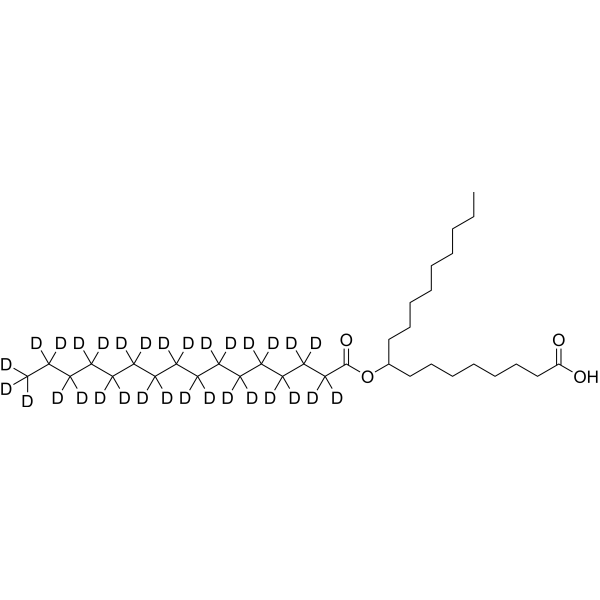 0 ImagesCat. No.: HY-120657S1CAS No.: 2748208-06-09-PAHSA-d31 is the deuterium labeled 9-PAHSA. 9-PAHSA is an orally active endogenous GPR120 agonist (EC50=18 μM). 9-PAHSA significantly inhibits LPS-induced inflammatory responses by blocking the NF-κB pathway. 9-PAHSA induces adipocyte browning, enhances glucose uptake and reduces lipid accumulation, while improving mitochondrial function and the survival rate of steatotic hepatocytes. In terms of neuroprotection, 9-PAHSA regulates the expression of REST and BDNF in the prefrontal cortex of diabetic mice, and effectively prevents spatial working memory deficits and abnormal social behaviors. 9-PAHSA does not directly regulate insulin secretion or improve systemic insulin sensitivity, and possesses specific anti-inflammatory, metabolic regulatory and neuroprotective properties. 9-PAHSA can be used in the research of diabetes-related cognitive impairment, obesity and non-alcoholic fatty liver disease.
-
Tianeptine sodium salt (Standard)
 0 ImagesTianeptine sodium salt (Standard) is the analytical standard of Tianeptine sodium salt (HY-90003A). This product is intended for research and analytical applications. Tianeptine sodium salt is an atypical antidepressant. Tianeptine sodium salt is a moderate-intensity agonist of the μ-opioid receptor (MOR), and to a lesser extent, is an agonist of the δ-opioid receptor (DOR). Tianeptine sodium salt is a glutamate modulator that can enhance AMPA receptor and antagonize NMDA receptor. Tianeptine sodium salt increases sensitivity of the α1 adrenergic receptor, which only manifests in chronic treatment. Tianeptine sodium salt exerts neuroprotective effects under stress/inflammation-induced conditions, exhibiting anti-inflammatory and antioxidant properties. Tianeptine sodium salt inhibits MMP-9 by suppressing the PI3K/Akt-mediated NF-κB pathway. Tianeptine sodium salt can be used to alleviate symptoms of depression and anxiety, but does not cause sedative effects.
-
Forsythoside B (Standard)
 0 ImagesForsythoside B (Standard) is the analytical standard of Forsythoside B. This product is intended for research and analytical applications. Forsythoside B is a phenylethanoid glycoside isolated from Forsythia suspensa (Thunb.) Vahl, a Chinese folk medicinal plant for treating inflammatory diseases and promoting blood circulation. Forsythoside B could inhibit TNF-alpha, IL-6, IκB and modulate NF-κB.
-
Lidocaine-d6
 0 ImagesCat. No.: HY-B0185S2CAS No.: 1215823-29-2Synonyms: Lignocaine-d6Lidocaine-d6 (Lignocaine-d6) is deuterium labeled Lidocaine. Lidocaine (Lignocaine) inhibits sodium channels involving complex voltage and using dependence. Lidocaine decreases growth, migration and invasion of gastric carcinoma cells via up-regulating miR-145 expression and further inactivation of MEK/ERK and NF-κB signaling pathways. Lidocaine is an amide derivative and has potential for the research of ventricular arrhythmia.
-
Olprinone Hydrochloride (Standard)
 0 ImagesSynonyms: Loprinone Hydrochloride (Standard)Olprinone (Loprinone) Hydrochloride Standard is the analytical standard of Olprinone (Hydrochloride) (HY-14254). This product is intended for research and analytical applications. Olprinone (Loprinone) Hydrochloride is a potent and selective phosphodiesterase 3 (PDE3) inhibitor, with IC50 values of 150, 100, 0.35, and 14 μM against PDE1, PDE2, PDE3, and PDE4, respectively. Olprinone Hydrochloride exerts comprehensive protective effects including anti-inflammatory, antioxidant, and anti-apoptotic activities by elevating intracellular cAMP levels and inhibiting the NF-κB and MAPK signaling pathways. Olprinone Hydrochloride can be used in studies related to lung injury, spinal cord injury, heart failure, myocardial ischemia-reperfusion injury, and cerebral ischemic injury.
-
BAY 11-7085 (Standard)
 0 ImagesCat. No.: HY-10257RCAS No.: 196309-76-9Synonyms: BAY 11-7083 (Standard)BAY 11-7085 (Standard) is the analytical standard of BAY 11-7085 (HY-10257). This product is intended for research and analytical applications. BAY 11-7085 (BAY 11-7083) is an inhibitor of NF-κB activation and phosphorylation of IκBα; it stabilizes IκBα with an IC50 of 10 μM.
-
Esculentoside A (Standard)
 0 ImagesCat. No.: HY-N0632RCAS No.: 65497-07-6Esculentoside A (Standard) is the analytical standard of Esculentoside A. This product is intended for research and analytical applications. Esculentoside A (EsA), a kind of triterpene saponin isolated from roots of Phytolacca esculenta. Esculentoside A (EsA) possesses anti-inflammatory activity in acute and chronic experimental models, has selective inhibitory activity towards cyclooxygenase-2 (COX-2). Esculentoside A (EsA) suppresses inflammatory responses in LPS-induced acute lung injury (ALI) through inhibition of the nuclear factor kappa B (NF-ΚB) and mitogen activated protein kinase (MAPK) signaling pathways.
-
Chrysin-7-O-glucuronide (Standard)
 0 ImagesCat. No.: HY-N2376RCAS No.: 35775-49-6Chrysin-7-O-glucuronide (Standard) is the analytical standard of Chrysin-7-O-glucuronide (Hy-N2376). This product is intended for research and analytical applications. Chrysin-7-O-glucuronide is a flavonoid found in Scutellaria baicalensis. Chrysin-7-O-glucuronide inhibits α-glucosidase and α-amylase with IC50 values of 612.13 and 980.73 μg/mL. Chrysin-7-O-glucuronide suppresses NF-κB signaling activity. Chrysin-7-O-glucuronide scavenges free radicals, acts as a tight junction protector, and mitigates intestinal mucosal barrier injury. Chrysin-7-O-glucuronide can be used for the research of type 2 diabetes and severe acute pancreatitis-induced intestinal mucosal barrier injury.
-
R-IMPP hydrochloride
 0 ImagesCat. No.: HY-101354ACAS No.: 2173005-10-0Synonyms: PF-00932239 hydrochlorideR-IMPP hydrochloride (PF-00932239 hydrochloride) is a PCSK9 translation inhibitor and a selective 80S ribosome binder. R-IMPP hydrochloride inhibits the KRAS/MEK/ERK signaling cascade. R-IMPP hydrochloride reduces LPS-induced nuclear translocation of NFkB P65. R-IMPP hydrochloride increases LDL-R levels in cells, promotes LDL-C uptake, and does not alter the secretion of transferrin or albumin. R-IMPP hydrochloride inhibits the growth of colorectal cancer (CRC) cells, organoids and xenografts carrying APC/KRAS mutations, as well as the number and burden of spontaneous mouse tumors. R-IMPP hydrochloride can be used in research related to colorectal cancer with APC/KRAS mutations, hepatic ischemia-reperfusion injury and hypercholesterolemia.
-
Perflubron (Standard)
 0 ImagesSynonyms: Perfluorooctyl bromide (Standard); 1-Bromoperfluorooctane (Standard); PFOB (Standard)Perflubron (Standard) is the analytical standard of Perflubron. This product is intended for research and analytical applications. Perflubron (Perfluorooctyl bromide) is a contrast medium for magnetic resonance imaging and sonography. Perflubron can be emulsified with egg phospholipids (EYP) and shows exceptionally fast excretion characteristics.
-
Nalmefene (Standard)
 0 ImagesCat. No.: HY-107744RCAS No.: 55096-26-9Nalmefene (Standard) is the analytical standard of Nalmefene. This product is intended for research and analytical applications. Nalmefene is a long acting opioid (MOR and DOR antagonist), and a partial KOR agonist. Nalmefene is used for opioid overdose and alcohol dependence.
-
Astragaloside II (Standard)
 0 ImagesCat. No.: HY-N0433RCAS No.: 84676-89-1Synonyms: Astrasieversianin VIII (Standard)Astragaloside II (Standard) is the analytical standard of Astragaloside II (HY-N0433). This product is intended for research and analytical applications. Astragaloside II is an orally active Cycloartane-type triterpene glycoside. Astragaloside II can be extracted from Astragalus membranaceus. Astragaloside II inhibits Autophagy, decreases pro-inflammatory cytokines (IL-6, IL-1β), HIF-α, p-p65, p-IκB and increases SOD. Astragaloside II regulates immunity and reduces inflammatory responses. Astragaloside II can be used in the research of diseases such as liver cancer, osteoporosis, immunosuppressive diseases, and ulcerative colitis.
-
Anethole (Standard)
 0 ImagesSynonyms: Anise camphor (Standard); p-Propenylanisole (Standard); Isoestragole (Standard)Anethole (Standard) is the analytical standard of Anethole. This product is intended for research and analytical applications. Anethole is a type of orally active aromatic compound that is widely found in nature and used as a flavoring agent. Anethole possesses anticancer, anti-inflammatory, antioxidant, antibacterial, antifungal, anesthetic, estrogenic, central nervous system depressant, hypnotic, insecticidal, and gastroprotective effects. Anethole can be used in the study of oxidative stress-related skin diseases and prostate cancer.
-
Hexadecanamide (Standard)
 0 ImagesSynonyms: Palmitamide (Standard)Hexadecanamide (Standard) is the analytical standard of Hexadecanamide. This product is intended for research and analytical applications. Hexadecanamide (Palmitamide) is a fatty acid amide that has orally active anti-allergic, antioxidant, and neuroprotective effects. Hexadecanamide exerts protective effects in Staphylococcus aureus- and SARA-induced mastitis. Hexadecanamide suppresses S. aureus-induced activation of the NF-κB pathway and improves blood-milk barrier integrity. Hexadecanamide activates PPARα. Hexadecanamide enhances sperm motility in vitro. Hexadecanamide can be studied in research for mastitis and asthenozoospermia.
-
2-Hydroxy-5-(2-nitrovinyl)benzoic acid
 0 ImagesCat. No.: HY-184788CAS No.: 42571-07-3Synonyms: SANA2-Hydroxy-5-(2-nitrovinyl) benzoic acid (SANA) is an orally active pleiotropic anti-inflammatory metabolic modulator. 2-Hydroxy-5-(2-nitrovinyl) benzoic acid inhibits NF-κB, activates Nrf2/Keap1 and AMPK, suppresses inflammasome activity, induces thermogenesis, reverses insulin resistance and alleviates skin graft rejection. 2-Hydroxy-5-(2-nitrovinyl) benzoic acid can be used in research related to obesity, glucose intolerance, skin graft rejection and insulin resistance.
-
BHA536
 0 ImagesCat. No.: HY-164462CAS No.: 919992-85-1BHA536 is an orally active selective inhibitor for PKCα/β and NF-kB signaling pathway. BHA536 inhibits the proliferation of CD79-mutated ABC DLBCL cell, arrests cell cycle at G1 phase, and induces apoptosis in TMD8 cell. BHA536 exhibits antitumor efficacy in mice.
-
WK88-1
 0 ImagesCat. No.: HY-164548CAS No.: 958888-32-9WK88-1 is an apoptosis inducer and Hsp90 client protein inhibitor with antiproliferative and immunomodulatory activities. WK88-1 inhibits signaling pathways such as PI3K/Akt and NF-κB, and induces mitochondrial dysfunction and cell cycle arrest. WK88-1 effectively suppresses cancer cell migration and invasion, and reverses various EGFR mutations and resistance to Gefitinib (HY-50895). WK88-1 also regulates the differentiation of monocytes and dendritic cells, blocks the expression of multiple chemokines, inhibits immune cell migration and M1 marker transcription, and restores impaired endocytic activity. WK88-1 has been used in studies of breast cancer, non-small cell lung cancer with various EGFR mutations or Met amplification, and atherosclerosis and other related diseases.
-
Pinoresinol Diglucoside (Standard)
 0 ImagesCat. No.: HY-N0657RCAS No.: 63902-38-5Pinoresinol Diglucoside (Standard) is the analytical standard of Pinoresinol Diglucoside (HY-N0657). This product is intended for research and analytical applications. Pinoresinol Diglucoside is an orally active lignan with multifunctional bioactivity. Pinoresinol Diglucoside interacts with targets including ALB, HIF1A, GSK3B, BCL2, MARK3, IL6, NF-κB p65, Nrf2, HO-1, and TLR4, and modulates pathways including PI3K-Akt, estrogen, MAPK, Rap1, AKT/mTOR/NF-κB, and TGF-β1/Smads. Pinoresinol Diglucoside regulates osteogenesis, bone resorption, oxidative stress, inflammation, apoptosis, ferroptosis, ferritinophagy, cardiac fibrosis, and vasorelaxation. Pinoresinol Diglucoside can be used for the research of osteoporosis, ischemia/reperfusion-induced brain injury, Alzheimer’s disease, myocardial ischemia-reperfusion injury, chondrodysplasia, diabetic cardiomyopathy, cardiac hypertrophy, hypertension, cisplatin-induced hearing loss, atherosclerotic cardiovascular diseases, and disuse osteoporosis.




