



TNFRSF5/CD40
TNFRSF5/CD40 is a tumor necrosis factor receptor family member expressed by B cells, professional antigen-presenting cells, non-immune cells, and tumors[1]. Mechanistically, CD40-CD40L/CD154 engagement regulates humoral and cellular adaptive immunity, including B-cell proliferation, immunoglobulin isotype switching, and germinal center formation[1][2]. CD40 signaling recruits TRAFs and activates NF-κB, with additional involvement of PI3K/AKT, MAPKs, and JAK3/STAT pathways[3]. In inflammatory disease models, CD40 ligation promotes cytokines, chemokines, matrix metalloproteinases, growth factors, adhesion molecules, and procoagulant responses in vascular and immune-associated cells[4][5]. Compared with related pathway forms, CD40 and CD40L both have membrane and soluble forms, and soluble CD40 may bind CD40L and reduce transmembrane CD40 receptor activation[3][6]. For experimental applications, CD40 agonistic antibodies and CD40L-based strategies require receptor clustering or trimerization, while antagonistic approaches target autoimmune disease, allograft rejection, and inflammatory pathology[3][7].
References:
- [1]. Elgueta R, et al. Molecular mechanism and function of CD40/CD40L engagement in the immune system. Immunol Rev. 2009 May;229(1):152-72. [Content Brief]
- [2]. Lougaris V, et al. Hyper immunoglobulin M syndrome due to CD40 deficiency: clinical, molecular, and immunological features. Immunol Rev. 2005 Feb;203:48-66. [Content Brief]
- [3]. Tang T, et al. Molecular basis and therapeutic implications of CD40/CD40L immune checkpoint. Pharmacol Ther. 2021 Mar;219:107709. [Content Brief]
- [4]. Chatzigeorgiou A, et al. CD40/CD40L signaling and its implication in health and disease. Biofactors. 2009 Nov-Dec;35(6):474-83. [Content Brief]
- [5]. Schönbeck U, et al. CD40 signaling and plaque instability. Circ Res. 2001 Dec 7;89(12):1092-103. [Content Brief]
- [6]. Lakshman N, et al. Microglia in the spinal cord stem cell niche regulate neural precursor cell proliferation via soluble CD40 in response to myelin basic protein. Stem Cells. 2025 Feb 12;43(2):sxae076. [Content Brief]
- [7]. Richards DM, et al. Concepts for agonistic targeting of CD40 in immuno-oncology. Hum Vaccin Immunother. 2020;16(2):377-387. [Content Brief]
-
TNFRSF5/CD40 Related Products (138)
Related Products (138)

-
CX-Se13
 0 ImagesCat. No.: HY-187219CX-Se13 is an orally active pulmonary fibrosis inhibitor with anti-inflammatory and antioxidant activities. CX-Se13 regulates the Keap1/Nrf2/HO-1/NQO1, YAP/TAZ-TEAD, NF-κB p65 and TGF-β/Smads signaling pathways. CX-Se13 activates the cellular antioxidant defense system, restores redox balance, alleviates inflammatory responses, reduces collagen deposition, decreases pro-inflammatory cytokine levels and inhibits pathological progression. CX-Se13 can be used in studies related to pulmonary fibrosis.

-
MEDI-5083
 0 ImagesCat. No.: HY-P992408MEDI-5083 is an Fc fusion protein that targets CD40 and is a CD40 agonist. MEDI-5083 stimulates CD40 signaling via NF-κB activation. MEDI-5083 upregulates MHCII, CD80, and CD86 expression, induces pro-inflammatory cytokine secretion, and enhances IFN-γ secretion by memory CD8+ T cells. MEDI-5083 can be used for the research of melanoma, colon carcinoma, and advanced solid tumors[1][2].
-
TNF-α-IN-14
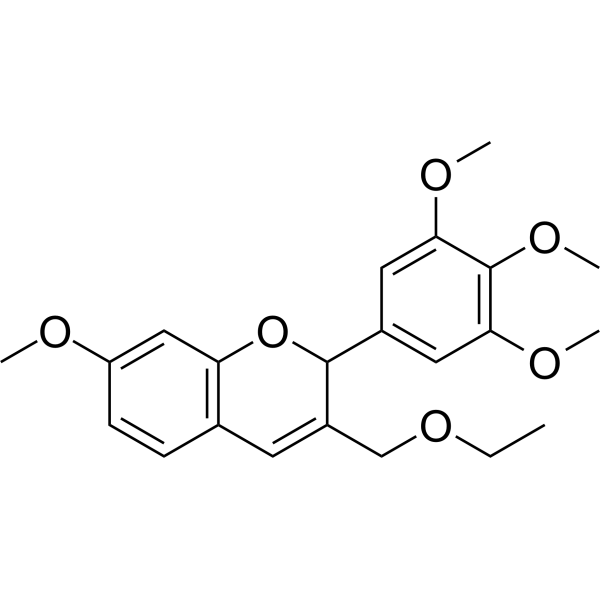 0 ImagesCat. No.: HY-160435CAS No.: 364039-54-3TNF-α-IN-14 is a potent and selective TNFα inhibitor with an IC50 value of 1.1 µM. TNF-α-IN-14 shows antiinflammatory properties (WO2001072735A2; compound 12).
-
Cacospongionolide B
 0 ImagesCat. No.: HY-N21818CAS No.: 172854-76-1Cacospongionolide B is an orally active sesterterpene compound that can be isolated from Fasciospongia cavernosa. Cacospongionolide B is a secreted phospholipase A2 (sPLA2) inhibitor with an IC50 of 4.3 μM. Cacospongionolide B exhibits antibacterial activity. Cacospongionolide B downregulates the expression of iNOS, COX-2 and TNF-α by inhibiting NF-κB nuclear translocation and its DNA binding, and simultaneously selectively and irreversibly inhibits sPLA2 enzymatic activity. Cacospongionolide B can be used in studies related to bacterial infection and adjuvant arthritis.
-
Hordenine hydrochloride (Standard)
 0 ImagesSynonyms: Ordenina hydrochloride (Standard); Peyocactine hydrochloride (Standard)Hordenine hydrochloride (Standard) (Ordenina hydrochloride (Standard); Peyocactine hydrochloride (Standard)) is the analytical standard of Hordenine hydrochloride (HY-N0113B). This product is intended for research and analytical applications. Hordenine hydrochloride (Ordenina hydrochloride; Peyocactine hydrochloride) is a multifunctional alkaloid with oral activity and blood-brain barrier penetration. Hordenine hydrochloride inhibits LPS-induced phosphorylation of p38, JNK, ERK1/2, p65, IκB, and AKT, prevents p65 nuclear translocation, and suppresses inflammatory cytokines and mediators. Hordenine hydrochloride inhibits melanin synthesis in melanocytes and reconstructed epidermis. Hordenine hydrochloride activates the Wnt/β-catenin signaling pathway. Hordenine hydrochloride activates DRD2, acts as a D3R partial agonist, α2A-AR full agonist, and 5-HT2A-R antagonist, and inhibits SERT and DAT. Hordenine hydrochloride inhibits α-synuclein accumulation and ameliorates motor deficits in Parkinson's disease models. Hordenine hydrochloride limits alcohol intake, reduces relapse drinking behavior. Hordenine hydrochloride can be used for research on mastitis, skin pigmentation, acute lung injury, foodborne diseases, hair loss, Parkinson's disease, bacterial infections, and alcohol use disorder.
-
FFP-104
 0 ImagesCat. No.: HY-P991554CAS No.: 2378693-56-0FFP-104 is a humanized IgG4 monoclonal antibody inhibitor targeting TNFRSF5/CD40. VX70 can be used for chronic autoimmune liver diseases research, such as primary biliary cholangitis (PBC).
-
Anti-inflammatory agent 116
 0 ImagesCat. No.: HY-184324CAS No.: 2975573-18-1Anti-inflammatory agent 116 is an anti-inflammatory agent. Anti-inflammatory agent 116 inhibits the abnormal activation of the NF-κB/MAPK signaling pathway. Anti-inflammatory agent 116 binds to the p50 subunit and impairs the DNA-binding ability of the p65-p50 heterodimer. Anti-inflammatory agent 116 inhibits LPS-induced production of NO and MtROS, secretion of IL-1β and TNF-α, expression of iNOS and COX-2, phosphorylation of IKK, IκB, p65, p38, ERK and JNK, as well as nuclear translocation of p65. Anti-inflammatory agent 116 alleviates sepsis-associated acute liver injury in mice. Anti-inflammatory agent 116 can be used for the research of sepsis-associated acute liver injury.
-
Nrf2 activator-27
 0 ImagesCat. No.: HY-184690Nrf2 activator-27 is a Nrf2 activator with anti-inflammatory activity. Nrf2 activator-27 increases the expression level of Nrf2, promotes its nuclear translocation, and upregulates the downstream target proteins HO-1 and NQO1. Nrf2 activator-27 reduces the production of NO, TNF-α, IL-1β and IL-6 in LPS-stimulated macrophages. Nrf2 activator-27 can be used for the research of inflammation-related diseases.
-
Abimufloxacin
 0 ImagesCat. No.: HY-187837CAS No.: 1426216-93-4Synonyms: OPS-2071Abimufloxacin (OPS-2071) is a broad-spectrum quinolone antibacterial agent. Abimufloxacin inhibits the supercoiling activity of DNA gyrase, the decatenation activity of topoisomerase IV, the activation and proliferation of T cells, macrophage activity, as well as the production of TNF-α and IFN-γ. Abimufloxacin exhibits activity against enteropathogenic Gram-positive bacteria, Gram-negative bacteria, quinolone-resistant bacteria, and Crohn's disease-associated bacteria (including Clostridioides difficile and Campylobacter jejuni). Abimufloxacin alleviates colonic inflammation in a mouse model of T cell-mediated colitis. Abimufloxacin can be used in research related to diseases such as intestinal infections and Crohn's disease.
-
Maxadilan TFA
 0 ImagesCat. No.: HY-P3483AMaxadilan TFA is a specific irreversible PAC1 receptor agonist and a potent vasodilator peptide present in the salivary glands of sand flies. Maxadilan TFA exhibits anti-apoptotic activity in hADSCs. Maxadilan TFA inhibits pro-inflammatory cytokines (TNF-α) and enhances anti-inflammatory mediators (IL-10). Maxadilan TFA can activate leukocytes and inhibit vascular permeability through PAC1 receptors. Maxadilan TFA promotes neural differentiation of human adipose-derived stem cells. Maxadilan TFA can be used to study endotoxin shock, atherosclerosis, and neurodegenerative diseases[1][2][3][4][5].
-
Semapimod
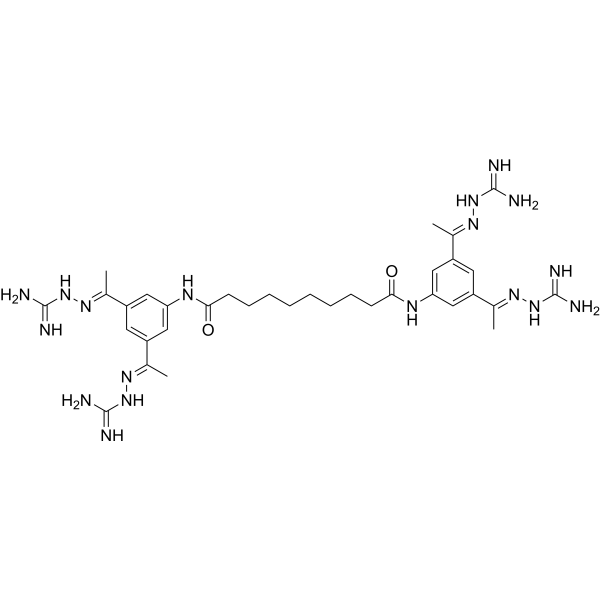 0 ImagesCat. No.: HY-15509CAS No.: 352513-83-8Synonyms: CNI-1493 free base; CPSI-2364Semapimod, an inhibitor of proinflammatory cytokine production, can inhibit TNF-α, IL-1β, and IL-6. Semapimod inhibits TLR4 signaling (IC50≈0.3 μM). Semapimod inhibits p38 MAPK and nitric oxide production in macrophages. Semapimod has potential in a variety of inflammatory and autoimmune disorders.
-
(DL)-3,5-Dimethyltyrosine
 0 ImagesCat. No.: HY-189364CAS No.: 88262-44-6Synonyms: SMC247-9(DL)-3,5-Dimethyltyrosine (SMC247-9) is a selective APOBEC3B inhibitor optimized from SMC247, with an IC50 of 50 pM. (DL)-3,5-Dimethyltyrosine binds to the APOBEC3B protein, reduces intracellular APOBEC3B protein abundance partially through a lysosome-dependent pathway, enhances IL-15 expression in tumor cells, and relieves the suppression of CD8+ T cells by tumor cells in an IL-15-dependent manner. (DL)-3,5-Dimethyltyrosine attenuates tumor- and macrophage-derived chemokine-mediated macrophage chemotaxis and inhibits pathological myeloid inflammatory signaling. (DL)-3,5-Dimethyltyrosine inhibits tumor growth in the immune checkpoint blockade-responsive MC38 syngeneic mouse model and produces synergistic effects with anti-PD-L1 in the immune checkpoint blockade-resistant TC-1 tumor model; it also ameliorates anti-PD-1-exacerbated DSS-induced colitis-like intestinal inflammatory injury. (DL)-3,5-Dimethyltyrosine can be used in research related to tumor immunotherapy.
-
Antileishmanial agent-44
 0 ImagesCat. No.: HY-184214Antileishmanial agent-44 is a histone deacetylase inhibitor targeting Leishmania donovani Sir2, with an IC50 of 0.652 μM against amastigotes. Antileishmanial agent-44 elevates ROS levels to induce oxidative stress, which causes mitochondrial membrane potential depolarization, cytochrome c release, phosphatidylserine externalization and DNA fragmentation, triggers apoptosis-like cell death, and arrests the cell cycle. Antileishmanial agent-44 upregulates the expression of Th1-type cytokines and NO in macrophages, reshapes host immune responses to eliminate intracellular parasites. Antileishmanial agent-44 inhibits parasites in infected golden hamsters in vivo. Antileishmanial agent-44 can be used for the research of visceral leishmaniasis.
-
Anti-inflammatory agent 11
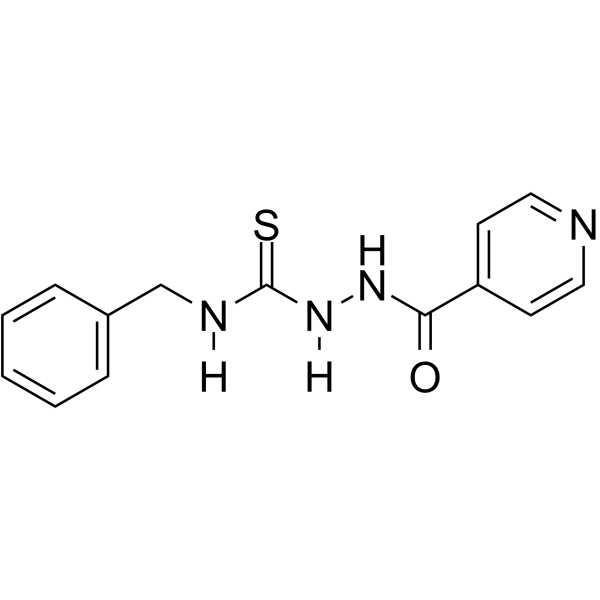 0 ImagesCat. No.: HY-144727CAS No.: 63932-07-0Anti-inflammatory agent 11 (compound 16) is a potent antimycobacterial and anti-inflammatory agent. Anti-inflammatory agent 11 inhibits Mtb H37Rv and M299 growth, with MIC50 (minimum inhibitory concentration 50%) of 1.3 and 6.9 μM, respectively. Anti-inflammatory agent 11 inhibits NO through the suppression of iNOS expression, and also inhibited the production of TNF-α and IL-1β. Anti-inflammatory agent 11 can be used for tuberculosis (TB) research.
-
Anti-inflammatory agent 115
 0 ImagesCat. No.: HY-183367CAS No.: 1504587-21-6Anti-inflammatory agent 115 is a potent anti-inflammatory agent. Anti-inflammatory agent 115 reduces secretion of myeloperoxidase (MPO), TNF-α, IL-1β, and IL-6. Anti-inflammatory agent 115 decreases ear tissue thickness and neutrophil infiltration in 12-O-tetradecanoylphorbol-13-acetate (TPA) (HY-18739)-induced topical edema in mice. Anti-inflammatory agent 115 can be used for the research of inflammatory diseases.
-
Hordenine sulfate
 0 ImagesCat. No.: HY-N0113ACAS No.: 62493-39-4Synonyms: Ordenina sulfate; Peyocactine sulfateHordenine sulfate (Ordenina sulfate; Peyocactine sulfate) is a multifunctional alkaloid with oral activity and blood-brain barrier penetration. Hordenine sulfate inhibits LPS-induced phosphorylation of p38, JNK, ERK1/2, p65, IκB, and AKT, prevents p65 nuclear translocation, and suppresses inflammatory cytokines and mediators. Hordenine sulfate promotes M2 macrophage polarization, restores blood-milk barrier integrity, alleviates oxidative stress by reducing ROS and MDA, and attenuates LPS-induced lung injury and pulmonary edema. Hordenine sulfate inhibits cAMP production, CREB phosphorylation, and MITF expression, thereby suppressing melanin synthesis in melanocytes and reconstructed epidermis. Hordenine sulfate activates the Wnt/β-catenin signaling pathway, promotes dermal papilla cell proliferation and hair shaft elongation, and accelerates hair regeneration. Hordenine sulfate activates DRD2, acts as a D3R partial agonist, α2A-AR full agonist, and 5-HT2A-R antagonist, and inhibits SERT and DAT. Hordenine sulfate inhibits α-synuclein accumulation and ameliorates motor deficits in Parkinson's disease models. Hordenine sulfate limits alcohol intake, reduces relapse drinking behavior, and modulates alcohol-induced conditioned place preference. Hordenine sulfate can be used for research on mastitis, skin pigmentation, acute lung injury, foodborne diseases, hair loss, Parkinson's disease, bacterial infections, and alcohol use disorder.
-
Anti-inflammatory agent 20
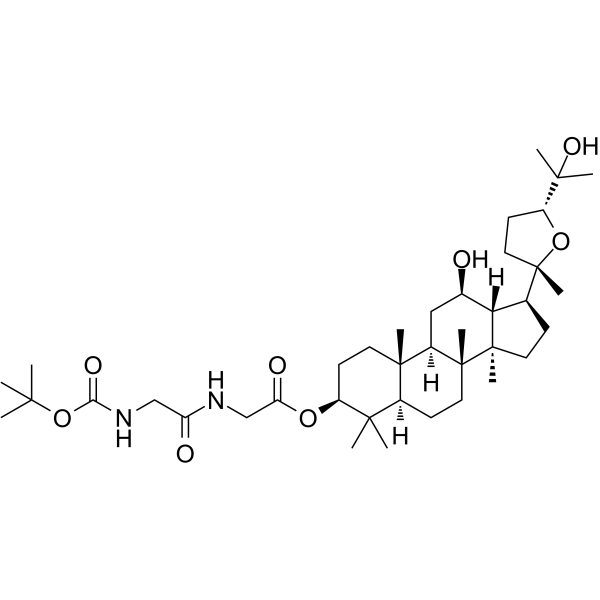 0 ImagesCat. No.: HY-146419CAS No.: 2127403-65-8Anti-inflammatory agent 20 (compound 5a) is a potent inhibitor of NO activity. Anti-inflammatory agent 20 shows anti-inflammatory activity. Anti-inflammatory agent 20 suppresses LPS-induced inflammation via inhibiting the activation of NF-κB and MAPK signaling and thereby reducing IL-6, TNF-α, iNOS, and COX-2 upregulation.
-
CH-100
 0 ImagesCat. No.: HY-131675CAS No.: 51346-20-4CH-100 is an immunomodulatory agent targeting T-cell activation and inflammatory mediator production. CH-100 demonstrates anti-inflammatory and hepatoprotective effects by reducing TNF-α secretion, suppressing CD4+ T-cell proliferation, and lowering endotoxin levels in alcohol-fed rats. CH-100 is promising for research of alcoholic liver disease and T-cell-mediated hepatitis.
-
CSF1R-IN-27
 0 ImagesCat. No.: HY-183569CAS No.: 3034296-91-5CSF1R-IN-27 is a CSF1R inhibitor with oral effectiveness, kinome-wide selective profile, low cellular cytotoxicity, and CSF1R IC50 values of 19 nM, 88 nM, 173 nM, 797 nM, 1448 nM, and >3000 nM. CSF1R-IN-27 suppresses M-CSF-induced phosphorylation of CSF1R, AKT, and ERK in macrophages, and inhibits hepatic p-CSF1R/p-AKT/p-ERK signaling. CSF1R-IN-27 reduces serum transaminase levels, improves hepatic histopathology, alleviates inflammatory cell infiltration, and decreases circulating TNF-α and IL-6 levels. CSF1R-IN-27 can be used for the research of acute liver injury.



