



TNFRSF5/CD40
TNFRSF5/CD40 is a tumor necrosis factor receptor family member expressed by B cells, professional antigen-presenting cells, non-immune cells, and tumors[1]. Mechanistically, CD40-CD40L/CD154 engagement regulates humoral and cellular adaptive immunity, including B-cell proliferation, immunoglobulin isotype switching, and germinal center formation[1][2]. CD40 signaling recruits TRAFs and activates NF-κB, with additional involvement of PI3K/AKT, MAPKs, and JAK3/STAT pathways[3]. In inflammatory disease models, CD40 ligation promotes cytokines, chemokines, matrix metalloproteinases, growth factors, adhesion molecules, and procoagulant responses in vascular and immune-associated cells[4][5]. Compared with related pathway forms, CD40 and CD40L both have membrane and soluble forms, and soluble CD40 may bind CD40L and reduce transmembrane CD40 receptor activation[3][6]. For experimental applications, CD40 agonistic antibodies and CD40L-based strategies require receptor clustering or trimerization, while antagonistic approaches target autoimmune disease, allograft rejection, and inflammatory pathology[3][7].
References:
- [1]. Elgueta R, et al. Molecular mechanism and function of CD40/CD40L engagement in the immune system. Immunol Rev. 2009 May;229(1):152-72. [Content Brief]
- [2]. Lougaris V, et al. Hyper immunoglobulin M syndrome due to CD40 deficiency: clinical, molecular, and immunological features. Immunol Rev. 2005 Feb;203:48-66. [Content Brief]
- [3]. Tang T, et al. Molecular basis and therapeutic implications of CD40/CD40L immune checkpoint. Pharmacol Ther. 2021 Mar;219:107709. [Content Brief]
- [4]. Chatzigeorgiou A, et al. CD40/CD40L signaling and its implication in health and disease. Biofactors. 2009 Nov-Dec;35(6):474-83. [Content Brief]
- [5]. Schönbeck U, et al. CD40 signaling and plaque instability. Circ Res. 2001 Dec 7;89(12):1092-103. [Content Brief]
- [6]. Lakshman N, et al. Microglia in the spinal cord stem cell niche regulate neural precursor cell proliferation via soluble CD40 in response to myelin basic protein. Stem Cells. 2025 Feb 12;43(2):sxae076. [Content Brief]
- [7]. Richards DM, et al. Concepts for agonistic targeting of CD40 in immuno-oncology. Hum Vaccin Immunother. 2020;16(2):377-387. [Content Brief]
-
TNFRSF5/CD40 Related Products (138)
Related Products (138)

-
Xanthine oxidase-IN-6
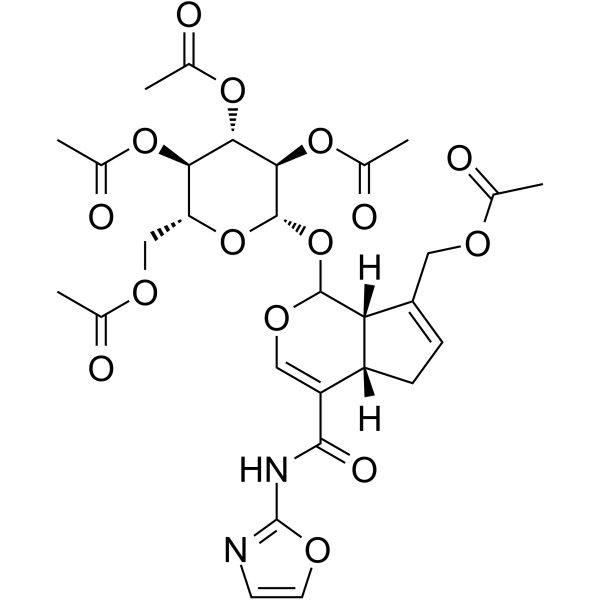 0 ImagesCat. No.: HY-146560Xanthine oxidase-IN-6 (Compound 6c) is a potent, orally active, mixed-type xanthine oxidase (XOD) inhibitor with an IC50 value of 1.37 µM. Xanthine oxidase-IN-6 shows strong anti-hyperuricemia and renal protective activity.
-
Penitrem E
 0 ImagesCat. No.: HY-N22060CAS No.: 78213-66-8Penitrem E is an indole diterpenoid alkaloid with antitumor activity, isolated and extracted from Penicillium commune. Penitrem E is a BK channel antagonist. Penitrem E exerts its antagonistic effect by forming hydrogen bonds with the calcium-binding site of the BK channel, thereby upregulating the expression of TNF-α. Penitrem E can be used for research on breast cancer.
-
AD-35
 0 ImagesCat. No.: HY-117710BCAS No.: 1531586-64-7AD-35 is an orally active, blood-brain barrier-permeable acetylcholinesterase inhibitor with an IC50 of 793 nM. AD-35 inhibits metal-induced amyloid-β aggregation and disassembles preformed amyloid-β aggregates. In rat models of cognitive impairment, AD-35 attenuates Aβ25-35-induced astrocyte activation, TNF-α and IL-1β release, inhibits ERK phosphorylation, and alleviates learning and memory deficits. AD-35 can be used for research on Alzheimer's disease.
-
Dendrocandin U
 0 ImagesCat. No.: HY-N21802CAS No.: 1922084-93-2Dendrocandin U is a bibenzyl compound found in Dendrobium officinale that exhibits anti-inflammatory activity and α-glucosidase inhibitory effect (IC50 = 9.46 mM). Dendrocandin U inhibits the expression of TLR4 and MyD88 in the TLR4/MyD88/NF-kB pathway, suppresses the phosphorylation of NF-kB p65 and I-kBα, and blocks the nuclear translocation of NF-kB p65. Dendrocandin U inhibits M1 polarization, NO secretion, and TNF-α release in alveolar macrophages, and reduces inflammatory morphological changes in macrophages. Dendrocandin U promotes neurite outgrowth in PC12 cells. Dendrocandin U can be used for research on inflammation-related diseases and type 2 diabetes.
-
LPZ-51
 0 ImagesCat. No.: HY-183611LPZ-51 is a Vibrio β-lactam resistance sensor kinase (VbrK) inhibitor with a Ki value of 1.09 μM. LPZ-51 inhibits blaA gene expression at the transcriptional level by blocking the kinase activity of VbrK, reduces β-lactamase synthesis, and does not affect bacterial growth. LPZ-51 acts synergistically with β-lactam antibiotics. LPZ-51 decreases bacterial load, alleviates intestinal inflammation, and improves survival rate in zebrafish infection models. LPZ-51 can be used in studies related to Vibrio parahaemolyticus infection.
-
NUCC-0227579
 0 ImagesCat. No.: HY-184969NUCC-0227579 is a VHL-recruiting PROTAC degrader targeting CD73, with a DC50 of 0.32 μM. NUCC-0227579 synergistically mediates CD73 degradation through the ubiquitin-proteasome pathway and the lysosomal pathway. NUCC-0227579 inhibits the conversion of AMP to adenosine, abrogates adenosine-mediated immunosuppression, upregulates the activities of the NF-κB and NFAT pathways, and enhances the secretion, activation and proliferation levels of IFN-γ and TNF-α. NUCC-0227579 downregulates NAD+ synthesis in tumor cells, and inhibits the proliferation, migration and adhesion abilities of tumor cells under glutamine-deficient conditions. NUCC-0227579 significantly suppresses tumor growth in a humanized NSG mouse model of triple-negative breast cancer.
-
M802
 0 ImagesCat. No.: HY-P992401M802 is an anti-HER2/CD3 bispecific antibody, with a Kd of 0.578 nM for human HER2 and a Kd of 71.2 nM for human CD3. M802 inhibits the PI3K/AKT and MAPK signaling pathways, suppresses tumor cell proliferation, activates caspase-3, and promotes tumor cell apoptosis (apoptosis). M802 recruits and activates CD3-positive immune cells, mediates cytotoxicity against HER2-positive tumor cells, and induces immune cells to secrete IFN-γ, TNF-α, IL-2 and IL-6. M802 exhibits anti-tumor efficacy in mice with gastric cancer xenografts. M802 can be used in research related to HER2-positive breast cancer, HER2-positive gastric cancer and other cancers. The recommended isotype control is human IgG1 kappa (HY-P99001).
-
Anti-inflammatory agent 112
 0 ImagesCat. No.: HY-181156Anti-inflammatory agent 112 is an inducible nitric oxide synthase (iNOS) inhibitor, a COX-2 inhibitor, and an anti-inflammatory agent. Anti-inflammatory agent 112 suppresses i-NOS and COX-2 protein expression, reduces nitric oxide, IL-6, and TNF-α production, and attenuates lipopolysaccharide (LPS)-induced inflammatory responses. Anti-inflammatory agent 112 can be used for the research of inflammatory disorders.
-
TNF-α-IN-29
 0 ImagesCat. No.: HY-182884TNF-α-IN-29 is an orally active and selective TNF-α inhibitor, with IC50 values of 123.0 nM against human targets, and a human Kd of 45.9 nM. TNF-α-IN-29 blocks TNF-α-TNFR1 protein-protein interactions and inhibits TNF-α-mediated inflammatory signaling pathways. TNF-α-IN-29 exhibits anti-inflammatory effects in a mouse model of collagen-induced arthritis and promotes articular cartilage repair. TNF-α-IN-29 can be used for the research of rheumatoid arthritis.
-
Asperflavin
 0 ImagesCat. No.: HY-N15651CAS No.: 1415764-41-8Asperflavin is an anti-inflammatory compound that can be produced by the marine fungus Eurotium amstelodami. Asperflavin inhibits the production of NO, PGE2, and proinflammatory cytokines, as well as the expression of inducible NOS (iNOS) in RAW 264.7 cells treated with LPS (HY-D1056). Asperflavin can be used in the study of inflammatory diseases.
-
TNF-α-IN-15
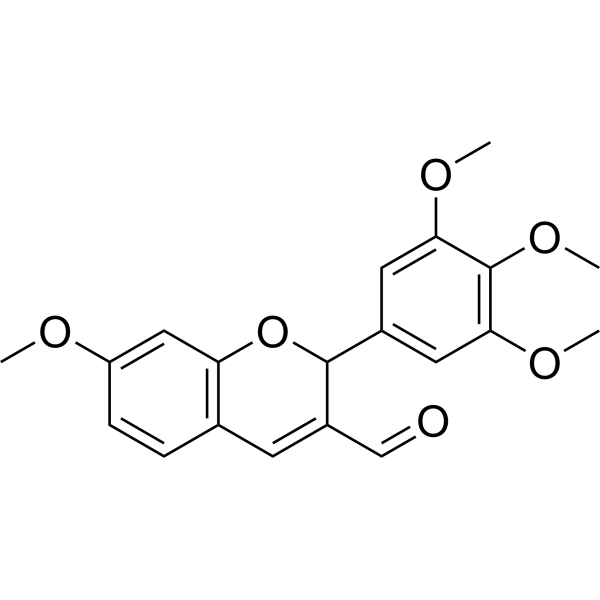 0 ImagesCat. No.: HY-160436CAS No.: 364039-58-7TNF-α-IN-15 is a TNF-α inhibitor. TNF-α-IN-15 can decrease the TNF-α blood levels.
-
Anethole trithione derivative-1
 0 ImagesCat. No.: HY-189057Anethole trithione derivative-1 is a derivative of Anethole trithione (HY-B1223), and also a regulator of sulfide:quinone oxidoreductase (SQR) and uncoupling protein 2 (UCP2), with mitochondrial uncoupling-inducing activity and neuroprotective activity. Anethole trithione derivative-1 mediates mitochondrial uncoupling via SQR-dependent reverse electron transport of complex I, ROS-dependent UCP2 activation, and reduction of mitochondrial membrane potential. Anethole trithione derivative-1 reduces brain damage and improves function in mouse models of ischemic and hemorrhagic stroke. Anethole trithione derivative-1 can be used in stroke research.
-
Anti-inflammatory agent 118
 0 ImagesCat. No.: HY-184341Anti-inflammatory agent 118 is a bergenin derivative with anti-inflammatory activity. Anti-inflammatory agent 118 inhibits the expression of iNOS through negative feedback regulation mediated by NO release, while blocking the phosphorylation of p65 protein and reducing the secretion levels of two pro-inflammatory cytokines, TNF-α and IL-6. Anti-inflammatory agent 118 can be used for the research of inflammation-related diseases.
-
TBE 31
 0 ImagesCat. No.: HY-141439CAS No.: 936475-62-6TBE 31 is an orally active Keap1/Nrf2 pathway activator and NQO1 inducer with a Dm value of 1.1 nM for NQO1. TBE 31 binds to cysteine residues of Keap1, inhibits ubiquitination and degradation of Nrf2, thereby activating the expression of ARE-dependent genes. TBE 31 induces cytoprotective enzymes including NQO1 and GST isoforms, promotes Nrf2 accumulation, and upregulates Nrf2-regulated genes related to antioxidation and lipid metabolism. TBE 31 inhibits pro-inflammatory responses, formation of AFB1-DNA adducts, endoplasmic reticulum stress, cell apoptosis (apoptosis), hepatic fibrosis, oxidative stress, and the expression of ChREBP. TBE 31 reduces the number of tumors in a mouse model of ultraviolet-induced skin carcinogenesis. TBE 31 enhances nerve growth factor-induced neurite outgrowth. TBE 31 attenuates LPS-induced serum TNF-α levels and immobility time in mice. TBE 31 can be used in research related to liver cancer, skin cancer, inflammation-related depression, and non-alcoholic steatohepatitis.
-
TNF-α-IN-12
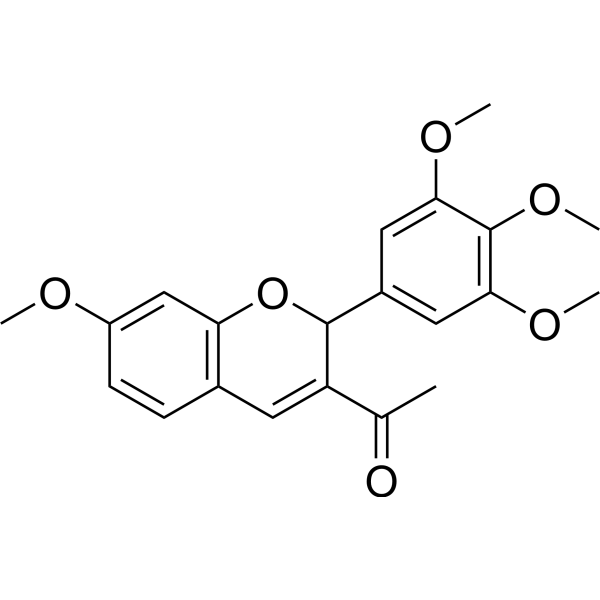 0 ImagesCat. No.: HY-160433CAS No.: 364039-56-5TNF-α-IN-12 is a TNF-α inhibitor with IC50 of 0.1 μM. TNF-α-IN-12 can decrease the TNF-α blood levels.
-
1-(2,5-Dihydroxyphenyl)-3-hydroxybutan-1-one
 0 ImagesCat. No.: HY-N19110CAS No.: 1083202-40-71-(2,5-Dihydroxyphenyl)-3-hydroxybutan-1-one is an inhibitor of iNOS and COX-2. 1-(2,5-Dihydroxyphenyl)-3-hydroxybutan-1-one inhibits LPS-induced excessive production of NO and PGE2, as well as the mRNA expression of pro-inflammatory cytokines TNF-α, IL-1β, IL-6 and IL-12. 1-(2,5-Dihydroxyphenyl)-3-hydroxybutan-1-one can be used in inflammation-related research.
-
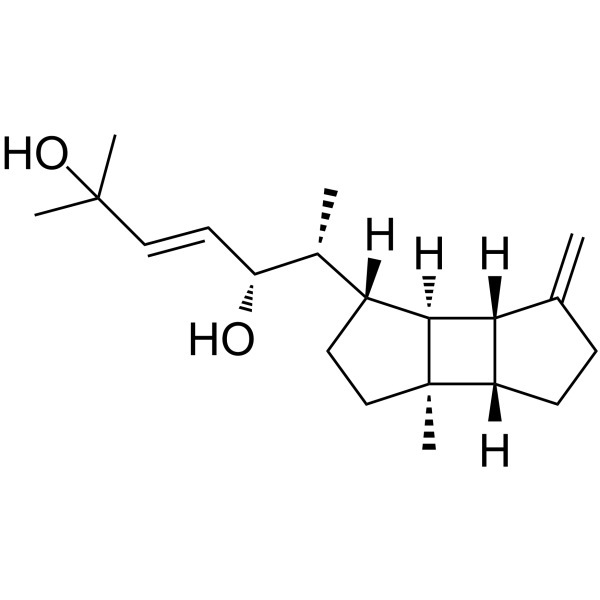
Sinulatumolin E
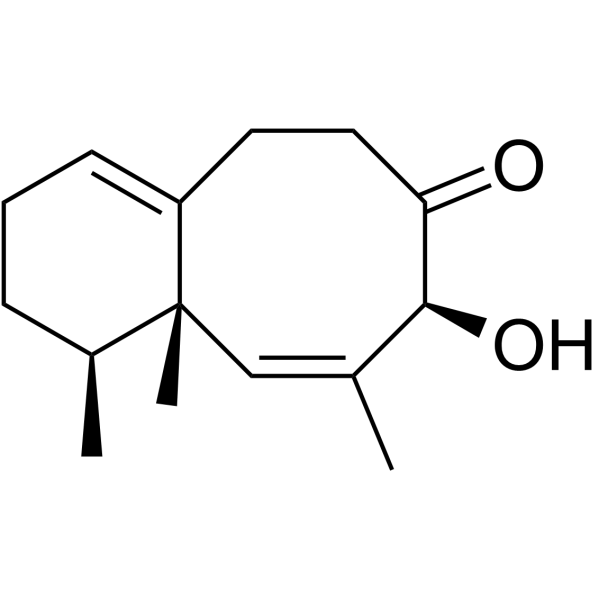 0 ImagesCat. No.: HY-N10448CAS No.: 2570255-85-3Sinulatumolin E (compound 6), a terpenoid, displays significant TNF-α inhibitory activity with an IC50 of 3.6 μM. Sinulatumolin E (compound 6) exhibits anti-inflammatory activity.
-
7-O-Methyl glabranin
 0 ImagesCat. No.: HY-N19816CAS No.: 75291-75-77-O-Methyl glabranin is a flavonoid compound and also an inhibitor of LPS-induced TNF-α and IL-1β production. 7-O-Methyl glabranin can be used in the research of diseases such as inflammation.
-
13(S)-HOTrE
 0 Images13 (S)-HOTrE is an oxylipin metabolite of α-Linolenic acid (HY-N0728). 13 (S)-HOTrE mediates the inactivation of the NLRP3 inflammasome through the PPAR-γ pathway to exert anti-inflammatory effects. 13 (S)-HOTrE inhibits NF-κB nuclear translocation, ROS production, autophagy and IL-1β levels, induces apoptosis, and increases IL-10 levels. 13 (S)-HOTrE alleviates LPS-induced inflammatory responses in macrophages, prolongs the survival time of septic mice, and regulates the immunometabolic phenotype in parenteral nutrition mouse models. 13 (S)-HOTrE can be used in the research of immune and inflammation-related diseases.



