



MHC
Major Histocompatibility Complex; MHC
MHC is a group of genes encoding proteins which are transferred to the cell surfaces to present the intracellular or extracellular, self or non-self antigens to the cells of the immune system, thereby helping T cells in differentiating self from non-self proteins, and initiating adaptive immune responses. MHC can be divided into 3 subtypes, MHC I, MHC II and MHC III, in which MHC I presents endogenous antigens (such as antigens produced by virus-infected cells or tumor cells) to activate cytotoxic T cells (CD8+ T cells); MHC II presents exogenous antigens (such as bacteria or parasites) to activate helper T cells (CD4+ T cells); MHC III does not directly participate in antigen presentation, but involves in immune regulation, inflammatory response and cell signaling. MHC is crucial for stem cell transplant (SCT), and could lead to graft-versus-host disease (GVHD)[1][2].
References:
- [1]. Deakin JE, et al., Evolution and comparative analysis of the MHC Class III inflammatory region. BMC Genomics. 2006 Nov 2;7:281. [Content Brief]
- [2]. Sharma S K. Major Histocompatibility Complex[M]//Basics of Hematopoietic Stem Cell Transplant. Singapore: Springer Nature Singapore, 2023: 903-913.
MHC Isoform Specific Products
All Product Categories
-
MHC Related Products (124)
Related Products (124)

-
MHC Isoform Comparison
-
MEDI-5083
 0 ImagesCat. No.: HY-P992408MEDI-5083 is an Fc fusion protein that targets CD40 and is a CD40 agonist. MEDI-5083 stimulates CD40 signaling via NF-κB activation. MEDI-5083 upregulates MHCII, CD80, and CD86 expression, induces pro-inflammatory cytokine secretion, and enhances IFN-γ secretion by memory CD8+ T cells. MEDI-5083 can be used for the research of melanoma, colon carcinoma, and advanced solid tumors[1][2].
-
TP1L
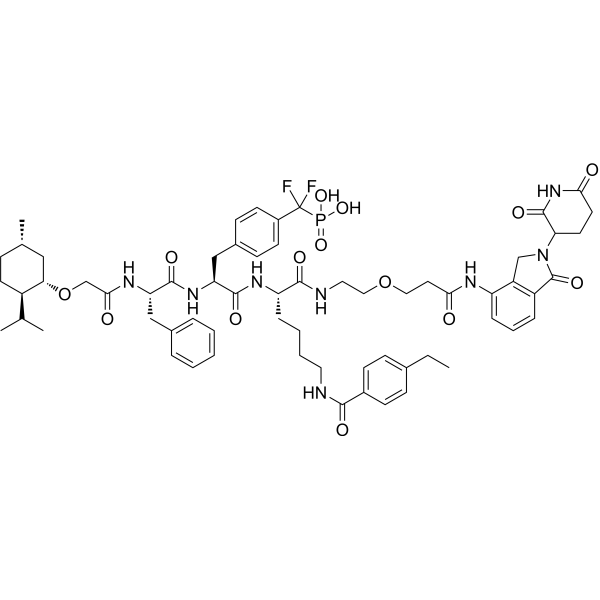 0 ImagesCat. No.: HY-160151TP1L is a potent and selective T-cell protein tyrosine phosphatase (TC-PTP) PROTAC degrader, with a DC50 value of 35.8 nM. TP1L elevates the phosphorylation level of TC-PTP substrates including pSTAT1 and pJAK1. TP1L selectively enhances IFN-γ signaling and increases MHC-I expression. TP1L activates TCR signaling through increases phosphorylation of LCK. TP1L enhances CAR-T cell mediated tumor killing efficacy through activation of the CAR-T cells. TP1L can be used for the study of cancer. (Pink: TC-PTP ligand: (HY-138964), Blue: E3 ligase CRBN Ligand (HY-A0003), Black: Linker: (HY-140002)).
-
BAGE (2-10)
 0 ImagesCat. No.: HY-P11390CAS No.: 160983-12-0BAGE (2-10) is a BAGE-encoded nonapeptide. BAGE (2-10) binds to the HLA-Cw*1601 molecule to form an antigen recognized by autologous cytotoxic T lymphocytes. BAGE (2-10) can be used in melanoma research.
-
TCR-IN-2
 0 ImagesCat. No.: HY-180609CAS No.: 2375043-73-3
-
KDEL
 0 ImagesCat. No.: HY-P2674CAS No.: 113516-56-6
-
CliMB-325
 0 ImagesCat. No.: HY-179211CliMB-325 is an HSP90 inhibitor that can induce MHC-I (EC50 = 498 nM) expression on the surface of CT26 murine colorectal cancer cells. CliMB-325 enhances T cell activation and exhibits lower toxicity. CliMB-325 can be used for the study of colorectal cancer.
-
Anti-Mouse TCR Vγ1.1/Cr4 Antibody (2.11)
 0 ImagesCat. No.: HY-P990161Anti-Mouse TCR Vγ1.1/Cr4 Antibody (2.11) is an anti-mouse TCR Vγ1.1/Cr4 IgG monoclonal antibody. Anti-Mouse TCR Vγ1.1/Cr4 Antibody (2.11) can deplete Vγ1 γδ T cells. Anti-Mouse TCR Vγ1.1/Cr4 Antibody (2.11) can be used for research on cancer and inflammation conditions such as mastitis and colon cancer.
-
SEIDLILGY
 0 ImagesCat. No.: HY-P11701CAS No.: 681020-80-4SEIDLILGY is a nonapeptide identified as a peptide ligand derived from mouse major histocompatibility complex class I (MHC). SEIDLILGY serves as a tool chemical stimulant for the specific activation of sensory neurons expressing the particular vomeronasal receptor (V2rf2).
-
Anti-Rat TCR alpha/beta Antibody (R73)
 0 ImagesCat. No.: HY-P990160Anti-Rat TCR alpha/beta Antibody (R73) is an anti-mouse TCR alpha/beta IgG1 monoclonal antibody. Anti-Rat TCR alpha/beta Antibody (R73) suppresses immune response by depleting α/β+ T cells. Anti-Rat TCR alpha/beta Antibody (R73) can inhibit the expression of pro-inflammatory cytokines. Anti-Rat TCR alpha/beta Antibody (R73) can extend graft survival time by reducing infiltration of T cells and neutrophils. Anti-Rat TCR alpha/beta Antibody (R73) can be used for researches on inflammation, metabolic conditions and xenotransplantation such as arthritis, acute inflammatory peripheral neuropathy and diabetes.
-
TpD
 0 ImagesCat. No.: HY-P11090CAS No.: 1273551-45-3TpD is a chimeric T-helper epitope. TpD has a special site that cathepsin can cut. Immunization with TpD produces a strong antibody response. TpD promotes long-term CD4 immune responses in animals and humans. TpD binds well to many human MHC class II types, mainly HLA-DRB1. It also binds some other HLA alleles like DRB3, DRB4, DRB5, DP, and DQ. TpD can be used to improve the immune response of peptide vaccines.
-
CMV pp65 (123-131)
 0 ImagesCat. No.: HY-P12118CAS No.: 151868-77-8
-
M133 peptide
 0 ImagesCat. No.: HY-P10382M133 peptide is a coronavirus-specific CD4 T cell epitope. M133 peptide is immunodominant in mice infected with the neurotropic coronavirus (the JHM strain of mouse hepatitis virus). M133 peptide forms a complex with MHC II molecules, which is recognized by specific TCRs, thereby activating CD4 T cells.
-
VLPDVFIRCV
 0 ImagesCat. No.: HY-P11397CAS No.: 176510-49-9VLPDVFIRCV, a melanoma antigen-derived peptide, is the intron sequence (nt 38-67) of the N-acetylglucosamine transferase V (GnT-V) gene. VLPDVFIRCV has a high affinity for MHC-I class molecules, but it cannot activate the immune response against natural tumor cells. The cytotoxic T lymphocytes (CTL) induced by VLPDVFIRCV can specifically lyse T2 cells loaded with this peptide in the chromium release experiment. VLPDVFIRCV can be used for vaccine design research.

-
Tyrosinase (192-200), human mouse
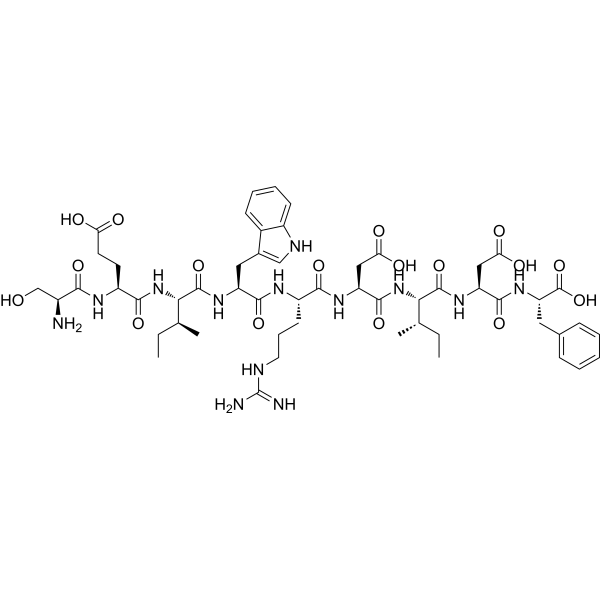 0 ImagesCat. No.: HY-P3742CAS No.: 170294-35-6Tyrosinase (192-200), human mouse is a HLA-B*4403-restricted tyrosinase epitope with affinity for HLA-B4403 and HLA-B4402. Tyrosinase (192-200), human mouse binds to HLA-B*4403 to form a complex, which is recognized by the autologous cytotoxic T lymphocyte clone 22/31 derived from melanoma. Tyrosinase (192-200), human mouse binds to HLA-B4402 to form a complex, which is recognized by the CTL clone 329B/5 derived from healthy HLA-B4402 donors. Tyrosinase (192-200), human mouse is applicable to melanoma-related research.
-
Adipophilin-derived peptide
 0 ImagesCat. No.: HY-P11434CAS No.: 474885-03-5Adipophilin-derived peptide is a peptide derived from Adipophilin. Adipophilin-derived peptide binds to HLA-A*0201. Adipophilin-derived peptide can be used in cancer research.
-
Ste2Cys
 0 ImagesCat. No.: HY-171239CAS No.: 656831-19-5Ste2Cys is a diacylglycerol cysteine-type immunologic adjuvant lipid molecule. Ste2Cys can bind to TLR2 and activate NF-κB signaling pathway. Ste2Cy can upregulate the expression of MHC II class molecules on the surface of mouse bone marrow-derived D1 dendritic cells. Ste2Cys can be used for research of the development of immunologic vaccines.
-
Anti-Mouse TCRβ Antibody (HB218)
 0 ImagesCat. No.: HY-P990159Anti-Mouse TCRβ Antibody (HB218) is an anti-mouse TCRβ IgG2b monoclonal antibody. Anti-Mouse TCRβ Antibody (HB218) can deplete TCRβ+ T cells. Anti-Mouse TCRβ Antibody (HB218) can be used for research on inflammation conditions and cancer such as spontaneous dermatitis and squamous cell carcinoma (SCC).
-
MOG (92–106), mouse, rat
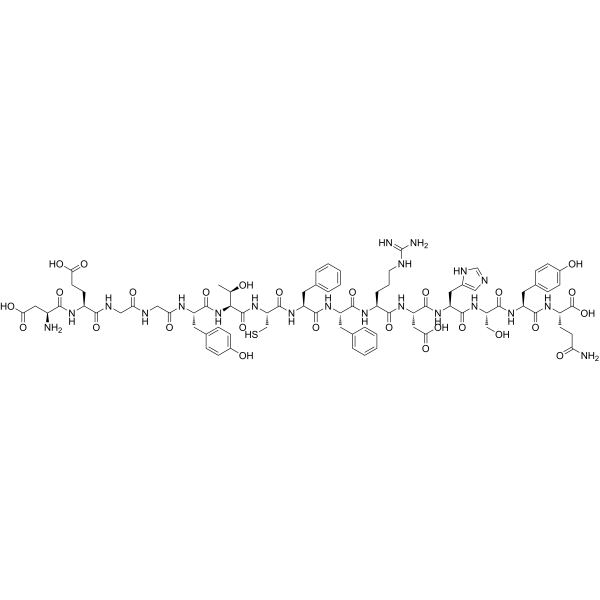 0 ImagesCat. No.: HY-P5448CAS No.: 159507-82-1MOG (92-106), mouse, rat is a 15-peptide encephalitogenic epitope composed of amino acid residues 92-106 of myelin oligodendrocyte glycoprotein (MOG). MOG (92-106), mouse, rat serves as an I-As-restricted CD4+ T cell antigen. MOG (92-106), mouse, rat also induces extensive B cell responses against secondary myelin antigens such as MBP and PLP. MOG (92-106), mouse, rat is applicable to studies on multiple sclerosis, EAE, autoimmune demyelination, and antigen-specific T/B cell responses.
-
Anti-CD160 Antibody (MAT 303)
 0 ImagesCat. No.: HY-P992202



