



Necroptosis
Necroptosis is a form of regulated necrotic cell death mediated by receptor-interacting serine-threonine kinase 3 (RIPK3) and mixed lineage kinase domain-like (MLKL) and generally manifests with morphological features of necrosis. Necroptosis is characterized by early loss of plasma membrane integrity, leakage of intracellular contents, and organelle swelling. The cells dying through necroptosis lack the typical apoptotic characteristics, such as membrane blebbing, chromatin condensation, and intranucleosomal DNA cleavage into 180 bp DNA laddering, but may show TUNEL positivity.
Necroptosis triggers innate immune responses by rupturing dead cells and releasing intracellular components, it can be caused by Toll-like receptor (TLR)-3 and TLR-4 agonists, tumor necrosis factor (TNF), certain microbial infections, and T cell receptors. Necroptosis signaling is modulated by receptor-interacting protein kinase (RIPK) 1 when the activity of caspase-8 becomes compromised. Activated death receptors (DRs) cause the activation of receptor-interacting serine-threonine kinase 1 (RIPK1) and the RIPK1 kinase activity-dependent formation of an RIPK1-RIPK3-MLKL, which is complex II. RIPK3 phosphorylates MLKL, ultimately leading to necrosis through plasma membrane disruption and cell lysis.
All Product Categories
-
Necroptosis Related Products (176)
Related Products (176)

-
RIP3 activator 1
 0 ImagesCat. No.: HY-168640CAS No.: 1456899-52-7RIP3 activator 1 (compound C8) is a potent RIP3 activator. RIP3 activator 1 inhibits cell growth. RIP3 activator 1 induces necroptosis through the RIP3/p62/Keap1 signaling pathway. RIP3 activator 1 increases the protein expression of p-MLKL. RIP3 activator 1 induces autophagy. RIP3 activator 1 increases accumulation of LC3-II and p62 protein expression.
-
RIPK1-IN-41
 0 ImagesCat. No.: HY-183781RIPK1-IN-41 is an orally active RIPK1 inhibitor with an IC50 of 92 nM and a KD of 106.8 nM. RIPK1-IN-41 reduces the phosphorylation level of RIPK1, inhibits necrosome formation, blocks the activation of RIPK3 and MLKL, maintains mitochondrial and lysosomal functions, preserves cell membrane integrity, and suppresses necroptosis. RIPK1-IN-41 alleviates hypothermia and multi-organ damage in a mouse model of systemic inflammatory response syndrome induced by mTNF-α. RIPK1-IN-41 is applicable to research related to systemic inflammatory response syndrome.
-
RIPK3-IN-8
 0 ImagesCat. No.: HY-189220RIPK3-IN-8 is an orally active and selective RIPK3 inhibitor with a Kd of 150 nM. RIPK3-IN-8 disrupts the formation of the RIPK3-MLKL necrosome and reduces the phosphorylation of downstream MLKL. RIPK3-IN-8 inhibits necroptosis. RIPK3-IN-8 increases the survival rate in a mouse model of TNF-α/Z-VAD-fmk (HY-16658B)-induced systemic inflammatory response syndrome. RIPK3-IN-8 is used for the research of systemic inflammatory response syndrome.
-
Necroptosis-IN-6
 0 ImagesCat. No.: HY-187056CAS No.: 3104649-83-1
Necroptosis-IN-6 is a Necroptosis inhibitor with an IC50 of 582 nM. Necroptosis-IN-6 can be used for cancer research.
-
ZYH-23
 0 ImagesCat. No.: HY-176407ZYH-23 is a potent necroptosis inhibitor. ZYH-23 blocks necroptosis by inhibiting RIPK1, RIPK3, and MLKL phosphorylation via HSP90 targeting.
-
Chlorhexidine acetate hydrate
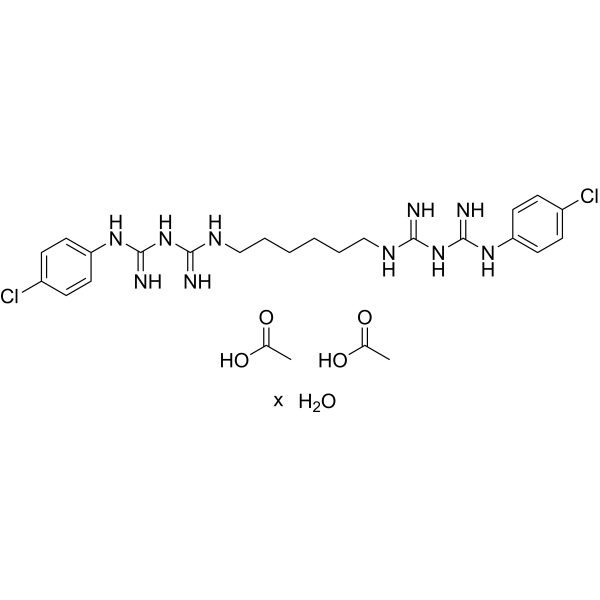 0 ImagesCat. No.: HY-B1248ACAS No.: 206986-79-0Chlorhexidine acetate hydrate is a orally active cationic antimicrobial agent that targets microbial cell membranes. Chlorhexidine acetate hydrate binds to cell membrane phospholipids non-specifically, destroys membrane structure and induces leakage of cell contents. Chlorhexidine acetate hydrate has broad-spectrum bactericidal activity against both Gram-positive and Gram-negative bacteria. Chlorhexidine acetate hydrate can interfere with membrane permeability, cause protein precipitation and energy metabolism disorders, such as rapid inhibition of microbial growth and induction of cell death (necrosis or apoptosis).
-
RIPK1-IN-40
 0 ImagesCat. No.: HY-181944RIPK1-IN-40 (Compound 51) is a RIPK1 inhibitor and anti-necroptotic agent (with an EC50 of 0.07 μM against necroptosis). RIPK1-IN-40 binds to the kinase domain of RIPK1, forms hydrogen bond interactions with Met95, and establishes additional polar contacts with Asp156 to stabilize binding, thereby inhibiting necroptosis. RIPK1-IN-40 can be used for the research of colorectal cancer.
-
RIPK1-IN-42
 0 ImagesCat. No.: HY-184686RIPK1-IN-42 is an orally active RIPK1 inhibitor with a Kd of 21 nM. RIPK1-IN-42 inhibits the phosphorylation of RIPK1, suppresses the phosphorylation of downstream RIPK3 and MLKL, blocks necrosome formation, and inhibits necroptosis. RIPK1-IN-42 alleviates hypothermia, suppresses the elevation of pro-inflammatory cytokine levels, and reduces organ damage. RIPK1-IN-42 can be used for the research of systemic inflammatory response syndrome.
-
Necrostatin-21
 0 ImagesCat. No.: HY-W319332CAS No.: 169136-33-8Necrostatin-21 (Compound Nec-21) is a necroptosis inhibitor with an EC50 of 0.5 μM. Necrostatin-21 has a dual inhibitory effect on the RIP1 and JNK3 kinases. Necrostatin-21 can be used for the researches of infection, cardiovascular and neurological disease, such as Alzheimer disease .
-
EGFR-IN-134
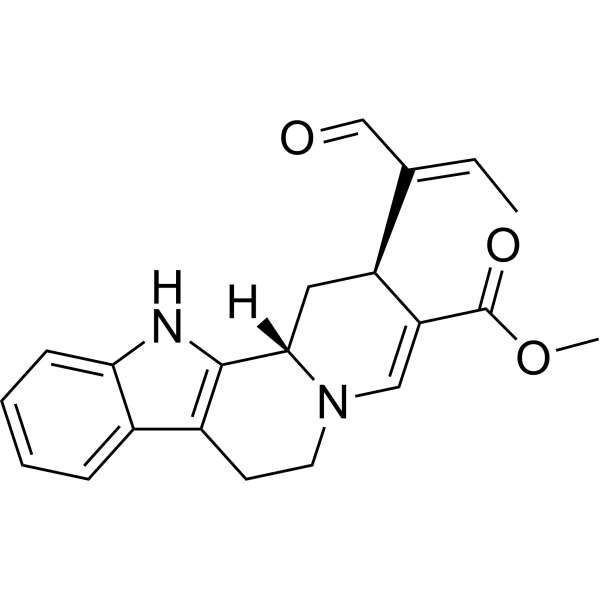
 0 ImagesCat. No.: HY-168623EGFR-IN-134 (compound 3f), a triazolo[3,4-a]isoquinoline derivative, is a potent EGFR inhibitor with an IC50 of 0.023 µM. EGFR-IN-134 induces apoptosis and necrosis. EGFR-IN-134 initiates cell cycle arrest at the G2/M and pre-G1 phases, downregulates anti-apoptotic protein Bcl2 and upregulates pro-apoptotic proteins: p53, Bax, and caspases 3, 8, and 9. EGFR-IN-134 shows antiproliferative and anticancer activity.
-
AZ'320
 0 ImagesCat. No.: HY-174820AZ'320 is an ATP-competitive necroptosis (EC50 of 4.9 μM) inhibitor and a RIPK1 (pKD of 5.45) inhibitor. AZ'320 inhibits necroptosis by inhibiting RIPK1 phosphorylation. AZ’320 prevents mortality of the mice and rescues temperature and body weight in SIRS mice models. AZ'320 can be used for researches of cancer and inflammation.
-
MLKL-IN-5
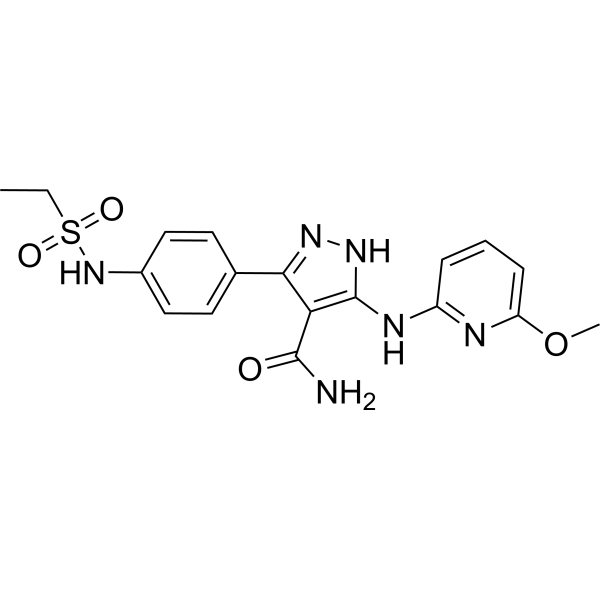 0 ImagesCat. No.: HY-148767CAS No.: 2755872-58-1MLKL-IN-5 is a mixed lineage kinase domain-like protein (MLKL) inhibitor with a KD of < 10 nM. MLKL-IN-5 exhibits selectivity for RIP3 and RIP1, with KD values of 1-30 μM and > 30 μM, respectively. MLKL-IN-5 mediates necroptosis.
-
FGFR1/VEGFR2-IN-2
 0 ImagesCat. No.: HY-161995FGFR1/VEGFR2-IN-2 (compound 6l) is a VEGFR2/FGFR1 dual inhibitor. The IC50 values for VEGFR2 and FGFR1 are 0.025 µM and 0.026 µM respectively, and for EGFR and PDGFR-β, the IC50 values are 0.106 µM and 0.077 µM. FGFR1/VEGFR2-IN-2 showes significant anti-cancer activity (GI=60.38%) on NCI-60 cell line, with an IC50 of 8.51 µM in T-47D cell line and anti-migration. FGFR1/VEGFR2-IN-2 acts to arrest cells in the G1 phase and promote apoptosis and necrosis; the IC50 for MCF-7 cell line exceeds 100 µM, and the IC50 for MDA-MB-231 is 69.17 µM, non-toxic to normal cells.
-
Citronellol-d3
 0 ImagesCat. No.: HY-W010201S1Synonyms: (±)-Citronelloll-d3; (±)-β-Citronelloll-d3Citronellol-d3 ( (±)-Citronelloll-d3) is the deuterium labeled Citronellol (HY-W010201). Citronellol ((±)-Citronellol) is an orally active inducer of apoptosis. Citronellol can prevent oxidative stress, mitochondrial dysfunction, and apoptosis in the SH-SY5Y cell Parkinson's disease model induced by 6-OHDA by regulating the ROS-NO, MAPK/ERK, and PI3K/Akt signaling pathways. Citronellol can induce necroptosis in human lung cancer cells through the TNF-α pathway and accumulation of ROS. Citronellol can reduce the levels of LC-3 and p62 to regulate the autophagy pathway, inhibit oxidative stress and neuroinflammation, and thus have neuroprotective effects on Parkinson's rats. Citronellol exhibits anti-fungal activity against Trichophyton rubrum by inhibiting ergosterol synthesis.
-
Anticancer agent 118
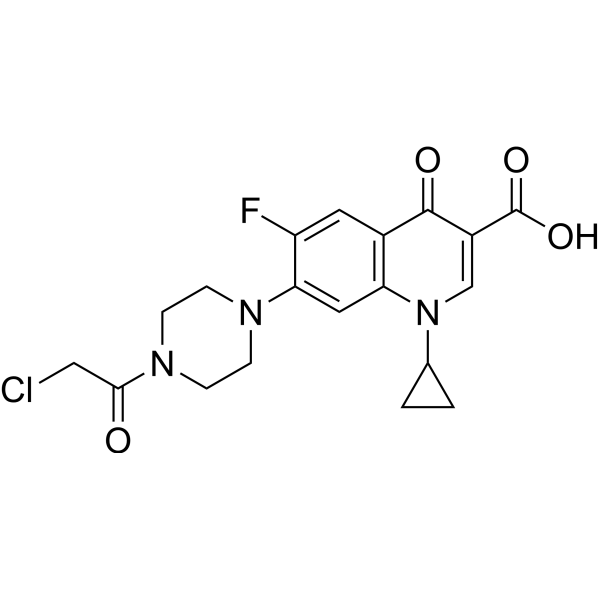 0 ImagesCat. No.: HY-154861CAS No.: 864443-43-6Anticancer agent 118, a N‑acylated ciprofloxacin derivative, has anti-bacterial and anticancer activities. Anticancer agent 118 shows high activity against Gram-positive strains and antiproliferative activities against prostate PC3 cells. Anticancer agent 118 can be used for antitumor research.
-
ω-Hexatoxin-Hv1a
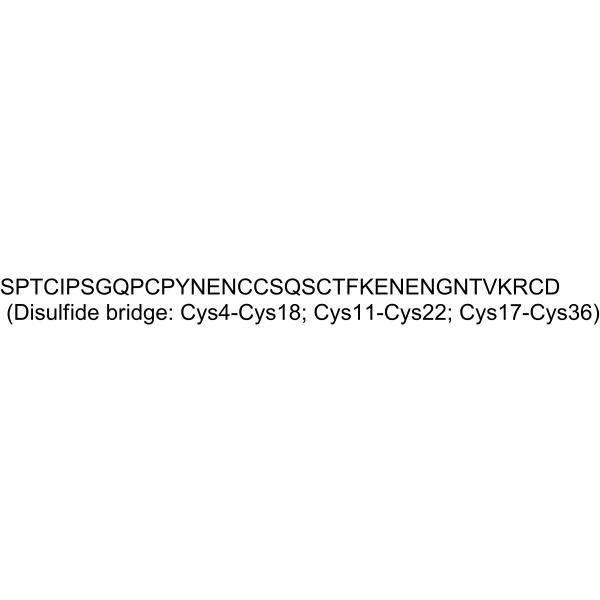 0 ImagesCat. No.: HY-P5142CAS No.: 193981-10-1Synonyms: ω-ACTX-Hv1; ω-Atracotoxin-HV1ω-Hexatoxin-Hv1a (ω-ACTX-Hv1; ω-Atracotoxin-HV1) is an orally active insecticidal neurotoxin containing an inhibitor cystine knot motif and a selective calcium channel inhibitor. ω-Hexatoxin-Hv1a blocks L-type voltage-dependent Ca2+ channels and reduces intracellular calcium ion concentration, thereby decreasing apoptosis, necroptosis and oxidative stress, and promoting cell recovery and energy level elevation. ω-Hexatoxin-Hv1a causes larval paralysis and death by impairing neurotransmission in the central nervous system of insects. It shows high injectable toxicity against insects of multiple orders, but exhibits weak oral toxicity. ω-Hexatoxin-Hv1a is widely applicable to studies related to ischemia-reperfusion injury, atopic dermatitis, and ischemic injury of cardiomyocytes and neurons.
-
Antiparasitic agent-15
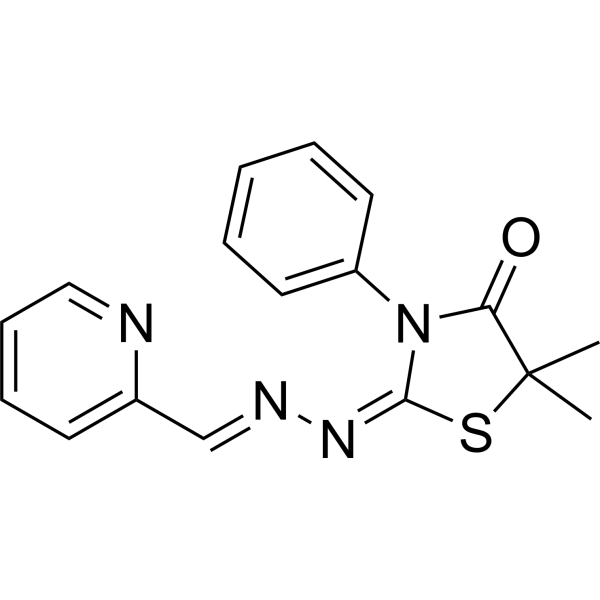 0 ImagesCat. No.: HY-149079CAS No.: 3046451-91-3Antiparasitic agent-15, a pyridine-thiazolidinone, has anti-Trypanosoma cruzi and leishmanicidal activities. Antiparasitic agent-15 has IC50s of 0.9 μM and 0.64 μM against trypomastigote and amastigote forms of T. cruzi. Antiparasitic agent-15 has IC50s of 42.2 μM and 9.58 μM against trypomastigote and amastigote forms of L. amazonensis. Antiparasitic agent-15 induces parasite cell death through necrosis induction. Antiparasitic agent-15 induces morphological changes such as shortening, retraction and curvature of the parasite body and leakage of internal content with T. cruzi trypomastigotes.
-
RIPK1-IN-23
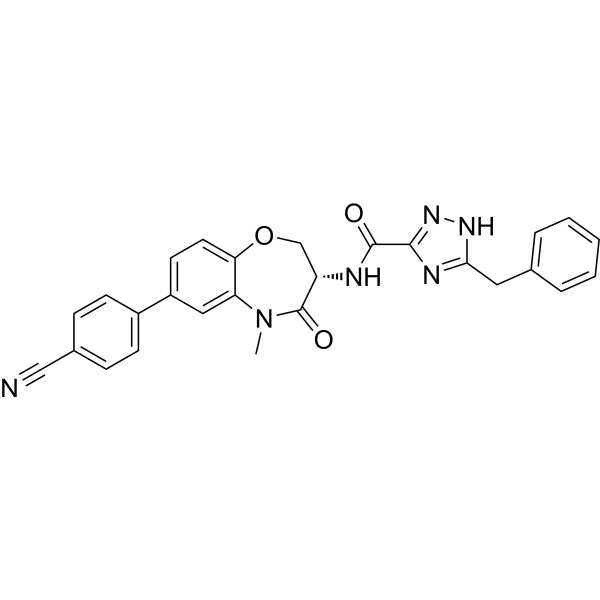 0 ImagesCat. No.: HY-157963CAS No.: 3031534-16-1RIPK1-IN-23 (compound 19) is a RIPK1 inhibitor with potent anti-necroptotic effects in HT-29 cells (EC50 of 1.7 nM). RIPK1-IN-23 shows anti-inflammatory activities.
-
Sibiriline
 0 ImagesCat. No.: HY-120600CAS No.: 1346526-26-8Sibiriline is a specific competitive inhibitor of RIPK1 that targets the RIPK1 ATP-binding site and locks it in an inactive conformation. Sibiriline inhibits TNF-induced RIPK1-dependent necroptosis and RIPK1-dependent apoptosis, but does not protect cells from caspase-dependent apoptosis. Sibiriline protects mice from concanavalin A-induced hepatitis and has the potential to inhibit immune-dependent hepatitis..



