



KT203

Based on 1 Customer Validation
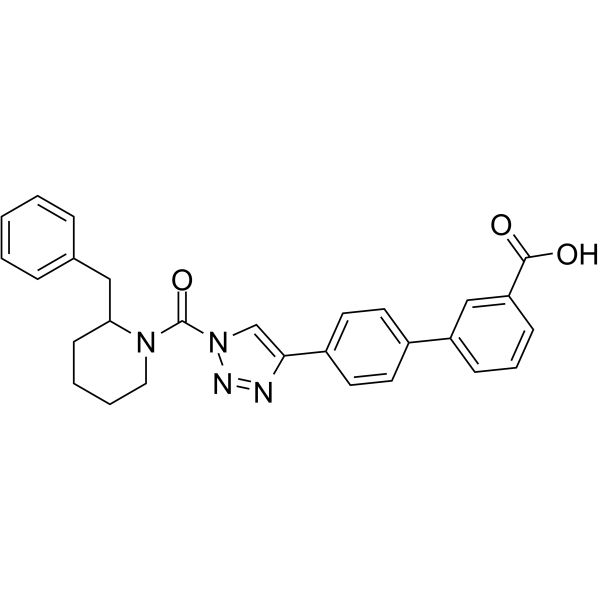
KT203 is a selective ABHD6 inhibitor. KT203 is peripherally restricted and cannot cross the blood-brain barrier, producing near-complete inhibition of hepatic ABHD6 while brain ABHD6 remains essentially unaffected. KT203 reduces cellular MAG hydrolase activity and blocks the hydrolysis of the endocannabinoid arachidonoylglycerol. KT203 inhibits pro-inflammatory cytokine expression, induces anti-inflammatory interleukin signaling and lipid metabolism gene expression, increases 2-MAG and DHA (HY-B2167)-containing lipid mediators, and reduces circulating TNF-α in LPS-exposed mice. KT203 inhibits PRRSV replication. KT203 can be used for research on NSCLC, obesity-related chronic inflammation, endotoxemia, and porcine reproductive and respiratory syndrome.
Nur für Forschungszwecke. Wir verkaufen nicht an Patienten.
- Reinheit : 99.64%
- CAS. Nr.: 1402612-64-9
- Formel: C28H26N4O3
- Molecular Weight:466.53
-
Speicherung:Powder -20°C, 3 years , 4°C, 2 years ; In solvent -80°C, 6 months , -20°C, 1 month

To place orders, for customer services and technical support, please contact: MedChemExpress USA
Tel: 609-228-6898 E-mail: [email protected] [email protected]


-
 Biologische Aktivität
-
Chemical Information
-
Lösungsmittel & Löslichkeit
- Protokoll
- Reinheit & Dokumentation
- Verweise
-
 Help & FAQs


-
HY-120177
KT182 -
HY-15249
JZL 184MAGL Inhibitor -
HY-117474
MJN110MAGL Inhibitor -
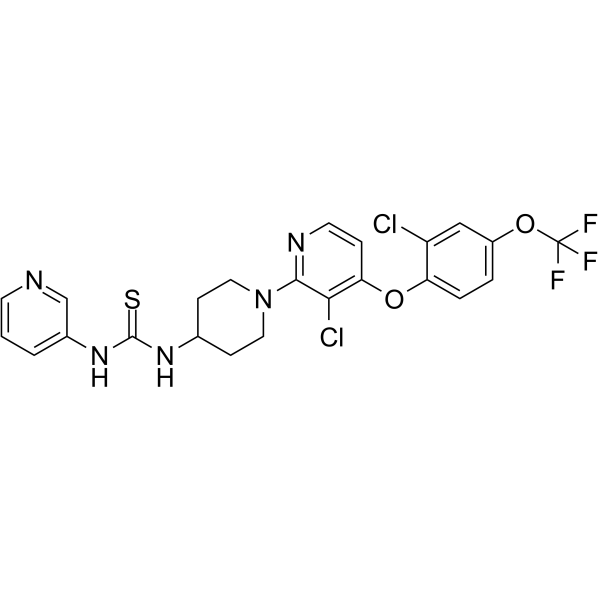
HY-114157
DO-264MAGL Inhibitor -
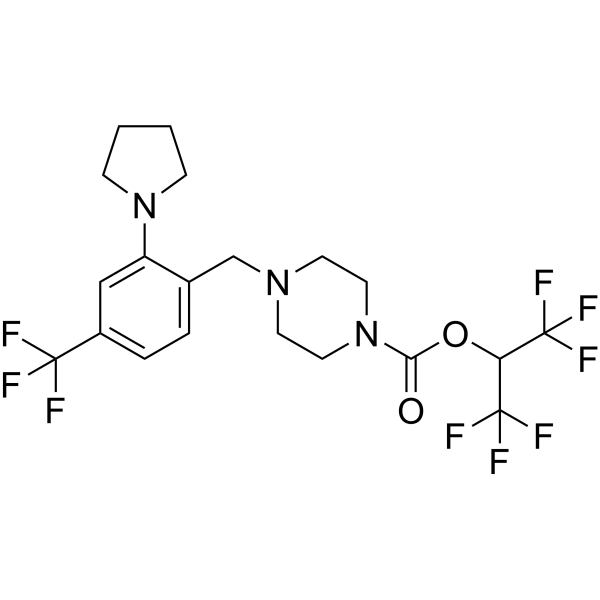
HY-117632
ElcubragistatMAGL Inhibitor -
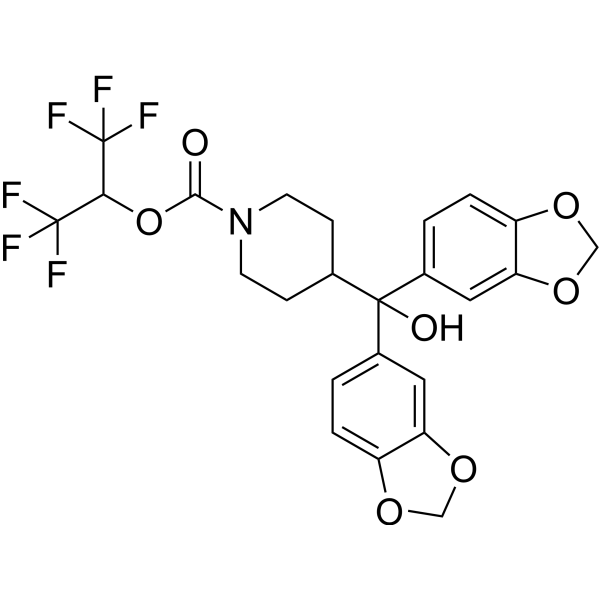
HY-18977
KML29MAGL Inhibitor -
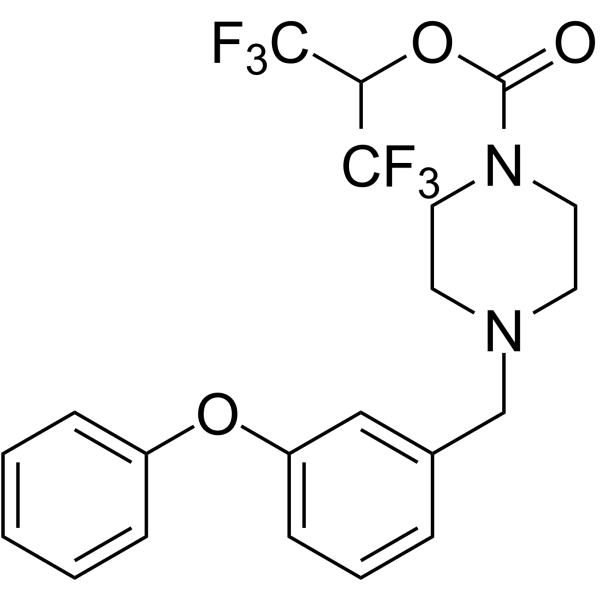
HY-12332
JW 642MAGL Inhibitor -
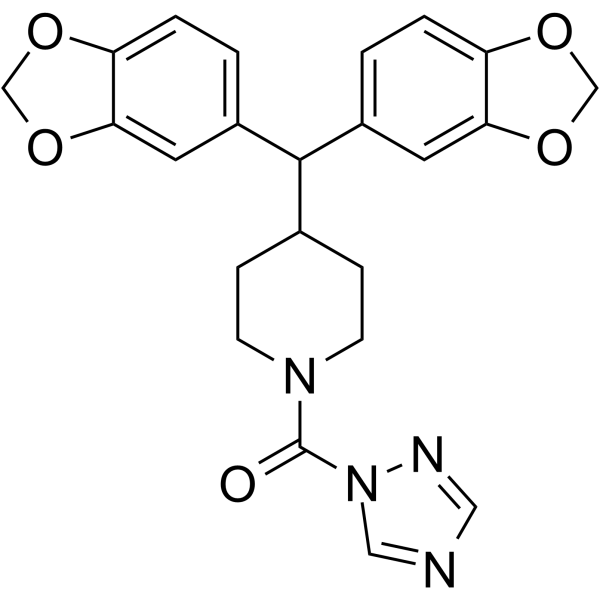
HY-108613
JJKK 048MAGL Inhibitor -
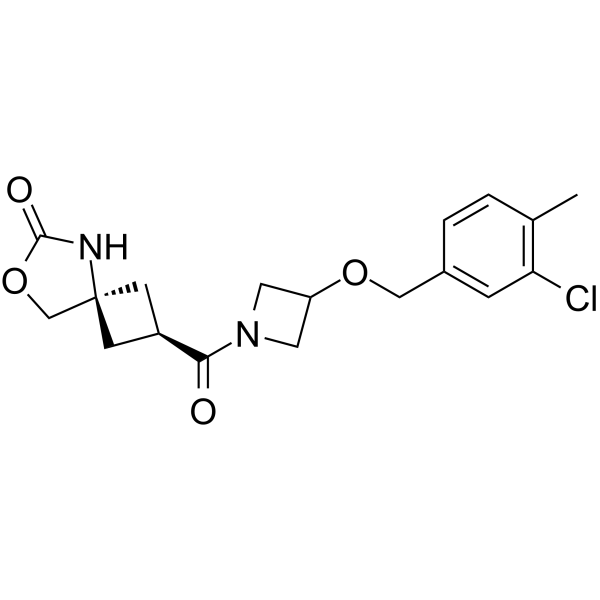
HY-132310
MAGL-IN-4MAGL Inhibitor -
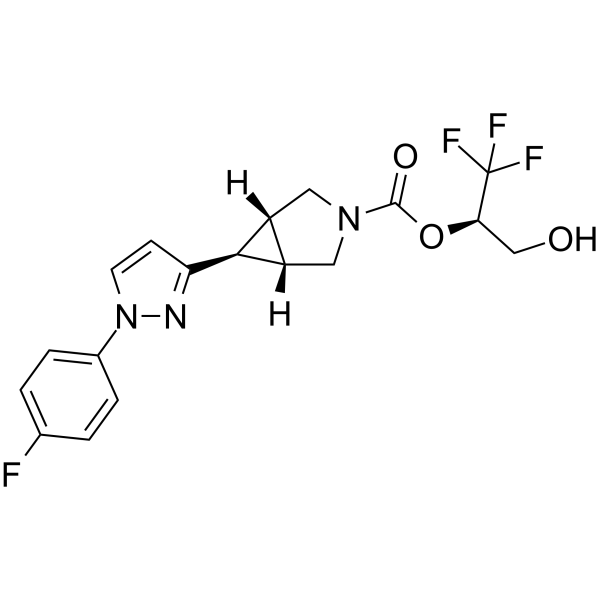
HY-111512
PF-06795071 -
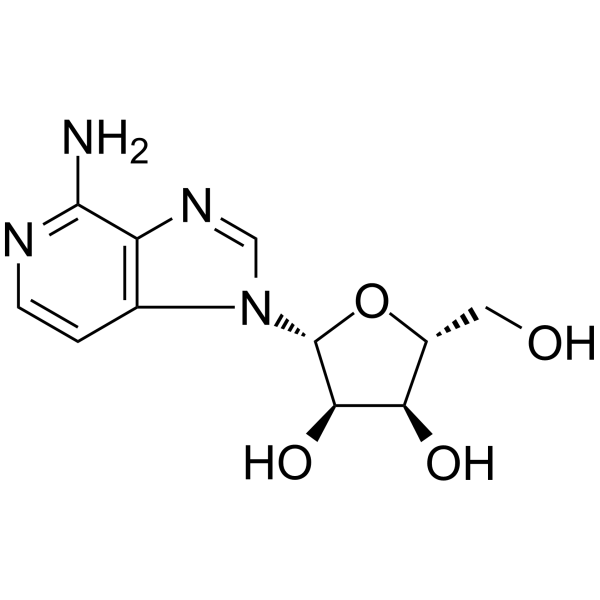
HY-W013332
3-DeazaadenosineSAHH Inhibitor -
HY-101294
TPPUsEH Inhibitor
Alle TNF Receptor Isoform-spezifische Produkte anzeigen
More

Biologische Aktivität
Beschreibung
IC50 & Target
IC50: 0.31 nM (ABHD6 in Neuro2A cells)[1].
Cellular Effect
|
Cell Line

|
Type | Value | Description | References |
|---|---|---|---|---|
| N2a | IC50 |
0.31 nM
|
In situ inhibition of ABHD6 in Neuro2A cells assessed by gel-based competitive ABPP after 4 hrs exposure with KT203.
In situ inhibition of ABHD6 in Neuro2A cells assessed by gel-based competitive ABPP after 4 hrs exposure with KT203.
|
24152295 |
| PAM | CC50 |
14.06 μM
|
Cytotoxicity against porcine alveolar macrophages (PAMs) assessed as viability reduction incubated 24 hrs by CCK-8 assay.
Cytotoxicity against porcine alveolar macrophages (PAMs) assessed as viability reduction incubated 24 hrs by CCK-8 assay.
|
40619342 |
In Vitro
KT203 (10 µM) increases the expression of PLIN2, PPARA, and PPARG and decreases TNFA in MMe-polarized THP1 macrophages[4].
KT203 (10 μM; 24 h) reduces glycerol release in RAW 264.7 macrophages and moderately reduces glycerol release in THP-1 macrophages[7].
KT203 (3 nM; 4 h) blocks >90% of ABHD6 activity in Neuro2A cells and shows no significant cross-reactivity with approximately 50 other serine hydrolases[5].
MedChemExpress (MCE) has not independently confirmed the accuracy of these methods. They are for reference only.
-
Cell Line:Marc145 cells
-
Concentration:0 to 200 µM
-
Incubation Time:24 h
-
Result:CC50 was 103.1 µM in Marc145 cells.
-
Cell Line:Marc145 cells
-
Concentration:Various concentrations
-
Incubation Time:24 h after infection
-
Result:Significantly reduced PRRSV N protein expression compared with DMSO at all tested concentrations.
In Vivo
MedChemExpress (MCE) has not independently confirmed the accuracy of these methods. They are for reference only.
-
Animal Model:C57BL/6[5]
-
Dosage:0.1-1 mg/kg
-
Administration:i.p.; single dose; 4 hr
-
Result:In liver, near-complete ABHD6 blockade was produced at 1 mg/kg and approximately 80% ABHD6 inhibition was maintained at lower doses.
In brain, negligible ABHD6 inhibition occurred at all doses tested.
Good selectivity was shown in brain and liver, with no observed CES1 inhibition.
-
Animal Model:C57BL/6 (female, 10 weeks old)[6]
-
Dosage:2 mg/kg
-
Administration:i.p.; once daily; from the day after MOG injection through 30 days post-immunization
-
Result:Did not modulate the course of EAE disease progression.
At 30 days post-immunization, neurological disability was comparable to vehicle.
Did not attenuate the corticospinal tract conduction latency deficit.
Did not reduce spinal cord lesion number or CD11b+ microglia/macrophage density, and inflammatory marker mRNA levels (Iba1, COX-2, TNFα, IL1β) in spinal cord, striatum, and hippocampus were similar to vehicle.
After chronic EAE, completely inactivated brain ABHD6 at 30 days post-immunization, although activity was restricted to the periphery during immunization and the early acute phase.
Did not reduce cannabinoid agonist-stimulated [35S]GTPγS binding in striatum or cerebellum.
No significant CB1 receptor downregulation was observed.
-
Animal Model:C57BL/6N (male, 12-16 weeks)[7]
-
Dosage:1 mg/kg
-
Administration:i.p.; single dose; one hour after LPS; 24 h follow-up
-
Result:Circulating TNF-α was lowered in LPS-challenged WT mice compared with vehicle-treated controls.
Plasma TNF-α reduction was observed within one hour of administration.


Chemical Information
-
CAS. Nr. 1402612-64-9
-
Appearance Solid
-
Molecular Weight 466.53
-
Formel C28H26N4O3
-
Color White to yellow
-
SMILES
O=C(N1C(CCCC1)CC2=CC=CC=C2)N3N=NC(C4=CC=C(C=C4)C5=CC=CC(C(O)=O)=C5)=C3
-
Versand
Room temperature in continental US; may vary elsewhere.
-
Speicherung
Powder -20°C 3 years 4°C 2 years In solvent -80°C 6 months -20°C 1 month


Lösungsmittel & Löslichkeit
In Vitro:
DMSO : 100 mg/mL (214.35 mM; Need ultrasonic; Hygroscopic DMSO has a significant impact on the solubility of product, please use newly opened DMSO)
Please refer to the solubility information to select the appropriate solvent. Once prepared, please aliquot and store the solution to prevent product inactivation from repeated freeze-thaw cycles.
Storage method and period of stock solution: -80°C, 6 months; -20°C, 1 month. When stored at -80°C, please use it within 6 months. When stored at -20°C, please use it within 1 month.
Konzentration (Stammlösung) × Volumen (Stammlösung) = Konzentration (Ziellösung) × Volumen (Ziellösung)
In Vivo:
Select the appropriate dissolution method based on your experimental animal and administration route.
- For the following dissolution methods, please ensure to first prepare a clear stock solution using an In Vitro approach and then sequentially add co-solvents:
- To ensure reliable experimental results, the clarified stock solution can be appropriately stored based on storage conditions. As for the working solution for In Vivo experiments, it is recommended to prepare freshly and use it on the same day.
- The percentages shown for the solvents indicate their volumetric ratio in the final prepared solution. If precipitation or phase separation occurs during preparation, heat and/or sonication can be used to aid dissolution.
Add each solvent one by one: 10% DMSO 40% PEG300 5% Tween-80 45% Saline
Solubility: ≥ 2.5 mg/mL (5.36 mM); Clear solution
This protocol yields a clear solution of ≥ 2.5 mg/mL (saturation unknown).
Taking 1 mL working solution as an example, add 100 μL DMSO stock solution (25.0 mg/mL) to 400 μL PEG300, and mix evenly; then add 50 μL Tween-80 and mix evenly; then add 450 μL Saline to adjust the volume to 1 mL.
Preparation of Saline: Dissolve 0.9 g sodium chloride in ddH₂O and dilute to 100 mL to obtain a clear Saline solution.
In Vivo Dissolution Calculator
Please enter the basic information of animal experiments:
-
-
-
-
Recommended: Prepare an additional quantity of animals to account for potential losses during experiments.
Please enter your animal formula composition:
-
%DMSO +
Recommended: Keep the proportion of DMSO in working solution below 2% if your animal is weak.
-
%+
-
+%Tween-80 + +
-
%Saline +
The co-solvents required include: DMSO, . All of co-solvents are available by MedChemExpress (MCE). , Tween 80. All of co-solvents are available by MedChemExpress (MCE).
Working solution concentration: 0.22 mg/mL
Method for preparing stock solution: mg drug dissolved in μL DMSO. Stock solution concentration: mg/mL.
1. Take μL DMSO stock solution;
2. Add μL .
μL , mix evenly;
3. Then add μL Tween 80, mix evenly;
4. Then add μL
Please ensure that the stock solution in the first step is dissolved to a clear state, and add co-solvents in sequence. You can use ultrasonic heating (ultrasonic cleaner, recommended frequency 20-40 kHz), vortexing, etc. to assist dissolution.


Reinheit & Dokumentation
-
Data Sheet (286 KB)
-
SDS (251 KB)
- English - EN (251 KB)
- Français - FR (251 KB)
- Deutsch - DE (251 KB)
- Norwegian - NO (251 KB)
- Español - ES (251 KB)
- Swedish - SV (251 KB)
- Italian - IT (251 KB)
- Korean - KR (251 KB)
- Portuguese - PT (251 KB)
-
Handling Instructions (2659 KB)
Verweise
[1]. Tang Z, et al. Enhanced monoacylglycerol lipolysis by ABHD6 promotes NSCLC pathogenesis. EBioMedicine. 2020 Mar;53:102696. [Content Brief]
[3]. Healey RD, et al. Discovery and mechanism of action of small molecule inhibitors of ceramidases. Angewandte Chemie International Edition. 2022 Jan 10;61(2):e202109967. [Content Brief]
[5]. Hsu KL, et al. Discovery and optimization of piperidyl-1,2,3-triazole ureas as potent, selective, and in vivo-active inhibitors of α/β-hydrolase domain containing 6 (ABHD6). Journal of medicinal chemistry. 2013 Nov 14;56(21):8270-9. [Content Brief]
[6]. Manterola A, et al. Re-examining the potential of targeting ABHD6 in multiple sclerosis: Efficacy of systemic and peripherally restricted inhibitors in experimental autoimmune encephalomyelitis. Neuropharmacology. 2018 Oct 1;141:181-91. [Content Brief]
[8]. He Z, et al. Identification of compounds targeting porcine reproductive and respiratory syndrome virus nsp3 and evaluation of their antiviral efficacy. Virulence. 2025 Dec 31;16(1):2530176. [Content Brief]


Complete Stock Solution Preparation Table
Please refer to the solubility information to select the appropriate solvent. Once prepared, please aliquot and store the solution to prevent product inactivation from repeated freeze-thaw cycles.
Storage method and period of stock solution: -80°C, 6 months; -20°C, 1 month. When stored at -80°C, please use it within 6 months. When stored at -20°C, please use it within 1 month.
| Optional Solvent | Concentration Solvent Mass | 1 mg | 5 mg | 10 mg | 25 mg |
|---|---|---|---|---|---|
| DMSO | 1 mM | 2.1435 mL | 10.7174 mL | 21.4348 mL | 53.5871 mL |
| 5 mM | 0.4287 mL | 2.1435 mL | 4.2870 mL | 10.7174 mL | |
| 10 mM | 0.2143 mL | 1.0717 mL | 2.1435 mL | 5.3587 mL | |
| 15 mM | 0.1429 mL | 0.7145 mL | 1.4290 mL | 3.5725 mL | |
| 20 mM | 0.1072 mL | 0.5359 mL | 1.0717 mL | 2.6794 mL | |
| 25 mM | 0.0857 mL | 0.4287 mL | 0.8574 mL | 2.1435 mL | |
| 30 mM | 0.0714 mL | 0.3572 mL | 0.7145 mL | 1.7862 mL | |
| 40 mM | 0.0536 mL | 0.2679 mL | 0.5359 mL | 1.3397 mL | |
| 50 mM | 0.0429 mL | 0.2143 mL | 0.4287 mL | 1.0717 mL | |
| 60 mM | 0.0357 mL | 0.1786 mL | 0.3572 mL | 0.8931 mL | |
| 80 mM | 0.0268 mL | 0.1340 mL | 0.2679 mL | 0.6698 mL | |
| 100 mM | 0.0214 mL | 0.1072 mL | 0.2143 mL | 0.5359 mL |


KT203 Related Classifications
HY-120215 Related Classifications
 Powered by Bioz