



Voxtalisib
Based on 5 publication(s) in Google Scholar
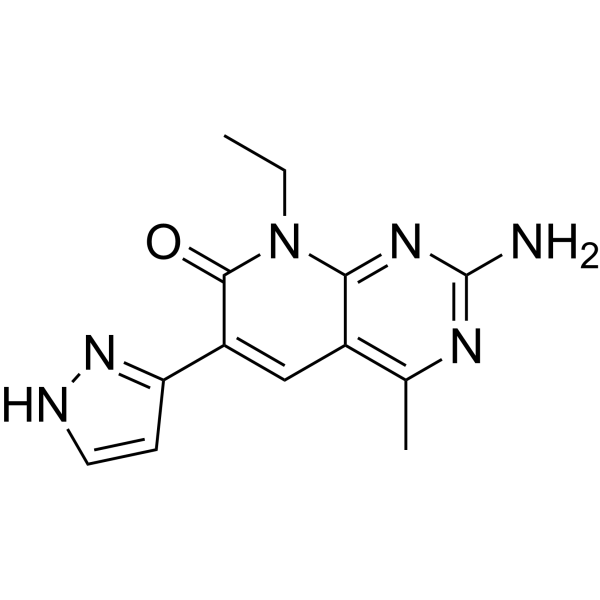
Voxtalisib (XL765) is a potent PI3K inhibitor, which has a similar activity toward class I PI3K (IC50s=39, 113, 9 and 43?nM for p110α, p110β, p110γ and p110δ, respectively), also inhibits DNA-PK (IC50=150?nM) and mTOR (IC50=157?nM). Voxtalisib (XL765) inhibits mTORC1 and mTORC2 with IC50s of 160 and 910 nM, respectively.
For research use only. We do not sell to patients.
- Purity : 99.82%
- CAS No.: 934493-76-2
- Formula: C13H14N6O
- Molecular Weight:270.29
-
Storage:Powder -20°C, 3 years , 4°C, 2 years ; In solvent -80°C, 2 years , -20°C, 1 year

To place orders, for customer services and technical support, please contact: MedChemExpress USA
Tel: 609-228-6898 E-mail: [email protected] [email protected]


-
 Biological Activity
-
Chemical Information
-
Solvent & Solubility
- Purity & Documentation
- References
-
 Help & FAQs


-
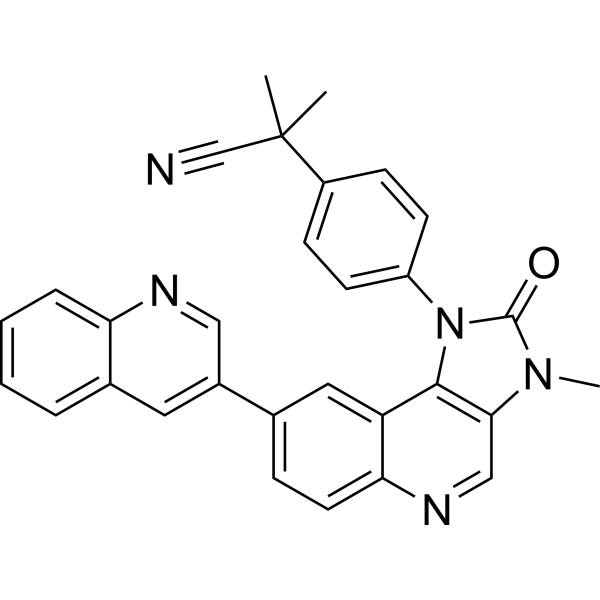
HY-50673
DactolisibPI3K/mTOR Inhibitor -
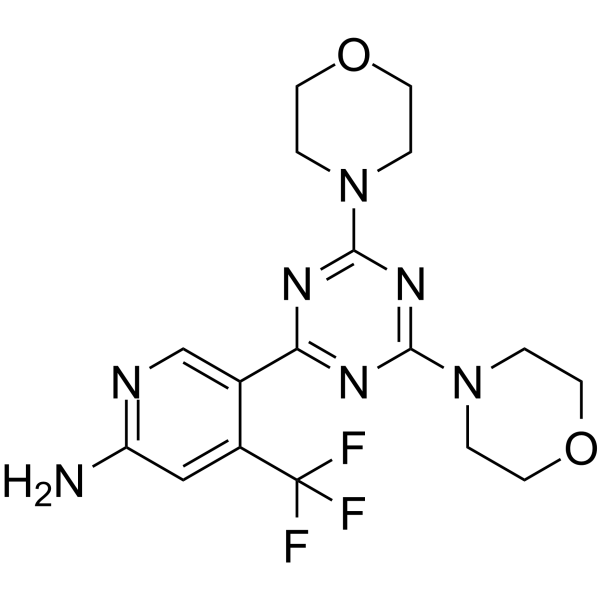
HY-12868
BimiralisibPI3K/mTOR Inhibitor -
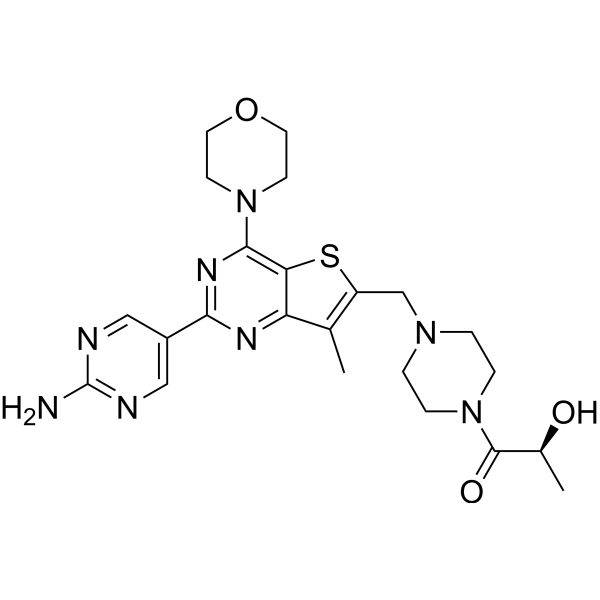
HY-13246
ApitolisibApoptosis Inducer -
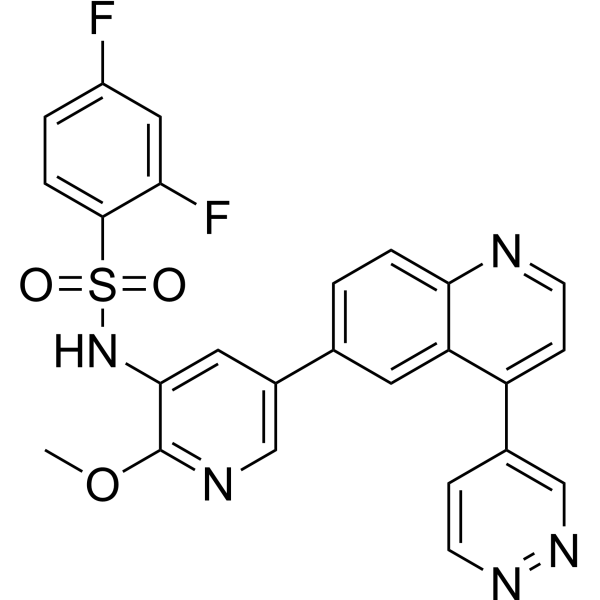
HY-10297
OmipalisibPI3K/mTOR Inhibitor -
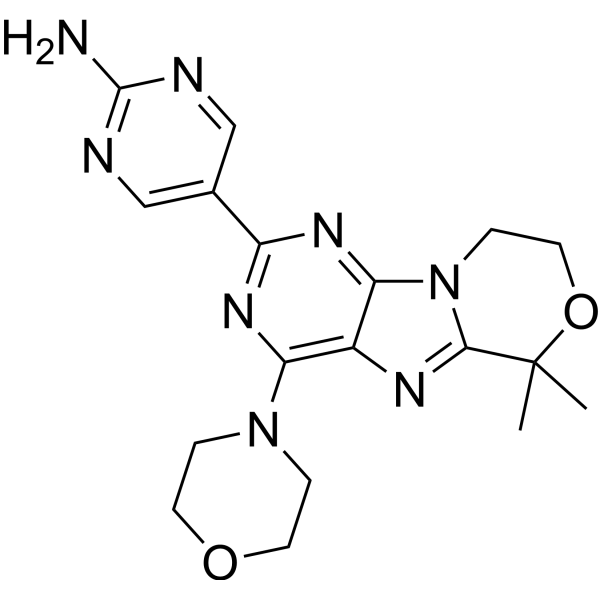
HY-19962
PaxalisibPI3K/mTOR Inhibitor -
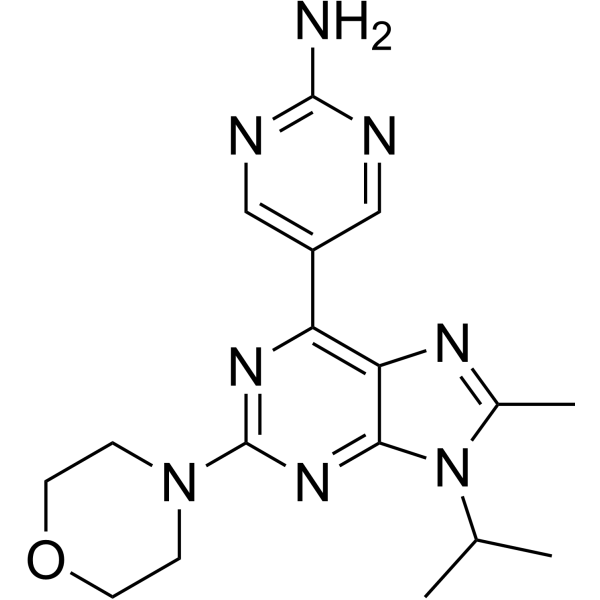
HY-16585
VS-5584PI3K/mTOR Inhibitor -
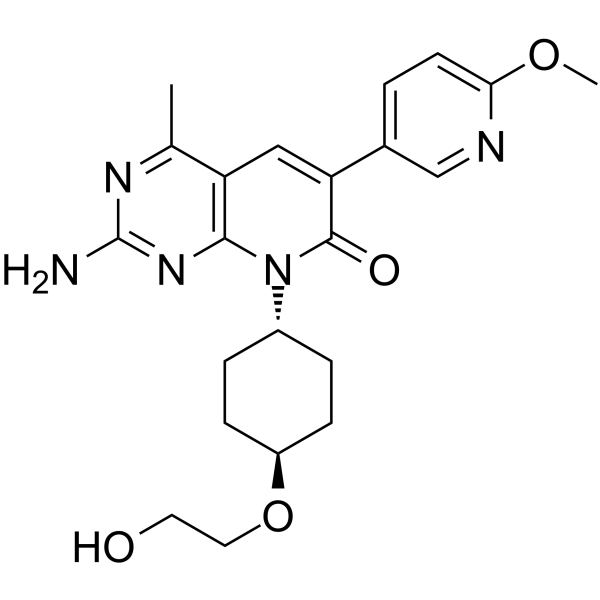
HY-15177
PF-04691502PI3K/mTOR Inhibitor -
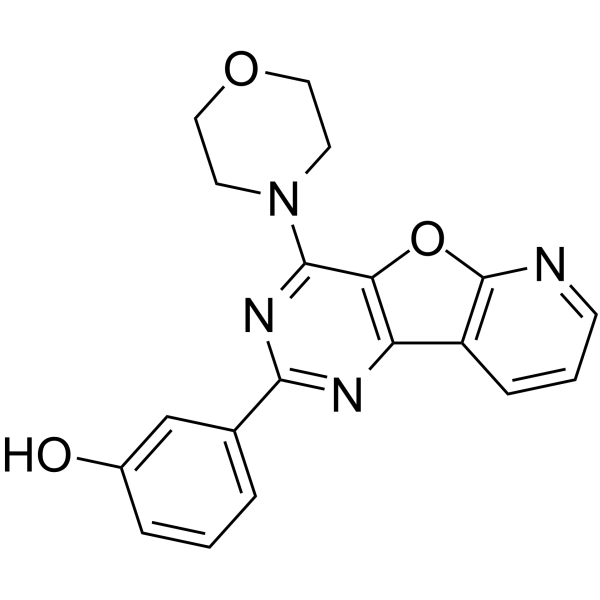
HY-10115
PI-103PI3K/mTOR Inhibitor -
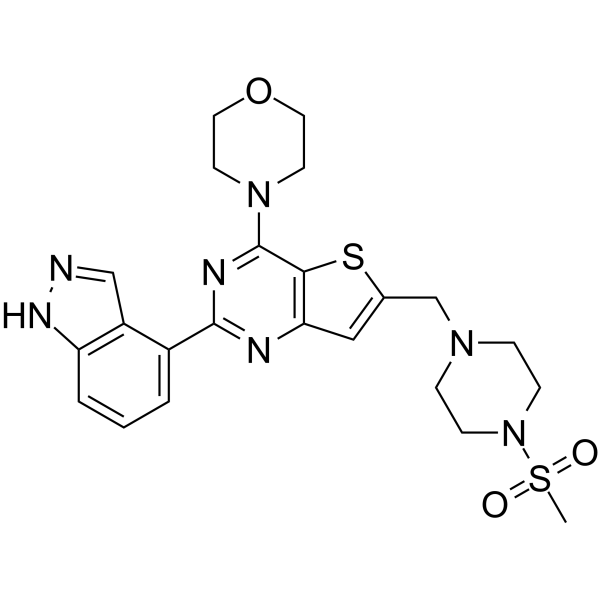
HY-50094
PictilisibPI3Kα/δ Inhibitor -
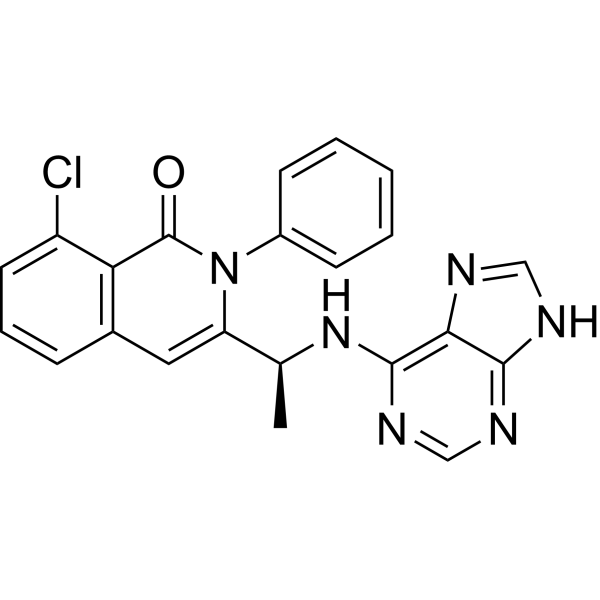
HY-17044
DuvelisibPI3Kδ Inhibitor -
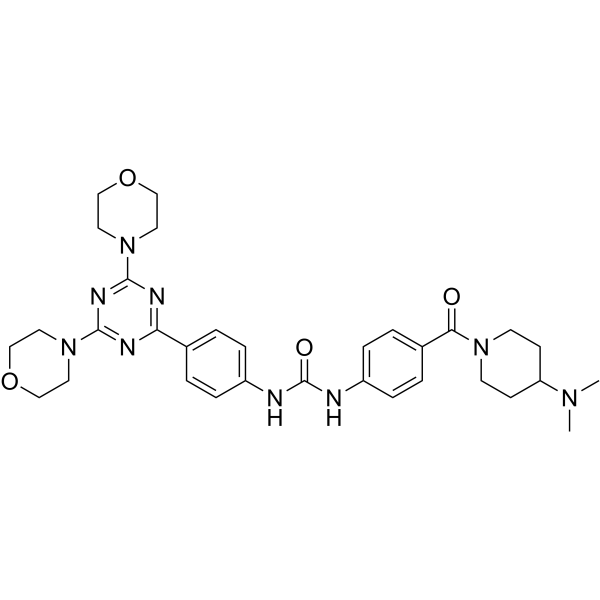
HY-10681
GedatolisibPI3K/mTOR Inhibitor -
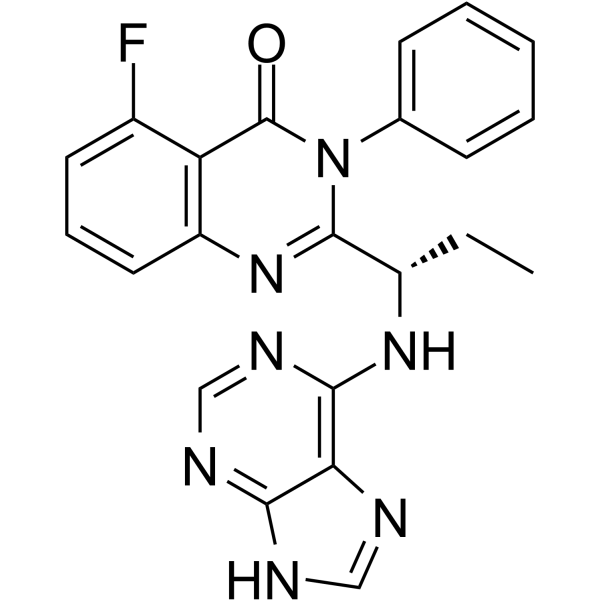
HY-13026
IdelalisibPI3Kδ Inhibitor
Publications Citing Use of MedChemExpress (MCE) Voxtalisib
More

Biological Activity
Description
|
p110γ 9 nM (IC50) |
p110α 39 nM (IC50) |
p110δ 43 nM (IC50) |
p110β 113 nM (IC50) |
mTOR 157 nM (IC50) |
mTORC1 160 nM (IC50) |
mTORC2 910 nM (IC50) |
DNA-PK 150 nM (IC50) |
In Vitro
Voxtalisib (XL765) displays potent inhibitory activity against class I PI3K isoforms p110α, p110β, p110δ, and p120γ, with IC50s of 39, 110, 43, and 9 nM, respectively. The IC50 value for inhibition of PI3Kα by Voxtalisib is determined at various concentrations of ATP, revealing Voxtalisib be an ATP-competitive inhibitor with an equilibrium inhibition constant (Ki) value of 13 nM. Voxtalisib also inhibits mTOR (IC50s of 160 and 910 nM for mTORC1 and mTORC2, respectively) in an immune-complex kinase assay and the PI3K-related kinase DNA-PK (IC50 value of 150 nM). In contrast, Voxtalisib (XL765) has relatively weak inhibitory activity toward the class III PI3K vacuolar sorting protein 34 (VPS34; IC50 value of ~9.1 μM). Consistent with its inhibitory activity against purified PI3K proteins, SAR245409 inhibits EGF-induced PIP3 production in PC-3 and MCF7 cells with IC50s of 290 and 170 nM, respectively. The ability of Voxtalisib to inhibit phosphorylation of key signaling proteins downstream of PI3K is examined by assessing its effects on EGF-stimulated phosphorylation of AKT and on nonstimulated phosphorylation of S6 in PC-3 cells by cell-based ELISA. Voxtalisib inhibits these activities with IC50s of 250 and 120 nM, respectively. In MCF7 and PC-3 cells, Voxtalisib inhibits proliferation (monitored by BrdUrd incorporation) with IC50s of 1,070 and 1,840 nM, respectively. To further characterize the effects of Voxtalisib on tumor cell growth, an assay monitoring the anchorage-independent growth of PC-3 and MCF7 cells in soft agar over a 14-day period is used. SAR245409 inhibits colony growth with an IC50 value of 270 nM in PC-3 cells and 230 nM in MCF7 cells[2].
MedChemExpress (MCE) has not independently confirmed the accuracy of these methods. They are for reference only.
In Vivo
MedChemExpress (MCE) has not independently confirmed the accuracy of these methods. They are for reference only.
Clinical Trial
| NCT Number | Sponsor | Condition | Start Date |
Phase

|
|---|---|---|---|---|
| NCT01329991 | Plexxikon| | 2011-05 | PHASE1 |


Chemical Information
-
CAS No. 934493-76-2
-
Appearance Solid
-
Molecular Weight 270.29
-
Formula C13H14N6O
-
Color Light brown to brown
-
SMILES
O=C1C(C2=NNC=C2)=CC3=C(C)N=C(N)N=C3N1CC
-
Synonyms
XL765; SAR245409
-
Shipping
Room temperature in continental US; may vary elsewhere.
-
Storage
Powder -20°C 3 years 4°C 2 years In solvent -80°C 2 years -20°C 1 year


Publications (5)
-
Journal Impact Factor
-
Most Recent
-
Sci Transl Med
PP2A inhibition is a druggable MEK inhibitor resistance mechanism in KRAS-mutant lung cancer cells. [Abstract]2018 Jul 18;10(450):eaaq1093. PMID: 30021885 -
Cell Death Dis
METTL8 links mt-tRNA m3C modification to the HIF1α/RTK/Akt axis to sustain GBM stemness and tumorigenicity. [Abstract]2024 May 14;15(5):338. PMID: 38744809 -
Acta Neuropathol
Vitamin D increases glucocorticoid efficacy via inhibition of mTORC1 in experimental models of multiple sclerosis. [Abstract]2019 Sep;138(3):443-456. PMID: 31030237 -
Front Pharmacol
CC-223, NSC781406, and BGT226 Exerts a Cytotoxic Effect Against Pancreatic Cancer Cells via mTOR Signaling. [Abstract]2020 Nov 11:11:580407. PMID: 33343350 -
Molecules
In Vitro and in Vivo Activity of mTOR Kinase and PI3K Inhibitors Against Leishmania donovani and Trypanosoma brucei. [Abstract]2020 Apr 23;25(8):1980. PMID: 32340370


Solvent & Solubility
In Vitro:
DMSO : 10 mg/mL (37.00 mM; Need ultrasonic; Hygroscopic DMSO has a significant impact on the solubility of product, please use newly opened DMSO)
Please refer to the solubility information to select the appropriate solvent. Once prepared, please aliquot and store the solution to prevent product inactivation from repeated freeze-thaw cycles.
Storage method and period of stock solution: -80°C, 2 years; -20°C, 1 year. When stored at -80°C, please use it within 2 years. When stored at -20°C, please use it within 1 year.
Please refer to the solubility information to select the appropriate solvent. Once prepared, please aliquot and store the solution to prevent product inactivation from repeated freeze-thaw cycles.
Storage method and period of stock solution: -80°C, 2 years; -20°C, 1 year. When stored at -80°C, please use it within 2 years. When stored at -20°C, please use it within 1 year.
Concentration (start) × Volume (start) = Concentration (final) × Volume (final)
In Vivo:
Select the appropriate dissolution method based on your experimental animal and administration route.
- For the following dissolution methods, please ensure to first prepare a clear stock solution using an In Vitro approach and then sequentially add co-solvents:
- To ensure reliable experimental results, the clarified stock solution can be appropriately stored based on storage conditions. As for the working solution for In Vivo experiments, it is recommended to prepare freshly and use it on the same day.
- The percentages shown for the solvents indicate their volumetric ratio in the final prepared solution. If precipitation or phase separation occurs during preparation, heat and/or sonication can be used to aid dissolution.
Add each solvent one by one: 10% DMSO 40% PEG300 5% Tween-80 45% Saline
Solubility: ≥ 1 mg/mL (3.70 mM); Clear solution
This protocol yields a clear solution of ≥ 1 mg/mL (saturation unknown).
Taking 1 mL working solution as an example, add 100 μL DMSO stock solution (10.0 mg/mL) to 400 μL PEG300, and mix evenly; then add 50 μL Tween-80 and mix evenly; then add 450 μL Saline to adjust the volume to 1 mL.
Preparation of Saline: Dissolve 0.9 g sodium chloride in ddH₂O and dilute to 100 mL to obtain a clear Saline solution.
Add each solvent one by one: 10% DMSO 90% (20% SBE-β-CD in Saline)
Solubility: ≥ 1 mg/mL (3.70 mM); Clear solution
This protocol yields a clear solution of ≥ 1 mg/mL (saturation unknown).
Taking 1 mL working solution as an example, add 100 μL DMSO stock solution (10.0 mg/mL) to 900 μL 20% SBE-β-CD in Saline, and mix evenly.
Preparation of 20% SBE-β-CD in Saline (4°C, storage for one week): 2 g SBE-β-CD powder is dissolved in 10 mL Saline, completely dissolve until clear.
In Vivo Dissolution Calculator
Please enter the basic information of animal experiments:
-
-
-
-
Recommended: Prepare an additional quantity of animals to account for potential losses during experiments.
Please enter your animal formula composition:
-
%DMSO +
Recommended: Keep the proportion of DMSO in working solution below 2% if your animal is weak.
-
%+
-
+%Tween-80 + +
-
%Saline +
The co-solvents required include: DMSO, . All of co-solvents are available by MedChemExpress (MCE). , Tween 80. All of co-solvents are available by MedChemExpress (MCE).
Working solution concentration: 0.22 mg/mL
Method for preparing stock solution: mg drug dissolved in μL DMSO. Stock solution concentration: mg/mL.
1. Take μL DMSO stock solution;
2. Add μL .
μL , mix evenly;
3. Then add μL Tween 80, mix evenly;
4. Then add μL
Please ensure that the stock solution in the first step is dissolved to a clear state, and add co-solvents in sequence. You can use ultrasonic heating (ultrasonic cleaner, recommended frequency 20-40 kHz), vortexing, etc. to assist dissolution.


Purity & Documentation
-
Data Sheet (282 KB)
-
SDS (392 KB)
- English - EN (392 KB)
- Français - FR (392 KB)
- Deutsch - DE (392 KB)
- Norwegian - NO (392 KB)
- Español - ES (392 KB)
- Swedish - SV (392 KB)
- Italian - IT (392 KB)
- Korean - KR (392 KB)
- Portuguese - PT (392 KB)
-
Handling Instructions (2659 KB)
References
[1]. Garcia-Echeverria C, et al. Drug discovery approaches targeting the PI3K/Akt pathway in cancer. Oncogene. 2008 Sep 18;27(41):5511-26. [Content Brief]
[2]. Yu P, et al. Characterization of the activity of the PI3K/mTOR inhibitor XL765 (SAR245409) in tumor models with diverse genetic alterations affecting the PI3K pathway. Mol Cancer Ther. 2014 May;13(5):1078-91. [Content Brief]


Complete Stock Solution Preparation Table
Please refer to the solubility information to select the appropriate solvent. Once prepared, please aliquot and store the solution to prevent product inactivation from repeated freeze-thaw cycles.
Storage method and period of stock solution: -80°C, 2 years; -20°C, 1 year. When stored at -80°C, please use it within 2 years. When stored at -20°C, please use it within 1 year.
| Optional Solvent | Concentration Solvent Mass | 1 mg | 5 mg | 10 mg | 25 mg |
|---|---|---|---|---|---|
| DMSO | 1 mM | 3.6997 mL | 18.4986 mL | 36.9973 mL | 92.4932 mL |
| 5 mM | 0.7399 mL | 3.6997 mL | 7.3995 mL | 18.4986 mL | |
| 10 mM | 0.3700 mL | 1.8499 mL | 3.6997 mL | 9.2493 mL | |
| 15 mM | 0.2466 mL | 1.2332 mL | 2.4665 mL | 6.1662 mL | |
| 20 mM | 0.1850 mL | 0.9249 mL | 1.8499 mL | 4.6247 mL | |
| 25 mM | 0.1480 mL | 0.7399 mL | 1.4799 mL | 3.6997 mL | |
| 30 mM | 0.1233 mL | 0.6166 mL | 1.2332 mL | 3.0831 mL |


Voxtalisib Related Classifications
HY-15900 Related Classifications
 Powered by Bioz