



Procaine
Based on 2 publication(s) in Google Scholar
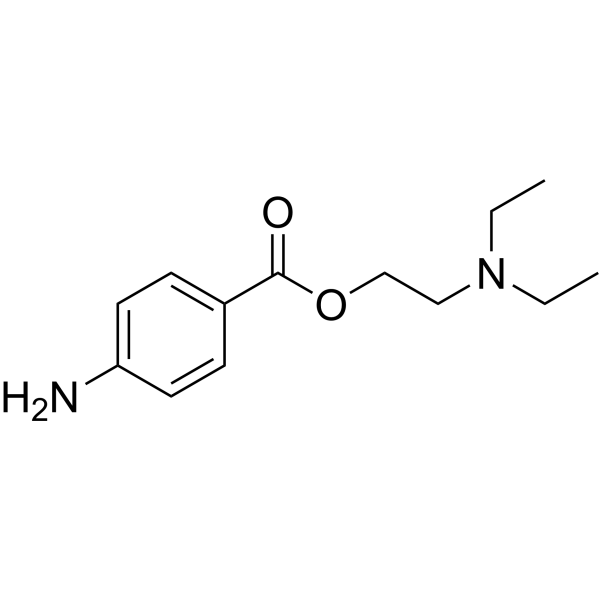
Procaine is a DNA-demethylating agent. Procaine acts through multiple targets and has a slow onset and a short duration of action.
Nur für Forschungszwecke. Wir verkaufen nicht an Patienten.
- Reinheit : 99.79%
- CAS. Nr.: 59-46-1
- Formel: C13H20N2O2
- Molecular Weight:236.31
-
Speicherung:Powder -20°C, 3 years , 4°C, 2 years
* The compound is unstable in solutions, freshly prepared is recommended.

To place orders, for customer services and technical support, please contact: MedChemExpress USA
Tel: 609-228-6898 E-mail: [email protected] [email protected]


-
 Biologische Aktivität
-
Chemical Information
-
Lösungsmittel & Löslichkeit
- Reinheit & Dokumentation
- Verweise
-
 Help & FAQs


-
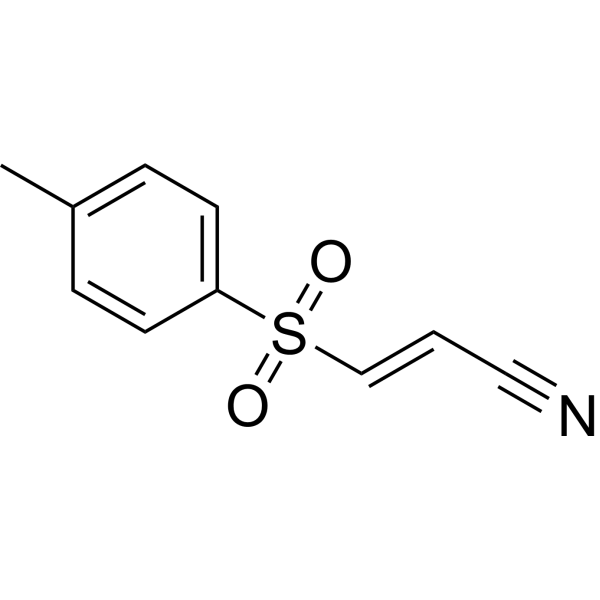
HY-13453
BAY 11-7082IκBα/NF-κB Inhibitor -
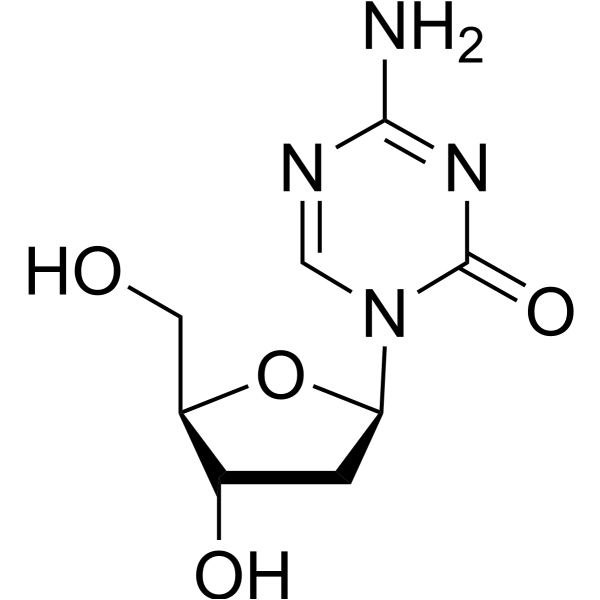
HY-A0004
DecitabineDNMT Inhibitor -
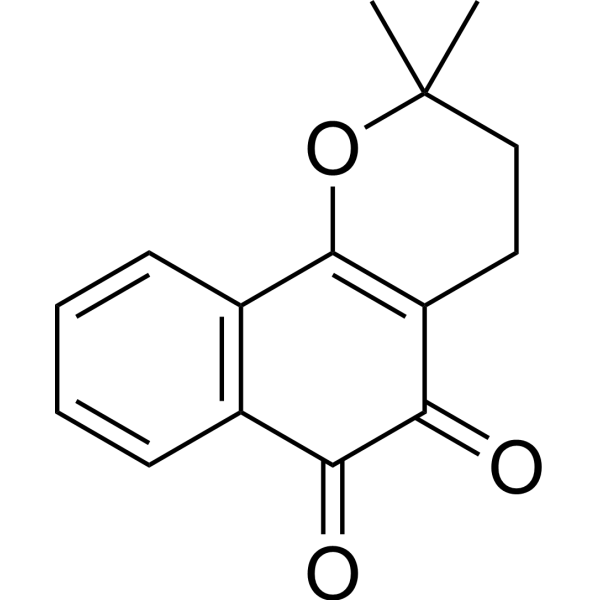
HY-13555
β-LapachoneAutophagy Inducer -
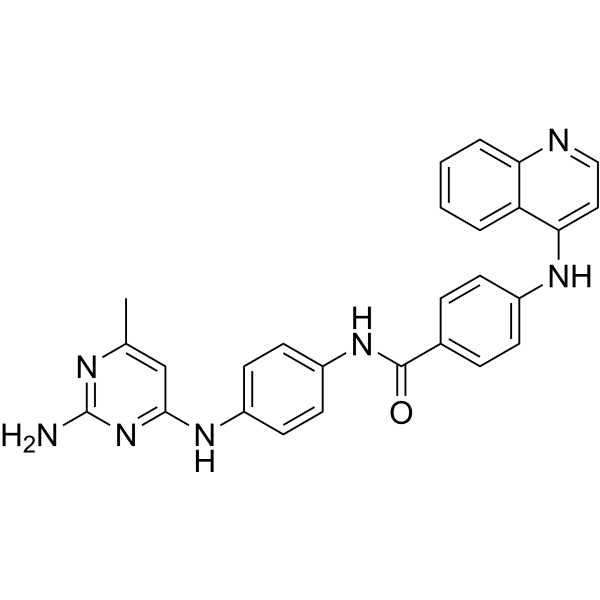
HY-13962
SGI-1027Apoptosis Inducer -
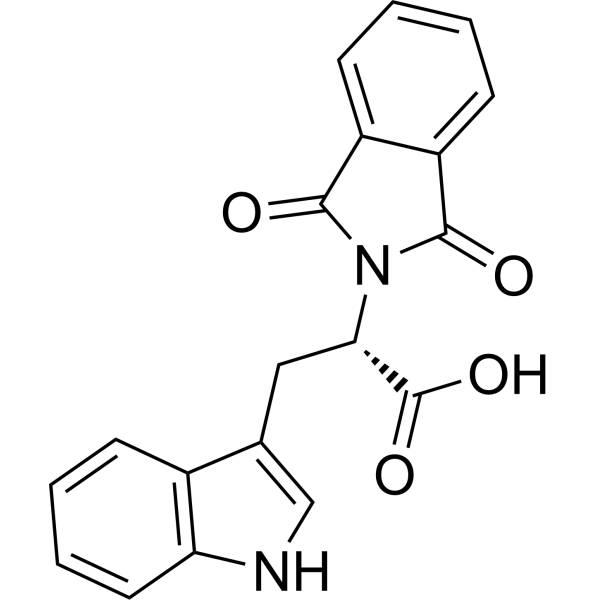
HY-13642
RG108DNMT Inhibitor -
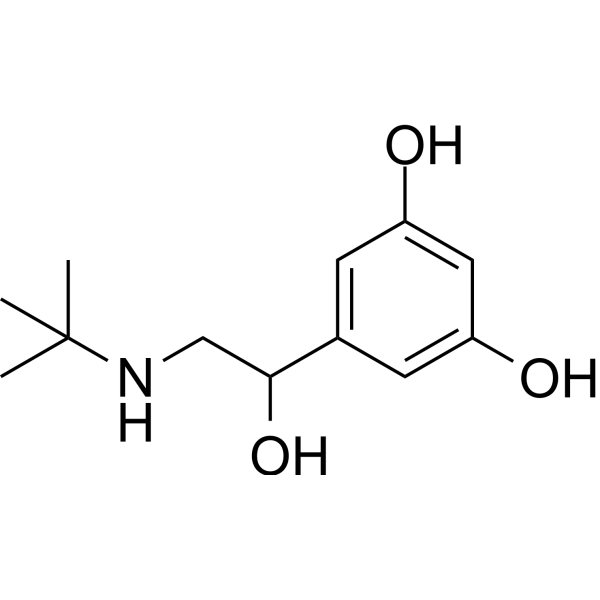
HY-B0802A
Terbutalineβ2-Drenergic Receptor Agonist -
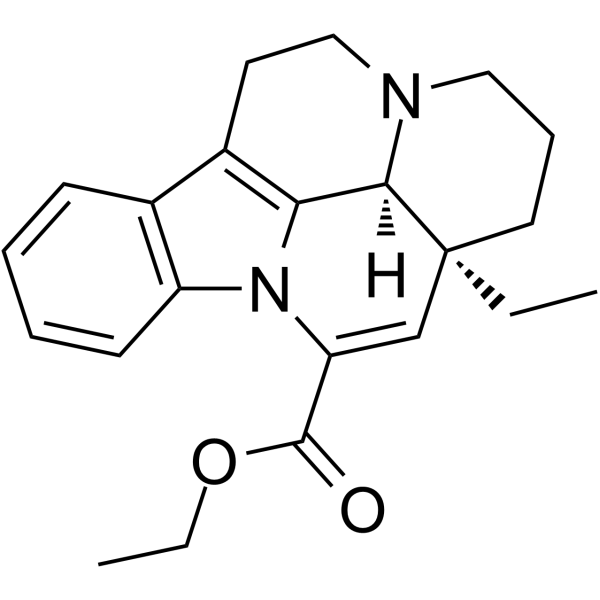
HY-13295
VinpocetinePDE1/Na+ Channel Inhibitor -
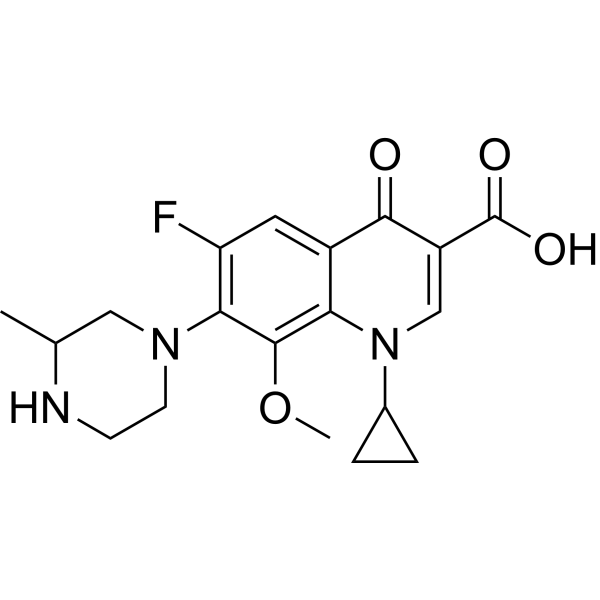
HY-10581
GatifloxacinAntibiotic -
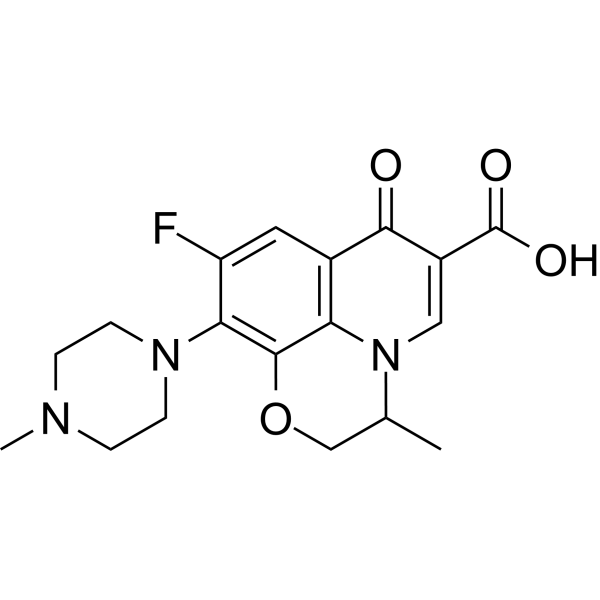
HY-B0125
OfloxacinBacterial Inhibitor -
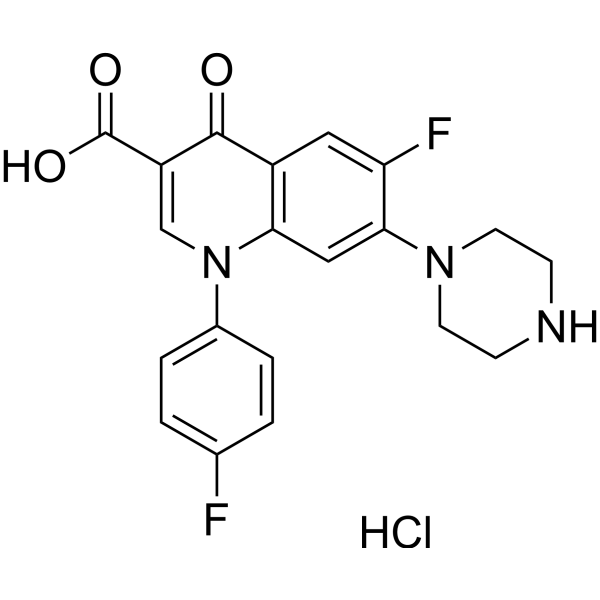
HY-B0343A
Sarafloxacin hydrochlorideAntibacterial Agent -

HY-13295R
Vinpocetine (Standard)PDE1/Na+ Channel Inhibitor -
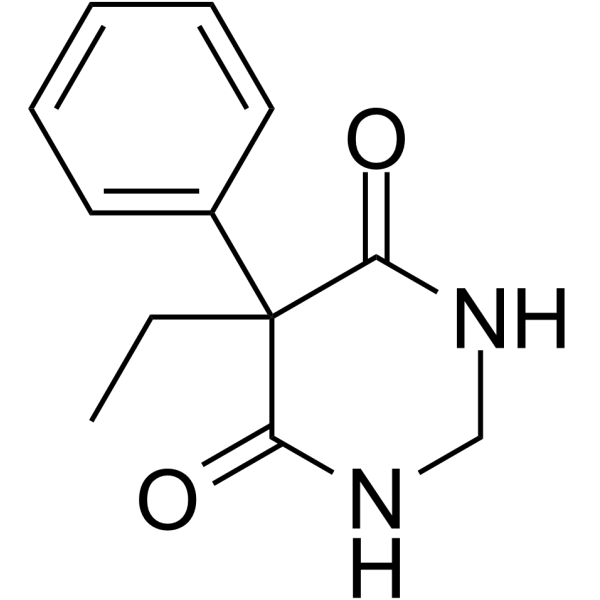
HY-B0339
PrimidoneTRPM3 Inhibitor
Publications Citing Use of MedChemExpress (MCE) Procaine
MoreAlle DNA/RNA Synthesis Isoform-spezifische Produkte anzeigen
More

Biologische Aktivität
Beschreibung
In Vitro
Procaine (0.01-100 μM) inhibits the 5-HT3 receptor-mediated inward current in the whole-cell patch clamp recording. Procaine appears to produce a competitive inhibition on 5-HT3 receptors with a KD of 1.7 μM[1]. Procaine is a DNA-demethylating agent that produces a 40% reduction in 5-methylcytosine DNA content as determined by high-performance capillary electrophoresis or total DNA enzyme digestion. Procaine can also demethylate densely hypermethylated CpG islands. Procaine also has growth-inhibitory effects in these cancer cells, causing mitotic arrest[2]. Procaine functions as an excitant of limbic system cells, and that procaine alters synaptic transmission in some, but not all, output pathways from the amygdale[3].
MedChemExpress (MCE) has not independently confirmed the accuracy of these methods. They are for reference only.
Clinical Trial
| NCT Number | Sponsor | Condition | Start Date |
Phase

|
|---|---|---|---|---|
| NCT01329991 | 2011-05 | PHASE1 |


Chemical Information
-
CAS. Nr. 59-46-1
-
Appearance Solid
-
Molecular Weight 236.31
-
Formel C13H20N2O2
-
Color White to off-white
-
SMILES
O=C(OCCN(CC)CC)C1=CC=C(N)C=C1
-
Versand
Room temperature in continental US; may vary elsewhere.
-
Speicherung
Powder -20°C 3 years 4°C 2 years * The compound is unstable in solutions, freshly prepared is recommended.


Publications (2)
-
Journal Impact Factor
-
Most Recent
-
Stem Cell Res Ther
Local anesthetics impair the growth and self-renewal of glioblastoma stem cells by inhibiting ZDHHC15-mediated GP130 palmitoylation. [Abstract]2021 Feb 4;12(1):107. PMID: 33541421 -
Ecotoxicol Environ Saf
PPARγ-responsive luciferase reporter system for high-throughput screening of chemical toxins with potential pulmonary fibrosis effects. [Abstract]2025 Nov 15:307:119433. PMID: 41273832


Lösungsmittel & Löslichkeit
In Vitro:
DMSO : 100 mg/mL (423.17 mM; Need ultrasonic; Hygroscopic DMSO has a significant impact on the solubility of product, please use newly opened DMSO)
H2O : 1 mg/mL (4.23 mM; ultrasonic and warming and heat to 60°C)
Please refer to the solubility information to select the appropriate solvent. The compound is unstable in solutions, freshly prepared is recommended.
* Note: If you choose water as the stock solution, please dilute it to the working solution, then filter and sterilize it with a 0.22 μm filter before use.
Please refer to the solubility information to select the appropriate solvent. The compound is unstable in solutions, freshly prepared is recommended.
* Note: If you choose water as the stock solution, please dilute it to the working solution, then filter and sterilize it with a 0.22 μm filter before use.
Konzentration (Stammlösung) × Volumen (Stammlösung) = Konzentration (Ziellösung) × Volumen (Ziellösung)
In Vivo:
Select the appropriate dissolution method based on your experimental animal and administration route.
- For the following dissolution methods, please ensure to first prepare a clear stock solution using an In Vitro approach and then sequentially add co-solvents:
- To ensure reliable experimental results, the clarified stock solution can be appropriately stored based on storage conditions. As for the working solution for In Vivo experiments, it is recommended to prepare freshly and use it on the same day.
- The percentages shown for the solvents indicate their volumetric ratio in the final prepared solution. If precipitation or phase separation occurs during preparation, heat and/or sonication can be used to aid dissolution.
Add each solvent one by one: 10% DMSO 40% PEG300 5% Tween-80 45% Saline
Solubility: ≥ 2.5 mg/mL (10.58 mM); Clear solution
This protocol yields a clear solution of ≥ 2.5 mg/mL (saturation unknown).
Taking 1 mL working solution as an example, add 100 μL DMSO stock solution (25.0 mg/mL) to 400 μL PEG300, and mix evenly; then add 50 μL Tween-80 and mix evenly; then add 450 μL Saline to adjust the volume to 1 mL.
Preparation of Saline: Dissolve 0.9 g sodium chloride in ddH₂O and dilute to 100 mL to obtain a clear Saline solution.
Add each solvent one by one: 10% DMSO 90% (20% SBE-β-CD in Saline)
Solubility: ≥ 2.5 mg/mL (10.58 mM); Clear solution
This protocol yields a clear solution of ≥ 2.5 mg/mL (saturation unknown).
Taking 1 mL working solution as an example, add 100 μL DMSO stock solution (25.0 mg/mL) to 900 μL 20% SBE-β-CD in Saline, and mix evenly.
Preparation of 20% SBE-β-CD in Saline (4°C, storage for one week): 2 g SBE-β-CD powder is dissolved in 10 mL Saline, completely dissolve until clear.
For the following dissolution methods, please prepare the working solution directly:
It is recommended to prepare fresh solutions and use them promptly within a short period of time.
The percentages shown for the solvents indicate their volumetric ratio in the final prepared solution. If precipitation or phase separation occurs during preparation, heat and/or sonication can be used to aid dissolution.
Add each solvent one by one: PBS
Solubility: 2 mg/mL (8.46 mM); Clear solution; Need ultrasonic and warming and heat to 60°C
In Vivo Dissolution Calculator
Please enter the basic information of animal experiments:
-
-
-
-
Recommended: Prepare an additional quantity of animals to account for potential losses during experiments.
Please enter your animal formula composition:
-
%DMSO +
Recommended: Keep the proportion of DMSO in working solution below 2% if your animal is weak.
-
%+
-
+%Tween-80 + +
-
%Saline +
The co-solvents required include: DMSO, . All of co-solvents are available by MedChemExpress (MCE). , Tween 80. All of co-solvents are available by MedChemExpress (MCE).
Working solution concentration: 0.22 mg/mL
Method for preparing stock solution: mg drug dissolved in μL DMSO. Stock solution concentration: mg/mL. * The compound is unstable in solutions, freshly prepared is recommended.
1. Take μL DMSO stock solution;
2. Add μL .
μL , mix evenly;
3. Then add μL Tween 80, mix evenly;
4. Then add μL
Please ensure that the stock solution in the first step is dissolved to a clear state, and add co-solvents in sequence. You can use ultrasonic heating (ultrasonic cleaner, recommended frequency 20-40 kHz), vortexing, etc. to assist dissolution.


Reinheit & Dokumentation
-
Data Sheet (271 KB)
-
SDS (393 KB)
- English - EN (393 KB)
- Français - FR (393 KB)
- Deutsch - DE (393 KB)
- Norwegian - NO (393 KB)
- Español - ES (393 KB)
- Swedish - SV (393 KB)
- Italian - IT (393 KB)
- Korean - KR (393 KB)
- Portuguese - PT (393 KB)
-
Handling Instructions (2659 KB)
Verweise
[1]. Fan, P. and F.F. Weight, Procaine impairs the function of 5-HT3 receptor-ion channel complex in rat sensory ganglion neurons. Neuropharmacology, 1994. 33(12): p. 1573-9. [Content Brief]
[2]. Villar-Garea, A., et al., Procaine is a DNA-demethylating agent with growth-inhibitory effects in human cancer cells. Cancer Res, 2003. 63(16): p. 4984-9. [Content Brief]
[3]. Adamec, R.E. and C. Stark-Adamec, The effects of procaine HCl on population cellular and evoked response activity within the limbic system of the cat. Evidence for differential excitatory action of procaine in a variety of limbic circuits. Prog Neuropsychopharmacol Biol Psychiatry, 1987. 11(4): p. 345-64. [Content Brief]


Complete Stock Solution Preparation Table
Please refer to the solubility information to select the appropriate solvent. The compound is unstable in solutions, freshly prepared is recommended.
| Optional Solvent | Concentration Solvent Mass | 1 mg | 5 mg | 10 mg | 25 mg |
|---|---|---|---|---|---|
| H2O / DMSO | 1 mM | 4.2317 mL | 21.1586 mL | 42.3173 mL | 105.7932 mL |
| DMSO | 5 mM | 0.8463 mL | 4.2317 mL | 8.4635 mL | 21.1586 mL |
| 10 mM | 0.4232 mL | 2.1159 mL | 4.2317 mL | 10.5793 mL | |
| 15 mM | 0.2821 mL | 1.4106 mL | 2.8212 mL | 7.0529 mL | |
| 20 mM | 0.2116 mL | 1.0579 mL | 2.1159 mL | 5.2897 mL | |
| 25 mM | 0.1693 mL | 0.8463 mL | 1.6927 mL | 4.2317 mL | |
| 30 mM | 0.1411 mL | 0.7053 mL | 1.4106 mL | 3.5264 mL | |
| 40 mM | 0.1058 mL | 0.5290 mL | 1.0579 mL | 2.6448 mL | |
| 50 mM | 0.0846 mL | 0.4232 mL | 0.8463 mL | 2.1159 mL | |
| 60 mM | 0.0705 mL | 0.3526 mL | 0.7053 mL | 1.7632 mL | |
| 80 mM | 0.0529 mL | 0.2645 mL | 0.5290 mL | 1.3224 mL | |
| 100 mM | 0.0423 mL | 0.2116 mL | 0.4232 mL | 1.0579 mL |
* Note: If you choose water as the stock solution, please dilute it to the working solution, then filter and sterilize it with a 0.22 μm filter before use.


Procaine Related Classifications
HY-B0546 Related Classifications
 Powered by Bioz