



Equisetin

Based on 1 Customer Validation
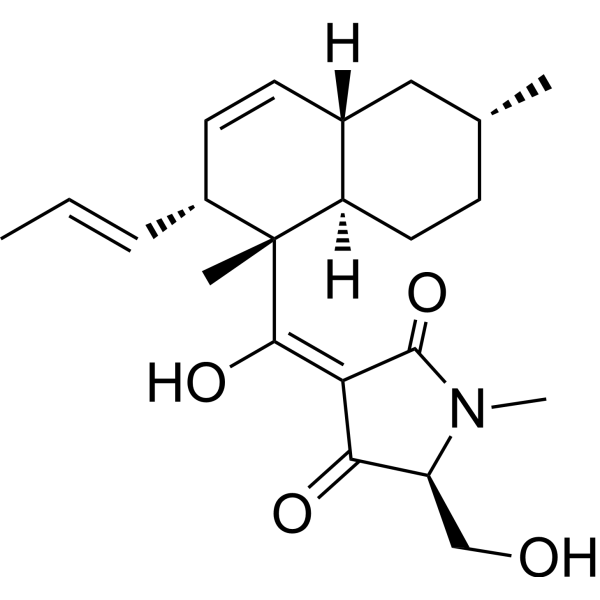
Equisetin is an N-methylserine-derived acyl tetramic acid, quorum sensing inhibitor (QSI), herbicides and antibiotics. Equisetin specifically inhibits the anionic carriers of substrates in the inner mitochondrial membrane. Equisetin inhibits the activity of HIV-1 integrase, 11β-HSD1, and 2,4-dinitrophenol (Dnp)-stimulated ATPase (IC50 = ~8 nmol per mg of protein). Equisetin exhibits growth inhibition of bacteria, anti-inflammatory, amelioration of lipid-associated disorders, and cytotoxic effects.
For research use only. We do not sell to patients.
- Purity : 99.50%
- CAS No.: 57749-43-6
- Formula: C22H31NO4
- Molecular Weight:373.49
-
Storage:Powder -20°C, 3 years , 4°C, 2 years ; In solvent -80°C, 6 months , -20°C, 1 month

To place orders, for customer services and technical support, please contact: MedChemExpress USA
Tel: 609-228-6898 E-mail: [email protected] [email protected]


-
 Biological Activity
-
Chemical Information
-
Solvent & Solubility
- Protocols
- Purity & Documentation
- References
-
 Help & FAQs


-
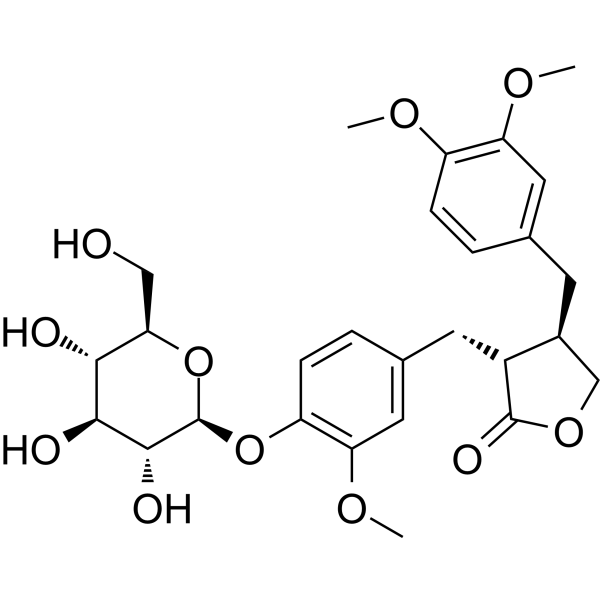
HY-N0034
ArctiinNF-κB Inhibitor -
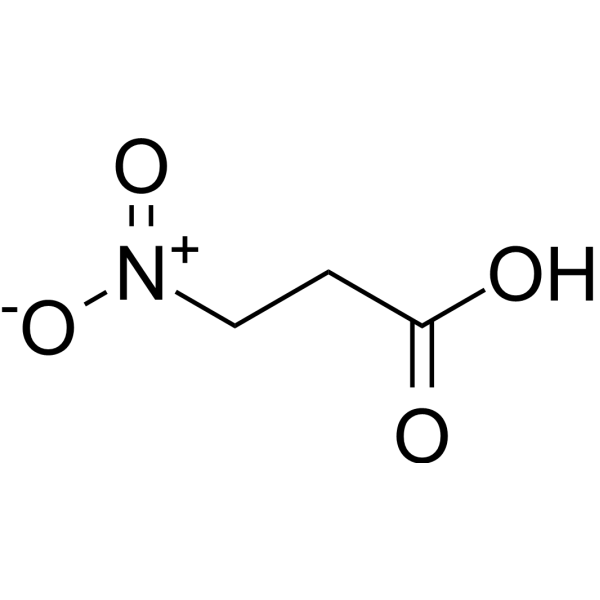
HY-W012875
3-Nitropropanoic acidSuccinate Dehydrogenase Inhibitor -
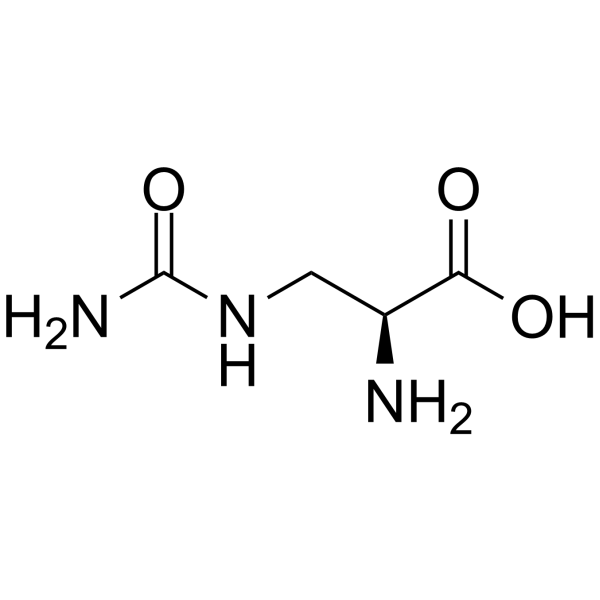
HY-121167
L-AlbizziinGlutamase Inhibitor -
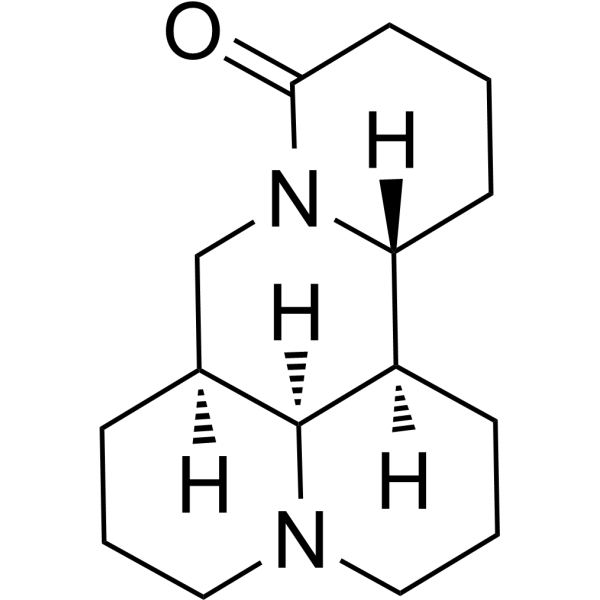
HY-N0164
MatrineAnticancer Agent -
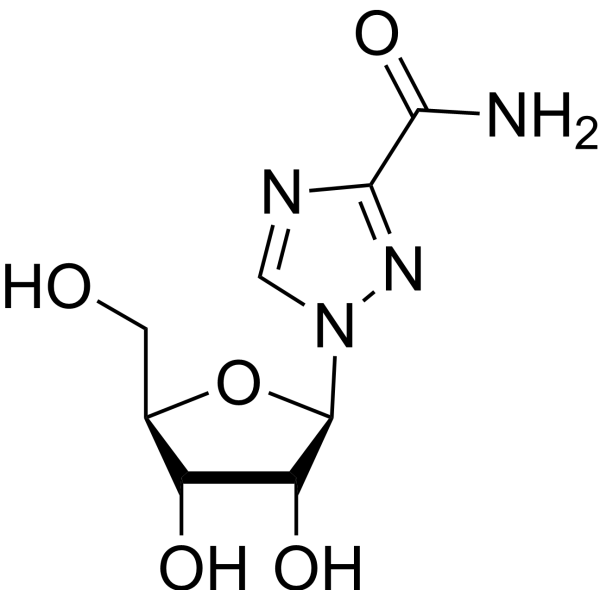
HY-B0434
RibavirinAntiviral Agent -
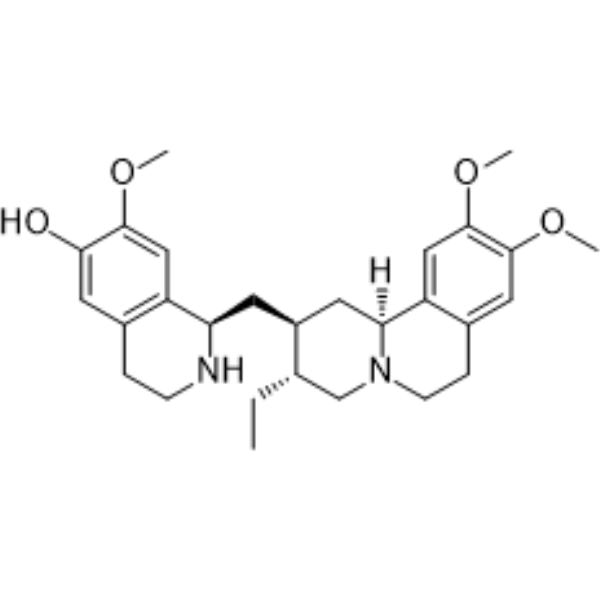
HY-N4118
CephaelineFerroptosis Inducer -
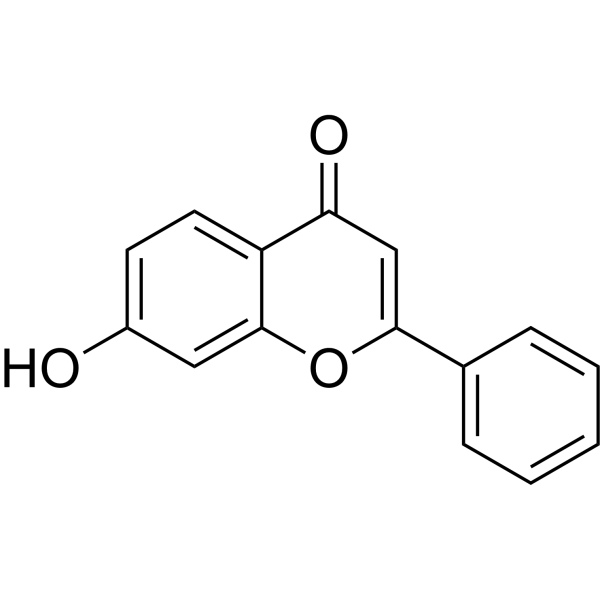
HY-N7108
7-HydroxyflavoneAnti-inflammatory Agent -
HY-N0440
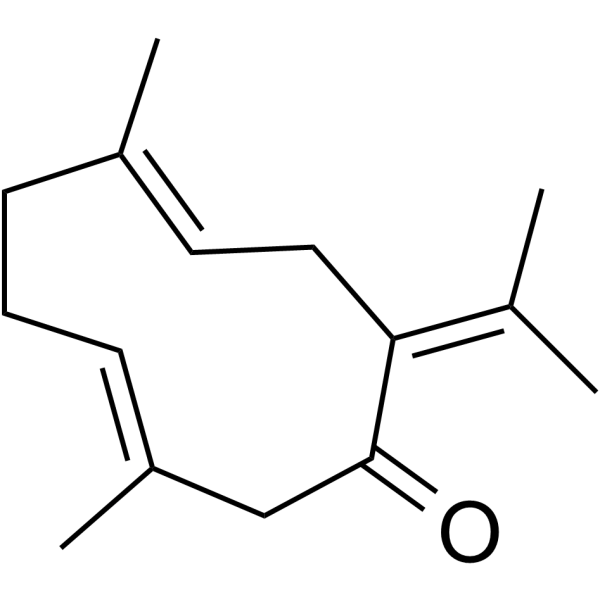
GermacroneAnti-viral/Cancer/Inflammatory Agent -

HY-B0434R
Ribavirin (Standard)Antiviral Agent -

HY-N0034R
Arctiin (Standard)NF-κB Inhibitor -

HY-N0440R
Germacrone (Standard)Standard of Germacrone -

HY-W012875R
3-Nitropropanoic acid (Standard)Succinate Dehydrogenase Inhibitor


Biological Activity
Description
IC50 & Target
[10]|
STAT3 |
Cellular Effect
|
Cell Line

|
Type | Value | Description | References |
|---|---|---|---|---|
| CCRF-CEM | GI50 |
144 nM
Compound: 5, NSC 772378
|
Cytotoxicity against human CCRF-CEM cells assessed as growth inhibition by SRB assay
Cytotoxicity against human CCRF-CEM cells assessed as growth inhibition by SRB assay
|
[PMID: 24422636] |
In Vitro
Equisetin (50-300 μM, 6 h) inhibit the production of virulence factor, biofilm formation, and swarming motility of Pseudomonas aeruginosa PAO1[4].
Equisetin shows cytotoxicity against human CCRF-CEM cells assessed as growth inhibition by SRB assay, with a GI50 of 144 nM[7].
Equisetin (1-6 μg/mL, 0-6 h) removes Staphylococcus aureus from IEC-6 cells by enhancing host autophagy and inducing mitochondria-mediated ROS generation[8].
Equisetin (20 μM, 7 days) inhibits adiposity through AMPK-dependent regulation of brown adipocyte (BA) differentiation[9].
Equisetin (0.01-100 μM, pre-stimulates 12 h) attenuates lipid droplet accumulation and foam cell formation in macrophages[10].
Equisetin (0.01-10 μM) inhibits LPS and oxLDL-induced inflammatory responses in macrophages (RAW264.7 and BMDM)[10].
Equisetin (4 µg/mL) can potentiate Colistin (HY-113678) activity against multi-drug resistant gram-negative bacteria including Colistin -resistant strains[11].
MedChemExpress (MCE) has not independently confirmed the accuracy of these methods. They are for reference only. Further protocols information, click here.
-
Cell Line:3T3-L1
-
Concentration:20 μM
-
Incubation Time:7 days
-
Result:Increased the specific BA markers Prdm16 and the uncoupling protein Ucp1, the mitochondrial markers Pgc1α, and Tfam.
Increased AMPK and phosphorylated AMPK (pAMPK).
In Vivo
Equisetin (10 mg/kg, i.p., 6 h) shows significant anti-infective activity in a mouse model of Staphylococcus aureus ATCC 29213 infection[8].
Equisetin (5-20 mg/kg, p.o., every two days until 12 weeks) prevents atherosclerosis in mice by binding to and inhibiting the activity of STAT3[10].
MedChemExpress (MCE) has not independently confirmed the accuracy of these methods. They are for reference only.
-
Animal Model:Atherosclerosis model (eight-week-old male ApoE-/- mice were fed with HFD for 12 weeks)[10]
-
Dosage:5, 20 mg/kg
-
Administration:Oral gavage (p.o.), every two days until 12 weeks
-
Result:Attenuated HFD-induced lipid area in the en face prepared aorta and aortic root.
Attenuated atherosclerotic lesion area (HFD versus HFD+5 mg/kg Equisetin: 31.71 versus 16.95; HFD versus HFD+20 mg/kg Equisetin: 31.71 versus 10.12).
Increased collagen content in the aortic plaques.
Increased α-SMA-positive areas in the plaques in aortic root.


Chemical Information
-
CAS No. 57749-43-6
-
Appearance Solid
-
Molecular Weight 373.49
-
Formula C22H31NO4
-
Color White to off-white
-
SMILES
O=C(/C1=C(O)\[C@]2(C)[C@H](/C=C/C)C=C[C@]3([H])C[C@H](C)CC[C@@]23[H])N(C)[C@@H](CO)C1=O
-
Structure Classification
-
Initial Source
marine fungus Fusarium sp. Z10
-
Shipping
Room temperature in continental US; may vary elsewhere.
-
Storage
Powder -20°C 3 years 4°C 2 years In solvent -80°C 6 months -20°C 1 month


Solvent & Solubility
In Vitro:
DMSO : 1 mg/mL (2.68 mM; Need ultrasonic and warming; Hygroscopic DMSO has a significant impact on the solubility of product, please use newly opened DMSO)
Please refer to the solubility information to select the appropriate solvent. Once prepared, please aliquot and store the solution to prevent product inactivation from repeated freeze-thaw cycles.
Storage method and period of stock solution: -80°C, 6 months; -20°C, 1 month. When stored at -80°C, please use it within 6 months. When stored at -20°C, please use it within 1 month.
Please refer to the solubility information to select the appropriate solvent. Once prepared, please aliquot and store the solution to prevent product inactivation from repeated freeze-thaw cycles.
Storage method and period of stock solution: -80°C, 6 months; -20°C, 1 month. When stored at -80°C, please use it within 6 months. When stored at -20°C, please use it within 1 month.
Concentration (start) × Volume (start) = Concentration (final) × Volume (final)

Protocols
-
Cell Cytotoxicity Assay
Cytotoxicity assays are usually based on the assessment of cell membrane damage, which can also be indirectly detected by measuring cell viability. Detection methods include MTT assay, CKK-8 assay, LDH assay and ATP assay, etc.
-
Research Protocol for Inflammation-related Diseases
The NLRP3 inflammasome is a cytosolic innate immune signaling platform that integrates priming signals and danger-signal activation to promote caspase-1 activation, maturation of IL-1β and IL-18, and gasdermin D-mediated pyroptotic cell death. The core experimental logic is to determine whether inflammatory disease phenotypes are driven by increased NLRP3 expression, ASC-containing inflammasome assembly, caspase-1 cleavage, GSDMD cleavage, and extracellular release of IL-1β/IL-18 rather than by nonspecific cell injury alone. The pathway is strongly linked to inflammation-related disease phenotypes because monosodium urate crystals activate NALP3/NLRP3 inflammasome signaling in gout-like crystal inflammation, cholesterol crystals activate NLRP3 inflammasomes in atherogenesis models, and DSS-induced intestinal inflammation has been reported to involve NLRP3 inflammasome activity. However, experimental colitis studies also show context-dependent protective effects of NLRP3 inflammasome co
-
Cell Viability Determination by MTT Colorimetric Assay
The following protocol uses the MTT colorimetric assay as a classic literature-established method for assessing cell viability/metabolic activity in cultured mammalian cells. MTT[3-(4,5-dimethylthiazol-2-yl)-2,5-diphenyltetrazolium bromide] is reduced by metabolically active cells to a colored formazan product; the amount of formazan is quantified spectrophotometrically and provides an indirect measure of metabolically active viable cells. Importantly, MTT reduction reflects cellular oxidoreductase/metabolic activity rather than an absolute direct count of living cells, so changes in cellular metabolism can alter the signal independently of cell number.


Purity & Documentation
-
Data Sheet (287 KB)
-
SDS (394 KB)
- English - EN (394 KB)
- Français - FR (394 KB)
- Deutsch - DE (394 KB)
- Norwegian - NO (394 KB)
- Español - ES (394 KB)
- Swedish - SV (394 KB)
- Italian - IT (394 KB)
- Korean - KR (394 KB)
- Portuguese - PT (394 KB)
-
Handling Instructions (2659 KB)
References
[1]. Burmeister HR, et al. Antibiotic produced by Fusarium equiseti NRRL 5537. Antimicrob Agents Chemother. 1974 Jun;5(6):634-9. [Content Brief]
[2]. Vesonder RF, et al. Equisetin, an antibiotic from Fusarium equiseti NRRL 5537, identified as a derivative of N-methyl-2, 4-pyrollidone. J Antibiot (Tokyo). 1979 Jul;32(7):759-61. [Content Brief]
[3]. Lee J, et al. The hierarchy quorum sensing network in Pseudomonas aeruginosa. Protein Cell. 2015 Jan;6(1):26-41. [Content Brief]
[4]. Zhang M, et al. Equisetin as potential quorum sensing inhibitor of Pseudomonas aeruginosa. Biotechnol Lett. 2018 May;40(5):865-870. [Content Brief]
[5]. Xu Z, et al. Equisetin is an anti-obesity candidate through targeting 11β-HSD1[J]. Acta Pharmaceutica Sinica B, 2022, 12(5): 2358-2373. [Content Brief]
[6]. König T, Kapus A, Sarkadi B. Effects of equisetin on rat liver mitochondria: evidence for inhibition of substrate anion carriers of the inner membrane. J Bioenerg Biomembr. 1993 Oct;25(5):537-45. [Content Brief]
[7]. Whitt J, et al. Tetramic acid analogues produced by coculture of Saccharopolyspora erythraea with Fusarium pallidoroseum. J Nat Prod. 2014 Jan 24;77(1):173-7. [Content Brief]
[8]. Tian J, et al. Equisetin Targets Intracellular Staphylococcus aureus through a Host Acting Strategy. Mar Drugs. 2022 Oct 22;20(11):656. [Content Brief]
[9]. Zhong Q, et al.Equisetin inhibits adiposity through AMPK-dependent regulation of brown adipocyte differentiation. Heliyon. 2024 Feb 1;10(3):e25458. [Content Brief]
[10]. Yang Y, et al. Equisetin protects from atherosclerosis in vivo by binding to STAT3 and inhibiting its activity. Pharmacol Res. 2024 Aug;206:107289. [Content Brief]
[11]. Zhang Q, et al. Equisetin Restores Colistin Sensitivity against Multi-Drug Resistant Gram-Negative Bacteria. Antibiotics (Basel). 2021 Oct 18;10(10):1263. [Content Brief]


Complete Stock Solution Preparation Table
Please refer to the solubility information to select the appropriate solvent. Once prepared, please aliquot and store the solution to prevent product inactivation from repeated freeze-thaw cycles.
Storage method and period of stock solution: -80°C, 6 months; -20°C, 1 month. When stored at -80°C, please use it within 6 months. When stored at -20°C, please use it within 1 month.
| Optional Solvent | Concentration Solvent Mass | 1 mg | 5 mg | 10 mg | 25 mg |
|---|---|---|---|---|---|
| DMSO | 1 mM | 2.6774 mL | 13.3872 mL | 26.7745 mL | 66.9362 mL |


Equisetin Related Classifications
HY-N6711 Related Classifications
 Powered by Bioz