



Hexadecanamide

Based on 1 Customer Validation
Hexadecanamide (Palmitamide) is a fatty acid amide that has orally active anti-allergic, antioxidant, and neuroprotective effects. Hexadecanamide exerts protective effects in Staphylococcus aureus- and SARA-induced mastitis. Hexadecanamide suppresses S. aureus-induced activation of the NF-κB pathway and improves blood-milk barrier integrity. Hexadecanamide activates PPARα. Hexadecanamide enhances sperm motility in vitro. Hexadecanamide can be studied in research for mastitis and asthenozoospermia.
For research use only. We do not sell to patients.
- Purity : 99.64%
- CAS No.: 629-54-9
- Formula: C16H33NO
- Molecular Weight:255.44
-
Storage:
Store at room temperature 3 years.
In solvent -80°C, 2 years , -20°C, 1 year


To place orders, for customer services and technical support, please contact: MedChemExpress USA
Tel: 609-228-6898 E-mail: [email protected] [email protected]


-
 Biological Activity
-
Chemical Information
-
Solvent & Solubility
- Protocols
- Purity & Documentation
- References
-
 Help & FAQs


-
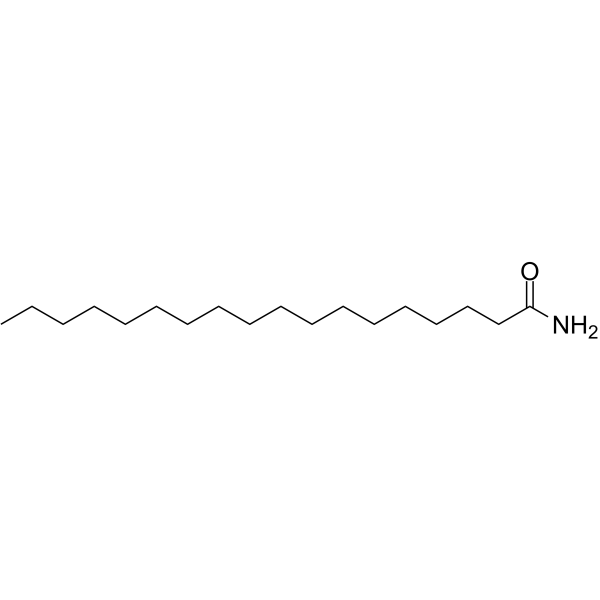
HY-W130610
StearamideCorrosion Inhibitor -
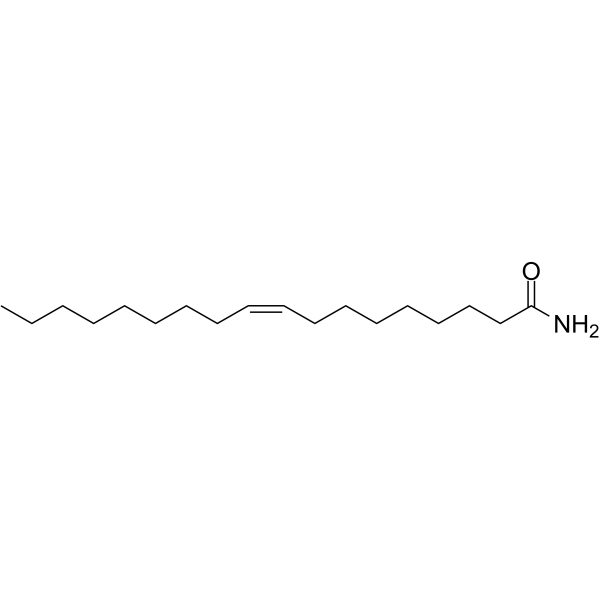
HY-N2327
OleamideEndogenous Metabolite -
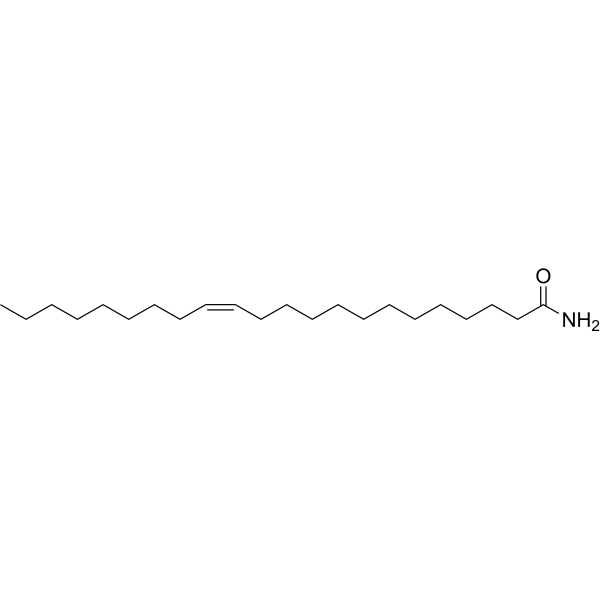
HY-W009123
ErucamideTMEM19 Ligand, T3SS Inhibitor -
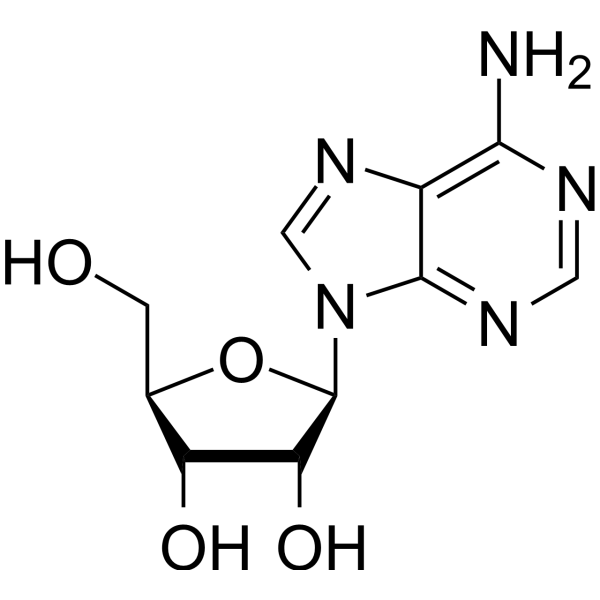
HY-B0228
AdenosineEndogenous Autacoid -
HY-W015309
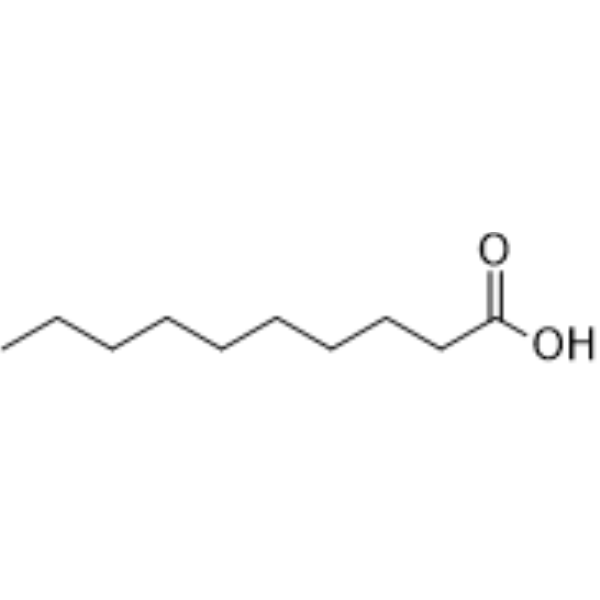
Decanoic acidTyrosinase Inhibitor; Melanosome Inhibitor; mTORC1 Signaling Inhibitor -
HY-20685
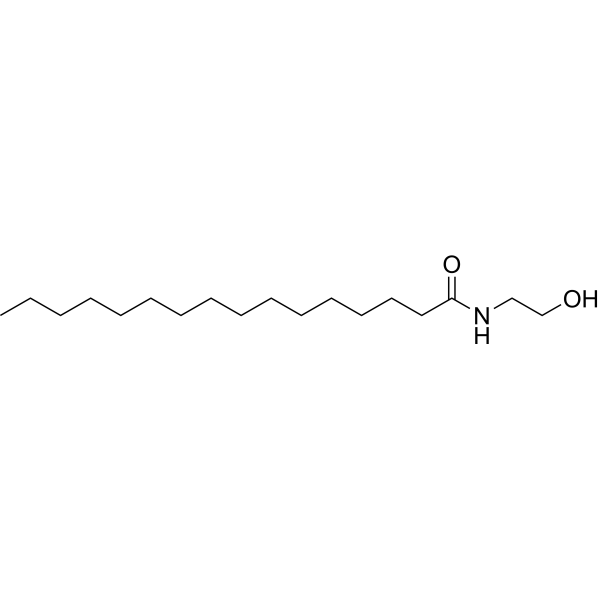
PalmitoylethanolamideEndogenous Metabolite -
HY-103660
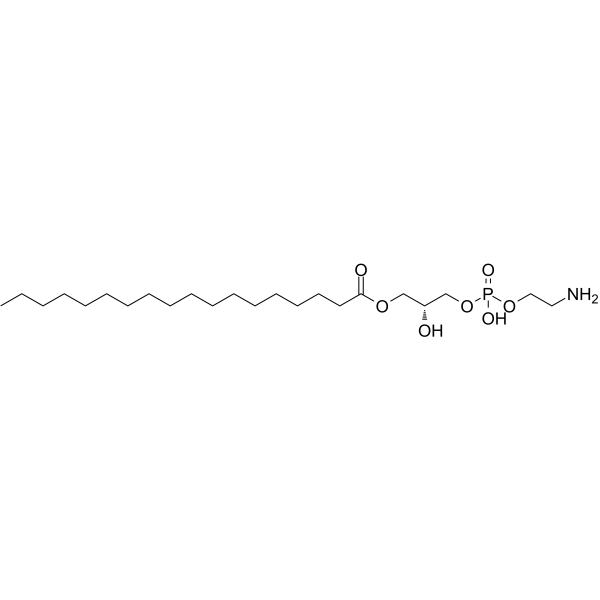
18:0 LYSO-PECa2+ Inducer -

HY-121389R
Hexadecanamide (Standard)Anti-inflammatory Agent -
HY-W127445
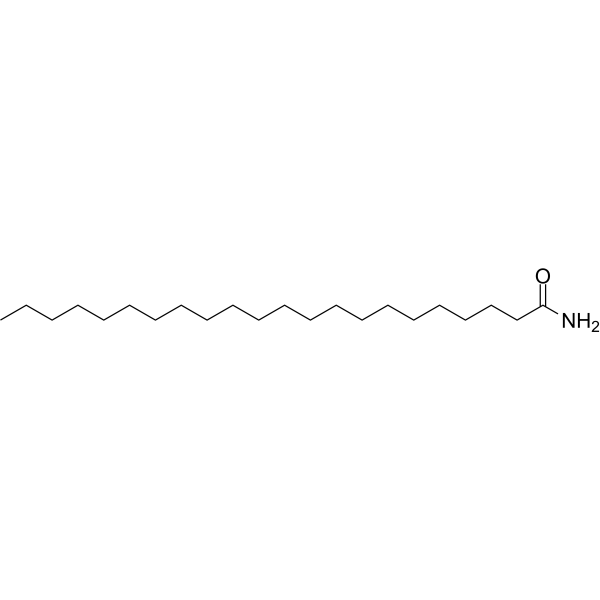
BehenamideBiochemical Assay Reagent -
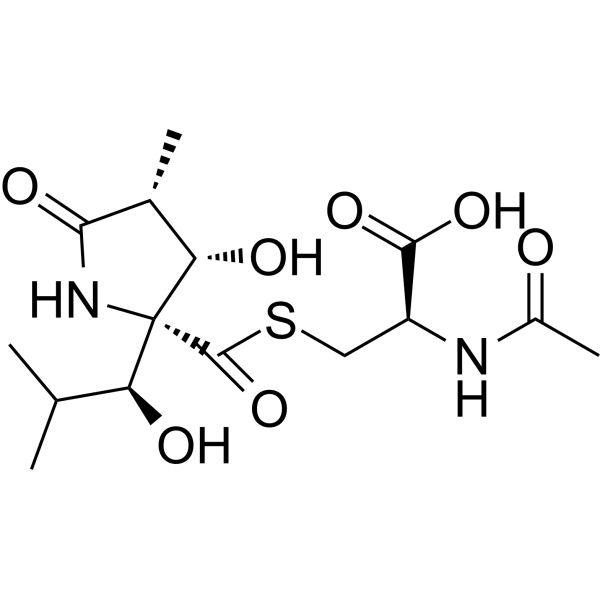
HY-16594
LactacystinProteasome Inhibitor -
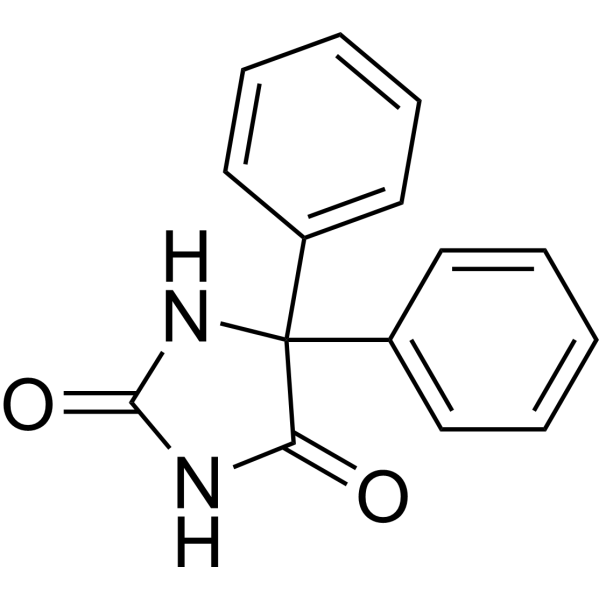
HY-B0448
PhenytoinVirus Protease Inhibitor -

HY-W130610R
Stearamide (Standard)


Biological Activity
Description
IC50 & Target
|
PPARα |
In Vitro
Hexadecanamide (Compound HEX) (5 μM, 2 h) limits the activation of mammary NF-κB via activating the PPARα-SIRT1 axis in MMECs[1].
Hexadecanamide (10 nM, 0-72 h) exerts a significant enhancing effect on sperm motility[2].
Hexadecanamide (0-1.5 nM, 72 h) results in a significant increase in the protein levels of both PAOX and CA2 in sperm cells[2].
MedChemExpress (MCE) has not independently confirmed the accuracy of these methods. They are for reference only.
In Vivo
Hexadecanamide (5 mg/kg, p.o., 10 d) effectively reduces colonic inflammation in SARA mice[1].
MedChemExpress (MCE) has not independently confirmed the accuracy of these methods. They are for reference only.
-
Animal Model:S. aureus infected male and female BALB/c mice (21-25 g, 6-8 w)[1]
-
Dosage:1.25, 2.5, 5 mg/kg
-
Administration:Oral gavage (p.o.), 15 d
-
Result:Reduced inflammatory cell infiltration and structure destruction.
Decreased inflammatory markers (MPO activity, TNF-α, IL-1β) dose-dependently.
Reversed the decrease in the TJs proteins, ZO-1, Occludin, and Claudin-3 caused by S. aureus.
Repaired the blood-milk barrier injury induced by S. aureus.
-
Animal Model:BALB/c mice model with S-RMT-induced mucosal barrier injury[1]
-
Dosage:5 mg/kg
-
Administration:Oral gavage (p.o.), 10 d
-
Result:Increased mucin-2 expression and improved S-RMT-induced mucosal barrier injury in S-RMT mice.
Distinctly mitigated the upregulation of inflammatory markers caused by S-RMT.
Reversed the SARA aggravated S. aureus-induced mastitis.


Chemical Information
-
CAS No. 629-54-9
-
Appearance Solid
-
Molecular Weight 255.44
-
Formula C16H33NO
-
Color White to off-white
-
SMILES
NC(CCCCCCCCCCCCCCC)=O
-
Synonyms
Palmitamide
-
Structure Classification
-
Initial Source
-
Shipping
Room temperature in continental US; may vary elsewhere.
-
Storage
Store at room temperature 3 years
In solvent -80°C 2 years -20°C 1 year


Solvent & Solubility
In Vitro:
DMSO : 5 mg/mL (19.57 mM; ultrasonic and warming and heat to 60°C; Hygroscopic DMSO has a significant impact on the solubility of product, please use newly opened DMSO)
Please refer to the solubility information to select the appropriate solvent. Once prepared, please aliquot and store the solution to prevent product inactivation from repeated freeze-thaw cycles.
Storage method and period of stock solution: -80°C, 2 years; -20°C, 1 year. When stored at -80°C, please use it within 2 years. When stored at -20°C, please use it within 1 year.
Please refer to the solubility information to select the appropriate solvent. Once prepared, please aliquot and store the solution to prevent product inactivation from repeated freeze-thaw cycles.
Storage method and period of stock solution: -80°C, 2 years; -20°C, 1 year. When stored at -80°C, please use it within 2 years. When stored at -20°C, please use it within 1 year.
Concentration (start) × Volume (start) = Concentration (final) × Volume (final)
In Vivo:
Select the appropriate dissolution method based on your experimental animal and administration route.
- For the following dissolution methods, please ensure to first prepare a clear stock solution using an In Vitro approach and then sequentially add co-solvents:
- To ensure reliable experimental results, the clarified stock solution can be appropriately stored based on storage conditions. As for the working solution for In Vivo experiments, it is recommended to prepare freshly and use it on the same day.
- The percentages shown for the solvents indicate their volumetric ratio in the final prepared solution. If precipitation or phase separation occurs during preparation, heat and/or sonication can be used to aid dissolution.
For the following dissolution methods, please prepare the working solution directly:
It is recommended to prepare fresh solutions and use them promptly within a short period of time.
The percentages shown for the solvents indicate their volumetric ratio in the final prepared solution. If precipitation or phase separation occurs during preparation, heat and/or sonication can be used to aid dissolution.
Add each solvent one by one: 50% PEG300 50% Saline
Solubility: 5 mg/mL (19.57 mM); Suspended solution; Need ultrasonic
In Vivo Dissolution Calculator
Please enter the basic information of animal experiments:
-
-
-
-
Recommended: Prepare an additional quantity of animals to account for potential losses during experiments.
Please enter your animal formula composition:
-
%DMSO +
Recommended: Keep the proportion of DMSO in working solution below 2% if your animal is weak.
-
%+
-
+%Tween-80 + +
-
%Saline +
The co-solvents required include: DMSO, . All of co-solvents are available by MedChemExpress (MCE). , Tween 80. All of co-solvents are available by MedChemExpress (MCE).
Working solution concentration: 0.22 mg/mL
Method for preparing stock solution: mg drug dissolved in μL DMSO. Stock solution concentration: mg/mL.
1. Take μL DMSO stock solution;
2. Add μL .
μL , mix evenly;
3. Then add μL Tween 80, mix evenly;
4. Then add μL
Please ensure that the stock solution in the first step is dissolved to a clear state, and add co-solvents in sequence. You can use ultrasonic heating (ultrasonic cleaner, recommended frequency 20-40 kHz), vortexing, etc. to assist dissolution.


Purity & Documentation
-
Data Sheet (269 KB)
-
SDS (393 KB)
- English - EN (393 KB)
- Français - FR (393 KB)
- Deutsch - DE (393 KB)
- Norwegian - NO (393 KB)
- Español - ES (393 KB)
- Swedish - SV (393 KB)
- Italian - IT (393 KB)
- Korean - KR (393 KB)
- Portuguese - PT (393 KB)
-
Handling Instructions (2659 KB)
References
[1]. Bao L, et al. Hexadecanamide alleviates Staphylococcus aureus-induced mastitis in mice by inhibiting inflammatory responses and restoring blood-milk barrier integrity. PLoS Pathog. 2023 Nov 10;19(11):e1011764. [Content Brief]
[2]. Han B, et al. Changes in seminal plasma microecological dynamics and the mechanistic impact of core metabolite hexadecanamide in asthenozoospermia patients. Imeta. 2024 Jan 25;3(2):e166. https://pubmed.ncbi.nlm.nih.gov/38882497/ [Content Brief]


Complete Stock Solution Preparation Table
Please refer to the solubility information to select the appropriate solvent. Once prepared, please aliquot and store the solution to prevent product inactivation from repeated freeze-thaw cycles.
Storage method and period of stock solution: -80°C, 2 years; -20°C, 1 year. When stored at -80°C, please use it within 2 years. When stored at -20°C, please use it within 1 year.
| Optional Solvent | Concentration Solvent Mass | 1 mg | 5 mg | 10 mg | 25 mg |
|---|---|---|---|---|---|
| DMSO | 1 mM | 3.9148 mL | 19.5741 mL | 39.1481 mL | 97.8703 mL |
| 5 mM | 0.7830 mL | 3.9148 mL | 7.8296 mL | 19.5741 mL | |
| 10 mM | 0.3915 mL | 1.9574 mL | 3.9148 mL | 9.7870 mL | |
| 15 mM | 0.2610 mL | 1.3049 mL | 2.6099 mL | 6.5247 mL |


Hexadecanamide Related Classifications
HY-121389 Related Classifications
 Powered by Bioz