



MMP-9/MMP-13 Inhibitor I

Based on 1 Customer Validation
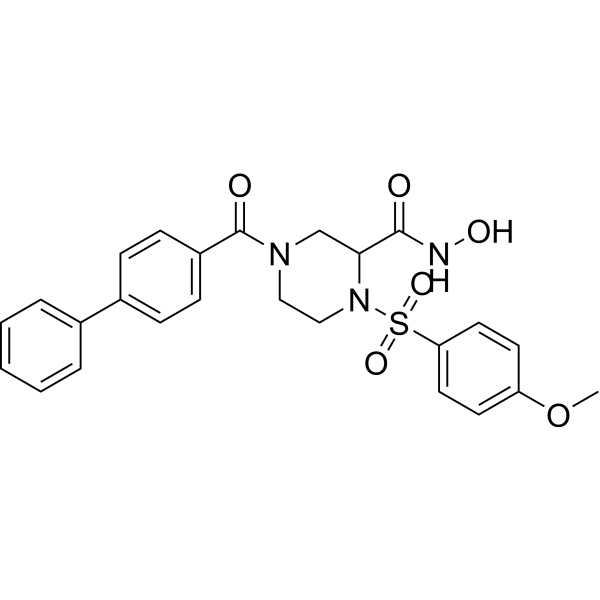
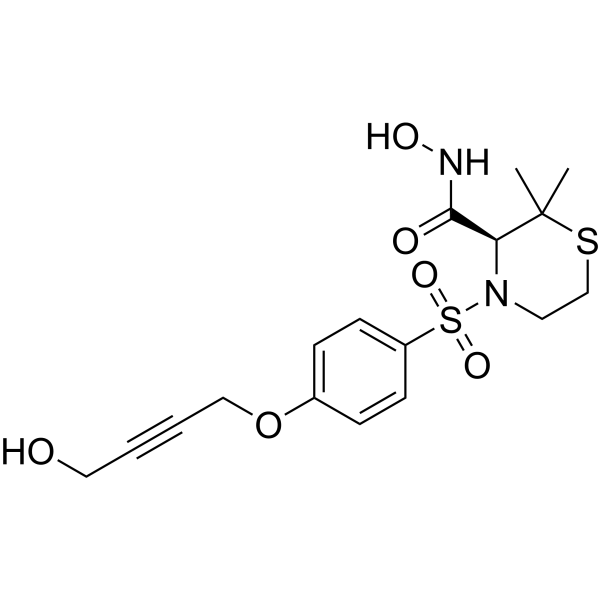
MMP-9/MMP-13 Inhibitor I is a potent MMP-9 and MMP-13 inhibitor with IC50s of both 0.9 nM. MMP-9/MMP-13 Inhibitor I shows >20-folds selectivity for MMP-9/MMP-13 over other MMPs.
For research use only. We do not sell to patients.
- Purity : 99.68%
- CAS No.: 204140-01-2
- Formula: C25H25N3O6S
- Molecular Weight:495.55
-
Storage:Powder -20°C, 3 years ; In solvent -80°C, 6 months , -20°C, 1 month

To place orders, for customer services and technical support, please contact: MedChemExpress USA
Tel: 609-228-6898 E-mail: [email protected] [email protected]


-
 Biological Activity
-
Chemical Information
-
Solvent & Solubility
- Protocols
- Purity & Documentation
- References
-
 Help & FAQs


-
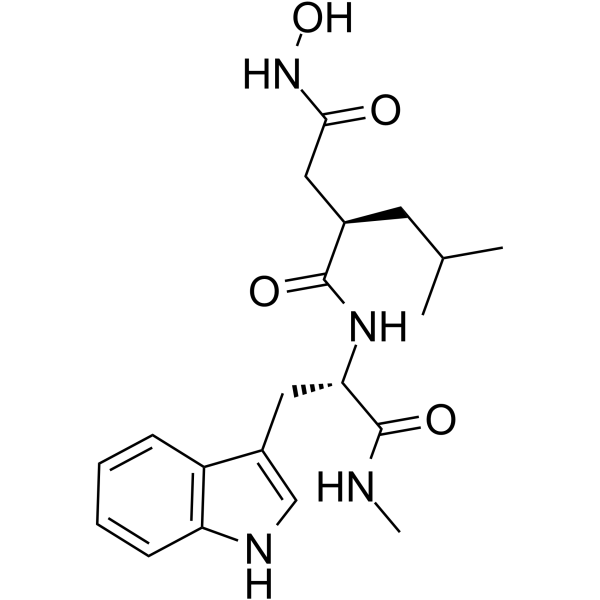
HY-15768
IlomastatMMP Inhibitor -
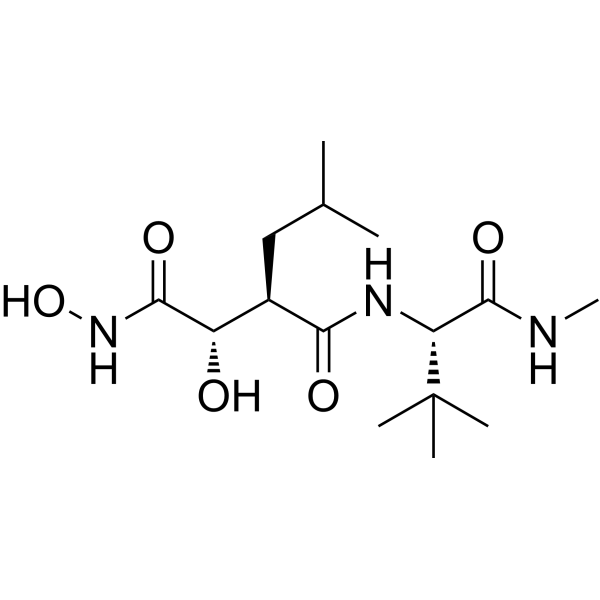
HY-12169
MarimastatMMP Inhibitor -
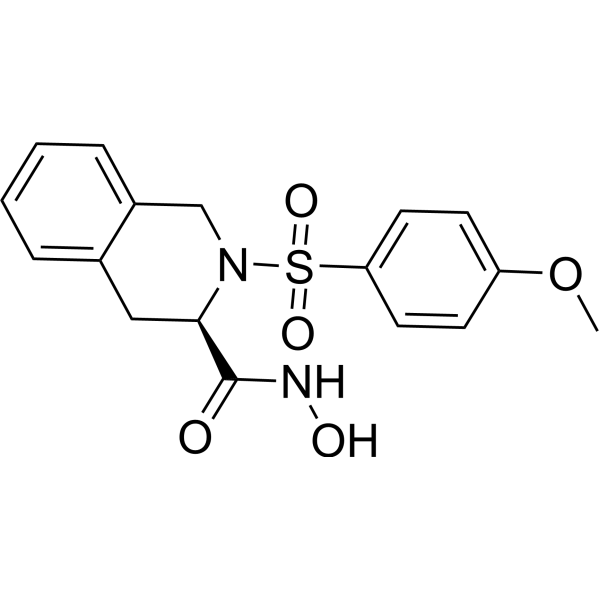
HY-128133
MMP-8 inhibitor-1MMP-8 Inhibitor -
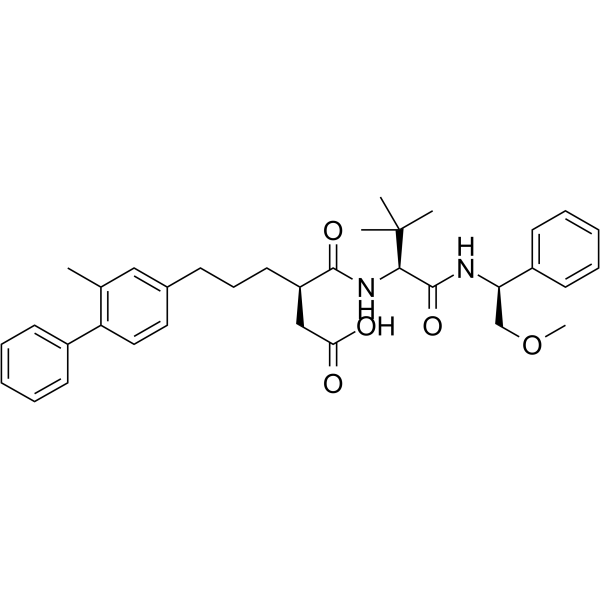
HY-107639
UK-370106MMP-3/MMP-12 Inhiibitor -
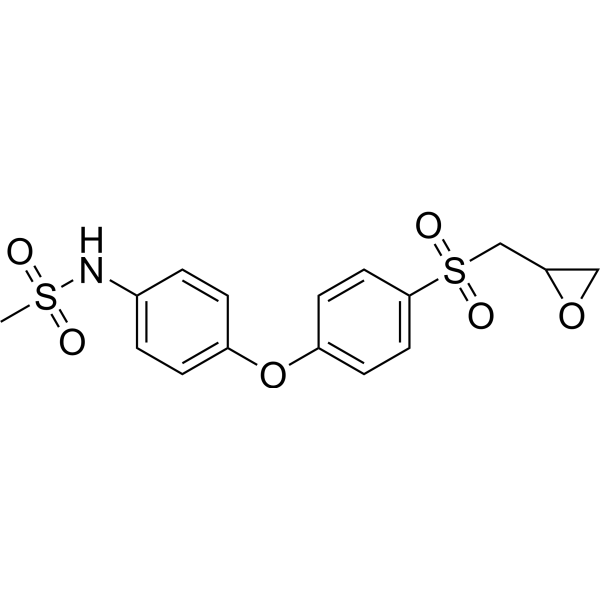
HY-130076
MMP-2 Inhibitor IIMMP-2 Inhibitor -
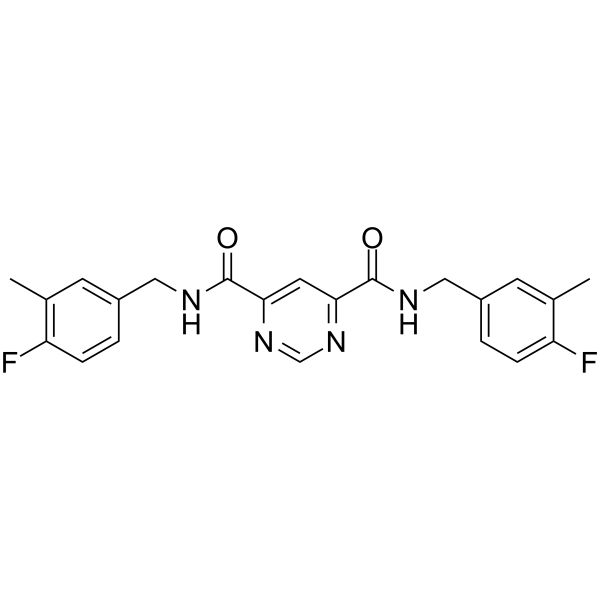
HY-125166
DB04760MMP Inhibitor -
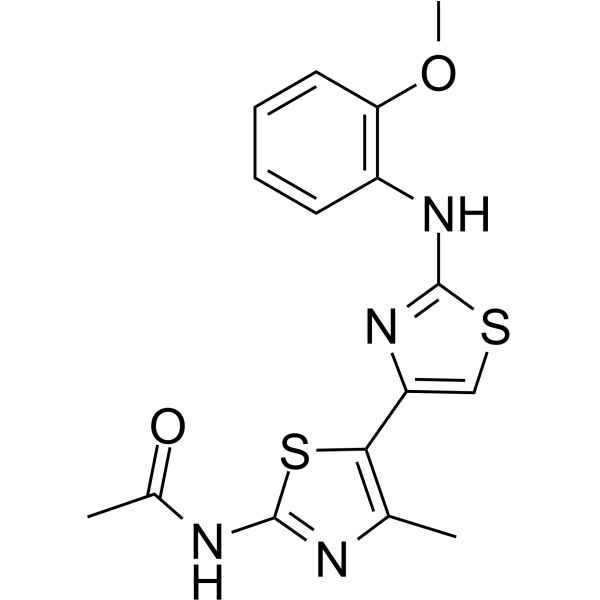
HY-103482
JNJ0966MMP-9 Inhibitor -
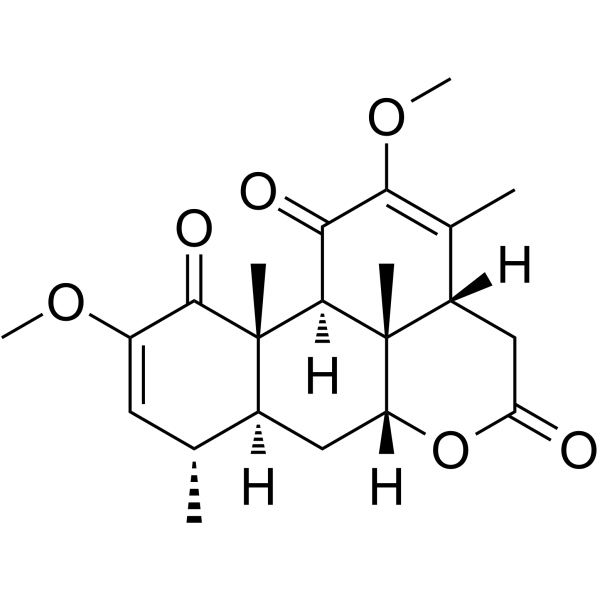
HY-N1581
QuassinAnti-plasmodial Agent -
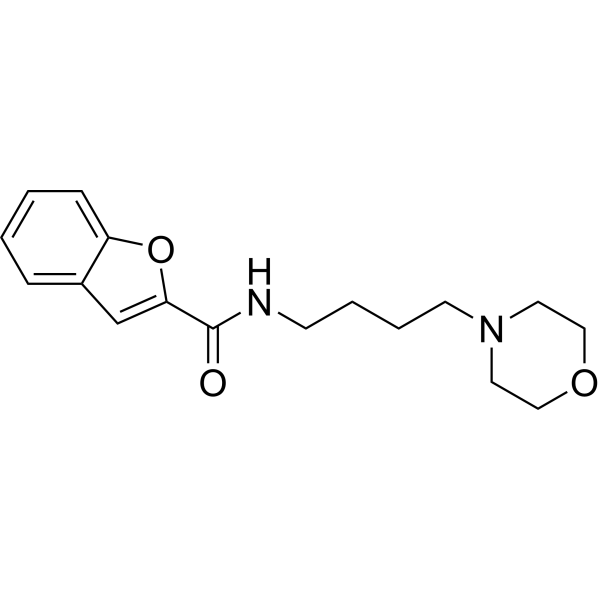
HY-100359
CL-82198MMP-13 Inhibitor -
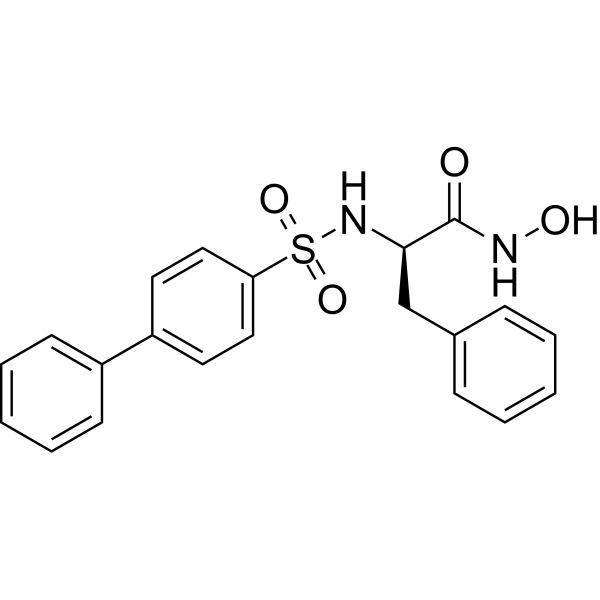
HY-114785
BPHAMMP-2/MMP-9/MMP-14 Inhibitor -
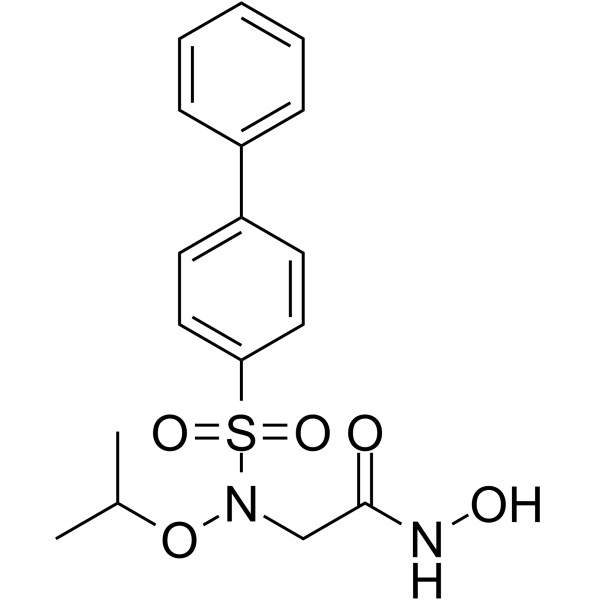
HY-103444
ARP-100MMP-2 Inhibitor -
HY-119307
ApratastatTACE/MMPs Inhibitor


Biological Activity
Description
IC50 & Target
[1]|
MMP-9 0.9 nM (IC50) |
MMP-13 0.9 nM (IC50) |
MMP-1 43 nM (IC50) |
MMP-3 23 nM (IC50) |
MMP-7 931 nM (IC50) |
In Vitro


Chemical Information
-
CAS No. 204140-01-2
-
Appearance Solid
-
Molecular Weight 495.55
-
Formula C25H25N3O6S
-
Color White to off-white
-
SMILES
O=C(C1N(S(=O)(C2=CC=C(OC)C=C2)=O)CCN(C(C3=CC=C(C4=CC=CC=C4)C=C3)=O)C1)NO
-
Shipping
Room temperature in continental US; may vary elsewhere.
-
Storage
Powder -20°C 3 years In solvent -80°C 6 months -20°C 1 month


Solvent & Solubility
In Vitro:
DMSO : 250 mg/mL (504.49 mM; Need ultrasonic; Hygroscopic DMSO has a significant impact on the solubility of product, please use newly opened DMSO)
Please refer to the solubility information to select the appropriate solvent. Once prepared, please aliquot and store the solution to prevent product inactivation from repeated freeze-thaw cycles.
Storage method and period of stock solution: -80°C, 6 months; -20°C, 1 month. When stored at -80°C, please use it within 6 months. When stored at -20°C, please use it within 1 month.
Please refer to the solubility information to select the appropriate solvent. Once prepared, please aliquot and store the solution to prevent product inactivation from repeated freeze-thaw cycles.
Storage method and period of stock solution: -80°C, 6 months; -20°C, 1 month. When stored at -80°C, please use it within 6 months. When stored at -20°C, please use it within 1 month.
Concentration (start) × Volume (start) = Concentration (final) × Volume (final)
In Vivo:
Select the appropriate dissolution method based on your experimental animal and administration route.
- For the following dissolution methods, please ensure to first prepare a clear stock solution using an In Vitro approach and then sequentially add co-solvents:
- To ensure reliable experimental results, the clarified stock solution can be appropriately stored based on storage conditions. As for the working solution for In Vivo experiments, it is recommended to prepare freshly and use it on the same day.
- The percentages shown for the solvents indicate their volumetric ratio in the final prepared solution. If precipitation or phase separation occurs during preparation, heat and/or sonication can be used to aid dissolution.
Add each solvent one by one: 10% DMSO 40% PEG300 5% Tween-80 45% Saline
Solubility: ≥ 2.08 mg/mL (4.20 mM); Clear solution
This protocol yields a clear solution of ≥ 2.08 mg/mL (saturation unknown).
Taking 1 mL working solution as an example, add 100 μL DMSO stock solution (20.8 mg/mL) to 400 μL PEG300, and mix evenly; then add 50 μL Tween-80 and mix evenly; then add 450 μL Saline to adjust the volume to 1 mL.
Preparation of Saline: Dissolve 0.9 g sodium chloride in ddH₂O and dilute to 100 mL to obtain a clear Saline solution.
Add each solvent one by one: 10% DMSO 90% (20% SBE-β-CD in Saline)
Solubility: ≥ 2.08 mg/mL (4.20 mM); Clear solution
This protocol yields a clear solution of ≥ 2.08 mg/mL (saturation unknown).
Taking 1 mL working solution as an example, add 100 μL DMSO stock solution (20.8 mg/mL) to 900 μL 20% SBE-β-CD in Saline, and mix evenly.
Preparation of 20% SBE-β-CD in Saline (4°C, storage for one week): 2 g SBE-β-CD powder is dissolved in 10 mL Saline, completely dissolve until clear.
In Vivo Dissolution Calculator
Please enter the basic information of animal experiments:
-
-
-
-
Recommended: Prepare an additional quantity of animals to account for potential losses during experiments.
Please enter your animal formula composition:
-
%DMSO +
Recommended: Keep the proportion of DMSO in working solution below 2% if your animal is weak.
-
%+
-
+%Tween-80 + +
-
%Saline +
The co-solvents required include: DMSO, . All of co-solvents are available by MedChemExpress (MCE). , Tween 80. All of co-solvents are available by MedChemExpress (MCE).
Working solution concentration: 0.22 mg/mL
Method for preparing stock solution: mg drug dissolved in μL DMSO. Stock solution concentration: mg/mL.
1. Take μL DMSO stock solution;
2. Add μL .
μL , mix evenly;
3. Then add μL Tween 80, mix evenly;
4. Then add μL
Please ensure that the stock solution in the first step is dissolved to a clear state, and add co-solvents in sequence. You can use ultrasonic heating (ultrasonic cleaner, recommended frequency 20-40 kHz), vortexing, etc. to assist dissolution.

Protocols
-
Mitochondrial membrane-potential fluorescent assay
Mitochondrial membrane potential fluorescent assays estimate ΔΨm in living cells using lipophilic cationic dyes such as TMRM, TMRE, rhodamine 123, and JC-1, which accumulate in mitochondria according to membrane polarization; loss of signal after FCCP or CCCP treatment is interpreted as mitochondrial depolarization. TMRM/TMRE and rhodamine 123 are commonly used for semi-quantitative live-cell microscopy or flow cytometry, while JC-1 can report a shift from red aggregate fluorescence to green monomer fluorescence during depolarization; interpretation requires controls because dye concentration, quenching mode, cell type, dye efflux, and mitochondrial mass can affect fluorescence independently of ΔΨm.
-
Mitochondrial membrane-potential and mitochondrial mass staining
Mitochondrial membrane potential staining measures the electrochemical polarization across the mitochondrial inner membrane in live cells using lipophilic cationic fluorescent probes; early rhodamine-based work showed that selective mitochondrial dye accumulation is lost when the mitochondrial transmembrane potential is dissipated. JC-1 reports mitochondrial polarization by shifting from green monomer fluorescence to red J-aggregate fluorescence as dye concentration increases within energized mitochondria; therefore, the red/green fluorescence ratio is used as a relative readout of mitochondrial membrane potential. TMRE or TMRM staining provides a single-channel relative readout because these cationic rhodamine esters accumulate in polarized mitochondria, and lower fluorescence indicates reduced mitochondrial polarization when acquisition and dye-loading conditions are controlled. Mitochondrial mass staining is commonly performed with MitoTracker Green FM or related MitoTracker dyes as


Purity & Documentation
-
Data Sheet (272 KB)
-
SDS (393 KB)
- English - EN (393 KB)
- Français - FR (393 KB)
- Deutsch - DE (393 KB)
- Norwegian - NO (393 KB)
- Español - ES (393 KB)
- Swedish - SV (393 KB)
- Italian - IT (393 KB)
- Korean - KR (393 KB)
- Portuguese - PT (393 KB)
-
Handling Instructions (2659 KB)
References


Complete Stock Solution Preparation Table
Please refer to the solubility information to select the appropriate solvent. Once prepared, please aliquot and store the solution to prevent product inactivation from repeated freeze-thaw cycles.
Storage method and period of stock solution: -80°C, 6 months; -20°C, 1 month. When stored at -80°C, please use it within 6 months. When stored at -20°C, please use it within 1 month.
| Optional Solvent | Concentration Solvent Mass | 1 mg | 5 mg | 10 mg | 25 mg |
|---|---|---|---|---|---|
| DMSO | 1 mM | 2.0180 mL | 10.0898 mL | 20.1796 mL | 50.4490 mL |
| 5 mM | 0.4036 mL | 2.0180 mL | 4.0359 mL | 10.0898 mL | |
| 10 mM | 0.2018 mL | 1.0090 mL | 2.0180 mL | 5.0449 mL | |
| 15 mM | 0.1345 mL | 0.6727 mL | 1.3453 mL | 3.3633 mL | |
| 20 mM | 0.1009 mL | 0.5045 mL | 1.0090 mL | 2.5224 mL | |
| 25 mM | 0.0807 mL | 0.4036 mL | 0.8072 mL | 2.0180 mL | |
| 30 mM | 0.0673 mL | 0.3363 mL | 0.6727 mL | 1.6816 mL | |
| 40 mM | 0.0504 mL | 0.2522 mL | 0.5045 mL | 1.2612 mL | |
| 50 mM | 0.0404 mL | 0.2018 mL | 0.4036 mL | 1.0090 mL | |
| 60 mM | 0.0336 mL | 0.1682 mL | 0.3363 mL | 0.8408 mL | |
| 80 mM | 0.0252 mL | 0.1261 mL | 0.2522 mL | 0.6306 mL | |
| 100 mM | 0.0202 mL | 0.1009 mL | 0.2018 mL | 0.5045 mL |


MMP-9/MMP-13 Inhibitor I Related Classifications
HY-128026 Related Classifications
 Powered by Bioz