



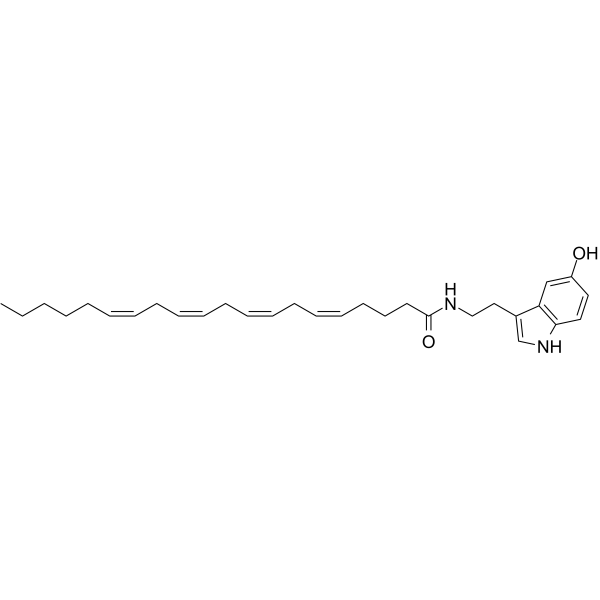
N-Arachidonoylserotonin

Based on 1 Customer Validation
N-Arachidonoylserotonin (Arachidonyl serotonin) is a dual FAAH inhibitor and TRPV1 antagonist. N-Arachidonoylserotonin blocks Anandamide (HY-10863) hydrolysis, increases brain Anandamide levels, and promotes CB1 receptor signaling in the dorsal hippocampus. N-Arachidonoylserotonin normalizes HPA axis dysregulation, reduces plasma corticosterone levels, and induces anxiolytic-like effects in mice. N-Arachidonoylserotonin reverses behavioral despair, inhibits contextual fear memory retrieval, and produces dose-dependent antinociceptive effects in rodents. N-Arachidonoylserotonin inhibits intestinal motility. N-Arachidonoylserotonin can be used to study stress-related disorders, traumatic memory and related psychiatric disorders, pain, and intestinal motility disorders.
For research use only. We do not sell to patients.
- Purity : 99.11%
- CAS No.: 187947-37-1
- Formula: C30H42N2O2
- Molecular Weight:462.67
-
Storage:
Solution, -20°C, 2 years

To place orders, for customer services and technical support, please contact: MedChemExpress USA
Tel: 609-228-6898 E-mail: [email protected] [email protected]


-
 Biological Activity
-
Chemical Information
- Protocols
- Purity & Documentation
- References
-
 Help & FAQs


-
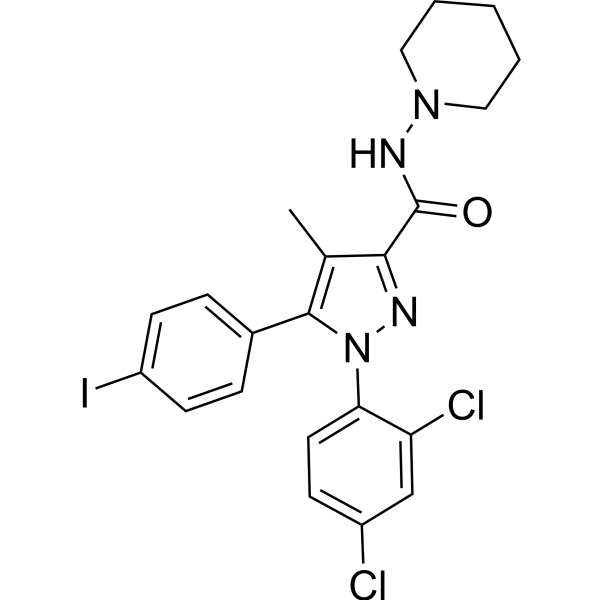
HY-15443
AM251CB1 Receptor Antagonist -
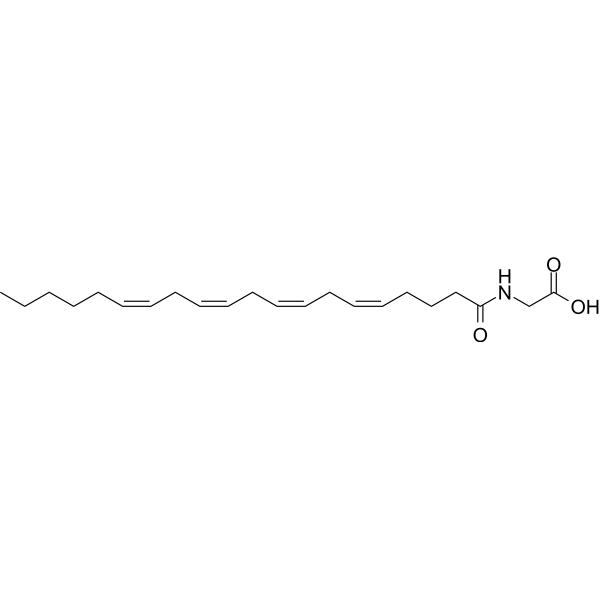
HY-103332
N-ArachidonylglycineGPR18 Agonist -
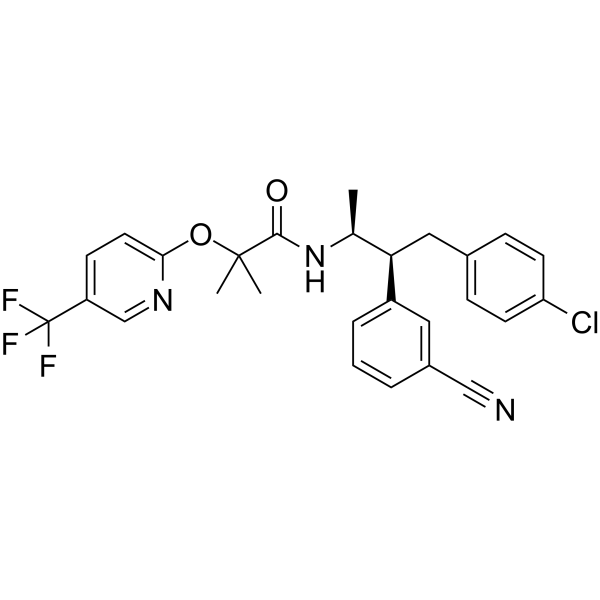
HY-10013
TaranabantCB1 Receptor Invert Agonist -
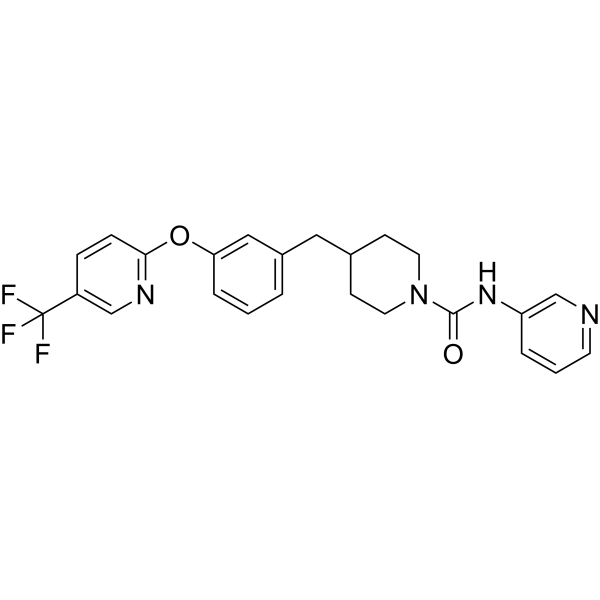
HY-14380
PF-3845FAAH Inhibitor -
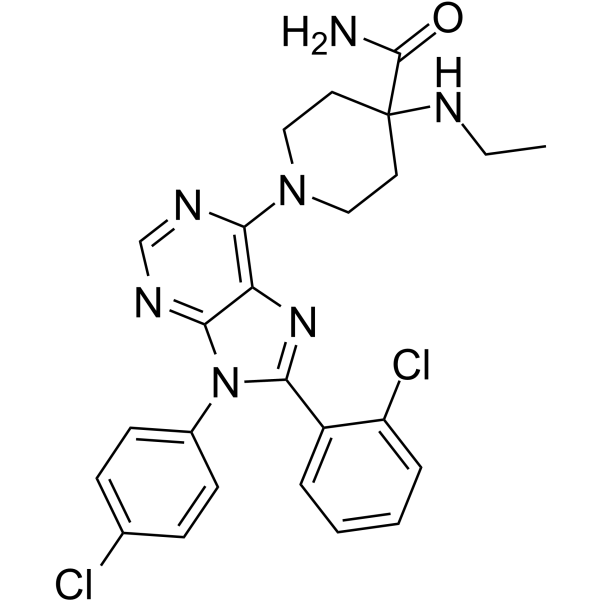
HY-10871
OtenabantCannabinoid Receptor Antagonist -
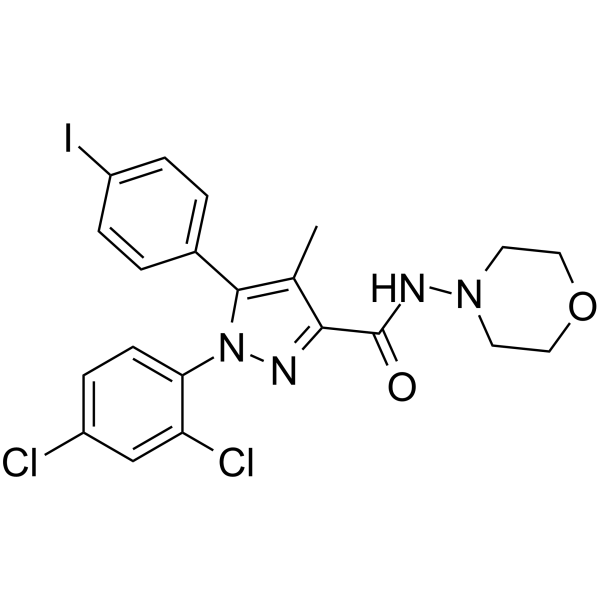
HY-13505
AM281CB1 Antagonist -
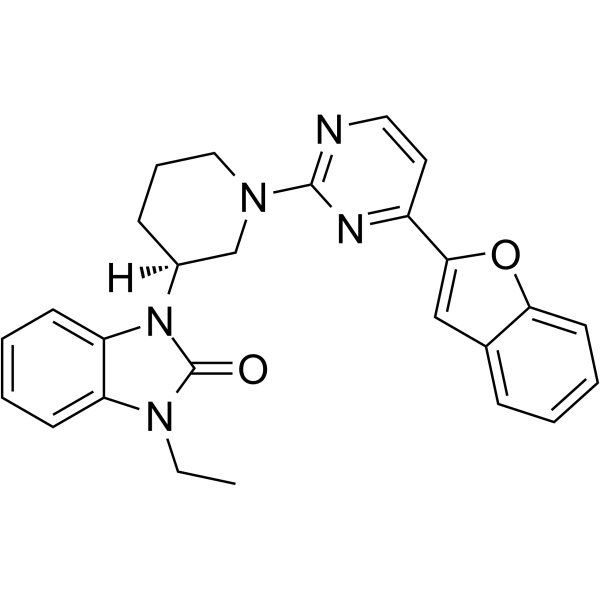
HY-103462
TC-F2FAAH Inhibitor -
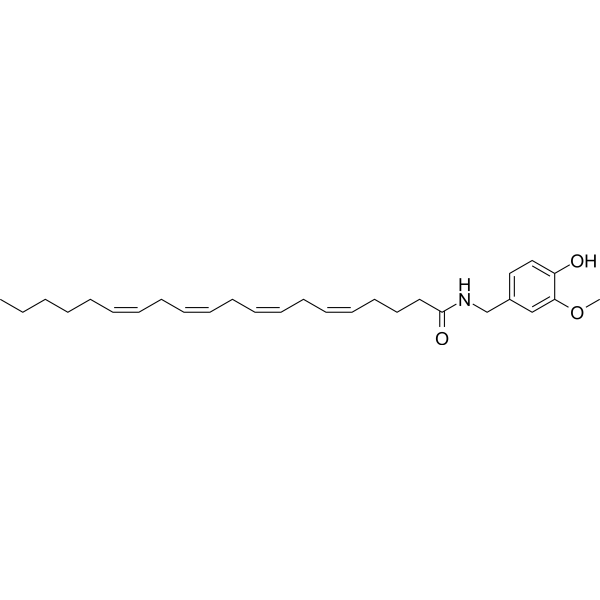
HY-103333
ArvanilCB1 Receptor And TRPV1 Receptor Agonist -
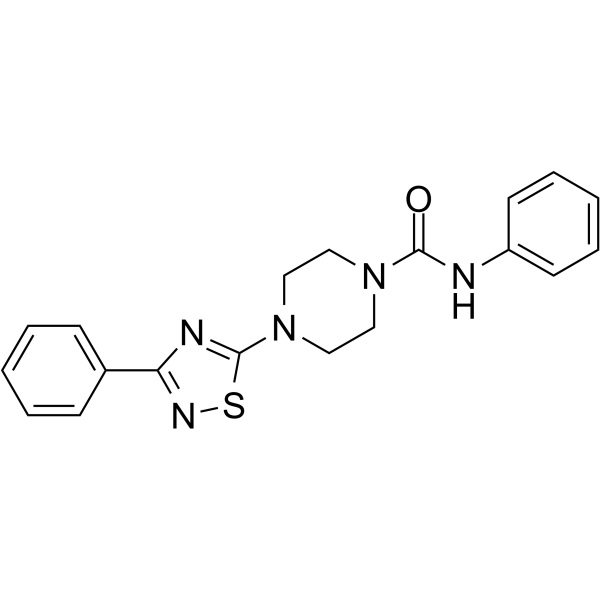
HY-N7062
JNJ-1661010FAAH Inhibitor -
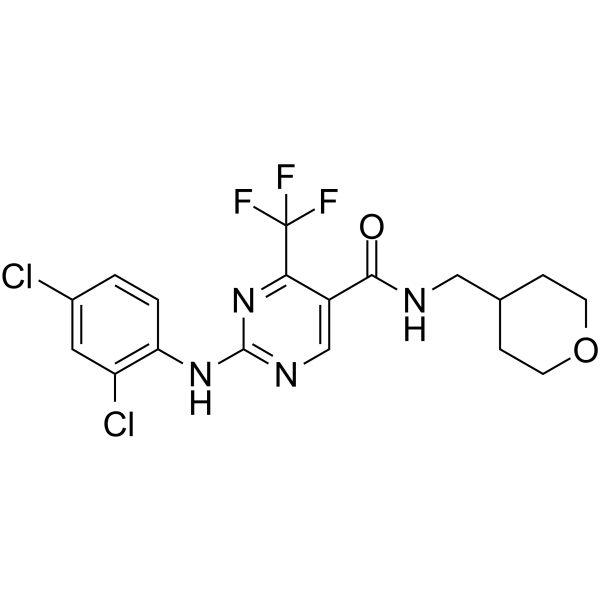
HY-14167
GW842166XCannabinoid Receptor Agonist -
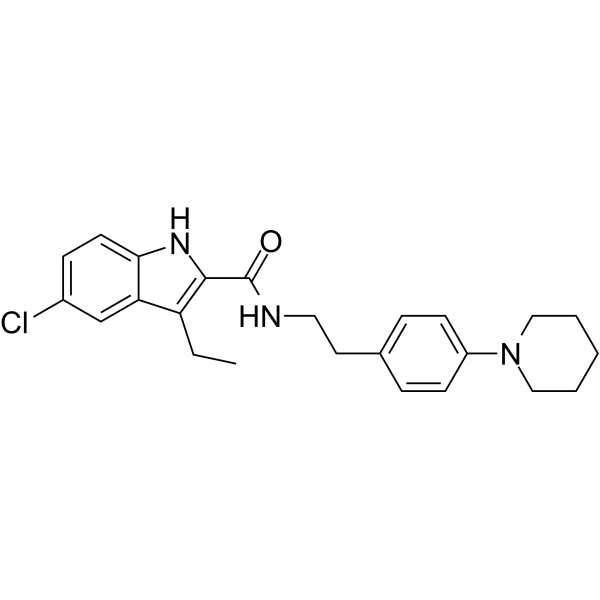
HY-13288
Org 27569Cannabinoid Receptor Modulator -

HY-103335
O1918


Biological Activity
Description
IC50 & Target
[3]|
CB1 |
hTRPV1 |
Cellular Effect
|
Cell Line

|
Type | Value | Description | References |
|---|---|---|---|---|
| HEK293 | IC50 |
0.27 μM
|
Antagonism of capsaicin-induced intracellular Ca2+ elevation in HEK293 cells overexpressing human recombinant TRPV1 assessed by Fluo-3 fluorescence measurement.
Antagonism of capsaicin-induced intracellular Ca2+ elevation in HEK293 cells overexpressing human recombinant TRPV1 assessed by Fluo-3 fluorescence measurement.
|
18027904 |
In Vitro
N-Arachidonoylserotonin (30 min) inhibits FAAH in rat brain membranes with an IC50 of 8 μM[3].
N-Arachidonoylserotonin (2 h) is a potent antagonist of hTRPV1 in HEK293 cells, with an IC50 of 0.27 μM[3].
N-Arachidonoylserotonin (50 μM) does not inhibit MAGL in cell-free homogenates even at concentrations up to 50 μM[4].
MedChemExpress (MCE) has not independently confirmed the accuracy of these methods. They are for reference only. Further protocols information, click here.
In Vivo
N-Arachidonoylserotonin (0.1-1 mg/kg; i.p.; 30 min before testing) inhibits the retrieval of contextual fear memory in mice[2].
N-Arachidonoylserotonin (1-20 mg/kg; i.p.; single dose; 30 min before labeling) inhibits intestinal motility in mice, with significant inhibition observed at doses of 10 mg/kg and above, and its effect is partially mediated by CB1 receptors[4].
N-Arachidonoylserotonin (15 mg/kg; i.p.; single dose) significantly inhibits intestinal motility in CB1 receptor-deficient mice, although this effect partially depends on CB1 receptors (42% inhibition in wild-type vs. 22% inhibition in mutant mice)[4].
MedChemExpress (MCE) has not independently confirmed the accuracy of these methods. They are for reference only.
-
Animal Model:Wistar rats (male, 220-240 g, 4 h restraint stress model)[1]
-
Dosage:2.5 mg/kg; 5 mg/kg
-
Administration:i.p.; three times at 24 h, 5 h, and 1 h prior to FST test or sacrifice
-
Result:Reversed behavioral despair at 5 mg/kg, significantly decreasing immobility time and increasing climbing time.
Completely reversed stress-induced elevation of plasma corticosterone levels at 5 mg/kg.
Significantly increased BDNF mRNA and protein levels in the hippocampus at 2.5 mg/kg.
Increased BDNF mRNA levels and showed a trend for increase in protein levels at 5 mg/kg.
Significantly elevated anandamide (AEA) levels in the medial PFC at 2.5 mg/kg.
Did not significantly alter BDNF levels in non-stressed animals except for a decrease in mRNA expression at 5 mg/kg.
Caused a significant elevation of corticosterone levels in non-stressed rats at 2.5 mg/kg.
-
Animal Model:Swiss mice (male, 25-30 g)[2]
-
Dosage:0.1, 0.3, and 1.0 mg/kg (i.p.); 0.125, 0.25, and 0.5 nmol (intra-hippocampal)
-
Administration:i.p. (30 min before test); intra-hippocampal (10 min before test)
-
Result:Decreased freezing responses at all i.p. doses (0.1, 0.3, 1 mg/kg) during the expression of contextual fear memory.
Did not affect freezing when administered before conditioning at 0.3 mg/kg.
Decreased freezing at intra-hippocampal doses of 0.125 and 0.25 nmol, but the 0.5 nmol dose was ineffective.
Did not interfere with basal motor activity in the open field test.
-
Animal Model:ICR mice (Male, 20-22 g)[4]
-
Dosage:1, 2.5, 5, 10, 15, 20 mg/kg
-
Administration:i.p.; single dose; 30 min before marker
-
Result:Inhibited intestinal motility in a dose-dependent manner, with significant effects starting at 10 mg/kg.
Was significantly reduced by rimonabant (0.1 mg/kg) when combined with a 15 mg/kg dose.
Increased the inhibitory effect of anandamide and PEA at 5 mg/kg.
Increased small intestine levels of anandamide (1.85 pmol/mg lipid at 10 mg/kg vs. control 1.08 pmol/mg lipid) and 2-AG (2.30 nmol/mg lipid at 10 mg/kg vs. control 1.23 nmol/mg lipid) starting from 10 mg/kg.
Increased PEA levels at 15 mg/kg (9.36 pmol/mg lipid vs. control 6.60 pmol/mg lipid).
-
Animal Model:CB1 receptor-deficient mice and wild-type littermates (Female, 19-22 g)[4]
-
Dosage:15 mg/kg
-
Administration:i.p.; single dose; 30 min before marker
-
Result:Significantly reduced intestinal motility in CB1 receptor-deficient mice.
Induced a larger reduction in motility in wild-type mice (42% inhibition) compared to CB1 receptor-deficient mice (22% inhibition).
-
Animal Model:FAAH-deficient mice (Female, 19-22 g)[4]
-
Dosage:15 mg/kg
-
Administration:i.p.; single dose; 30 min before marker
-
Result:Significantly reduced intestinal motility in FAAH-deficient mice.


Chemical Information
-
CAS No. 187947-37-1
-
Appearance Liquid
-
Molecular Weight 462.67
-
Formula C30H42N2O2
-
Color Colorless to light yellow
-
SMILES
CCCCC/C=C\C/C=C\C/C=C\C/C=C\CCCC(NCCC1=CNC2=C1C=C(O)C=C2)=O
-
Synonyms
Arachidonyl serotonin; AA-5-HT
-
Shipping
Room temperature in continental US; may vary elsewhere.
-
Storage
Solution, -20°C, 2 years

Protocols
-
Protocol for Tail Suspension Test (TST)
The Tail Suspension Test is a mouse behavioral assay in which an animal is suspended by the tail in an inescapable position, causing alternating escape-directed activity and immobility; the main readout is immobility time, and antidepressant-like treatments generally reduce immobility compared with vehicle controls. The assay detects behavioral response to acute inescapable stress rather than a molecular event; immobility is interpreted as passive stress-coping behavior, while reduced immobility is used as a predictive screen for antidepressant-like activity, with important limitations related to strain, locomotor activity, and tail-climbing behavior.
-
Protocol for Forced Swim Test (FST)
The Forced Swim Test is a rodent behavioral assay in which a mouse or rat is placed in an inescapable cylinder of water, and the main readout is the time spent immobile versus active escape-related behaviors such as swimming or climbing. Reduced immobility after treatment has historically been interpreted as antidepressant-like activity, but the assay should be interpreted as a behavioral response to acute inescapable stress rather than a complete model of human depression.


Purity & Documentation
-
Data Sheet (276 KB)
-
SDS (394 KB)
- English - EN (394 KB)
- Français - FR (394 KB)
- Deutsch - DE (394 KB)
- Norwegian - NO (394 KB)
- Español - ES (394 KB)
- Swedish - SV (394 KB)
- Italian - IT (394 KB)
- Korean - KR (394 KB)
- Portuguese - PT (394 KB)
-
Handling Instructions (2659 KB)
References
[1]. Navarria A, et al. The dual blocker of FAAH/TRPV1 N-arachidonoylserotonin reverses the behavioral despair induced by stress in rats and modulates the HPA-axis. Pharmacological research. 2014 Sep;87:151-9. [Content Brief]
[3]. Ortar G, et al. New N-arachidonoylserotonin analogues with potential "dual" mechanism of action against pain. J Med Chem. 2007 Dec 27;50(26):6554-69. [Content Brief]

Calculators
Concentration (start) × Volume (start) = Concentration (final) × Volume (final)


N-Arachidonoylserotonin Related Classifications
HY-103337 Related Classifications
 Powered by Bioz
Keywords
- N-Arachidonoylserotonin
- 187947-37-1
- Arachidonyl serotonin
- AA-5-HT
- FAAH
- TRP Channel
- Cannabinoid Receptor
- human TRPV1
- dorsal hippocampus
- intestinal motility
- TRPV1 antagonist
- anandamide hydrolysis
- FAAH inhibitor
- rat FAAH
- plasma corticosterone levels
- HPA-axis deregulation
- CB1 receptor signaling
- Inhibitor
- inhibitor
- inhibit