87 Results for "

c-Fos

" in MedChemExpress (MCE) Product Catalog:
Products (87)

87 Results for "c-Fos" in MCE Product Catalog:

  • Categories Recommended:
    More
Cat. No.: HY-169021
CAS No.: 3056388-71-4
Target:  

JNK

Research Areas:  

Cancer

JNK-1-IN-3 (Compound 9e) is an inhibitor of JNK1 that downregulates JNK1 gene expression and inhibits the protein levels of its phosphorylated form, concurrently reducing the expression of its downstream targets, c-Jun and c-Fos, in tumors while restoring p53 activity. JNK-1-IN-3 exhibits broad-spectrum antiproliferative activity, particularly with high inhibitory activity against renal and breast cancer cell lines, demonstrating both in vivo and in vitro anticancer activity .
loading...
    loading...
Cat. No.: HY-N1326
CAS No.: 4290-13-5
Synonyms: Santamarin; Balchanin
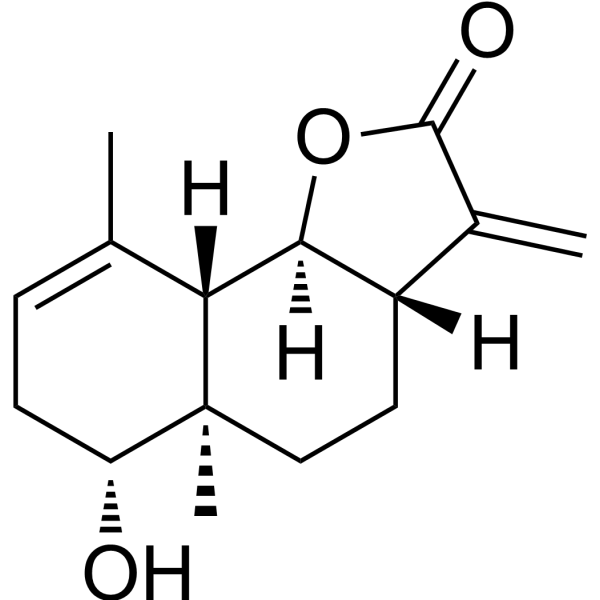
Santamarine (Santamarin; Balchanin) is a sesquiterpene lactone found in Artemisia scoparia. Santamarine shows anti-inflammatory, antioxidant, anticancer and anti-photoaging activities. Santamarine suppresses UVA-induced phosphorylation of JNK and p38 MAPK, nuclear translocation of phosphorylated c-Fos and c-Jun, and AP-1-mediated MMP-1 transcription and secretion. Santamarine suppresses NF-κB signaling, iNOS, COX-2, TNF-α, and IL-1β production. Santamarine inhibits thioredoxin reductase activity, induces ROS production, mitochondrial apoptosis, G2/M cell cycle arrest, and DNA damage, and reduces cancer cell growth. Santamarine can be used for the photoaging, inflammatory diseases and cancer .
loading...
    loading...
Cat. No.: HY-A0116
CAS No.: 87679-71-8
Synonyms: Trandolaprilat; RU 44403
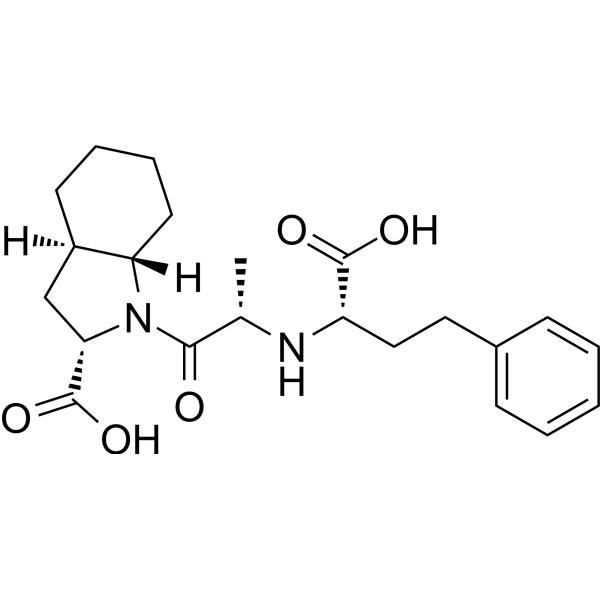
Trandolaprilate is a potent angiotensin-converting enzyme (ACE) inhibitor. Trandolaprilate partially inhibits angiotensin-I-mediated c-fos induction. Trandolaprilate is main bioactive metabolite of Trandolapril. Trandolaprilate shows high lipophilicity .
loading...
    loading...
Cat. No.: HY-A0116R
CAS No.: 87679-71-8
Synonyms: Trandolaprilat (Standard); RU 44403 (Standard)
Trandolaprilate (Standard) is the analytical standard of Trandolaprilate. This product is intended for research and analytical applications. Trandolaprilate is a potent angiotensin-converting enzyme (ACE) inhibitor. Trandolaprilate partially inhibits angiotensin-I-mediated c-fos induction. Trandolaprilate is main bioactive metabolite of Trandolapril. Trandolaprilate shows high lipophilicity .
loading...
    loading...
Cat. No.: HY-N3071
CAS No.: 100234-59-1
Picrasidine I is an anti-inflammatory and anti-osteoclastogenic dimeric alkaloid that can be isolated from Picrasma quassioides. Picrasidine I inducs cell cycle arrest, and triggers cell apoptosis by downregulats ERK and Akt pathways. Picrasidine I inhibits the activation of MAPKs, NF-κB and ROS generation, and suppresses the expression of c-Fos and NFATc1 .
loading...
    loading...
Cat. No.: HY-168895
CAS No.: 3125025-31-9
Target:  

AP-1 ERK Apoptosis

Research Areas:  

Cancer

c-Fos-IN-1 (Compound P16) is a c-Jun inhibitor, and decreases mRNA levels and protein levels of c-Fos. c-Fos-IN-1 also inhibits the phosphorylation activity of ERK and the transcriptional activity of AP-1. c-Fos-IN-1 shows anticancer activity by inhibiting ERK/c-Fos/Jun pathway. c-Fos-IN-1 inhibits the proliferation and migration of gastric cancer cells (IC50: 2.31 μM for MGC-803 cell). c-Fos-IN-1 arrests cell cycle at G2/M phase and induces cancer cell apoptosis. c-Fos-IN-1 inhibits gastric cancer tumor growth .
loading...
    loading...
Cat. No.: HY-124277
CAS No.: 1644134-60-0
Target:  

TRP Channel

Research Areas:  

Neurological Disease

ADM 12 is a highly selective transient receptor potential ankyrin 1 (TRPA1) channel antagonist. ADM 12 blocks nitroglycerin (NTG)-induced trigeminal hyperalgesia in animal models, reducing expression of pain-related genes (c-Fos, TRPA1) and neuropeptides (CGRP, SP). ADM_12 is promising for research of migraine and neuropathic pain .
loading...
    loading...
Cat. No.: HY-B1606
CAS No.: 89-68-9
Synonyms: Chlorthymol; 6-Chlorothymol
Chlothymol is a potent positive modulator of the GABAA receptor subunit LGC-37, anticonvulsant, and antibacterial agent. Chlothymol inhibits Pentylenetetrazol-induced c-fos expression. Chlothymol inhibits the growth of Methicillin (HY-121544)-resistant Staphylococcus aureus (MRSA) strains, including LAC, with an MIC of 32 μg/mL. Chlorothymol has protective effects against epileptic seizures in various mouse models .
loading...
    loading...
Cat. No.: HY-168482
CAS No.: 3070509-60-0
Target:  

NF-κB p38 MAPK

Research Areas:  

Cancer

NF-κB/MAPK-IN-2 (compound 14) is a potent NF-κB and MAPK Inhibitor. NF-κB/MAPK-IN-2 decreases the protein expression of p-p65, p-IκB, p-p38, p-JNK, and p-ERK. NF-κB/MAPK-IN-2 reduces the LPS-induced release of TNF-α and IL-6. NF-κB/MAPK-IN-2 inhibits nuclear translocation of p65 and c-Fos. NF-κB/MAPK-IN-2 has the potential for the research of sepsis .
loading...
    loading...
Cat. No.: HY-P10405A
Target:  

Dopamine Receptor

Research Areas:  

Neurological Disease

TAT-D1 peptide acetate is a dopamine D1-D2 receptor heterodimer inhibitor. TAT-D1 peptide acetate disrupts the function of dopamine D1-D2 receptor heteromers, enhances subchronic amphetamine-induced locomotor activity, and exacerbates the expression of amphetamine-induced locomotor sensitization. TAT-D1 peptide acetate produces rapid anxiolytic and antidepressant-like effects in rat models of depression and anxiety, and inhibits c-fos expression in the nucleus accumbens of rats. TAT-D1 peptide acetate can be used in the research of psychostimulant addiction, depression and anxiety disorders .
loading...
    loading...
Cat. No.: HY-B1052S
CAS No.: 1206845-57-9
Synonyms: Baq-168-d4; MDL-14042-d4
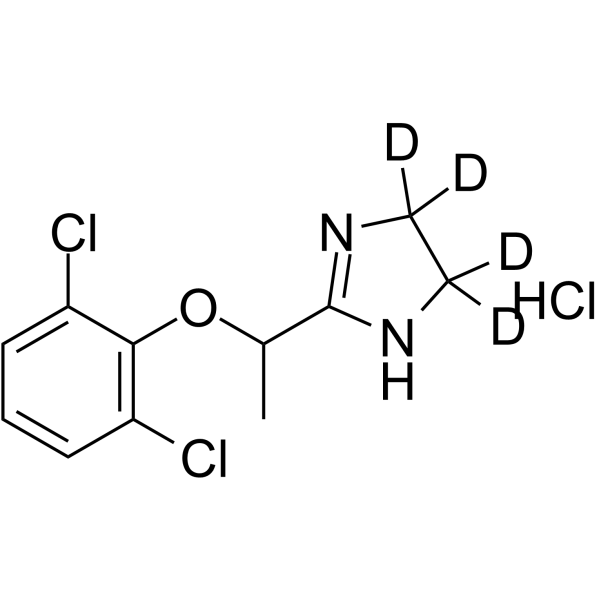
Lofexidine-d4 hydrochloride (Baq-168-d4) is the deuterium labeled Lofexidine hydrochloride (HY-B1052). Lofexidine hydrochloride (Baq-168) is an orally active agonist of the imidazoline I1 receptor (imidazoline I1 receptor) (Ki: 1.9 nM) and α2-adrenergic receptor (α2-adrenergic receptor). Lofexidine hydrochloride binds to the α2A-adrenergic receptor, reduces sympathetic outflow, lowers blood pressure, and exhibits vasoconstrictive effects. Lofexidine hydrochloride regulates the expression of c-fos and alleviates opioid withdrawal symptoms. Lofexidine hydrochloride is applicable to research on opioid addiction and withdrawal .
loading...
    loading...
Cat. No.: HY-107614G
CAS No.: 325465-93-8
Synonyms: 1-Oleoyl-sn-glycero-3-phosphate sodium (GMP); 1-Oleoyl-LPA sodium (GMP)
1-Oleoyl lysophosphatidic acid sodium (GMP) is the GMP-grade form of 1-Oleoyl lysophosphatidic acid sodium (HY-107614). GMP-grade small molecules serve as auxiliary reagents in cell therapy. 1-Oleoyl lysophosphatidic acid sodium is a bioactive lipid signaling molecule. 1-Oleoyl lysophosphatidic acid sodium inhibits lysoPLD-catalyzed hydrolysis of lysophosphatidylcholine and FS-3. 1-Oleoyl lysophosphatidic acid sodium activates LPA1 and LPA2, thereby triggering calcium mobilization, NFATc1 translocation, Rho/ROCK activation, Smad2/3 phosphorylation and c-Fos expression. 1-Oleoyl lysophosphatidic acid sodium induces anxiety-like, depression-like and hypoactivity phenotypes, regulates osteoclast cytoskeleton and viability, reduces osteoclast bone resorptive activity, and drives mesenchymal stem cell differentiation into myofibroblast-like cells. 1-Oleoyl lysophosphatidic acid sodium stimulates the secretion of transforming growth factor-β1 and stromal cell-derived factor-1. 1-Oleoyl lysophosphatidic acid sodium is applicable to research related to anxiety, depression and ovarian cancer .
loading...
    loading...
Cat. No.: HY-P11321A
Synonyms: acyl-GIP hydrochloride
Target:  

GLP Receptor

Research Areas:  

Metabolic Disease

IUB0271 hydrochloride (acyl-GIP hydrochloride) is a glucose-dependent insulinotropic polypeptide receptor (GIPR) agonist with blood-brain barrier permeability. IUB0271 hydrochloride activates the GIPR signaling pathway, inhibits food intake and weight gain, and induces cFos neuron activation in the area postrema. IUB0271 hydrochloride enhances lipid clearance and induces systemic fatty acid oxidation. IUB0271 hydrochloride improves dyslipidemia, reduces atherosclerotic plaque formation and decreases adipocyte volume. IUB0271 hydrochloride can be used in studies related to obesity, dyslipidemia and atherosclerosis .
loading...
    loading...
Cat. No.: HY-P11321
Synonyms: acyl-GIP
Target:  

GLP Receptor

Research Areas:  

Metabolic Disease

IUB0271 (acyl-GIP) is a glucose-dependent insulinotropic polypeptide receptor (GIPR) agonist with blood-brain barrier permeability. IUB0271 activates the GIPR signaling pathway, inhibits food intake and weight gain, and induces cFos neuron activation in the area postrema. IUB0271 enhances lipid clearance and induces systemic fatty acid oxidation. IUB0271 improves dyslipidemia, reduces atherosclerotic plaque formation and decreases adipocyte volume. IUB0271 can be used in studies related to obesity, dyslipidemia and atherosclerosis .
loading...
    loading...
Cat. No.: HY-RS16815
Research Areas:  

Others

Fos Mouse Pre-designed siRNA Set A contains three designed siRNAs for Fos gene (Mouse), as well as a negative control, a positive control, and a FAM-labeled negative control.

loading...
    loading...
Cat. No.: HY-113443
CAS No.: 71774-10-2
Target:  

AP-1

Research Areas:  

Metabolic Disease

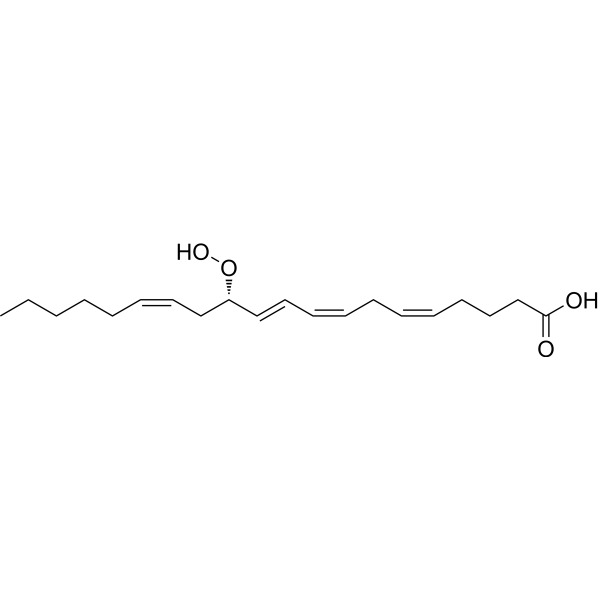
12(S)-HPETE is a 12-hydroxyeicosatetraenoic acid. 12(S)-HPETE has the function of regulating vascular tone. 12(S)-HPETE induces the expression of c-Fos and c-Jun protein and increases activating protein 1 (AP-1) activity in vascular smooth muscle cells.12(S)-HPETE may play a physiological role in vasomotor regulation through endothelium itself and crosstalk between blood cells and endothelium. 12(S)-HPETE can be used in the study of cerebrovascular tension .
loading...
    loading...
Cat. No.: HY-P10405
Target:  

Dopamine Receptor

Research Areas:  

Neurological Disease

TAT-D1 peptide is a dopamine D1-D2 receptor heterodimer inhibitor. TAT-D1 peptide disrupts the function of dopamine D1-D2 receptor heteromers, enhances subchronic amphetamine-induced locomotor activity, and exacerbates the expression of amphetamine-induced locomotor sensitization. TAT-D1 peptide produces rapid anxiolytic and antidepressant-like effects in rat models of depression and anxiety, and inhibits c-fos expression in the nucleus accumbens of rats. TAT-D1 peptide can be used in the research of psychostimulant addiction, depression and anxiety disorders .
loading...
    loading...
Cat. No.: HY-59201A
CAS No.: 848591-90-2
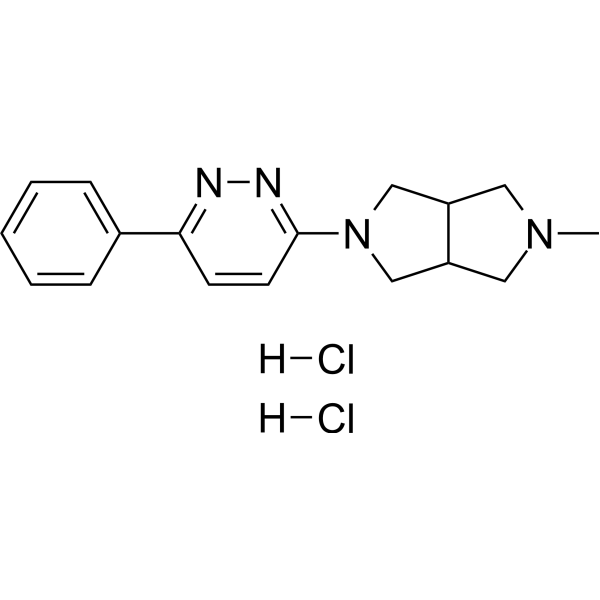
A-582941 dihydrochloride is a selective, orally active, blood-brain barrier-permeable α7 nAChR agonist, with Ki values of 10.8 nM and 17 nM in rat brain and human frontal cortex, respectively. A-582941 dihydrochloride exhibits agonistic activity at 5-HT3 receptors, with a Ki of 150 nM. A-582941 dihydrochloride triggers phosphorylation of ERK1/2 and CREB, inhibits GSK-3β via Ser-9 phosphorylation, increases acetylcholine release, induces the expression of Arc and c-Fos, activates brain regions associated with working memory and attention, and reduces cell death caused by nerve growth factor (NGF) deprivation. A-582941 dihydrochloride is applicable for the research of Alzheimer's disease and schizophrenia .
loading...
    loading...
Cat. No.: HY-12270R
CAS No.: 530141-72-1
Target:  

AP-1 MMP

Research Areas:  

Others

T-5224 (Standard) is the analytical standard of T-5224. This product is intended for research and analytical applications. T-5224 is a transcription factor c-Fos/activator protein (AP)-1 inhibitor with anti-inflammatory effects, which specifically inhibits the DNA binding activity of c-Fos/c-Jun without affecting other transcription factors. T-5224 inhibits the IL-1β-induced up-regulation of Mmp-3, Mmp-13 and Adamts-5 transcription .
loading...
    loading...
Cat. No.: HY-164425
CAS No.: 2597832-98-7
Target:  

Phosphatase STAT

Research Areas:  

Metabolic Disease

ENT-03 is a centrally acting mammalian aminosterol. ENT-03 upregulates cFos activation, inhibits PTP1b and induces phosphorylation of STAT3. ENT-03 normalizes blood glucose, induces weight loss. ENT-03 can be used in the research of type 2 diabetes and obesity .
loading...
    loading...

