1427 Results for "

M2 Macrophage Reprogramming

" in MedChemExpress (MCE) Product Catalog:
Products (1427)

1427 Results for "M2 Macrophage Reprogramming" in MCE Product Catalog:

4
4 Cited Publications
Cat. No.: HY-P7361A
Purity:  ≥ 90%, as determined by reducing SDS-PAGE.
Synonyms: CSF2; Molgramostim; Colony Stimulating Factor 2; Molgramostin; GMCSF; CSF; Sargramostim; Granulocyte-Macrophage Colony Stimulating Factor; GM-CSF; Granulocyte Macrophage-Colony Stimulating Factor; Colony Stimulating Factor 2 (Granulocyte-Macrophage); Colo
Species:  
Mouse
Source:  
E. coli
loading...
    loading...
4
4 Cited Publications
Cat. No.: HY-B0991
CAS No.: 14028-44-5
Synonyms: CL-67772
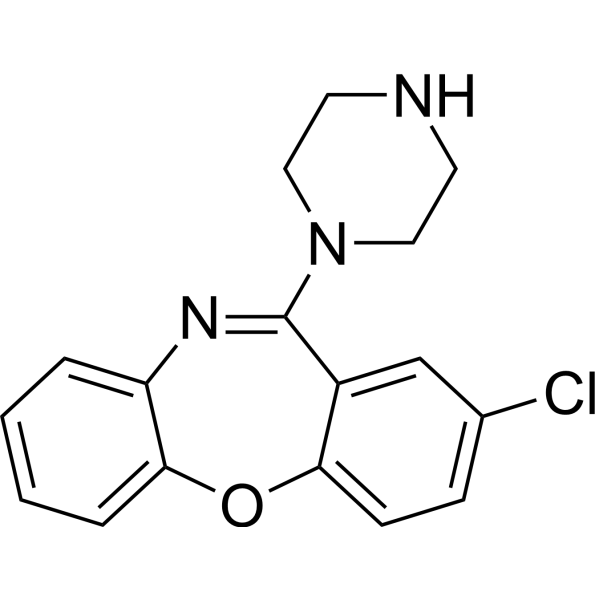
Amoxapine (CL-67772) is a norepinephrine reuptake blocker and a 5-HT2/5-HT3 antagonist. Amoxapine can be used for the research of depression. Amoxapine has antibacterial activity. Amoxapine can enhance the killing effect of macrophages on mycobacterium by inducing autophagy, while protecting the cells from death .
loading...
    loading...
4
4 Cited Publications
Cat. No.: HY-110247
CAS No.: 433249-94-6
Purity:  99.67%
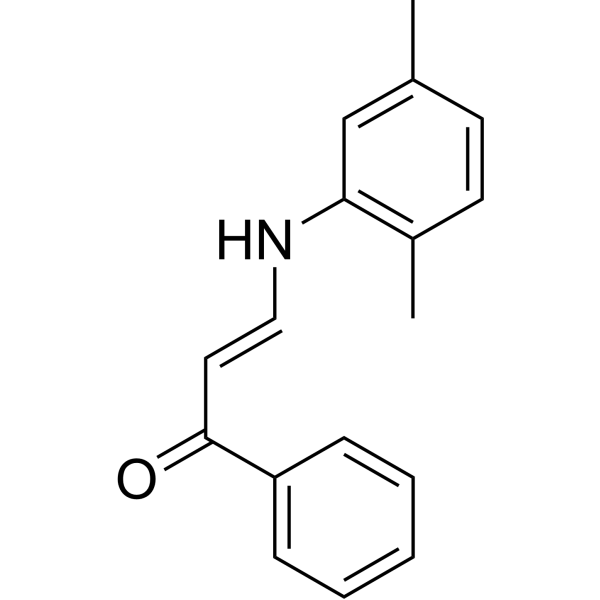
TRAF-STOP inhibitor 6877002 is a selective CD40-TRAF6 interaction inhibitor. TRAF-STOP inhibitor 6877002 exerts anti-atherosclerotic activity by blocking the CD40-TRAF6 signaling pathway, inhibiting classical monocyte activation, leukocyte recruitment, and macrophage activation and migration. TRAF-STOP inhibitor 6877002 reduces the phosphorylation levels of signaling intermediates in the canonical NF-κB pathway .
loading...
    loading...
4
4 Cited Publications
Cat. No.: HY-15509A
CAS No.: 164301-51-3
Purity:  98.43%
Synonyms: CNI-1493; CPSI-2364 tetrahydrochloride
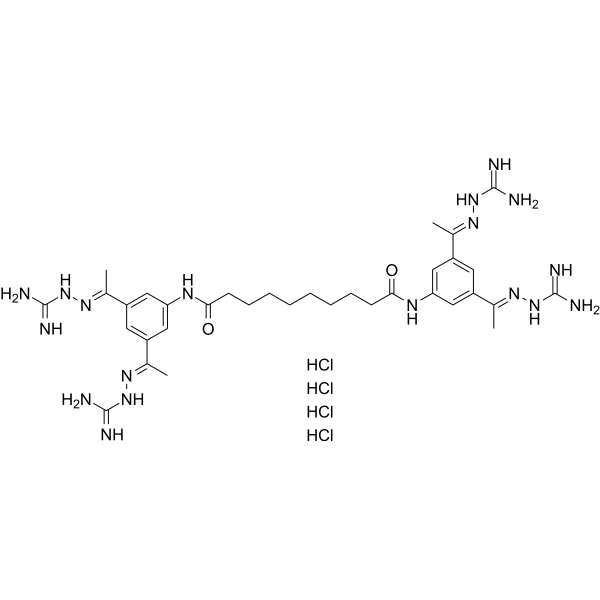
Semapimod tetrahydrochloride (CNI-1493), an inhibitor of proinflammatory cytokine production, can inhibit TNF-α, IL-1β, and IL-6. Semapimod tetrahydrochloride inhibits TLR4 signaling (IC50≈0.3 μM). Semapimod tetrahydrochloride inhibits p38 MAPK and nitric oxide production in macrophages. Semapimod tetrahydrochloride has potential in a variety of inflammatory and autoimmune disorders .
loading...
    loading...
4
4 Cited Publications
Cat. No.: HY-P7417
Purity:  ≥ 95%, as determined by reducing SDS-PAGE.
Synonyms: TNF; Tumor Necrosis Factor (TNF Superfamily, Member 2); Prev. TNFA; Tumor Necrosis Factor-Alpha; TNF-Alpha; Tumor Necrotic Factor Alpha; TNFSF2; TNF Superfamily, Member 2; Tumor Necrosis Factor Ligand Superfamily Member 2; TNF, Macrophage-Derived; TNF-A;
Species:  
Mouse
Source:  
E. coli
loading...
    loading...
4
4 Cited Publications
Cat. No.: HY-P73807
Purity:  ≥ 90%, as determined by reducing SDS-PAGE.
Synonyms: MMP9; Matrix Metallopeptidase 9 (Gelatinase B, 92kDa Gelatinase, 92kDa Type IV Collagenase); Prev. CLG4B; Macrophage Gelatinase; Matrix Metalloproteinase 9 (Gelatinase B, 92kDa Gelatinase, 92kDa Type IV Collagenase); Type V Collagenase; Matrix Metalloprot
Species:  
Mouse
Source:  
HEK293
loading...
    loading...
4
4 Cited Publications
Cat. No.: HY-P70571
Purity:  ≥ 95%, as determined by reducing SDS-PAGE.
Synonyms: TNF; Tumor Necrosis Factor (TNF Superfamily, Member 2); Prev. TNFA; Tumor Necrosis Factor-Alpha; TNF-Alpha; Tumor Necrotic Factor Alpha; TNFSF2; TNF Superfamily, Member 2; Tumor Necrosis Factor Ligand Superfamily Member 2; TNF, Macrophage-Derived; TNF-A;
Species:  
Mouse
Source:  
E. coli
loading...
    loading...
4
4 Cited Publications
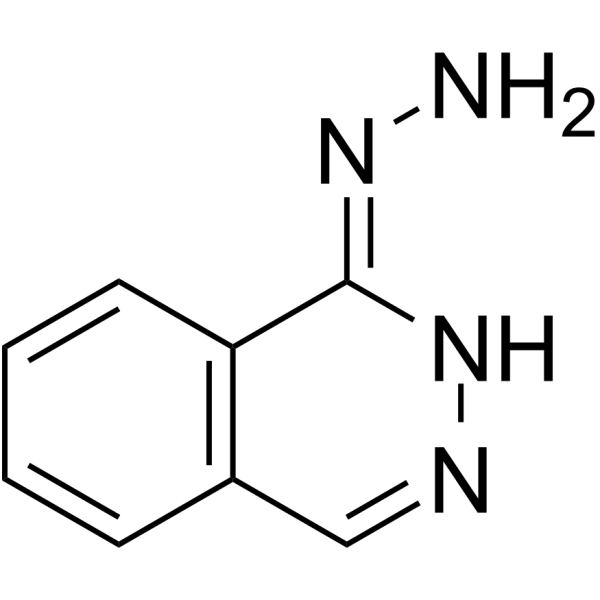
Cat. No.: HY-B0464
CAS No.: 304-20-1
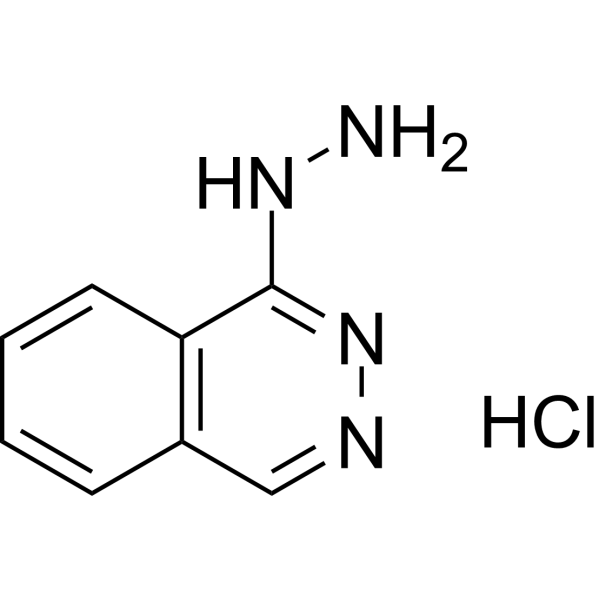
Hydralazine hydrochloride is an orally active, blood-brain barrier-permeable DNA methyltransferase inhibitor with vasodilatory, arterial smooth muscle relaxant and hypotensive activities. Hydralazine hydrochloride reactivates silenced tumor suppressor genes via mediating DNA demethylation, while exerting neuroprotective and anti-inflammatory properties. Hydralazine hydrochloride inhibits NOS-2 (iNOS) and COX-2, and reduces the production of NO and PGEE2; meanwhile, Hydralazine hydrochloride scavenges reactive oxygen species and inhibits macrophage activation. Hydralazine hydrochloride alleviates motor dysfunction, neuropathic inflammatory pain, and formalin-induced somatic and emotional pain responses. In addition, Hydralazine hydrochloride directly induces DNA strand breaks and sister chromatid exchange, exhibiting certain mutagenic characteristics. Hydralazine hydrochloride has been widely used in studies on hypertension, various cancers (such as cervical cancer, leukemia), spinal cord injury and the mechanisms of inflammatory pain .
loading...
    loading...
4
4 Cited Publications
Cat. No.: HY-B0464A
CAS No.: 86-54-4
Hydralazine is an orally active, blood-brain barrier-permeable DNA methyltransferase inhibitor with vasodilatory, arterial smooth muscle relaxant and hypotensive activities. Hydralazine reactivates silenced tumor suppressor genes via mediating DNA demethylation, while exerting neuroprotective and anti-inflammatory properties. Hydralazine inhibits NOS-2 (iNOS) and COX-2, and reduces the production of NO and PGEE2; meanwhile, Hydralazine scavenges reactive oxygen species and inhibits macrophage activation. Hydralazine alleviates motor dysfunction, neuropathic inflammatory pain, and formalin-induced somatic and emotional pain responses. In addition, Hydralazine directly induces DNA strand breaks and sister chromatid exchange, exhibiting certain mutagenic characteristics. Hydralazine has been widely used in studies on hypertension, various cancers (such as cervical cancer, leukemia), spinal cord injury and the mechanisms of inflammatory pain .
loading...
    loading...
4
4 Cited Publications
Cat. No.: HY-P7257
Purity:  ≥ 95%, as determined by reducing SDS-PAGE.
Synonyms: CCL4; Act-2; Prev. SCYA4; MIP1B; Prev. LAG1; HC21; MIP-1-Beta; Monocyte Adherence-Induced Protein 5 Alpha; AT744.1; Chemokine C-C Motif Ligand 4; Small Inducible Cytokine A4 (Homologous To Mouse Mip-1b); Small-Inducible Cytokine A4; Macrophage Inflammator
Species:  
Human
Source:  
E. coli
loading...
    loading...
4
4 Cited Publications
Cat. No.: HY-P7255
Purity:  ≥ 95%, as determined by reducing SDS-PAGE.
Synonyms: CCL3; Tonsillar Lymphocyte LD78 Alpha Protein; Prev. SCYA3; C-C Motif Chemokine 3; MIP-1-Alpha; PAT 464.1; G0S19-1; SIS-Beta; LD78ALPHA; MIP1A; LD78; Macrophage Inflammatory Protein 1 Alpha; SCI; Chemokine (C-C Motif) Ligand 3; Small Inducible Cytokine A3
Species:  
Mouse
Source:  
HEK293
loading...
    loading...
4
4 Cited Publications
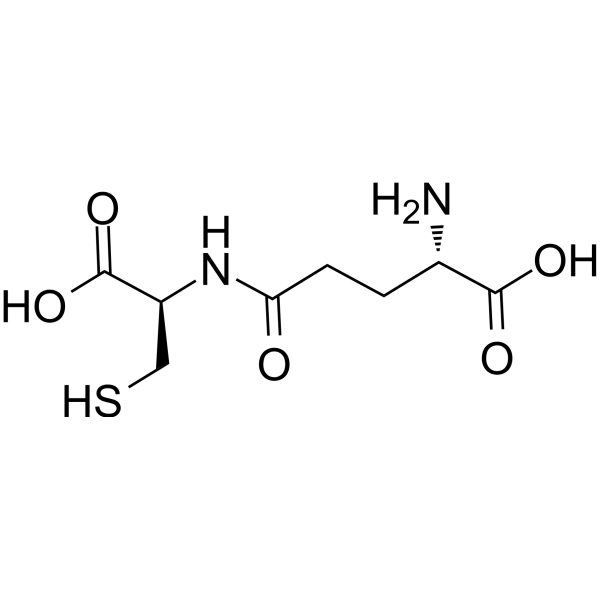
Cat. No.: HY-113402
CAS No.: 636-58-8
Purity:  95.20%
Synonyms: γ-Glu-Cys
Gamma-glutamylcysteine (γ-Glu-Cys) is an orally active, blood-brain barrier permeable dipeptide . Gamma-glutamylcysteine activates AMPK, SIRT1, IL-4/STAT6, AC/cAMP/PI3K, IGF-1R/IRS1/PI3K, and Nrf2 signaling pathways; it inhibits NF-κB, JAK1/STAT1/3, MAPKs, cadmium-induced p38 MAPK, JNK, and PI3K/Akt signaling pathways. Gamma-glutamylcysteine regulates macrophage polarization, modulates the trafficking of CD36 and GLUT4, induces glutathione synthesis, improves metabolic dysfunction, reduces lipid deposition, ameliorates glucose homeostasis, inhibits apoptosis (Apoptosis), stabilizes mitochondria, suppresses lipid peroxidation, iron accumulation and ferroptosis (Ferroptosis), reduces ds-HMGB1 levels, reverses mechanical hyperalgesia, and alleviates hepatic lipid droplet formation. Gamma-glutamylcysteine is applicable to research related to inflammatory bowel disease, type 2 diabetes, cadmium-induced neurotoxicity, Alzheimer's disease, cerebral ischemia/reperfusion injury, neuropathy, and alcoholic liver disease .
loading...
    loading...
4
4 Cited Publications
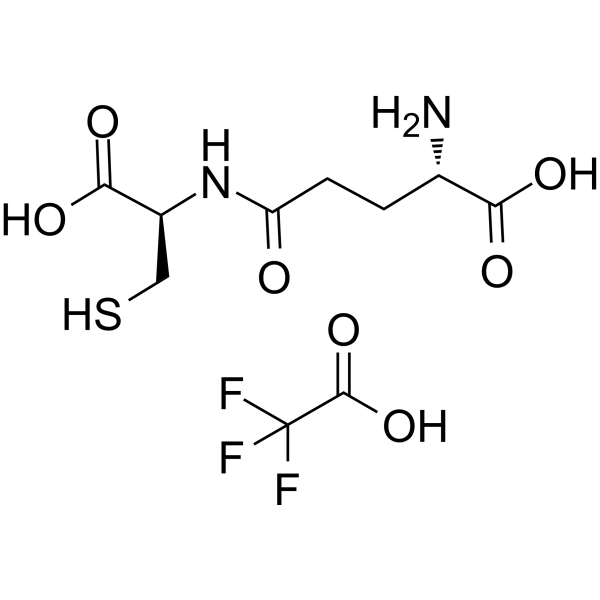
Cat. No.: HY-113402A
CAS No.: 283159-88-6
Purity:  95.20%
Synonyms: γ-Glu-Cys TFA
Gamma-glutamylcysteine TFA (γ-Glu-Cys TFA) is an orally active, blood-brain barrier permeable dipeptide . Gamma-glutamylcysteine TFA activates AMPK, SIRT1, IL-4/STAT6, AC/cAMP/PI3K, IGF-1R/IRS1/PI3K, and Nrf2 signaling pathways; it inhibits NF-κB, JAK1/STAT1/3, MAPKs, cadmium-induced p38 MAPK, JNK, and PI3K/Akt signaling pathways. Gamma-glutamylcysteine TFA regulates macrophage polarization, modulates the trafficking of CD36 and GLUT4, induces glutathione synthesis, improves metabolic dysfunction, reduces lipid deposition, ameliorates glucose homeostasis, inhibits apoptosis (Apoptosis), stabilizes mitochondria, suppresses lipid peroxidation, iron accumulation and ferroptosis (Ferroptosis), reduces ds-HMGB1 levels, reverses mechanical hyperalgesia, and alleviates hepatic lipid droplet formation. Gamma-glutamylcysteine TFA is applicable to research related to inflammatory bowel disease, type 2 diabetes, cadmium-induced neurotoxicity, Alzheimer's disease, cerebral ischemia/reperfusion injury, neuropathy, and alcoholic liver disease .
loading...
    loading...
4
4 Cited Publications
Cat. No.: HY-P70569
Purity:  ≥ 95%, as determined by reducing SDS-PAGE.
Synonyms: CXCL8; Lung Giant Cell Carcinoma-Derived Chemotactic Protein; Prev. IL8; Alveolar Macrophage Chemotactic Factor I; MDNCF; Tumor Necrosis Factor-Induced Gene 1; NAP-1; Neutrophil-Activating Peptide 1; MONAP; T-Cell Chemotactic Factor; GCP-1; Interleukin 8; Monocyte-Derived Neutrophil Chemotactic Factor; Interleukin-8; Monocyte-Derived Neutrophil-Activating Peptide; Emoctakin; Granulocyte Chemotactic Protein 1; AMCF-I; Chemokine (C-X-C Motif) Ligand 8; B-ENAP; SCYB8; TSG-1; LYNAP; 3-10C; LUCT; K60; LECT; Small Inducible Cytokine Subfamily B, Member 8; IL-8; Beta-Thromboglobulin-Like Protein; GCP1; Neutrophil-Activating Protein 1; NAP1; C-X-C Motif Chemokine 8; NAF; C-X-C Motif Chemokine; Beta Endothelial Cell-Derived Neutrophil Activating Peptide; Protein 3-10C; C-X-C Motif Chemokine Ligand 8; Lymphocyte Derived Neutrophil Activating Peptide
Species:  
Human
Source:  
HEK293
loading...
    loading...
3
3 Cited Publications
Cat. No.: HY-110095
CAS No.: 1309793-47-2
Purity:  99.64%
(±)-CPSI-1306 is an orally available antagonist of macrophage migration inhibitory factor (MIF).
loading...
    loading...
3
3 Cited Publications
Cat. No.: HY-P7069
Purity:  ≥ 95%, as determined by reducing SDS-PAGE.
Synonyms: CSF2; Molgramostim; Colony Stimulating Factor 2; Molgramostin; GMCSF; CSF; Sargramostim; Granulocyte-Macrophage Colony Stimulating Factor; GM-CSF; Granulocyte Macrophage-Colony Stimulating Factor; Colony Stimulating Factor 2 (Granulocyte-Macrophage); Colony-Stimulating Factor; Granulocyte-Macrophage Colony-Stimulating Factor
Species:  
Mouse
Source:  
CHO
loading...
    loading...
3
3 Cited Publications
Cat. No.: HY-P72629
Purity:  ≥ 95%, as determined by reducing SDS-PAGE.
Synonyms: CSF2; Molgramostim; Colony Stimulating Factor 2; Molgramostin; GMCSF; CSF; Sargramostim; Granulocyte-Macrophage Colony Stimulating Factor; GM-CSF; Granulocyte Macrophage-Colony Stimulating Factor; Colony Stimulating Factor 2 (Granulocyte-Macrophage); Colo
Species:  
Rat
Source:  
HEK293
loading...
    loading...
3
3 Cited Publications
Cat. No.: HY-P7388
Purity:  ≥ 95%, as determined by reducing SDS-PAGE.
Synonyms: MIF; L-Dopachrome Isomerase; Prev. GLIF; Glycosylation-Inhibiting Factor; Phenylpyruvate Tautomerase; MMIF; GIF; Epididymis Secretory Sperm Binding Protein; L-Dopachrome Tautomerase; Macrophage Migration Inhibitory Factor; Macrophage Migration Inhibitory
Species:  
Mouse
Source:  
E. coli
loading...
    loading...
3
3 Cited Publications
Cat. No.: HY-P7386
Purity:  ≥ 95%, as determined by reducing SDS-PAGE.
Synonyms: CSF1; Macrophage Colony Stimulating Factor 1; Colony Stimulating Factor 1; Lanimostim; MCSF; MGC31930; Proteoglycan Macrophage Colony-Stimulating Factor; PG-M-CSF; Macrophage Colony-Stimulating Factor 1; CSF-1; M-CSF; CSF1-HERV-LTR71B Fusion Protein; Colo
Species:  
Rat
Source:  
E. coli
loading...
    loading...
3
3 Cited Publications
Cat. No.: HY-D0970
CAS No.: 72-57-1
Synonyms: Direct Blue 14; Trypan Blue
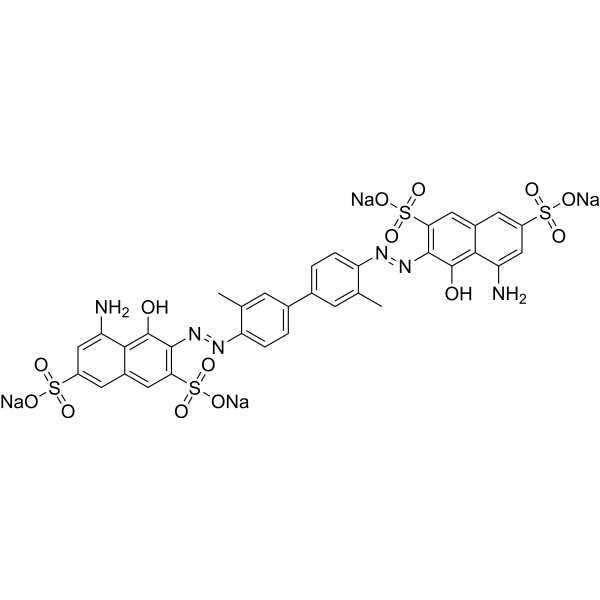
Diphenyl Blue (Trypan Blue) is a cell active dye, the most commonly used dye for the identification of dead cells, of en used to test cell membrane integrity and cell viability. Diphenyl Blue staining is one of the methods for tissue and cell culture. When cells are deactivated or have incomplete cell membranes, Diphenyl Blue can stain them Blue. Normal living cells with intact cell membranes reject Diphenyl blue and do not stain them blue. However, macrophages are capable of phagocytosis of Diphenyl Blue, so it can be used as a living stain for macrophages .
loading...
    loading...

