

10116 Results for "

Cancer cell

" in MedChemExpress (MCE) Product Catalog:
Products (10116)

10116 Results for "Cancer cell" in MCE Product Catalog:

Cat. No.: HY-163472
PR280 is a dihydroceramide desaturase 1 (Des1) inhibitor with an IC50 of 700 nM. PR280 is used for the research of metabolic diseases, cancers, and neurodegenerative diseases .
loading...
    loading...
Cat. No.: HY-169317
CAS No.: 3058005-75-4
Target:  

DGK Interleukin Related

Research Areas:  

Inflammation/Immunology Cancer

DGKζ-IN-6 (compound 40) is an oral active DGKζ inhibitor with the IC50 of 45.5 nM. DGKζ-IN-6 inhibits the secretion of IL-2 and can be used for study of cancer and autoimmune diseases .
loading...
    loading...
Cat. No.: HY-169318
CAS No.: 3058006-33-7
Target:  

DGK Interleukin Related

Research Areas:  

Inflammation/Immunology Cancer

DGKζ-IN-7 (compound 97) is an oral active DGKζ inhibitor with the IC50 of 33.4 nM. DGKζ-IN-6 inhibits the secretion of IL-2 and can be used for study of cancer and autoimmune diseases .
loading...
    loading...
Cat. No.: HY-172949
Research Areas:  

Cancer

E3 Ligase Ligand-linker Conjugate 187 is a CRBN E3 ligase ligand-linker conjugate. E3 Ligase Ligand-linker Conjugate 187 can be used to synthesize PROTAC SD-2301 (HY-172946) .
loading...
    loading...
Cat. No.: HY-172954
CAS No.: 3077430-87-3
Androgen receptor ligand 1 is an androgen receptor (AR) ligand. Androgen receptor ligand 1 binds to CRBN E3 ligase via a linker to form an AR PROTAC degrader. Androgen receptor ligand 1 can be used in the study of prostate cancer .
loading...
    loading...
Cat. No.: HY-173372
Research Areas:  

Cancer

PROTAC AR Degrader-10 is a potent cereblon (CRBN)-recruited androgen receptor (AR) PROTAC degrader. PROTAC AR Degrader-10 exhibits high AR degradation activity and can be applied to research related to prostate cancer .
loading...
    loading...
Cat. No.: HY-N18195
CAS No.: 77210-33-4
Trichilin B is a limonoid compound found in the twigs and leaves of Trichilia connaroides. Trichilin B exhibits no in vitro cytotoxic activity against tumor cell lines .
loading...
    loading...
Cat. No.: HY-N6712R
CAS No.: 87-11-6
Synonyms: Acetopyrrothin (Standard)
Thromycin (Standard) is the analytical standard of thromycin (Acetopyrrothin) (HY-N6712). Thiolutin is a sulfur-containing antibiotic, which is a potent inhibitor of bacterial and yeast RNA polymerases. Thiolutin can be produced by Streptomyces. Thiolutin inhibits AMSH (IC50 = 4 μM) and Rpn11 (IC50 = 0.53 μM). Thiolutin is a dual inhibitor of BRCC36 and the NLRP3 inflammasome, exhibiting anti-inflammatory effects. Thiolutin effectively suppresses the interaction between BRCC36 and HMGCR, leading to the inhibition of HCC growth. Thiolutin attenuates pyroptosis and NLRP3 inflammasome activation. Thiolutin markedly alleviates renal injury and inflammatory process in IgAN. Thiolutin is an anti-angiogenic compound which can ease Doxorubicin (HY-15142A)-induced cardiotoxicity (DOXIC) [1][2][3][4][5].
loading...
    loading...
Cat. No.: HY-P2228
CAS No.: 53342-16-8
Target:  

HDAC Apoptosis

Research Areas:  

Cancer

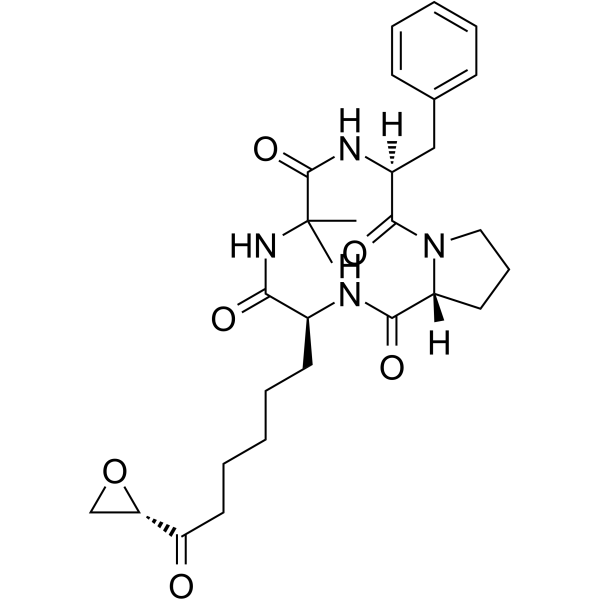
Chlamydocin (purity≥70%), a fungal metabolite, is a highly potent HDAC inhibitor, with an IC50 of 1.3 nM. Chlamydocin (purity≥70%) exhibits potent antiproliferative and anticancer activities. Chlamydocin (purity≥70%) induces apoptosis by activating caspase-3 .
loading...
    loading...
Cat. No.: HY-P990798

Target:  

IFNAR

Research Areas:  

Inflammation/Immunology Cancer

Anti-Mouse IFN gamma Antibody (XMG1.2) is a kind of rat-derived IgG1 antibody inhibitor, targeting to IFN-γ. Anti-Mouse IFN gamma Antibody (XMG1.2) can neutralize IFN-γ. Anti-Mouse IFN gamma Antibody (XMG1.2) can be used for the researches of cancer, inflammation and immunology, such as multiple myeloma and chronic inflammation .
loading...
    loading...
Cat. No.: HY-P99118
CAS No.: 2231029-82-4
Synonyms: HLX 10

Target:  

PD-1/PD-L1 Akt STAT

Research Areas:  

Cancer

Serplulimab (HLX 10) is a humanized anti-PD-1 monoclonal antibody. Serplulimab can inhibit tumor growth, regulate the tumor microenvironment, and has anti-tumor activity. Serplulimab can be used in the research of cancer such as lung cancer and colon cancer .
loading...
    loading...
Cat. No.: HY-P992100
CAS No.: 3051777-50-2
Target:  

Annexin A

Research Areas:  

Cancer

Amesotatug is a humanized monoclonal antibody and ANXA1 binder. Amesotatug binds to Homo sapiens ANXA1 and exhibits antineoplastic activity. Amesotatug can be used for the research of cancer .
loading...
    loading...
Cat. No.: HY-P99217
CAS No.: 872514-65-3
Synonyms: AMG 102

Target:  

c-Met/HGFR

Research Areas:  

Cancer

Rilotumumab (AMG 102) is an anti-HGF (anti-hepatocyte growth factor) monoclonal antibody, inhibits HGF/MET-driven signaling. Rilotumumab shows anti-tumor activity, and can be used in castration-resistant prostate cancer (CRPC) and solid tumor research .
loading...
    loading...
Cat. No.: HY-W613220
CAS No.: 2143473-95-2
MDH1/2-IN-1 is a MDH1/2 inhibitor (IC50: 1.07 μM and 1.06 μM respectively). MDH1/2-IN-1 inhibits mitochondrial respiration and the HIF-1α pathway. MDH1/2-IN-1 demonstrates significant anti-tumor potential. MDH1/2-IN-1 provides a new direction for the development of drugs targeting cancer metabolism .
loading...
    loading...
Cat. No.: HY-181871
Research Areas:  

Cancer

DZX19 (Compound C02) is an orally active, selective TRK inhibitor with a TRKA IC50 value of 1.32 nM, a TRKB IC50 of 2.28 nM, and a TRKC IC50 of 4.05 nM. DZX19 inhibits the kinase activities of wild-type TRKA, TRKA mutants (G595R, F589L, G667C), wild-type TRKB, and wild-type TRKC, and suppresses the phosphorylation of TRKA as well as its downstream AKT and ERK signaling pathways. DZX19 induces apoptosis. DZX19 inhibits tumor growth in a colorectal cancer xenograft mouse model. DZX19 is applicable for the research of colorectal cancer .
loading...
    loading...
Cat. No.: HY-187136
CAS No.: 3004503-11-8
Research Areas:  

Others

EZH2-IN-13-CO-C9-COOH is a target protein ligand-linker conjugate. EZH2-IN-13-CO-C9-COOH can be used to synthesize PROTAC NUCC-0226272 (HY-157844) .
loading...
    loading...
Cat. No.: HY-L074
3,404 compounds

Breast cancer is the most frequent cancer among women, impacting 2.1 million women each year, and also causes the greatest number of cancer-related deaths among women. Surgery is usually the first type of treatment for breast cancer, which is usually followed by chemotherapy or radiotherapy or, in some cases, hormone or targeted therapies, especially for metastatic breast cancer (MBC).

Breast cancer is a heterogeneous disease, which is categorized into 3 major subtypes based on the presence or absence of molecular markers for estrogen or progesterone receptors and human epidermal growth factor 2 (ERBB2; formerly HER2): hormone receptor positive/ERBB2 negative (70% of patients), ERBB2 positive (15%-20%), and triple-negative (tumors lacking all 3 standard molecular markers; 15%). Different intrinsic subtypes exhibit different tumor behavior with different prognoses, and may require specific targeted therapies to maximize treatment effectiveness. Otherwise, some signaling pathways also play important roles in the development of breast cancer, such as NF-κB Signaling Pathway, TGF-beta Signaling Pathway, PI3K/AKT/mTOR signaling pathway and Notch Signaling Pathway. These signaling pathways offer ideal targets for development of new targeted therapies for breast cancer.

MCE supplies a unique collection of 3,404 compounds with identified and potential anti-breast cancer activity. MCE Anti-Breast Cancer Compound Library is a useful tool for anti-breast cancer drugs screening.

Cat. No.: HY-L037
2,489 compounds

Oxidative stress is an imbalance of free radicals and antioxidants in the body, which can lead to cell and tissue damage. Oxidative stress can be responsible for the induction of several diseases, both chronic and degenerative, as well as speeding up body aging process and cause acute pathologies. Antioxidants are a class of compounds able to counteract oxidative stress and mitigate its effects on individuals’ health, gained enormous attention from the biomedical research community. Antioxidants have long been substantial and amenable therapeutic arsenals for multifarious diseases such as AD and cancer.

MCE Antioxidant Compound Library contains 2,489 compounds that act as antioxidants for high throughput screening (HTS) and high content screening (HCS). This library is a useful tool for discovery new antioxidants and oxidative stress research.

Cat. No.: HY-L043
2,028 compounds

Lipids are a diverse and ubiquitous group of compounds which have many key biological functions, such as acting as structural components of cell membranes, serving as energy storage sources and participating in signaling pathways. Several studies suggest that bioactive lipids have effects on the treatment of some mental illnesses and metabolic syndrome. For example, DHA and EPA are important for monoaminergic neurotransmission, brain development and synaptic functioning, and are also correlated with a reduced risk of cancer and cardiovascular disease in clinical and animal studies.

MCE supplies a unique collection of 2,028 lipid and lipid derivative related compounds including triglycerides, phospholipids, sphingolipids, steroids and their structural analogues or derivatives. MCE lipid compound library can be used for research in bioactive lipids, and high throughput screening (HTS) and high content screening (HCS).

Cat. No.: HY-L105S
867 compounds

Peptides, composed of amino acids, serve as crucial building blocks for proteins and have gained significant attention in drug development over the past decade. The advancements in production, modification, and analytical technologies have led to a surge in the potential applications of peptides in medicine. Peptides offer a number of advantages over small molecule drugs, including: greater target specificity and efficacy, more predictable metabolic profiles, easier delivery to where they are needed in the body, and fewer side effects. Peptides are increasingly appearing in all branches of medicine as components of innovative drugs, imaging agents, diagnostic agents, and other complex drugs such as peptide-drug conjugates. To date, more than 80 peptide drugs have been approved to treat a variety of diseases, including microbial infections, obesity, anti-diabetes, and cancer, as well as to develop cell targeting platforms and improve cell penetration properties.

MCE designs a unique collection of 867 peptide compounds. HY-L105S is a peptide compound library that can be provided with solution form based on HY-L105, and can be applied to peptides-based drug development.

