156 Results for "

hypoglycemic

" in MedChemExpress (MCE) Product Catalog:
Products (156)

156 Results for "hypoglycemic" in MCE Product Catalog:

Cat. No.: HY-175263
CAS No.: 38239-51-9
Aminochalcone 4AAF is a neuroprotective agent that exerts anxiolytic effects through GABAA and 5-HT receptors. Aminochalcone 4AAF has high selectivity for 5-HT3A and 5-HT2C receptors, and stimulates allosteric behavior toward the 5-HT2A receptor. Aminochalcone 4AAF shows hypoglycemic effects and reduces the level of ROS in the liver. Aminochalcone 4AAF delays the clonic stage of the epileptic seizures . Aminochalcone 4AAF can be used in the study of anxiety, hyperglycemia, and seizures .
loading...
    loading...
Cat. No.: HY-128447R
CAS No.: 10152-76-8
Allyl methyl sulfide (Standard) is the analytical standard of Allyl methyl sulfide (HY-128447). This product is intended for research and analytical applications. Allyl methyl sulfide is an orally active organic sulfide. Allyl methyl sulfide is one of the main active ingredients in garlic volatile metabolites. Allyl methyl sulfide can be extracted from garlic. Allyl methyl sulfide enhances SOD activity, inhibits NF-κB signaling pathway, and upregulates pancreatic GLUT2 expression. Allyl methyl sulfide has significant antioxidant, anti-inflammatory and hypoglycemic activities. Allyl methyl sulfide can be used in the research of diabetes and its complications .
loading...
    loading...
Cat. No.: HY-173217
Target:  

PPAR Phosphatase

PPARα agonist 5 is an orally available, selective partial agonist of PPARα (EC50: 3 nM). PPARα agonist 5 reduces lipid accumulation and upregulates key PPARα target genes, exerting anti-fatty liver effects. PPARα agonist 5 also exhibits significant hypolipidemic and hypoglycemic effects through partial PPARγ agonist activity and mild inhibition of protein tyrosine phosphatase 1B (PTP1B) (IC50: 79.1 μM). PPARα agonist 5 has a good safety profile and can be used in the study of type 2 diabetes with dyslipidemia .
loading...
    loading...
Cat. No.: HY-180845
CAS No.: 2931879-67-1
TGR5 agonist 9 is a highly selective and orally active TGR5 allosteric agonist with EC₅₀ values for hTGR5 and mTGR5 of 0.48 and 0.49 μM, respectively. TGR5 agonist 9 can recruit β-arrestin 1 (EC₅₀ = 78.8 μM) and β-arrestin 2 (EC₅₀ = 12.3 μM), and has a higher efficacy in cAMP accumulation (EC₅₀ = 0.48 μM). TGR5 agonist 9 exhibits a significant hypoglycemic effect in the ICR mouse model. TGR5 agonist 9 can be used for research on diabetes .
loading...
    loading...
Cat. No.: HY-N0500
CAS No.: 130567-83-8
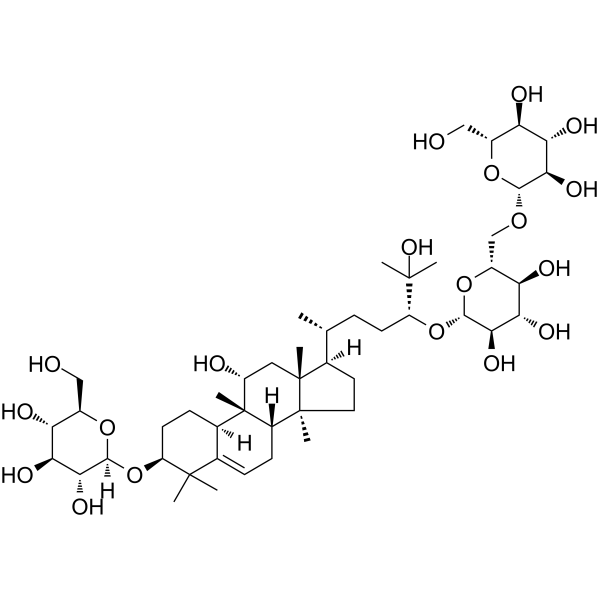
Mogroside III is a triterpenoid glycoside. Mogroside III exhibits maltase inhibitory effect with an IC50 value of 1.6 mM. Mogroside III enhances oocyte developmental potential by promoting autophagy in cumulus cells. Mogroside III, as the active ingredient of the low-polarity glycoside component (L-SGgly), L-SGgly can increase serum GLP-1 levels, improve insulin resistance, and reduce IL-6 levels, and has hypoglycemic, lipid-regulating and anti-inflammatory effects. Mogroside III can be used for the studies of type 2 diabetes mellitus (T2DM) and assisted reproductive technology .
loading...
    loading...
Cat. No.: HY-N21789
CAS No.: 152543-09-4
Dihydroconiferyl dihydro-p-coumarate is a mesophenolic acetylcholinesterase (AChE) inhibitor discovered in orchids such as Vanda roxburghii and Dendrobium nobile, with an IC50 of 118.17 μg/mL against mouse AChE. Dihydroconiferyl dihydro-p-coumarate reduces the hydrolytic activity of AChE, scavenges DPPH and hydroxyl radicals, exhibits potassium ferricyanide reducing power, reduces Mo (VI) to Mo (V), and inhibits lipid peroxidation in mouse brain homogenates. Dihydroconiferyl dihydro-p-coumarate is a key hypoglycemic compound and shows no significant cytotoxicity to human cancer cells. Dihydroconiferyl dihydro-p-coumarate can be used in research related to Alzheimer's disease and type 2 diabetes .
loading...
    loading...
Cat. No.: HY-W563489
CAS No.: 88431-47-4
Synonyms: POCA
Clomoxir (POCA) is a carnitine palmitoyltransferase I (CPT I) inhibitor with hypoglycemic activity. Clomoxir mediates the inhibition of CPT I via its active form POCA-CoA. Clomoxir inhibits long-chain fatty acid oxidation, ketogenesis, gluconeogenesis, de novo synthesis of cholesterol and fatty acids, and also mildly inhibits acetyl-CoA carboxylase. Clomoxir reduces blood glucose levels in various rodent and porcine models, alters plasma NEFA and cholesterol concentrations, induces hepatic lipid accumulation, peroxisome proliferation and mild myocardial hypertrophy in rats, and stimulates the pentose phosphate pathway in cultured human fibroblasts. Clomoxir can be used in diabetes-related research .
loading...
    loading...
Cat. No.: HY-108615R
CAS No.: 186392-43-8
Synonyms: GPi 819 (Standard)
CP-316819 (GPi 819) Standard is the analytical standard of CP-316819 (HY-108615). This product is intended for research and analytical applications. CP-316819 (GPi 819) is a blood-brain barrier permeable glycogen phosphorylase inhibitor. CP-316819 inhibits hepatic glycogenolysis, safely reduces blood glucose in type 2 diabetes, and rarely induces hypoglycemia. CP-316819 increases brain glycogen reserves, protects neurons, alleviates hypoglycemic brain injury, and inhibits excessive platelet activation, exerting both neuroprotective and vasculoprotective effects. CP-316819 can be used in research related to hypoglycemia, thrombosis, autoimmune inflammatory diseases, and type 2 diabetes.
loading...
    loading...
Cat. No.: HY-N9725
CAS No.: 141979-19-3
Synonyms: 16ξ-Hydroxycleroda-3,13-dien-15,16-olide
Target:  

Dipeptidyl Peptidase

Research Areas:  

Metabolic Disease

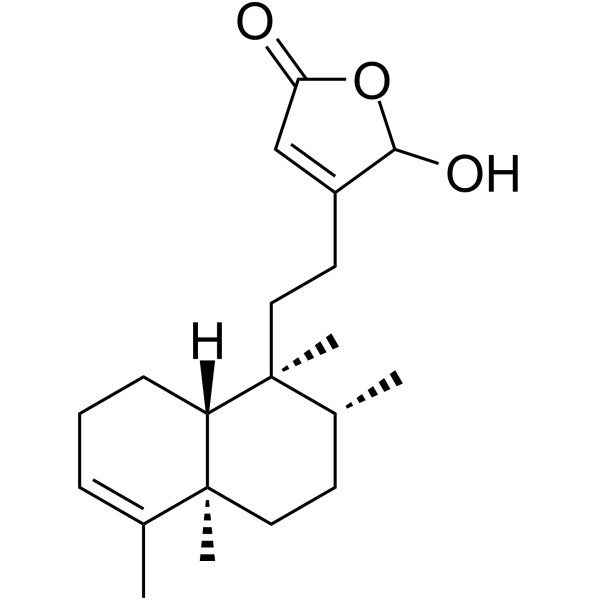
16-Hydroxycleroda-3,13-dien-15,16-olide (16ξ-Hydroxycleroda-3,13-dien-15,16-olide; HCD), a clerodane diterpene, is a potent serine protease dipeptidyl peptidase 4 (DPP-4) inhibitor. 16-Hydroxycleroda-3,13-dien-15,16-olide down-regulates LPS-induced ERK phosphorylation in myocyte but blocks GLP-1 induced PKA expression. 16-Hydroxycleroda-3,13-dien-15,16-olide exhibits hypolipidemic, hepatoprotective, hypoglycemic efficacy .
loading...
    loading...
Cat. No.: HY-126969
CAS No.: 870095-15-1
Target:  

PPAR

Research Areas:  

Metabolic Disease

C333H is a selective PPARγ modulator with insulin-sensitizing and hypoglycemic activities. C333H exhibits similar insulin-sensitizing effects to thiazolidinediones (TZDs) in diabetic mouse models without significantly increasing body weight or adipose tissue weight. C333H increases circulating high molecular weight adiponectin isoform levels in diabetic db/db mice, reduces serine phosphorylation of PPARγ 273 in brown adipose tissue, and selectively modulates the expression of specific PPARγ target genes in adipose tissue. Express. C333H exhibits weak recruitment of co-activators and weak dissociation of co-repressors in vitro. These properties suggest that C333H may be a potential inhibitor of type 2 diabetes .
loading...
    loading...
Cat. No.: HY-P10302A
Target:  

GLP Receptor

GLP-1R/GIPR agonist-1 sodium is a dual GLP-1/GIP receptor agonist, with an EC50 of 0.57 nM for GLP-1R and an EC50 of 0.75 nM for GIPR. GLP-1R/GIPR agonist-1 sodium reduces food intake, inhibits weight gain, repairs islet damage, improves glucose tolerance, regulates serum lipid and liver enzyme levels, ameliorates hepatic vacuolization, reduces hepatic fat accumulation, delays the progression of hepatic fibrosis, and exhibits long-lasting hypoglycemic activity. GLP-1R/GIPR agonist-1 sodium can be used in research related to type 2 diabetes, obesity, and non-alcoholic steatohepatitis .
loading...
    loading...
Cat. No.: HY-16443
CAS No.: 173534-37-7
Target:  

OAT

Research Areas:  

Metabolic Disease

S-4048 is a glucose-6-phosphate translocase modulator and hypoglycemic agent. S-4048 is taken up by hepatocytes via OATP-1 and is rapidly eliminated via the hepatobiliary system in rats. S-4048 blocks glucose-6-phosphate translocase, prevents glucose-6-phosphate from entering the endoplasmic reticulum, and thereby interferes with the glucose-6-phosphatase system (i.e., the final step of hepatic gluconeogenesis and glycogenolysis) to regulate hepatic glucose production. S-4048 completely inhibits glucose production from pyruvate in GLUT2-deficient hepatocytes without affecting the release of cytoplasmic glucose. S-4048 effectively reduces blood glucose levels in rats and has been used in studies related to type 2 diabetes .
loading...
    loading...
Cat. No.: HY-W1113135
CAS No.: 2828447-14-7
Research Areas:  

Others

Carboxymethyl-β-cyclodextrin sodium salt is a negatively charged β-cyclodextrin derivative, as well as a metal ion chelator and solubilizing reagent. Carboxymethyl-β-cyclodextrin sodium salt forms stable aqueous complexes with Ba 2+, Ca 2+, Cd 2+, Ni 2+, Pb 2+, Sr 2+, and Zn 2+ ions. Carboxymethyl-β-cyclodextrin sodium salt derived hydrogel carriers support oral insulin delivery via paracellular permeation across Caco-2 monolayers and produce sustained hypoglycemic effects in diabetic mice. Carboxymethyl-β-cyclodextrin sodium salt can be conjugated onto folate-modified BSA nanoparticles to boost folate receptor-mediated endocytosis, elevate intracellular anticancer drug uptake and trigger cell apoptosis. Carboxymethyl-β-cyclodextrin sodium salt can be utilized for chiral separation in capillary electrophoresis, development of nanoscale drug carriers and nucleic acid transfection research .
loading...
    loading...
Cat. No.: HY-W1113135A
CAS No.: 2828447-14-7
Research Areas:  

Others

Carboxymethyl-β-cyclodextrin sodium salt, for capillary electrophoresis is a negatively charged β-cyclodextrin derivative, as well as a metal ion chelator and solubilizing reagent. Carboxymethyl-β-cyclodextrin sodium salt, for capillary electrophoresis forms stable aqueous complexes with Ba 2+, Ca 2+, Cd 2+, Ni 2+, Pb 2+, Sr 2+, and Zn 2+ ions. Carboxymethyl-β-cyclodextrin sodium salt derived hydrogel carriers support oral insulin delivery via paracellular permeation across Caco-2 monolayers and produce sustained hypoglycemic effects in diabetic mice. Carboxymethyl-β-cyclodextrin sodium salt can be conjugated onto folate-modified BSA nanoparticles to boost folate receptor-mediated endocytosis, elevate intracellular anticancer drug uptake and trigger cell apoptosis. Carboxymethyl-β-cyclodextrin sodium salt can be utilized for chiral separation in capillary electrophoresis, development of nanoscale drug carriers and nucleic acid transfection research .
loading...
    loading...
Cat. No.: HY-142026
CAS No.: 142449-89-6
Synonyms: (+)-Vitisin A
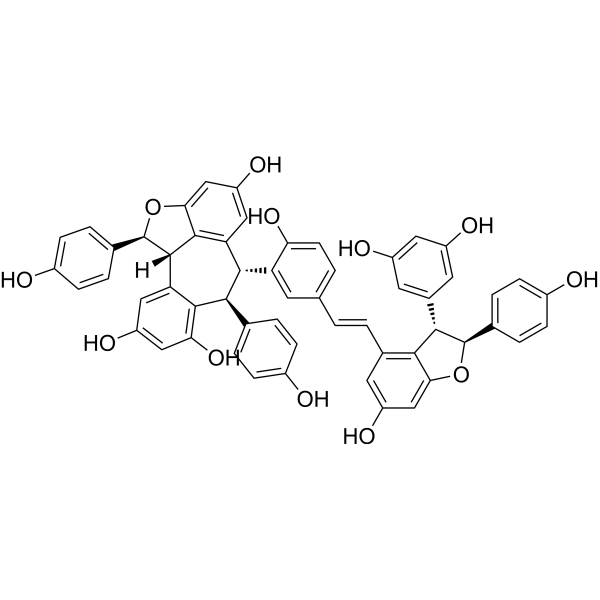
Vitisin A ((+)-Vitisin A) is an orally active natural product with multiple pharmacological activities including anti-inflammatory, anti-tumor, anti-oxidant, anti-pathogenic microorganism, hypoglycemic and lipid-regulating, anti-osteoporotic, neuroprotective and cardiovascular protective effects. Vitisin A exhibits inhibitory effects on human AChE and MAO-B with IC50 values of 1.29 µM and 4.94 µM, respectively. Vitisin A inhibits the ERK, MAPK, NF-κB, STAT1, HMGCR and TRAF6 pathways, downregulates the related phosphorylation and protein expression, while activates the Nrf2/HO-1 pathway and upregulates p21 expression. Vitisin A induces tumor cell apoptosis and cell cycle arrest, inhibits adipogenesis and lipid accumulation, while alleviates oxidative stress, suppresses inflammatory responses, blocks hepatic fibrosis, Cuproptosis and cholesterol synthesis, and increases the expression levels of central BDNF and TrkB. Vitisin A can be used in the research of tumors, infectious diseases, metabolic diseases, bone and joint diseases, liver diseases, skin injuries, as well as neurodegenerative and cognitive dysfunction-related diseases .
loading...
    loading...
Cat. No.: HY-121811
CAS No.: 484-33-3
Purity:  99.81%
Synonyms: Lanceolatin C
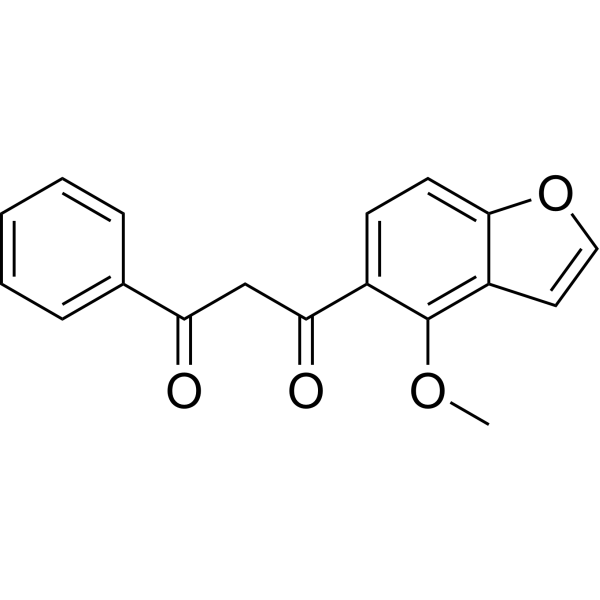
Pongamol (Lanceolatin C) is an orally active flavonoid with an IC50 of 75 μM and a Ki of 58 μM against PTPase-1B, and an IC50 of 103.5 μM against intestinal α-Glycosidase. Pongamol reduces the release of IL‑1β, TNF‑α, COX‑2 and iNOS in cells, reverses the nuclear translocation of NF‑κB, and upregulates the levels of Beclin 1 and LC3 Ⅱ/LC3 Ⅰ. Pongamol promotes glucose uptake by increasing the level of GLUT4 on the surface of skeletal muscle cells. Pongamol inhibits epithelial-mesenchymal transition by suppressing the FAK/Akt-mTOR signaling pathway. Pongamol inhibits neuronal cytotoxicity, suppresses cell apoptosis and extends the lifespan of Caenorhabditis elegans by activating the MAPKs/Nrf2 signaling pathway. Pongamol exerts hypoglycemic effects in diabetic mouse models. Pongamol exhibits antibacterial activity. Pongamol alleviates oxidative stress, neuroinflammation, Aβ deposition and excessive phosphorylation of Tau Protein, and restores autophagy function in Alzheimer's disease mouse models by inhibiting the Akt/mTOR signaling pathway. Pongamol is applicable to research related to Alzheimer's disease, type 2 diabetes, non-small cell lung cancer and postprandial hyperglycemia .
loading...
    loading...

