2438 Results for "

decrease

" in MedChemExpress (MCE) Product Catalog:
Products (2438)

2438 Results for "decrease" in MCE Product Catalog:

Cat. No.: HY-W197533
CAS No.: 65474-79-5
3-Hydroxymethyl-β-carboline is a Benzodiazepine antagonist with a Ki value of ~1470 nM. 3-Hydroxymethyl-β-carboline reverses Flurazepam-induced sleep, cerebrovascular and cerebral metabolic inhibition, and also partially reverses Flurazepam-induced decreases in blood pressure and heart rate. 3-Hydroxymethyl-β-carboline disrupts the anticonvulsant and anxiolytic effects of Diazepam in male mice. 3-Hydroxymethyl-β-carboline has no effect on sodium-dependent high-affinity choline uptake in rat cortical or hippocampal synaptosomes .
loading...
    loading...
Cat. No.: HY-W339331
CAS No.: 272451-65-7
Synonyms: NNI-0001
Flubendiamide (NNI-0001) is an orally active phthalic diamide insecticide that acts by targeting insect ryanodine receptors (RyRs), causing insect muscle dysfunction, paralysis and death. Flubendiamide disrupts molting, metamorphosis and reproductive processes, induces oxidative stress by increasing the levels of ROS/RNS, MDA and 8OHdG and decreasing the levels of SOD, CAT and GST, activates the CncC/Maf apoptosis pathway, impairs calcium homeostasis, promotes adipogenesis, increases triglyceride accumulation, and upregulates the expression of regulatory factors for adipocyte differentiation and adipogenesis .
loading...
    loading...
Cat. No.: HY-W585876
CAS No.: 58814-71-4
Chenodeoxycholic acid 3-glucuronide is a derivative of chenodeoxycholic acid (HY-76847). Chenodeoxycholic acid 3-glucuronide activates FXR-dependent transcription, with an EC50 of 8 μM for hFXR. Chenodeoxycholic acid 3-glucuronide upregulates the expression of BSEP, OSTα, and OSTβ transporters. Chenodeoxycholic acid 3-glucuronide accumulates under cholestasis and biliary obstruction conditions, its levels decrease after biliary stent implantation, and it participates in the hepatic detoxification process of chenodeoxycholic acid. Chenodeoxycholic acid 3-glucuronide can be used in the study of cholestasis .
loading...
    loading...
Cat. No.: HY-P991736
Anti-IL11 Antibody (X203, Mouse IgG) is an antibody targeting IL-11. Anti-IL11 Antibody (X203, Mouse IgG) inhibits IL-11-mediated activation of the ERK-mTORC1 axis, inactivation of LKB1-AMPK, and pro-senescence pathways. Anti-IL11 Antibody (X203, Mouse IgG) alleviates age-related metabolic decline, improves muscle function, reduces tissue fibrosis, decreases the expression of senescence markers, and maintains telomere length and mtDNA copy number. Anti-IL11 Antibody (X203, Mouse IgG) restores browning of white adipose tissue, upregulates thermogenic and mitochondrial biogenesis gene programs, reduces lipid droplet size, and decreases immune cell infiltration in visceral white adipose tissue. Anti-IL11 Antibody (X203, Mouse IgG) extends the median lifespan of mice and reduces the incidence of age-related tumors. Anti-IL11 Antibody (X203, Mouse IgG) can be used in the research of age-related metabolic decline, sarcopenia and age-related cancers .
loading...
    loading...
Cat. No.: HY-105064A
CAS No.: 249296-45-5
Synonyms: CP-597396 mesylate
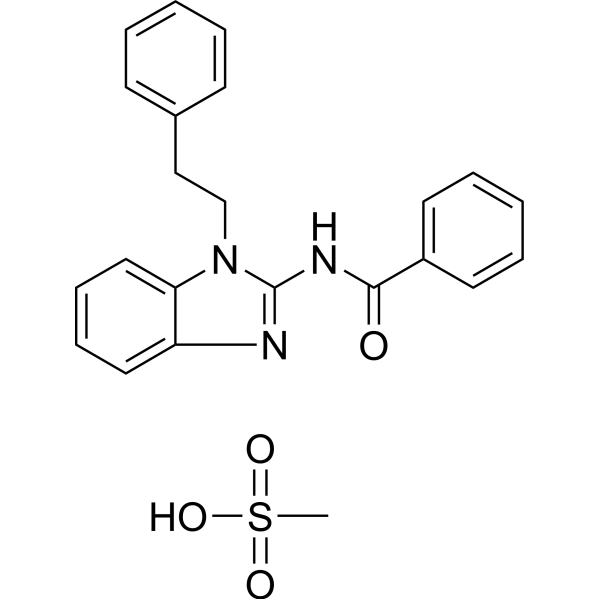
Zoniporide mesylate (CP-597396 mesylate) is a selective Na +/H + exchanger subtype 1 (NHE1) inhibitor with cardioprotective activity, with IC50 values of 67 nM and 73 nM against rat NHE1. Zoniporide mesylate reduces intracellular Na + and Ca 2+ overload, preserves mitochondrial integrity, activates pro-survival ERK1/2 and STAT3 signaling pathways, reduces necrosis and apoptosis, and decreases neutrophil aggregation. Zoniporide mesylate is applicable to research related to myocardial ischemia-reperfusion injury and heart graft ischemia-reperfusion injury .
loading...
    loading...
Cat. No.: HY-105064B
CAS No.: 241800-97-5
Synonyms: CP-597396 hydrochloride
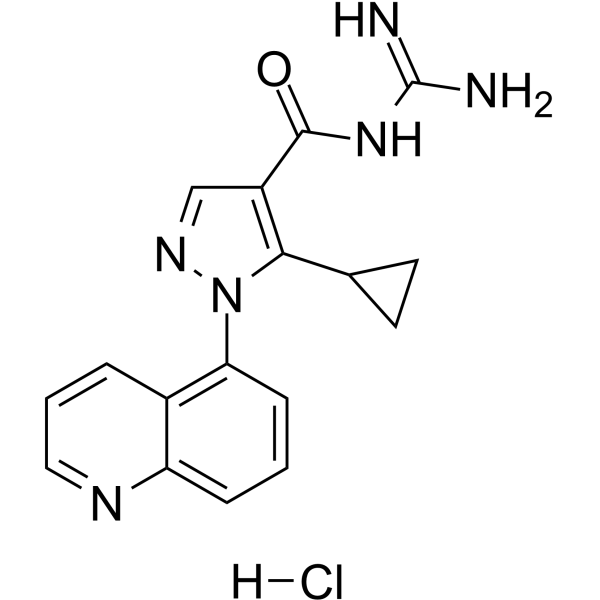
Zoniporide hydrochloride (CP-597396 hydrochloride) is a selective Na +/H + exchanger subtype 1 (NHE1) inhibitor with cardioprotective activity, with IC50 values of 67 nM and 73 nM against rat NHE1. Zoniporide hydrochloride reduces intracellular Na + and Ca 2+ overload, preserves mitochondrial integrity, activates pro-survival ERK1/2 and STAT3 signaling pathways, reduces necrosis and apoptosis, and decreases neutrophil aggregation. Zoniporide hydrochloride is applicable to research related to myocardial ischemia-reperfusion injury and heart graft ischemia-reperfusion injury .
loading...
    loading...
Cat. No.: HY-105064C
CAS No.: 241799-10-0
Synonyms: CP-597396 dihydrochloride
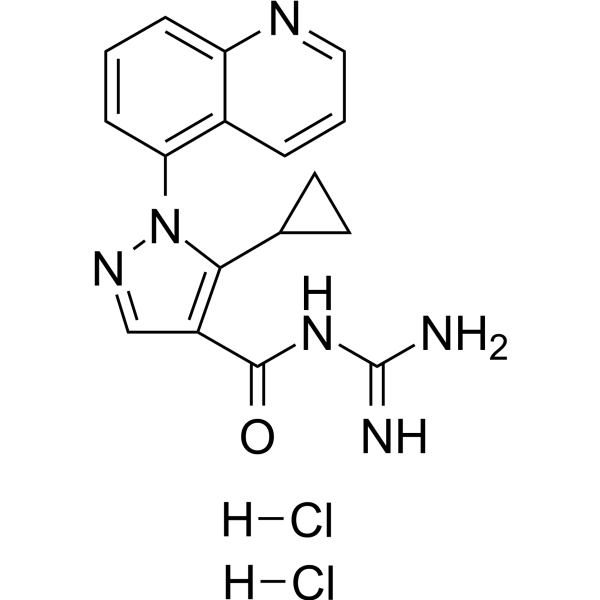
Zoniporide dihydrochloride (CP-597396 dihydrochloride) is a selective Na +/H + exchanger subtype 1 (NHE1) inhibitor with cardioprotective activity, with IC50 values of 67 nM and 73 nM against rat NHE1. Zoniporide dihydrochloride reduces intracellular Na + and Ca 2+ overload, preserves mitochondrial integrity, activates pro-survival ERK1/2 and STAT3 signaling pathways, reduces necrosis and apoptosis, and decreases neutrophil aggregation. Zoniporide dihydrochloride is applicable to research related to myocardial ischemia-reperfusion injury and heart graft ischemia-reperfusion injury .
loading...
    loading...
Cat. No.: HY-110107
CAS No.: 469861-49-2
Purity:  99.98%
GW438014A is a selective NPY-Y5 receptor competitive antagonist capable of crossing the blood-brain barrier, with IC50 values of 197 nM and 211 nM against human receptors. GW438014A reverses PYY-mediated inhibition of Forskolin (HY-15371)-induced cAMP production, reduces NPY-induced food intake and nocturnal food intake in rodents, decreases body weight gain and fat mass in Zucker rats, and inhibits centrally mediated feeding behavior. GW438014A can be used in research related to obesity and epilepsy .
loading...
    loading...
Cat. No.: HY-110177R
CAS No.: 154563-54-9
Research Areas:  

Inflammation/Immunology

SP-100030 (Standard) is the analytical standard of SP-100030 (HY-110177). This product is intended for research and analytical applications. SP-100030 is a potent NF-κB and activator protein-1 (AP-1) double inhibitor (IC50s=50 and 50 nM, respectively). SP-100030 inhibits IL-2, IL-8, and TNF-alpha production in Jurkat and other T cell lines. SP-100030 decreases murine collagen-induced arthritis (CIA) .
loading...
    loading...
Cat. No.: HY-111753AR
CAS No.: 2749300-35-2
Research Areas:  

Cancer

WDR5-IN-4 TFA (Standard) is the analytical standard of WDR5-IN-4 (TFA) (HY-111753A). This product is intended for research and analytical applications. WDR5-IN-4 TFA (Compound C6) is an inhibitor of the WIN site of chromatin-associated WD repeat-containing protein 5 (WDR5), with a Kd of 0.1 nM. WDR5-IN-4 TFA displaces WDR5 from chromatin and decreases the expression of associated genes, causing translational inhibition, nucleolar stress. Anti-cancer activity .
loading...
    loading...
Cat. No.: HY-111784R
CAS No.: 2222941-37-7
Synonyms: CCS1477 (Standard)
Research Areas:  

Cancer

Inobrodib (Standard) is the analytical standard of Inobrodib (HY-111784). This product is intended for research and analytical applications. Inobrodib (CCS1477) is an orally active, potent, and selective inhibitor of the p300/CBP bromodomain. Inobrodib binds to p300 and CBP with Kd values of 1.3 and 1.7 nM, respectively, and with 170/130-fold selectivity compared with BRD4 with a Kd of 222 nM. CCS1477 inhibits cell proliferation in prostate cancer cell lines and decreases androgen receptor (AR)- and C-MYC-regulated gene expression .
loading...
    loading...
Cat. No.: HY-113050
CAS No.: 138-81-8
Synonyms: 2,3-DPG
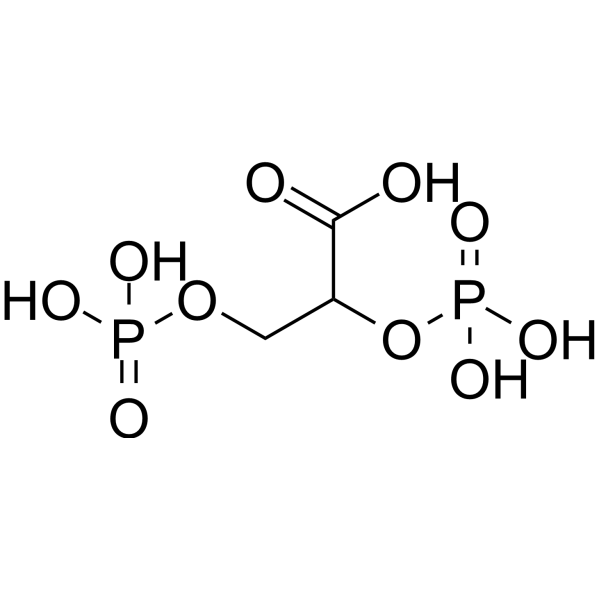
2,3-Diphosphoglyceric acid (2,3-DPG) is an intermediate metabolite of the 2,3-BPG shunt in erythrocytes, capable of binding to hemoglobin and modulating oxygen affinity. 2,3-Diphosphoglyceric acid stabilizes the deoxyhemoglobin T-state conformation, reduces hemoglobin oxygen affinity, and promotes oxygen release in tissues. 2,3-Diphosphoglyceric acid inhibits the growth of Plasmodium falciparum within erythrocytes without causing hemolysis or a decrease in ATP levels. 2,3-Diphosphoglyceric acid is useful for research related to malaria and Alzheimer's disease .
loading...
    loading...
Cat. No.: HY-113493
CAS No.: 82-82-6
Purity:  99.82%
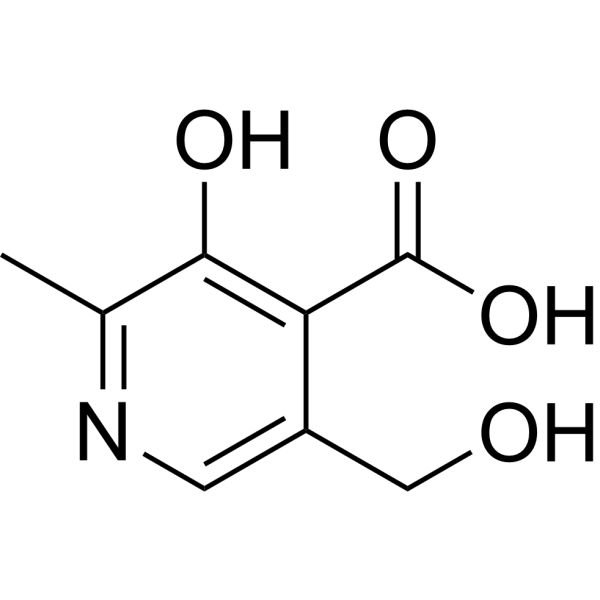
4-Pyridoxic acid is an endogenous substrate of renal organic anion transporters (OAT1/3) and a catabolite of vitamin B6. 4-Pyridoxic acid is excreted through OAT1/3-mediated tubular active secretion, which can reflect OAT1/3 activity. Elevated plasma concentrations of 4-Pyridoxic acid are associated with decreased OAT1/3 activity in chronic kidney disease (CKD) and can be used as a biomarker to reflect the severity of knee osteoarthritis (KOA) and lumbar spondylosis (LS) .
loading...
    loading...
Cat. No.: HY-113916
CAS No.: 1019889-35-0
Synonyms: AT13387 lactate
Target:  

HSP

Research Areas:  

Cancer

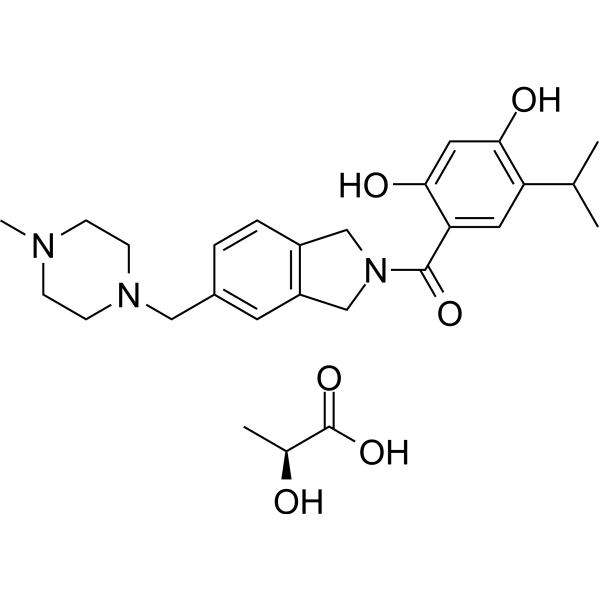
Onalespib lactate is a potent and cross the blood-brain barrier heat-shock-protein-90 (Hsp90) inhibitor with an Kd value of 0.71 nM. Onalespib lactate inhibits the proliferation, survival and migration. Onalespib lactate decreases the expression of EGFR, p-EGFR, AKT, P-AKT, ERK1/2, P-ERK1/2, S6, P-S6 protein. Onalespib lactate shows antitumor activity. Onalespib lactate has the potential for the research of non-small cell lung cancer (NSCLC) .
loading...
    loading...
Cat. No.: HY-116969
CAS No.: 17954-98-2
Purity:  ≥98.0%
Synonyms: Narthesterol
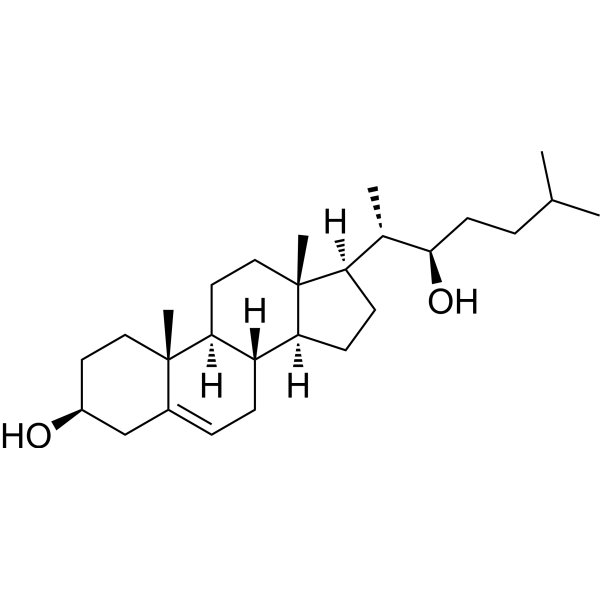
22 (R)-Hydroxycholesterol (Narthesterol) is a natural oxysterol, acting as a LXRα agonist that inhibits cancer cell proliferation. 22 (R)-Hydroxycholesterol activates LXRα-mediated upregulation of downstream ABCA1 expression, enhances apolipoprotein-dependent cholesterol efflux, reduces intracellular cholesterol content, and decreases the production of β-amyloid peptide. 22 (R)-Hydroxycholesterol induces the differentiation of human mesenchymal stem cells into functional dopaminergic neurons. 22 (R)-Hydroxycholesterol is applicable to research related to cancer, Alzheimer's disease, and Parkinson's disease .
loading...
    loading...
Cat. No.: HY-119753
CAS No.: 68284-69-5
Synonyms: SC-31828
Target:  

Others

Research Areas:  

Cardiovascular Disease

Disobutamide (SC-31828) is an orally active, blood-brain barrier permeable cationic amphiphilic ditertiary amine piperidine ring compound with antiarrhythmic properties. Disobutamide induces lysosomal phospholipid accumulation, which triggers extensive cytoplasmic vacuolization and leads to cell death. Disobutamide prolongs multiple electrocardiographic intervals in canine hearts, induces cardiac arrest at high doses, and causes decreased retinal reflectivity. Disobutamide can be used in studies related to arrhythmias, and also serves as a model drug for investigating the storage mechanisms and toxicity thresholds of intracellular amphiphilic compounds .
loading...
    loading...
Cat. No.: HY-122179
CAS No.: 1060469-90-0
Target:  

TGF-β Receptor

Research Areas:  

Inflammation/Immunology

NUCC-555 is an activin antagonist. NUCC-555 interacts with Trp25, Trp28, Phe55, Tyr93, Lys103, and Asn107 in the Activin A binding pocket. NUCC-555 blocks Activin A-mediated hepatic stellate cells (HSCs) activation. NUCC-555 promotes liver regeneration and halts fibrosis progression in chronic liver disease models. NUCC-555 inhibits Activin A-mediated ovarian cell proliferation. NUCC-555 decreases FSH levels in ovariectomized mice .
loading...
    loading...
Cat. No.: HY-122742
CAS No.: 489408-02-8
Purity:  99.83%
Target:  

iGluR

Research Areas:  

Neurological Disease

HBT1 is an effective AMPA receptor AMPA-R potentiator. HBT1 specifically binds to the ligand-binding domain (LBD) of AMPAR and enhances receptor activity only when AMPA is present., HBT1 has almost no agonistic effect (i.e., reaching the optimal concentration, and then the efficacy decreases as the concentration continues to increase) compared with traditional AMPA-R potentiator, avoiding the bell-shaped reaction of brain-derived neurotrophic factor (BDNF) production in primary neurons. HBT1 can be applicable to a wider range of neurological and psychiatric diseases (such as depression, Alzheimer's disease, etc.) .
loading...
    loading...
Cat. No.: HY-12502C
CAS No.: 128194-13-8
Synonyms: (R)-NZ-105; (-)-Efonidipine
(R)-Efonidipine ((R)-NZ-105) is an orally active, selective T-type Ca 2+ channel blocker. (R)-Efonidipine does not inhibit high-voltage-activated Ca 2+ channels, voltage-dependent Na + channels, or Ca 2+-activated K + channels. (R)-Efonidipine modulates cardiac autonomic function by increasing parasympathetic activity and decreasing sympathetic activity. (R)-Efonidipine significantly improves survival in a mouse model of dilated cardiomyopathy. (R)-Efonidipine can be used in research on ischemic encephalopathy, heart failure, and hypertension .
loading...
    loading...
Cat. No.: HY-126779
CAS No.: 549-06-4
Purity:  98.5%
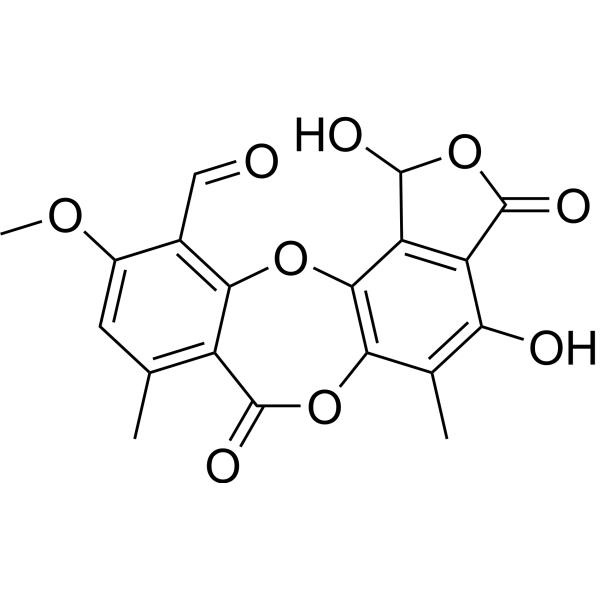
Stictic acid is a Depsidone. Stictic acid is found in the edible lichens Lobaria pindarensis and Lobaria pulmonaria. Stictic acid inhibits LPS/Aβ42-induced mRNA expression of iNOS, IL-1β, TNF-α, and IL-6, and decreases LPS-induced COX-2 protein expression. Stictic acid inhibits Aβ42 fibril formation and aggregation. Stictic acid scavenges superoxide anions. Stictic acid exhibits anticancer activity against colon adenocarcinoma. Stictic acid is used in research on Alzheimer's disease and colon adenocarcinoma .
loading...
    loading...

