194 Results for "

ikk

" in MedChemExpress (MCE) Product Catalog:
Products (194)

194 Results for "ikk" in MCE Product Catalog:

  • Categories Recommended:
    More
Cat. No.: HY-N1904
CAS No.: 57096-02-3
Synonyms: 8-Methoxyapigenin
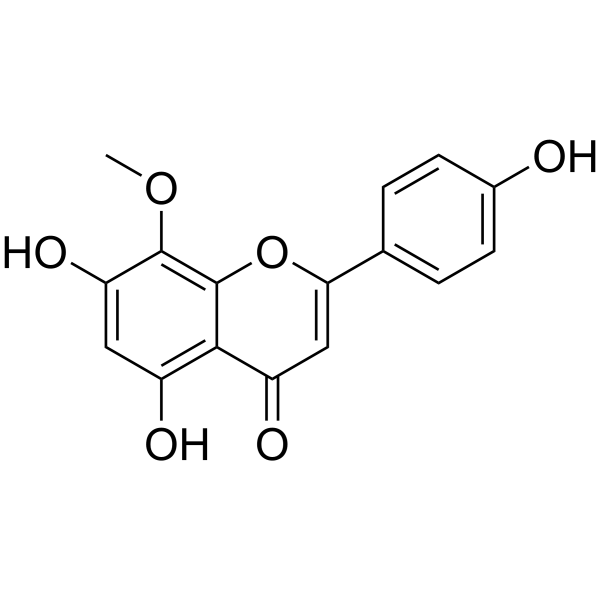
4′-Hydroxywogonin (8-Methoxyapigenin), a flavonoid, could be isolated from a variety of plants including Scutellaria barbata and Verbena littoralis. 4′-Hydroxywogonin has anti-inflammatory activity via TAK1/IKK/NF-κB, MAPKs and PI3/AKT signaling pathways. 4′-Hydroxywogonin inhibits angiogenesis by disrupting PI3K/AKT signaling. 4′-Hydroxywogonin inhibits cell proliferation and induces apoptosis .
loading...
    loading...
Cat. No.: HY-10514R
CAS No.: 702675-74-9
Research Areas:  

Cancer

BX795 (Standard) is the analytical standard of BX795 (HY-10514). This product is intended for research and analytical applications. BX795 is a potent and selective inhibitor of PDK1, with an IC50 of 6 nM. BX795 is also a potent and relatively specific inhibitor of TBK1 and IKKε, with an IC50 of 6 and 41 nM, respectively. BX795 blocks phosphorylation of S6K1, Akt, PKCδ, and GSK3β, and has lower selectivity over PKA, PKC, c-Kit, GSK3β etc. BX795 modulates autophagy .
loading...
    loading...
Cat. No.: HY-118973
CAS No.: 1807810-16-7
LASSBio-1829 hydrochloride is an orally active IKK2 inhibitor with an IC50 of 3.8 μM against the human target (Sf21 cells). LASSBio-1829 hydrochloride blocks signal transduction of the inflammation-associated NF-κB activation pathway. LASSBio-1829 hydrochloride reduces leukocyte migration, TNF-α biosynthesis, ROS production and NO production. LASSBio-1829 hydrochloride exhibits anti-inflammatory activity in a carrageenan-induced subcutaneous air pouch mouse model. LASSBio-1829 hydrochloride alleviates licking behavior during the inflammatory phase of the mouse formalin test. LASSBio-1829 hydrochloride can be used in inflammation-related research .
loading...
    loading...
Cat. No.: HY-N17821
CAS No.: 492-13-7
Butrin is a compound found in Butea monosperma flowers. Butrin reduces expression of SIRT1, AURKB, cyclin D1, pAKT, GSK-3β, β-catenin, and TGF-3β expression, enhances apoptosis and ROS production in cancer cells. Butrin downregulates Wnt and NF-κB signaling, mitigates oxidative stress, reduces proinflammatory cytokine (TNF-α, IL-6 and IL-8) production and suppresses neuroinflammation. Butrin inhibits IKK enzyme activity. Butrin can be used for the researches of colorectal cancer, Alzheimer’s disease, and rheumatoid arthritis .
loading...
    loading...
Cat. No.: HY-124865
CAS No.: 2113617-02-8
Target:  

MAP3K IKK

Research Areas:  

Cancer

MAP3K14-IN-1 (Compound 173) is a MAP3K14 (NIK kinase) inhibitor with an IC50 of 1.8 nM. MAP3K14-IN-1 inhibits the autophosphorylation of MAP3K14 kinase. MAP3K14-IN-1 reduces the level of phosphorylated IKKα in cancer cells. MAP3K14-IN-1 inhibits the proliferation of multiple myeloma cells. MAP3K14-IN-1 can be used in research related to multiple myeloma .
loading...
    loading...
Cat. No.: HY-16561R
CAS No.: 501-36-0
Synonyms: trans-Resveratrol (Standard); SRT501 (Standard)
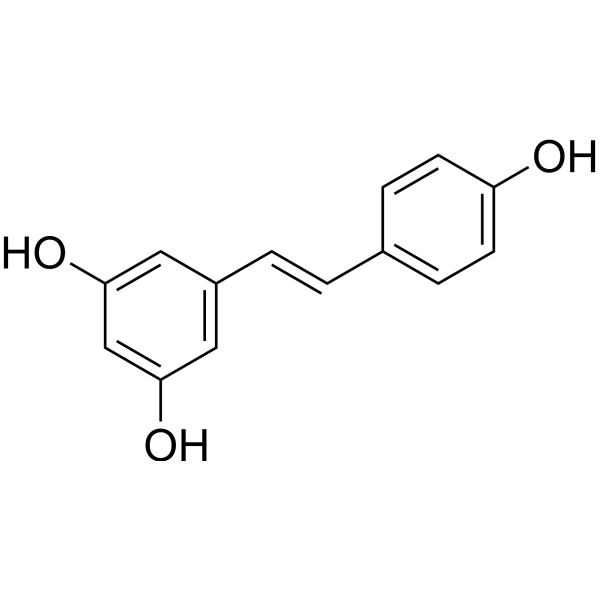
Resveratrol (Standard) is the analytical standard of Resveratrol. This product is intended for research and analytical applications. Resveratrol (trans-Resveratrol; SRT501), a natural polyphenolic phytoalexin that possesses anti-oxidant, anti-inflammatory, cardioprotective, and anti-cancer properties. Resveratrol (SRT 501) has a wide spectrum of targets including mTOR, JAK, β-amyloid, Adenylyl cyclase, IKKβ, DNA polymerase. Resveratrol also is a specific SIRT1 activator . Resveratrol is a potent pregnane X receptor (PXR) inhibitor . Resveratrol is an Nrf2 activator, ameliorates aging-related progressive renal injury in mice model . Resveratrol increases production of NO in endothelial cells .
loading...
    loading...
Cat. No.: HY-16561S
CAS No.: 1089051-56-8
Synonyms: trans-Resveratrol-d4; SRT501-d4
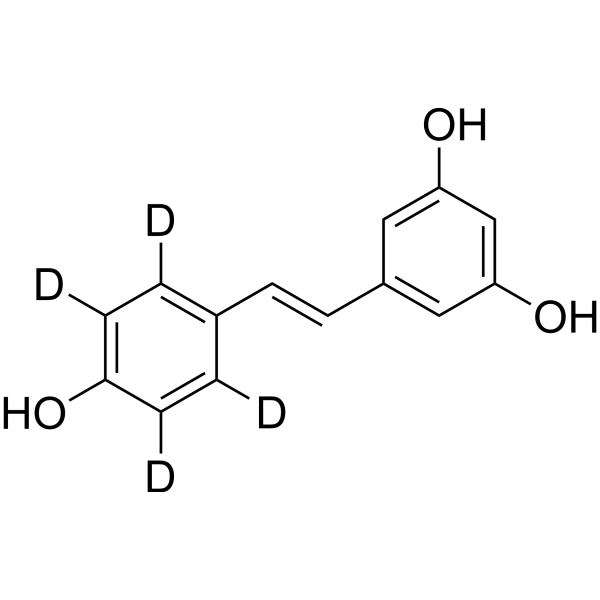
Resveratrol-d4 is the deuterium labeled Resveratrol. Resveratrol (trans-Resveratrol; SRT501), a natural polyphenolic phytoalexin that possesses anti-oxidant, anti-inflammatory, cardioprotective, and anti-cancer properties. Resveratrol (SRT 501) has a wide spectrum of targets including mTOR, JAK, β-amyloid, Adenylyl cyclase, IKKβ, DNA polymerase. Resveratrol also is a specific SIRT1 activator . Resveratrol is a potent pregnane X receptor (PXR) inhibitor . Resveratrol is an Nrf2 activator, ameliorates aging-related progressive renal injury in mice model . Resveratrol increases production of NO in endothelial cells .
loading...
    loading...
Cat. No.: HY-16561S1
Synonyms: trans-Resveratrol-13C6; SRT501-13C6
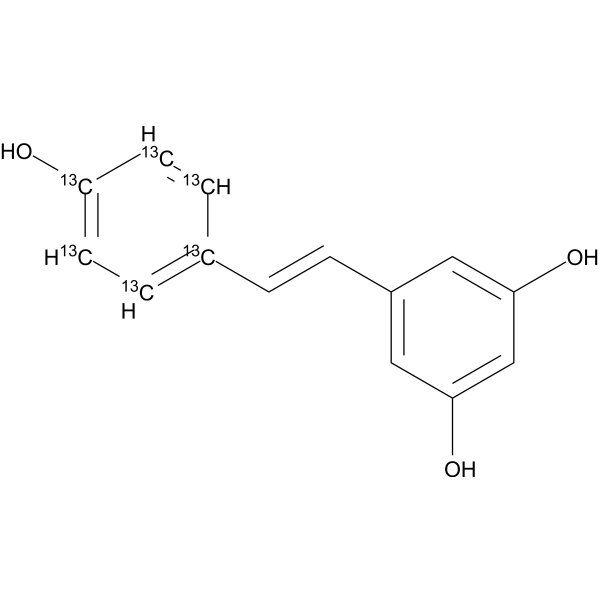
Resveratrol- 13C6 is the 13C-labeled Resveratrol. Resveratrol (trans-Resveratrol; SRT501), a natural polyphenolic phytoalexin that possesses anti-oxidant, anti-inflammatory, cardioprotective, and anti-cancer properties. Resveratrol (SRT 501) has a wide spectrum of targets including mTOR, JAK, β-amyloid, Adenylyl cyclase, IKKβ, DNA polymerase. Resveratrol also is a specific SIRT1 activator . Resveratrol is a potent pregnane X receptor (PXR) inhibitor . Resveratrol is an Nrf2 activator, ameliorates aging-related progressive renal injury in mice model . Resveratrol increases production of NO in endothelial cells .
loading...
    loading...
Cat. No.: HY-180829
CAS No.: 3062867-16-4
Target:  

HDAC NF-κB IKK COX NO Synthase

Research Areas:  

Inflammation/Immunology

HDAC6-IN-71 (Compound 24) is a HDAC6 inhibitor with IC50 values for HDAC6 and HDAC1 of 13.68 and 443.12 nM respectively. HDAC6-IN-71 effectively inhibits the production of NO by mouse macrophages, with its IC50 being 2.31 μM. HDAC6-IN-71 inhibits the HDAC6-NF-κB signaling pathway, reduces the levels of phosphorylated IκB-α and IKK-α/β, and suppresses the expression of downstream inflammatory proteins COX-2 and iNOS. HDAC6-IN-71 significantly alleviates ulcerative colitis in mice .
loading...
    loading...
Cat. No.: HY-208723
CAS No.: 2345648-39-5
Target:  

MAP3K IKK NF-κB

Research Areas:  

Cancer

MAP3K1-IN-1 is an orally active and selective MAP3K1 kinase inhibitor. MAP3K1-IN-1 blocks TNFα-induced phosphorylation of IKKβ and activation of NF-κB. MAP3K1-IN-1 inhibits the growth of cancer cells. MAP3K1-IN-1 induces a decrease in phosphorylation sites of NPM1. MAP3K1-IN-1 can be used in pancreatic cancer-related research .
loading...
    loading...
Cat. No.: HY-N6861
CAS No.: 95311-95-8
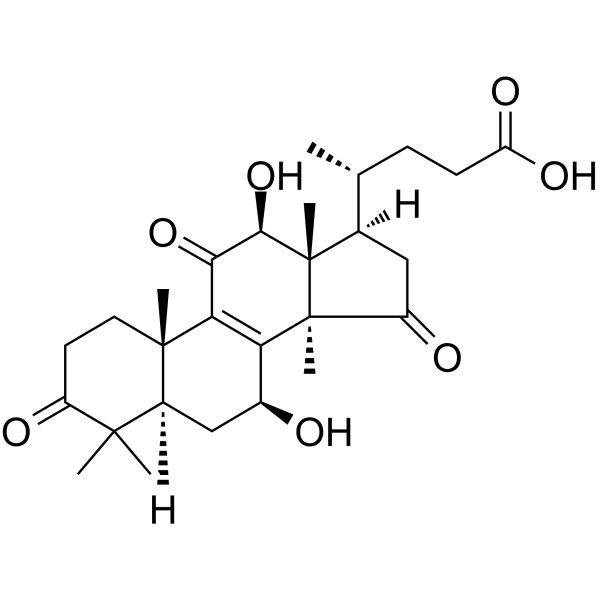
Lucidenic acid B is a triterpenoid compound. Lucidenic acid B inhibits the activities of ERK1/2, AP-1, NF-kB, and IKK, suppresses PMA (Phorbol 12-myristate 13-acetate) (HY-18739)-induced MMP-9 expression and cell invasion, and induces apoptosis in leukemia cells via the mitochondrial pathway. Lucidenic acid B inhibits the growth of various cancer cell lines without affecting normal lymphocytes and does not induce G1 phase arrest or necrosis. Lucidenic acid B can be used in research on hepatocellular carcinoma, human acute promyelocytic leukemia, and skin tumor promotion .
loading...
    loading...
Cat. No.: HY-W709448
Synonyms: Oxaprozinum-d10; Wy21743-d10
Oxaprozin-d10 (Oxaprozinum-d10; Wy21743-d10) is the deuterium labeled Oxaprozin (HY-B0808). Oxaprozin is an orally active and potent COX inhibitor, with IC50 values of 2.2 μM for human platelet COX-1 and and 36 μM for IL-1-stimulated human synovial cell COX-2, respectively. Oxaprozin also inhibits the activation of NF-κB. Oxaprozin induces cell apoptosis. Oxaprozin shows anti-inflammatory activity. Oxaprozin-mediated inhibition of the Akt/IKK/NF-κB pathway contributes to its anti-inflammatory properties .
loading...
    loading...
Cat. No.: HY-W718178
CAS No.: 152-84-1
Ruberythric acid is a natural product found in madder (Rubia tinctorum). Acid treatment induces hydrolysis of Ruberythric acid, producing pentose-containing sugar residues and alizarin. Ruberythric acid inhibits stimulus-induced phosphorylation of IKK, IκBα and p65 in the NF-κB pathway, regulates tight junction integrity, suppresses stimulus-induced MLCK activation and myosin light chain phosphorylation, reduces tight junction disruption associated with cytoskeletal contraction, alleviates stimulus-induced increase in intestinal permeability, and prevents stimulus-induced redistribution of tight junction proteins. Ruberythric acid forms red salts when dissolved in alkali and can be used as a dye. Ruberythric acid is applicable to research related to inflammatory bowel disease .
loading...
    loading...
Cat. No.: HY-16561G
CAS No.: 501-36-0
Synonyms: trans-Resveratrol (GMP); SRT501 (GMP)
Resveratrol (GMP) is Resveratrol (HY-16561) produced by using GMP guidelines. GMP small molecules work appropriately as an auxiliary reagent for cell therapy manufacture. Resveratrol (trans-Resveratrol; SRT501), a natural polyphenolic phytoalexin that possesses anti-oxidant, anti-inflammatory, cardioprotective, and anti-cancer properties. Resveratrol (SRT 501) has a wide spectrum of targets including mTOR, JAK, β-amyloid, Adenylyl cyclase, IKKβ, DNA polymerase. Resveratrol also is a specific SIRT1 activator . Resveratrol is a potent pregnane X receptor (PXR) inhibitor . Resveratrol is an Nrf2 activator, ameliorates aging-related progressive renal injury in mice model . Resveratrol increases production of NO in endothelial cells .
loading...
    loading...
Cat. No.: HY-183448
CAS No.: 117666-86-1
ETMTC is an orally active anti-inflammatory and antioxidant agent. ETMTC inhibits IKK-mediated phosphorylation and degradation of IkBα, blocks nuclear translocation and activation of NF-κB, and reduces the expression of ICAM-1, VCAM-1, E-selectin, Th2 cytokines and eosinophil chemokines. ETMTC abrogates neutrophil adhesion to endothelial monolayers and inhibits TNF-α-induced ROS production. ETMTC activates Nrf2, and enhances the activities of mitochondrial complex I and IV. ETMTC reduces lipid peroxidation levels, oxidative DNA damage, cytochrome c and caspase 9 activity, and decreases goblet cell metaplasia and subepithelial fibrosis. ETMTC can be used for the research of inflammatory diseases and asthma .
loading...
    loading...
Cat. No.: HY-184325
Target:  

Bacterial IKK

Research Areas:  

Infection

NDM-622 is a Colistin (HY-113678) adjuvant. NDM-622 weakly inhibits IKKβ with an IC50 of 20.40 μM. NDM-622 reduces the minimum inhibitory concentration of colistin against colistin-highly-resistant Acinetobacter baumannii and Klebsiella pneumoniae. NDM-622 decreases bacterial colony-forming units in a mouse peritonitis model infected with colistin-highly-resistant Klebsiella pneumoniae. NDM-622 does not modify bacterial lipid A, induce reactive oxygen species production, or increase bacterial membrane permeability. NDM-622 can be used in the research of extensively drug-resistant Gram-negative bacterial infections, colistin-resistant Acinetobacter baumannii infections, and Klebsiella pneumoniae infections .
loading...
    loading...
Cat. No.: HY-N2435R
CAS No.: 36700-45-5
-Shogaol (Standard) is the analytical standard of -Shogaol. This product is intended for research and analytical applications. -Shogaol, a kind of stimulating compound in ginger, has antiplatelet (IC50=5 μM), anti-cancer and anti-inflammatory activity. -Shogaol inhibited COX-2 (IC50=17.5 μM), which led to the decline of human leukemia cells. 8-Shogaol Selective direction TAK1 sum TAK1-TAB1 (IC50=5 μM), suppress IKK, Akt sum MAPK signal pathway, and reverse synovitis synovial sum Air dampness (RA) .
loading...
    loading...
Cat. No.: HY-L014
1,801 compounds

Nuclear factor-κB (NF-κB)/Rel proteins include NF-κB2 p52/p100, NF-κB1 p50/p105, c-Rel, RelA/p65, and RelB. These proteins function as dimeric transcription factors that regulate the expression of genes and influence a broad range of biological processes including innate and adaptive immunity, inflammation, stress responses, B-cell development, and lymphoid organogenesis. NF-κB plays a key role in regulating the immune response to infection. In addition, activation of the NF-κB pathway is involved in the pathogenesis of chronic inflammatory diseases, such as asthma, rheumatoid arthritis, and inflammatory bowel disease. Incorrect regulation of NF-κB has been linked to cancer, inflammatory and autoimmune diseases, septic shock, viral infection, and improper immune development.

MCE owns a unique collection of 1,801 small molecule compounds that can be used in the research of NF-κB signaling pathway or high throughput screening (HTS) related drug discovery.

Cat. No.: HY-P7S0185
Purity:  ≥ 80%, as determined by reducing SDS-PAGE.
Synonyms: CHUK; Transcription Factor 16; Prev. TCF16; Nuclear Factor NFkappaB Inhibitor Kinase Alpha; Inhibitor Of Nuclear Factor Kappa-B Kinase Subunit Alpha; IkB Kinase Alpha Subunit; ikk-Alpha; I-Kappa-B Kinase-Alpha; NFKBIKA; I-Kappa-B Kinase Alpha; IkBKA; I-Ka
Species:  
Human
Source:  
Sf9 insect cells
loading...
    loading...
Cat. No.: HY-126421
CAS No.: 57701-86-7
Purity:  99.81%
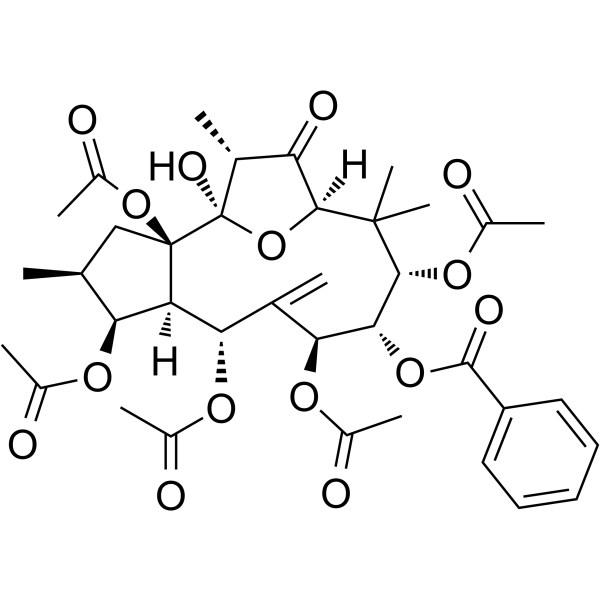
Kansuinine A is a diterpenoid compound. Kansuinine A is isolated from the roots of Euphorbia kansui. Kansuinine A inhibits H2O2-mediated upregulation of phosphorylated IKKβ, NF-κB and IκBα. Kansuinine A inhibits ROS production, reduces the Bax/Bcl-2 ratio and the expression of cleaved Caspase-3. Kansuinine A upregulates the expression of SOCS-3 and blocks IL-6-induced signal transduction. Kansuinine A decreases the expression of LOX-1 and inhibits Apoptosis. Kansuinine A reduces the atherosclerotic lesion area of the aortic arch, improves glucose/insulin tolerance, and enhances antioxidant capacity. Kansuinine A exhibits antiviral and antitumor activities. Kansuinine A can be used in research related to atherosclerosis, liver cancer and type 2 diabetes .
loading...
    loading...